The Vine That Keeps Coming Back In California No Matter How Many Times You Cut It
Some garden battles feel won by Saturday afternoon, only to start all over again by the following weekend. A few familiar plants seem to shrug off every effort to remove them.
One climbing intruder has mastered that trick better than almost any other in California yards.
Its pretty appearance hides a remarkable survival strategy, most of it operating far out of sight.
Quick fixes rarely work against it, and a few common approaches can make matters worse.
Patience and a steady routine, on the other hand, can slowly tip the balance in a gardener’s favor.
Understanding how this plant operates makes all the difference, since the real contest happens well beneath the surface.
Field Bindweed Is The Vine That Returns
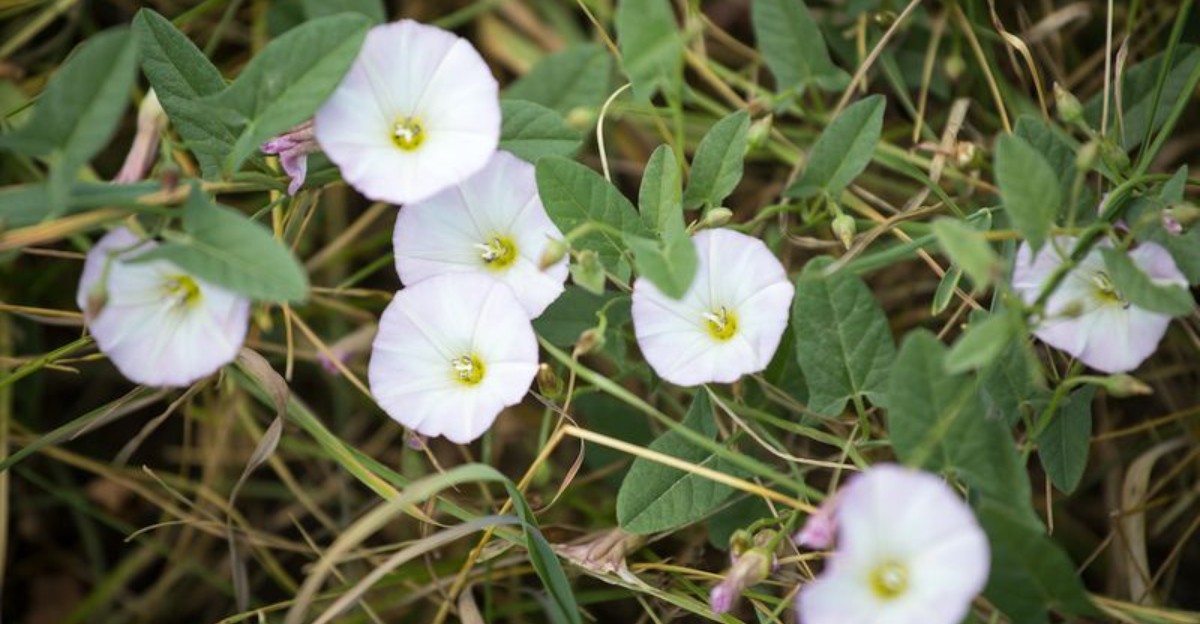
A small morning glory that refuses to leave describes this troublemaker perfectly. Field bindweed, known botanically as Convolvulus arvensis, is a perennial vine that returns year after year.
Originally from Europe and Asia, it now grows across much of California, from backyards to farm fields.
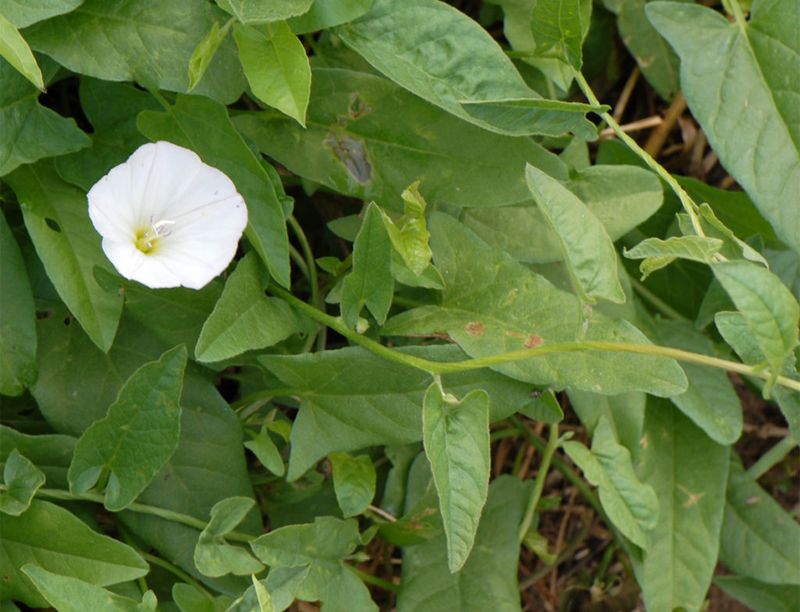
Identification gets easier with a few clues. The leaves are shaped like arrowheads, with two pointed lobes at the base, usually one to two inches long and a soft, slightly dull green.
Thin stems twist counterclockwise around anything nearby, from tomato cages to chain-link fences.
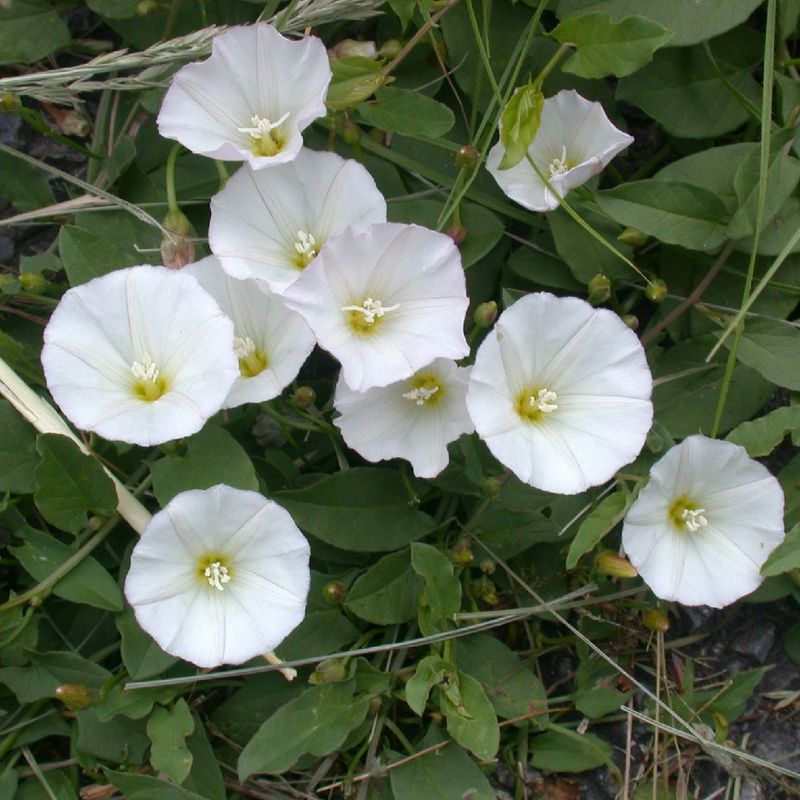
Flowers give the plant away in summer and fall. Each bloom resembles a little trumpet about an inch across, ranging from pure white to light pink, sometimes with faint stripes.
Blossoms often open in the morning and close later in the day.
Without support, the vine sprawls along the ground like a green carpet, creeping through lawns, flower beds, sidewalk cracks, and vegetable rows. Many people mistake it for a harmless wildflower at first.
Others confuse it with hedge bindweed, which carries much larger flowers, often two inches wide or more.
Early identification matters a great deal, since a young patch proves far easier to manage than one settled in for years.
A weekly walk through the yard, watching for those arrow-shaped leaves, gives a real head start against a very patient opponent, and fall remains a fine time to begin.
Roots Run Twenty Feet Or More Into The Soil
A shovel pushed a foot down barely scratches the surface of this plant’s real strength.
Field bindweed hides most of its power underground, where an enormous root system stores food and water, and UC IPM notes these roots can reach 20 feet deep or more.
Two kinds of roots work together. A main taproot plunges straight down, while side roots, called lateral roots, branch outward and then send new vertical roots downward.
Over time, a single plant builds a hidden network that can stretch through an entire garden bed.
Those roots hold plenty of stored energy, mostly starches and sugars, working like a giant underground pantry. When leaves get cut or pulled, the plant simply draws on that pantry to grow new shoots.
A well-stocked root system can keep sending up stems for a long time.
Your California Garden Changes Every Week. Your Plan Should Too.
Gardening in California changes quickly throughout the season. Every Friday you’ll receive a simple weekly plan showing exactly what to plant, prune, fertilize, harvest, and protect so you never miss the right timing.
Root buds add another layer of trouble. New shoots can sprout from buds located at considerable depths.
Clearing the top few feet of soil, then, still leaves deeper buds ready to push fresh growth back to the surface.
Deep roots also help the vine survive hot, dry California summers, tapping moisture far below while shallow-rooted plants wilt.
That insight changes the strategy. Rather than trying to dig out every root, a nearly impossible task, smart gardeners focus on emptying the pantry little by little until the plant runs low on fuel.
Any Root Piece Can Sprout A New Plant
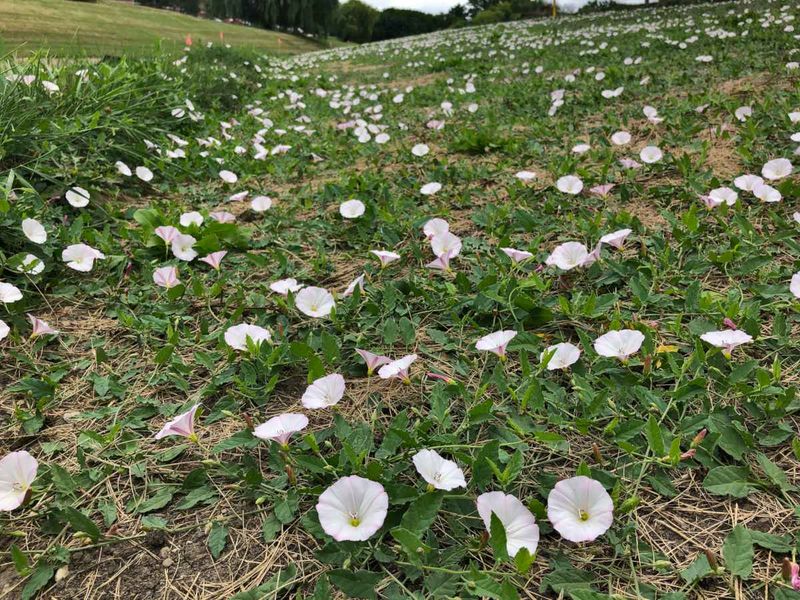
A rototiller seems like a smart fix. The bed gets churned, the vines vanish, and the soil looks clean, yet a few weeks later dozens of new bindweed shoots pop up across the entire area.
The explanation lies in the roots. Field bindweed can grow new plants from small broken pieces, since each fragment carries buds and stored food.
Tilling chops those roots into many pieces and spreads them around like confetti.
Digging can cause the same problem. A shovel that snaps a root leaves the remaining section to keep growing.
The broken piece in hand might also start a new patch if dropped on the ground or tossed into a compost pile.
Tools deserve careful handling. Tilling areas where bindweed already grows is best avoided.
Gentle loosening of the soil, with long sections of root lifted out rather than chopped, works far better. Moist soil helps roots slide out with fewer breaks, which makes the damp weeks after fall rains a good time for digging.
Cleanup counts, too. Every removed root and stem belongs in a bag headed for the trash, or a green waste bin where local rules allow.
Home compost piles are best kept free of bindweed, since backyard piles often stay too cool to stop it.
Rinsing soil off shovels and tillers before moving to clean beds keeps one patch from turning into five.
A Single Plant Spreads Ten Feet In A Season
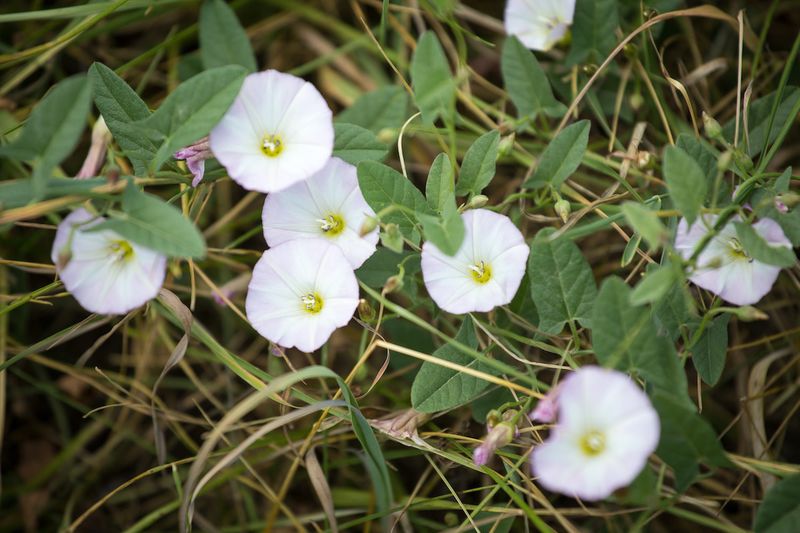
Spring starts with one innocent sprout near the fence. By late summer, that same plant may have crawled across the lawn, slipped beneath the roses, and climbed a tomato cage.
Field bindweed moves fast and rarely asks permission. University sources report that a single plant can spread more than 10 feet in one growing season.
Much of that travel happens underground. Lateral roots stretch sideways through the soil, then send new shoots up at different spots, while stems above ground creep and twine over everything nearby.
That growth creates real problems. The vines wrap around garden plants and shade their leaves.
They also compete for water and nutrients, which can leave vegetables small and flowers weak. In farm fields, bindweed can even tangle harvest equipment.
Speed explains why early action pays off. A patch ignored in May may cover an entire bed by September.
Marking the spot where bindweed first appears, then checking a wide circle around it each week, catches new shoots that often surface several feet from the original plant.
Edging helps, too. A deep barrier between lawn and garden beds, or a strip of bare mulch that’s easy to watch, works like a border checkpoint for the yard.
Sneaky runners spotted at the edge are far easier to handle than a vine that has already moved in and unpacked. October, as growth slows, makes a smart time to install those barriers before spring.
Seeds Wait In The Soil For Decades
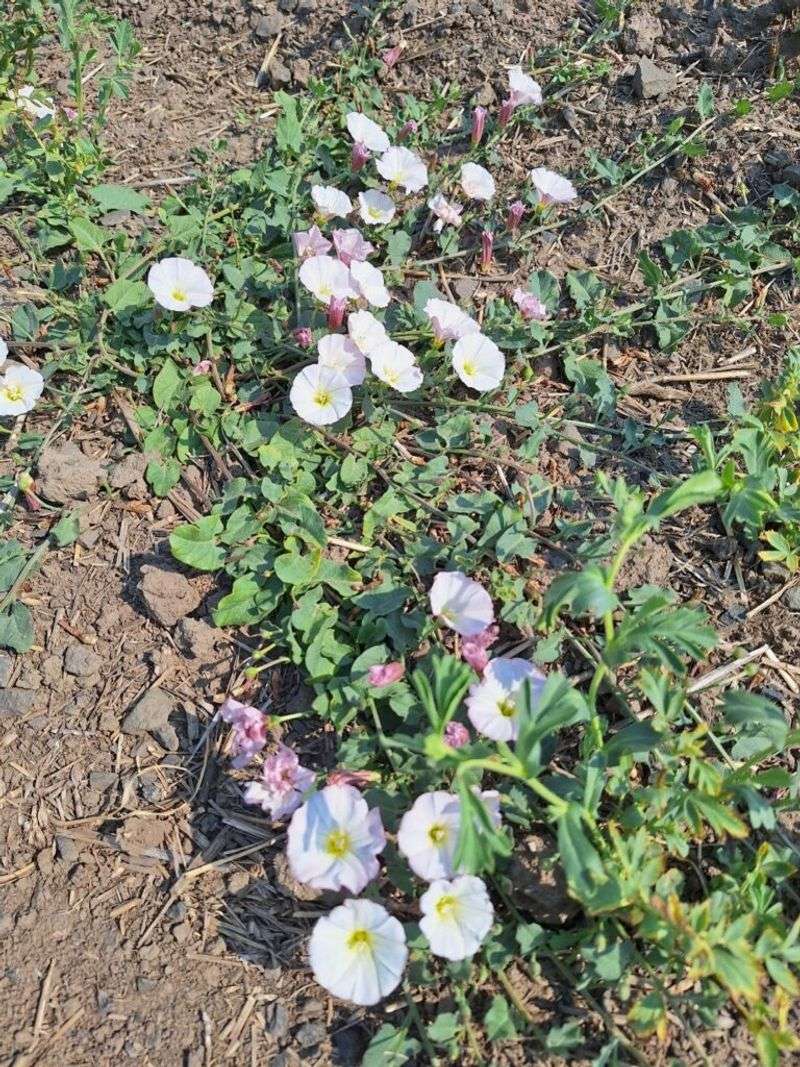
A garden bed abandoned long ago may still hold bindweed seeds left behind by a previous owner.
These seeds are famous for their patience, and university sources estimate they can stay viable in soil for decades, with some reports stretching to 50 years or longer.
Each plant produces hundreds of them. The seeds form inside small round capsules after flowers fade, turning dark brown to gray, with a hard coat that keeps water out for a long time.
That tough coat holds the secret. Seeds stay dormant until the coat cracks or wears down, then sprout under the right conditions.
Because they awaken at different times, new seedlings can appear year after year, even after old plants have been cleared.
Birds and other animals can spread seeds after eating them. Seeds also travel in muddy boots, on tools, in hay, and in contaminated soil or mulch.
Clean soil and compost from trusted sources help avoid bringing new seeds home.
The most effective move stays simple. Letting bindweed flower and set seed is best avoided, so plants come out before blooms turn into capsules.
Seedlings prove much easier to remove than older plants, especially during their first few weeks, before roots grow deep.
Warm, moist soil after early fall rains can trigger a few fresh sprouts, so October checks still pay off. Every seed stopped now means one less surprise for decades to come.
Cutting The Tops Rarely Finishes The Job
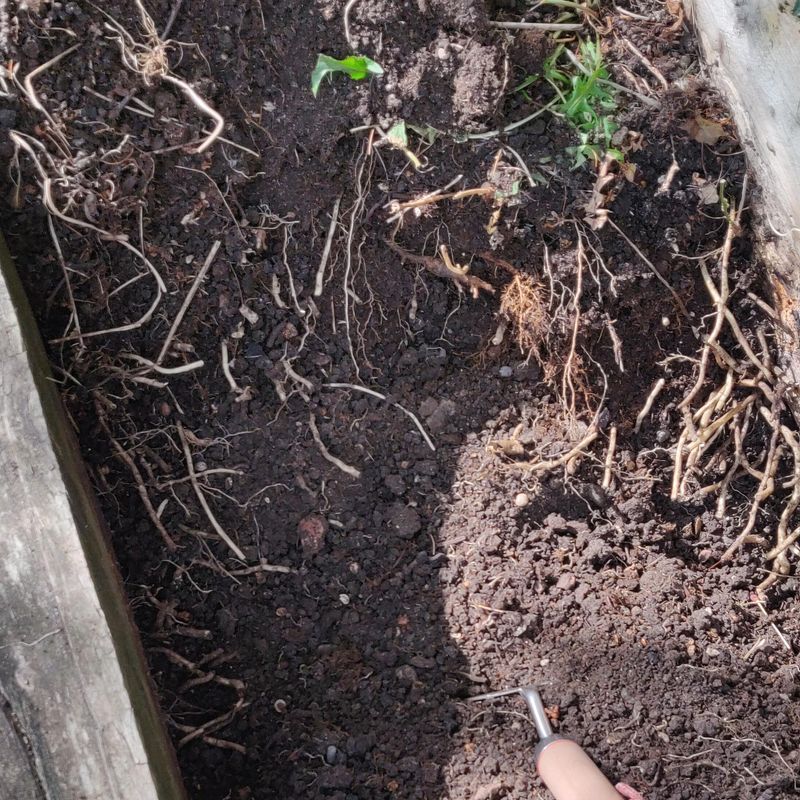
Snip, snip, and the fence looks clean again. That satisfying feeling usually lasts about a week before the vine creeps back, often looking healthier than before.
Cutting removes only what shows above ground. The real engine of field bindweed sits below, in those deep, food-filled roots, and as long as they hold stored energy, they keep pushing up new stems.
An occasional chop barely dents a full pantry.
Mowing shares the same weakness. Bindweed can grow low and flat, slipping right under the mower blade, and some plants even form tighter mats after regular mowing.
Timing makes matters worse. Many people cut bindweed only once it grows big and unsightly, after the leaves have spent weeks making food and sending it down to the roots.
Each long break lets the plant refill its reserves.
Cutting still has value as part of a bigger plan. Regular removal keeps the vine from flowering, which stops new seeds, and frequent cutting or pulling forces the roots to spend energy on new shoots again and again.
Fall offers another opportunity. UC IPM notes that the plant moves sugars down to its roots in late summer and fall, which makes systemic herbicides most effective then.
Any product use calls for careful label reading, and a licensed pest professional can help. Cutting works best as a steady habit that weakens the plant over time rather than a single knockout punch.
Pull New Shoots Weekly To Drain The Roots
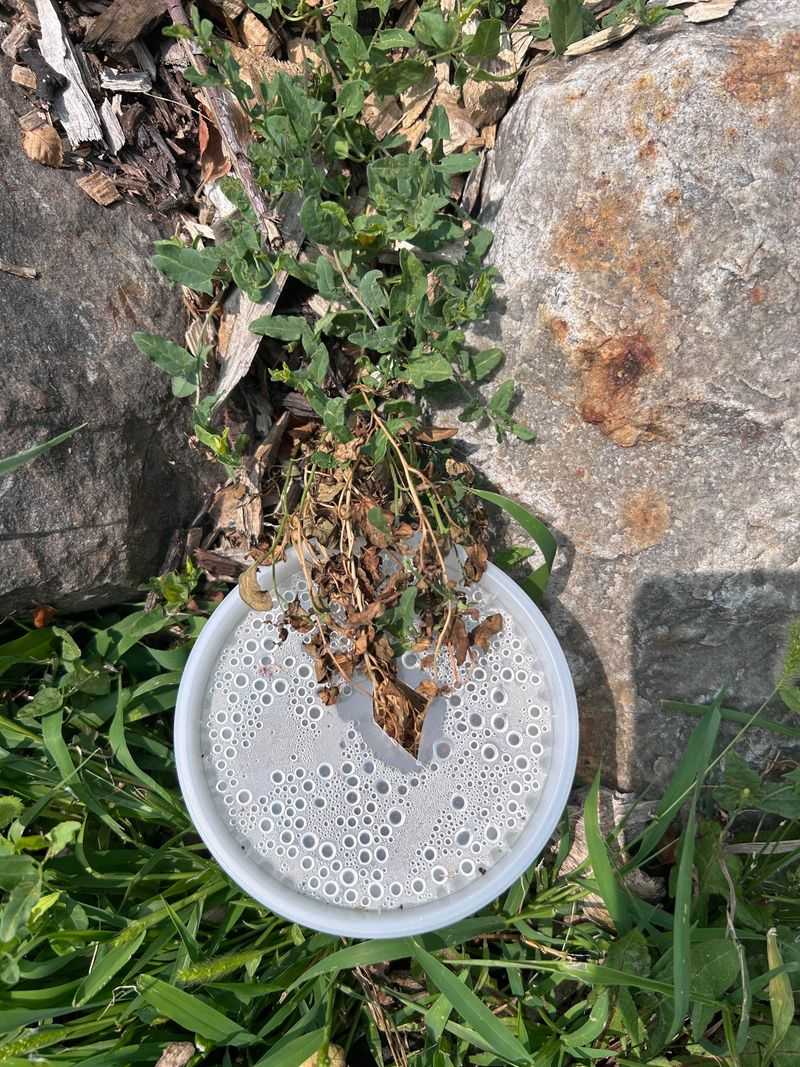
Saturday coffee in one hand, garden bag in the other. That simple weekly ritual ranks among the strongest tools against field bindweed, and steady effort beats this vine better than any flashy trick.
Every new shoot draws on stored root energy to grow. Once it reaches daylight, its leaves start making food to send back down.
Shoots removed before they grow many leaves force the roots to spend energy without getting paid back.
Repeated week after week, that cycle slowly empties the root pantry. UC IPM recommends this kind of regular removal to exhaust the roots over time, while skipped weeks let the plant refill its reserves.
One set day each week for a bindweed walk keeps the routine consistent. Fences, beds, lawn edges, and cracks in paths all deserve a look, with every new shoot pulled or cut at or just below the soil line.
Watering the area a day ahead makes pulling easier.
Everything removed belongs in a bag rather than the compost pile. Quick notes on where shoots keep appearing reveal the busiest root zones.
Mulch adds extra pressure. A thick layer over cardboard blocks light and makes surviving shoots easier to spot.
In fire hazard areas, though, wood mulch belongs beyond the first five feet around the house.
The effort usually stretches across more than one season, though shoots tend to return thinner and less often as roots weaken. A week with only three sprouts counts as a real victory.