What It Means When A Cooper’s Hawk Visits Your California Bird Feeder
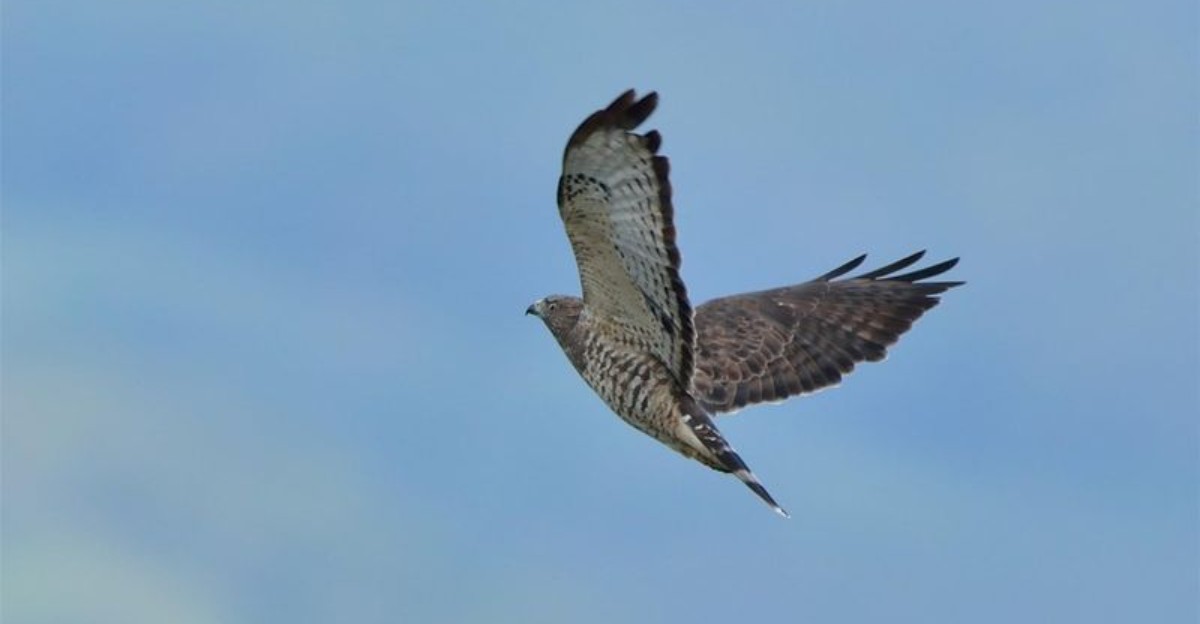
Some backyard visitors arrive with no interest in the menu at all. Their presence can change the mood of an entire yard in seconds, from busy chatter to complete stillness.
These moments often catch homeowners off guard, especially during autumn.
The sight can stir mixed feelings, with awe on one side and a protective urge toward favorite songbirds on the other.
Yet there’s far more going on than meets the eye, including a few surprises about why the timing seems so predictable.
A handful of thoughtful adjustments can help everyone share the space more peacefully, without breaking any rules along the way.
Sometimes the most dramatic guest at the feeder ignores the seed entirely.
It Is Hunting Birds, Not Seed
A full tube of sunflower seed can swing right beside this visitor without earning a second glance. Seed simply isn’t on the menu.
A Cooper’s hawk is a meat eater, and its hooked beak and sharp talons are built for catching live animals, not cracking shells.
The Cornell Lab of Ornithology lists medium-sized birds as the bulk of its diet. Doves, robins, jays, starlings, and quail are common targets.
Smaller birds such as sparrows and finches appear on the list, too, along with an occasional lizard, mouse, or squirrel. A hawk near a feeder is scanning the crowd, not the tray.
That knowledge helps keep reactions calm. Switching seed types or buying a special feeder won’t change the hawk’s interest, since nothing set out tempts it directly.
What draws it in is the busy gathering of songbirds that the seed creates each morning and afternoon.
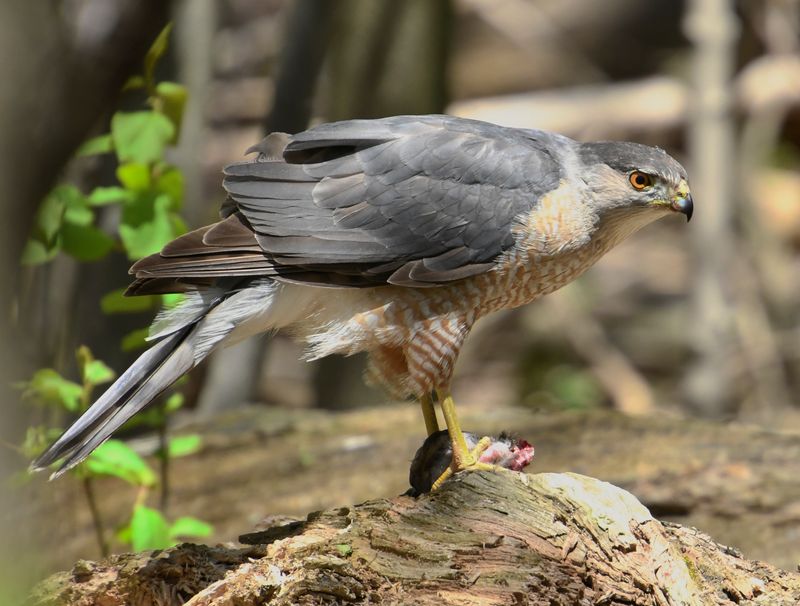
A quick look at shape and color helps confirm the visitor’s identity. Adults show a blue-gray back, rusty barring on a pale chest, and a dark cap.
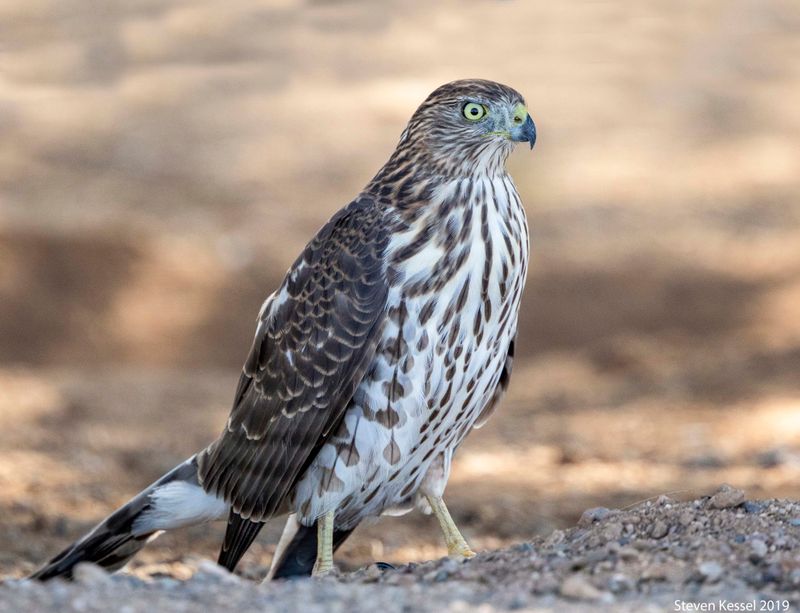
Their long, rounded tails carry bold bands, and their eyes glow red-orange. Young birds look brown with streaky chests and yellow eyes.
Seen as a hunter checking out a busy restaurant, the hawk’s behavior makes perfect sense. It simply follows the crowd, much like any diner drawn to the most popular spot in town.
Feeders Gather Easy Prey
Word spreads fast once a feeder fills. Within days, finches, doves, juncos, and sparrows start arriving on a regular schedule, and to a hungry hawk the yard begins to resemble an all-you-can-eat buffet.
In the wild, songbirds scatter across trees and fields while they search for food. A feeder pulls them into one small, predictable spot.
Many also spend time on the ground, pecking at fallen seed with their heads down. That posture makes them easier to surprise.
Doves deserve special mention. Mourning doves and Eurasian collared-doves love feeders, and they rank among the Cooper’s hawk’s favorite meals.
They’re plump, they feed on open ground, and they tend to burst upward in a straight line when startled. A hawk can learn that pattern quickly.
Temptation can drop without giving up feeding entirely. Spilled seed cleaned up every few days keeps birds from crowding open ground.
Your California Garden Changes Every Week. Your Plan Should Too.
Gardening in California changes quickly throughout the season. Every Friday you’ll receive a simple weekly plan showing exactly what to plant, prune, fertilize, harvest, and protect so you never miss the right timing.
A seed tray or catcher underneath helps, too. Hulled seed, such as sunflower chips, leaves less mess behind, so fewer birds linger on the open lawn.
Audubon notes that predators naturally come with the territory whenever wildlife gathers in one place. The feeder didn’t create the hawk; it simply made the yard worth checking.
A tidy, well-planned feeding area keeps those visits shorter and less rewarding. That outcome is exactly what neighborhood songbirds need to stay safer through the season.
Cooper’s Hawks Ambush From Cover
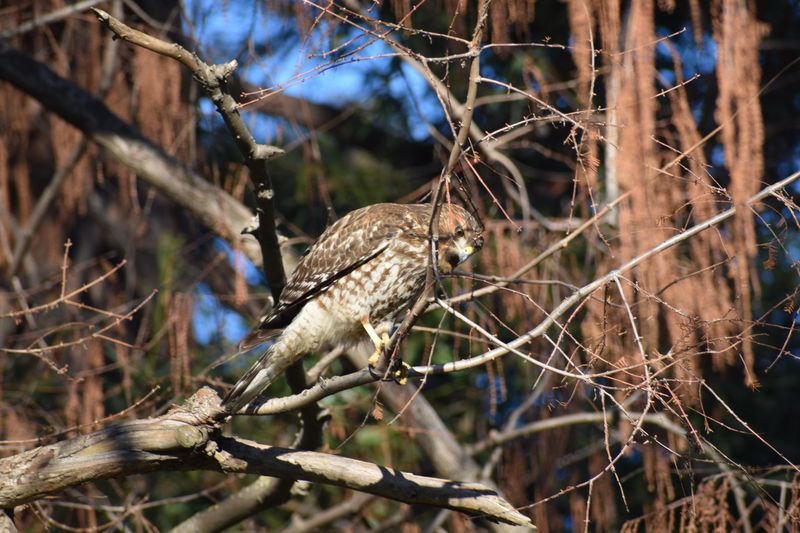
Blink, and the moment slips by. One second the yard looks calm, and the next a gray blur tears through the branches.
Surprise attacks are this hawk’s specialty. The Cornell Lab describes its hunting style as fast and stealthy.
A hawk often sits quietly inside a tree or behind a fence, watching. When a songbird lets its guard down, the hunter launches into a sudden burst of speed.
It may also fly low along hedges and buildings, then pop over the top to catch birds off guard.
Body shape suits the job perfectly. Short, rounded wings allow quick twists between branches, while the long tail works like a rudder for steering around trunks and through tight gaps.
The effect resembles a fighter jet weaving through an obstacle course. Few birds of prey maneuver so well in dense cover.
That agility comes with a cost. Researchers who examined Cooper’s hawk skeletons found that nearly a quarter had healed fractures in their chest bones, especially the wishbone.
High-speed chases through thick trees bring plenty of bumps and collisions. These hawks are tough, resilient birds.
This style explains why the hawk seems to appear out of nowhere. Tall trees, power poles, and fence lines near feeders make favorite lookout posts.
Songbirds usually sound the alarm first by going silent or freezing in place, offering an early clue for watchful eyes.
Fall Brings Young And Migrating Hawks
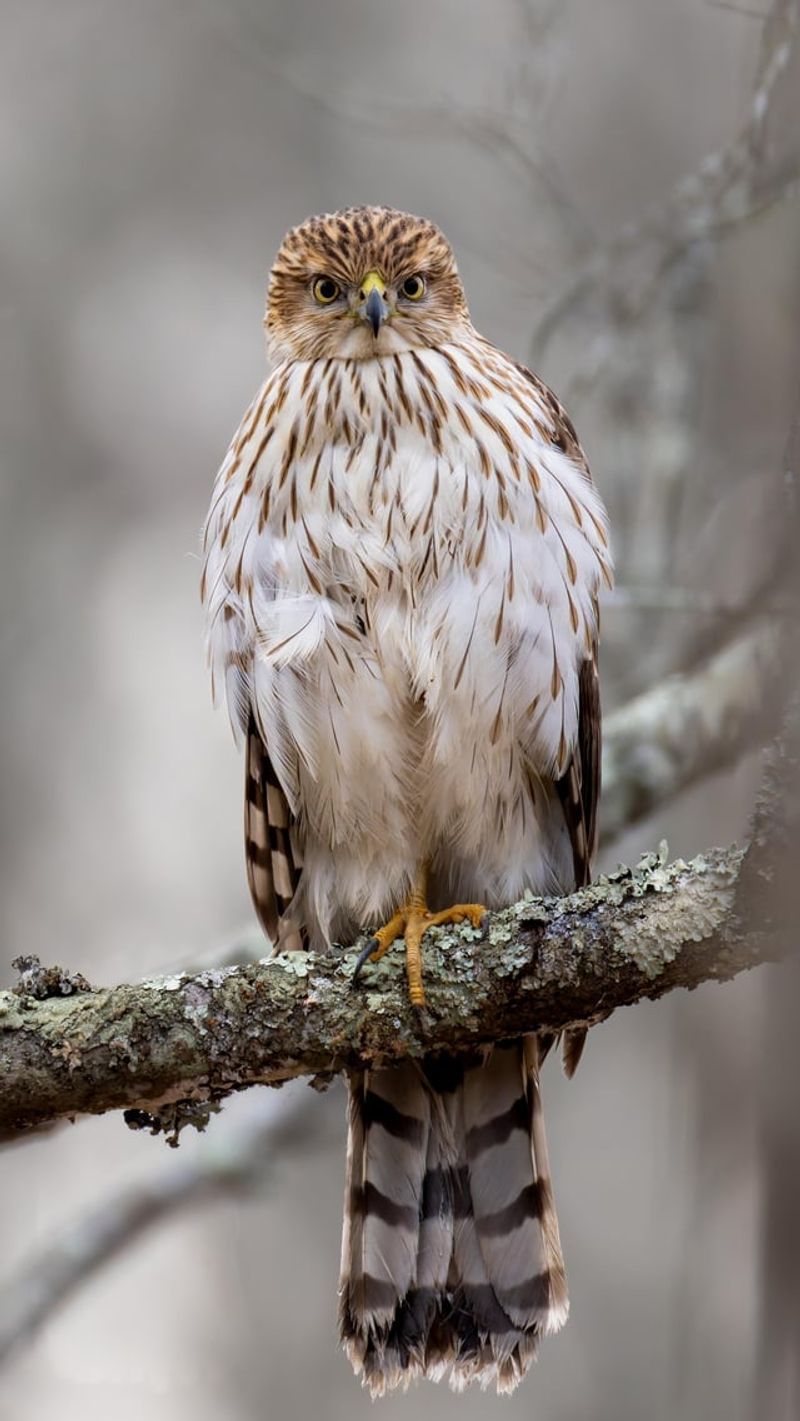
Falling leaves and cooler mornings often coincide with a brown, streaky hawk appearing near the feeder day after day. Many Californians notice more Cooper’s hawks in fall, and the timing has a clear explanation.
Young hawks hatched in spring leave their parents by late summer. Now they must find their own territory and learn to hunt alone.
These first-year birds look brown on top, with heavy streaks on a white chest and pale yellow eyes. Still practicing their skills, they often linger near spots where prey gathers easily.
Migration adds more traffic. Some Cooper’s hawks that nest farther north move south for the colder months, and California’s mild winters draw many of them in.
The Golden Gate Raptor Observatory in the Marin Headlands tallies large numbers of migrating Cooper’s hawks passing through each fall. October often brings some of the busiest days.
Beginners can look a little clumsy. A young hawk may miss its target, land awkwardly, or chase birds into a bush and come up empty.
Some even walk around shrubs on foot, peering inside for hidden songbirds. Watching them learn becomes part of the show.
The busy season usually settles by winter, once young hawks claim territories of their own.
A simple notebook of dates and sightings can reveal patterns over a few years. Before long, the arrival of these feathered fall visitors becomes almost predictable.
Hawk Visits Are Normal In Suburbs
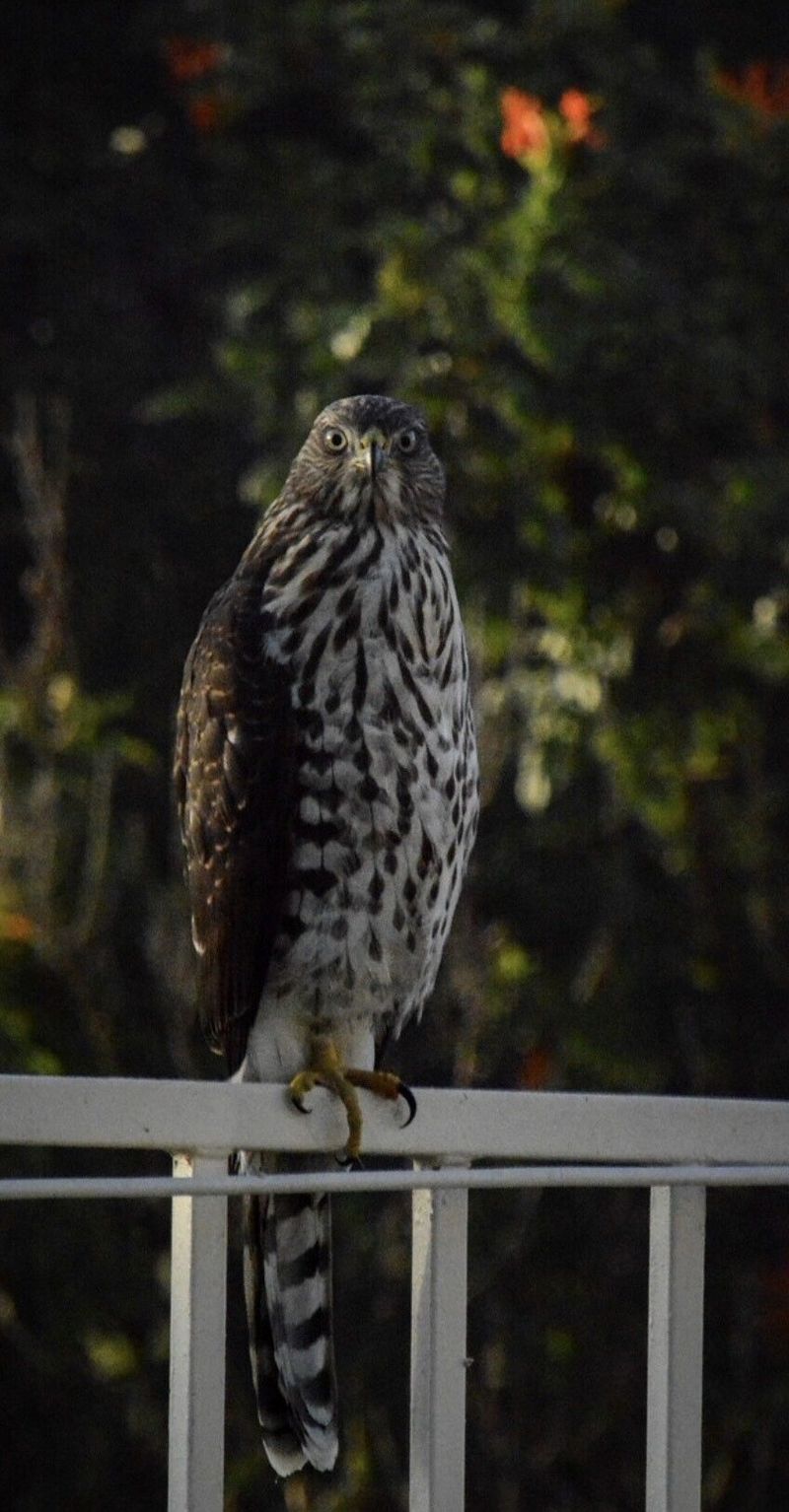
Decades ago, spotting this hawk in a neighborhood made for a rare event. Today, the species nests in city parks, schoolyards, and quiet streets across California, sometimes raising chicks in tall trees above busy sidewalks.
The Cornell Lab notes that Cooper’s hawks have grown much more common in cities and suburbs. Their numbers dropped in the mid-1900s because of shooting and the pesticide DDT.
After DDT was banned and legal protections took hold, populations rebounded. Many birds moved right into town and stayed.
Suburbs suit them well. Tall shade trees such as oaks, pines, and eucalyptus offer sturdy, sheltered nesting spots.
Backyard feeders, birdbaths, and gardens attract plenty of doves and songbirds to hunt. In Tucson, long-term research found urban Cooper’s hawks nesting at high densities.
A hawk at the feeder signals nothing wrong. Instead, it suggests the area supports a full food chain, from seeds and insects to songbirds and predators.
Healthy birds of prey usually point to a healthy environment. Their presence reflects a working ecosystem right in the neighborhood.
Losing a favorite finch can still sting, and that feeling is natural. Hawks may catch weaker, slower, or sick birds more often, which can help keep songbird flocks strong over time.
Each backyard forms one small piece of a much bigger wild story. That story plays out daily, often just beyond the kitchen window.
The Hawk Is Protected By Law
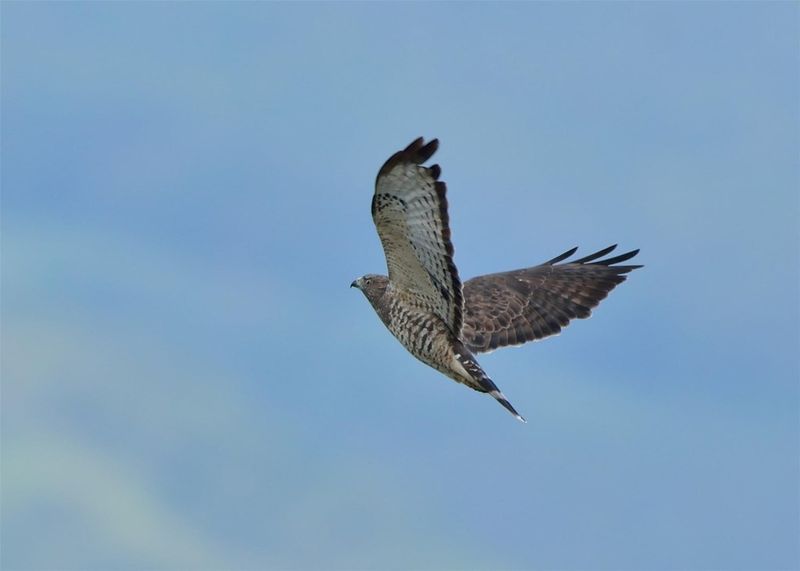
Banging pots, spraying the hose, or chasing the hawk off might feel tempting. Those reactions are best set aside. Cooper’s hawks are protected by federal law, and those rules apply in every backyard.
Under the Migratory Bird Treaty Act, harming, capturing, or possessing a Cooper’s hawk without a permit is illegal. Protection extends to nests, eggs, and even feathers.
California law adds its own safeguards. The California Department of Fish and Wildlife enforces protections for birds of prey across the state.
Harassment creates problems as well. Trapping attempts, thrown objects, or anything that could injure the bird can lead to serious fines.
Such actions also add stress during nesting season, when parents work hard to feed hungry chicks through spring and early summer.
A better approach changes the setting rather than the hawk. Adjusted feeders, added cover for songbirds, and short breaks from feeding are legal, gentle, and effective.
An injured hawk calls for professional help rather than home care. A licensed wildlife rehabilitation center has the training to treat it safely.
The CDFW website lists approved rehabilitation facilities around California. Trained staff can care for the bird and return it to the sky.
Respect for the hawk keeps homeowners on the right side of the law. It also protects a remarkable bird that declined sharply in many areas during the last century before making its impressive comeback.
Place Feeders Near Shrubs For Escape Cover
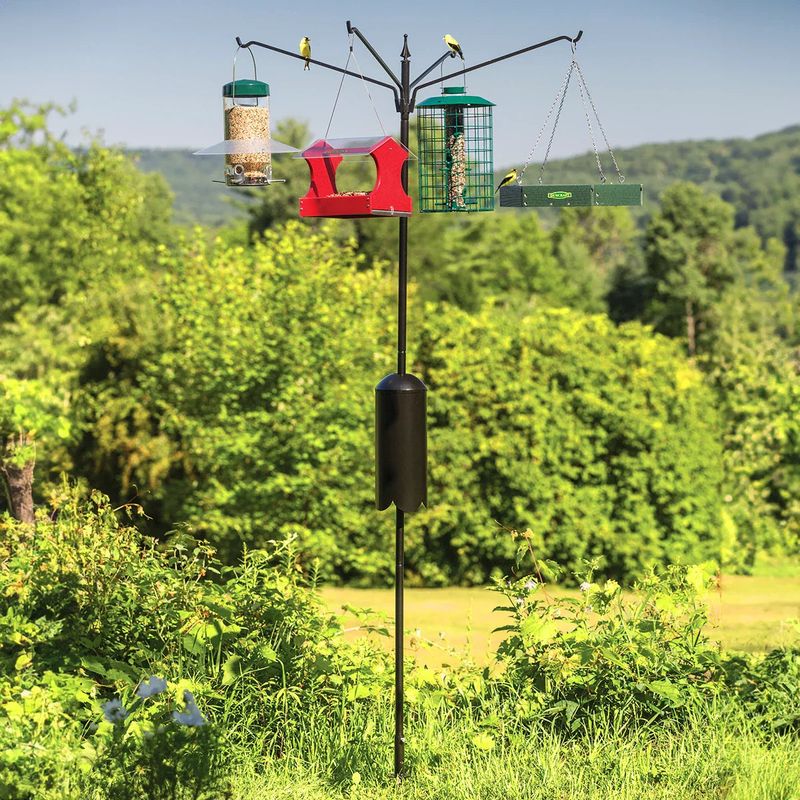
A startled sparrow races straight for the nearest bush. Dense shrubs serve as a songbird’s safe room, and a quick hiding spot near the feeder can turn a close call into a clean escape.
Feeders placed about 10 to 12 feet from thick shrubs or small trees give birds a short dash to safety. That distance also keeps cover far enough away that cats can’t easily hide and pounce.
Wide-open lawns with a lone feeder in the middle leave birds exposed. A little nearby greenery changes the odds considerably.
Native California plants work beautifully here. Toyon, coffeeberry, manzanita, and California lilac form dense, twiggy shelters.
Many also provide berries and attract insects that birds love. A brush pile in a back corner can serve as another handy hideout.
Fire safety matters in planning, too. Dense shrubs and brush piles belong well beyond the first five feet around the house, where new ember-resistant rules limit woody plants.
Windows deserve attention as well. Birds fleeing a hawk sometimes strike glass, so Cornell and Audubon suggest placing feeders within about 3 feet of windows or more than 30 feet away.
Close feeders keep birds from building up dangerous speed. Decals or screens on the glass add even more protection.
Thick branches slow a hawk down and give small birds the edge. With smart planting and placement, the feeder becomes a safer stop, and the yard stays full of cheerful chatter.