What It Means When a Gila Monster Shows Up in Your Arizona Yard
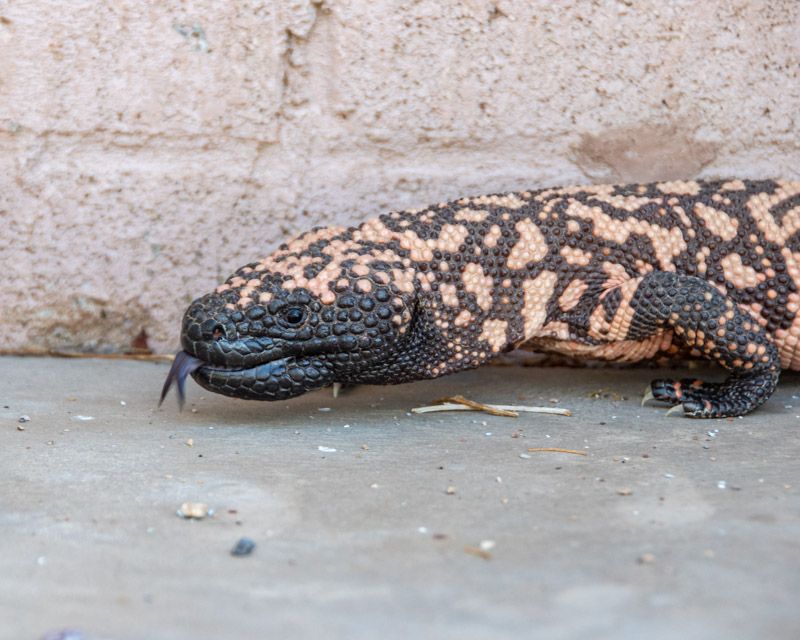
A slow, bead-skinned lizard in orange and black crosses your patio, and suddenly everyone in the house is at the window. Gila monsters are native Arizona wildlife, and seeing one can feel exciting and a little scary.
Knowing what the sighting does and does not tell you helps you stay calm and keep everyone safe. Here is how to read the moment and what to do next.
Gila monsters belong in Arizona’s desert landscape
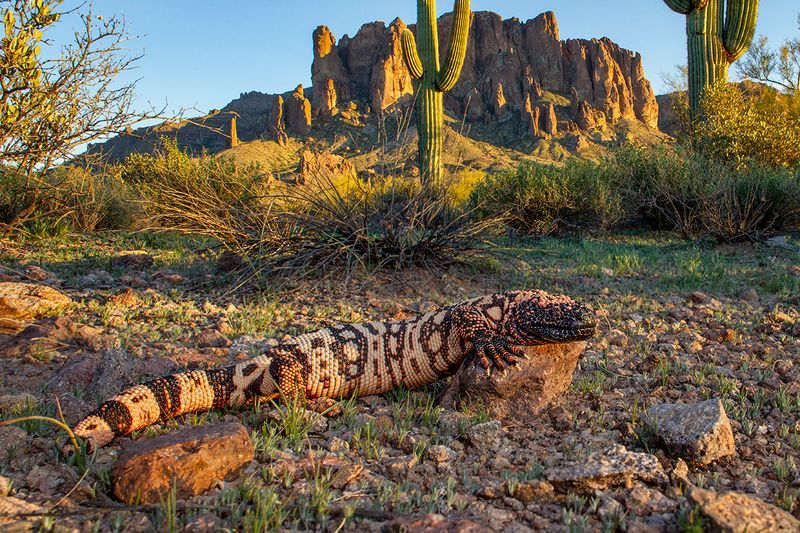
Long before there were patios and block walls, Gila monsters were part of the Sonoran Desert. According to the Arizona-Sonora Desert Museum, they occur across western and southern Arizona and favor foothills and washes.
They also use burrows as places to rest and shelter.
Much of their life happens out of sight. These lizards spend long stretches underground, so a view of one above ground is a brief glimpse of an animal that is usually tucked away.
Above-ground activity tends to pick up in the warmer months. The museum describes mostly daytime activity from March through November.
That is a general pattern, though, and it shifts with local weather and habitat, so your neighborhood may not follow it neatly.
Put together, a sighting is not strange. If your home sits near desert, a wash, or a rocky hillside, an animal native to the region passing through is a plausible event, not a sign that something is out of place.
A yard sighting does not reveal why the lizard is there
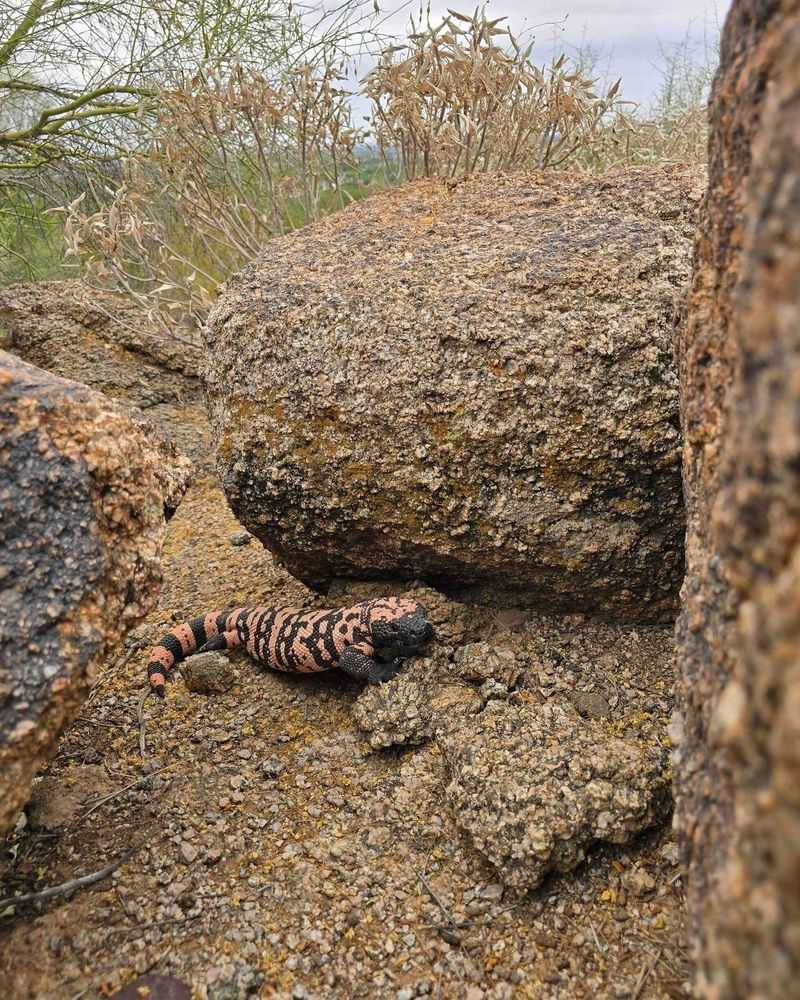
One encounter is a single snapshot. You cannot tell from it whether the lizard lives on your property, was simply crossing through, or stopped to rest for an afternoon.
It also tells you nothing about the condition of your yard.
Researchers have looked at how these animals use developed areas. In
a U.S.Geological Survey study at three Sonoran Desert sites, Gila monsters at the urban site used artificial structures as refuges. That shows developed settings can be part of how the animals get around.
It does not explain any one yard sighting. A wall, a pile of landscape rock, or a shed may be a place a lizard uses, but you cannot assume that is what happened at your house.
The Desert Museum also notes these lizards spend much of their time in burrows and shelters, which is one more reason a single glimpse says so little. Think of it as a passing visitor, not a verdict on your property.
Its diet is not a promise of pest control
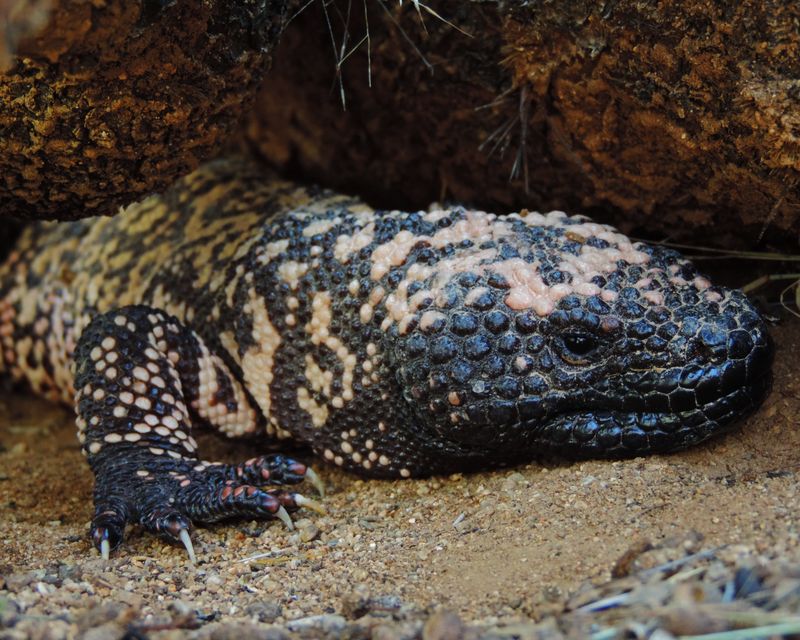
Gila monsters are not hunters of the typical household nuisance. The Desert Museum says their diet includes newborn rodents and rabbits, along with the eggs of birds, reptiles, and other animals.
That is a fairly specific menu, found mostly in nests and burrows.
Some homeowners hope a visiting lizard means free pest help. It is a tempting idea, but nothing about that diet makes a lizard a dependable answer to rodents, scorpions, or other pests around a house.
Your Arizona Garden Changes Every Week. Your Plan Should Too.
Gardening in Arizona changes quickly throughout the season. Every Friday you’ll receive a simple weekly plan showing exactly what to plant, prune, fertilize, harvest, and protect so you never miss the right timing.
The reverse is also true. Seeing one does not show that your yard has a rodent problem or that prey is unusually plentiful.
A lizard can pass through a spot for many reasons that have nothing to do with food.
If pests are a concern at home, treat that as its own question and handle it with ordinary, practical steps such as sealing gaps and clearing clutter. Let the lizard be a bit of desert wildlife, not a hired helper.
Why you should keep your distance
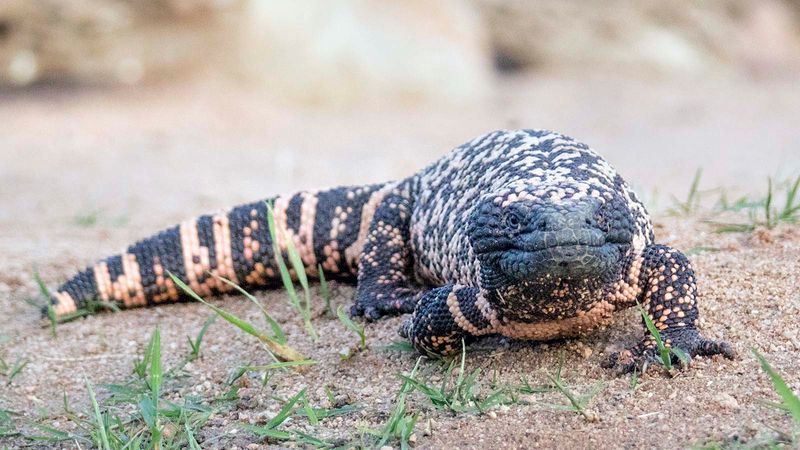
Gila monsters are among the few venomous lizards in the world, but that is only half the story. The Arizona Poison and Drug Information Center describes them as shy animals.
They are not known for chasing people or attacking without cause.
The trouble starts when someone handles or agitates one. The same poison center says serious bites can happen in those situations.
A lizard that feels trapped or grabbed may bite, and it can hold on.
The venom works through the bite. The lizard does not spit it or spray it, so there is no danger from across the yard.
The risk comes from close contact.
That makes distance the simplest tool you have. Stay several steps back, skip the photo that requires leaning in, and let the animal move on at its own slow pace.
Giving it room keeps the encounter calm for you and for the lizard.
Leave it alone and protect children and pets
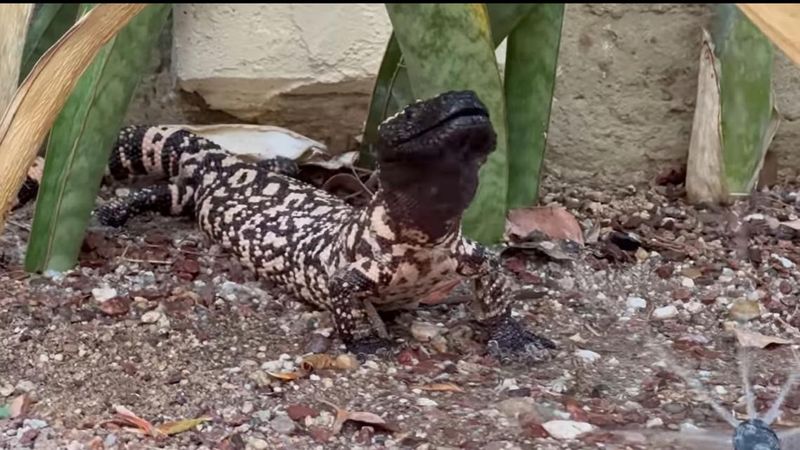
Your job is mostly to do nothing, and to do it carefully. Do not touch, feed, corner, capture, or try to move the lizard yourself.
Call children inside, put dogs on a leash or bring pets indoors, and watch from a safe spot until it leaves.
Curious pets and kids are the most likely to get too close, so keep them away until the animal has gone. The poison center notes that bites tend to happen when a Gila monster is agitated or handled, which is exactly what a nosy dog or a young child might do.
If the lizard stays where people or pets may run into it, ask an appropriate local wildlife professional for help rather than attempting removal. Wildlife rules matter here too.
Arizona law generally restricts taking or possessing live wildlife unless authorized, and the state wildlife agency lists the species as having no open season. How that applies to a specific situation is a question for the professionals you call.
A bite calls for prompt medical attention
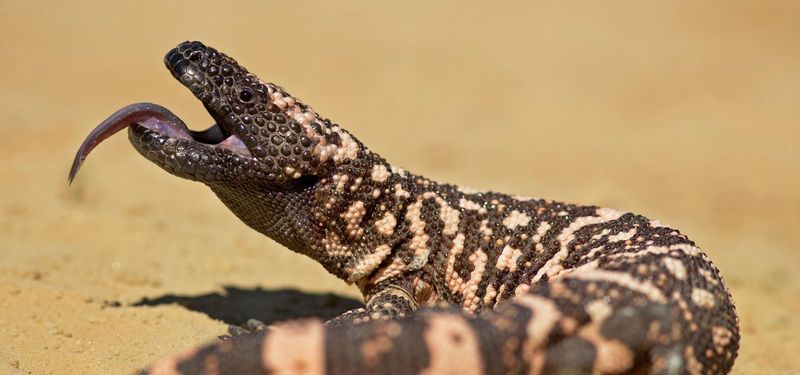
If someone is bitten, get medical help promptly. A bite is not something to wait out at home, even though serious outcomes are not the norm.
Rarely life-threatening does not mean harmless.
The Arizona Poison and Drug Information Center says people who call about a Gila monster bite are referred to a medical facility. It lists symptoms that can include severe pain, swelling, nausea, vomiting, and weakness.
The center also says no antivenom is available. That is another reason a medical team should evaluate the person rather than leaving it to guesswork.
Call Poison Control at 1-800-222-1222 for guidance, and follow the directions you are given about getting to care. Keep the person calm and, if you can do it safely, keep everyone else away from the lizard.
A sighting is a reason for space, not panic
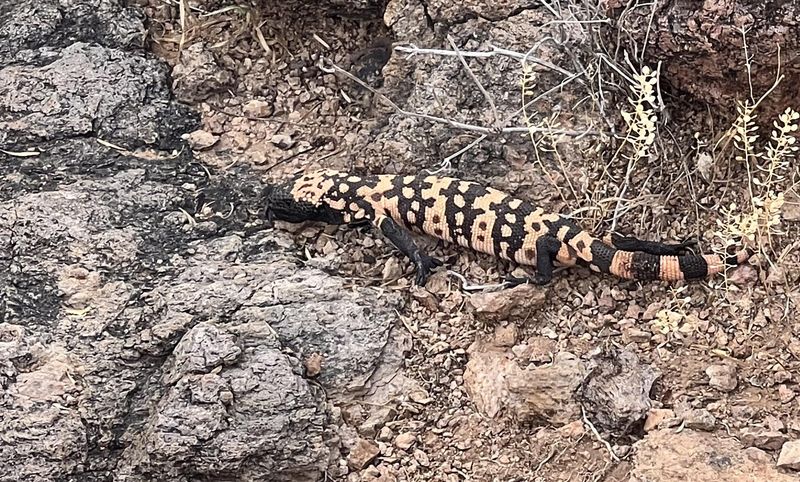
Seeing a Gila monster is a rare moment of desert wildlife up close. Step back, bring kids and pets inside, and let it wander off.
If it lingers somewhere risky, call a qualified local professional.
Most visits end quietly with a lizard simply moving on.