8 Christmas Cactus Colors California Plant Lovers Can Grow
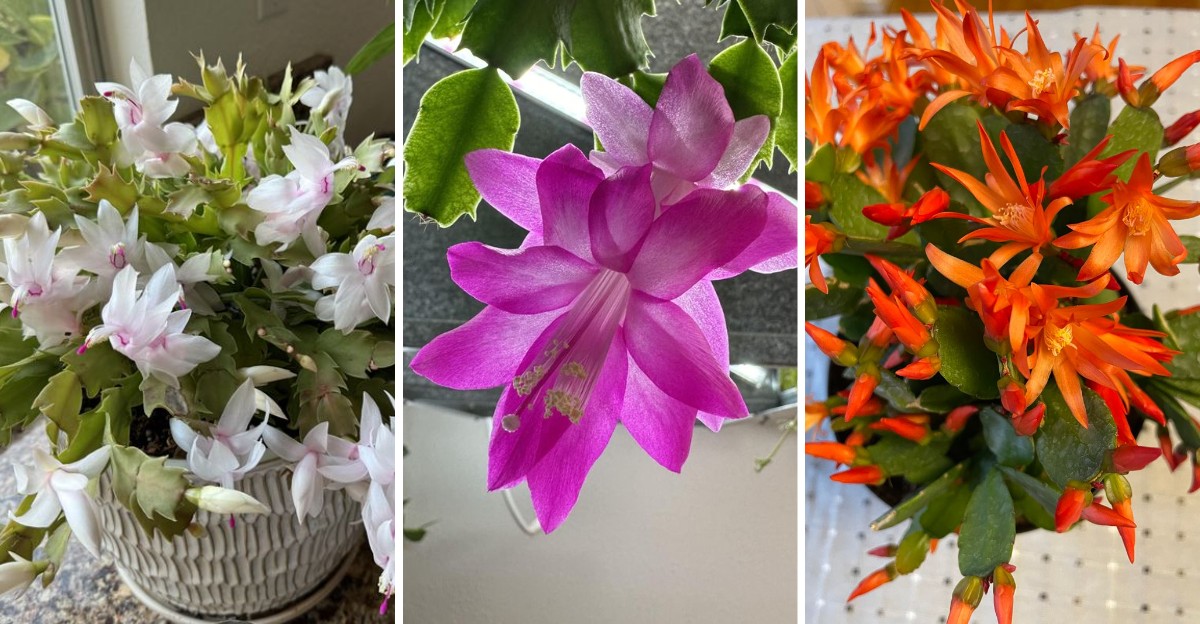
Late fall turns certain garden center benches into something close to a spilled box of crayons. Arching green stems suddenly drip with blooms, and the range of shades can surprise even seasoned houseplant fans.
Some colors turn up nearly everywhere, while others vanish from shelves within days.
A few shift their tone depending on the temperature of the room, which keeps owners guessing from one season to the next.
Care stays refreshingly simple across the whole lineup, so the real decision comes down to taste, decor, and a bit of luck in the hunt.
California homes, with their bright windows and mild patios, suit these plants nicely.
Choosing a favorite shade may prove harder than keeping it happy.
1. Classic Red Brings Holiday Cheer
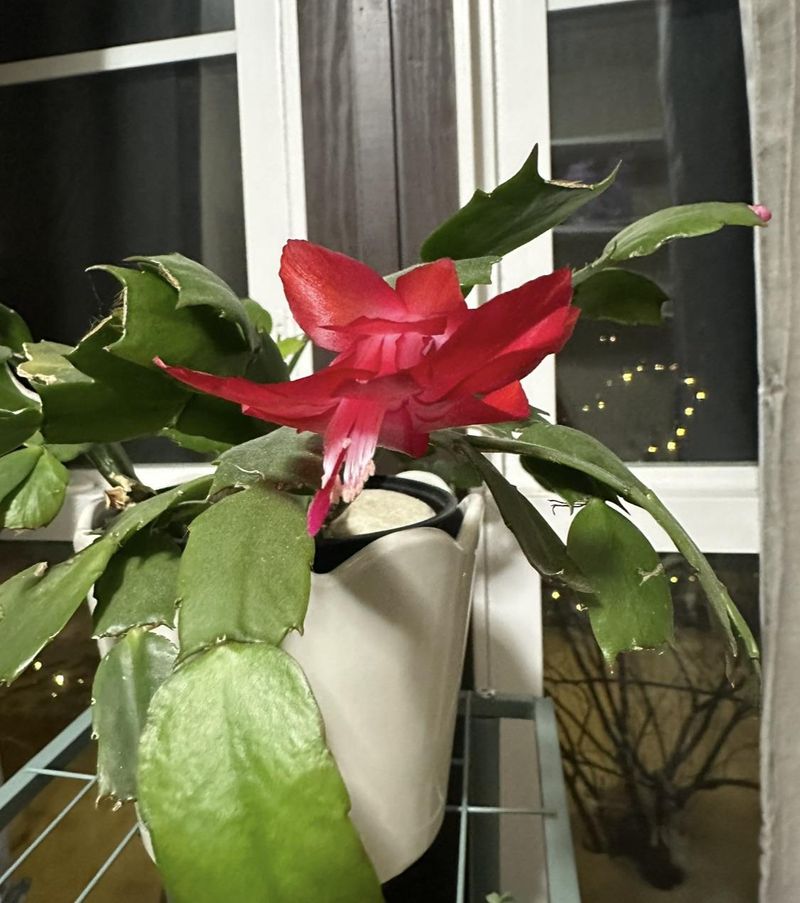
For many households, the traditional holiday shade has always been crimson, often on a plant passed down for decades. Some of those heirlooms have grown into huge, arching specimens.
Red ranks among the most common colors growers sell, so it turns up at almost any nursery or grocery store in fall. Flowers range from cherry to deep scarlet, often with a magenta glow near the center.
Many older heirloom plants are true Christmas cacti (Schlumbergera x buckleyi), recognizable by rounded, scalloped stem edges.
Each bloom has layered, swept-back petals and a tuft of pink-tipped stamens that dangle like tiny ornaments.
A plain white or galvanized pot lets those bold flowers do the talking. A red plant also looks charming on a mantel beside pine cones and a string of warm lights.
Bud set depends on the season rather than the color. University sources explain that holiday cacti form buds when nights run long and temperatures stay cool, roughly 50 to 60 degrees.
Coastal California falls often provide those conditions naturally on a covered porch.
Once buds appear, heater vents and drafty doors are best avoided. Sudden swings in heat or dryness can make buds drop before they open.
Watering works best when the top inch of soil feels dry, with extra water allowed to drain away. A happy red plant can bloom for weeks, bringing that classic holiday feeling right to the table.
2. Hot Pink Pops On A Windowsill
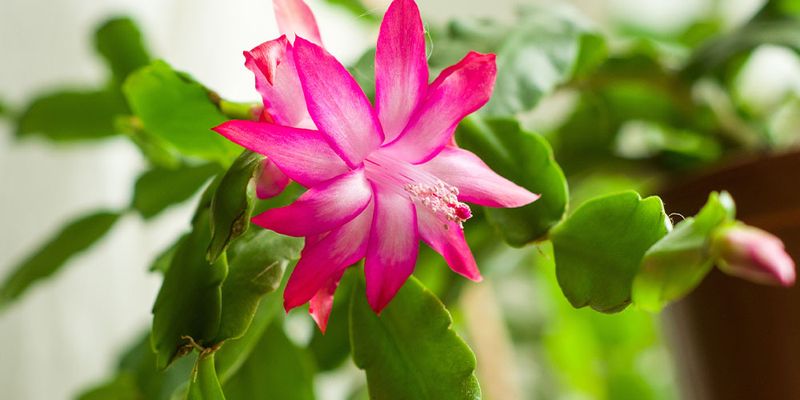
A bright window framing a vivid pink plant in full bloom draws the eye from across the room. The color is loud in the best possible way.
Fuchsia and magenta rank among the most widely sold shades, right alongside red. Many plants labeled simply as pink actually lean toward this vivid tone.
The petals seem to glow when morning light shines through them, almost like stained glass.
Container choice can turn up the volume. A turquoise, cobalt, or bright yellow pot creates a cheerful, beachy look, and a hanging basket works well too, since stems arch and spill over the edges as the plant matures.
Light matters for both blooms and stems. Bright, indirect light keeps segments a healthy green, while harsh afternoon sun in places like Fresno or Riverside can scorch them reddish or yellow.
An east-facing window makes a sweet spot in most homes. Morning sun warms the plant gently without the intensity that bleaches stems later in the day.
Your California Garden Changes Every Week. Your Plan Should Too.
Gardening in California changes quickly throughout the season. Every Friday you’ll receive a simple weekly plan showing exactly what to plant, prune, fertilize, harvest, and protect so you never miss the right timing.
Hot pink plants also make great gifts for friends who struggle with houseplants, since holiday cacti forgive a missed watering far better than ferns or orchids.
A light feeding with a balanced houseplant fertilizer during spring and summer supports growth. Feeding stops by early fall so the plant can focus on making buds.
By late November, the windowsill show should be ready to begin, and the color often lasts well into December.
3. Pure White Looks Fresh And Elegant
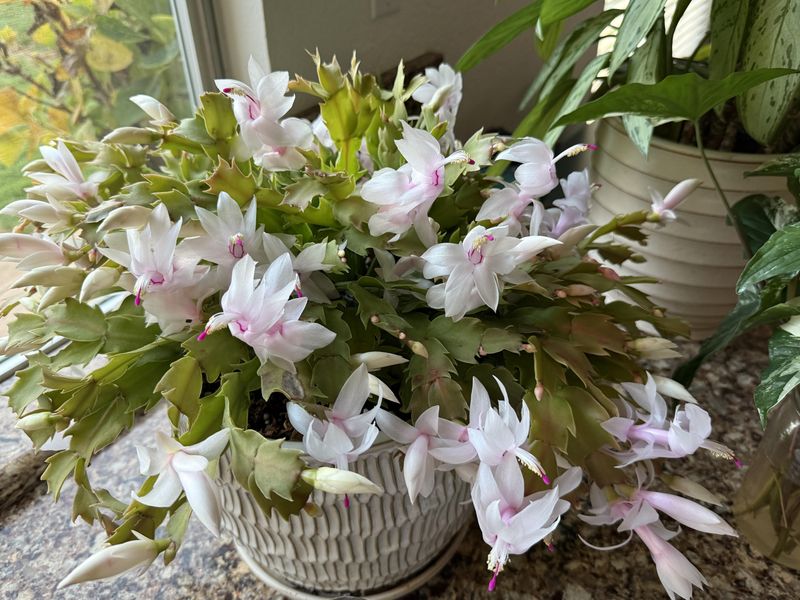
Snow rarely falls in Los Angeles, yet a white-flowered plant can bring a winter mood indoors anyway. The blooms look crisp, calm, and a little fancy.
White varieties are fairly easy to find each fall, with some sold under names like ‘White Christmas.’ A close look often reveals a creamy center or a faint green tint at the base of the petals.
Some white flowers even blush pink when temperatures drop, which surprises many first-time owners.
That color shift is perfectly normal. Cool nights below about 55 degrees can tint white petals with rose tones, while warmer rooms keep them pure, and neither version signals a problem.
Owners hoping for the cleanest white can keep the plant in a slightly warmer room once buds form, while still protecting it from heater vents and lamps at night.
Dark containers suit this shade well. Matte black, charcoal, or natural wood creates a sleek, modern contrast, and white flowers mix beautifully with silver ornaments, eucalyptus sprigs, or a simple linen table runner.
Care stays the same as for every other color. A fast-draining mix, such as potting soil blended with perlite or orchid bark, keeps roots healthy.
Soggy roots cause more trouble for holiday cacti than almost anything else, so emptying the saucer after each watering helps. A white plant fits nearly every room and every style, from farmhouse to minimalist.
4. Sunny Yellow Warms The Room
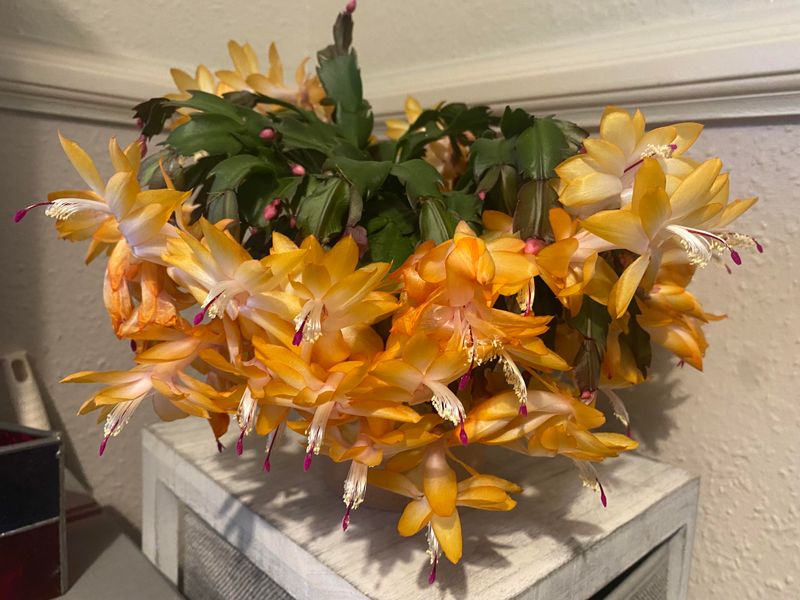
Few shades disappear from store shelves faster than this one. Yellow-flowered holiday cacti remain harder to find than red or pink, and plants often sell out early in the season.
True yellow flowers tend to be soft and buttery rather than lemon bright. Many show a cream or pale gold tone, sometimes with a peachy edge.
Selections such as ‘Gold Charm,’ one of the first yellow introductions, and ‘Christmas Flame,’ with yellow petals edged in orange, still turn up in nurseries.
Breeders worked for years to develop yellow types, which helps explain why they remain less common.
Specialty nurseries, local plant sales, and online growers offer the best odds in early fall. California succulent and houseplant clubs sometimes share cuttings too, and holiday cacti root easily from a few stem segments tucked into barely damp potting mix.
Temperature affects yellow blooms more than many other colors. Cooler nights may push flowers toward pink or peach, while warmer conditions keep them closer to gold.
Once buds form, a spot around 60 to 65 degrees tends to bring out the sunniest shade.
For decorating, a cobalt blue or deep green pot creates contrast that makes the soft color shine. A yellow plant also brightens a gray January morning on a kitchen counter.
Online listings promising vivid, saturated yellow sometimes rely on edited photos, so trusted sellers matter. A healthy yellow plant tends to become the one every visitor asks about.
5. Orange Glows Like A Candle
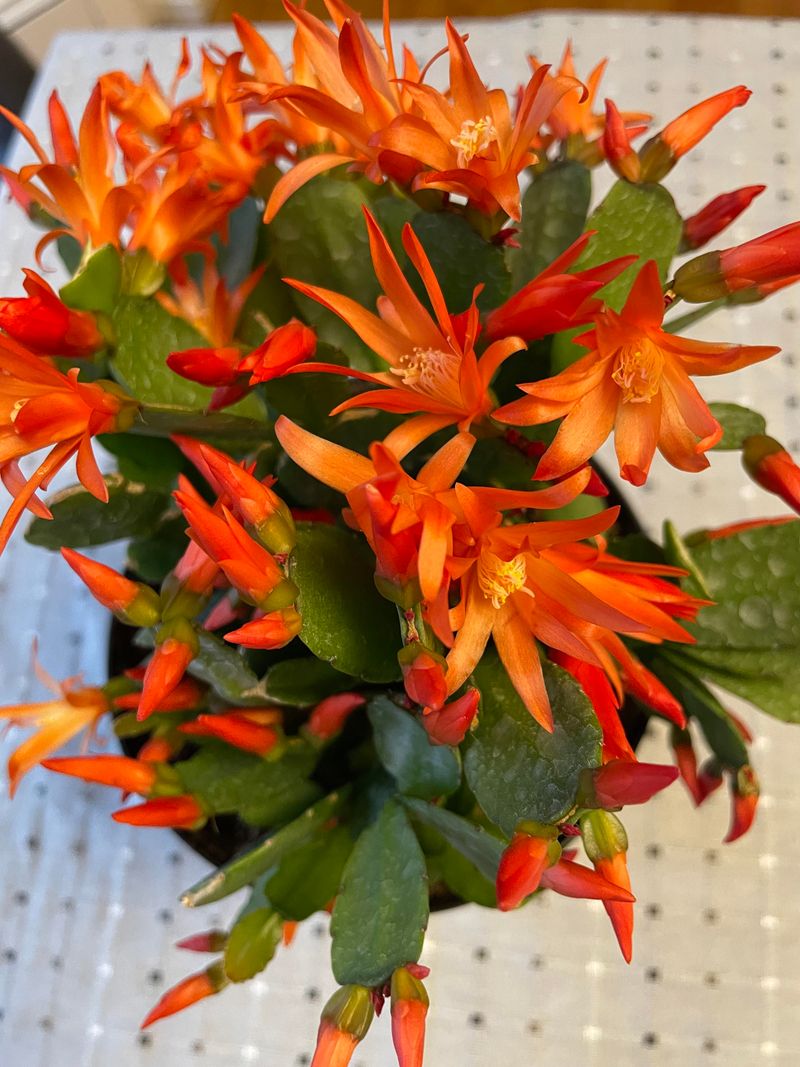
Candlelight and these warm blooms make a natural match. The flowers carry a flickering, glowing color that feels cozy on chilly evenings.
Orange shades range from soft tangerine to deep coral and salmon. They show up less often than red and pink, yet many nurseries carry them in fall, especially in mixed color displays.
Plants covered in tight buds make a smarter purchase than those already wide open. A cactus mostly in bud tends to bloom longer at home.
The trip from store to car to house can stress a plant, and open flowers often drop first, while buds usually adjust better.
Styling orange comes easily. Copper planters, terra-cotta pots, and woven baskets bring out its fiery tone, and grouping it with small pumpkins after Halloween lets the same display carry straight through Thanksgiving dinner.
Speaking of Thanksgiving, many orange plants sold in stores are Thanksgiving cacti (Schlumbergera truncata). Pointed, claw-like teeth along the stem edges give them away, and these types often bloom from November into December.
In mild parts of California, the plant can spend summer outdoors in dappled shade. Bringing it inside well before nights turn frosty keeps it safe.
Snails and slugs sometimes find outdoor plants, so a quick check of stems and the pot rim before moving it indoors helps.
That outdoor break, with its naturally cooler fall nights, often leads to a fuller bloom. Light from porch fixtures can still interrupt bud set, so a dark spot works best.
6. Soft Peach Adds A Gentle Blush
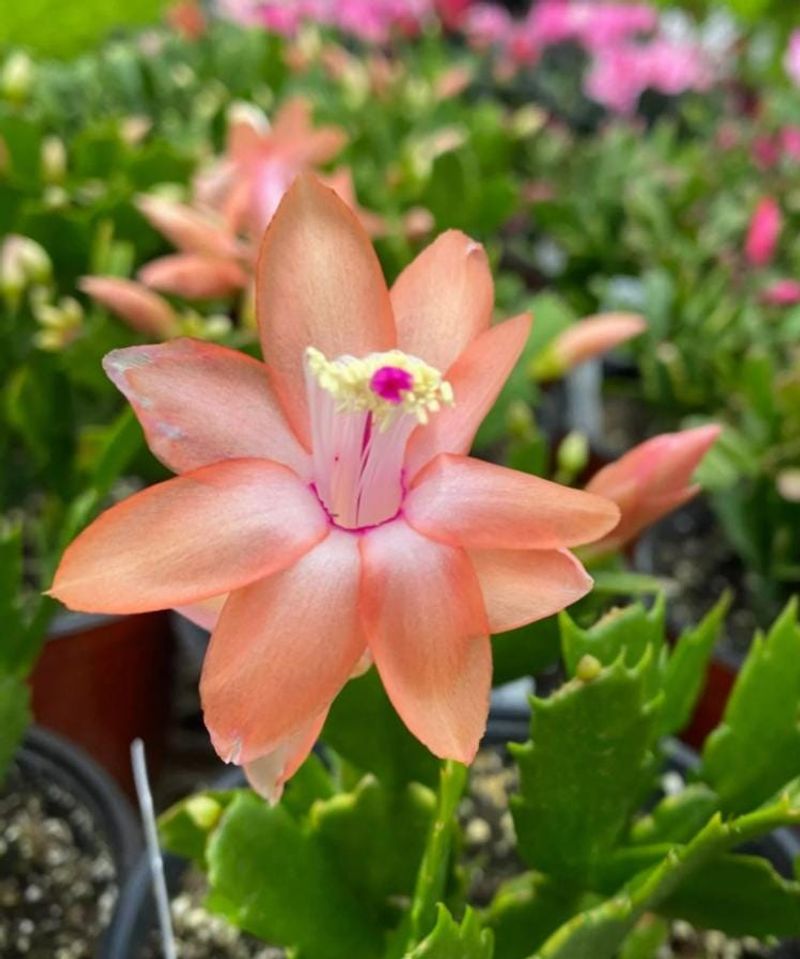
Some flowers shout, while these whisper. A peach holiday cactus carries a soft, sunset-like blush that feels warm without turning bold.
Peach and apricot shades come from many growers, though tags may read salmon, coral, or apricot. Petals often fade from a deeper center to paler tips, making each bloom look hand-painted.
Color can drift through the bloom season. Fresh flowers may look brighter, then soften as they age.
Cooler nights can deepen the pink tones, while warmer rooms lean toward a creamy apricot, and those shifts become part of the show.
A blush, sage green, or cream pot suits a peach plant nicely. It fits well in a bedroom, a bathroom with bright filtered light, or a reading nook, and it pairs gracefully with dried grasses and soft neutral decor.
The long-night rule still applies. In fall, holiday cacti need about 12 to 14 hours of darkness each night for several weeks to form buds, and even a lamp switched on in the evening can interrupt the process.
By mid-October, that nightly routine should already be underway for blooms by the holidays.
A spare room, a closet for the night hours, or a covered porch away from streetlights works well.
Bathrooms deserve one caution here, since a light flicked on late at night can disrupt bud set just as easily as a living room lamp. With steady dark nights, a peach plant should blush right on schedule.
7. Rich Purple Feels Bold And Rare
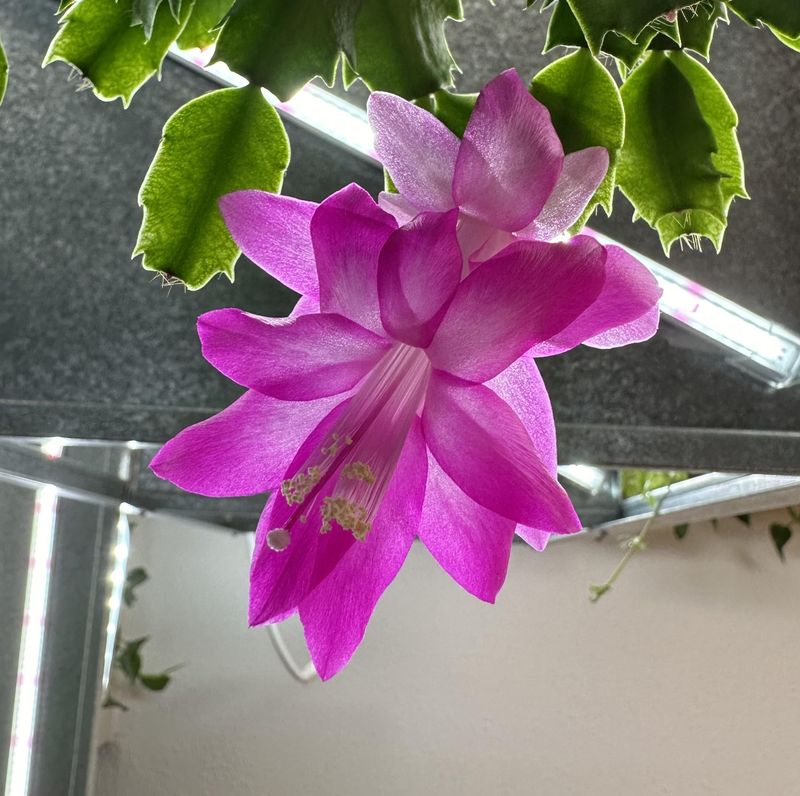
Plenty of shoppers go hunting for a purple holiday cactus and come home confused. Store tags may say purple, yet the flowers often open as deep magenta or violet-pink.
True purple, like a grape or lavender tone, is rare in Schlumbergera. Most plants sold as purple fall into rich magenta or plum-pink shades, which still look dramatic, though with a reddish rather than bluish cast.
Online listings showing bright blue or lavender plants deserve caution. Many of those images are edited, and some seed offers promise colors that simply don’t exist.
Holiday cactus seeds also rarely produce plants that match the parent’s color.
Plants or cuttings from trusted nurseries offer a far more reliable way to know what will actually bloom. A plant already in bud at the nursery shows its true color before purchase.
A magenta-purple plant looks regal in a gold, brass, or deep navy container. Set on a dark side table, the flowers seem to glow, and they match jewel-toned holiday decor such as emerald ribbons and plum ornaments.
Care for a purple-leaning plant mirrors every other color. Watering when the top of the soil dries, bright indirect light, and cool, dark fall nights cover the basics.
Repotting every few years is usually plenty, since holiday cacti tend to bloom best when slightly snug in their pots. Spring, after flowering ends, makes the best time for that job.
That bold color rewards a little patience, often returning stronger each year.
8. Pink And White Bicolor Mixes Two Looks
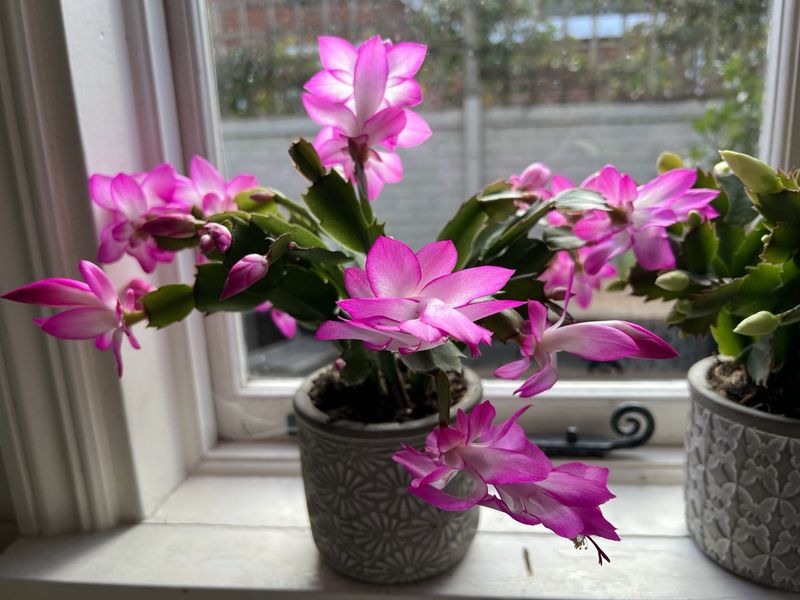
Indecision between two favorite shades has an easy fix. Bicolor holiday cacti usually carry white centers with petals edged or tipped in pink.
These plants turn up fairly often from growers, frequently mixed into fall displays. A close look shows that each bloom differs a little, with some mostly white and a hint of pink, and others mostly pink with a pale throat.
Temperature shapes the pattern. Cooler nights tend to spread more pink across the petals, while warmer rooms keep more white.
Flowers can shift as they age too, starting pale and deepening, or fading softly before they drop.
A hanging basket on a shaded porch lets trailing stems show off every bloom. Porch plants come indoors well before nights turn frosty.
Indoors, a soft gray or white pot keeps the two colors from competing for attention.
Every shade covered here follows the same basic rules. Bright indirect light, well-draining soil, and steady watering keep plants healthy, while long nights and cool temperatures in fall set buds.
After blooming, a rest of a few weeks with lighter watering helps the plant recharge. Pruning a few segments at that point, by twisting them off at a joint, encourages a fuller plant.
Pet owners have one less worry with this group. The ASPCA lists Christmas cactus as nontoxic to cats and dogs, though nibbling can still cause mild stomach upset.
With steady care, a two-toned plant tends to come back for an encore year after year.