Look Twice Before Grabbing That Giant Desert Centipede in Your Arizona Yard
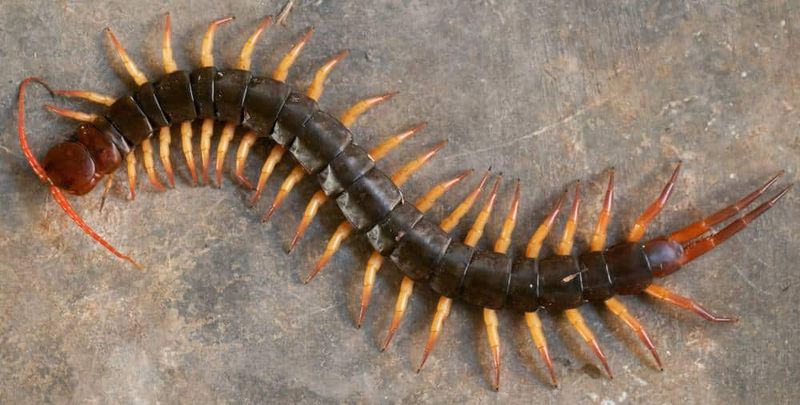
Flip over a flat rock in an Arizona yard and something long, glossy, and many-legged might race for cover. That animal is likely a giant desert centipede, and it can deliver a painful, venomous injury if someone grabs it.
It also does useful work in the yard, which makes it more than a creepy surprise. Here is how to spot one, keep your hands out of trouble, and know what to do if a sting happens.
The likely culprit is a giant desert centipede
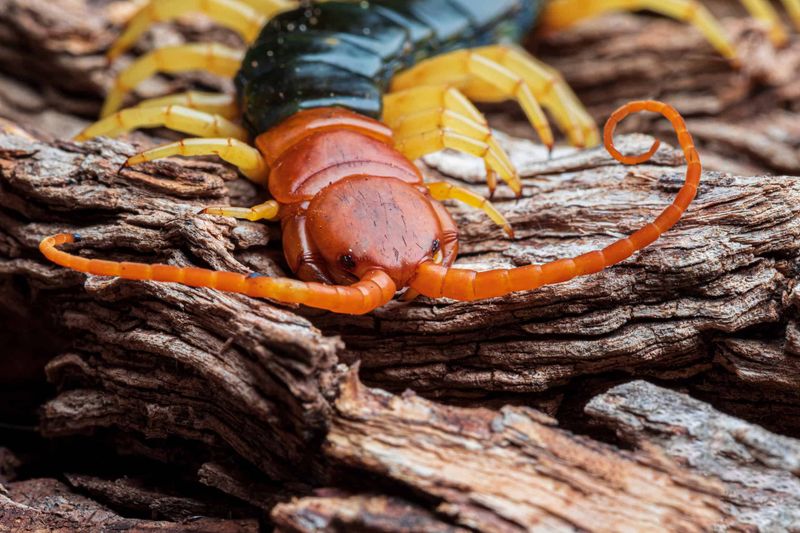
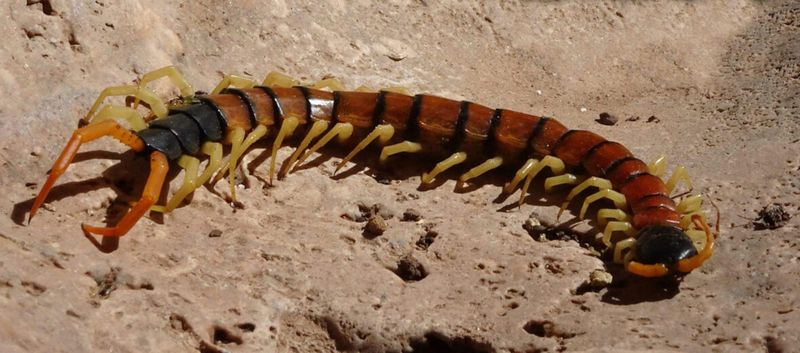
Picture a long, flat creature with a reddish-yellow body, darker blue-black bands, and a reddish-orange head. That color pattern points toward the giant desert centipede, Scolopendra heros, which lives across much of Arizona and the Southwest.
Size is another clue. Arizona Extension describes adults as often around 6 inches, though the largest can reach about 8½ inches.
Few other animals in a yard look quite like it.
Still, color and size are hints, not proof. Young centipedes, faded individuals, and related species can look different, so treat any large centipede with the same caution whether or not you can name it exactly.
One more point of vocabulary: despite the common habit of calling every crawler a bug, a centipede is not an insect. Insects have six legs.
Centipedes are arthropods in their own group, with one pair of legs on each body segment, which gives them a long, ribbon-like look. Millipedes generally carry more legs per segment and move more slowly.
Its venom-delivering structures are at the front
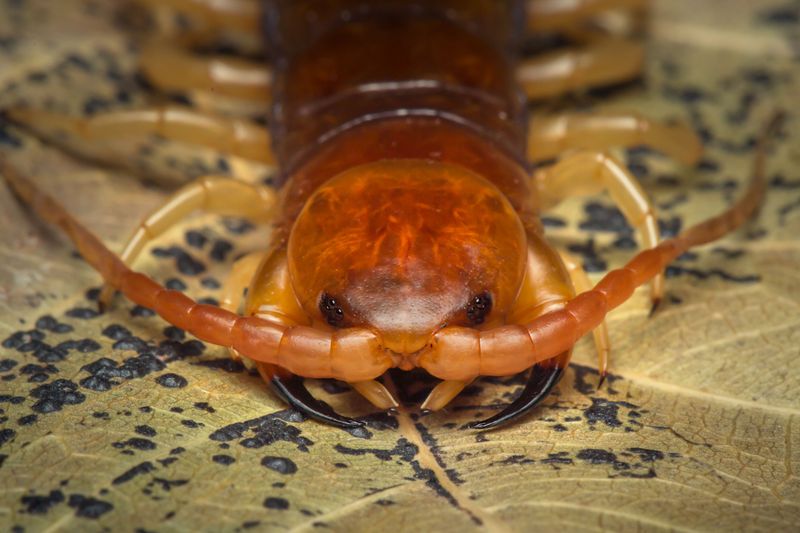
Scorpions carry their stinger on the tail. A centipede does the opposite.
Its venom-delivering structures are modified front legs, sharp and curved, tucked just behind the head.
That is why the injury gets called both a bite and a sting. Either word is common, and neither changes what matters: the animal injects venom through those front pincers, and the result can be painful.
Arizona Extension notes that these structures are sharp enough to be a real concern when the animal is handled.
Knowing where the business end sits is practical. If a centipede is on a wall or a patio, the danger zone is the head end, and a firm grip anywhere on the body still puts fingers within reach.
How the injury works says nothing about how it stacks up against another animal’s sting. Mechanism and pain are separate questions, and pain varies from person to person.
A garden sighting does not mean it is hunting you
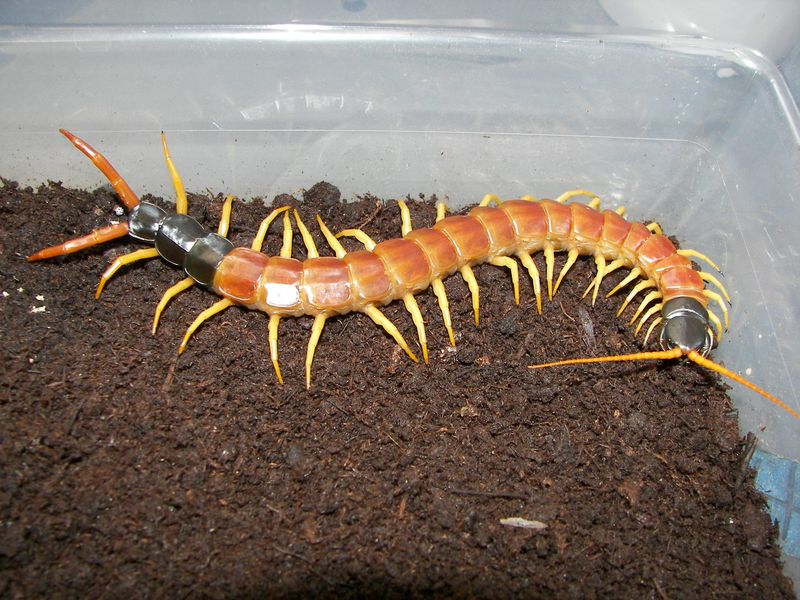
By day, desert centipedes tuck themselves under rocks, logs, bark, and leaf litter. They come out after dark to hunt, which is why most people meet one while moving a flowerpot or stacking wood.
The Arizona-Sonora Desert Museum describes them as nocturnal predators that eat other small animals. In a yard, that can mean fewer crickets, roaches, and similar pests, so a centipede may be doing quiet work for you.
Nothing about this behavior suggests it seeks out people. Arizona Extension says centipedes are not vicious unless harassed, and most injuries come from surprise contact, such as a hand landing on one or a poke from a shovel.
Your Arizona Garden Changes Every Week. Your Plan Should Too.
Gardening in Arizona changes quickly throughout the season. Every Friday you’ll receive a simple weekly plan showing exactly what to plant, prune, fertilize, harvest, and protect so you never miss the right timing.
So the calm response to a sighting is simple. Step back, give it room, and let it move on.
Treating it as a pest to chase down is unnecessary, and getting close is the very thing that raises your risk.
Keep your hands away from rocks and firewood
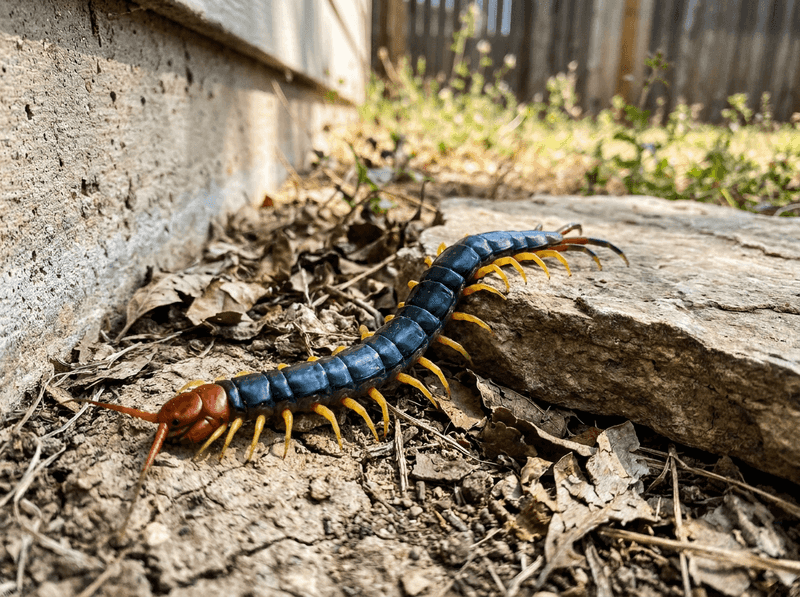
Most surprises happen where centipedes like to hide. Rock borders, pavers, woodpiles, and bark mulch all offer shade and shelter, so these spots deserve a pause before you reach in.
Lift items with a tool, tilt them away from your body, and look before you grab. Shake out gardening gloves and boots left outside overnight.
Arizona Extension cautions around firewood and rocks and warns that the sharp venomous structures may penetrate leather gloves, so ordinary work gloves are not a safe shield.
Indoors, Extension describes removing a centipede with kitchen tongs or heavy-duty gloves and a covered container. Treat that as a careful last option, not an invitation to get close.
Since a quick glance can misjudge what you are looking at, the safer move is usually to keep distance, use long tongs, and never pinch one with your fingers.
If you cannot manage it comfortably, leave the room, close the door, and deal with it when you feel ready.
Block the routes that bring centipedes inside
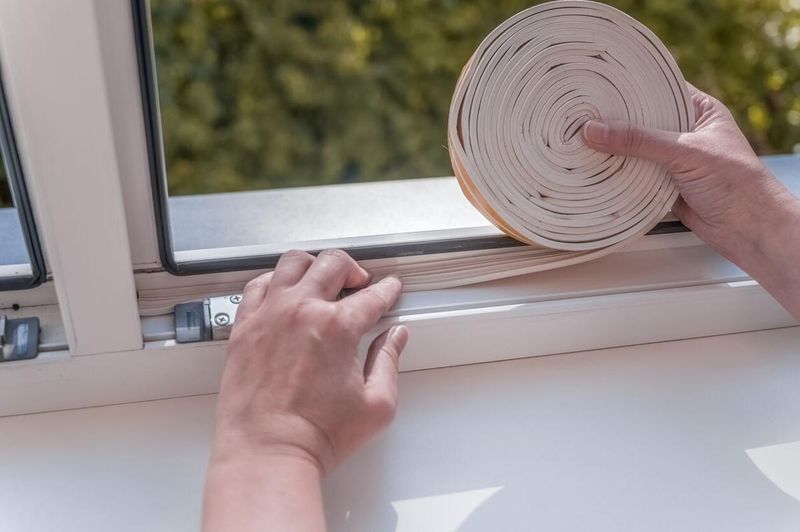
Handling a centipede is one job. Keeping them out is another, and it starts with the edges of your home.
Gaps under doors, torn screens, and worn seals are easy doorways for small crawlers.
Arizona Extension recommends maintaining screens and weather stripping and sealing visible cracks. A walk around the house with a flashlight, checking door sweeps, window frames, and places where pipes enter walls, can turn up trouble spots quickly.
Food matters too. A centipede indoors is usually following prey, so if you keep seeing them, look for other insects such as roaches or crickets.
Fixing that supply may make your home less appealing.
No sealing job is perfect, and a centipede may still wander in now and then, especially during warm months. Think of these steps as ways to cut down on encounters, not a guarantee.
Outdoors, where the animal is doing its predator work, there is no need to treat the whole yard as a problem.
Know when a suspected sting needs medical attention
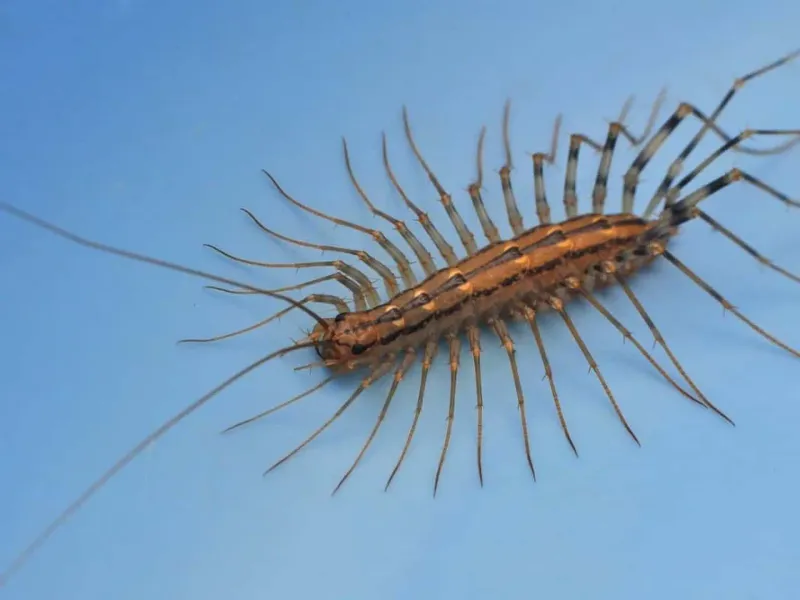
Say a centipede does get you. First, stay calm and step away from the animal so it cannot sting again.
Wash the spot and note the time.
According to the Arizona Poison and Drug Information Center, many suspected centipede stings can be managed at home. Severe pain, or pain that lasts longer than 12 hours, warrants evaluation at urgent care or an emergency department.
The Poison Center is also a practical resource if you are unsure what to do. You can reach poison guidance at 1-800-222-1222, and it is worth saving that number in your phone before you ever need it.
Do not try to judge your own situation by what happened to someone else. Pain differs between people, and a story from a neighbor or a single published case does not tell you what to expect.
If something feels wrong, or you cannot be sure the culprit was a centipede, ask for guidance rather than waiting it out.
A centipede sting cannot be ranked against every scorpion sting
The original headline claimed a centipede bites harder than a scorpion stings. That does not hold up. “Harder” could mean sharper pain, longer pain, or greater medical danger, and those are different things.
Pain is personal, too. A published case report on centipede envenomation describes significant pain in one patient, but a single case cannot show what is typical or rank it against another animal.
Arizona Extension likens the bite to a bee sting.
Scorpions also need to be named by species. The Arizona Poison Center says a bark scorpion sting can cause immediate pain, numbness, and tingling, and some cases can become severe, so it calls for a call for guidance.
That is a separate risk from a centipede sting, not an interchangeable one.
So the practical message is plain: avoid contact with both, and call 1-800-222-1222 when you need guidance.
A creature can look fearsome and still mostly want to be left alone.