How Arizona Gardeners Protect Citrus From an Early Cold Snap
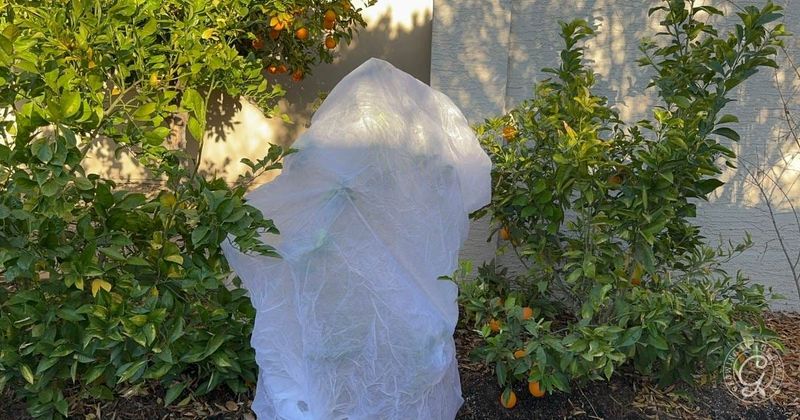
A forecast of 33 degrees can make a backyard citrus grower lose sleep. Lemons, oranges, and grapefruit are a proud part of many Phoenix and Tucson yards, but a sudden cold night can damage fruit and new growth.
A few simple habits can reduce the harm when the cold is brief and calm. Here is what works, what does not, and where home protection runs out.
How cold is your yard at the tree?
Your phone may say 36 degrees, but the number that counts is the one at your tree. Forecasts often come from an airport or a regional station, and a backyard can run colder.
Cold air is heavy, so it settles into low spots, swales, and corners where it cannot drain away.
The simplest fix is a cheap outdoor thermometer. University of Arizona frost guidance recommends taking temperature readings in your own yard and comparing them with the reported temperatures.
After a few cold nights, you will learn whether your yard tends to run the same as the forecast or noticeably colder.
Place the thermometer near the canopy, away from walls and pavement that hold heat or reflect it. Check it near dawn, when the coldest air usually arrives.
Jot the readings in a notebook or your phone so you can plan ahead next time a cold snap is announced.
A tree’s age and acclimation change its risk
A forecast low is only one piece of the puzzle. Citrus type and variety matter, and so do the tree’s age, health, and the spot where it grows.
How long the cold lasts also changes the outcome, so one night just under a number is not the same as several hours below it.
Young trees have less wood and fewer reserves, so they tend to be more vulnerable. Tender new growth is the softest tissue of all.
According to Arizona frost guidance, cold that arrives after a warm spell can do more harm because plants have not had time to acclimate.
Hardiness comparisons exist. Kumquats and Satsumas are among the hardier edible types, while lemons and limes are among the least tolerant, as noted in the university citrus cold publication.
Treat those rankings as rough guides, not guarantees. A healthy, well-sited lemon may fare better than a stressed one in a cold pocket.
Keep citrus from becoming drought-stressed
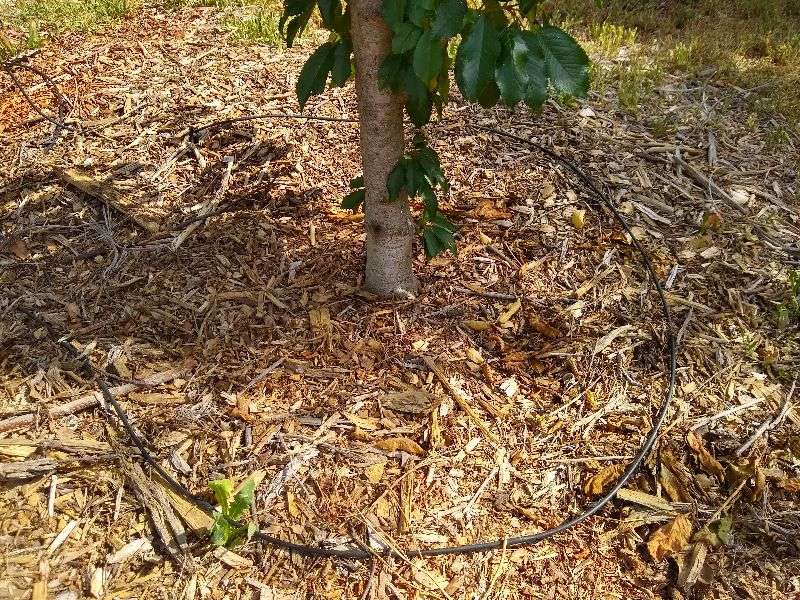
Steady, ordinary watering is one of the quiet ways to prepare for cold. Plants that are short on water are more vulnerable to frost injury, so a tree that has been dry for weeks starts the cold night at a disadvantage.
Think of this as routine care rather than a last-minute move. Following the Arizona citrus irrigation guide to keep the root zone adequately moist through the cooler months helps avoid drought stress.
Winter needs are lower than summer needs, so adjust the schedule rather than switching it off.
This does not mean flooding the soil before every cold night. Soaking a tree repeatedly does not replace a cover, and overwatering brings its own problems.
Your Arizona Garden Changes Every Week. Your Plan Should Too.
Gardening in Arizona changes quickly throughout the season. Every Friday you’ll receive a simple weekly plan showing exactly what to plant, prune, fertilize, harvest, and protect so you never miss the right timing.
Watering is also separate from wrapping or covering, which are different jobs covered next. Keep a simple rhythm, check soil moisture a few inches down, and let the tree enter the cold evenly hydrated.
A ground-reaching cover helps protect a small canopy
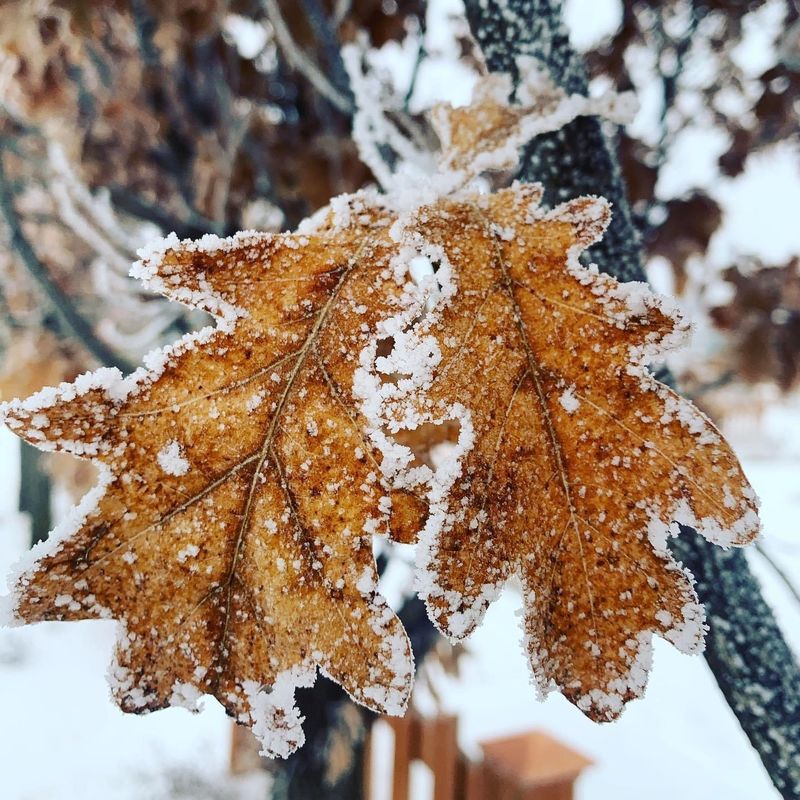
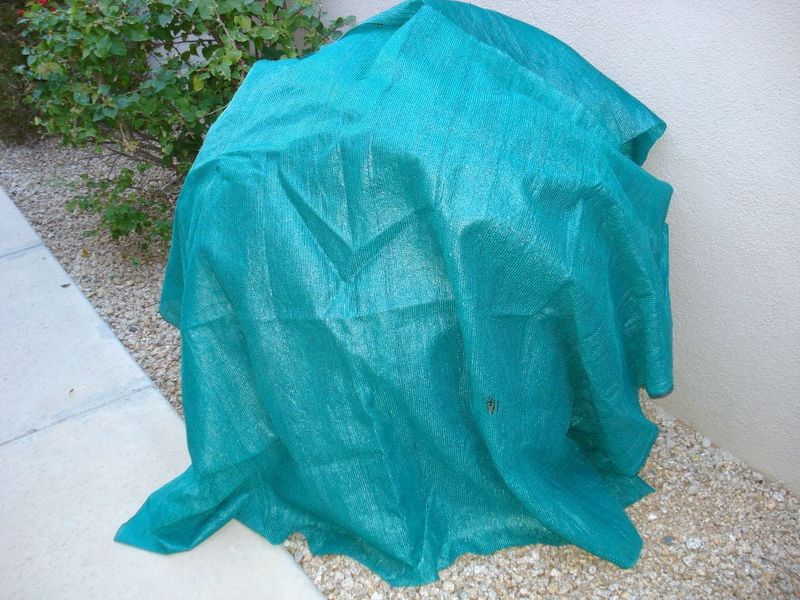
For a small tree on a frost-prone night, a cover can conserve warmth. Use cloth or paper such as blankets, quilts, or burlap, not plastic.
University citrus guidance mentions blankets for small trees as a way to hold in daytime heat.
The detail that matters most is length. Drape the cover all the way to the ground so it traps heat rising from the soil.
A blanket tossed over the top and left short does little. If you can, set stakes or a light frame so the fabric does not rest on the leaves.
Put the cover on in late afternoon, before the day’s warmth escapes. According to Arizona frost protection advice, ordinary sheets and blankets should come off during the day.
Fabrics and weaves vary, so no cover can promise a certain temperature gain, and it will not rescue a tree in every freeze.
A trunk wrap protects the stem, not the canopy
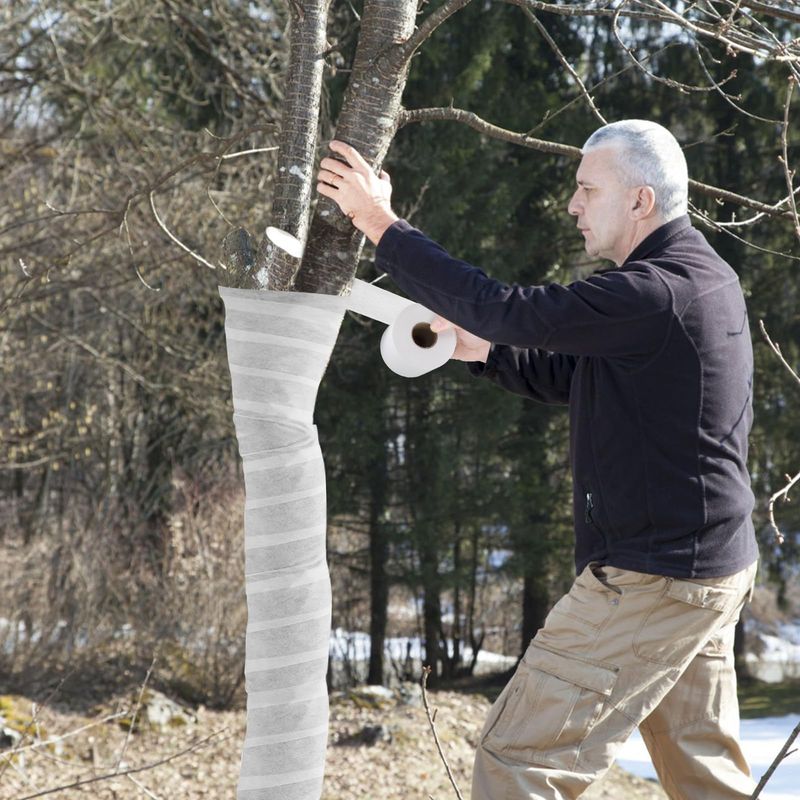
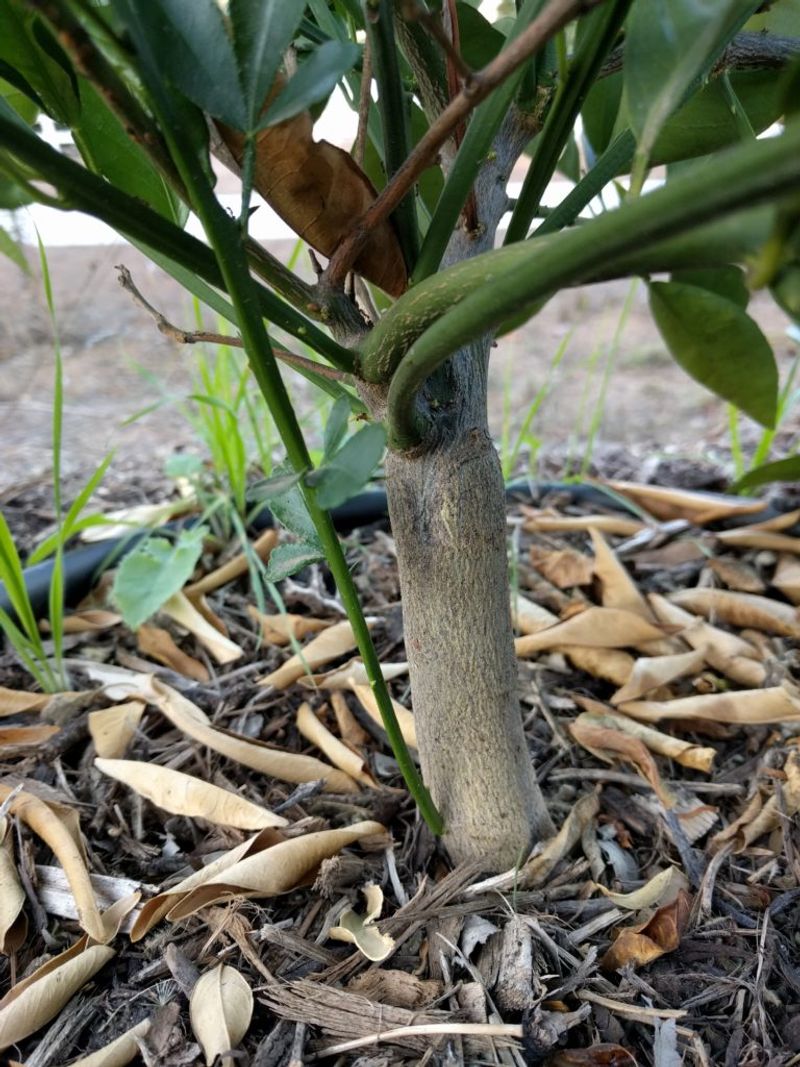
Wrapping a trunk is a different job from covering a tree. University of Arizona frost guidance describes wrapping young citrus trunks loosely with layers of weatherproof paper or cloth to protect the vital stem area.
That stem area matters because it is the foundation of a young tree. If branches are nipped, a healthy trunk gives the tree a chance to regrow.
Still, the wrap does nothing for leaves, flowers, or fruit above it.
Keep the layers loose so the trunk can breathe, and secure the wrap without tight binding. Start low and work upward along the stem.
Then be honest about what you have done: the canopy is still exposed. On a night when you are worried about foliage or fruit, a ground-reaching cover on a small tree is a separate step, and exposed fruit may need to be picked.
Think of the wrap as a stem guard that works alongside other care, not a replacement for it.
Harvest exposed lemons and limes before a hard freeze
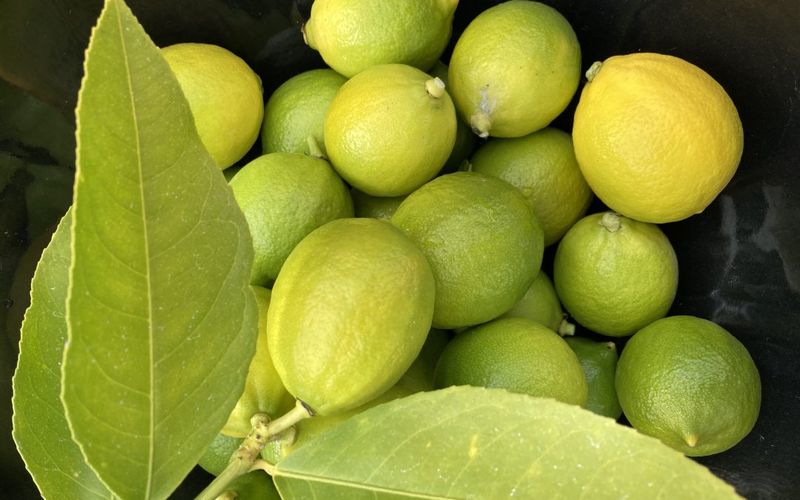
Fruit can be saved even when the tree itself is not covered. Picking is a separate protection step, and it is often the simplest one.
Arizona gardening guidance for Pima County says exposed lemons and limes on the upper and outer parts of the tree can be damaged around 28°F. It recommends harvesting them before a hard freeze, as described in the December gardening guide for Pima County.
Read that number carefully. It is a cue about fruit on those exposed branches, not a temperature at which citrus trees fail.
Tree injury depends on variety, how long the cold lasts, acclimation, and site, so 28 is not a magic line for every tree.
If a hard freeze is on the way, walk the tree with a basket and pick the lemons and limes at the top and edges first. Fruit tucked deep inside the canopy is more sheltered.
Then you can juice, zest, or share what you picked.
Home protection has limits in a prolonged freeze
Frost and freeze are not the same situation. An Arizona frost is often brief and calm, and protection attempts are often successful.
A windborne freeze can last much longer, and then home measures are generally not very successful, according to the university citrus cold publication.
Wind pulls away trapped warmth and can pull covers loose. Many days of cold also wear down any extra heat a cover or light might hold.
So covers, lights, and other tricks should never be treated as a promise.
Canopy sprinkling is a specialized method, not an easy shortcut. The citrus guidance says water must flow without stopping through the frost and stay on until air temperatures rise above 37°F.
Ice buildup can break limbs. Spraying on and off is not recommended.
Frost guidance from the university also describes a brief trickle at the tree base, but that is a different technique with different instructions, so do not blend the two into a casual overnight watering habit.
Wait for spring growth before pruning freeze damage
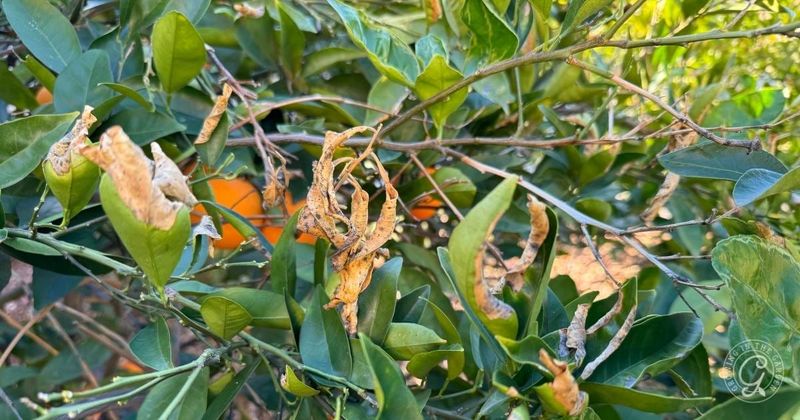
After a freeze, brown leaves can tempt you to grab the pruners. Resist.
Citrus damage is hard to judge right away, and the tree often needs time to show which branches are truly hurt.
Arizona guidance says to wait for spring growth to reveal the extent of the damage before pruning, as noted in the university citrus cold publication. Cutting too early can remove wood that is still alive.
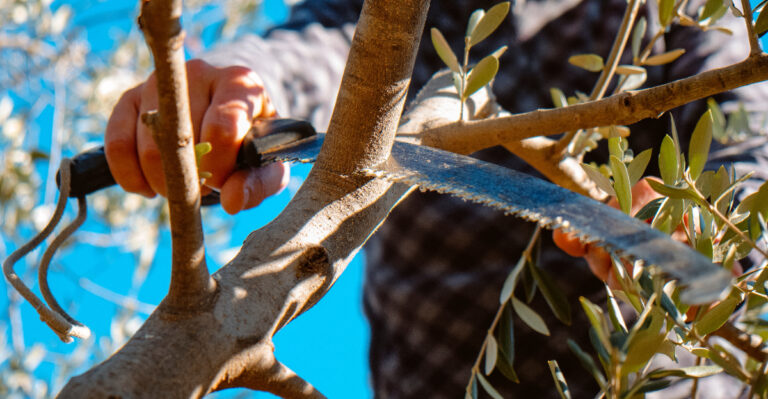
Pruning in cold months can also push tender growth that is vulnerable to the next cold night, and the citrus pruning guidance advises against extensive pruning from November through January.
Leave damaged leaves on for now, since they can offer a little shelter. When buds swell and new shoots appear, trim back to where growth starts.
Cover a small tree, wrap a young trunk, pick the exposed fruit, and keep up the watering, and you give your citrus a fair chance. The cold still gets a vote.