Why California Plants May Struggle When Santa Ana Winds Arrive
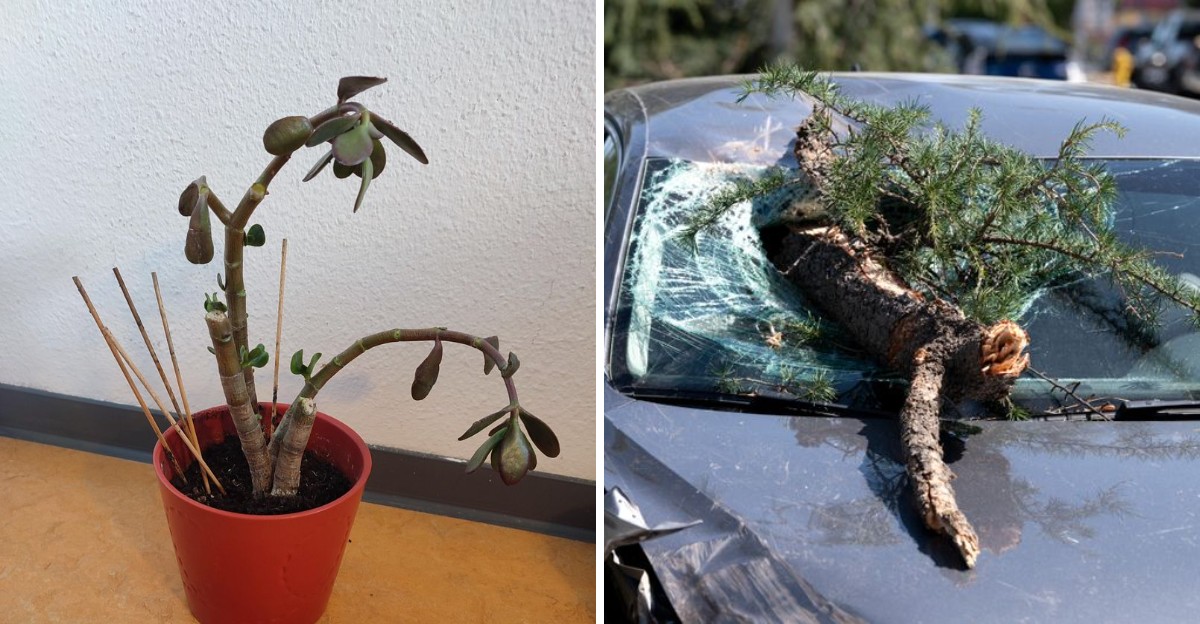
Two identical shrubs can react to the same windy day in different ways. One ends the afternoon looking scorched and ragged, while the other, a few feet away, barely seems to notice.
The difference often comes down to a few hidden factors that gardeners overlook until damage appears.
Southern California’s dry seasonal winds arrive with a particular combination of conditions that tests plants from leaf tip to root.
Some effects show up within hours. Others take days to reveal themselves, long after the gusts have passed.
Understanding why certain plants struggle makes protecting them simpler, and most of the solutions take little time or money.
A bit of foresight can keep the garden green through the roughest stretch of the season.
1. Low Humidity Pulls Water From Leaves
Chapped lips within minutes of stepping outside during a Santa Ana offer a hint of what plants experience.
Humidity during these winds can drop into the single digits, drier than many deserts on an ordinary day, and plants have no water bottle to reach for.
Leaves carry tiny pores called stomata that let water vapor escape. In normal weather, the air around a leaf holds some moisture, so water leaves slowly, while bone-dry air acts like a sponge, pulling moisture from foliage far faster.
Wind compounds the problem. Moving air sweeps away the thin layer of humid air that normally hugs each leaf, and fresh dry air keeps replacing it, so the leaf rarely gets a break.
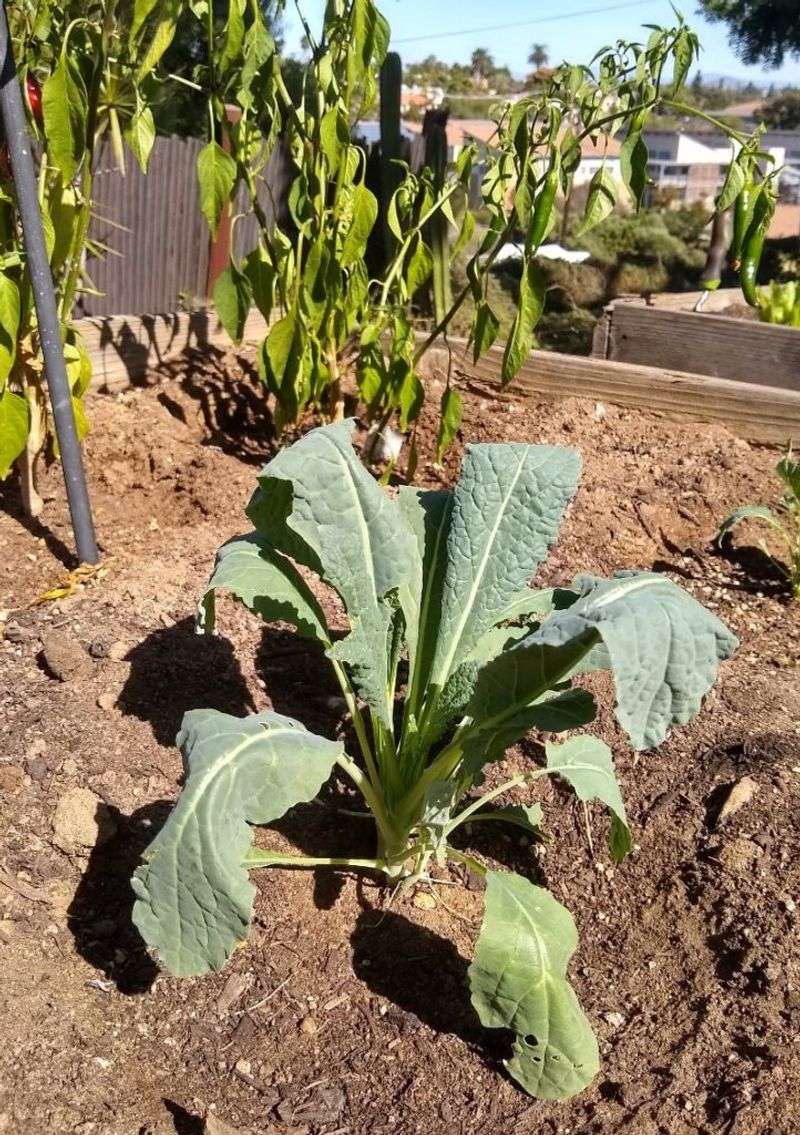
Soft, thin leaves on hydrangeas, impatiens, and young vegetables lose water fastest. Leafy herbs such as basil and cilantro often droop first on patios.
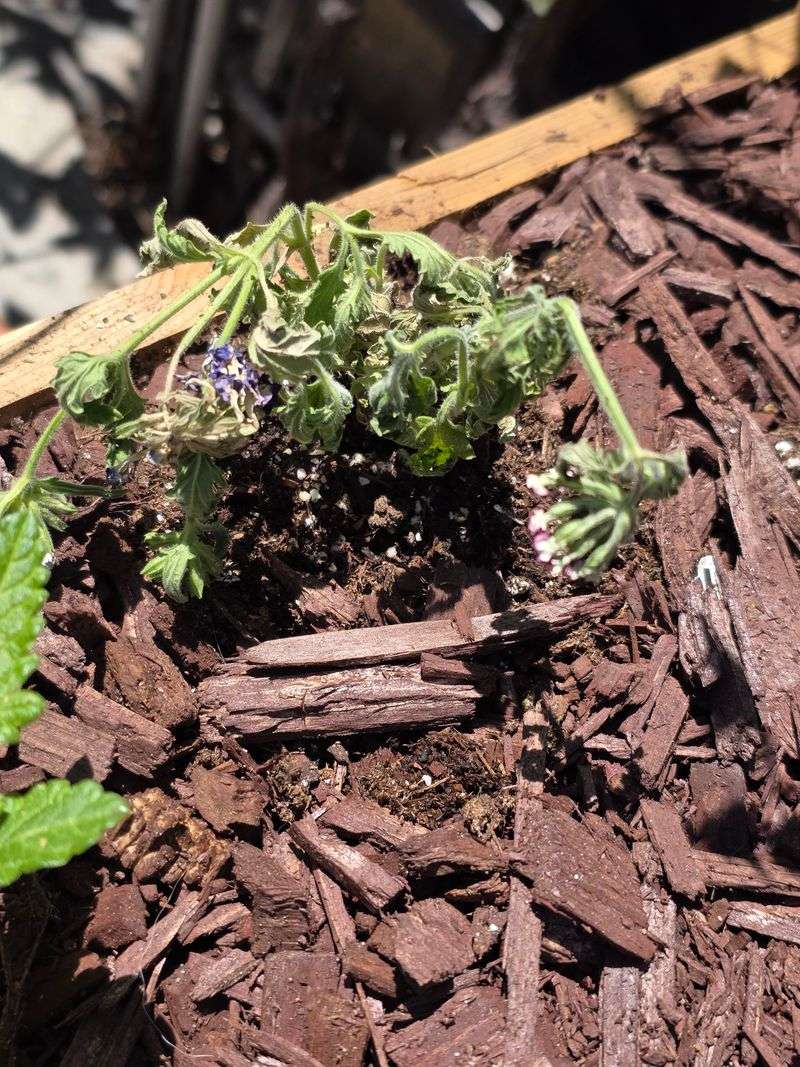
Plants defend themselves by closing their pores, which helps for a while yet also slows the cooling that keeps leaves from overheating. Midday wilting can appear even when soil remains damp.
The best defense begins a day or two before the winds arrive. The National Weather Service issues wind advisories and Red Flag Warnings ahead of strong events, giving gardeners a useful head start.
A deep watering lets plants enter the dry spell fully hydrated. A well-watered plant tolerates drying air far longer than one that started the event already a little thirsty.
2. Hot Dry Air Overwhelms Roots
A bucket brigade working against buckets full of holes captures the problem well. During a Santa Ana, roots work hard to pull water upward, yet leaves lose it faster than roots can deliver.
Water moves from soil into roots, then up through stems to the leaves, and under calm, mild weather that flow stays balanced. Hot, dry wind accelerates water loss so much that the supply chain simply can’t keep pace.
Shallow-rooted plants struggle most. Lawns, annual flowers, and many vegetables keep roots near the surface, where soil dries first.
Deep-rooted trees and established native shrubs usually cope better, since they can tap moisture stored lower down. Natives adapted to dry summers often handle these winds better than thirsty ornamentals.
Watering a little every day rarely solves the problem. Light sprinkles wet only the top inch, encouraging roots to stay shallow and weak, while UC ANR guidance favors deep, less frequent watering that soaks the full root zone.
Your California Garden Changes Every Week. Your Plan Should Too.
Gardening in California changes quickly throughout the season. Every Friday you’ll receive a simple weekly plan showing exactly what to plant, prune, fertilize, harvest, and protect so you never miss the right timing.
Before a wind event, a slow, deep soak benefits trees and shrubs. A drip line or a hose on a trickle works well, since water sinks in rather than running off.
Moisture reaching 12 to 18 inches deep suits shrubs, with trees benefiting from even deeper watering.
A long screwdriver pushed into the ground afterward confirms the result. When it slides in easily, the water reached far enough to support roots through the dry, gusty days ahead.
3. Gusts Tear Leaves And Snap Branches

A sharp snap from the yard at night often marks a branch giving way. Santa Ana gusts can top 60 miles per hour in canyons and passes, and even sturdy trees feel the strain.
Strong wind pushes on every leaf like a tiny sail. Large, soft leaves on bananas, birds of paradise, and philodendrons often shred into ragged strips, while brittle trees, including some eucalyptus and fast-growing ornamentals, tend to drop limbs as gusts twist and bend them.
Top-heavy or poorly pruned trees face higher risk. Branches with narrow, tight forks can split apart, and brittle or cracked limbs often fall first, sometimes onto roofs, cars, or fences.
Prevention relies mostly on good pruning done in calm weather. Removing brittle, weak, or crossing branches and lightly thinning dense canopies lets wind pass through.
Topping is best avoided, since it produces weak new growth that breaks easily later, and large trees near the home belong with a certified arborist.
Windbreaks help considerably too. A row of sturdy shrubs, a fence with small gaps, or shade cloth stretched on a frame slows wind rather than stopping it outright, with shrub windbreaks planted beyond the first five feet of the house in fire-prone areas.
Solid walls can actually create swirling turbulence on the far side.
After a storm, torn branches benefit from clean cuts just outside the branch collar, made with tools wiped with household disinfectant, so wounds can seal properly and the tree can recover.
4. Wind Burn Browns Leaf Edges
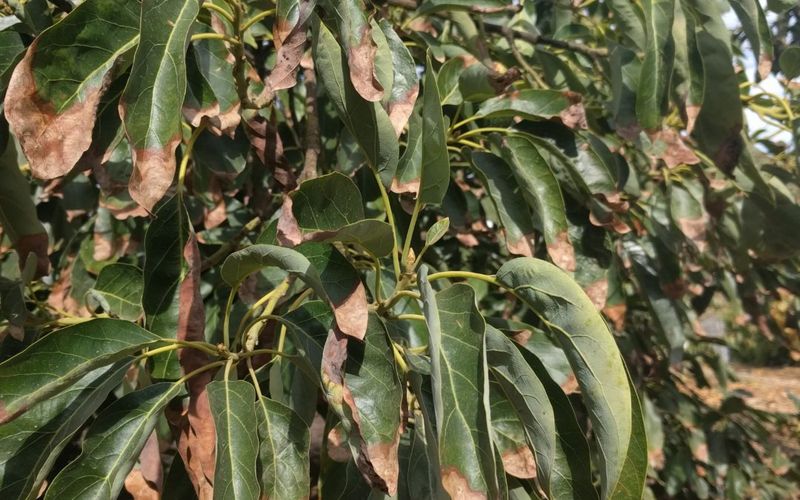
Crispy, brown margins often look as though someone held a lighter to the edge of each leaf. The center stays green, while the edges turn tan or dark brown and crumble at a touch.
Scorch happens because leaf edges and tips sit farthest from the plant’s water supply.
When dry wind pulls moisture out faster than it can be replaced, those outer cells dry first, and once they lose too much water, they can’t recover.
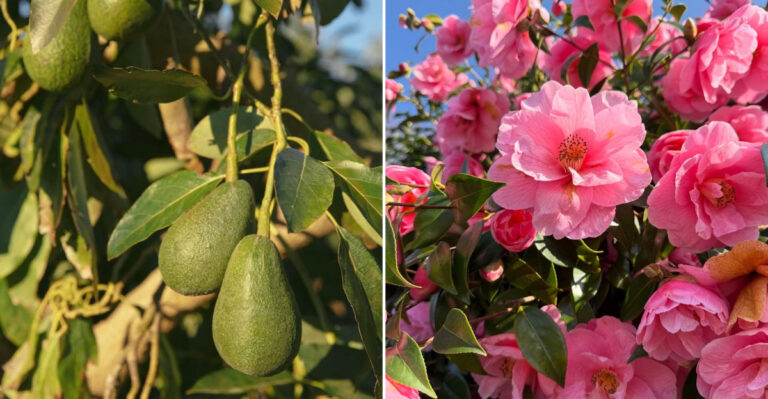
Avocados, Japanese maples, camellias, and many tropical plants show wind burn quickly. Damage often concentrates on the windward side, the side facing the gusts.
Plants tucked behind a house or wall frequently look untouched, which offers a helpful clue about placement.
Stripping off every brown leaf right away is best avoided. Damaged leaves still shade inner branches and help the plant make food, and UC ANR suggests waiting until weather cools and new growth appears before trimming what’s truly spent.
Heavy fertilizing after wind burn can backfire too, since feeding pushes tender new leaves that may scorch in the next event.
A steady, deep watering schedule supports recovery far better.
For future seasons, sensitive plants do best in sheltered spots or under temporary shade cloth on windy days.
Salty soil worsens scorch on avocados and citrus, so an occasional deep soak that flushes salts below the root zone helps them withstand the next round of wind.
5. New Plantings Lack Anchoring Roots
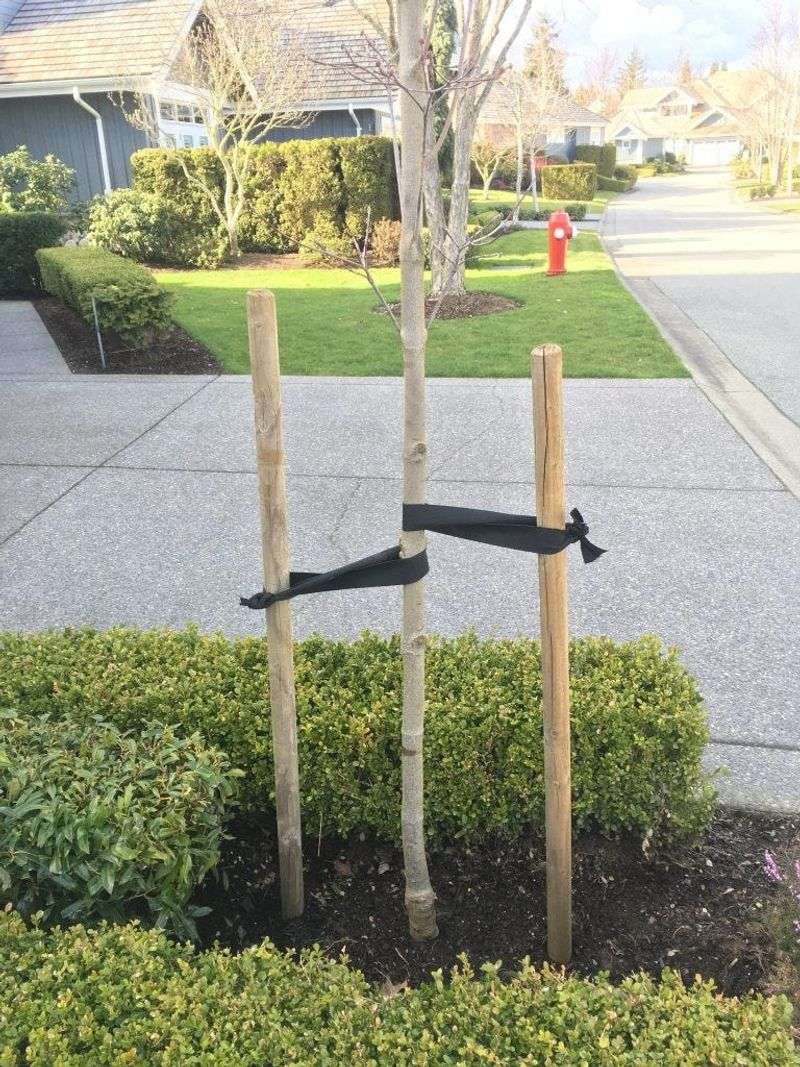
A common misstep involves planting a new shrub in October and assuming it’s ready for anything.
Fall makes a great planting season in California, yet it overlaps with Santa Ana season, leaving fresh transplants among the most vulnerable plants in the yard.
Young plants still carry roots shaped like their nursery pots, not yet spread into surrounding soil. Water in that small root ball runs out quickly, while the native soil around it may stay dry.
Potting mix in the root ball also drains faster than garden soil, so the bed can feel damp while the root ball runs dry.
Weak anchoring adds another problem. Strong gusts can rock a new tree back and forth, tearing fine roots and loosening the soil, and some young trees lean or tip over completely.
Staking helps when done correctly. Two stakes placed outside the root ball, with soft, flexible ties set low on the trunk, let the tree sway a little, since gentle movement builds a stronger trunk.
Stakes come off after about a year so they don’t rub or girdle the bark.
Watering matters even more. Daily checks during windy weather, with water aimed directly at the root ball, keep new plants from drying out, and a small soil basin around each plant holds water where it’s needed.
Shade cloth or a temporary burlap screen on the windward side gives tender newcomers a calmer place to settle in. Even drought-tolerant natives need this extra care during their first season.
6. Containers Dry Out In Hours
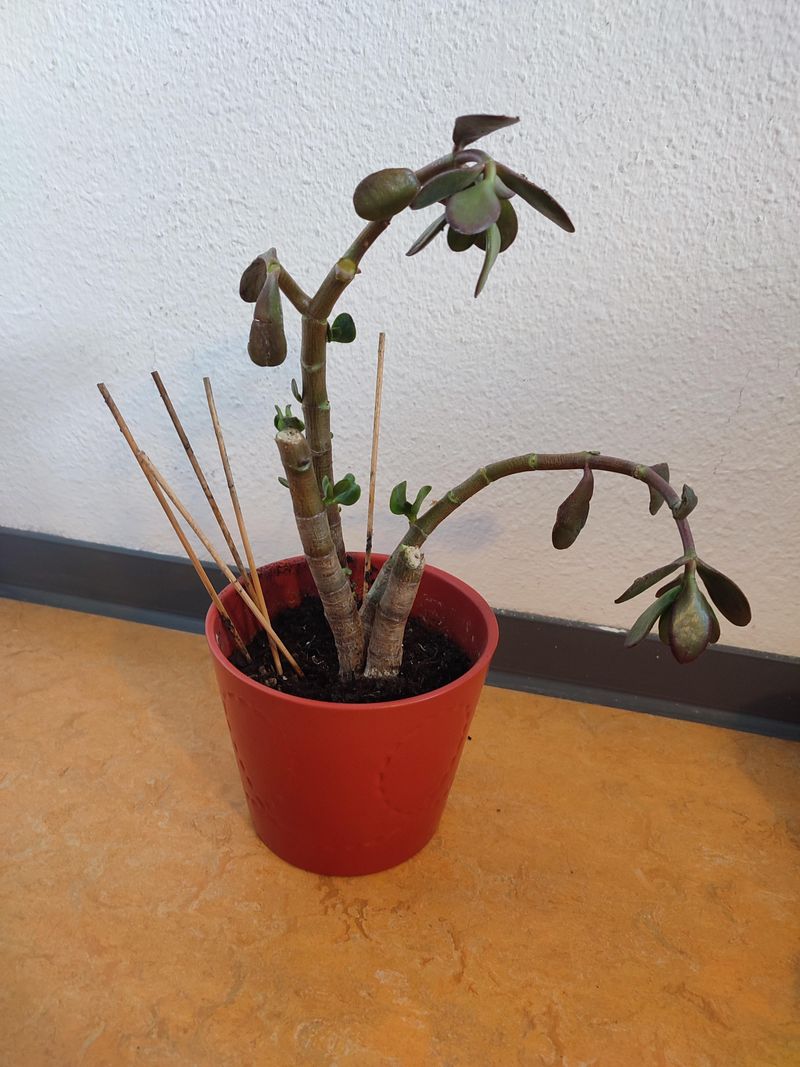
Patio pots watered at breakfast can look frazzled by lunch during a dry wind, with basil flopped over as if it had run a marathon. Container plants can go from fine to wilted within just a few hours.
Pots hold only a small amount of soil, so little water stays in reserve.
Wind strikes the container walls as well as the leaves, warming and drying the whole thing, and terra cotta loses moisture through its sides, speeding the process further.
Dark plastic pots absorb heat in the sun, which can stress roots. Hanging baskets fare worst, since air flows around them from every direction.
Moving containers before the wind starts offers the easiest fix. Grouping them against a wall, under a patio cover, or on the sheltered side of the house lets clustered pots shade one another and create a slightly more humid pocket of air.
Thorough watering until water drains from the bottom comes next, followed by an afternoon check.
During strong events, some pots may need water twice a day. Setting light pots inside larger ones or adding a layer of mulch on top helps hold moisture.
Hanging baskets do best lowered to the ground so they can’t swing, spin, or crash onto the patio. Saucers left under pots can also hold a small reserve during the event, though emptying them afterward keeps roots from sitting in water.
7. Soil Dries Faster Than Usual
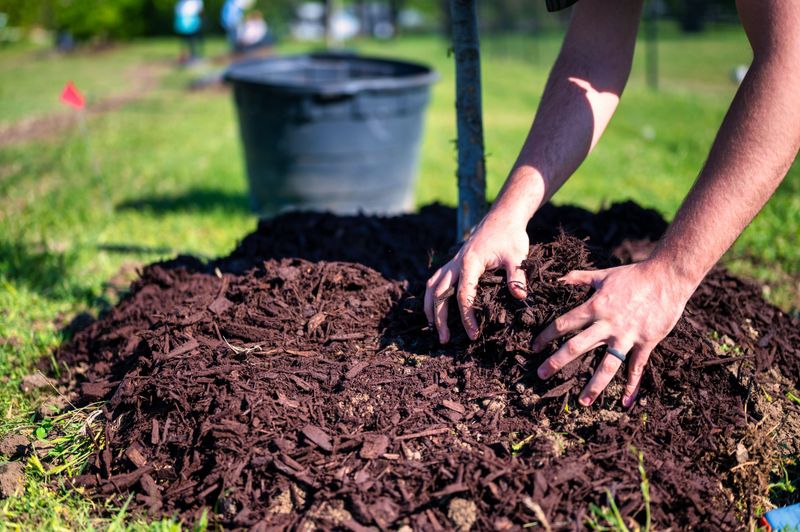
Soil in an unmulched bed can puff up like flour after a windy day. Wind dries more than plants, since it also pulls moisture from the ground they depend on.
Moving air draws moisture from the soil surface the same way it draws water from leaves. Bare soil exposed to sun and wind loses water quickly, and the top few inches can turn dusty within a day.
Sandy soils drain and dry fastest, while clay soils may crack and pull away from roots.
Mulch works like a protective jacket for soil. A layer of wood chips, shredded bark, or other organic material shields the surface from wind and sun, and UC ANR recommends spreading it about 3 to 4 inches deep around trees and shrubs.
It slows evaporation, keeps roots cooler, and reduces weeds that compete for water. Coarse wood chips also stay put better in gusts than light, fluffy mulches such as straw.
Keeping mulch a few inches from trunks and stems matters, since piling it against bark traps moisture and invites rot or pests.
In fire-prone areas, Zone 0 rules approved this year exclude bark mulch and wood chips within five feet of the house, so gravel or bare soil fills that strip instead.
Watering before mulching locks moisture underneath. After the wind passes, a trowel dug a few inches down reveals true soil dampness, since surface dust can mislead while the deeper layer tells the real story.
8. Dust Coats Leaves And Blocks Light
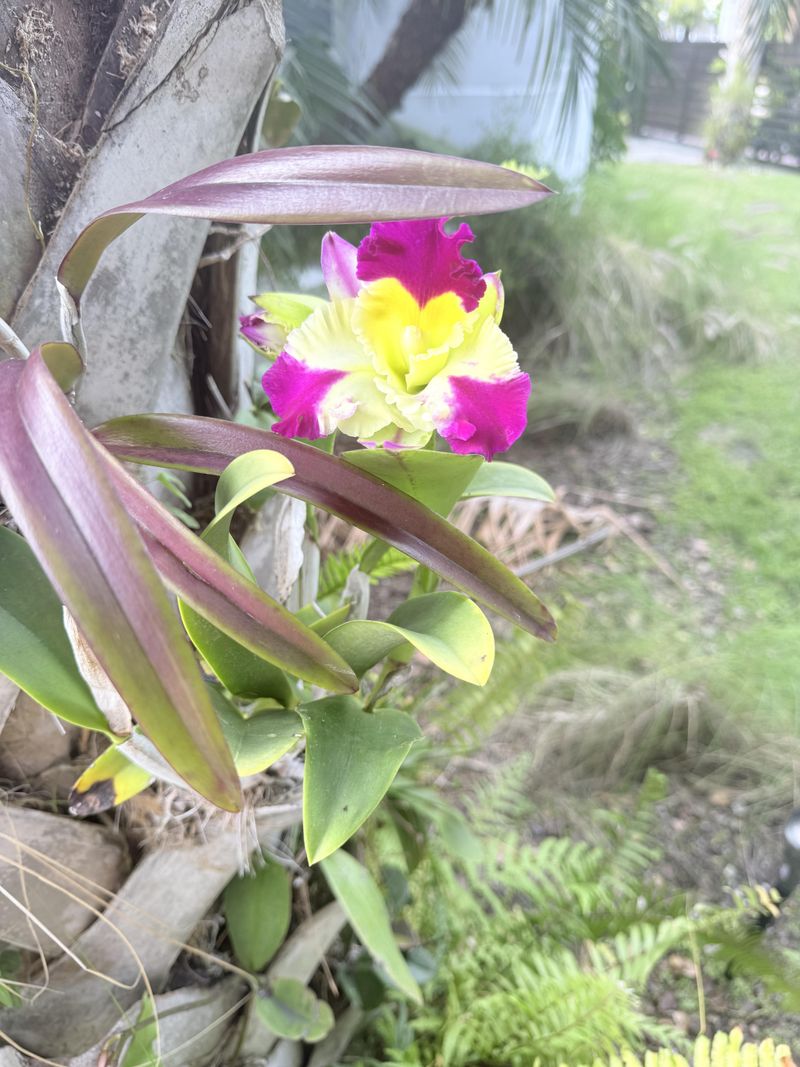
A finger run across a leaf after a long Santa Ana often comes away gray. Strong winds pick up dust, ash, and fine debris and plaster it onto everything in their path, leaving plants coated in grit.
Leaves need sunlight to make food through photosynthesis. A thick film of dust acts like a dirty window, cutting the light that reaches the leaf, and it can also clog surface pores and add a bit of heat stress.
Dusty conditions tend to invite pests as well. Spider mites thrive on dry, dusty plants, and UC IPM notes that dust can worsen mite problems.
Tiny speckles or fine webbing on leaf undersides signal their presence. Mite damage often shows up a week or two after a wind event, so a follow-up check pays off.
The fix is refreshingly simple. Once the wind calms, a gentle rinse with a hose on a soft spray setting washes foliage clean, ideally in the morning so leaves dry before evening.
Spraying both tops and undersides removes dust and knocks off mites at the same time.
A hard jet of water is best avoided, since tender leaves can tear. For potted plants on patios, a damp cloth works well.
After smoky fire weather, rinsing edible crops before eating them makes a smart habit, and leafy greens deserve an especially thorough wash. A quick shower helps the garden shake off the storm and return to steady growth.