That Webby Mess Covering California Trees This Fall May Not Be A Spider Problem
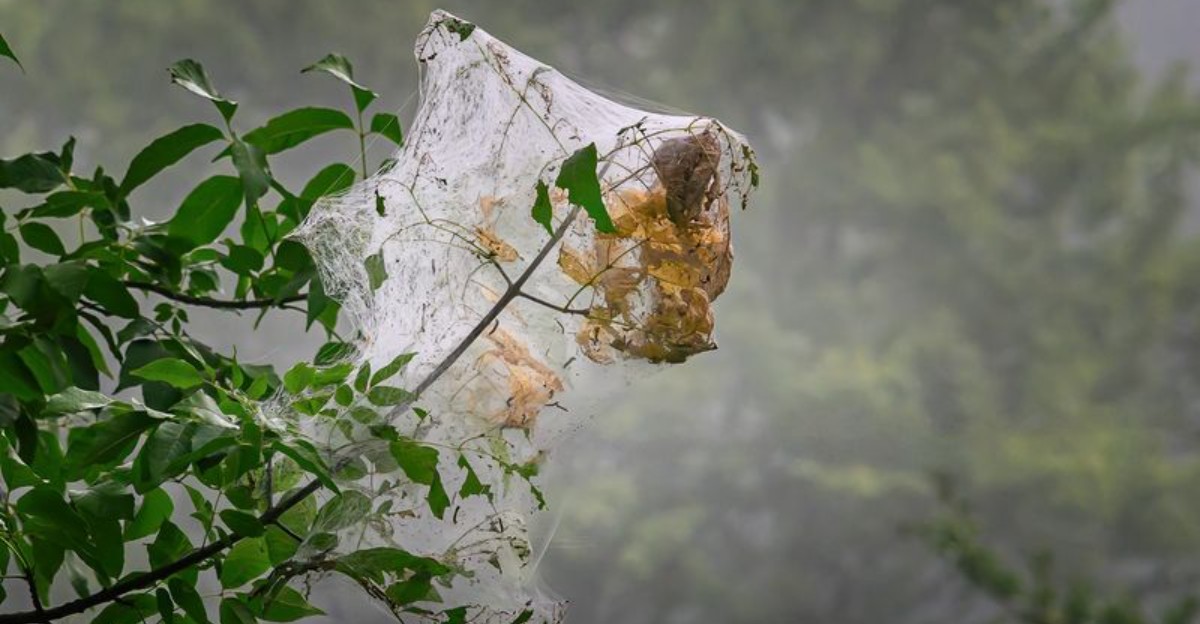
Spotting thick, silky webs draped over tree branches this fall can feel a little creepy. Most folks jump to one guess right away, thinking spiders have taken over the yard.
But that sticky mess wrapped around leaves and twigs is usually the work of something else entirely. Tiny caterpillars called fall webworms build these tents to feed and stay safe while they grow.
They show up across many parts of California once the weather cools down. The good news is that these webs, while ugly, rarely cause lasting harm to healthy trees.
Learning what these pests are and how they behave can save you a lot of worry. It also helps you decide whether to grab the pruners or just let nature handle things.
You will learn where they form, how the caterpillars live, and which trees they like most. By the end, you will feel a lot more confident about spotting the difference between a spider and a webworm.
So before you panic and start spraying, take a closer look. That webby mess might be far less scary than it seems at first glance.
1. Those Webs May Be Full Of Caterpillars
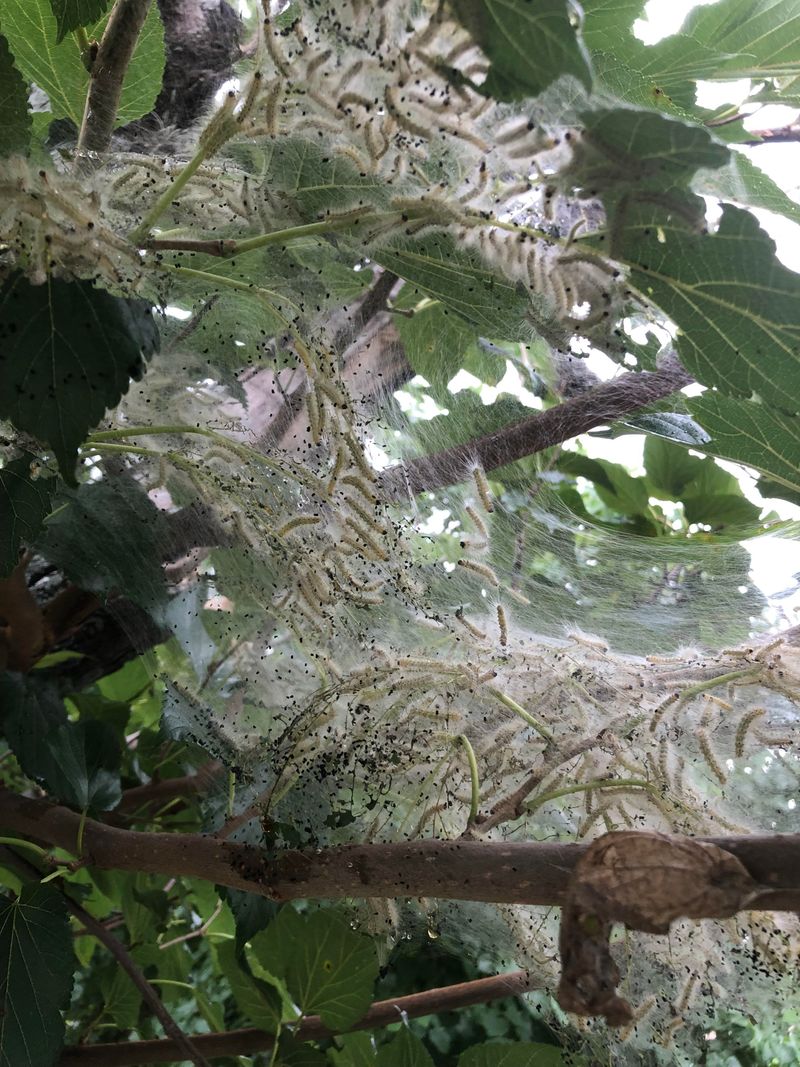
Peeking closer at one of those webs often reveals a surprise. Instead of a spider sitting in the middle, you might see dozens of tiny caterpillars wiggling around inside.
These little creatures are fall webworms, and they live together in large groups. The silk they spin is not for catching bugs like a spider does.
It works more like a cozy tent that keeps them safe from birds and other hungry animals.
Each web can hold a hundred or more caterpillars at once. They munch on leaves during the day and stay tucked inside the silk when they rest.
Their fuzzy bodies come in shades of pale yellow, green, or tan, with tiny dark spots and long hairs.
Many of us in California mistake the webbing for a spider nest because both look messy and sticky. But spiders build neat, single webs, while webworms make thick, cloudy clumps around leaves.
Once you know the difference, spotting them gets easier.
If you gently open a web, you will likely see the caterpillars scatter or curl up. That reaction is a clear sign you are dealing with webworms, not eight-legged visitors.
Knowing what lives inside helps you plan the right response instead of panicking over a harmless mix-up in your yard this fall season.
2. Fall Webworms Build Silk Around Branch Tips
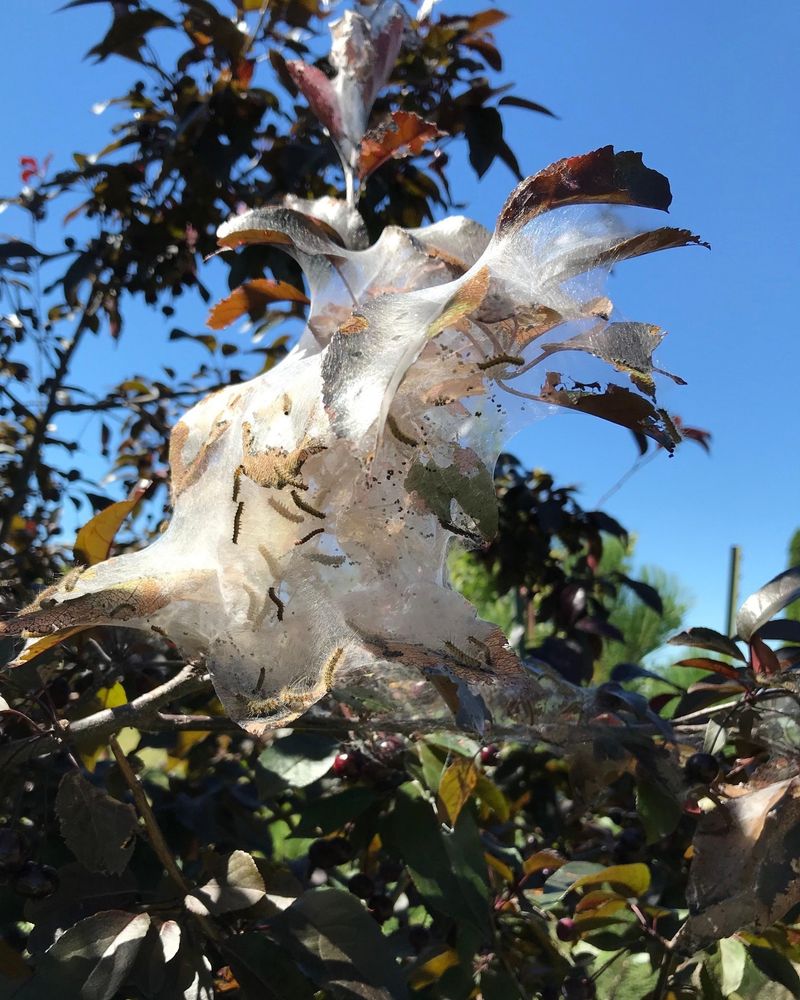
One thing that makes these pests easy to name is where they start building. Fall webworms almost always spin their silk right at the ends of branches, near the fresh leaves.
They begin small, wrapping just a few leaves together with a thin layer of webbing. As more caterpillars hatch and grow, that silk stretches farther along the twig.
The tents hang out in the open where sunlight hits them.
This habit is a handy clue for telling them apart from other bugs. Some caterpillars, like tent caterpillars, build their nests in the forks where branches split.
Your California Garden Changes Every Week. Your Plan Should Too.
Gardening in California changes quickly throughout the season. Every Friday you’ll receive a simple weekly plan showing exactly what to plant, prune, fertilize, harvest, and protect so you never miss the right timing.
Webworms prefer the outer edges instead.
Because the silk sits near the branch tips, it catches your eye quickly. You might notice a soft, cloudy blob glowing in the afternoon light.
That is the group hard at work, feeding and expanding their home.
The location also tells you how much damage to expect. Since they stay near the outer leaves, the inner parts of the tree usually stay healthy and green.
That means the core of your tree is rarely in danger.
Keeping an eye on branch tips during late summer and early fall lets you catch these webs early. Spotting them soon makes any cleanup much simpler and far less stressful for you.
3. They Feed Inside The Webbing
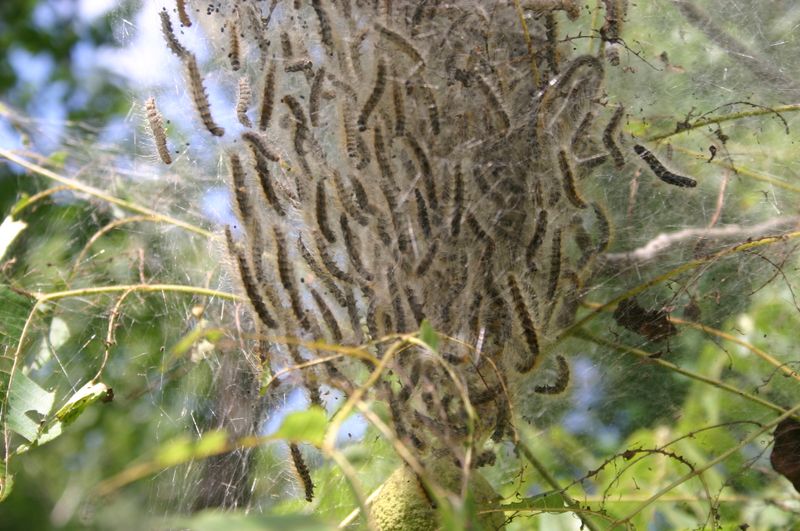
Unlike many California bugs that wander around to eat, webworms bring the food to them. They pull leaves right into their silky tent and chew away while staying protected.
This clever trick keeps them safe from birds, wasps, and bad weather. Instead of crawling out into danger, they simply expand the web to reach more leaves.
The whole group feasts together inside their shelter.
As they eat, the leaves inside the web turn brown and skeleton-like. You might notice see-through patches where only the leaf veins remain.
That thin, lacy look is a telltale sign of webworm feeding.
Because they hide while snacking, you may not see much activity at first. The web just seems to grow larger day by day.
Look closely and you will spot tiny dark droppings and chewed bits scattered inside.
Feeding usually lasts a few weeks before the caterpillars finish growing. During that time, they stay bundled inside the silk almost the entire day.
This behavior is why the webbing looks so full and cloudy.
Understanding that they eat inside the tent helps explain why the damage stays contained. The mess looks worse than it really is.
Most trees shrug off this feeding, especially since fall leaves would soon drop off anyway once the season changes.
4. The Tents Get Bigger As Caterpillars Grow
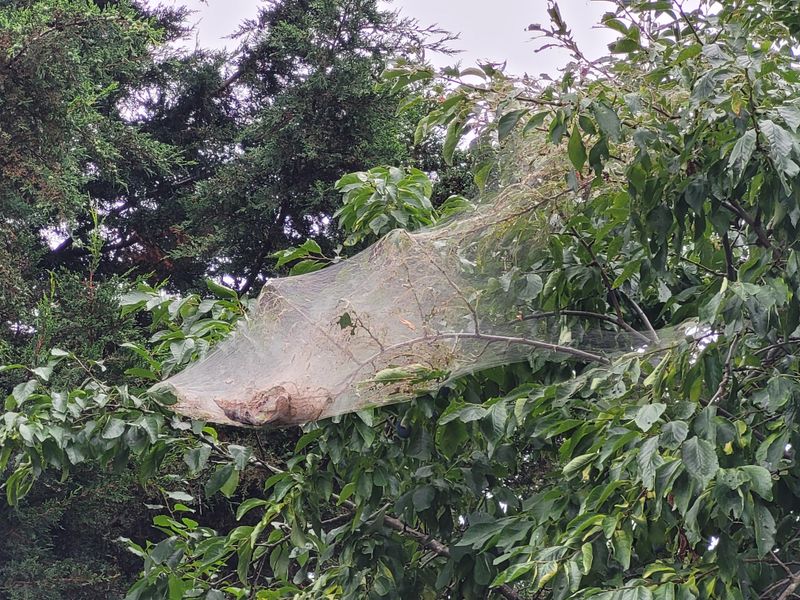
What starts as a tiny wisp of silk can turn into a huge, puffy tent. That growth happens fast as the caterpillars get bigger and hungrier.
When they first hatch, the group is small and needs only a few leaves. But as their appetite grows, they add more silk to cover fresh food.
Layer by layer, the web spreads wider along the branch.
By late fall, some tents stretch two or three feet long. They can wrap around whole clusters of leaves and even parts of nearby twigs.
From a distance, it looks like the tree is draped in gray cotton.
The bigger the web, the more caterpillars are usually packed inside. Their numbers can climb into the hundreds within a single tent.
Each one keeps eating and spinning until it is ready to change into a moth.
Seeing a giant web can feel alarming, but size does not equal serious harm. The tree underneath is often just fine, with plenty of healthy branches beyond the mess.
If the web reaches a size you dislike, you can trim that branch off and remove it. Doing this early, while the tent is smaller, makes the job easier.
Waiting too long lets the silk spread and the cleanup grow harder to manage.
5. Fruit Trees Can Be Common Targets
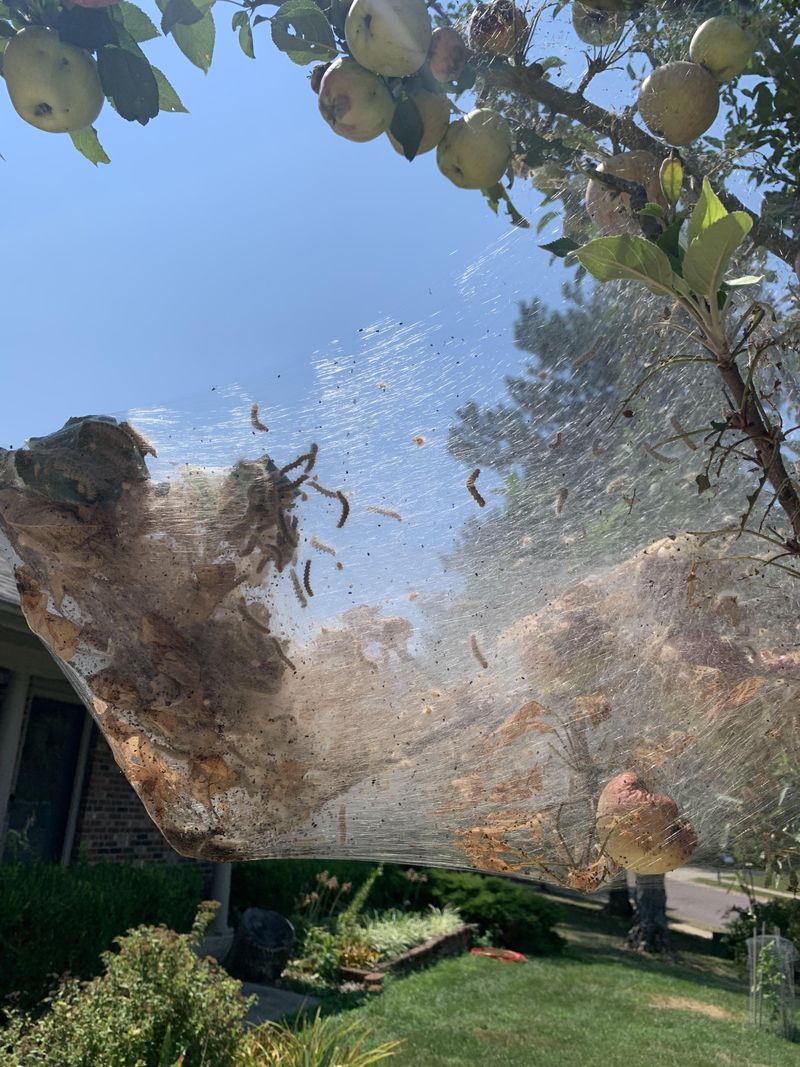
California gardeners with backyard orchards often spot these webs first. Fruit trees like apple, cherry, plum, and walnut rank high on the webworm menu.
The soft, tasty leaves of these trees make an easy meal for the caterpillars. Once a female moth lays her eggs on a branch, the young hatch and start feeding on the nearest foliage.
Fruit trees provide exactly the kind of tender greenery they love.
Finding a web on your apple tree can be worrying, especially near harvest time. The good news is that the fruit itself is usually safe.
Webworms stick to the leaves and leave the growing apples or plums alone.
Still, heavy webbing can strip a fair amount of foliage. A young or newly planted tree might feel the stress more than an older, established one.
Keeping those smaller trees healthy with water and care helps them bounce back.
Checking your fruit trees every week during late summer pays off. Catching a small web early means you can snip it away before it spreads.
Toss the clipped branch in a bag and remove it from the yard.
For most home orchards, a webworm visit is more of an eyesore than a real threat. Your trees will likely leaf out just fine next spring.
6. Maples And Mulberries Can Get Covered Too
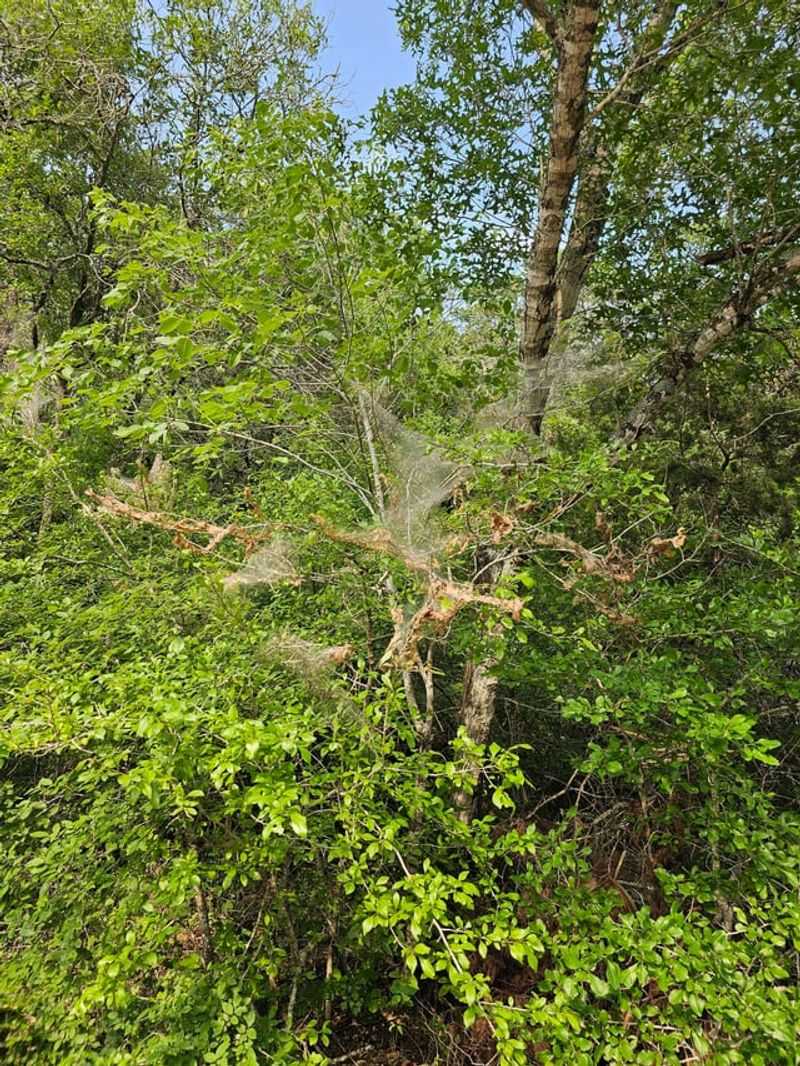
Fruit trees in California are not the only ones that catch a webworm’s eye. Shade trees such as maples and mulberries often end up wrapped in silk as well.
These broad-leaved trees offer plenty of soft foliage, which the caterpillars find irresistible. A big mulberry can host several tents at once, especially if the bugs had a busy breeding year.
Maples get their share of visits too, particularly younger ones.
Seeing your favorite shade tree covered in webbing can be a real bummer. It changes the look of a pretty yard almost overnight.
Thankfully, the effect is mostly cosmetic on strong, mature trees.
Large maples and mulberries have lots of leaves to spare. Even when webworms munch through a good chunk, enough foliage stays behind to keep the tree fed.
By spring, fresh growth usually erases any sign of trouble.
Webworms are known to feed on more than a hundred kinds of trees. That wide taste explains why they pop up on so many different plants around neighborhoods each fall.
For these big shade trees, doing nothing is often the smartest choice. Nature has helpers like birds and wasps that feast on the caterpillars.
Letting those predators do their job keeps your tree healthy without any effort from you at all.
7. The Damage Usually Starts At The Outer Branches
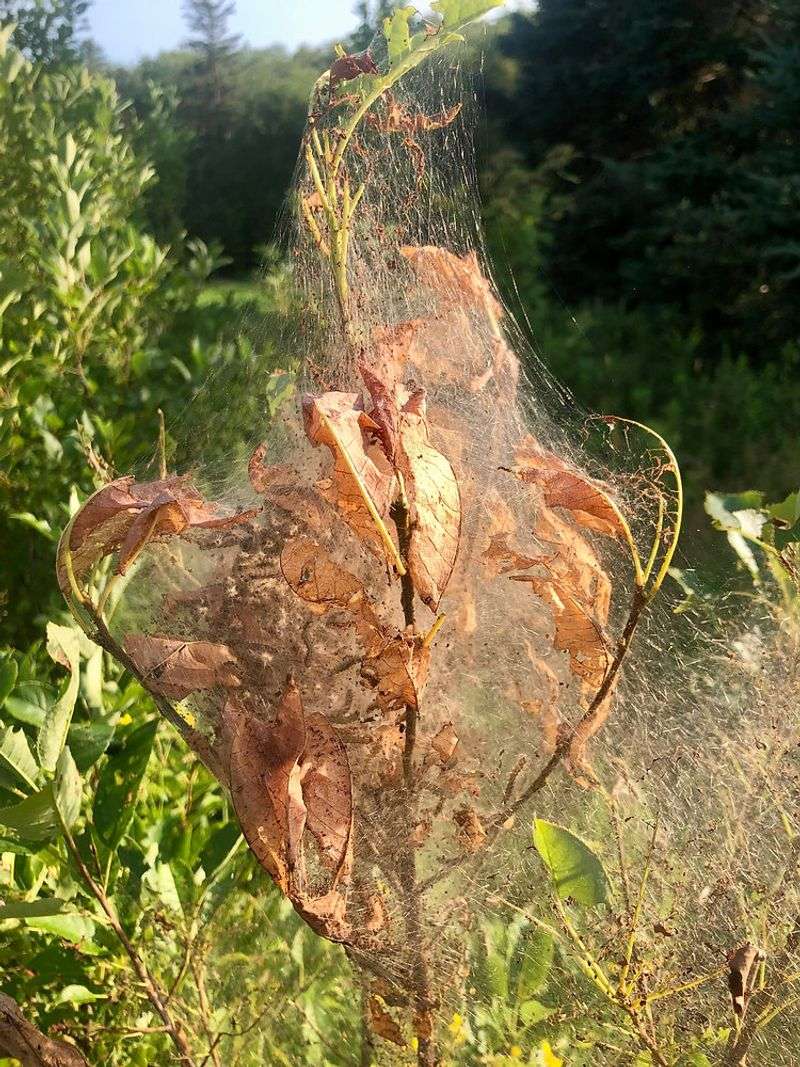
Ever notice how the brown, chewed leaves show up on the edges first? That pattern is a key sign of webworm feeding.
Because the caterpillars build their tents at branch tips, all their eating happens out on the ends. They work their way inward slowly, but the heaviest damage stays near the outside.
The middle of the tree often looks perfectly fine.
This outer-edge damage is actually good news for tree health. The important parts, like the trunk and main branches, stay untouched.
Those inner sections hold the tree’s energy and keep it strong.
Leaves near the branch tips are the ones the tree would drop soon anyway. Fall is nearly here, so their loss barely matters.
The tree simply lets them go a little early.
Watching where the damage sits helps you judge how worried to be. Edge feeding is normal and mild.
If you ever saw a bug attacking the trunk or inner limbs, that would be a bigger concern, but webworms do not do that.
Since the harm stays on the outside, most trees recover with ease. Come next growing season, new leaves fill in the gaps.
Knowing this lets you relax and skip the harsh sprays that some people rush to use out of fear.
8. Webs Can Spread Across Several Nearby Twigs
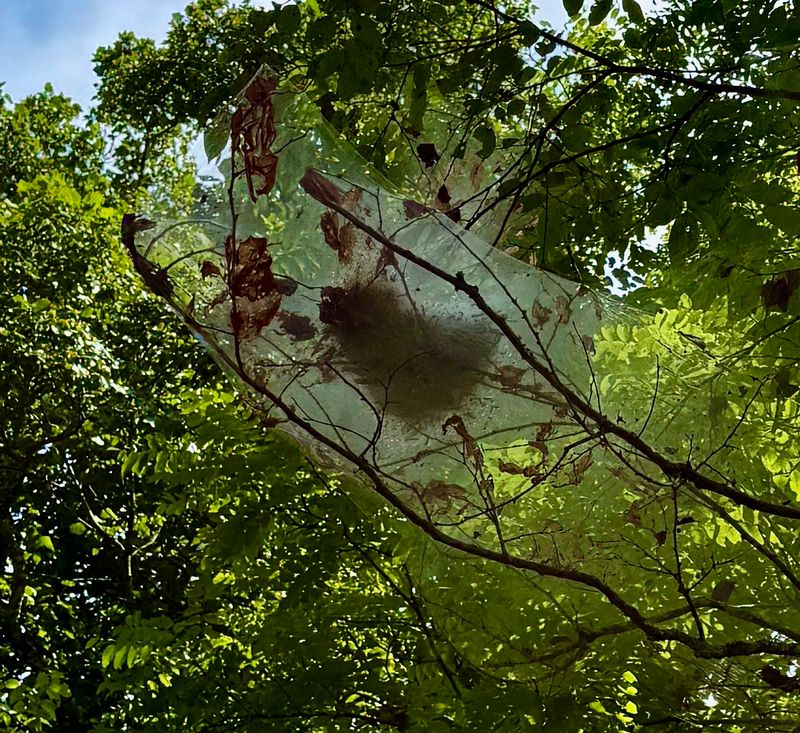
Sometimes it looks like the whole corner of a tree got wrapped up. That happens when webworm tents grow and connect across several twigs at once.
As the caterpillars run out of leaves in one spot, they simply spin silk toward the next batch. Twig by twig, the web reaches farther across the branch.
Neighboring tents can even merge into one giant sheet.
This spreading gives the tree a heavily draped, ghostly appearance. It is the stage where most people finally notice the problem and start to worry.
The silk seems to be everywhere all of a sudden.
Even at this point, the tree usually stays healthy underneath all that webbing. The caterpillars are just being thorough about finding food.
Once they finish eating, they will leave the silk behind and drop to the ground to pupate.
If the spread bothers you, a strong blast from a garden hose can break up the webs. Pruning off the worst-covered twigs works too.
Just be sure to bag and remove whatever you cut.
Old, empty webs sometimes hang around for weeks after the bugs are gone. Wind and rain slowly tear them apart.
Given a little time, your tree returns to its normal, clean look without any lasting damage at all.