Plant These Arizona Natives This Fall And Butterflies Will Fill Your Yard By Spring
Fall is the secret planting season in the Arizona desert, and butterflies know it even if most people do not. When you tuck native plants into the ground in October or November, their roots grow strong all winter while the weather stays mild.
By the time spring warms up, those plants are ready to bloom and feed hungry caterpillars and butterflies. Here are ten tough, water-wise natives that can turn a plain yard into a fluttering, living habitat.
1. Desert Milkweed
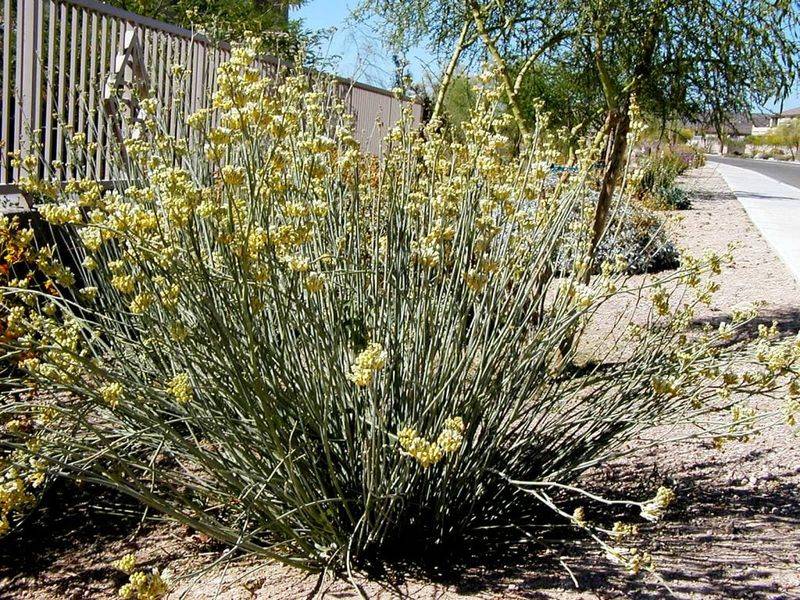
Picture a clump of bare, gray-green stems that looks almost like a bundle of pencils. Now picture a queen butterfly landing on it.
Desert milkweed may not win a beauty contest at first glance, but butterflies treat it like a five-star restaurant.
Asclepias subulata is one of the toughest milkweeds you can grow in the low desert. It handles full sun, reflected heat, and rocky caliche soil without complaint.
Even better, it pulls double duty as both a host plant for monarch and queen caterpillars and a nectar source for the adults.
Planting in fall gives the roots months to settle in before summer hits 110 degrees. Once established, it needs only an occasional deep soak.
Skip fertilizer, because rich soil can make the stems floppy.
Expect some chewed stems once caterpillars show up. That damage is the whole point, so resist the urge to spray anything.
The plant bounces back quickly.
Fun fact: the milky sap gives caterpillars a bitter taste that may help protect them from birds. Place a few plants near a sunny wall or along a gravel path, and you may soon spot striped caterpillars munching away by early spring.
2. Pineleaf Milkweed
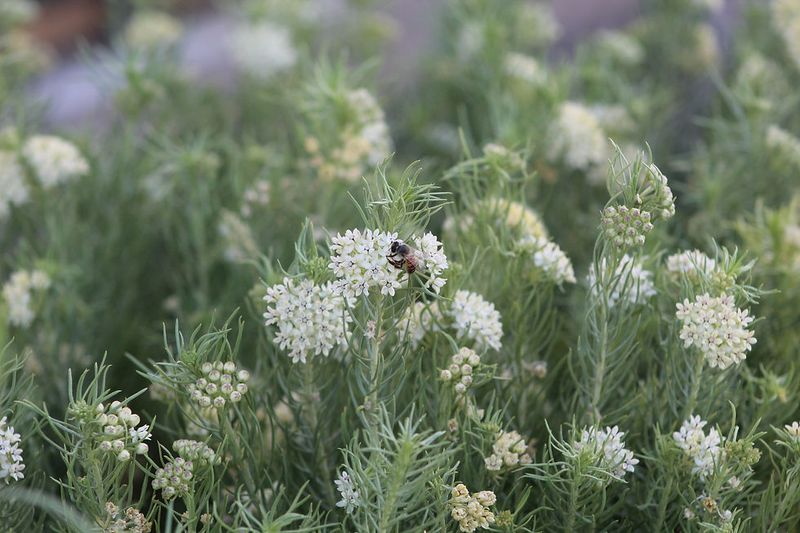
Soft, needle-thin leaves make pineleaf milkweed look like a tiny pine tree that wandered into the desert. Kids love touching it, and butterflies love everything else about it.
Asclepias linaria is a native shrubby milkweed that grows about two to three feet tall. Its clusters of creamy white flowers show up for long stretches, offering steady nectar for queens, monarchs, and plenty of native bees.
The leaves feed caterpillars too, so one plant covers the full life cycle.
Here is where it stands apart from desert milkweed. Pineleaf has a fuller, bushier shape, so it fits nicely into a front-yard bed where you want something tidy looking.
It also appreciates a bit of afternoon shade in the hottest parts of Phoenix and Tucson.
Water it regularly through its first winter and spring. After that, deep watering every week or two in summer usually keeps it happy.
Well-draining soil matters more than rich soil, so mix in some gravel if your yard holds water.
Plant two or three together in fall. A small cluster is easier for passing butterflies to find, and it gives caterpillars enough leaves to munch without stripping one plant bare.
3. Desert Senna
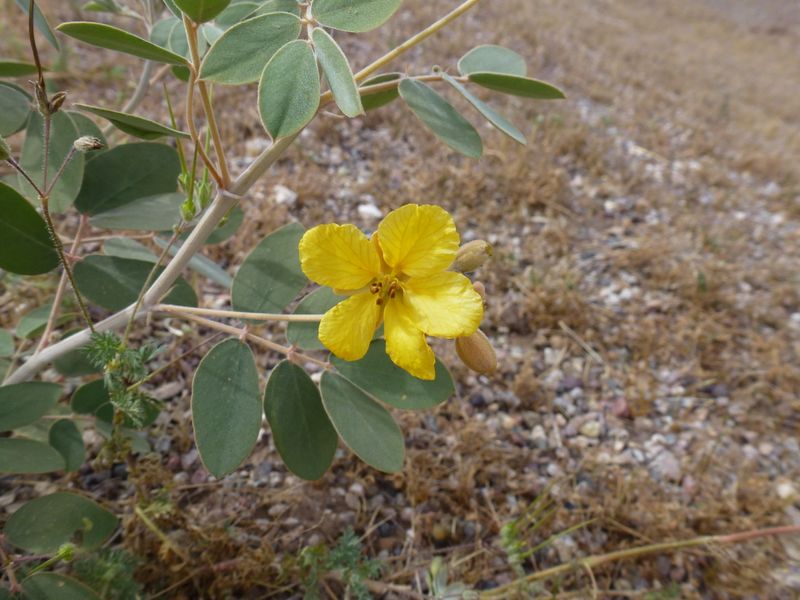
Ever seen a bright yellow butterfly zigzag across your yard and vanish? That was probably a cloudless sulphur, and it may have been hunting for desert senna.
Your Arizona Garden Changes Every Week. Your Plan Should Too.
Gardening in Arizona changes quickly throughout the season. Every Friday you’ll receive a simple weekly plan showing exactly what to plant, prune, fertilize, harvest, and protect so you never miss the right timing.
Senna covesii is a small, low-growing native with fuzzy gray leaves and cheerful yellow blooms. It flowers from spring well into fall, which gives butterflies a long-lasting snack bar.
Bees enjoy it as well.
What makes it special is its role as a host plant. Cloudless sulphurs and sleepy oranges lay eggs on its leaves, and the green caterpillars blend in so well you might never notice them.
That means your yard becomes a nursery, not just a rest stop.
Desert senna stays under two feet tall, so it works great along walkways, in front of larger shrubs, or tucked between boulders. It thrives on very little water once established and handles intense sun with ease.
Sow seeds or set out nursery plants in fall. Light, sandy soil suits it best.
It may reseed a little on its own, which most gardeners see as a free bonus. Pair it with purple flowers nearby and the yellow really pops for both you and the butterflies.
4. Fairy Duster
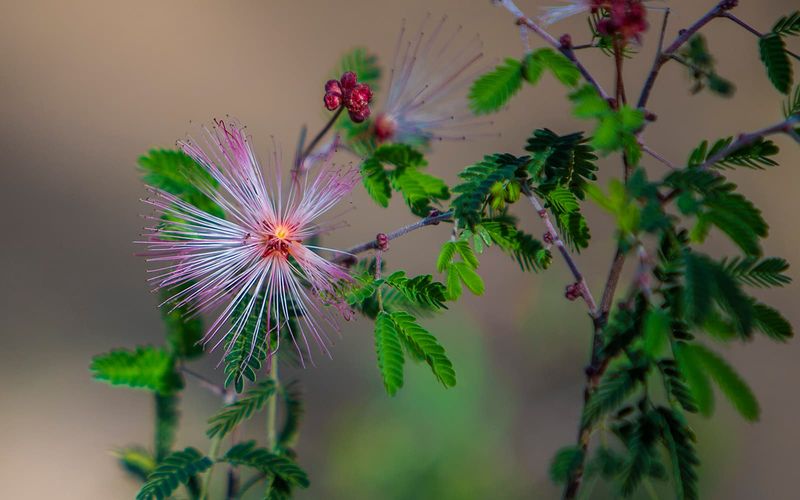
Fluffy pink pom-poms in late winter? It sounds like a craft project, but it is actually fairy duster, one of the first native shrubs to wake up in the low desert.
Calliandra eriophylla grows into a loose, airy mound about three feet tall. Its powder-puff flowers often appear from February through spring, right when early butterflies are searching for food.
Hummingbirds join the party too, so you get double the action.
That early bloom time is its secret weapon. Many plants on this list hit their stride later, so fairy duster helps fill the gap and keeps visitors coming back to your yard from the very start of the season.
Care is refreshingly simple. Give it full sun or light shade and water deeply every couple of weeks once it has settled in.
It tolerates poor, rocky soil and rarely needs trimming.
Plant it in fall near a window or patio so you can enjoy the show up close. Small birds may also tuck themselves into its branches for shelter.
Group a few together along a property line for a soft, low hedge that feeds wildlife and asks almost nothing from your water bill.
5. Desert Marigold
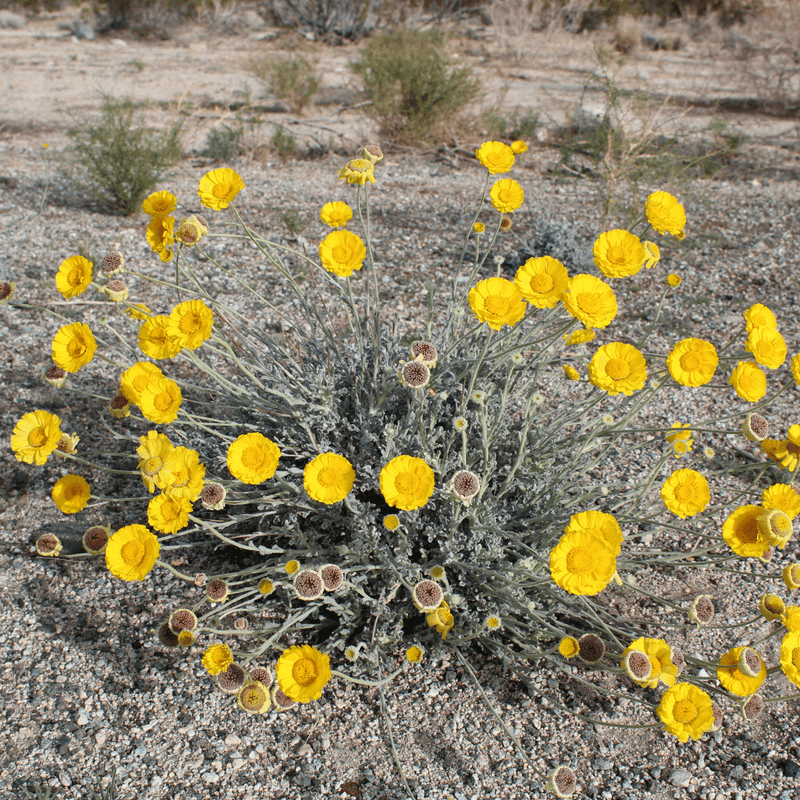
Some plants bloom for a few weeks. Desert marigold seems to forget it is supposed to stop.
Baileya multiradiata forms neat mounds of silvery leaves topped with sunny yellow daisies. In the low desert, it can flower almost all year, with its biggest show in spring.
Butterflies drop by constantly for nectar, and the soft gray foliage looks lovely against red rock or tan gravel.
It earns its spot here because it is about as easy as gardening gets. Scatter seeds in fall, or set out small plants, and give them a little water until they grow.
After that, it actually prefers being left alone. Too much water or rich soil can shorten its life.
Desert marigold is a short-lived perennial, usually lasting a couple of years. The good news is that it reseeds freely, so new plants pop up to take the place of older ones.
Think of it as a self-renewing butterfly buffet.
Use it to fill bare spots, line driveways, or brighten a hot west-facing bed where other flowers struggle. A sweep of yellow across your yard can be one of the easiest ways to catch the eye of passing butterflies.
6. Parry’s Penstemon
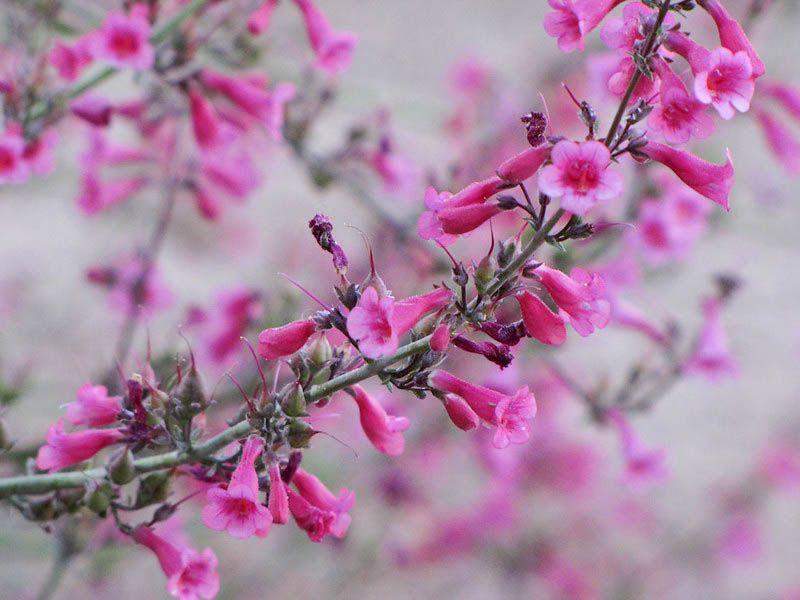
Tall pink spikes rising out of a gravel yard in March are a sure sign that spring has arrived in Arizona. Parry’s penstemon is the plant behind that show.
Penstemon parryi grows a low rosette of leaves in winter, then sends up flower stalks two to four feet tall. Each stalk is lined with rosy tubular blooms packed with nectar.
Butterflies and hummingbirds both visit, and you might see native bees crawling right inside the flowers.
Fall planting is especially important for penstemons. They need the cool months to build roots and leaves before blooming.
Plants set out in spring often miss their first flowering season entirely.
Give them full sun and very well-draining soil. Overwatering is their biggest enemy, so water lightly and let the soil dry between soaks.
After blooming, you can leave a few stalks standing to drop seeds for next year.
Penstemons look best in groups of five or more, scattered like they would grow in the wild. Mix in other species like firecracker penstemon for red blooms or desert penstemon for extra color.
Together, they create a vertical splash that pulls butterflies in from down the block.
7. Desert Willow
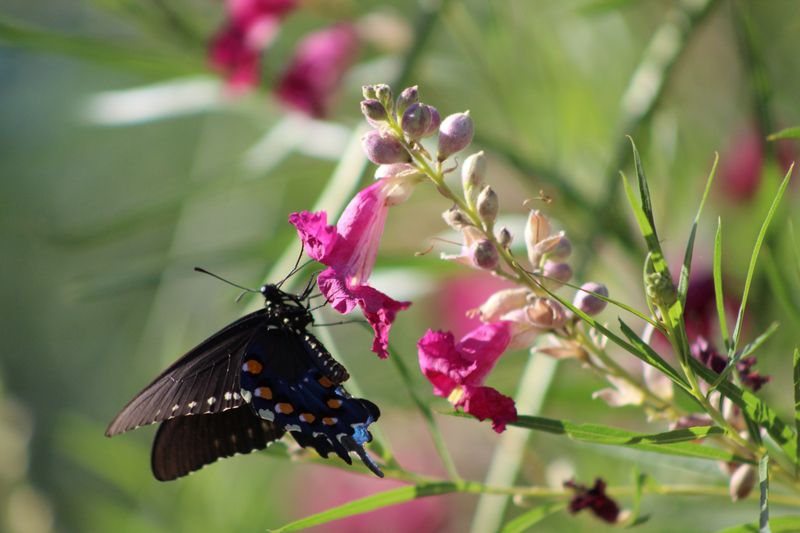
Butterflies need food, but people need shade. Desert willow delivers both, which is why it belongs on every butterfly-friendly Arizona property.
Chilopsis linearis is not a true willow at all. It is related to catalpa trees and produces trumpet-shaped flowers in shades of pink, lavender, and white.
Blooms start in late spring and keep coming through summer, feeding butterflies, hummingbirds, and bees for months.
Its slender leaves cast light, filtered shade, which can help cool a patio or west wall during brutal afternoons. Smaller plants underneath, like milkweed or penstemon, may appreciate that bit of relief.
Desert willow grows fast, often reaching 15 to 25 feet. It drops its leaves in winter, letting sunshine warm your home during the cooler months.
Once established, it gets by on deep watering every few weeks in summer.
Fall is the ideal time to plant trees here, since roots keep growing while the top rests. Choose a sunny spot with room to spread.
Some newer varieties produce fewer seed pods if you want less cleanup. Either way, you are planting a long-term anchor for your backyard habitat that rewards you more every year.
8. Desert Hackberry
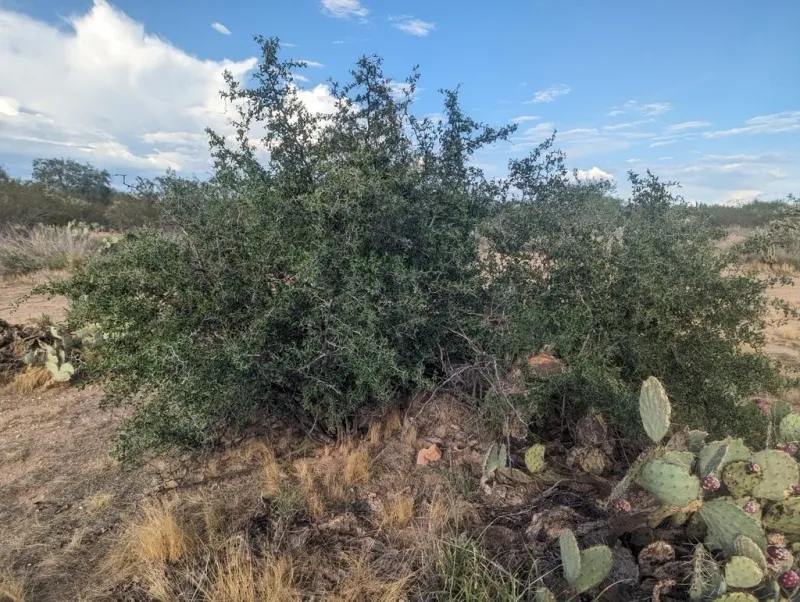
Not every butterfly plant needs flashy flowers. Desert hackberry proves that a scruffy, thorny shrub can be one of the most valuable plants in your whole yard.
Celtis pallida grows into a dense, spiny thicket about six to ten feet tall. Its tiny greenish flowers are easy to miss, but it serves as a host plant for the Arizona hairstreak and other butterflies.
Caterpillars feed safely tucked among the thorns.
That thick tangle also gives birds a protected place to hide and nest. Quail, cactus wrens, and even roadrunners may use it for shelter.
Roadrunners hunt lizards, insects, and occasionally scorpions, so welcoming them could make your yard a little less inviting to unwanted critters.
In fall, small orange berries appear, offering food for birds. Hackberry also handles heat, drought, and poor soil like a champ.
Water it during its first year, then it can mostly fend for itself.
Plant it along a back fence or property edge where its prickly branches will not bother anyone. It works as a natural screen, too.
If you want a yard that functions like real desert habitat, this humble shrub is a smart backbone plant.
9. Blackfoot Daisy
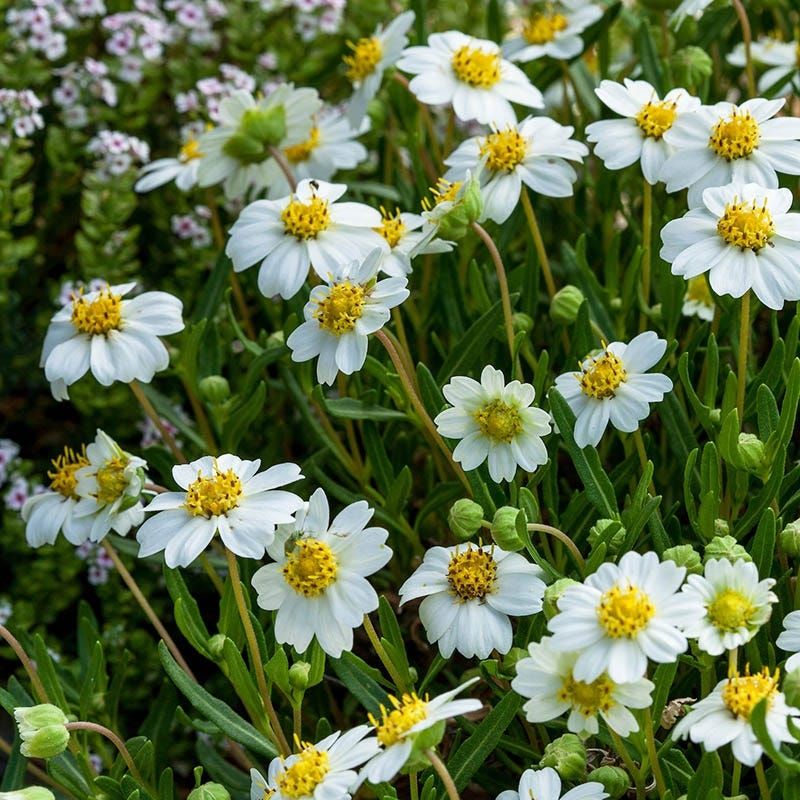
Honey-scented and small enough to fit in any corner, blackfoot daisy is the plant you add when you think your garden is full.
Melampodium leucanthum forms tidy mounds about a foot tall, covered in white daisies with golden centers. Flowers keep appearing from spring through fall, giving small butterflies a dependable sip of nectar.
The sweet scent on warm evenings is a nice bonus for you.
Its size is what sets it apart. While other picks on this list fill beds or shade patios, blackfoot daisy fits along sidewalks, in pots, or between stepping stones.
It also loves the hot, rocky spots that make most flowers wilt.
The biggest rule is simple: do not overwater it. This native prefers dry, gritty soil and can rot if kept soggy.
A deep drink every week or two in summer is usually plenty once it gets going.
Plant it in fall and trim it back lightly in late winter to keep it compact. It reseeds gently, so you may find a few surprise babies nearby.
Pair it with desert marigold for a cheerful white and yellow combo that butterflies seem to find irresistible.
10. Autumn Sage
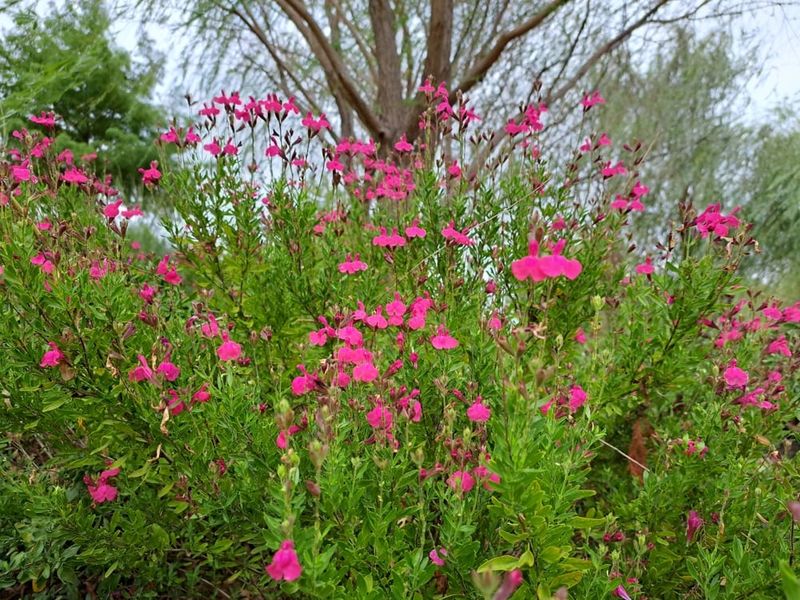
Hummingbirds may claim autumn sage as their own, but butterflies are just as eager to crash the party.
Salvia greggii is a compact shrub with small, fragrant leaves and bright flowers in red, pink, coral, or purple. In the low desert, it often blooms in spring and again in fall, sometimes nonstop if it gets a little afternoon shade.
Its nectar-rich blooms draw butterflies, bees, and hummingbirds all at once.
Gardeners love it because the leaves have a strong herbal scent. Many aromatic plants in the sage family may help make a patio area less appealing to some flying insects, though results vary from yard to yard.
Autumn sage grows about two to three feet tall and wide. It handles heat well, uses modest water, and bounces back from a light trim in late winter.
Morning sun with some afternoon protection keeps it looking its best during July.
Plant several in fall along a sunny bed or near a sitting area. Mixing colors creates a lively look, and it extends the nectar supply.
Once spring rolls in, you may find yourself pausing at the window to watch the steady parade of winged visitors.