What It Really Means When Lanternflies Feed On Your Ohio Maples
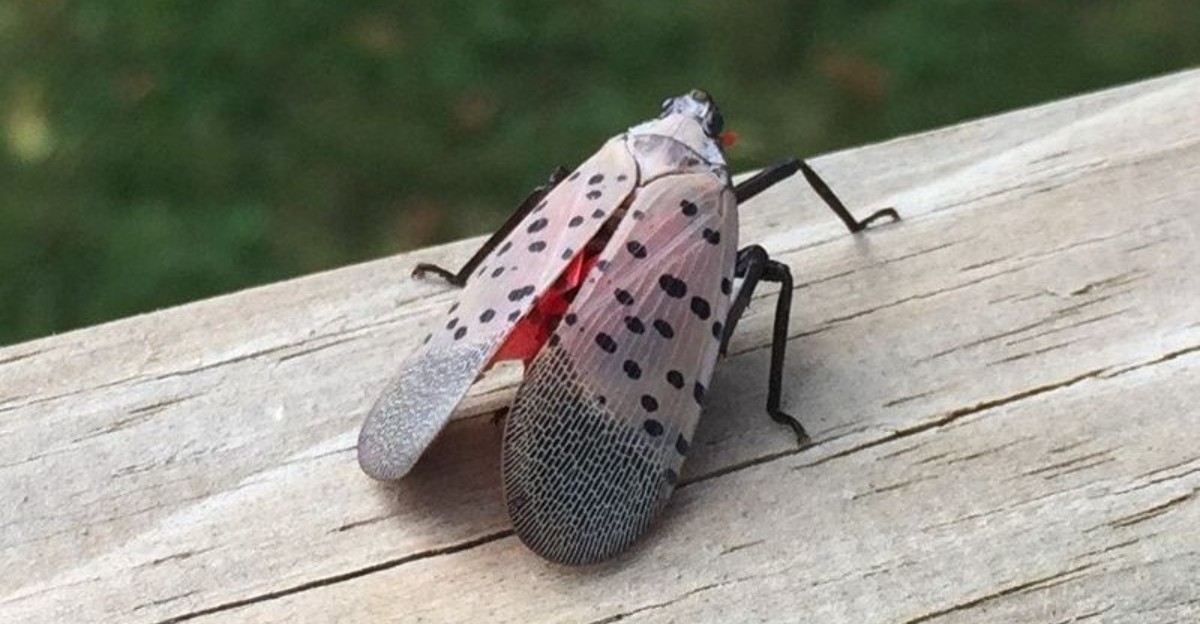
Spot a cluster of spotted lanternflies on your Ohio maple, and it’s natural to wonder how much trouble your tree is in. Those colorful insects can gather in numbers, cling to the bark, and leave behind a sticky mess that attracts ants and wasps.
Not exactly the kind of company you want in the garden.
But a swarm doesn’t automatically mean your maple is in serious trouble. Lanternflies feed on plant sap, and the impact depends on factors such as the number of insects and the length of the infestation.
The bigger concern may be what their presence says about the plants and trees around your property.
So, should you worry, reach for a treatment, or simply keep an eye on things? The signs on your maple can help you decide what deserves attention and what you can leave alone.
1. Lanternflies Are Now Found Across Ohio
Back in 2020, a handful of odd, spotted bugs showed up in Mingo Junction, a small town on the Ohio River. Few people back then guessed how fast they would spread.
Fast forward a few years, and spotted lanternflies have spread into Ohio and become an established invasive pest in parts of the state. Their distribution continues to change, so a statewide quarantine should not be taken to mean that every county has an established population.
How did it travel so quickly? Lanternflies are excellent hitchhikers.
They lay eggs on cars, trailers, firewood, and lawn furniture, and those items roll down highways to new places. One family road trip can carry a whole new batch to a fresh neighborhood.
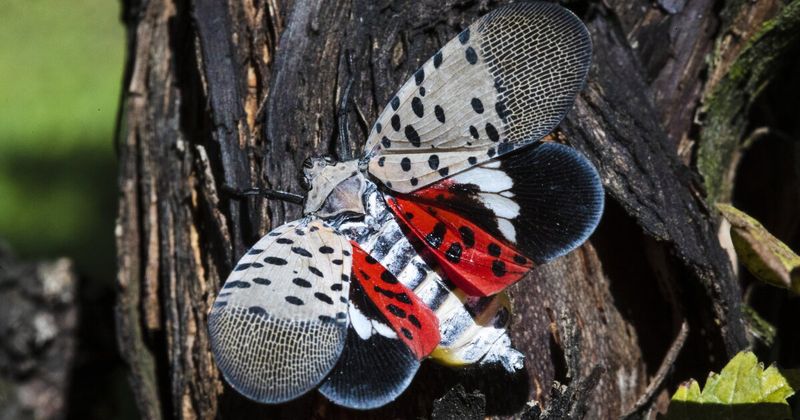
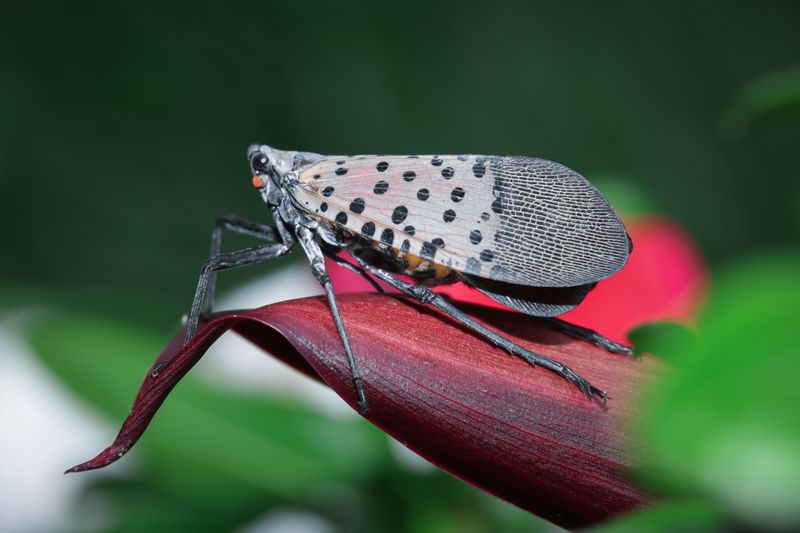
Spotting one is easier than you might think. Adults are about an inch long, with gray wings dotted in black.
When they flap, you see a flash of bright red underwings that looks almost like a party costume.
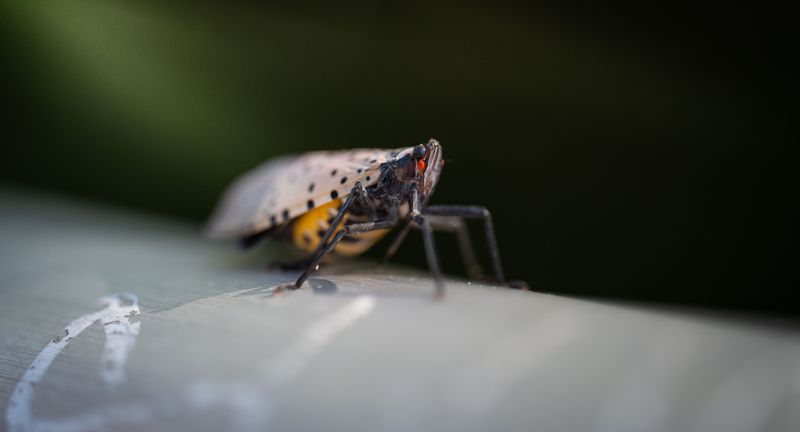
Young nymphs look different. Early on they are black with white spots, and later they turn red with white dots.
If you see any of these on your maples, you are not alone. Thousands of Ohio homeowners are noticing the same visitors, and learning about them is the first smart step.
2. The Whole State Went Under Quarantine In 2026
February 17, 2026, marked a big day for Ohio trees. On that date, the Ohio Department of Agriculture announced a quarantine covering all 88 counties.
Before then, only 18 counties were under the rules. Bugs do not read maps, though, and the insects kept spreading past county lines.
Officials decided the smartest move was to treat the whole state as one big zone.
So what does a quarantine actually mean for regular people? For most homeowners, daily life stays about the same.
The main rules affect businesses that ship things like trees, nursery plants, and other regulated products out of Ohio. Those items need a compliance agreement, permit, or inspection certificate before leaving the state.
Still, everyday folks can help a lot. Before you drive to visit relatives in another state, take a quick walk around your car.
Your Ohio Garden Changes Every Week. Your Plan Should Too.
Gardening in Ohio changes quickly throughout the season. Every Friday you’ll receive a simple weekly plan showing exactly what to plant, prune, fertilize, harvest, and protect so you never miss the right timing.
Peek at wheel wells, bumpers, and roof racks for clinging bugs or muddy-looking egg patches.
Moving firewood is another big one. Buy it near where you plan to burn it instead of hauling it from home.
Think of yourself as a friendly border guard for your neighbors. A two-minute check can keep these pests from catching a free ride to someone else’s maples, and that kind of teamwork really adds up.
3. Tree-Of-Heaven Is Their Favorite, But Maples Are On The Menu
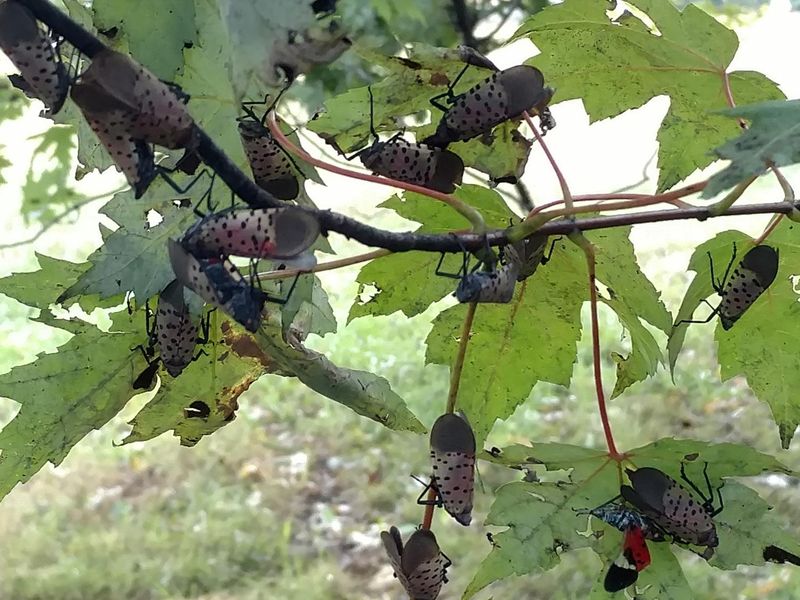
Every picky eater has a favorite dish, and for spotted lanternflies, that dish is tree-of-heaven. Ironically, this tree is also an invader, brought from Asia long ago.
Lanternflies are not shy about trying other foods, however. Scientists have recorded them feeding on more than 100 kinds of plants.
Grapevines, walnuts, willows, and birches all make the list. Maples are on it too, especially red and silver maples.
Here is where timing matters. From mid to late September, tree-of-heaven starts slowing down for the year as it heads toward winter rest.
Hungry adults then go looking for a new buffet, and your maples are often the next stop.
That helps explain why homeowners may suddenly see large groups of lanternflies on maples in early fall. Adults often gather on red and silver maples around mid- to late September, when tree-of-heaven begins going dormant.
The exact pattern varies with local conditions and the plants available nearby.
Fun fact: tree-of-heaven has a strong smell some people compare to burnt peanut butter. If you have one growing near your yard, it may be acting like a lanternfly magnet.
Talk with a local arborist about removing it the right way, since cutting it improperly can cause lots of new sprouts to pop up from the roots.
4. Heavy Feeding Can Hurt Young Maples
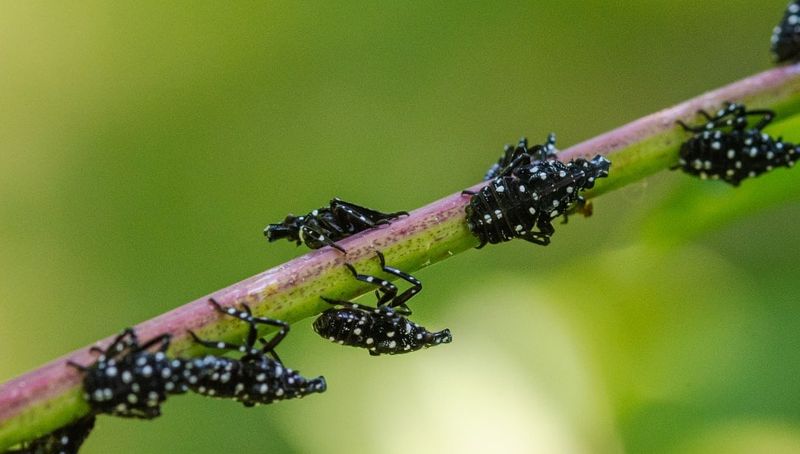
Think of a young maple as a teenager still growing into its shoes. It has energy, but it does not have big reserves saved up yet.
Lanternfly nymphs love tender, fresh growth. Early in the season, they feed on soft plants and the new shoots of shrubs and trees.
Young maple saplings deserve extra attention because heavy lanternfly feeding can interfere with photosynthesis and slow their growth.
Research backs this up. Studies found that large numbers of nymphs can slow how much young silver maples grow in trunk width.
A thinner trunk means a tree that is a bit behind schedule, which can matter a lot in its early years.
So if you recently planted a maple, give it some extra attention. Check the trunk and lower branches every week or so, especially in late summer and fall when adults move onto maples.
A quick look while you water the garden works great.
Keeping your young tree strong helps too. Water deeply during dry spells, add a ring of mulch a few inches away from the trunk, and avoid bumping it with the mower.
A well-cared-for sapling handles stress far better than a thirsty one. Treat it like a new puppy, with steady care and frequent checkups, and it will reward you with years of shade.
5. They Feed By Sucking Sap From Trunks And Branches
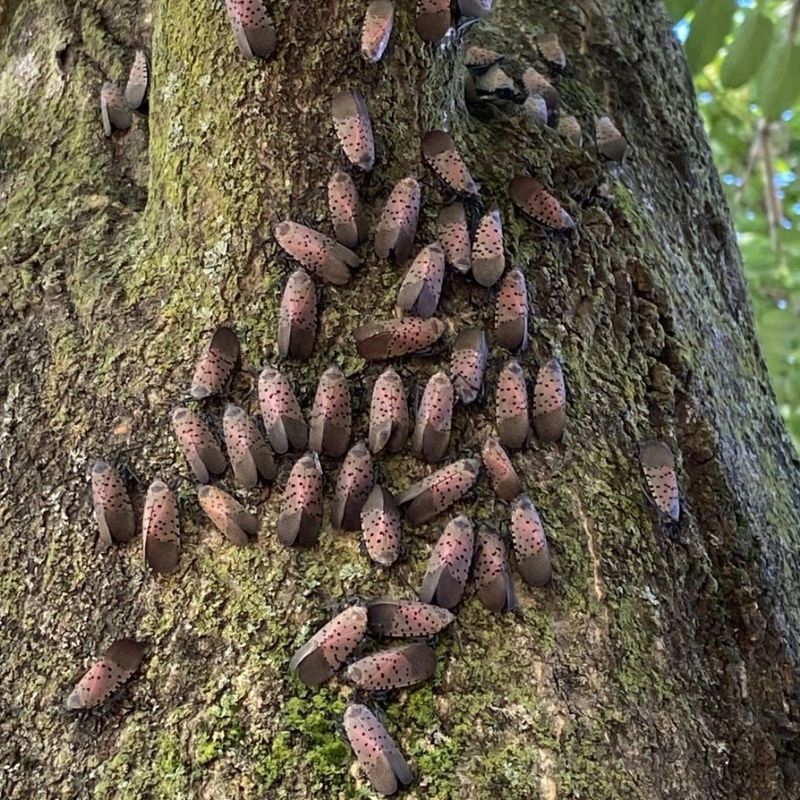
Imagine sipping a milkshake through a very thin straw that you push right into the cup. That is roughly how a lanternfly eats.
These insects do not chew leaves like caterpillars do. Instead, they have piercing, sucking mouthparts that work like a tiny needle.
They poke into the phloem, which is the layer just under the bark that carries sugary sap through the tree.
Nymphs are not very fussy. They often feed on new growth, tender stems, and young shoots.
Adults behave a little differently, gathering on trunks and bigger branches as summer turns into fall.
You might notice something odd after they feed. Small spots on the bark can ooze sap, creating what experts call weeping wounds.
These wet streaks may look dark or shiny, and they sometimes smell slightly sour or fermented.
Spotting lines of bugs marching up the trunk is a clear clue. Lanternflies tend to line up in rows, all facing upward, almost like they are waiting in line for a concert.
If you see this on your maple, snap a photo and note the date. Keeping a simple record helps you track whether numbers are rising or falling from week to week, which is useful if you ever call in a tree expert.
6. Healthy, Mature Trees Usually Survive The Feeding
Take a deep breath, maple lovers. Here comes some genuinely good news.
Big, healthy, mature trees usually handle lanternfly feeding just fine. A towering maple that has stood in your yard for decades has deep roots, a wide canopy, and lots of stored energy.
A light group of bugs is a bit like a few mosquitoes at a picnic, annoying but not a disaster.
A few lanternflies are unlikely to cause major harm to a healthy, established maple. Heavy or repeated feeding is more concerning, particularly on young or already-stressed trees, and scientists are continuing to study the longer-term effects on mature trees.
That does not mean you should ignore them, of course. Strong trees stay strong when you help them out.
Give your maple a long, slow drink during summer droughts, keep heavy equipment off its root zone, and avoid piling mulch against the trunk.
An annual checkup can also be smart. A certified arborist can spot early stress, weak limbs, or other problems you might miss from the ground.
Think of it as a yearly physical for your tree. With good care, your old maple can shrug off a few uninvited guests and keep standing proudly over your yard for many seasons to come.
7. Large Swarms Can Stress Trees And Cause Decline
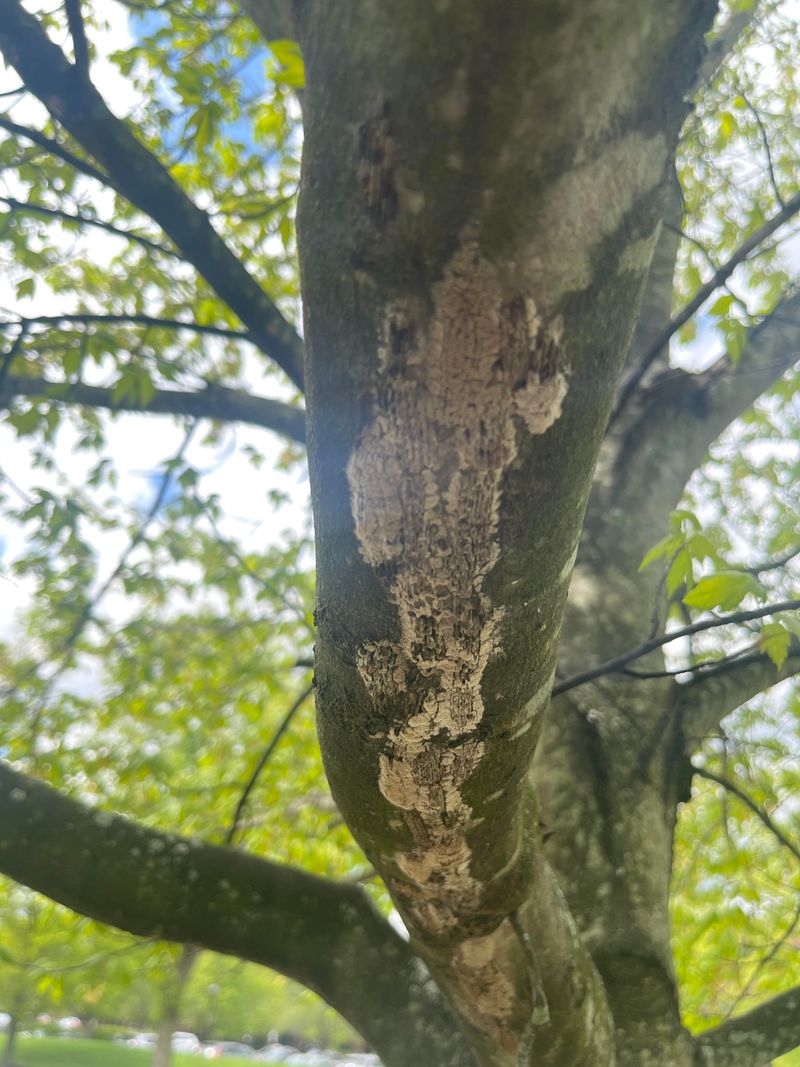
During a heavy infestation, hundreds of lanternflies can gather on a single tree, making the bark appear almost covered in insects.
When lanternflies gather by the hundreds or even thousands, the story changes. Each bug drinks only a little sap, but together they take a huge amount.
That sap holds the sugars a tree needs to grow, heal, and store energy for winter.
Losing all that fuel puts real stress on a tree. Growth can slow down, and some branch tips may lose their leaves early and stop growing.
Experts call this decline, and it often starts at the outer edges of the canopy.
A stressed tree also has a harder time fighting off other problems. Drought, disease, and other insects can hit harder when a maple is already worn out.
It is a bit like catching a cold when you have not been sleeping well.
So what can you do? Keep an eye out for big clusters, especially in September and October.
Sticky bands are risky because they can trap birds, so many experts suggest circle traps instead. If your tree is covered year after year, call a certified arborist.
They can talk through treatment options that fit your tree and your yard safely.
8. Sticky Honeydew Below Signals Heavy Feeding
Ever had your patio chair feel like it was coated in syrup? Lanternflies might be raining down a sweet surprise.
As these bugs drink sap, they release a sugary liquid called honeydew. It drips from the branches onto anything below, including cars, sidewalks, decks, and garden plants.
A lot of honeydew usually means a lot of feeding is happening overhead.
The mess does not stop there. That sweet coating draws ants, wasps, and bees looking for a free treat.
Soon after, a black, dusty fungus called sooty mold can grow on top of it.
Sooty mold looks like someone sprinkled pepper or soot across your plants. On leaves, it blocks sunlight, which makes it harder for plants to make food.
Flowers and veggies under an infested maple may look tired and grimy.
Cleanup is fairly simple, thankfully. Warm, soapy water and a soft brush work well on outdoor furniture and siding.
Wash your car more often during fall, and consider parking it away from busy trees for a few weeks.
Here is a handy trick: lay a light-colored sheet under your maple for a day. If it turns tacky or spotted, you have a strong clue that heavy feeding is going on above, even if the bugs are hiding high in the canopy.
9. Scrape Off Egg Masses Into Soapy Water This Fall
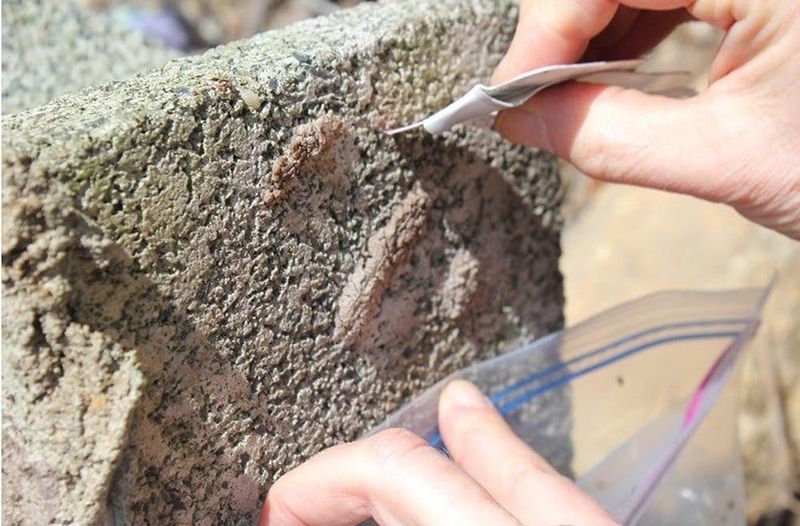
Ready to fight back? Grab an old gift card, because it is about to become your secret weapon.
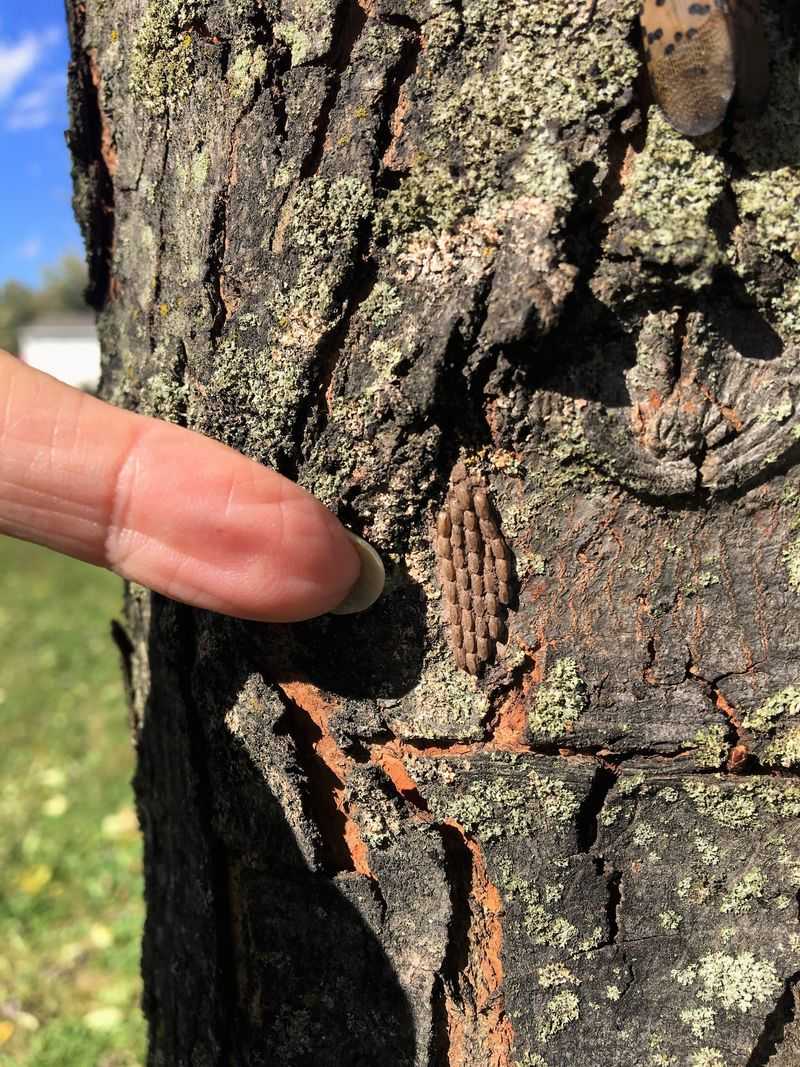
Female lanternflies lay eggs from late summer into early winter, with the busiest stretch in October. Each egg mass holds about 30 to 50 eggs.
Fresh masses look like smeared gray mud or putty, while older ones can look cracked and brownish.
Here is the exciting part. Egg masses are the only stage that stays put, so they are the easiest target.
You will find them on tree trunks, branches, rocks, fences, grills, lawn chairs, and even car bumpers.
You can remove reachable egg masses by scraping them firmly from the surface into a container of soapy water or rubbing alcohol, following local extension or Ohio Department of Agriculture guidance. Wear gloves, keep liquids away from children and pets, and never climb a tree or use a ladder to reach an egg mass.
Dispose of the eggs according to the recommended guidance. Each destroyed egg mass can prevent roughly 30 to 50 lanternflies from hatching, although removing a few masses will not eliminate the pest from your area.
Seal the bag tight and toss it in the trash. Every mass you remove means dozens fewer bugs crawling onto your maples next spring.
That is a pretty great return for a few minutes of work.
Make a careful inspection part of your fall yard cleanup. Adults can check reachable surfaces such as fences, outdoor furniture, and tree trunks, taking care not to disturb wildlife or climb to reach hidden masses.
Check under branches and low on the trunk, where masses like to hide.