Which Wasps In A California Yard Are Actually Helping Your Garden
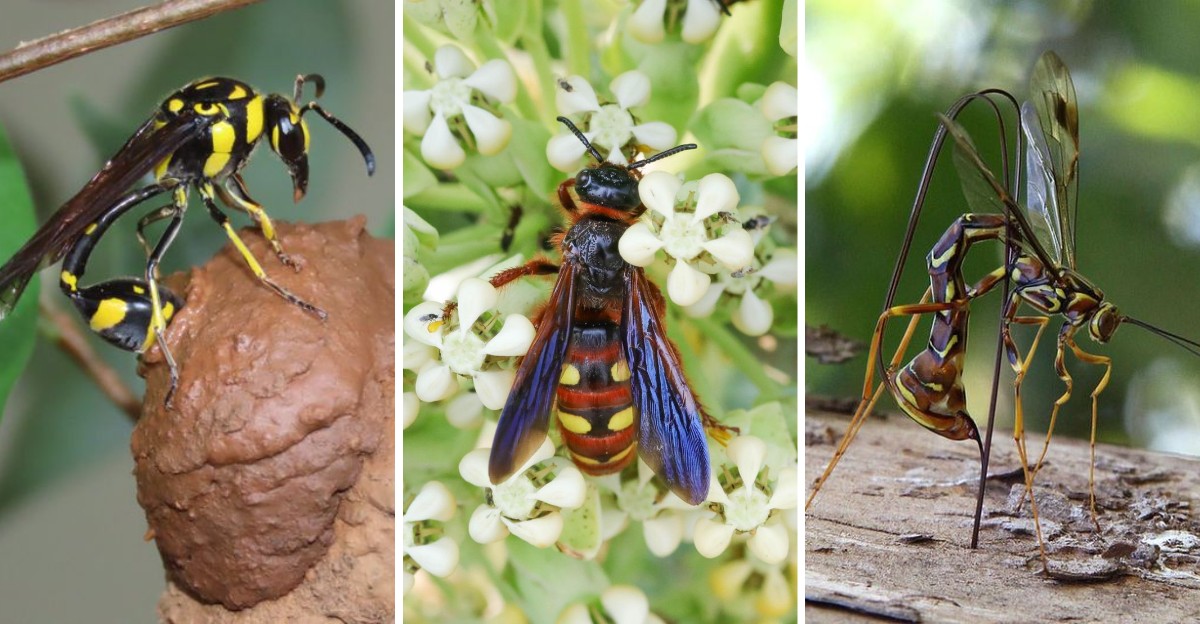
Not every buzzing visitor in a California garden deserves the reputation wasps tend to carry. Many are tiny, calm, and almost entirely uninterested in people.
Some are smaller than a grain of rice, quietly working on leaves while gardeners walk right past.
Their work happens largely out of sight, yet it shapes how many pests survive long enough to cause damage.
A few leave clues behind that look alarming at first, and recognizing them can change how a gardener responds.
That knowledge can save money, time, and plenty of unnecessary spraying.
Some of the most effective helpers in the yard arrive on wings, uninvited and unpaid, and they tend to stay as long as the welcome lasts.
1. Paper Wasps Hunt Garden Caterpillars
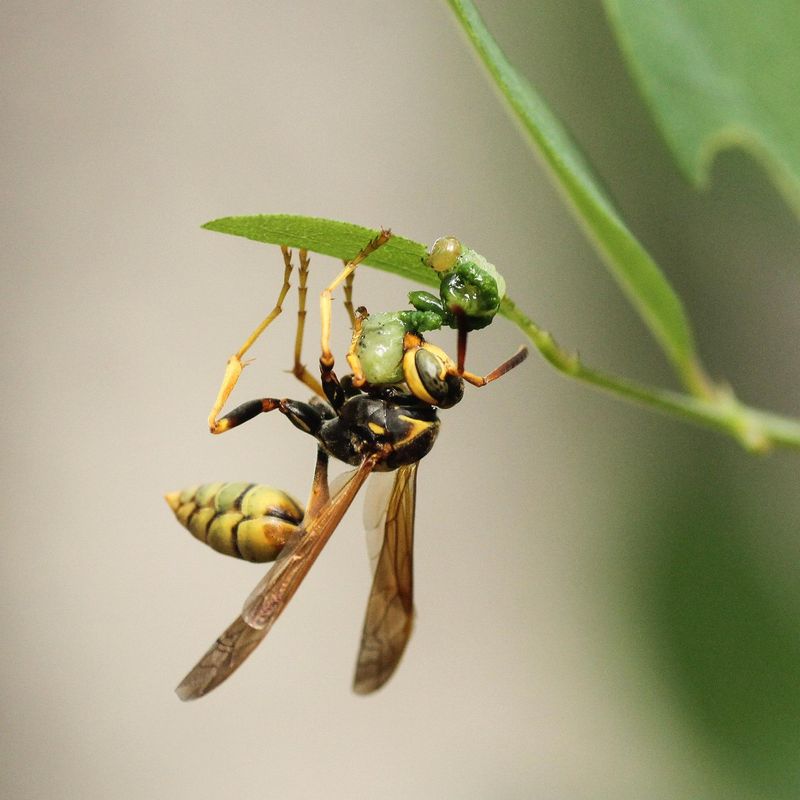
On a warm summer morning, a slim, long-legged wasp may creep across each cabbage leaf like a detective. That paper wasp is hunting caterpillars.
Once she finds one, she chews it into a soft ball and carries it home.
Home is an open, umbrella-shaped nest made of gray paper, built from chewed wood fibers mixed with saliva. The six-sided cells often hang from eaves, fence rails, or patio furniture.
Adult paper wasps sip nectar, while their young need protein. That diet makes them handy hunters of cabbageworms, armyworms, loopers, and other leaf feeders.
A single colony can remove a surprising number of caterpillars over one summer.
California yards host several types, including the native golden paper wasp and the introduced European paper wasp. Many nests start small in spring, growing through summer.
The European kind has bright yellow markings and orange antennae, so people often mistake it for yellowjackets. Paper wasps let their legs dangle in flight, while yellowjackets tuck theirs up tight.
Paper wasps rarely act aggressively away from home, though they will defend a nest.
A nest tucked in a far corner of the yard can stay put and keep working. One beside a door or play set calls for removal by a licensed pest professional.
Late fall usually brings colony decline, and old nests are rarely reused the following year.
2. Mud Daubers Capture Spiders
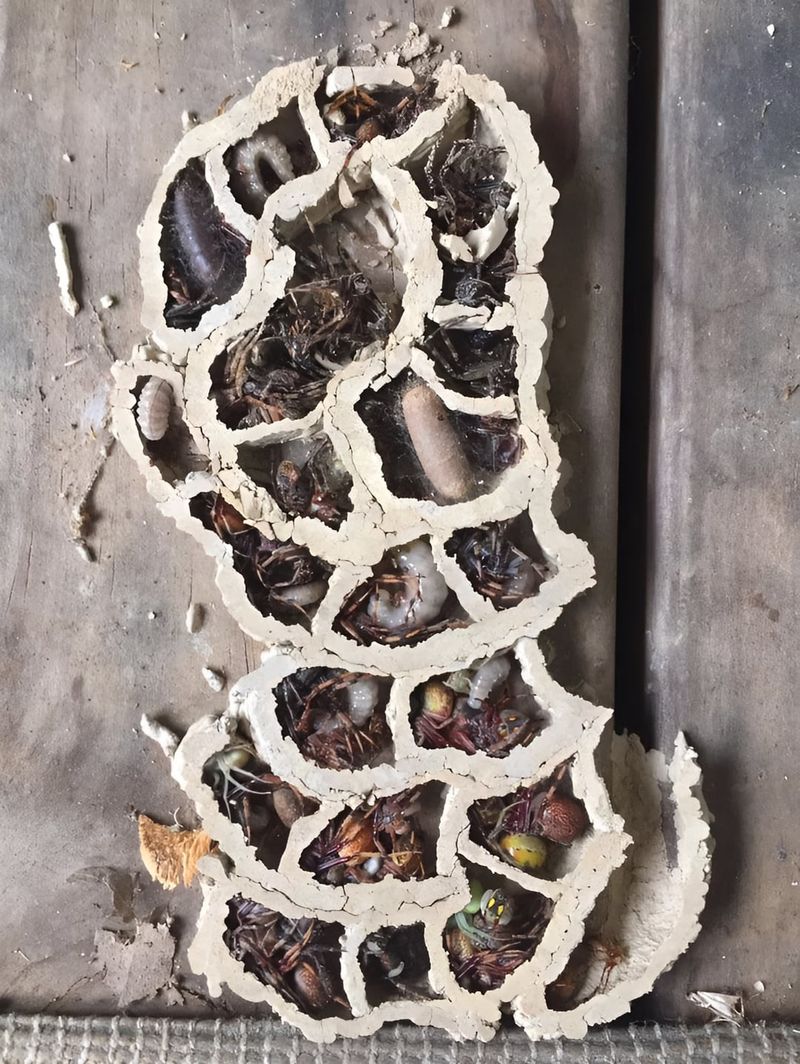
Odd little tubes of dried mud on a garage wall can make people nervous. A closer look before scraping them away reveals nurseries built by mud daubers, each packed with spiders.
Mud daubers are slender, solitary wasps with a long, threadlike waist. The black and yellow mud dauber is common in California, and so is the shiny blue mud dauber.
Near a puddle or leaky hose, one may be spotted rolling a ball of wet mud to carry away.
Inside each mud cell, the mother tucks several spiders she has stung and paralyzed, then lays one egg and seals the chamber.
The larva hatches, eats its stored meals, and later chews out as an adult.
The blue mud dauber even targets black widow spiders, making it a welcome neighbor around woodpiles and sheds.
Calm describes these wasps well. Mud daubers live alone, don’t defend nests in groups, and very rarely sting people, often ignoring anyone walking past while they gather mud.
Your California Garden Changes Every Week. Your Plan Should Too.
Gardening in California changes quickly throughout the season. Every Friday you’ll receive a simple weekly plan showing exactly what to plant, prune, fertilize, harvest, and protect so you never miss the right timing.
Some homeowners still dislike mud stains on siding. Old nests with small round exit holes are already empty and can be brushed away.
Fresh ones on a shed or fence can stay. They quietly trim the spider population without any spray, costing only a few smudges of dirt.
Late fall and winter make an easy time to clear old nests, since most activity has ended.
3. Potter Wasps Stock Nests With Caterpillars
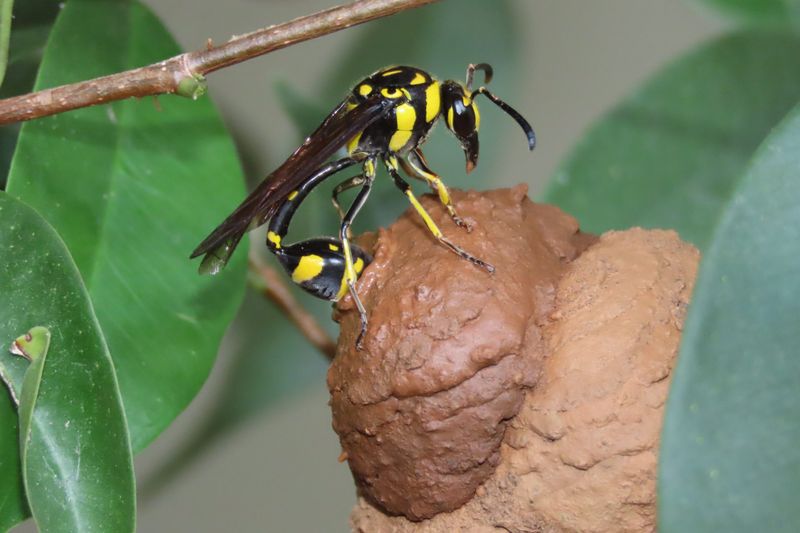
A clay jug small enough to fit on a pinky nail, complete with a neat flared lip, can feel like a piece of fairy pottery when found on a twig.
A potter wasp made it, and it holds a stash of caterpillars.
Potter wasps are solitary hunters in the same family as paper wasps. Most are black with white, yellow, or orange bands, and they fold their wings lengthwise at rest.
Adults visit flowers for nectar, often bobbing around buckwheat or yarrow blooms.
Each mother builds her tiny pot from mud and water. She stings small caterpillars, often inchworms or other moth larvae, and stuffs several inside.
After laying a single egg, she seals the opening and moves on to the next pot.
The young wasp feasts on its packed lunch before breaking free. Since every pot needs several caterpillars, one busy female can clear a fair number from plants in a season.
Leafy crops, fruit trees, and ornamentals all benefit from that steady trimming. Pots often appear on twigs, stems, and fence wire, so a gentle look before pruning protects them.
Potter wasps are mellow insects that seldom sting unless grabbed or trapped against skin, and they don’t guard nests in swarms.
A patch of bare, damp soil where they can gather mud invites them in. A shallow saucer kept moist in summer works nicely too, also serving thirsty bees and butterflies.
4. Braconid Wasps Parasitize Hornworms
Tomato growers know the shock of finding a fat green hornworm the size of a finger. That same caterpillar covered in tiny white bumps resembling rice grains, though, signals good news.
Each white bump is a silk cocoon spun by a braconid wasp larva.
The adult female, small, dark, and about the size of a gnat, lays dozens of eggs inside a young hornworm.
The larvae feed within it as they grow, then push out through the skin and spin cocoons on its back.
A parasitized hornworm slows down and soon stops feeding on plants. Leaving it on the vine lets a new batch of adult wasps emerge and hunt for more hornworms.
Removing that caterpillar would discard an entire crew of free helpers.
Braconids form a huge family, and not all target hornworms. Others parasitize aphids, cabbageworms, codling moth larvae, and other pests.
Nearly all are so tiny that most people never notice them at work, and their egg-laying tube is built for insects rather than human skin.
Keeping them around starts with skipping broad-spectrum sprays on tomatoes.
Small-flowered plants nearby help too, and sweet alyssum tucked between tomato plants offers quick nectar for hungry adults. Cilantro and dill in flower work well too.
By fall, many hornworm populations wind down, though late tomato plants still benefit from a quick check for cocoon-covered caterpillars.
5. Tiny Trichogramma Wasps Target Moth Eggs
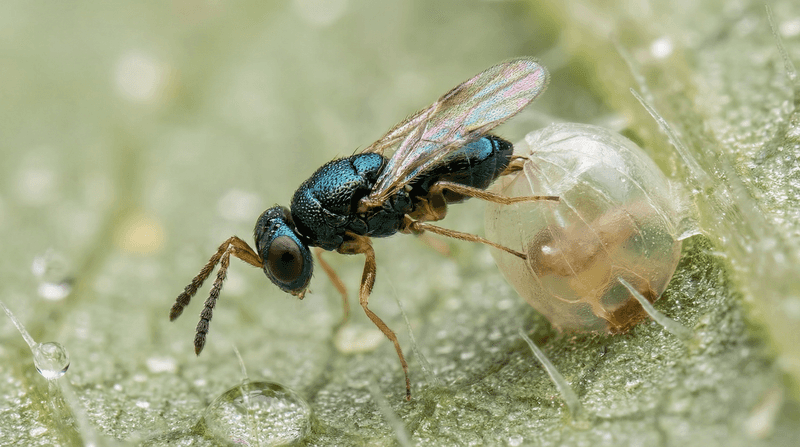
Three of these wasps lined up end to end would barely span the period at the end of a sentence.
Trichogramma rank among the smallest insects on Earth, yet they handle a job bigger bugs can’t.
A female Trichogramma searches for moth eggs on leaves and fruit, then drills in and lays her own egg inside.
Her young grow within the moth egg and consume its contents, so no caterpillar ever hatches.
A parasitized egg usually turns dark or black, the easiest sign to spot with a hand lens.
Stopping a pest at the egg stage makes a smart strategy, since the caterpillar never takes a single bite of corn, cabbage, or tomatoes.
Trichogramma attack the eggs of corn earworms, loopers, armyworms, hornworms, and codling moths, among others. Native species already live in many California yards.
Some growers also buy them as cards covered in parasitized eggs, hung among plants.
UC IPM notes that releases work best as part of a broader plan rather than a stand-alone fix.
Timing matters a great deal with purchased wasps. Releases help only while pest moths are laying eggs, so moths fluttering at dusk offer the cue to order.
Stings pose no concern with a wasp this tiny. Keeping them fed and safe matters more, since adults drink nectar.
Flowering herbs such as dill and cilantro help, along with avoiding sprays while they’re active.
6. Aphid Parasitoids Hollow Out Aphids
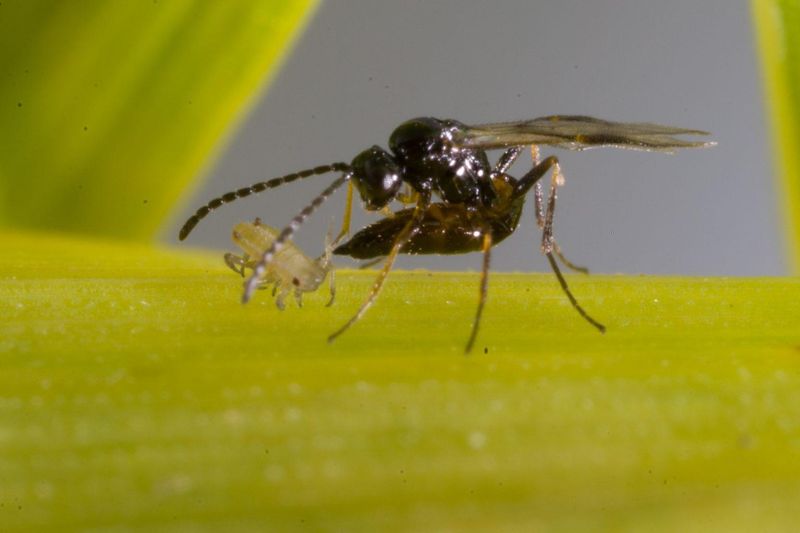
The underside of a rose leaf crowded with aphids may reveal a few that look puffed up, round, and golden brown.
Those aren’t sick aphids but aphid mummies, each one a tiny wasp nursery.
Aphid parasitoids are miniature wasps, usually less than a tenth of an inch long.
A female curls her body forward beneath her legs and places an egg inside an aphid in a split second.
Her larva grows inside, consuming the aphid from within and turning its skin into a hard, tan, papery shell.
A magnifier reveals more. A neat round hole means a new adult wasp has already chewed its way out, while mummies without holes still have wasps developing inside.
Those unopened mummies are best left right where they sit.
One female can parasitize hundreds of aphids in her short life, so even a handful of mummies signals that natural control is underway.
Outbreaks often fade on their own once these wasps and lady beetles move in. Cooler fall weather often brings another wave of parasitoid activity on aphid-covered plants.
Patience pays off. A strong stream of water knocks aphids loose without harming helpers, while harsh insecticides sharply reduce parasitoids along with the pests.
Ants cause trouble too, since they guard aphids for their sweet honeydew. Sticky barriers on trunks keep ants off shrubs and trees, giving the wasps room to work.
7. Scoliid Wasps Hunt Lawn Grubs
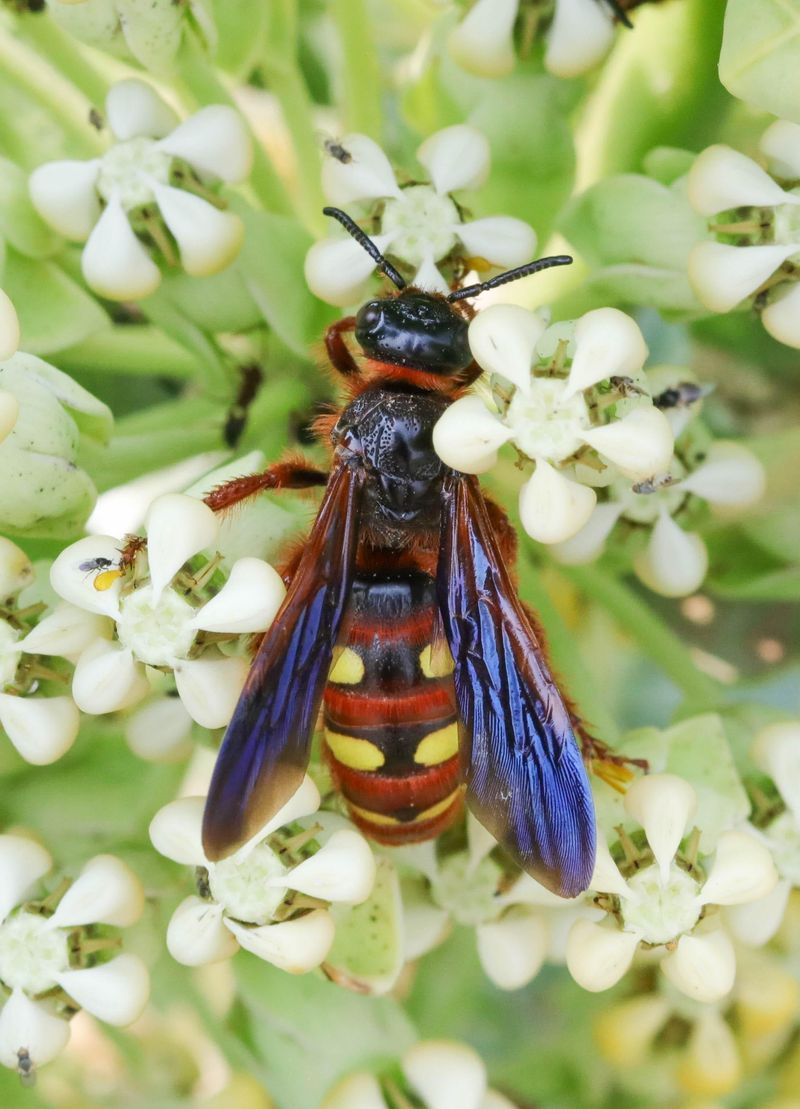
Late summer lawns sometimes buzz with large, hairy wasps flying low in lazy loops over the grass. Those fliers, often mistaken for a threat, are usually scoliid wasps searching for beetle grubs.
Scoliids are chunky, dark wasps, often with yellow or orange bands and wings that shine with a bluish or purple tint.
Females are larger than males and carry strong legs for digging, with some reaching an inch or more in length.
Grubs are the C-shaped larvae of June beetles, masked chafers, and similar beetles. They chew grass roots and can leave brown patches that peel up like carpet.
A female scoliid locates a grub in the soil, burrows down, and stings it to paralyze it, then lays an egg on it.
Her larva feeds on the grub underground, and those low, figure-eight flights offer a clue that grubs are present.
Fewer grubs also mean fewer skunks and raccoons tearing up the yard in search of a meal.
Scoliid wasps are docile and rarely sting unless stepped on barefoot or handled. Shoes on the lawn during their busy season solve most concerns.
Adults favor nectar, so a border of flowering plants keeps these grub hunters close by. Yarrow, buckwheat, and other small blooms make an easy welcome mat.
Avoiding broad lawn insecticides during their active months lets them continue working. Activity tapers in fall, though their work earlier in the season often shows in healthier turf.
8. Ichneumon Wasps Search Out Hidden Larvae
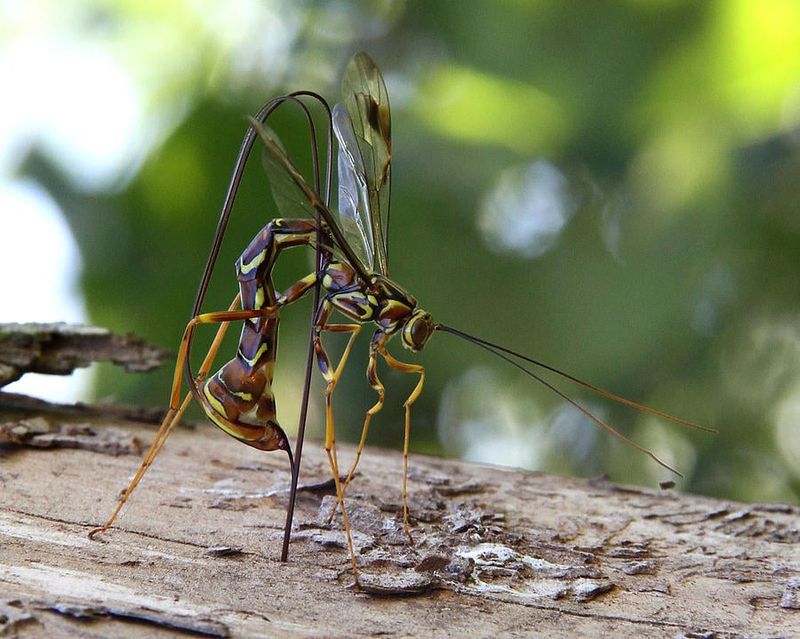
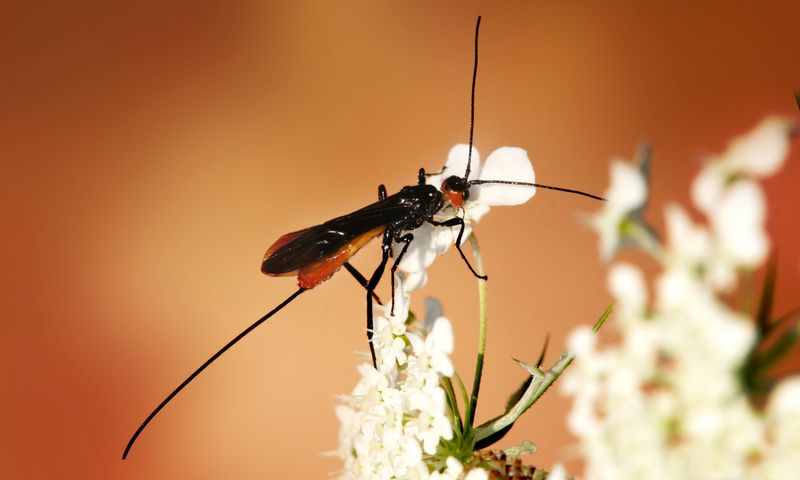
A slender wasp with a tail three times longer than its body can look alarming at first glance.
That long tail is an egg-laying tube, used to reach larvae hidden deep in wood, stems, or cocoons.
Ichneumons come in many sizes and colors, from tiny brown ones to large orange and black species.
Some can detect wood-boring larvae through bark and thread their tubes right to them, while others parasitize caterpillars on garden plants. Nearly all are harmless to people.
Supporting ichneumons and every other wasp described here follows one simple plan. Broad-spectrum insecticides, which harm helpers along with pests, are best skipped.
Small-flowered nectar sources such as sweet alyssum, dill, yarrow, and buckwheat help, since tiny wasps struggle to reach nectar in big, deep blooms.
Yellowjackets deserve a fair word too. In spring and early summer, they hunt plenty of insects to feed their young.
By fall, though, they crash picnics and swarm trash cans, and their nests turn very defensive.
Nests deserve caution. Yellowjacket nests in the ground, plus any wasp nest in walls, attics, or near doorways, belong with a licensed pest professional.
Anyone with a known allergy to stings benefits from extra caution and a plan with a doctor.
For everything else buzzing quietly in the garden, a little tolerance goes a long way. The yard gains a free pest control team that returns season after season.