The Pretty Purple Flower California Gardeners Still Plant Even Though It Can Escape The Yard
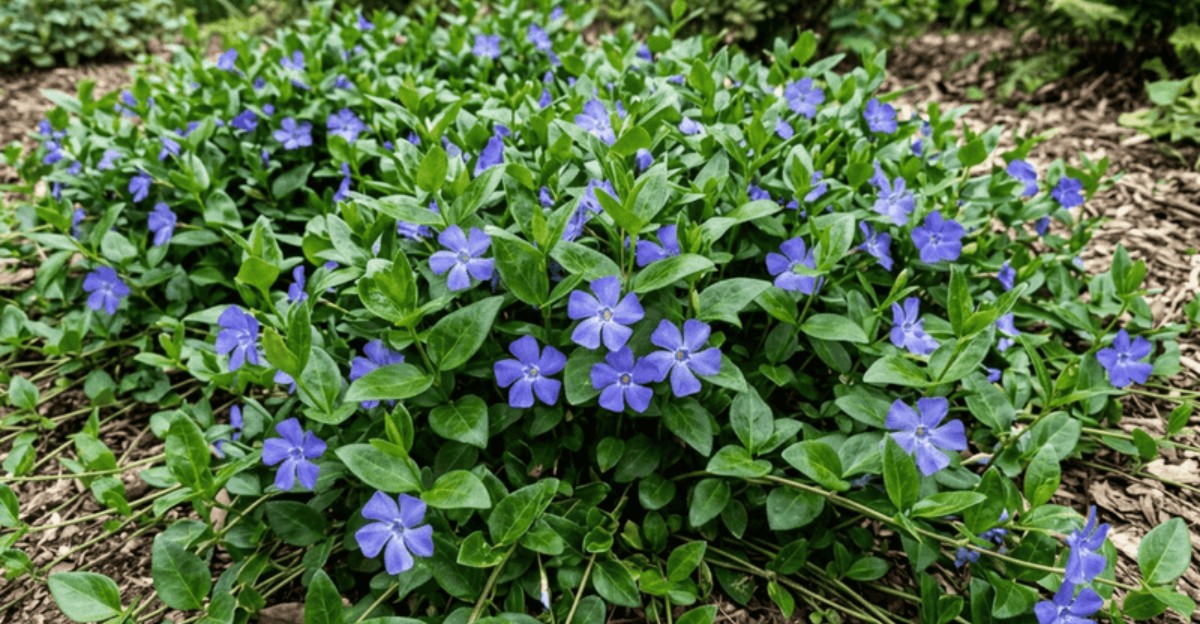
A shady creek bank in the coastal hills can look surprisingly lush, covered in glossy green leaves and dotted with purple-blue flowers, even with no garden anywhere nearby.
That scene often traces back to a familiar backyard favorite.
The plant behind it remains popular for good reasons, staying green year round, filling bare ground quickly, and thriving in shade where little else will grow.
Those same strengths, however, help it travel far beyond the fence line.
Once loose, it can blanket streamsides and woodland floors, displacing the native plants local wildlife depends on.
Understanding how it spreads, and why a quick trim rarely solves the problem, makes managing it far simpler. A shady corner can still bloom beautifully without sending trouble downstream.
Big Periwinkle Wears Pretty Purple Blue Blooms
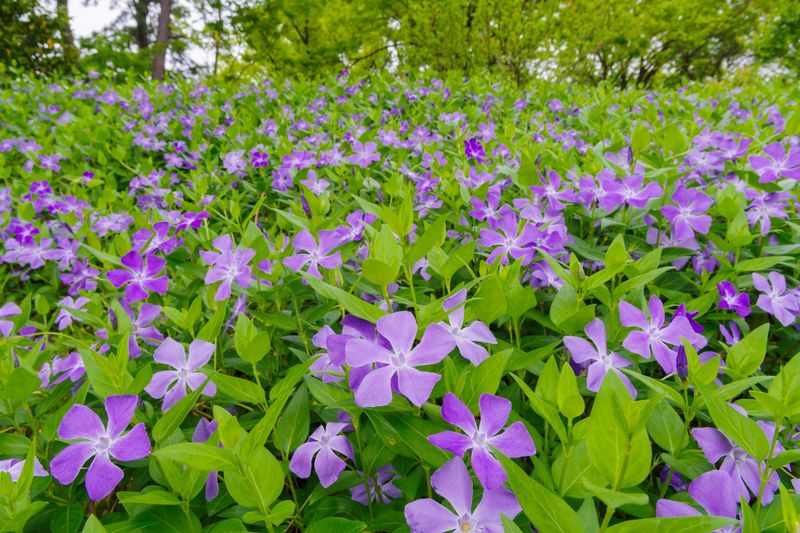
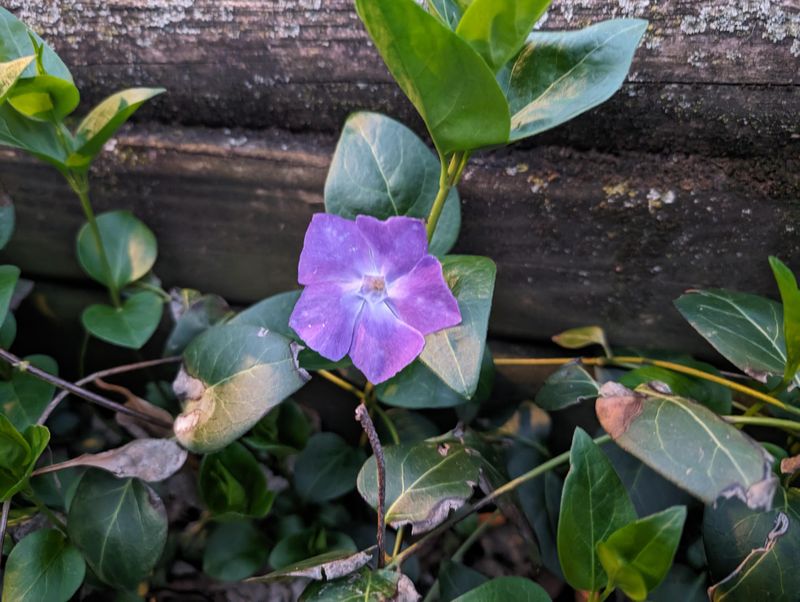
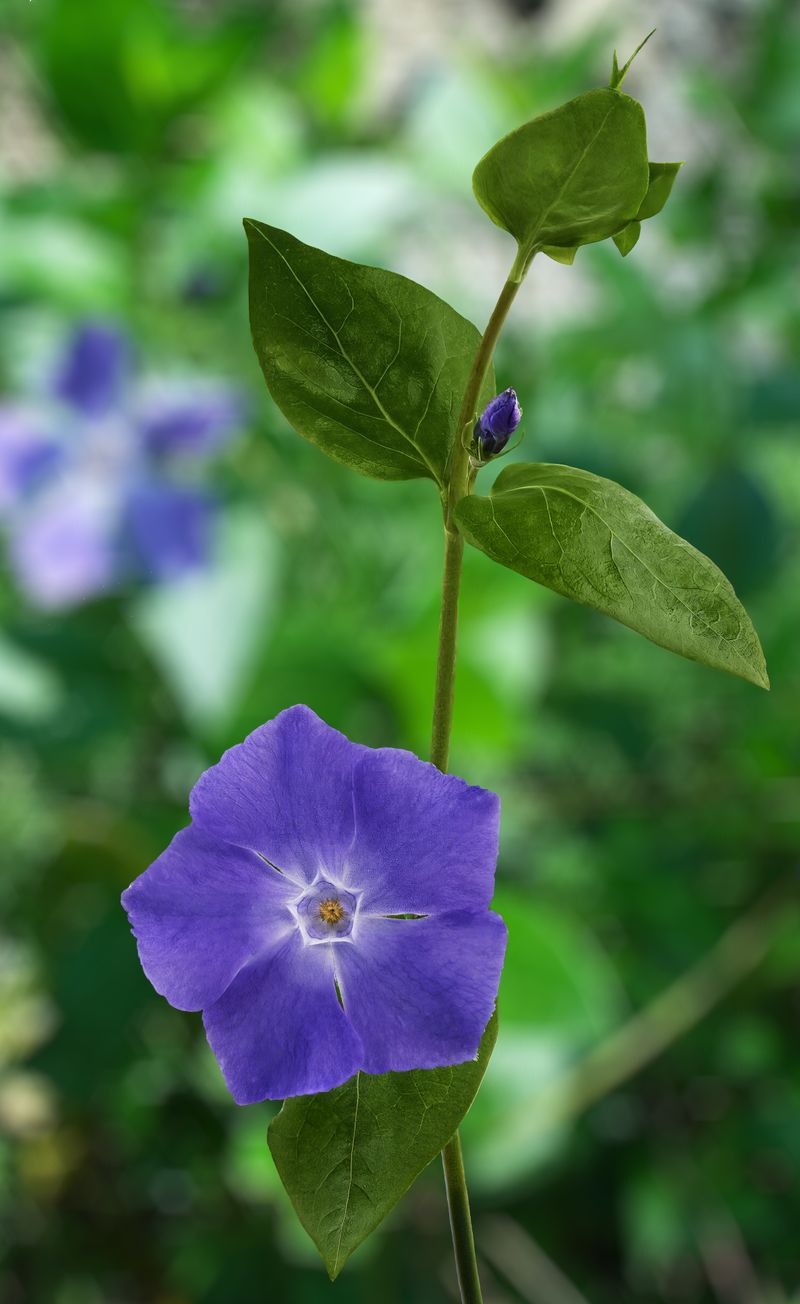
Spring sunshine hits a shady fence line, and dozens of purple-blue pinwheels pop open. Each flower carries five flat petals that twist slightly, like a tiny paper fan.
Beneath them sits a carpet of glossy, dark green leaves shaped like ovals or hearts.
The name fits. Big periwinkle, Vinca major, has larger leaves and flowers than its cousin, common periwinkle, with blooms often measuring one to two inches across.
Some garden types even carry creamy white leaf edges that brighten dark corners.
Gardeners fall for it for understandable reasons. Leaves stay green year round across most of California, and blooms appear from late winter into spring, when color feels especially welcome.
It also grows under trees, beside walls, and on slopes where grass struggles.
Nurseries have sold it for decades as a fast way to cover bare dirt, and a single pot can fill a wide patch within a season or two.
Busy homeowners appreciate anything that needs little water once settled and almost no fussing.
The plant comes from the Mediterranean region of Europe and North Africa, and California’s mild climate feels like home, which explains its quick growth here.
That comfort is exactly what lets it wander beyond the fence. Its beauty is real, so the goal here involves understanding its behavior rather than faulting anyone who planted it.
The California Invasive Plant Council rates big periwinkle as a moderate invasive.
Trailing Stems Root Wherever They Touch Soil
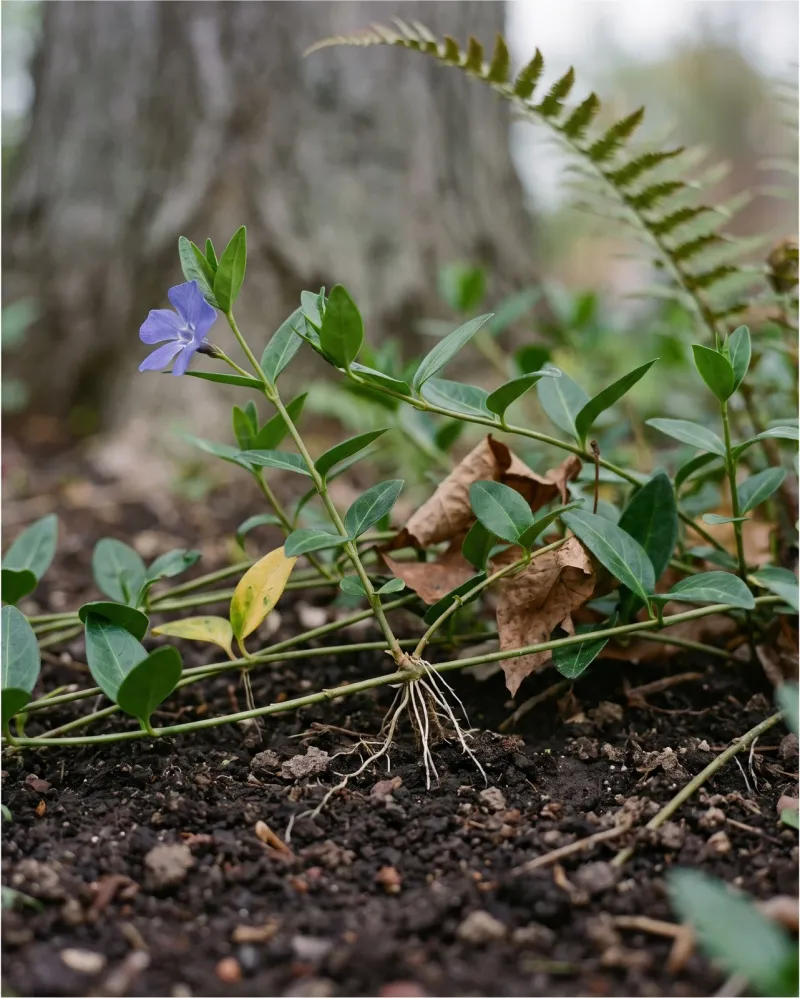
A long stem lifted from the ground may give a faint snap as tiny white roots release their grip halfway along the vine.
Big periwinkle spreads through a slow, steady game of leapfrog.
Its stems trail along the ground and can stretch several feet in one season. Along each stem sit nodes, the spots where leaves attach.
When a node presses against moist soil, it sends roots straight down, and that spot soon becomes a brand-new plant.
The effect resembles a garden hose that sprouts a sprinkler head every few inches. Each rooted node sends out fresh stems, building a tangled net within a few years.
In California, big periwinkle rarely spreads by seed. Most of its travel happens through these rooting stems and broken pieces.
Your California Garden Changes Every Week. Your Plan Should Too.
Gardening in California changes quickly throughout the season. Every Friday you’ll receive a simple weekly plan showing exactly what to plant, prune, fertilize, harvest, and protect so you never miss the right timing.
A snipped bit of vine with a node or two can start over almost anywhere damp.
Shade and steady moisture speed the process. Irrigated beds, leaky spigots, and drip lines give stems perfect landing spots.
Stems often sneak under fences, into lawns, or beneath shrubs on the other side of the property line. Fall rains and cooler weather often trigger a fresh round of rooting.
Checking the patch a few times a year helps, especially along the edges where stems stretch outward.
Pulling those wandering runners early keeps the planting from marching where it was never invited. A little watchfulness now saves hours of digging later.
Garden Dumping Starts Wild Infestations
A pile of garden clippings tossed over the edge at a canyon turnout can feel harmless, almost like returning plants to nature.
A year later, that heap may become a spreading green mat of periwinkle.
Dumped yard waste ranks among the main ways big periwinkle reaches wild places. Cal-IPC points to garden escapes and discarded trimmings as major sources of new patches.
Every chopped stem with a node can root once it lands on damp soil.
Canyons, roadside ditches, and creek banks often stay shady and moist, ideal conditions for a cut vine. Rain then washes pieces farther downhill, starting more colonies along the way.
People rarely mean to cause harm. Some assume green waste breaks down quickly, while others simply want to skip a trip to the curb.
Periwinkle cuttings, however, rarely rot quietly. They wake up and grow.
One simple rule deserves sharing with family and friends. Yard waste of any kind is best kept out of parks, open space, vacant lots, and creek areas.
Periwinkle trimmings belong bagged in the trash rather than the backyard compost pile, where stems may survive.
Local rules matter too. Many California cities offer green waste pickup, though some ask that invasive plants go in the regular trash, and a quick call to the hauler clarifies.
Small choices at the curb protect large stretches of wild land.
It Crowds Out Native Plants In Shady Areas
A spring walk through an oak woodland might promise ferns, wild ginger, and tiny wildflowers. Some spots, though, show only a thick, wall-to-wall periwinkle blanket.
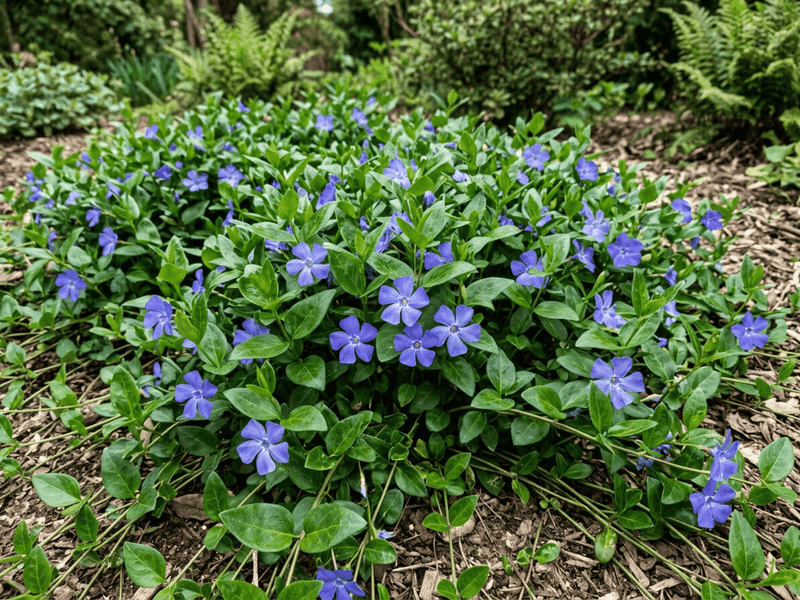
Big periwinkle forms dense mats that can reach knee-deep in rich, shady soil. Those layered leaves block sunlight, so native seedlings sprouting beneath struggle to grow through.
Below the surface, its roots compete hard for water and nutrients. Native plants that once shared the forest floor get pushed out bit by bit.
Over time, a varied mix of plants shrinks to a single kind.
That loss ripples through the entire community of living things. Native bees depend on local wildflowers for pollen, and butterflies need specific native host plants for their caterpillars.
Ground-feeding birds lose the seeds and insects they hunt among mixed plantings.
The irony is that shade, where periwinkle shines brightest, also shelters some of California’s most delicate understory plants.
Creek bottoms and north-facing slopes happen to suit the invader perfectly. Those spots often hold native ferns, irises, and woodland wildflowers found nowhere else nearby.
Cal-IPC notes that big periwinkle can crowd out natives across large areas in coastal and foothill regions.
A lush green carpet in the wild can look peaceful. In many cases, though, it represents a takeover in progress, advancing one leafy step at a time.
Restoration groups in many counties spend considerable volunteer hours removing it from parks and preserves.
Streams And Woodlands Are Common Escape Routes
Bits of green vine riding the current in a backyard drainage ditch after a winter storm show how periwinkle travels. Water serves as its favorite taxi.
Where the ride ends, a fresh patch often begins.
Streams give big periwinkle everything it wants. Banks stay moist, trees provide shade, and floods break stems into pieces that wash ashore, settle into wet soil, and root at their nodes.
Over the years, a single garden patch upstream can seed an entire creek corridor downstream.
Cal-IPC lists riparian areas, meaning streamside habitats, among the places it invades most, and along coastal and foothill creeks, it can line banks for long distances.
Woodlands come next. Stems creep from creek edges into nearby oak and bay forests, where shade lets the plant spread with little competition from sun-loving weeds.
Thick streamside mats cause extra problems. They can replace native plants whose roots help hold banks together, and they change the habitat frogs, insects, and birds use near water.
Homes near creeks play a special role. A yard bordering a stream, gully, or wooded canyon keeps any periwinkle just one storm away from wandering.
Clearing it from these edges first delivers the biggest payoff. Fall, before winter storms arrive, offers an ideal time for that work.
Drainage paths deserve watching during rainy months, since spotting and pulling washed-out pieces early stops a small hitchhiker before it becomes a creekside crowd.
Cutting Alone Does Not Stop Regrowth
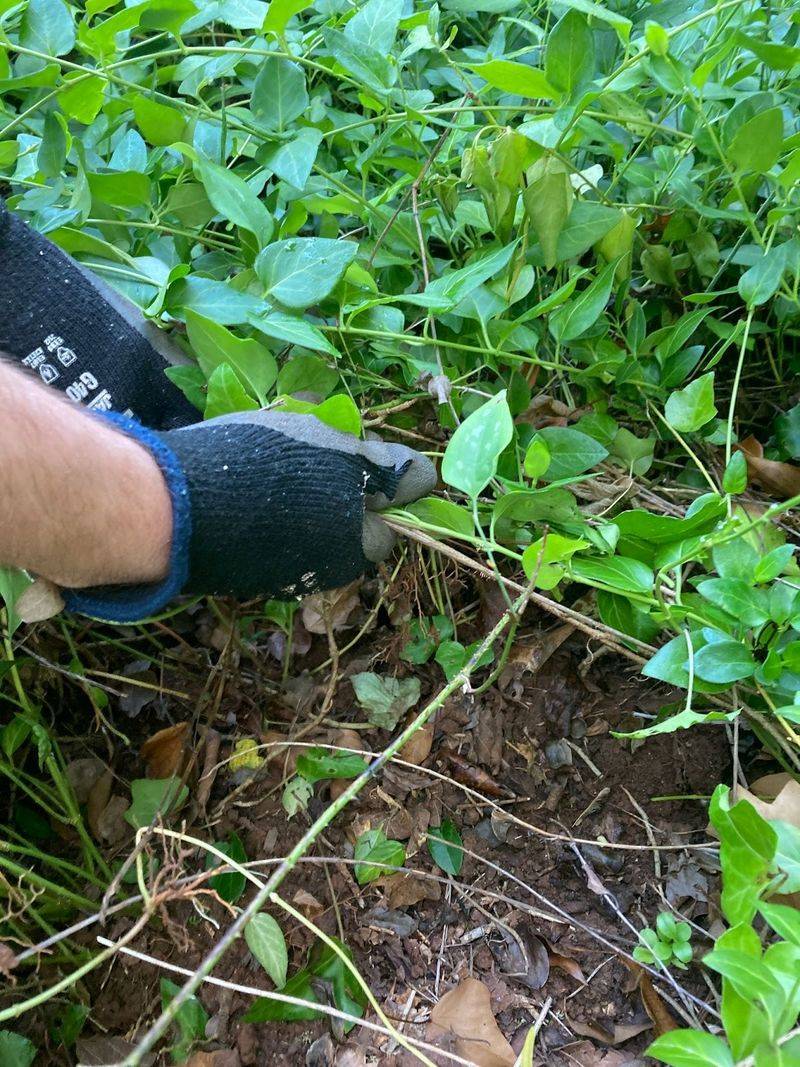
A string trimmer run across the whole patch can feel like victory. A few weeks later, bright new shoots often appear everywhere, a lesson many gardeners learn the frustrating way.
Big periwinkle stores energy in its roots and in rooted nodes along its stems. Cutting top growth leaves that underground reserve untouched, so the plant simply sends up fresh leaves.
Trimming can even worsen the problem. Mowers and trimmers chop vines into small bits and fling them around, and each bit with a node can root in moist soil.
The patch meant to shrink may end up spreading.
Hand pulling works better when done thoroughly. A garden fork loosens soil, and slow pulling brings roots out whole.
Following each runner to its rooted points, and removing those too, prevents easy regrowth.
A few rounds of effort usually follow. Tiny root pieces left behind resprout, especially after rain, so checks every few weeks through the growing season catch new shoots quickly.
Moist soil makes pulling easier, so working after a soaking rain or deep watering helps.
Gloves protect hands during a job that can stretch across a weekend or more.
Patience pays off here. Steady, careful removal beats one big cutting session, and it keeps cleanup from accidentally spreading the plant further.
Fall and winter, when soil stays damp from rain, make an especially good window for pulling.
Cover It With Cardboard And Mulch
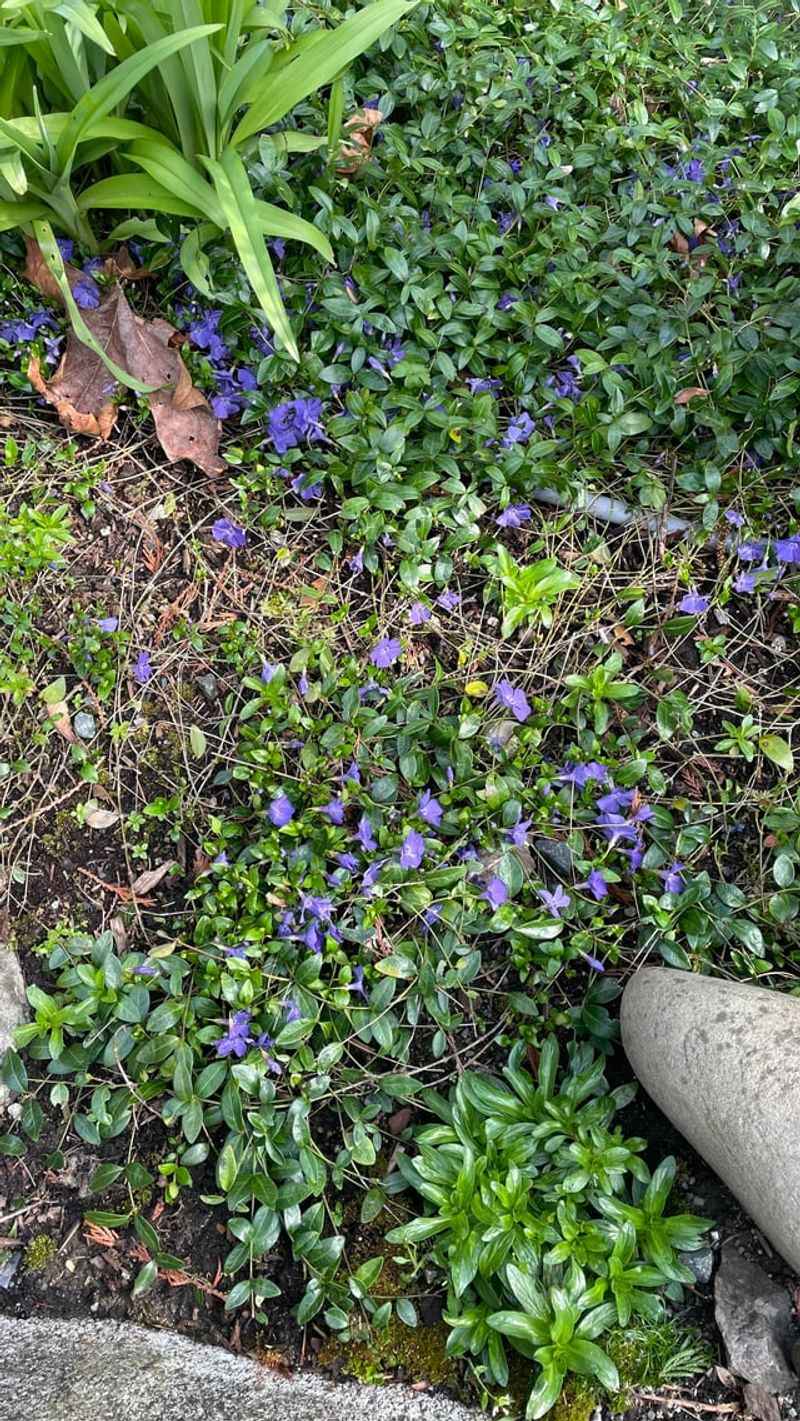
Plain brown cardboard may be the cheapest weed tool in the garage. Laid out properly, it cuts off the sunlight periwinkle needs, and paired with mulch it forms a simple plan.
The process begins by pulling or cutting as much of the patch as possible and digging out the largest root clumps.
Every stem, leaf, and fragment goes straight into a bag so nothing re-roots nearby.
Cardboard comes next, with tape and plastic labels removed. Edges overlapping by several inches block light at the seams, and a soaking with the hose helps it hug the soil.
Three to four inches of wood chip mulch on top holds the cardboard down, keeps moisture in, and looks tidy, while leftover roots underneath gradually run out of energy.
Within five feet of the house in fire-prone areas, Zone 0 rules exclude combustible mulch, so hand pulling followed by gravel or bare soil works better there.
The cover stays in place for many months, often a full growing season or longer. Regular walks along the edges catch stems sneaking out sideways.
Escapees come out by hand, with extra cardboard added wherever gaps appear.
All periwinkle waste belongs in the trash rather than compost or green bins, unless the city specifically accepts invasive plants.
Once the patch stays quiet, holes cut in the mulch make room for native shade plants such as hummingbird sage, yerba buena, Douglas iris, or western sword fern.