The Arizona Native Tree Smart Homeowners Plant This Fall in the Low Desert
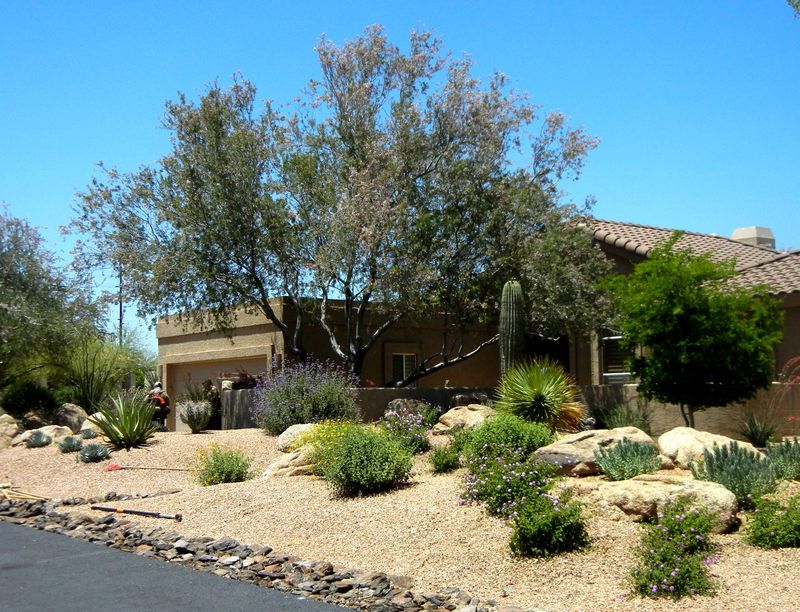
Picture a tough, broad-crowned tree that grows right in the Sonoran Desert and handles brutal summer heat. Desert ironwood is a native option that may suit some Phoenix and Tucson yards, but it comes with trade-offs worth knowing before you shop.
It grows slowly, has short spines, and needs real care at the start. Here is how to decide if it fits your yard and your fall planting plans.
Check local stock instead of assuming it is unavailable
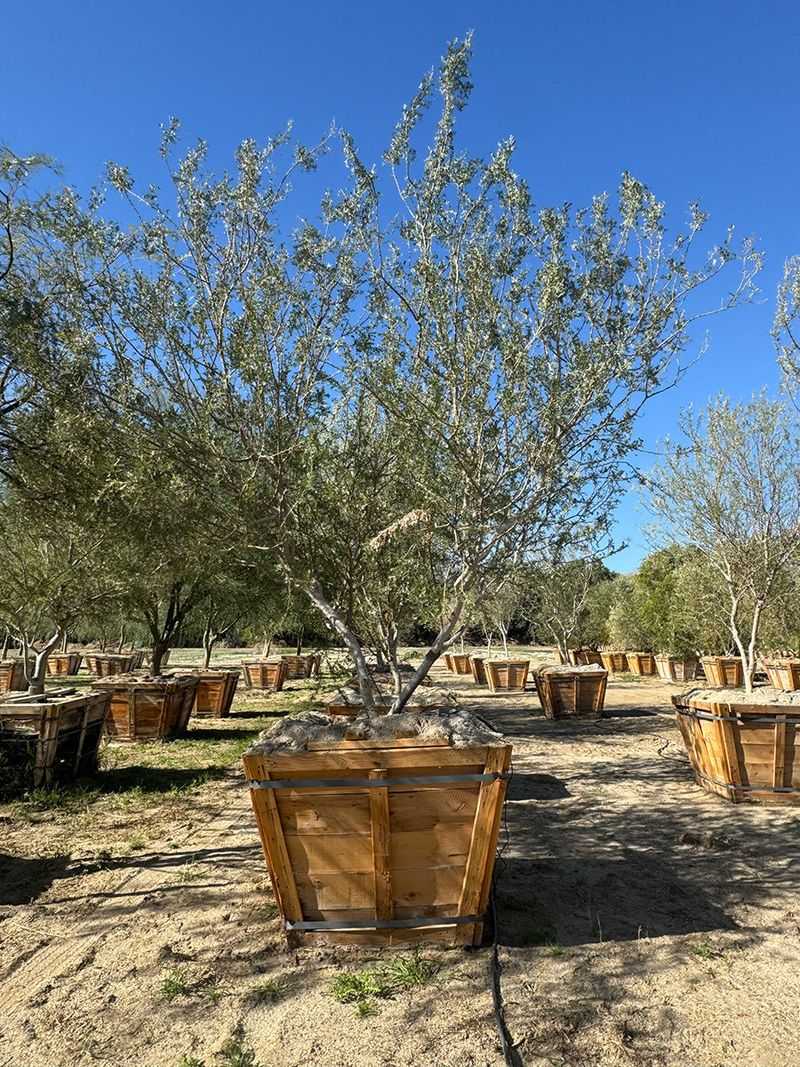
Plenty of homeowners assume a native tree like this must be a special order. The reality is simpler: University of Arizona legume program notes say desert ironwood is readily available in various sizes from commercial nurseries in Arizona.
What we can’t tell you is what any big-box chain or individual store has on the shelf. Inventory changes by location and by season, so there is no honest blanket answer.
Your best move is a few quick calls. Ask local nurseries and home improvement retailers whether they carry Olneya tesota, what container sizes they have, and when new stock arrives.
If one place comes up empty, try another before you give up on the idea.
It also helps to ask about the tree’s health. Look for a sturdy trunk, healthy foliage, and roots that are not circling tightly in the pot.
A little legwork now can save you from settling for a tree that does not suit your yard.
A broad canopy takes patience and room
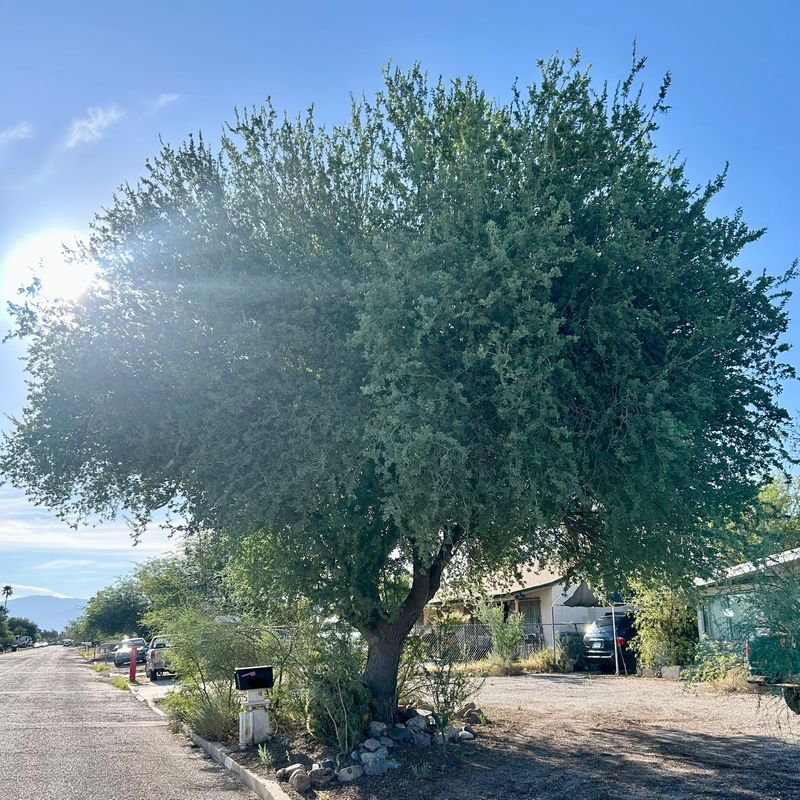
Desert ironwood, known scientifically as Olneya tesota, is a Sonoran Desert native that can eventually reach about 20 to 30 feet tall and wide, according to the University of Arizona’s species profile. That is a generous, spreading shape once it matures.
The key word is eventually. This tree grows slowly to modestly, so it will not give you a leafy umbrella in a couple of seasons.
If you need afternoon relief for a west-facing patio next summer, ironwood alone will not deliver it.
Think in terms of years. Walk your yard and picture a canopy roughly 30 feet across.
Does it clear the house, power lines, walls, and neighbors’ trees? Can you live with partial shade while it fills out?
If you can, the payoff is a sturdy, heat-tolerant tree with a broad crown. If you cannot wait, consider pairing a young ironwood with temporary shade such as a shade sail or pergola while it grows.
Its native range, described in Extension plant notes, sits in low-elevation Sonoran Desert country.
Its canopy supports desert habitat
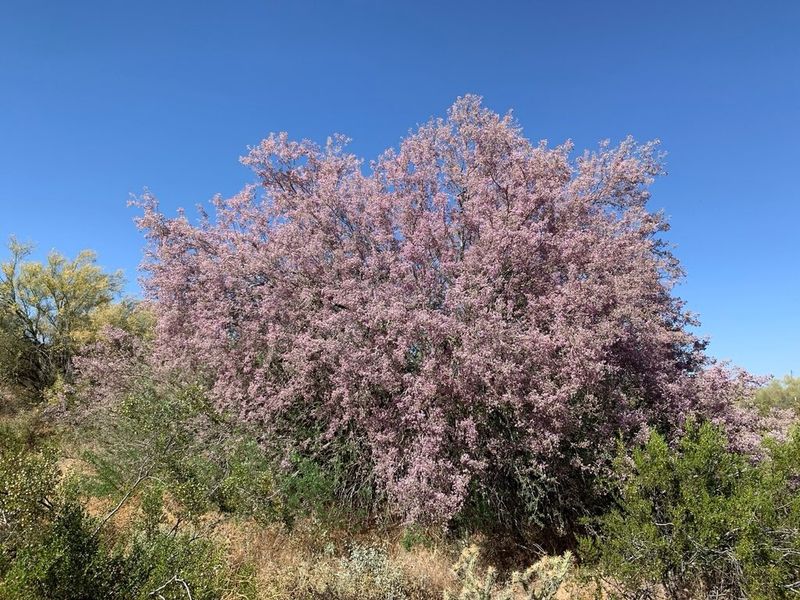
Walk through undisturbed Sonoran Desert and you may notice smaller plants tucked under ironwood branches. Researchers call this a nurse plant effect, where a tree’s shade creates a gentler spot for other plants to grow.
In a field study at sites in Sonora and Arizona, 75 perennial plant species were found beneath ironwood canopies. The study also measured temperature differences in the shaded habitat.
Keep the setting in mind. Those were natural desert sites, not suburban lots.
Your Arizona Garden Changes Every Week. Your Plan Should Too.
Gardening in Arizona changes quickly throughout the season. Every Friday you’ll receive a simple weekly plan showing exactly what to plant, prune, fertilize, harvest, and protect so you never miss the right timing.
A single tree in your yard will not recreate that community, and it cannot promise visits from any particular bird, bat, or pollinator.
What it can do is offer shade and structure, which gives you a head start on a more desert-friendly yard. Pair it with other low-water natives beneath and around it, and you build a landscape with real habitat value.
Just don’t count on it for pest control. Nothing here suggests it keeps scorpions, mosquitoes, or ticks away.
Check whether your yard is a good fit
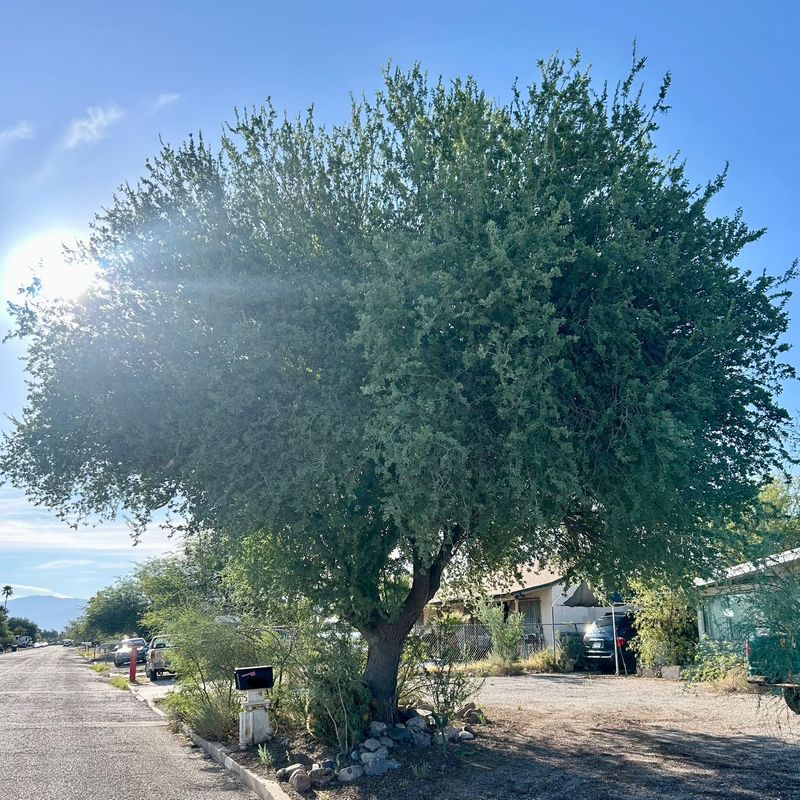
Before you buy, walk your site with a tape measure. Desert ironwood fits best in low-elevation Sonoran Desert settings, such as the Phoenix and Tucson regions.
Being native to Arizona does not make it right for every corner of the state, and university descriptions place it at lower elevations, below about 3,000 feet.
Look for a sunny spot with space for a canopy that may reach roughly 30 feet across. Measure from the planting spot to walls, fences, pools, and neighboring trees.
Now think about foot traffic. The twigs carry short spines, so skip planting beside a narrow path, a gate, or a play area where people brush past.
A wide, open yard corner is a much safer choice.
Finally, picture the shade you want and where it will fall. A tree placed with room to spread will need less pruning and cause fewer headaches down the road.
Plant profiles like this Extension entry can help you compare your site against the tree’s natural habits.
Use regional guidance to plan fall planting
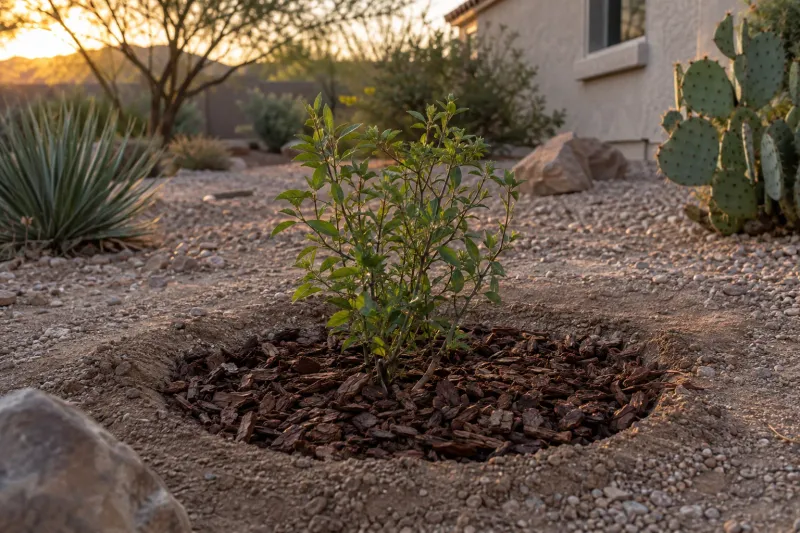
Fall can be a smart planting window in the low desert, since cooler weather lets roots settle before the next summer. Local timing guidance varies a bit, so match it to where you live.
The City of Chandler calls September through November ideal for planting desert trees. For Pima County, Extension’s October gardening guide recommends planting trees early in October.
These are regional guidelines, not statewide deadlines, and not every date or site will be right. Check your own conditions first.
When planting day comes, set the root ball level with or slightly above the surrounding soil. Backfill with the native soil you dug out, then water thoroughly to settle it.
Finish with mulch, but keep it pulled back from the trunk so moisture does not sit against the bark. A neat ring of mulch out past the root ball helps hold in moisture without causing trouble.
Low water use comes after establishment
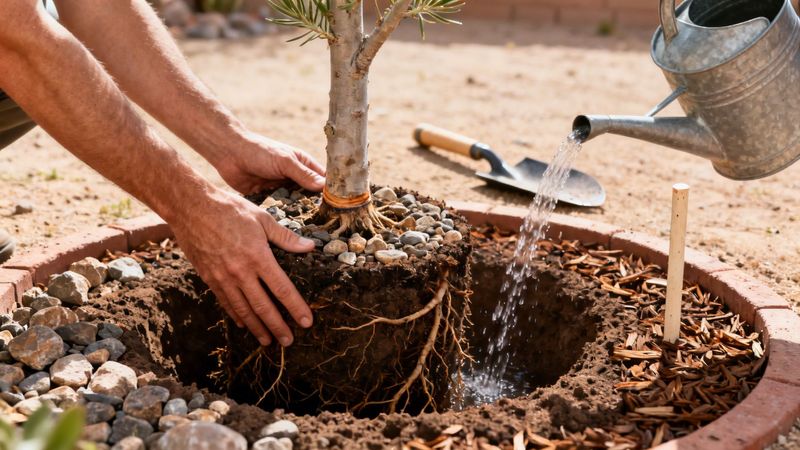
Low water use is a reward for patience. Once established within its range, ironwood may get by on rainfall, but university guidance notes that growth can be greatly reduced without extra water.
Survival and thriving are not the same thing.
A newly planted tree needs supplemental irrigation. Think of about three years as a general establishment guideline for trees, not a promise for every ironwood.
Some may settle in sooner, and others may need more time.
Once the tree is established, deep, infrequent watering suits desert-adapted trees, as Extension watering advice describes. The same source says too little or too much water can cause problems.
That is why a fixed calendar does not work. Soil type, weather, and the tree’s age all change what it needs.
Check the soil a few inches down, watch the leaves, and lengthen the gaps between waterings gradually as the tree gets its footing.
Choose the tree that fits your site and timeline
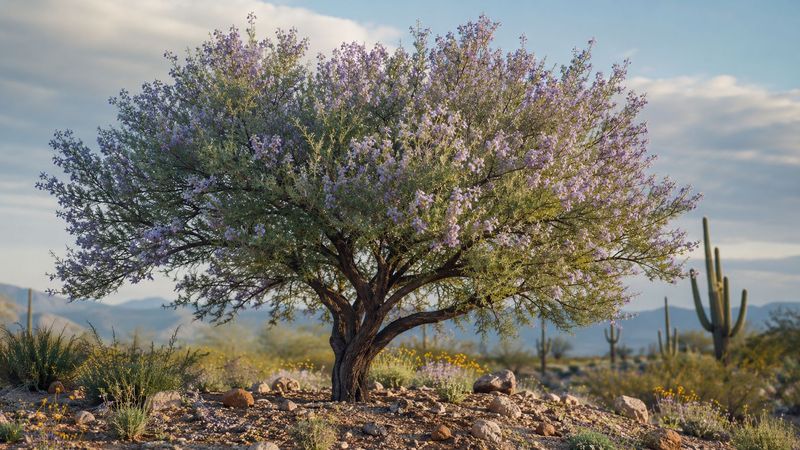
Desert ironwood makes the most sense for a sunny, spacious low-desert yard. You will need room for a canopy up to about 30 feet across, a spot away from tight walkways because of the spines, and patience while it grows slowly.
You will also need to water it through establishment. Both species notes and watering guidance point to that early care.
Call local nurseries and stores to confirm availability before you plan your planting day. If your space is tight, your shade needs are urgent, or you cannot commit to early watering, another species may serve you better.
A good tree choice is the one your yard can actually support, and an ironwood planted well can still be shading someone long after you have forgotten the effort.