Why Arizona Homeowners Are Growing Star Jasmine Along Their Fence For Shade-Loving Fragrance
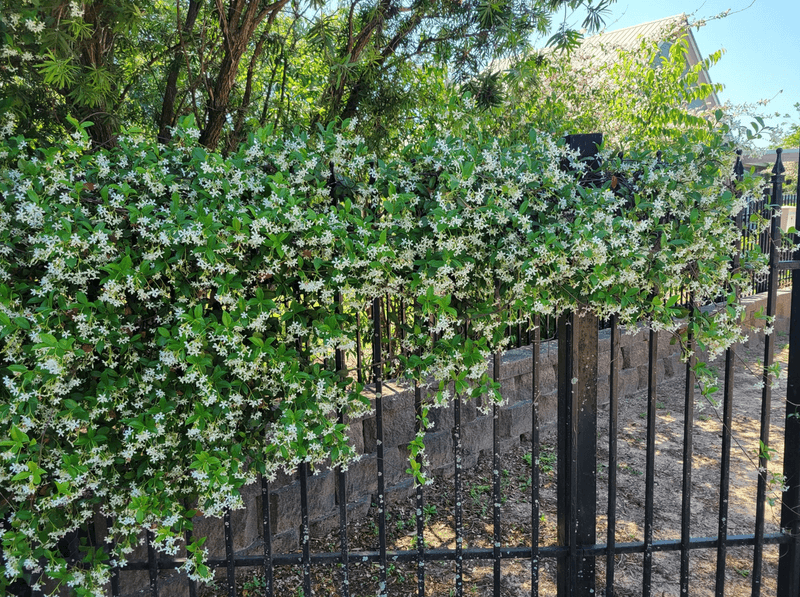
Star jasmine is an evergreen, twining vine with glossy leaves and small white flowers that fill the air with a strong, sweet scent each spring. For Phoenix and Tucson homeowners who have a fence with filtered light or afternoon shade, it can provide a living green screen that looks good year-round.
Getting the most from this plant means matching it to the right spot, preparing the soil carefully, and committing to consistent irrigation. This guide walks through what star jasmine can realistically offer in the low desert, and where it falls short.
Star jasmine offers a fragrant way to soften a protected fence
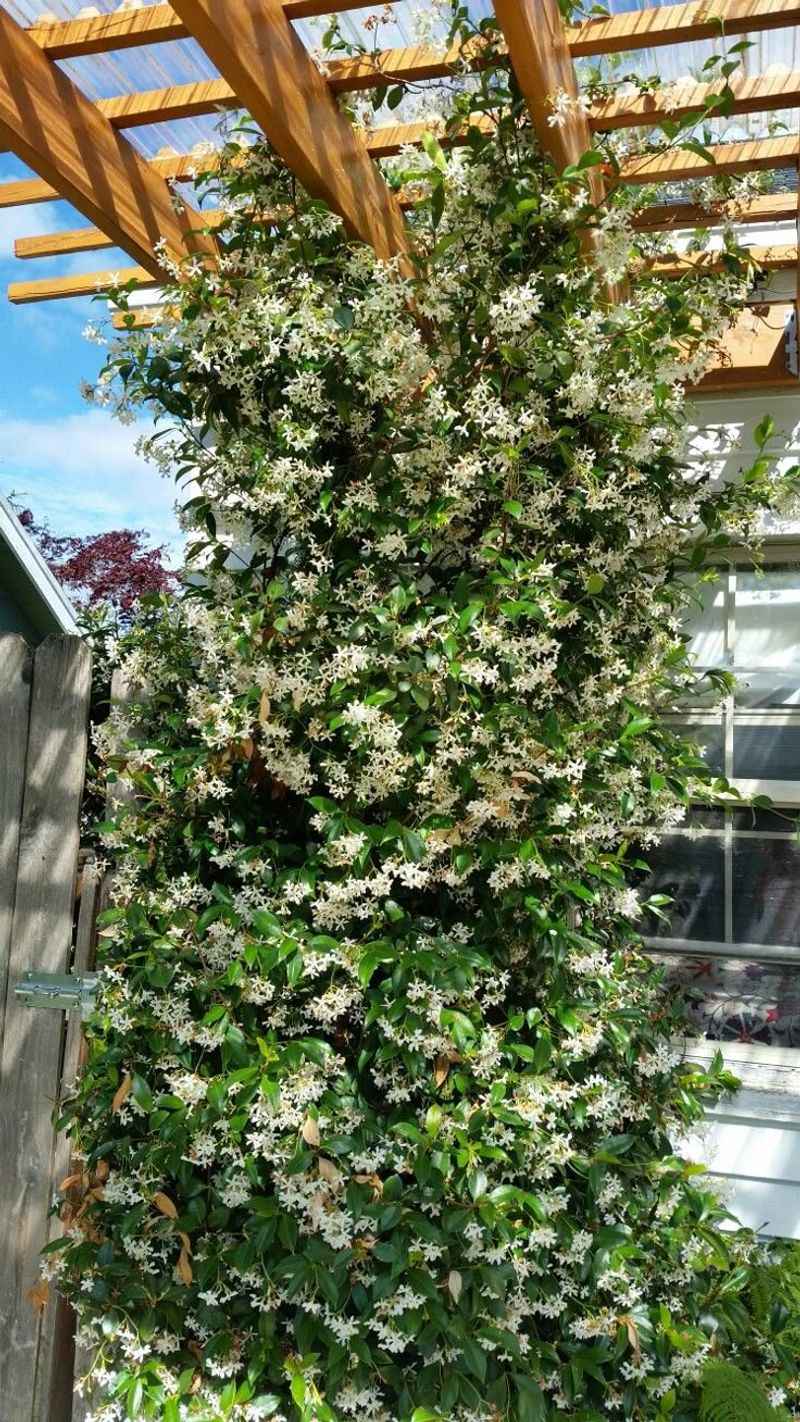
Trachelospermum jasminoides, sold widely as star jasmine or Confederate jasmine, is an ornamental vine native to southeastern Asia. It is not a true jasmine in the genus Jasminum, even though the name and the scent invite that comparison.
The University of Arizona Campus Arboretum identifies it as a fragrant landscape vine suited to protected Arizona sites, and the University of Arizona art-of-gardening plant list includes it among recommended fragrant vines for Arizona landscapes.
The plant produces glossy, deep-green leaves that stay on the vine year-round, making it useful as a visual screen along a fence or trellis. In late spring, clusters of small white flowers open in a pinwheel shape and release a scent strong enough to notice from several feet away.
That combination of evergreen coverage and nearby fragrance is the plant’s clearest practical value for a fence setting.
Mature vines can reach significant heights on a supported structure, which means a well-established plant can cover a meaningful section of fence over time. That said, coverage speed varies with plant size at installation, irrigation, heat exposure, and support type.
Softening the look of a fence and adding fragrance near a patio or gate are realistic goals; promising rapid whole-fence enclosure or substantial cooling shade is not.
Match the fence to filtered light, not a generic shade label
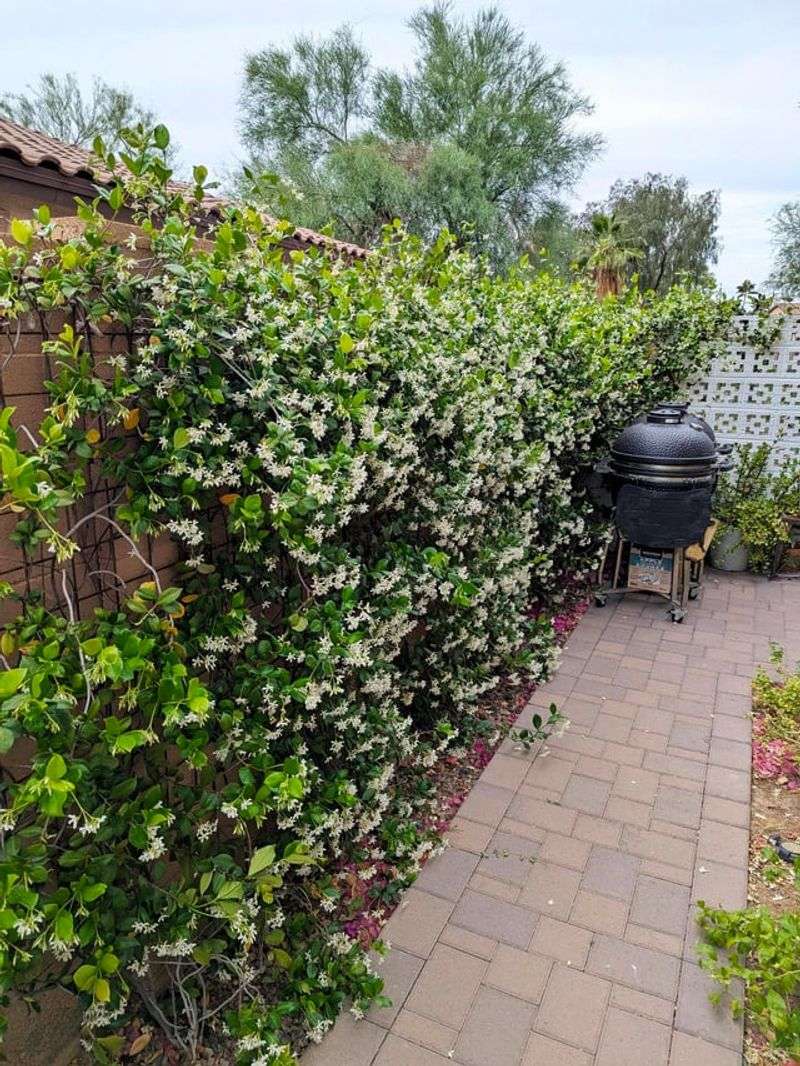
Before buying a plant, walk the fence line at different times of day and note when direct sun hits the wall and for how long. Arizona-specific guidance from the University of Arizona recommends part shade and east- or north-facing exposure for star jasmine in low-desert areas.
UA’s ground-cover guide goes further, stating that afternoon shade is required at elevations below 2,000 feet, which covers most of the Phoenix and Tucson metro areas.
A west- or south-facing block wall that absorbs heat all afternoon is a poor candidate. The reflected heat and intense afternoon radiation can stress the foliage even when the root zone receives adequate water.
An east-facing fence that gets morning sun and shade by early afternoon, or a north-facing fence with bright indirect light, fits the range the plant performs best in for low-desert conditions.
Deep shade is a different problem. NC State Extension lists star jasmine as tolerant of partial shade, but dense, unrelieved shade can reduce flowering and weaken the fragrance that makes the vine worth growing in the first place.
The evidence does not establish a single hour-count where flowering stops, but homeowners who want reliable blooms and scent each spring should avoid assuming that any dark or heavily shaded fence will produce the same results as a filtered-light location.
Your Arizona Garden Changes Every Week. Your Plan Should Too.
Gardening in Arizona changes quickly throughout the season. Every Friday you’ll receive a simple weekly plan showing exactly what to plant, prune, fertilize, harvest, and protect so you never miss the right timing.
Test the root zone before you plant
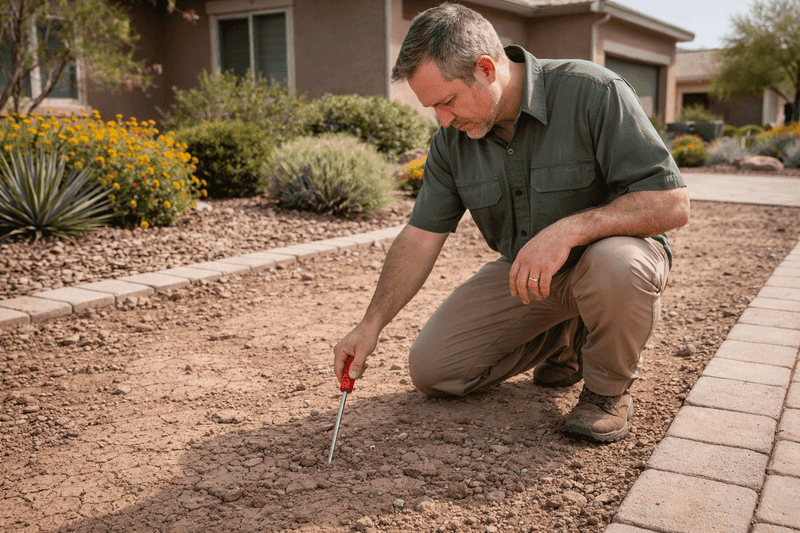
Arizona soils present a real challenge for any vine that needs consistent moisture without waterlogging. Compacted ground, clay-heavy layers, and caliche hardpan all slow drainage, and roots sitting in wet soil for extended periods will suffer.
Before planting, dig a hole about 12 inches deep and wide near the fence, fill it with water, and time how long it takes to drain. If standing water remains after an hour or two, drainage needs improvement before the vine goes in.
The University of Arizona’s planting guidelines for container trees and shrubs recommend deep soil preparation rather than relying on a small planting hole. Breaking up compacted layers, amending with organic matter, and ensuring a clear drainage path give roots room to develop and reduce the risk of chronic wetness at the root zone.
Skipping this step and planting directly into undisturbed desert soil is one of the most common reasons ornamental vines underperform or decline in the low desert.
Alkaline soil adds another layer of complexity. The UA Campus Arboretum notes that star jasmine may develop iron chlorosis in alkaline desert soils, a condition that shows up as yellowing new leaves with greener veins remaining visible.
The right response is to improve drainage first, avoid overwatering, and test the soil when symptoms appear. Chelated iron products can help correct a confirmed deficiency, but applying them without a diagnosis wastes money and does not fix an underlying drainage or watering problem.
Plant in a mild season and build an irrigation routine
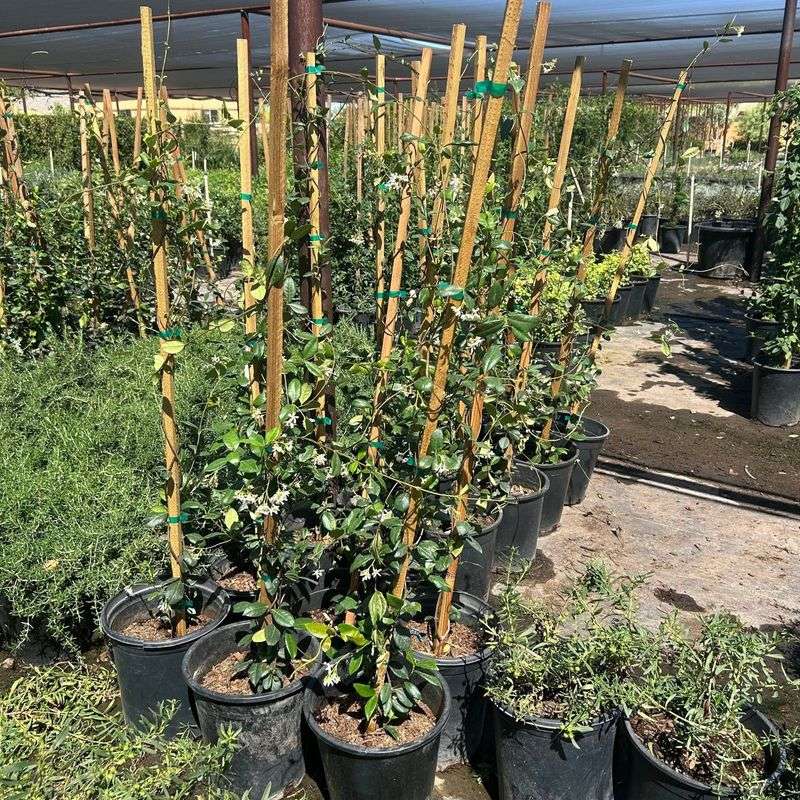
Timing the installation to a mild season gives roots the best chance to establish before extreme conditions arrive. For container-grown plants in the low desert, fall and early spring are the practical windows.
Fall planting lets roots develop during cooler months before summer heat arrives, while early spring works if the vine is in the ground before temperatures climb into the high 90s. Putting a new vine in during peak summer heat, when soil temperatures are extreme and evaporative stress is highest, makes establishment significantly harder.
New plants need regular irrigation while roots are still confined to the original root ball and have not yet spread into surrounding soil. University of Arizona vine guidance rates star jasmine as medium to high water use in low-desert conditions, and recommends generous watering particularly in sunny exposures.
That is a meaningful distinction from the broader horticultural claim that established plants can be drought-tolerant. An established vine in a cooler, coastal climate is not the same as a newly planted vine in a Phoenix summer microclimate.
As roots extend into prepared soil over weeks and months, watering intervals can gradually lengthen, but the adjustment should follow the plant’s response and the season rather than a fixed calendar. Drip irrigation delivers water directly to the root zone with less waste than broadcast or overhead watering, and the University of Arizona’s guidance on efficient landscape irrigation supports drip systems for ornamental plantings.
Treating star jasmine as a low-water or set-it-and-forget-it vine in the low desert will lead to a stressed, underperforming plant.
Give the twining stems a support they can actually use
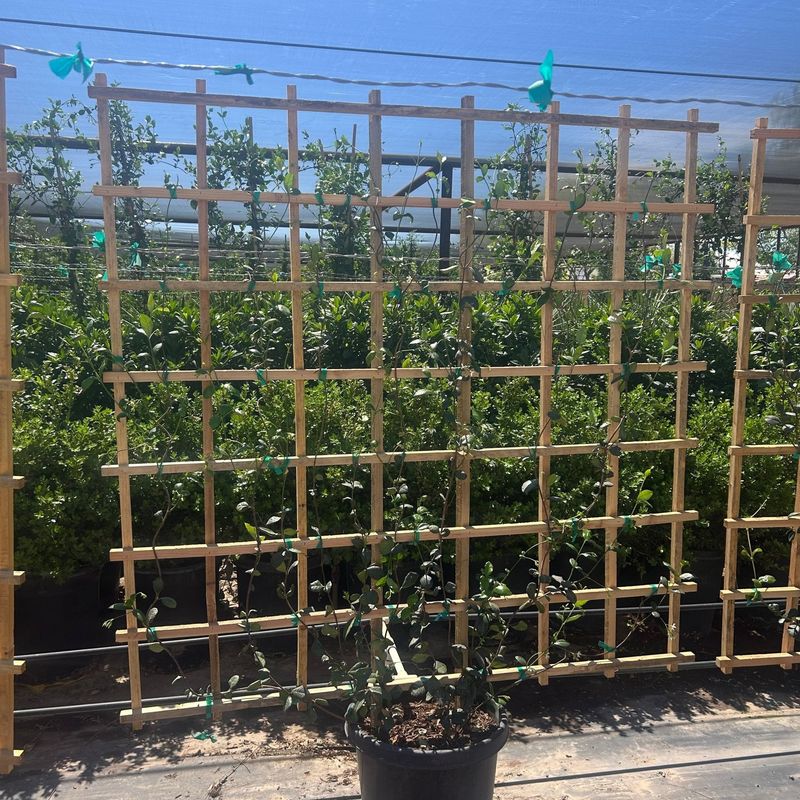
Star jasmine climbs by twining, meaning its stems wrap around whatever they can reach. That growth habit requires a fence or trellis that offers something narrow enough for the stems to grip, such as wire, wooden lattice, or thin horizontal rails.
A smooth block wall or a flat wood surface with nothing to grab gives the vine no purchase, and stems will simply hang or sprawl without anchoring.
When the vine is young, guiding a few leading stems to the support by hand and securing them loosely with soft ties gets growth headed in the right direction. From there, new stems will seek out and wrap the available structure on their own.
NC State Extension and Oregon State University both describe star jasmine as a twining vine suited to fence and trellis training, and neither source calls it self-clinging the way ivy or creeping fig attaches directly to surfaces.
Pruning after the main flowering period helps keep the vine within the fence line and encourages denser growth rather than long, bare runners. Placing the vine near a patio, walkway, gate, or seating area makes practical sense because the flowers are strongly scented and the fragrance is most enjoyable close to where people spend time outdoors.
Coverage speed depends on plant size at installation, irrigation consistency, heat exposure, and how well the support accommodates the twining stems, so expecting quick full-fence enclosure sets an unrealistic standard for most low-desert installations.
Account for water, alkaline soil, and Arizona frost pockets
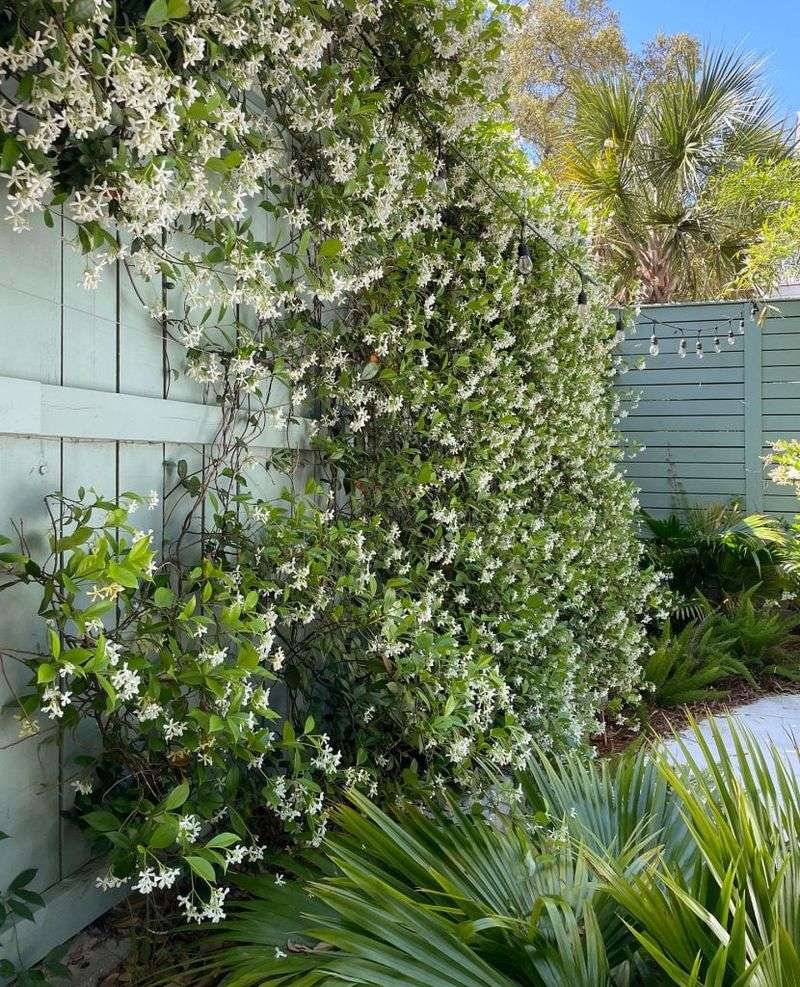
Ongoing water demand stays significant even after star jasmine establishes in the low desert. University of Arizona vine guidance describes it as medium to high water use, and that rating does not drop to low simply because the plant has been in the ground for a season or two.
Irrigation frequency should track the season, the exposure, and the soil type rather than following a fixed schedule borrowed from a cooler climate.
Alkaline soil can cause iron chlorosis to appear or worsen over time, especially if drainage is imperfect or the plant receives irregular watering. When new leaves yellow while their veins stay relatively green, that pattern points toward iron deficiency.
Improving drainage and normalizing irrigation are the first responses. A soil test can confirm the deficiency before adding chelated iron, because treating a symptom without understanding the cause rarely solves the underlying problem.
Frost risk is real and varies considerably across Arizona. Elevation, proximity to cold-air drainage paths, and local microclimate all affect how cold a site gets on a clear winter night.
Star jasmine is generally associated with USDA Zone 8 and warmer, but even within the Phoenix and Tucson metros there are neighborhoods and low-lying areas that experience harder freezes than nearby sites. UA guidance on frost protection recommends covering susceptible plants during cold events and accounting for microclimate differences when choosing plant locations.
When pruning or handling the vine at any time of year, wear gloves because the stems produce a milky latex sap. Avoid encouraging ingestion of plant material by people or pets, as safety references for this plant are not fully consistent with one another.
Do not mistake a fragrant screen for pest control or desert adaptation
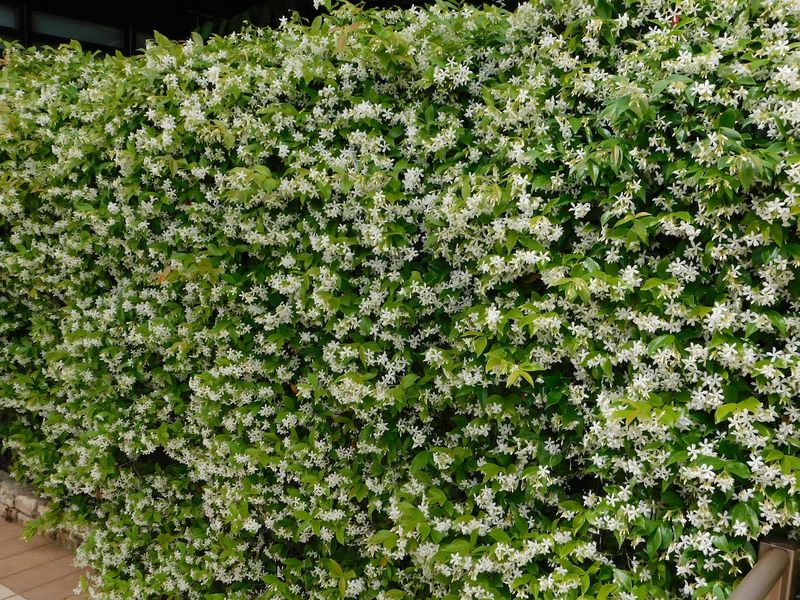
Star jasmine is not native to Arizona or to any part of North America. The University of Arizona Campus Arboretum identifies it as a plant originating in southeastern Asia, and it belongs in a cultivated, irrigated oasis area rather than being compared to native desert plants like palo verde, desert willow, or mesquite.
Presenting it as a desert-adapted, low-water choice misrepresents what the plant actually needs to survive and look good in the low desert.
No reliable evidence supports the claim that star jasmine repels scorpions, mosquitoes, or ticks. UA scorpion management guidance focuses on removing debris, reducing hiding places, keeping vegetation and branches away from structure walls, and minimizing low-growing cover near the home.
A dense, irrigated vine growing along a wall provides exactly the kind of shaded, moist microhabitat that scorpion management advice recommends against. Planting star jasmine near a fence is a reasonable aesthetic and fragrance choice; marketing it as pest deterrence is not accurate and could lead homeowners to overlook more effective management steps.
Wildlife benefits should also be described carefully. The flowers do attract bees, which is a genuine and documented value for pollinators in the yard.
Claims about bats, roadrunners, fireflies, or other headline species are not supported by the reviewed research on this plant. The vine can also soften the visual hardness of a block or wood fence, but a mature screen does not create meaningful structural shade for a patio or home interior.
Fragrance, evergreen coverage, and pollinator value are honest benefits; pest control and structural shade are not.
Choose star jasmine when the site can support its real requirements
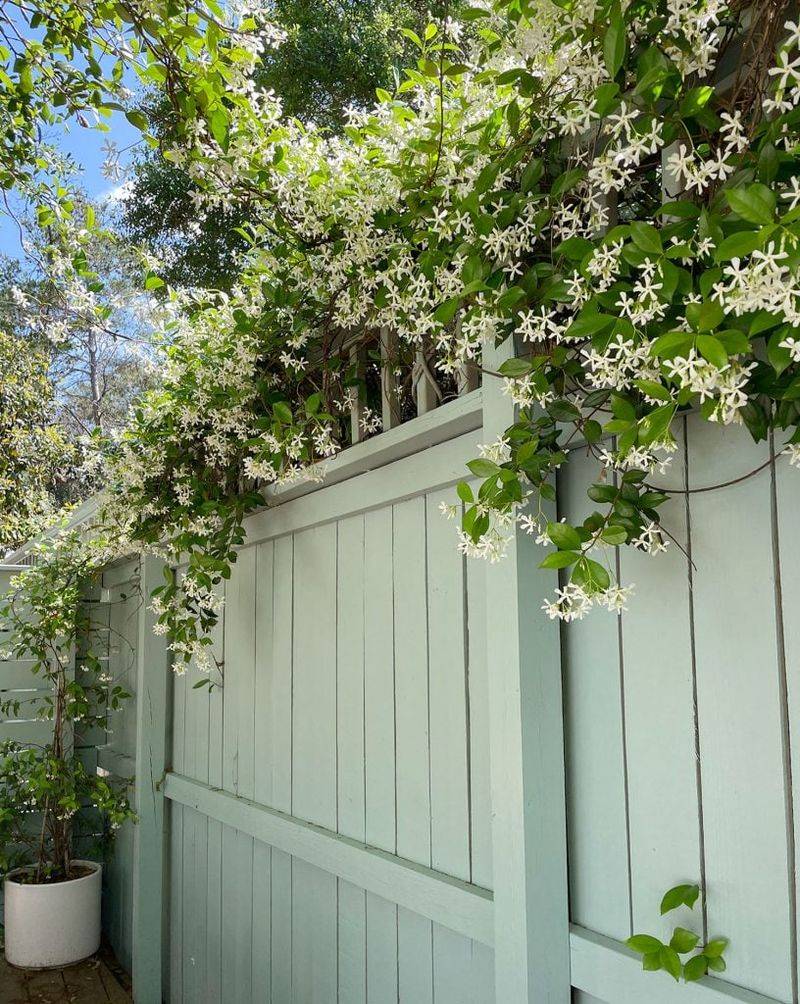
Star jasmine earns a place in an Arizona landscape when several conditions line up: a fence with filtered light, morning sun, or genuine afternoon shade; soil that drains well and has been prepared deeply; a reliable drip irrigation system; and a support structure the twining stems can actually grip. University of Arizona vine guidance confirms that east or north exposure with generous watering and deep soil preparation are the conditions where the plant performs best in the low desert.
Homeowners who want a native plant, an ultra-low-water vine, or a planting that needs minimal irrigation should look at other options better suited to Arizona’s desert character. Star jasmine fits a cultivated garden area where regular water is already part of the maintenance routine, not a dry slope or a fence that receives no supplemental irrigation.
For a fence near a patio, gate, or walkway where fragrance and year-round green coverage matter, star jasmine is a practical candidate when the site qualifies. In deep shade where flowering is likely to be sparse, the vine’s main selling points are compromised, and a different evergreen screen may serve better.
The right question is not whether a trend supports the choice, but whether the specific fence, soil, water supply, and maintenance commitment match what the plant genuinely needs. A good microclimate and a realistic care plan matter far more than any label or marketing claim.