What Georgia Gardeners Should Know Before Leaving Elephant Ears In The Ground This Winter
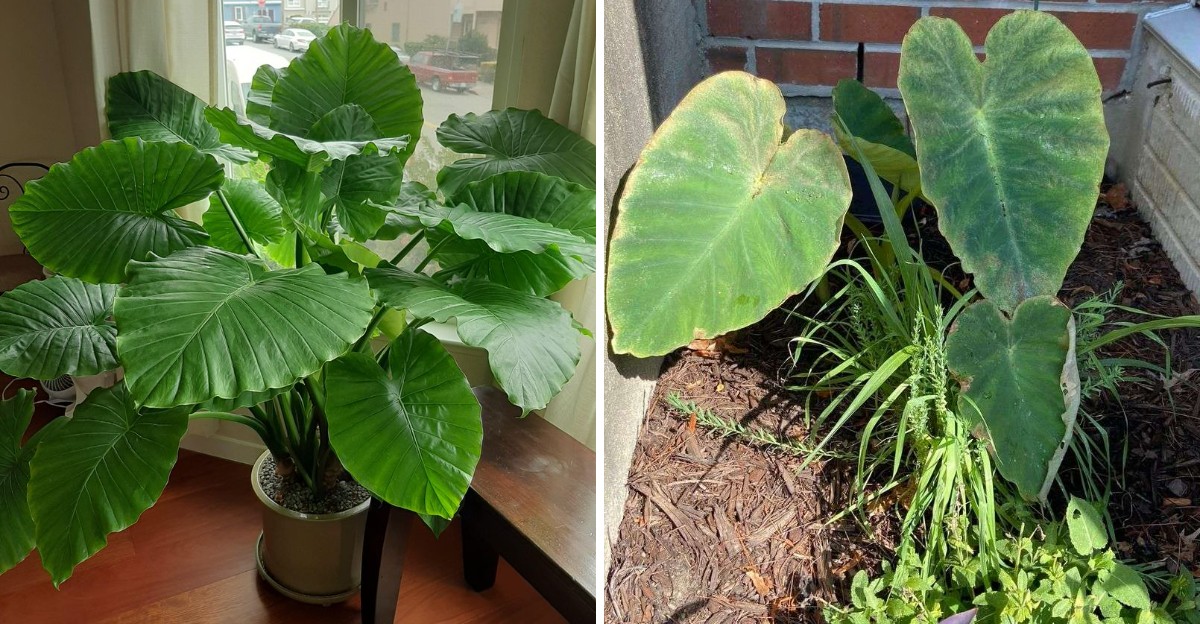
Elephant ears can fill a garden with enormous tropical leaves all summer, but what happens underground when winter temperatures begin dropping?
Their impressive foliage offers little protection against freezing conditions. Some varieties tolerate colder weather better than others, making winter survival less predictable than their sturdy appearance suggests.
Before deciding to leave yours outside, consider exactly which type you are growing.
Georgia’s winter temperatures vary considerably between regions, and soil drainage can also influence whether underground tubers or corms survive.
A sheltered planting spot may offer some protection, but prolonged freezing or soggy soil can still cause problems. Mulch helps moderate soil temperatures without guaranteeing survival.
Digging up elephant ears is not always necessary, yet leaving them untouched can be risky when their cold tolerance and growing conditions remain uncertain.
1. Survival Depends On Both The Variety And Local Winter Lows
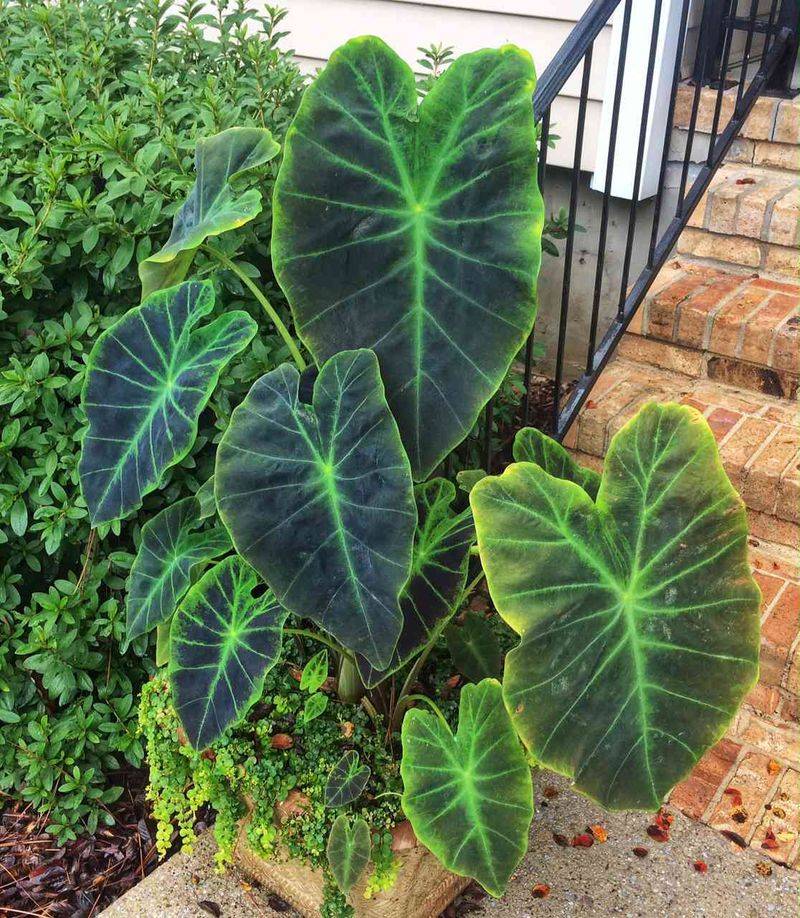
Two neighbors can plant the same elephant ears and get very different results by spring. Much of that comes down to the exact plant and how cold your yard gets.
Elephant ears is a common name for several plants, mostly in the Colocasia and Alocasia groups, with Xanthosoma sometimes included too.
Each group, and even each named variety, can handle cold a little differently. Checking the plant tag or the seller’s listing is a good first step before deciding what to do this fall.
Your location matters just as much as the plant itself.
Georgia stretches across several USDA hardiness zones, from about Zone 7 in the northern mountains to Zone 9 near the coast. A plant that sails through winter in Valdosta may struggle in Blue Ridge.
Small details around your home can shift things too. A bed near a south-facing brick wall often stays a bit warmer than an open, low spot where cold air settles.
Zone maps are based on average lowest winter temperatures, not on every single year.
An unusually harsh cold snap can still hurt plants that normally come back fine. Keeping that in mind helps you set realistic expectations rather than counting on a sure thing.
If you are unsure about your variety, consider digging up one or two tubers as backup. That way you keep some insurance while still testing how your garden handles winter.
2. Many Colocasias Are Root-Hardy To Zone 8, And Some To Zone 7
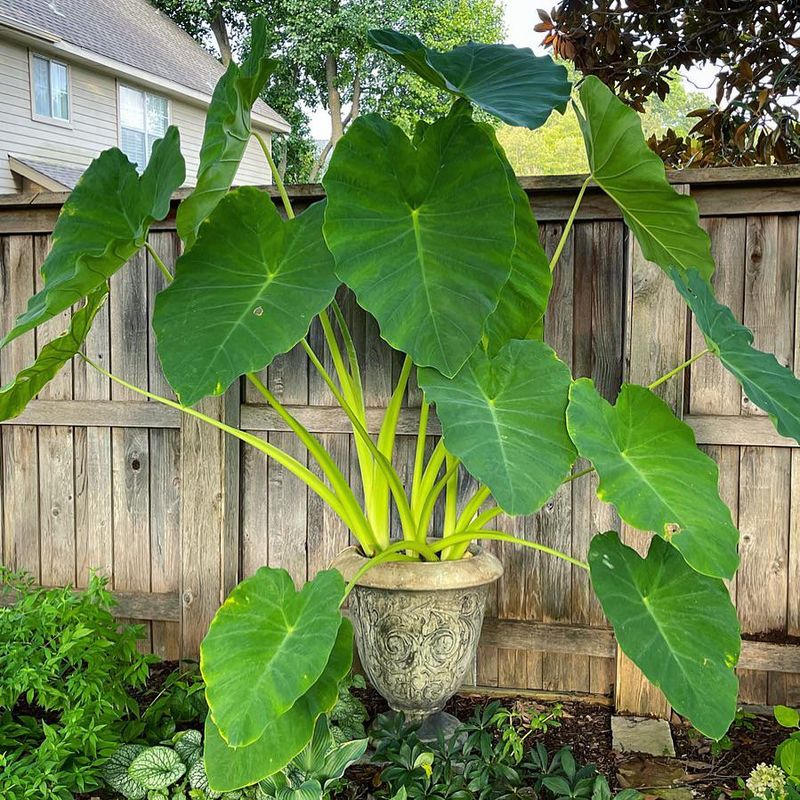
Good news for a lot of yards across the state. Colocasias, often sold as taro or common elephant ears, tend to be the tougher choice for leaving outside.
Root-hardy means the leaves may not survive the cold, but the underground tuber can stay alive and resprout.
Many Colocasia esculenta types are commonly listed as root-hardy in Zone 8 and warmer. That covers a large part of middle and south Georgia, including areas around Macon and Albany.
Some varieties are described as handling Zone 7 with protection. Results there tend to be less predictable, so a heavier layer of mulch and a well-drained spot become more important.
Not every Colocasia shares the same toughness, though.
Some fancy dark-leaved or variegated selections may be a bit more sensitive than plain green types. Reading the grower’s hardiness rating for your specific variety gives you a clearer picture.
Your Georgia Garden Changes Every Week. Your Plan Should Too.
Gardening in Georgia changes quickly throughout the season. Every Friday you’ll receive a simple weekly plan showing exactly what to plant, prune, fertilize, harvest, and protect so you never miss the right timing.
A quick way to spot a Colocasia is by looking at how the leaves hang.
Their leaves usually point downward, with the tip angled toward the ground. Alocasias, by contrast, often hold their leaves more upright.
If you live in a Zone 8 area and grow a standard green Colocasia, leaving it in the ground is often a reasonable choice. Still, weather swings from year to year, so mild winters and harsh ones can lead to different outcomes.
3. Alocasias Are Generally Less Cold-Tolerant Than Colocasias
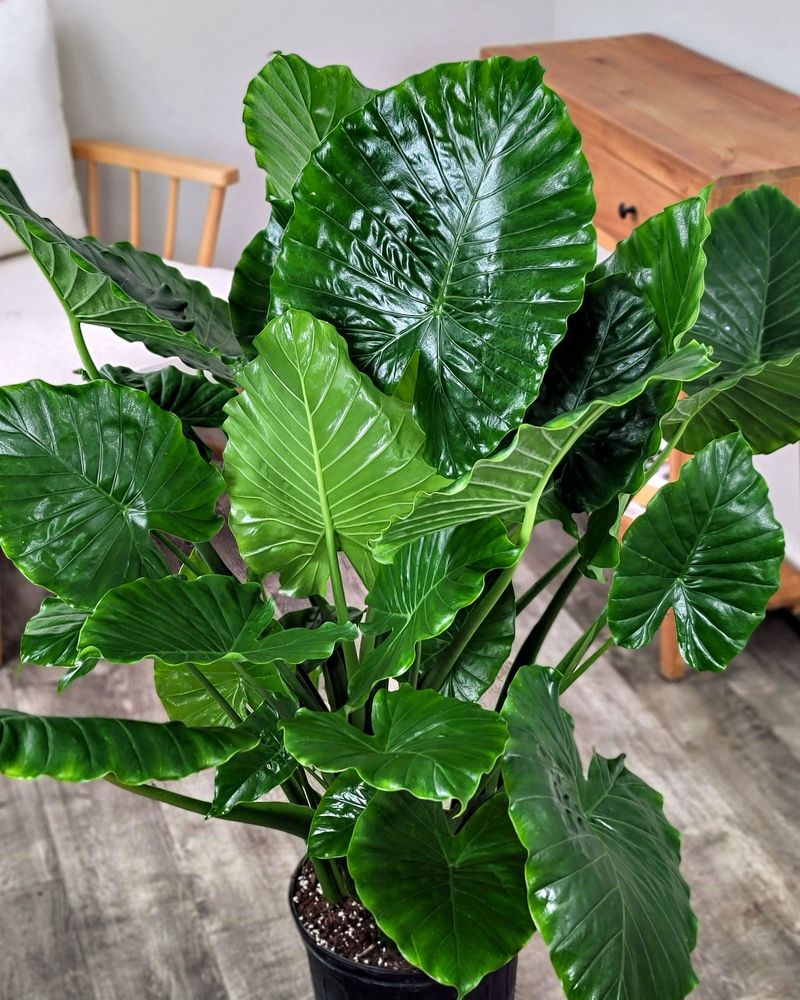
Upright leaves can be a clue that you need a different winter plan. Alocasias usually hold their leaves pointing up or out, and many of them prefer warmer conditions.
As a group, Alocasias are generally considered more cold-sensitive than common Colocasias.
Plenty of them are sold as houseplants for that reason. Varieties like Alocasia ‘Polly’ or Alocasia zebrina are often grown indoors or treated as summer-only plants outdoors.
There are a few exceptions worth knowing about.
Some larger types, such as certain Alocasia odora selections, are reported to come back in Zone 8 with good mulch. Even so, their success can vary with soil, drainage, and how cold the winter turns out.
In most of Georgia, leaving a tender Alocasia in the ground is riskier than leaving a hardy Colocasia.
So what does that mean for your fall chores? If you are not sure your Alocasia can handle frost, digging it up or bringing the pot indoors is the safer route.
Gardeners on the coast or in the far southern counties may have more wiggle room. Those in the Piedmont or mountains will likely want to play it safe.
Keeping a label in the pot or garden bed helps a lot. Knowing exactly what you planted makes these choices much easier next fall.
4. Frost Blackens The Leaves, But The Tubers Below Can Pull Through
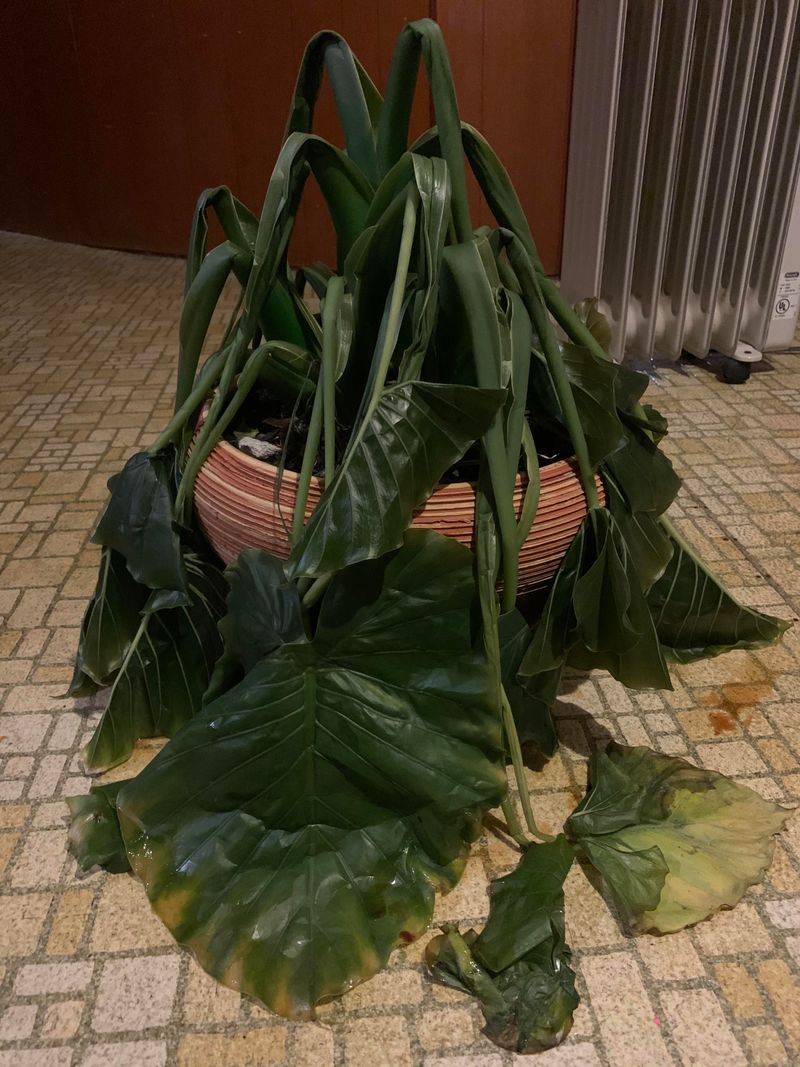
Waking up to black, mushy leaves after the first frost can feel like a punch to the gut. Take a breath, because the leaves are only part of the plant.
Elephant ear foliage is tender and usually collapses after a frost or freeze.
Across much of Georgia, that first frost tends to arrive sometime in the fall, though timing varies widely by region and year. North Georgia usually sees it earlier than coastal areas.
Hardy types store energy in the tuber underground, and that part is what matters for next year.
Once the leaves have collapsed, you can cut them back near soil level. Removing the slimy foliage keeps the bed tidier and makes it easier to add mulch on top.
Some gardeners wait a few days before trimming, which is fine too. There is no need to rush as long as the mess does not bother you.
Patience pays off in spring.
Elephant ears that overwinter in the ground can be slow to wake up, often waiting until the soil warms. It is common to see new shoots appear later than other perennials, so avoid digging around too early.
Keep in mind that leaf damage does not prove the tuber survived. A very hard freeze or wet soil can still cause losses, which is why later sections cover mulch and drainage.
5. A Thick Layer Of Mulch Helps Protect Tubers From Winter Cold
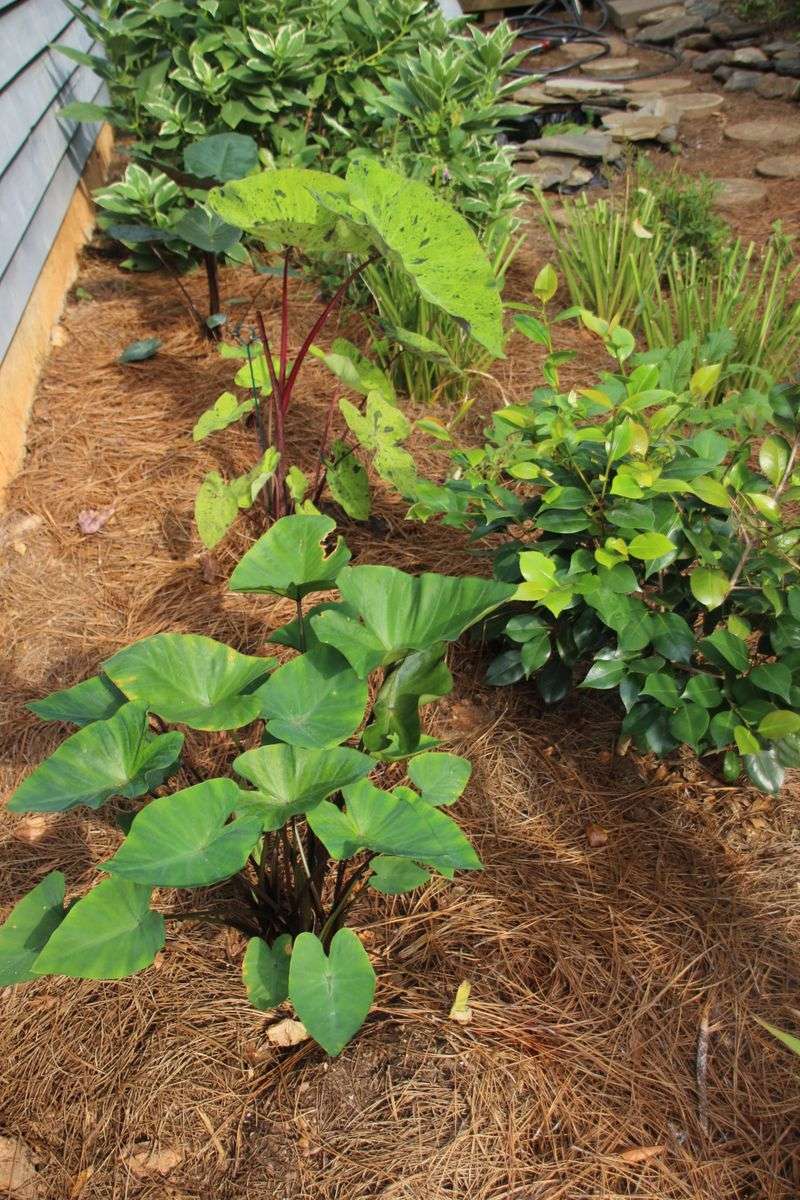
Think of mulch as a warm blanket for the soil. It does not create heat, but it helps slow down how fast the ground cools during cold nights.
After cutting back frost-damaged leaves, spread mulch over the area where the tubers sit.
Pine straw is easy to find in Georgia and works well for this job. Shredded leaves, pine bark, or wood chips are also solid choices.
How much should you use? Many gardeners aim for several inches, with a bit more in colder parts of the state.
Extension experts often suggest a thicker layer for marginal zones where elephant ears are borderline hardy.
In Zone 7 areas, a deep mulch layer can make a noticeable difference. In warmer spots near the coast, a lighter covering may be enough.
Spreading the mulch a little wider than the plant also helps, since tubers and roots can extend beyond the main stem.
Timing matters a bit too. Adding mulch after the first frost but before the hardest cold usually works well.
Come spring, pull some mulch back once the danger of frost has passed.
That lets the sun warm the soil, which can encourage new growth. Mulch helps a lot, but it cannot promise survival in a severe winter or in poorly drained ground.
6. Soggy Cold Soil Can Rot Tubers Left In Place
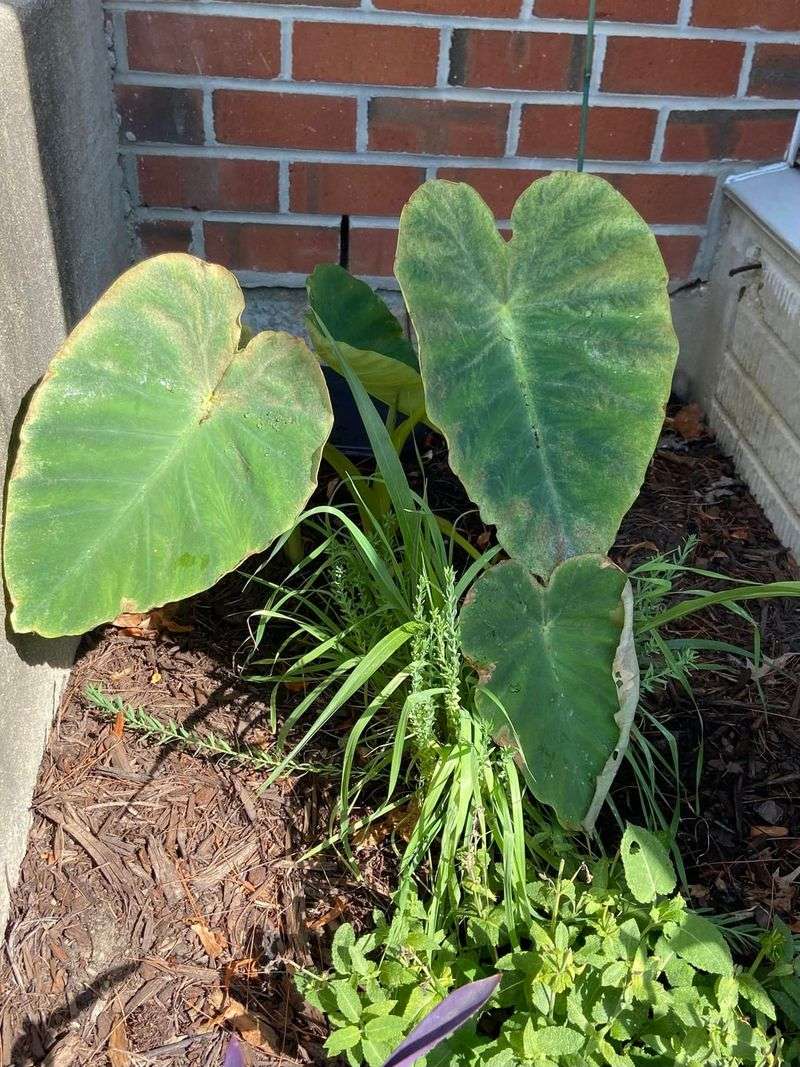
Cold alone is not the only threat underground. Wet winter soil may be just as big a problem for dormant tubers.
Elephant ears love moisture in summer, but dormant tubers handle constant soggy soil poorly.
When the ground stays cold and waterlogged for long stretches, tubers can start to rot. Heavy red clay, which covers much of the Georgia Piedmont, tends to drain slowly after winter rains.
Watch your garden after a big rain. If water sits in puddles for a day or more, your tubers may be at higher risk.
Raised beds or slightly mounded planting areas can help water drain away faster.
Mixing compost into clay soil when you first plant may improve drainage over time. Results depend on how heavy your clay is and how much organic matter you add.
Some Colocasias do grow happily in wet spots, even along pond edges. Even so, a tuber sitting in cold mud through a long winter is a different situation than a plant growing in warm summer moisture.
Skip extra watering once the plants go dormant.
Rain usually provides plenty during a typical winter. If your yard has poor drainage and you value a certain variety, lifting the tubers and storing them in a cool, dry spot may be the better plan.
7. Potted Elephant Ears Need Protection Before Freezing Weather
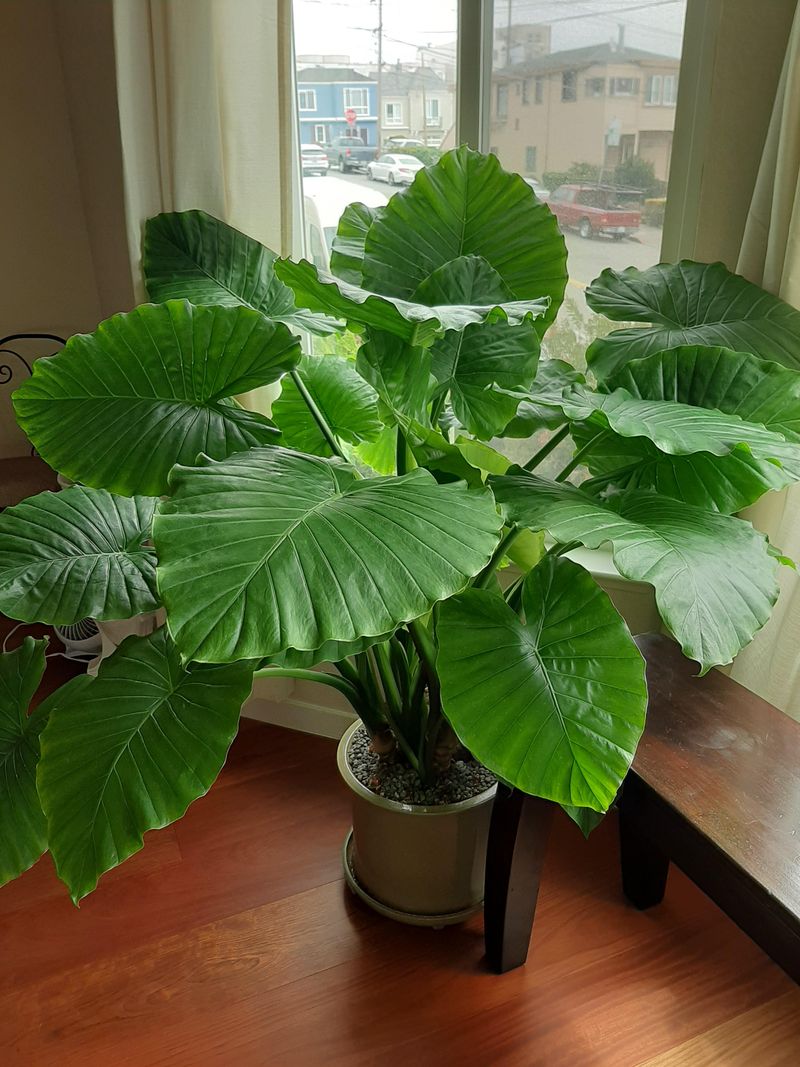
Containers play by different rules. A pot sitting on the patio does not get the same insulation that garden soil provides.
Soil in a container can cool down faster than ground soil, putting tubers at greater risk.
Even a plant rated as hardy in the ground may struggle in a pot during a hard freeze. That holds true in many parts of Georgia, not just the colder north.
You have a few practical options before freezing weather arrives.
Moving the pot into a garage, shed, or basement that stays above freezing is a common approach. Some gardeners bring tender Alocasias indoors as houseplants near a bright window.
Another option is letting the plant go dormant. Cut back the leaves, reduce watering, and store the pot somewhere cool and dry until spring.
Heavy pots can be tough to move, so plan ahead.
Placing big containers on rolling plant stands before fall makes the job much easier. Grouping pots against a warm wall can help during brief cold snaps, though it offers limited protection in hard freezes.
Check stored plants once in a while during winter. If the soil seems bone dry for weeks, a small drink of water may help, but too much can lead to rot.
When warm weather returns, bring pots back outside gradually so the new leaves can adjust.