9 Common Foods That Are Illegal to Grow in Your New York Backyard
Some of the tastiest snacks in a backyard can land you on the wrong side of state rules. I learned that tidbit while reading invasive plant lists, and my jaw dropped right onto my garden boots.
New York keeps an official list of plants you cannot sell, buy, transport, or plant on purpose. A few of them produce juicy berries or tender greens that foragers happily toss into their kitchen baskets.
October is when many of these plants show off their fruit, so the timing feels oddly perfect. I believe a quick look now can save you from planting trouble right before the ground freezes.
One fruit on this list even spent decades as a banned crop across New York farms and gardens. Its story surprised me most, and I think the final twist on that history will surprise you too.
1. Black Currant
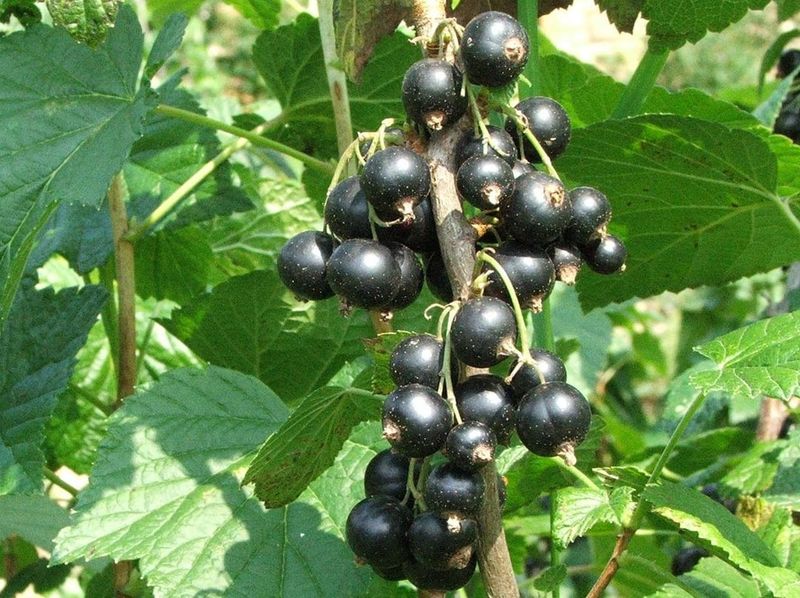
Those glossy purple berries taste like a jam jar exploded with flavor, yet they carried a legal record for decades. Back in the early 1900s, growing them was banned to protect valuable white pine forests from a fungus.
The trouble comes from white pine blister rust, a disease that needs currant or gooseberry plants to finish its life cycle. Spores jump from the shrubs to nearby pines, where cankers can girdle branches and weaken the trees.
New York lifted its statewide ban in 2003, so most gardeners can legally plant black currants again today under certain conditions. Still, Cornell experts encourage choosing rust-resistant varieties like Titania or Consort to keep nearby pines much safer.
I suggest checking with your town or county before ordering bushes, since local rules and forestry concerns sometimes linger. A quick call to your local Cornell Cooperative Extension office usually clears up any remaining questions very fast.
Early October happens to be a fine window for planting dormant currant bushes in many cooler regions. The roots settle into cool soil now, which gives you a sturdier shrub when the berries finally arrive next year.
2. Japanese Barberry
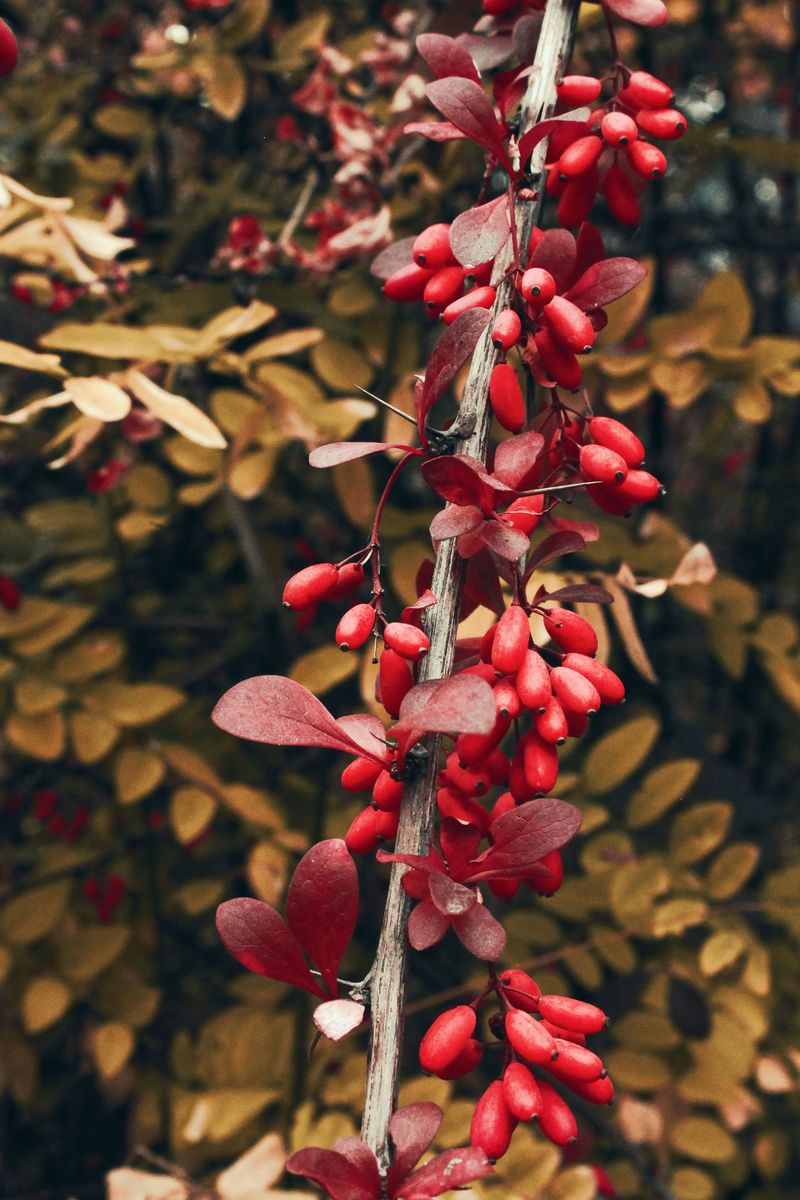
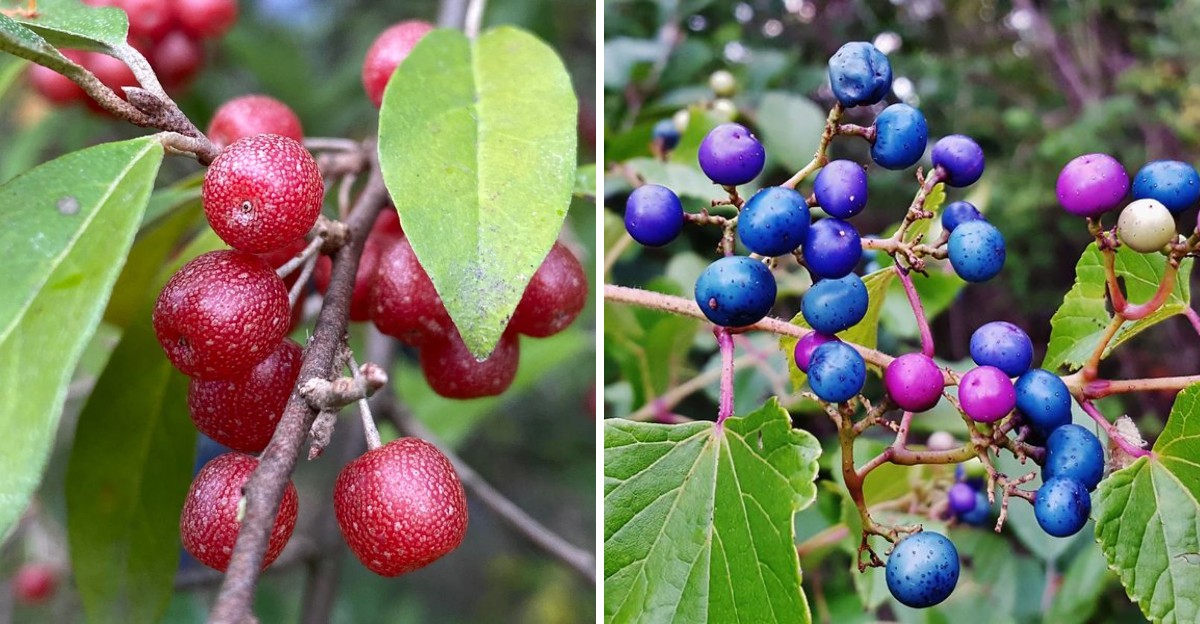
Tiny red berries dangle from this thorny shrub like holiday ornaments, and they reliably show up every single fall. You can technically eat them, though the sour pucker might make your whole face fold in half.
Japanese barberry joined the prohibited invasive species list, and nursery sales were fully phased out. That means you cannot legally buy, sell, transport, or knowingly plant new shrubs anywhere in your yard.
Researchers at the University of Connecticut found barberry thickets hold far more blacklegged ticks than open forest areas. Those ticks can carry Lyme disease, and the humid tangle keeps them moist while mice hide underneath.
Birds gobble the berries in autumn and drop seeds into woodlands, where shrubs crowd out native wildflowers over time. Deer usually skip barberry, which lets it spread while tastier native plants get nibbled down to stubs.
If an old hedge already lines your driveway, the law does not force you to remove it right away. I would still swap it for native winterberry, which offers bright red fruit without the extra tick trouble.
Your New York Garden Changes Every Week. Your Plan Should Too.
Gardening in New York changes quickly throughout the season. Every Friday you’ll receive a simple weekly plan showing exactly what to plant, prune, fertilize, harvest, and protect so you never miss the right timing.
3. Autumn Olive
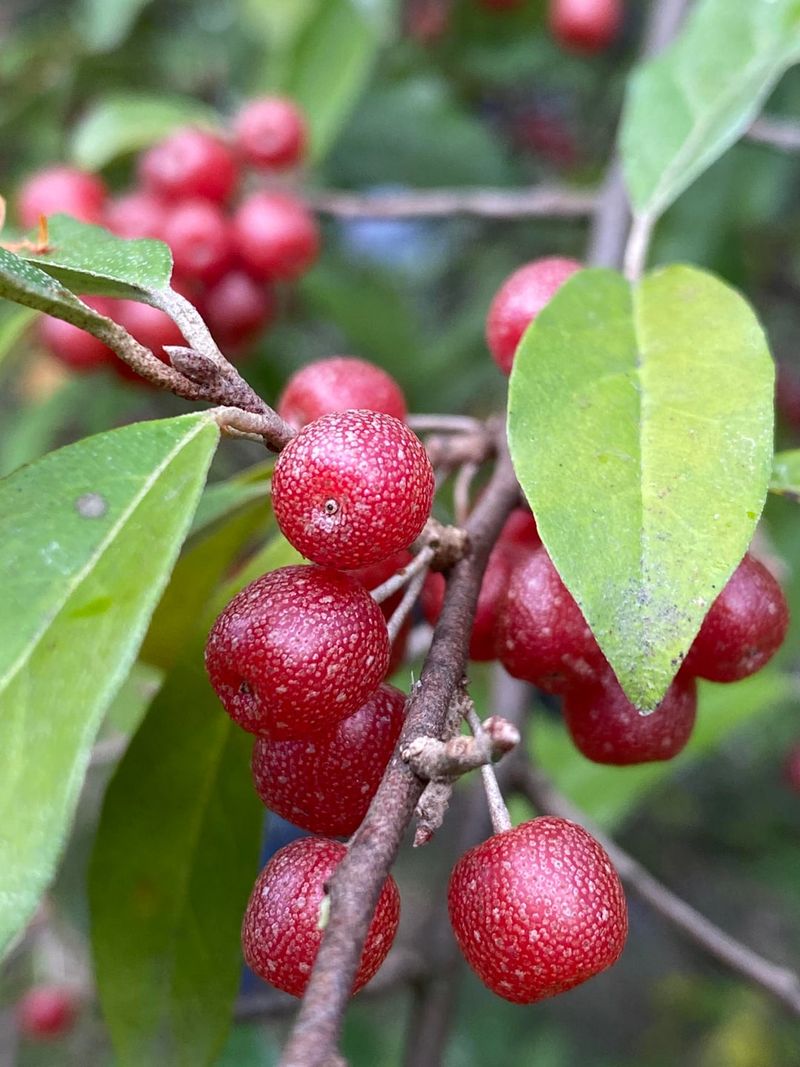
Silver-backed leaves shimmer in the breeze on this shrub, and right now its branches sag with speckled red berries. Foragers love the tart fruit, which tastes a bit like a sweet cherry mixed with a sour cranberry.
Researchers at the USDA found autumn olive berries can hold far more lycopene than a typical ripe red tomato. That surprising nutrition fact has turned the shrub into a quirky favorite among jam makers and wild food fans.
Planting it on purpose, however, breaks the rules because autumn olive is listed as a prohibited invasive species. It was once promoted for wildlife cover and erosion control, which explains why so many old fields hold thickets.
The shrub can pull nitrogen from the air, which changes soil chemistry and favors weeds over native plants. Birds spread the seeds widely, so one bush near a fence line can quickly become a long tangled hedge.
You can still pick the berries from wild plants this month, as long as you have permission to harvest there. I like that idea because every bowl you fill means fewer seeds reach hungry birds heading across the countryside.
4. Garlic Mustard
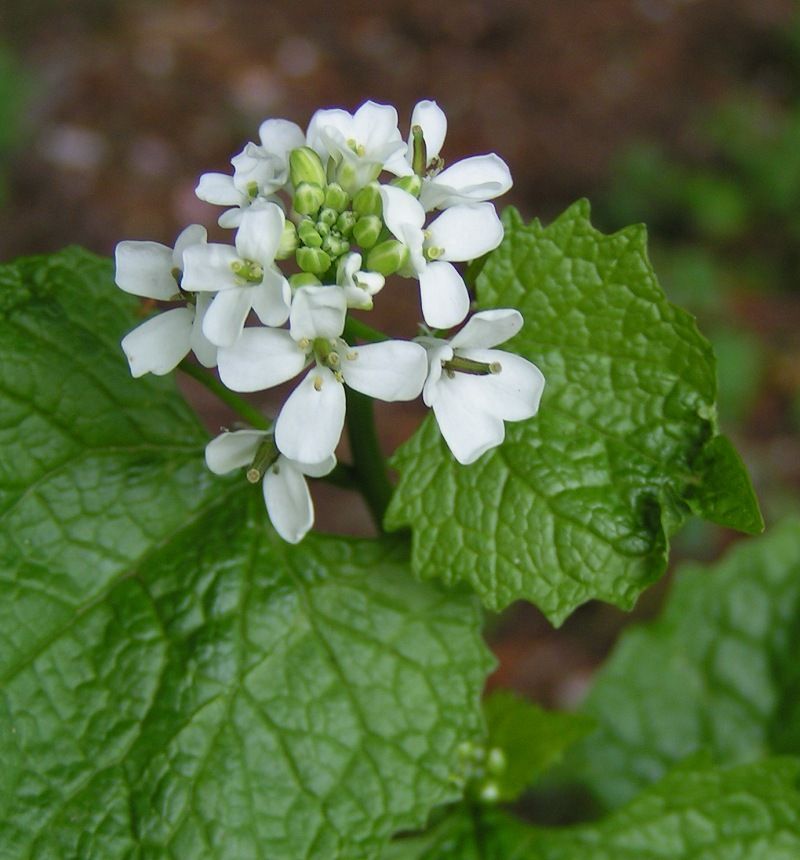
Crush a leaf of this woodland weed, and your fingers will smell like a freshly baked garlic bread shop. Cooks have used the greens for centuries in Europe, where the plant naturally belongs and stays mostly in balance.
Here in the Northeast, garlic mustard is a prohibited invasive plant that spreads through forests at an alarming pace. One plant can release thousands of tiny seeds, and those seeds may survive in the soil for years.
Its roots release chemicals that disrupt helpful soil fungi, which many native trees and wildflowers depend on for nutrients. Over time, the forest floor fills with garlic mustard, while trilliums and other spring bloomers slowly fade away.
October is a smart time to spot first-year rosettes, which sit low with rounded, scalloped leaves close to the ground. Pulling them now, roots and all, helps prevent next year’s flower stalks from scattering a fresh crop of seeds.
I believe pesto is the tastiest revenge, since tender young leaves blend nicely with toasted nuts and olive oil. Harvest only young greens, because older leaves turn bitter, and bag any flowering plants for the trash instead.
5. European Water Chestnut
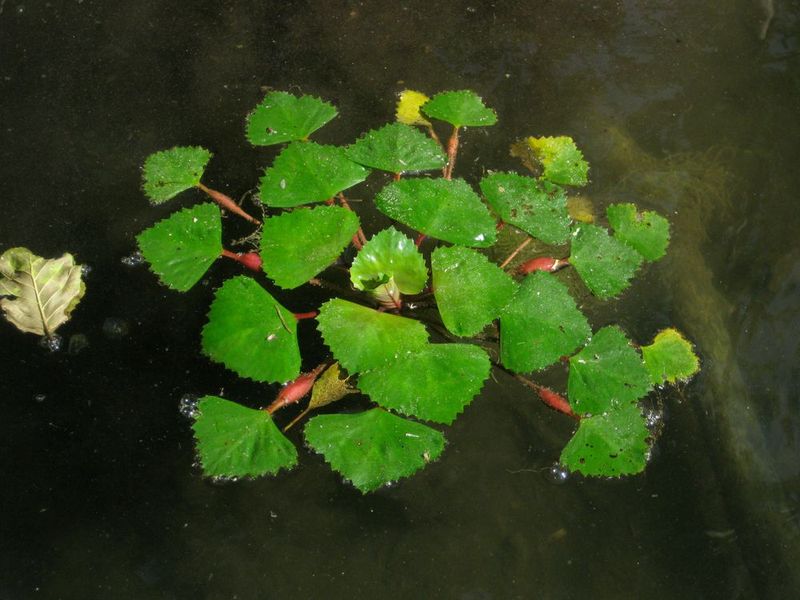
Those crunchy slices in your takeout come from a different plant, so please do not confuse them with this pond invader. European water chestnut grows floating rosettes of toothed leaves, and its seeds wear sharp, spiny horns.
The seeds are edible after thorough cooking, and people in parts of Asia and Europe have eaten them for centuries. Eating them raw is risky, though, because the plant can carry a parasite called the giant intestinal fluke.
In the Hudson River and Lake Champlain, thick mats can stretch across the water surface from shoreline to shoreline. Those mats block sunlight and lower oxygen levels, which turns a pleasant paddle into a frustrating slog for kayakers.
Regulators list it as a prohibited invasive species, so you cannot plant it in a backyard pond or water garden. By early fall, the spiky nuts drop to the bottom, where they can sprout for several years afterward.
I would hate to step on one barefoot, since those spines can poke right through thin water shoes. If you spot the floating rosettes, snap a photo and report it to iMapInvasives so experts can track new populations.
6. Multiflora Rose
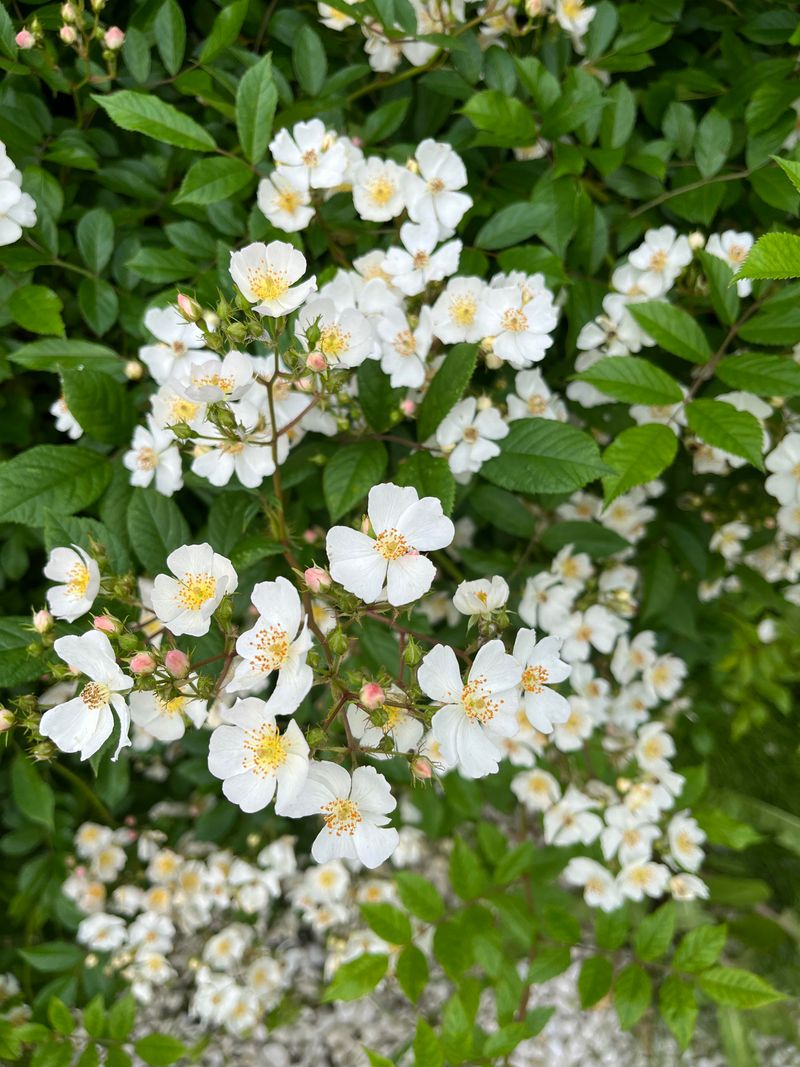
Clusters of tiny white blossoms make this rose look innocent in June, but the October view tells another story. Arching canes now hold bunches of small red hips, and every cane bristles with hooked thorns that grab sleeves.
Rose hips from this shrub are edible and packed with vitamin C, especially after a light frost softens them. Many foragers steep them into a tangy tea, though you should strain out the itchy hairs around the seeds.
Ironically, government agencies once promoted multiflora rose as a living fence for livestock and as cover for wildlife. Farmers planted it widely in the mid-1900s before realizing how fast it marched across pastures and woodland edges.
Today it sits on the prohibited invasive list, so nurseries cannot sell it and you cannot plant it on purpose. One large shrub can produce up to a million seeds a year, and those seeds stay viable for many years.
I suggest wearing heavy leather gloves if you remove one, because those thorns will snag almost anything you wear. Native roses like Virginia rose or swamp rose give you similar hips and blooms without the runaway growth.
7. Chinese Yam
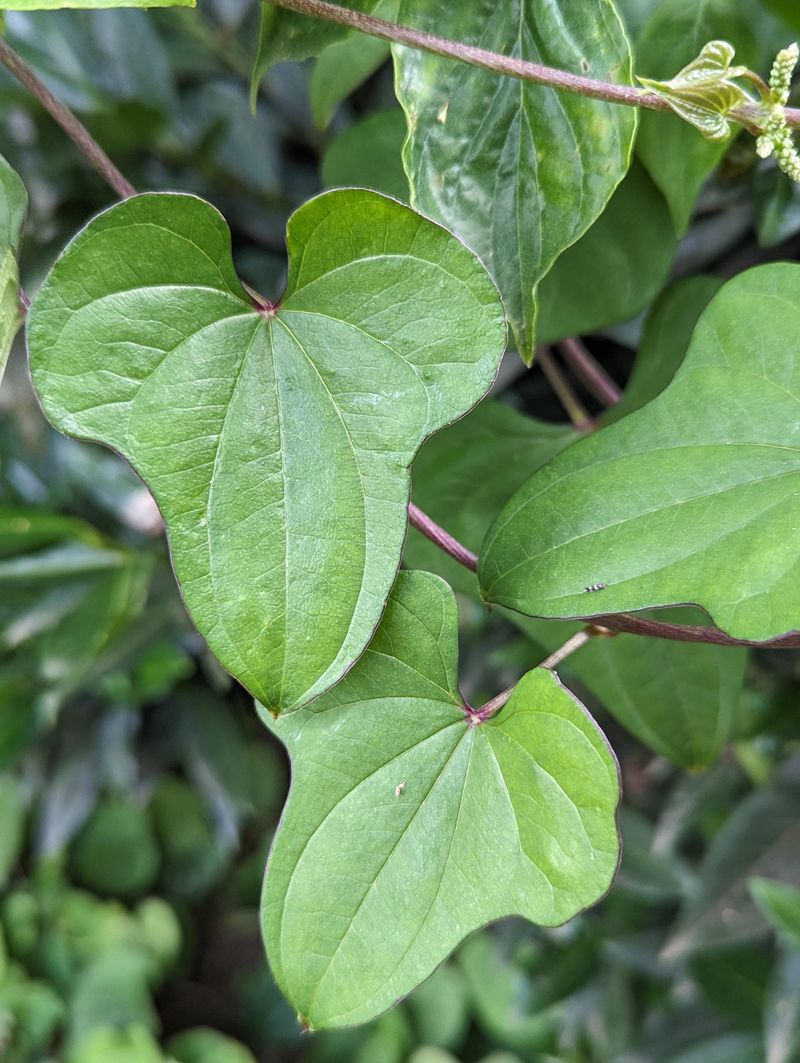
Heart-shaped leaves and a sweet cinnamon scent from its tiny flowers make this vine surprisingly charming during midsummer. Come October, though, small potato-like bulbils cling to the stems, ready to drop and start a fresh tangle.
In East Asia, the long starchy tubers are a popular food, often grated raw into a slippery topping for rice. You can find them in some grocery stores, where they sometimes go by the name nagaimo or mountain yam.
Growing the vine outdoors is a different matter, since Chinese yam is a prohibited invasive species in New York. The vines climb quickly over shrubs and young trees, forming leafy curtains that shade out the plants underneath.
Each bulbil can sprout into a new plant, so a single vine can scatter dozens of tiny clones each fall. Animals and floodwaters move those bulbils downstream, which helps the vine reach riverbanks far from where it started.
I find it amusing that the vine rarely sets seed in North America, yet it still spreads quickly using bulbils. If you spot one, collect every bulbil in a bag before pulling vines, since missed bulbils will sprout next spring.
8. Mugwort
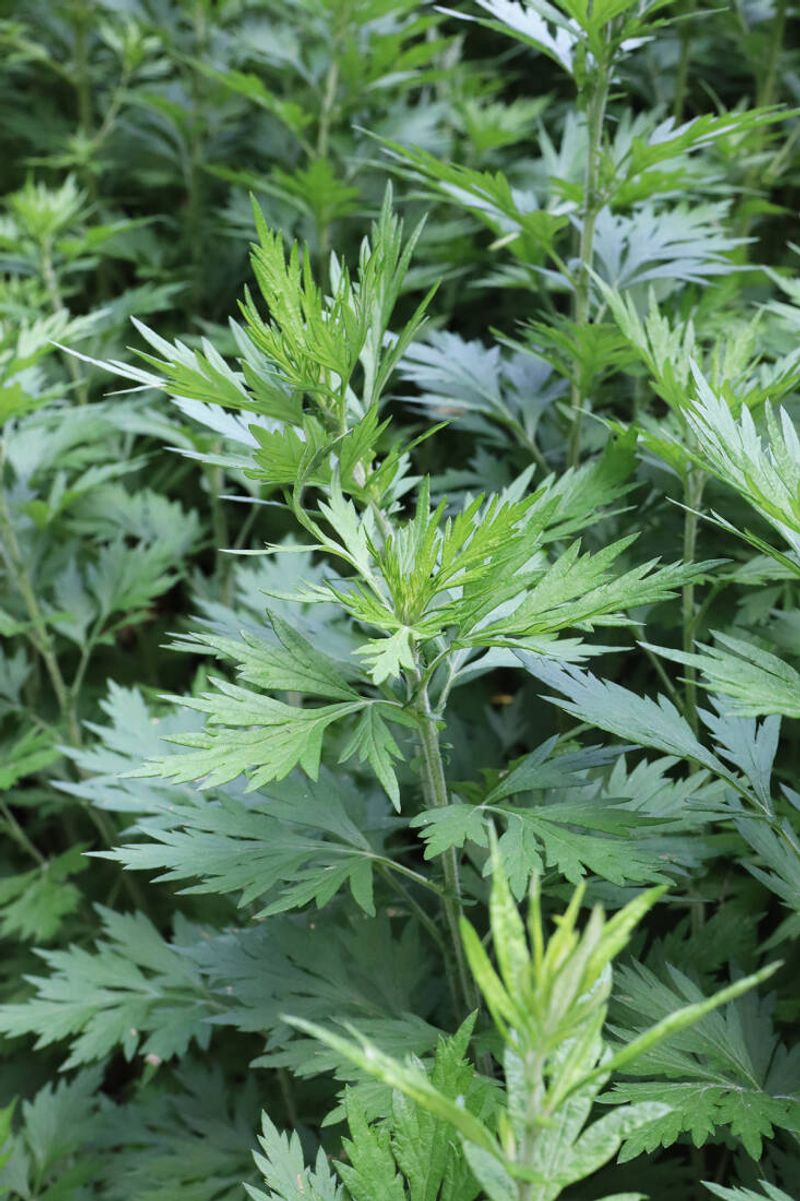
Run your hand along the silvery underside of a mugwort leaf, and you will catch a sharp, sagey perfume. That fragrance has earned the herb a long history in kitchens and folk traditions across Europe and Asia.
Korean cooks use young mugwort leaves in rice cakes and soups, giving them a green color and earthy taste. Japanese cooks fold the leaves into yomogi mochi, a chewy sweet treat with a grassy and slightly bitter flavor.
Even with that tasty resume, mugwort is a prohibited invasive plant, so you cannot plant it or sell it here. It spreads mainly through creeping underground rhizomes, and tiny root fragments can grow into brand new patches.
Roadsides and vacant lots offer the disturbed soil it loves, which explains why it pops up in so many neighborhoods. Tilling often makes things worse, since the blades chop rhizomes into pieces that each sprout fresh new shoots.
Some people also notice allergy flare-ups in late summer and early fall, because mugwort pollen is a known allergen. I would dig out small patches carefully this month, sifting the soil to catch every pale root piece you find.
9. Porcelain Berry
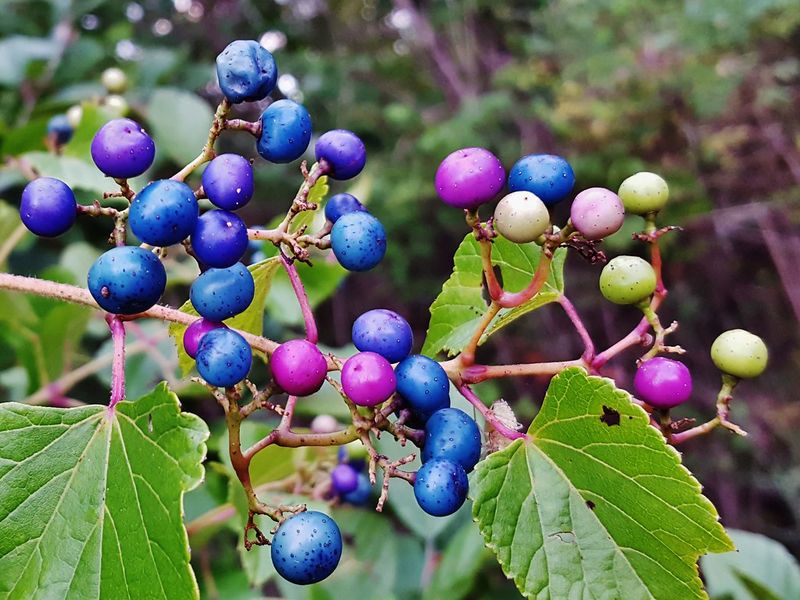
Speckled berries in shades of lilac and turquoise make this vine look like a jewelry box spilled across the shrubs. Its fruit peaks right now in early fall, and I admit the colors could stop anyone in their tracks.
Porcelain berry is a cousin of the grape, with similar lobed leaves and curling tendrils that grab whatever they touch. Gardeners once grew it as an ornamental for arbors, which is how it escaped into woods and streambanks.
Some foragers describe the berries as edible yet bland, so they rarely earn a spot in anyone’s kitchen pantry. I would skip tasting them unless an experienced local expert confirms the plant, since several lookalike vines grow nearby.
New York lists porcelain berry as a prohibited invasive species, so planting or selling it is not allowed. The vine can climb more than fifteen feet in one season, blanketing shrubs and small trees under heavy leaves.
Birds carry the seeds far from the parent plant, which helps new vines appear along forest edges and riverbanks. Pulling seedlings while the soil is moist this fall is easier than wrestling a thick woody vine next year.