Why Your North Florida Pecans Are Black, Empty Or Dropping Early This Year
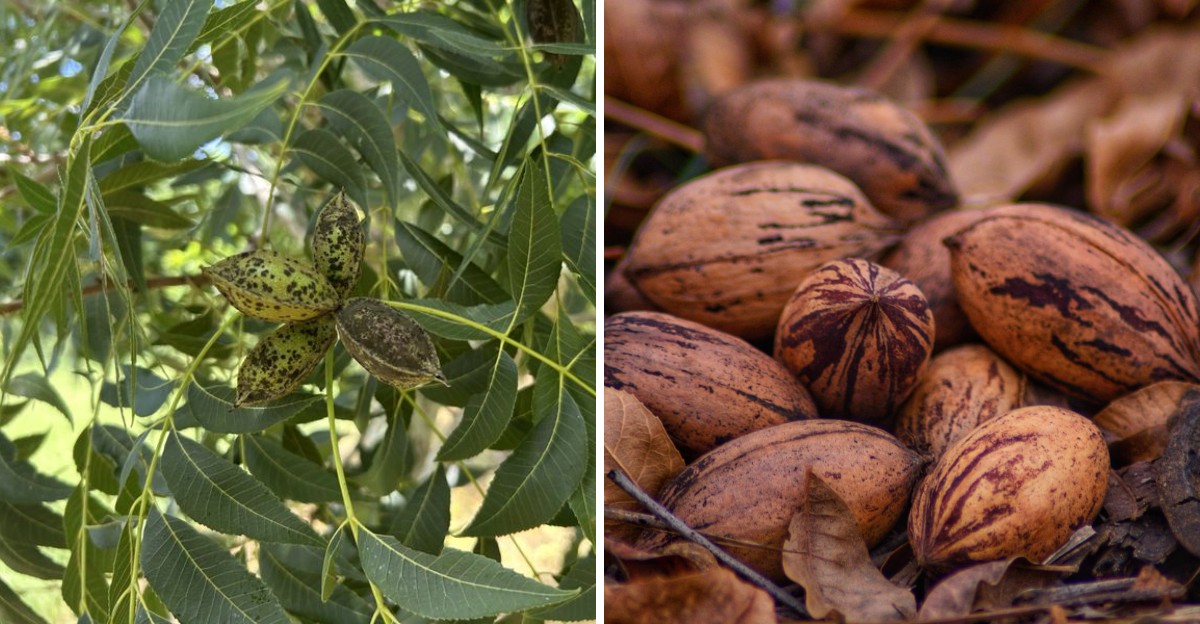
You shell the first pecan of the season, and the inside looks like someone dumped ink in the shell. Or worse, nothing’s in there at all.
North Florida growers hear the same story every fall. Nuts drop early, hulls blacken, and the harvest shrinks to a bucket you could carry with one hand.
Neighbors blame the weather, the squirrels, and the tree, in that order.
Several culprits take turns here, and each leaves a different fingerprint. One shows up on the hull, another inside the shell, and a third waits until the nuts hit the ground.
Lump them together and you end up treating the wrong problem.
This year’s conditions made a few of them worse than usual.
Crack open a handful and look closely at what’s inside. The shells have already told you most of the story.
1. Pecan Scab Covers Shucks In Black Spots
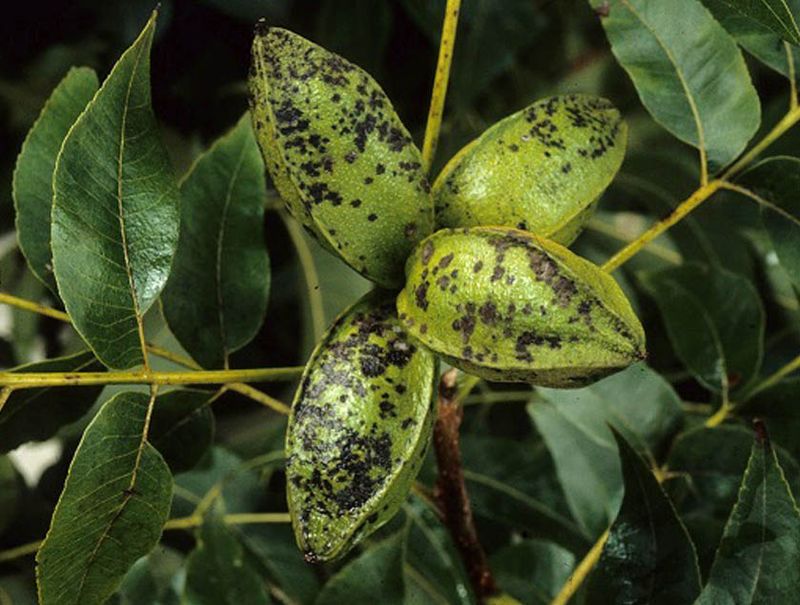
Picture a green pecan that looks like someone flicked a paintbrush full of black ink at it. That speckled look is the calling card of pecan scab, a fungus called Venturia effusa.
Older books may list it as Fusicladium effusum or Cladosporium caryigenum. The name has changed a few times, but the trouble it causes has stayed the same.
Scab starts as tiny olive-green to black dots on leaves, leaf stems and the outer shuck. Over time, those dots grow, turn darker and sink into the surface.
Many spots merge into big black patches that cover most of the nut.
Early spots can look a bit fuzzy or velvety. That soft look comes from spores the fungus is busy making.
Later, the spots harden and fade to dark gray or silvery brown.
Heavy scab on shucks can stop nuts from growing to full size. Badly hit nuts may fall early or end up with skimpy kernels inside.
Walk under your tree in early summer and check young nuts and leaves closely. Catching scab early helps you plan better for next season.
Rake up fallen leaves and shucks in winter, since the fungus can hang out on old debris. Pruning low, crowded limbs also lets more air and sun reach the canopy, which helps leaves dry faster.
2. Wet Weather Gives Scab A Boost
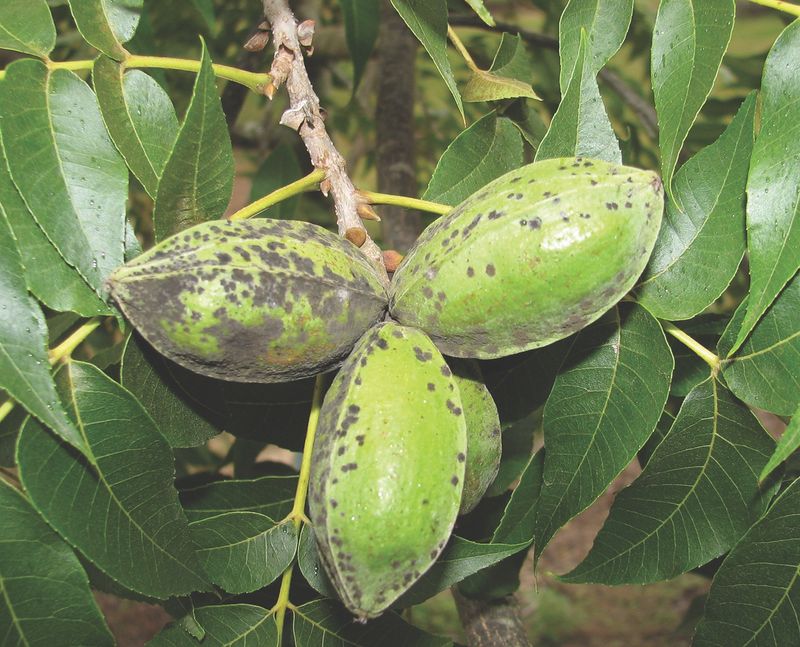
Here is a fun twist: a light drizzle can be worse for pecans than a big storm. Scab cares more about how often things get wet than how much rain falls.
The fungus loves hot, sticky weather, and North Florida summers deliver plenty of it. Spores need free moisture, like rain or heavy dew, to sprout and infect leaves and nuts.
Temperatures between about 65 and 85 degrees Fahrenheit hit the sweet spot. Add water on the leaves, and the spores get right to work.
Think about a soft evening shower that leaves the tree damp all night. Those long wet hours give scab a perfect window to move in.
A heavy afternoon downpour that ends early is a different story. If the sun and breeze dry the tree before night, the fungus has less time to settle in.
Your Florida Garden Changes Every Week. Your Plan Should Too.
Gardening in Florida changes quickly throughout the season. Every Friday you’ll receive a simple weekly plan showing exactly what to plant, prune, fertilize, harvest, and protect so you never miss the right timing.
So a summer with frequent short rains can bring a scab explosion. That may explain why your nuts look spottier this year than last year.
Keep a simple rain diary on your phone or calendar. Note rainy days and foggy mornings from spring through August.
Over time, you will start to see how wet stretches match up with scab outbreaks. That record can help you time any spray treatments a local expert recommends.
3. Some Varieties Resist Scab Far Better Than Others
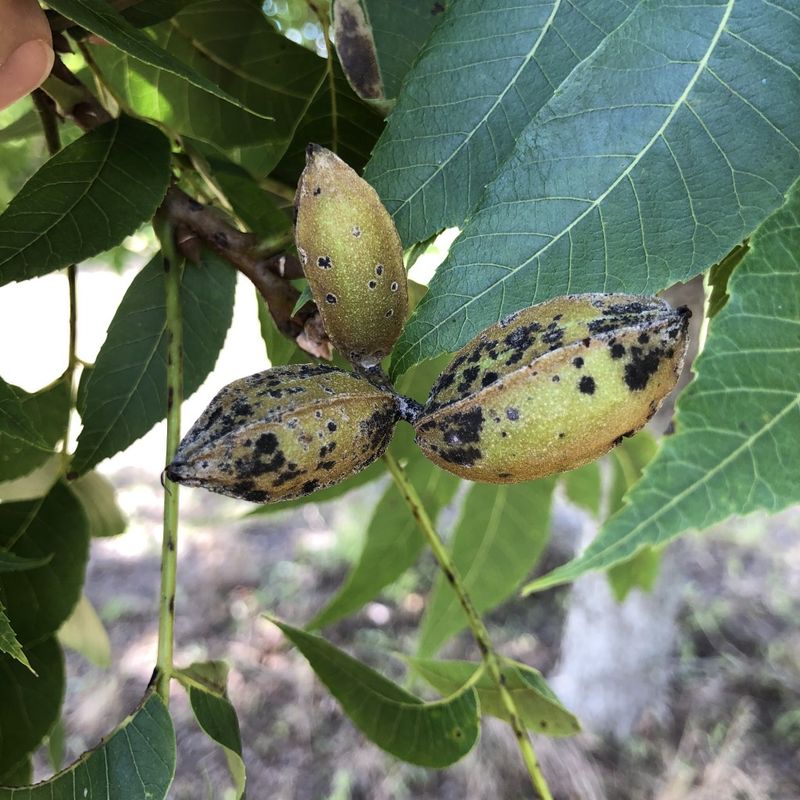
Choosing the right tree is a bit like picking the right raincoat for Florida. Some pecan varieties shrug off scab, while others soak it up.
Planting resistant types is the strongest step you can take against this fungus. Sprays help, but a tough tree does much of the work for you.
Elliott has long been a favorite for scab resistance in humid Florida. Some growers report its defenses may be slipping, though, so keep an eye on it.
Amling is known as a hardy choice for North and Central Florida. Excel has shown excellent resistance in trials.
Lakota, McMillan, Kanza and Major also hold up well against scab. Any of these can be worth a look when you plant new trees.
Here is a twist worth knowing. Several varieties that once resisted scab have lost ground because the fungus keeps adapting, almost like it studies for a test.
On the other side, Wichita and Western Schley are very prone to scab. They struggle in the Southeast, where moisture hangs in the air for months.
If you already own a sensitive tree, you do not need to cut it down. Just expect more spots and plan extra care.
Before buying, ask your county extension office which varieties are doing best near you right now.
4. Stink Bugs Leave Bitter Black Spots On Kernels
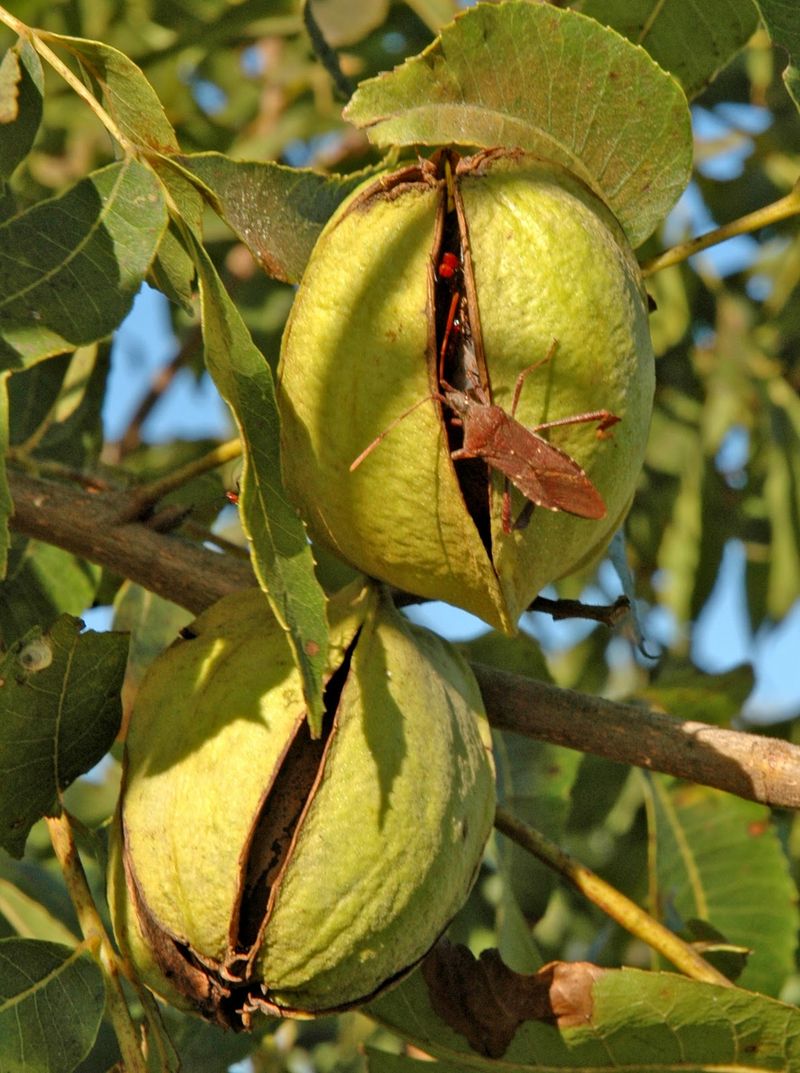
You crack a pecan, pop the kernel in your mouth and make a face. That bitter bite often comes from a sneaky little bug with a big appetite.
Stink bugs and leaffooted bugs feed on pecans by poking a needle-like mouth straight through the shell. They then inject a chemical that breaks down the tissue inside.
Where they feed, the kernel turns dark brown or black. These marks are called kernel spots, and they taste unpleasant.
For growers who sell nuts, spotted kernels lose value fast. For home cooks, they can turn a pie from tasty to tossed.
Most of this damage happens while the kernel fills out. In North Florida, that usually lands in mid to late August.
Fun fact: stink bugs got their name from the strong smell they release when bothered. Squish one and you will understand right away.
Watch for these shield-shaped insects on nuts and nearby plants. They often move in from crops and weeds like soybeans, peas or tall grasses.
Keeping the ground under your trees mowed can help cut down on hiding spots. Some growers also plant trap crops to pull bugs away from pecans.
When cracking your harvest, sort out spotted kernels so one bitter bite does not spoil the batch.
5. Early Stink Bug Feeding Can Make Nuts Drop
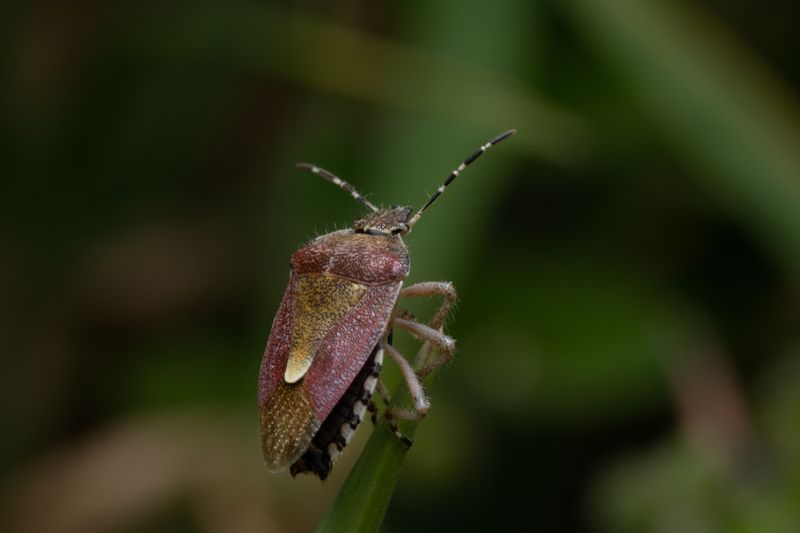
Timing is everything with stink bugs. A bite in July can do very different harm than a bite in September.
Experts split the damage into two types. Feeding before the shell hardens causes black pit, while feeding after causes kernel spot.
Early in summer, a young pecan is in its water stage. If you cut one open, the inside looks clear and juicy, almost like a grape.
When a stink bug pierces a nut at this point, the tiny kernel inside turns dark and black. The tree often responds by dropping that nut.
So those small green pecans scattered across your lawn in midsummer may be bug victims. Slice a few open and look for a darkened center.
If you see black inside, stink bugs are likely the cause. That clue helps you separate bug damage from other early drops.
Not every summer drop is bad news, though. Trees naturally shed some extra nuts, so a light scatter can be normal.
Heavy drops with blackened insides call for a closer look. Check the canopy and nearby plants for adult bugs and their tiny barrel-shaped eggs.
Your local extension agent can help you decide whether treatment makes sense for your trees this year.
6. Thin-Shelled Varieties Can Split And Drop In Summer
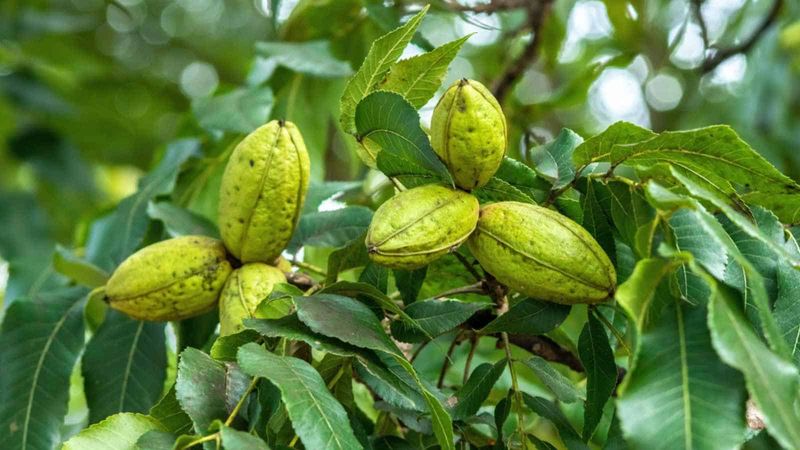
Ever overfill a water balloon until it bursts? Thin-shelled pecans can do something similar in late summer.
The problem is called water-stage fruit split. Water pressure builds up fast inside the nut, and the shell, seed coat and sometimes the shuck crack open.
Thin-shelled types like Oconee, Sumner, Cape Fear, Wichita and Caddo are most at risk. Their shells simply have less strength to hold back the pressure.
In the Southeast, water split usually shows up around mid-August. It often follows rain right as the shell starts to harden.
The tree soaks up that water and pushes it into the nut. A sudden rush can be more than a thin shell can handle.
Split nuts typically fall about a week after cracking. So if green nuts pile up under the tree in late August, take a peek for splits.
Cherryle has its own quirk called suture split. Its shells crack along the seam after the nuts land on the ground.
You cannot control the rain, but steady watering during dry spells can help. Even moisture keeps the tree from gulping too much at once when storms arrive.
Gathering fallen split nuts also keeps your yard tidier and removes snacks for pests.
7. Late-Summer Drought Leaves Nuts Poorly Filled
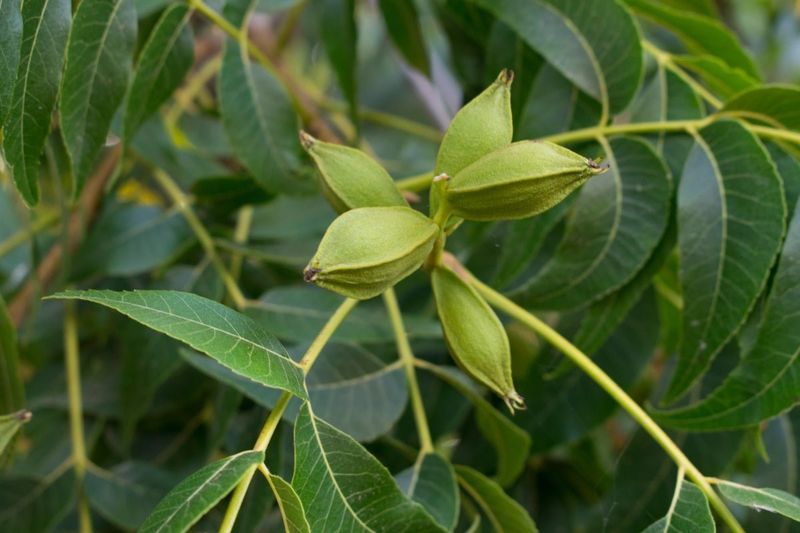
Pecan trees build the house before they furnish it. The shell forms first, and the kernel fills in later, mostly in August and September.
Filling that kernel takes lots of water and plenty of sun. If either runs short, the nut ends up skimpy inside.
Late-summer drought is one of the most common reasons for poorly filled pecans. Hot, dry days from late August into early September hit especially hard.
You might notice kernels that look shriveled, thin or wrinkled. Some feel dry and crumble when you try to pull them out.
North Florida has a lot of sandy soil, which drains like a sieve. Water slips past the roots quickly, so trees in sand feel drought sooner.
A mature pecan can drink a surprising amount of water on a hot day. When rain disappears for a couple of weeks, the tree quietly runs low.
Deep watering during late summer dry spells can make a big difference. Soak the soil under the canopy instead of giving quick splashes.
A layer of mulch helps hold moisture in sandy ground. Keep it a few inches away from the trunk.
Checking rainfall in August is a smart habit. If the sky stays stingy, give your tree a long drink.
8. Completely Empty Nuts Are Called Pops
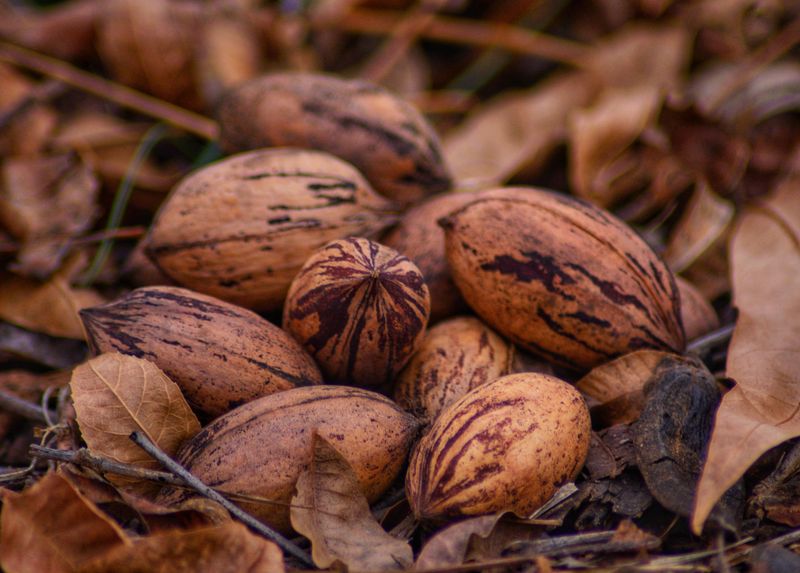
Growers have a cheerful name for a pretty disappointing nut. A pecan with nothing inside is called a pop.
You can often spot pops before cracking them. They feel oddly light, and some float when dropped in a bucket of water.
Several things can lead to pops. Poor pollination is one, since a flower that is not pollinated well cannot grow a proper kernel.
Pecans rely on wind to carry pollen. If the timing between male and female flowers is off, or nearby trees bloom at different times, pollination can suffer.
Low nutrients can also leave nuts empty. A hungry tree may not have enough fuel to fill its crop.
Serious insect or disease damage early in the season plays a role too. Heavy scab or bug attacks can rob nuts before they ever fill.
Late drought and a thin supply of healthy leaves add to the problem. Leaves make the food that fills each kernel, so fewer leaves mean less filling.
Try the float test on your harvest. It saves time and keeps you from cracking a whole bowl of hollow shells.
A soil test every few years can show whether your tree needs nutrients like zinc or nitrogen to bounce back.
9. Shucks That Won’t Open Point To Stress, Scab Or Shuckworms
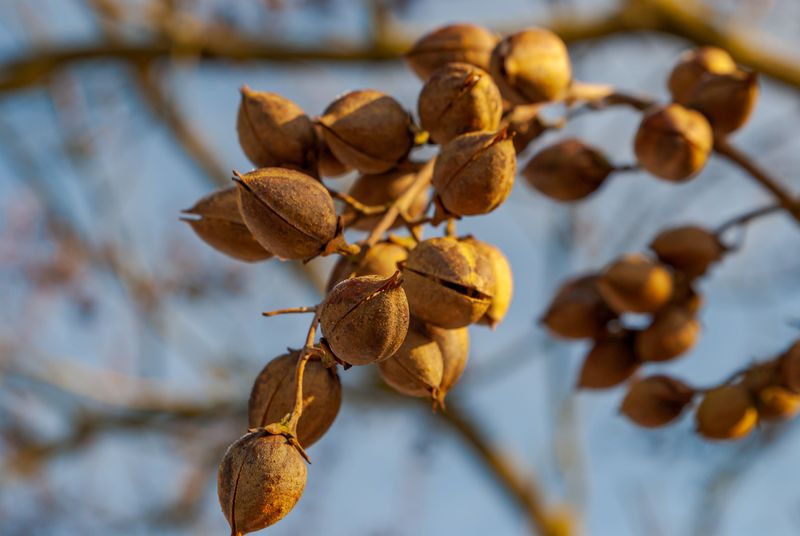
By late fall, pecan shucks should peel back like a flower and let the nut slip out. When they stay shut, your tree is waving a little red flag.
Hickory shuckworms are one common cause. These small caterpillars bore into developing pecans in August and tunnel through the shuck walls.
Their tunnels block the flow of water through the shuck. As a result, shucks may stay green and refuse to split.
Late-season scab can also lock shucks closed. Heavy black lesions toughen the outer layer and stop it from opening normally.
General stress is another big player. A huge crop load or a long dry spell can delay shuck split.
Growers call nuts with clinging shucks stick-tights. They hang on stubbornly and often hide poor kernels inside.
Weak kernel growth adds to the trouble. When the nut never fills well, the shuck may not get the signal to open.
Break open a few stuck shucks and look closely. Tiny tunnels and frass point to shuckworms, while black crusty patches suggest scab.
Clean up fallen shucks during winter to reduce shuckworm numbers next year. Watering in dry months and avoiding overloaded limbs can help ease stress too.