Light Patches Of Bare Wood Are Showing Up On Indiana Tree Trunks
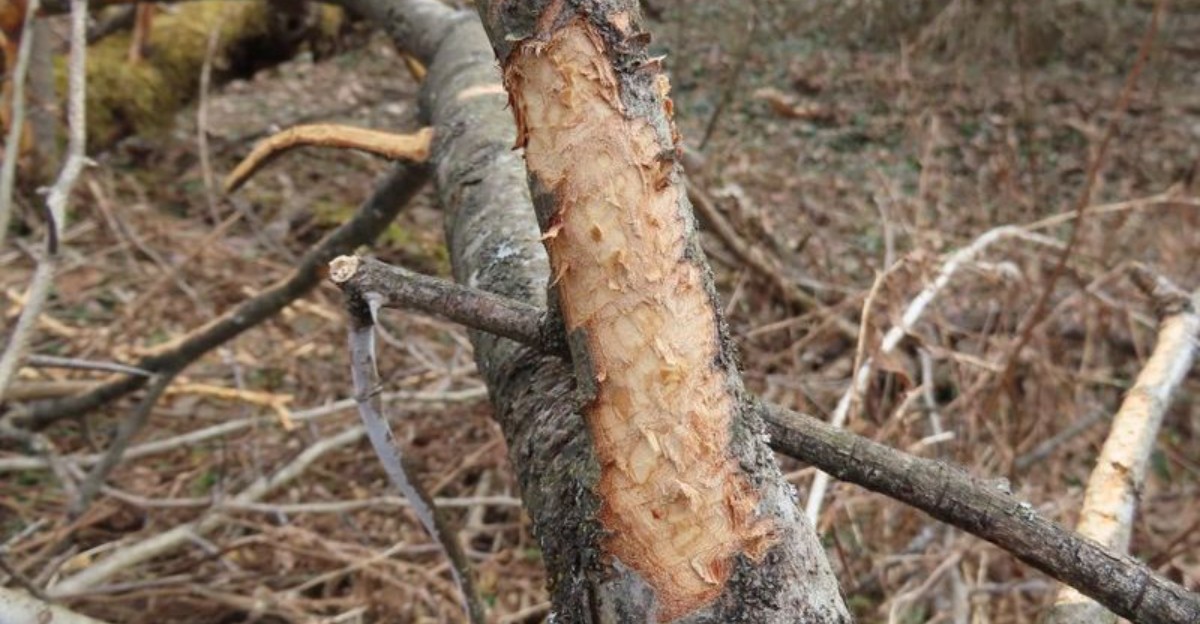
A tree trunk with pale patches can mean something small is working under the bark. In Indiana, plenty of ash trees show this odd, speckled look along their trunks and larger limbs.
The patches appear where the gray outer bark has flaked away in uneven pieces. The lighter layer underneath stands out clearly, even from across the yard or the street.
The cause usually starts with a tiny insect that spends most of its life out of sight. Its young feed under the bark for many months, well hidden from anyone walking by.
I find it fascinating that such a small creature can change how a whole tree looks. You can spot the clues from your own yard this fall without any special tools or training.
Woodpeckers Strip The Bark While Hunting Hidden Larvae
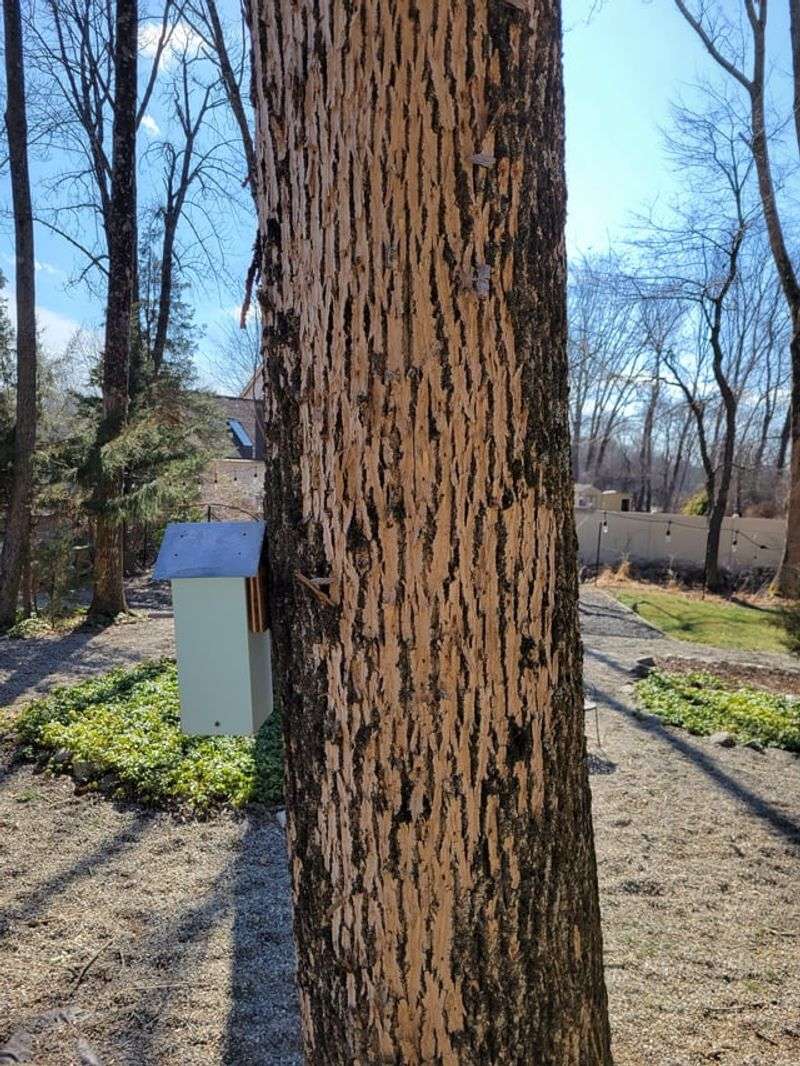
Flecks of bark on the ground can tell a surprising story. Look at the base of an ash tree, and you may find small gray pieces scattered like confetti.
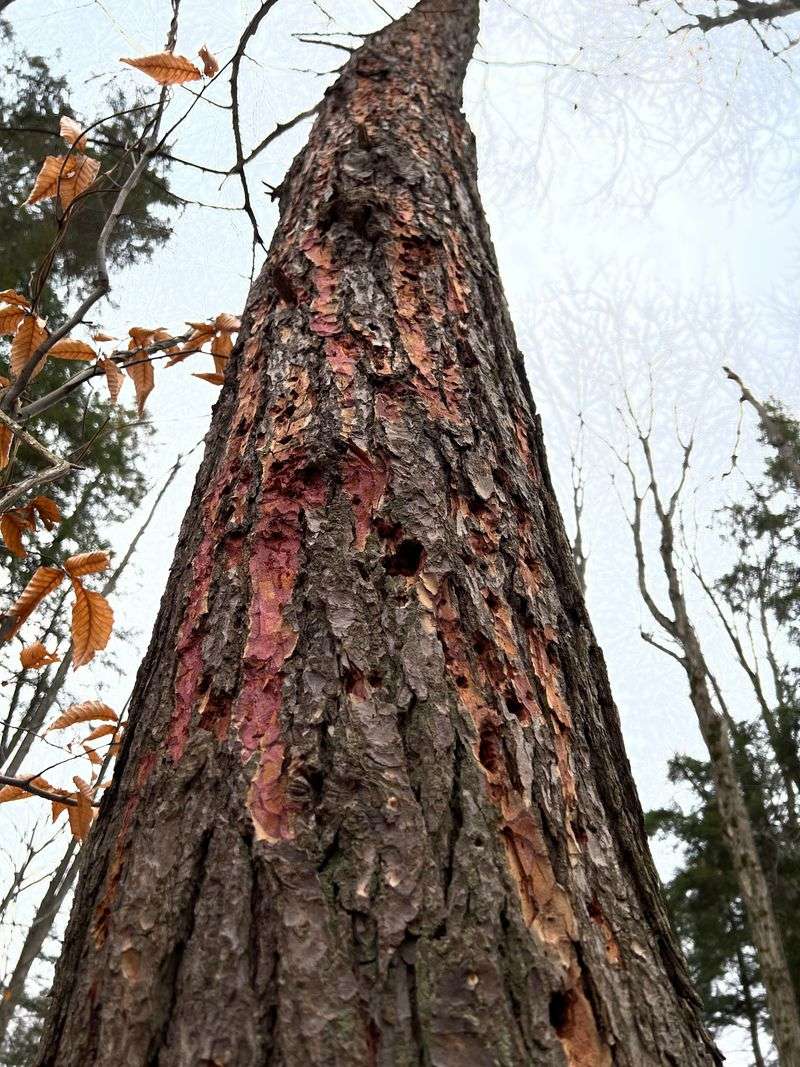
Woodpeckers are often the artists behind those pale patches. They listen closely for insect larvae moving under the bark and flake the rough surface away to reach a meal.
What shows up underneath is not bare wood but the inner bark. Ash bark is gray on the outside, while this hidden layer has a light, corky tan color.
Many tree experts call this habit blonding because of the pale color it leaves behind. From the ground, the trunk can look as if someone scraped it with a tool.
The activity often begins high on the main stem and larger branches. As more larvae settle under the bark, the birds work their way lower on the trunk.
Heavy flaking usually means plenty of food is hidden below the surface. Purdue Extension describes blonding as one of the best signs of trouble under ash bark.
Fresh patches can appear from fall into early spring, when larvae are an important winter food. A short walk around your yard with binoculars can show which trees get the most attention.
Take a few photos of any pale patches you find, and note the date. Pictures help an expert compare changes over time and see how fast the pale patches spread across the trunk.
A Metallic Green Beetle Is Often The Reason
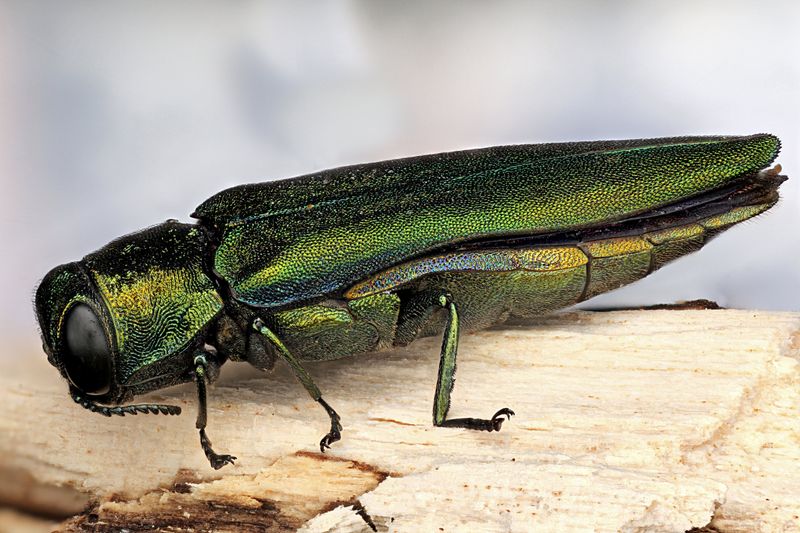
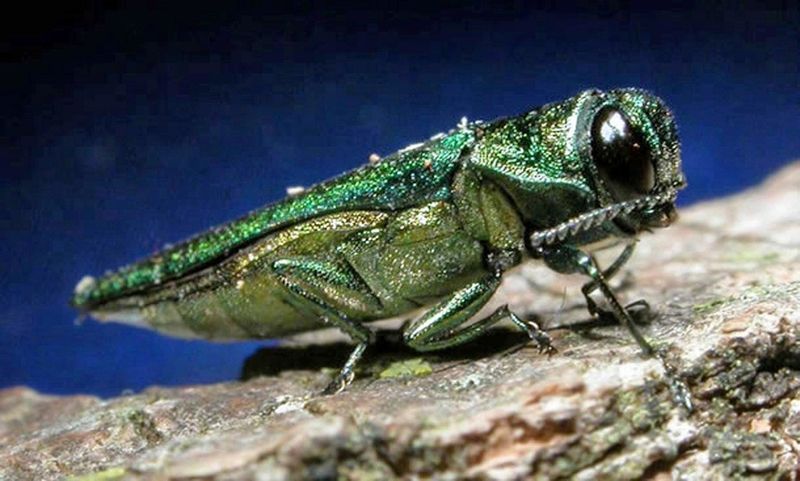
Small enough to sit on a penny, the emerald ash borer has a metallic green body that shines in sunlight. Adults are slender and about half an inch long, so they are easy to miss.
This beetle came to North America from Asia and was first found in southeastern Michigan in 2002. It has since spread across Indiana and many other states.
Adult beetles feed on ash leaves for a few weeks in late spring and summer. The real trouble comes from their young, which live where you cannot see them.
Females lay tiny eggs in bark cracks and crevices. The larvae hatch and chew inward to feed on the living tissue just beneath the bark.
By October, the adult season has ended. What remains are larvae tucked under the bark for winter, and those larvae are what woodpeckers seek.
Your Indiana Garden Changes Every Week. Your Plan Should Too.
Gardening in Indiana changes quickly throughout the season. Every Friday you’ll receive a simple weekly plan showing exactly what to plant, prune, fertilize, harvest, and protect so you never miss the right timing.
That timing explains why pale patches often show up in late fall and winter. The larvae give birds a steady meal during the colder months.
Purdue University and the Indiana Department of Natural Resources both share guides about this beetle. Their photos can help you tell it apart from harmless green insects that look similar at a quick glance.
A clue worth checking is a small D-shaped hole in the bark, about one-eighth inch wide. The adult makes it when leaving the tree, and finding even one is a good reason to ask for professional advice.
Winding Tunnels Beneath The Bark Cut Off The Tree’s Nutrient Flow
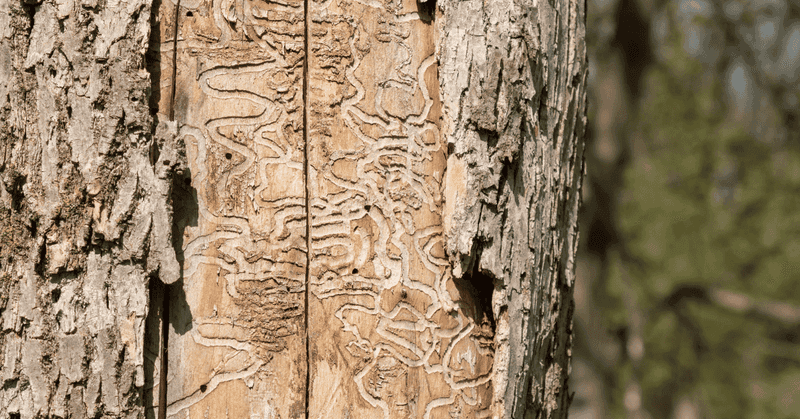
Under the bark sits a thin living layer that works like a delivery road for the tree. It carries sugars made in the leaves down to the trunk and roots.
The larvae feed in this layer and in the outer sapwood just below it. As they chew, the flow of food slows down and then stops in the damaged spots.
The tunnels are called galleries, and they wind back and forth in an S shape. They are packed with fine, sawdust-like material that the larvae leave behind as they move.
When bark is peeled away, these patterns look like squiggly writing on the wood. Each larva carves its own path, and some galleries stretch for several inches.
Many larvae in one trunk can eventually circle the tree and block the flow in every direction. That makes it hard for the tree to move water and food where they are needed.
Think of a garden hose with many small pinches along its length. A little water still gets through, but not enough to keep every branch healthy.
Branches farther from the trunk are often the first to struggle, and leaves on those limbs may thin out. Extension experts list these galleries among the clearest signs of this beetle.
You should not peel bark yourself, though. Leave that job to a trained person who can look safely, protect the tree, and explain what the pattern means.
Thinning Crowns Often Follow Several Seasons Of Feeding
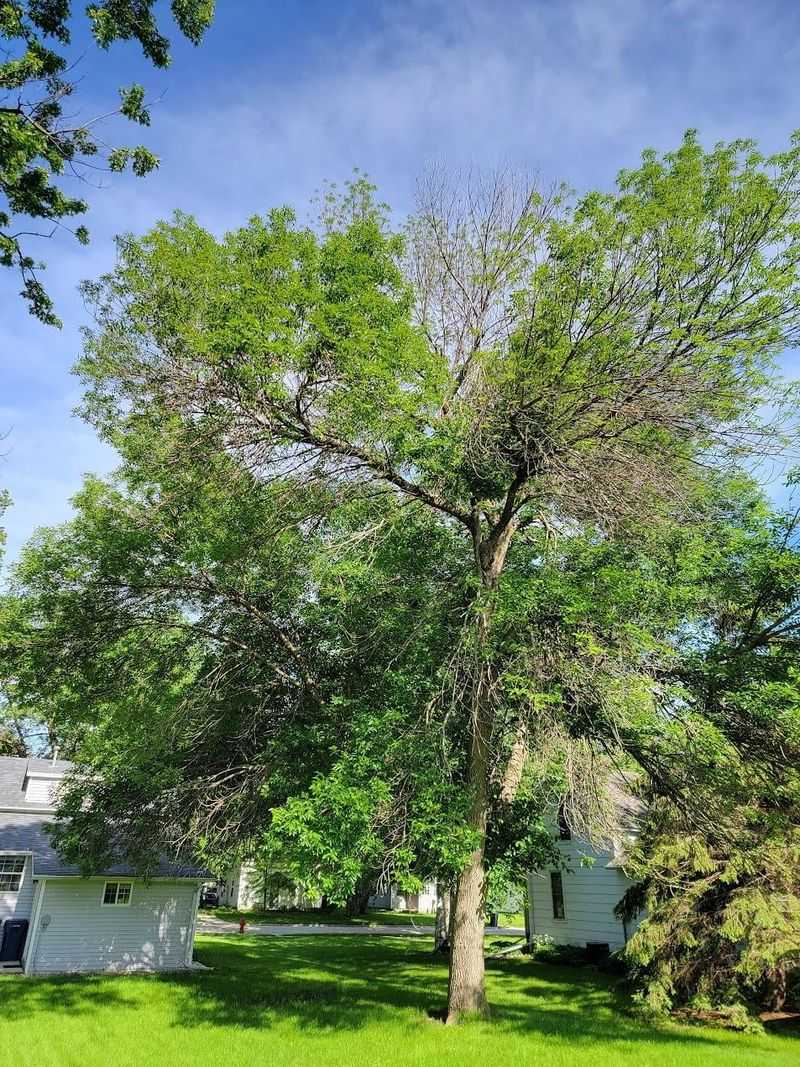
Trees rarely show trouble right away. Larvae may feed for a few years before the leaves look any different, and by then the damage inside the trunk is well along.
The first change usually shows up near the top of the tree. Leaves get sparse, small twigs stop growing, and the crown starts to look see-through.
Later, you may see sprouts growing low on the trunk or around the base. Trees often push out these shoots when they are stressed and trying to make new leaves closer to the roots.
Those shoots are a helpful clue, even though they look healthy and green. Vertical splits in the bark can appear too, sometimes with a tunnel visible underneath.
Crown thinning is easiest to judge in summer, when the tree is fully leafed out. In fall, photos taken from one spot give you something to compare with the same view next summer.
Thin crowns can also come from drought, root problems, construction damage, or other diseases. That is why a careful check matters before anyone decides what to do.
Write down what you see, and note the date in a phone or notebook. Comparing the crown with a nearby ash of the same kind and age can also help.
Early attention gives you more choices. Purdue experts note that treatment works best on trees that have lost less than about 30 percent of their canopy.
Ash Trees Across Indiana Have Faced This Pest For Years
Since the first Indiana find in 2004 in Steuben County, the beetle has traveled a long way. The Indiana Department of Natural Resources now reports it in all 92 counties.
Many woodlots and city streets have lost ash trees over the years. Some neighborhoods that had shady rows of ash now have young replacement trees of other kinds instead.
Ash was a popular choice for shade before the beetle arrived. Planners liked how quickly it grew, how well it handled city conditions, and how bright its leaves turned in fall.
Because so many ash trees were planted, the pest found plenty of food. Still, not every tree with pale patches has this problem.
Other insects and weather can also cause bark to peel. In Indiana, though, ash trees are the first ones experts check when these patches appear.
You can learn to tell ash from other trees with a few simple clues. Ash branches and leaves grow in pairs across from each other along the twig.
Each leaf is made of several smaller leaflets on one stem. The bark on older trees often forms tight, diamond-shaped ridges that look like a net.
Many towns keep records of public ash trees, and your local city forester may know the plans for trees near your street. If you own an ash, fall is a good time to plan so you are not rushed when winter arrives.
A Certified Arborist Can Confirm The Cause
Guessing from the ground only gets you so far. A certified arborist is trained to read bark, branches, and leaves together to find the real cause of the patches.
The visit usually starts with a slow walk around the trunk. The arborist may check for exit holes, split bark, woodpecker patches, and shoots near the base.
They might also study the crown with binoculars to estimate how much of it has thinned. That estimate helps decide whether treatment still makes sense for your tree.
Some healthy ash trees can be protected with trunk injections or soil treatments. Trees that are already badly thinned may need to be removed safely by a trained crew.
You can find a local expert through the International Society of Arboriculture website. Purdue Extension also has helpful guides and contact details for ash questions.
Choose someone who is licensed and insured, and ask for a written plan. Get more than one opinion if the cost feels high.
A good arborist will explain each option clearly and will not rush you. Questions about cost, timing, and long-term care are all fair to ask.
Treatments need repeating to keep working over time. Soil treatments are often applied every year, while trunk injections usually protect a tree for two to three years.
Do not wait if the tree stands near a house, wire, or walkway. Ash trees weakened by this beetle can turn brittle and drop limbs with little warning.