Dense Twig Tangles Are Becoming Easy To Spot In Missouri Treetops
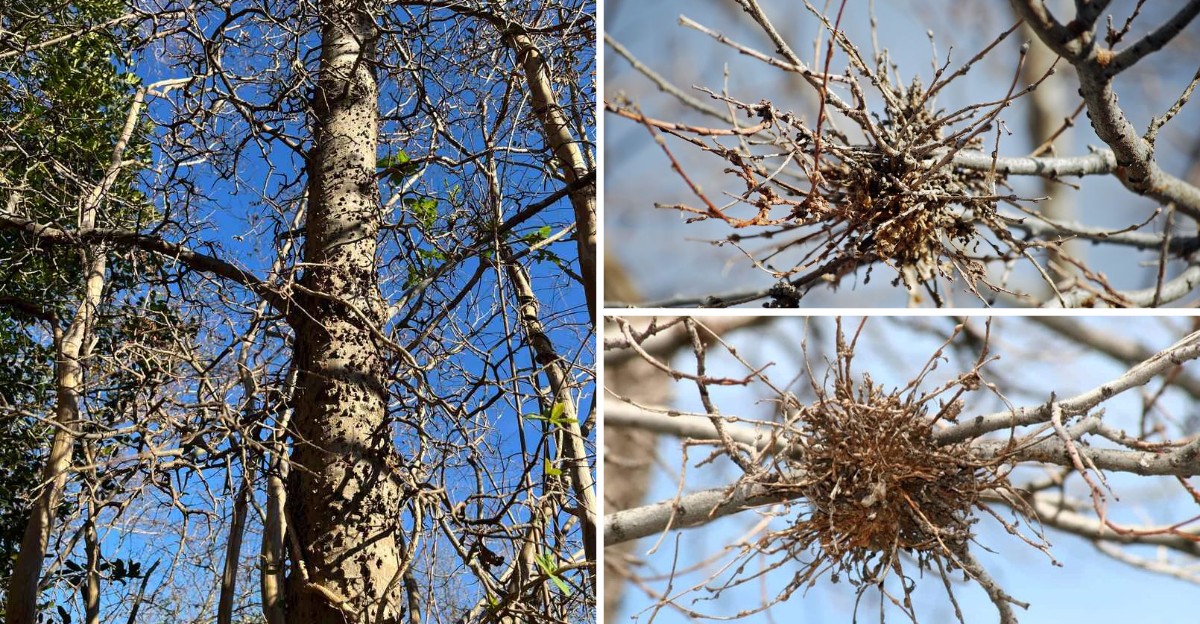
A tiny mite and a fungus can team up to make one tree grow a messy bundle of twigs. Missouri woodlands display these dark, ragged clumps high in the thinning branches during late autumn walks.
Two organisms too small for your eyes can reshape a branch, and I find that wonderful. Scientists at university extension offices have examined these growths for years and describe them as mostly harmless clusters.
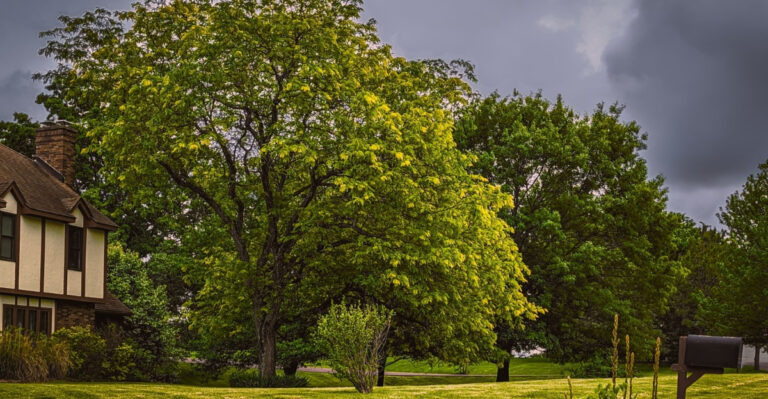
The clumps often look like old bird nests woven from dozens of tiny crooked upright twigs. You can spot them from a driveway, a trail, or a quiet gravel road across the state.
Take a slow walk beneath tall trees this month and look carefully overhead along a tree-lined Missouri street. Will you find the knotted bundle hiding among the very highest branches of your neighborhood trees?
A Pair Of Microscopic Organisms Triggers The Tangle
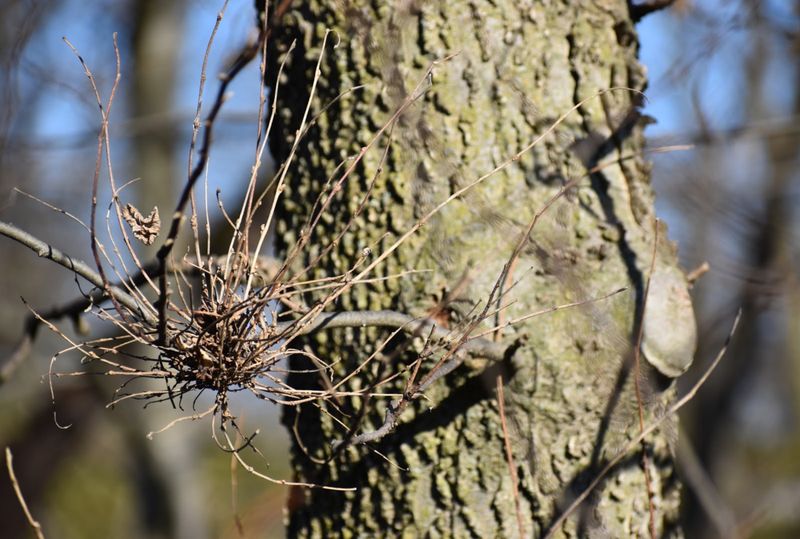
Two tiny partners, a fungus and a mite, work together to start the whole messy bundle. Experts link hackberry witches’ broom to a powdery mildew fungus and a tiny mite that feeds in the buds.
The fungus is now called Podosphaera phytoptophila, and the little mite carries the scientific name Eriophyes celtis. Neither one is easy to see with the naked eye, so most people only notice the final result.
Mites in this group are relatives of spiders, though each one is much smaller than a sesame seed. They shelter between bud scales through winter and feed on the tender tissue inside the buds.
In spring and early summer, the powdery mildew fungus can sometimes appear as a thin pale layer on young stems, buds, and leaf undersides. The cause is not fully understood, but researchers link the thick broom shape to the two organisms acting together.
Hackberry trees host this pair across the central United States, including Missouri river bottoms and fence rows. The partnership is a natural part of the woodland, much like the small galls you may see on oak leaves.
The tree did not ask for this teamwork, yet it grows the bundle anyway all season. Once the bundle forms, it stays attached to the branch and often keeps growing for many years.
Learning the cause takes away the mystery, and it can make your next walk more fun. Spot one, and you can tell friends that a fungus and a mite did the work.
Bare Branches Reveal What Summer Leaves Hid
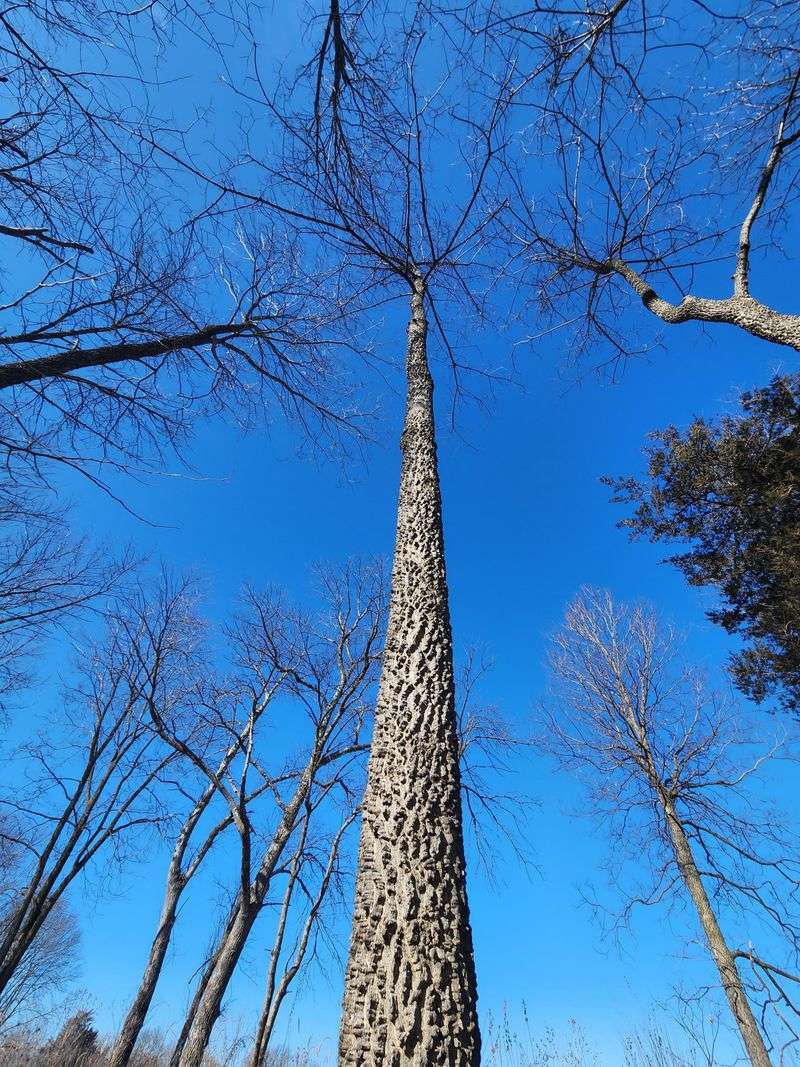
Leaves act like a curtain, and in October that curtain starts to slip away from the treetops. Suddenly the hidden bundles of twigs stand out against the pale autumn sky like dark paintbrush tips.
Hackberry leaves turn a soft yellow and drop fairly early, which gives the tree an open look. That open view makes the brooms easier to notice, and binoculars can help you study them much more closely.
Seen in full leaf, a broom blends in with the green crown and can hide there for many months. Leaves on the bundle often look smaller and crowded, which makes them even harder to pick out.
Your Missouri Garden Changes Every Week. Your Plan Should Too.
Gardening in Missouri changes quickly throughout the season. Every Friday you’ll receive a simple weekly plan showing exactly what to plant, prune, fertilize, harvest, and protect so you never miss the right timing.
Autumn walks are a great time to practice, since the shapes show up so clearly right now. Bring a small notebook and jot down where each tree stands, then compare notes after winter arrives.
Look for a dark, rounded mass that sits right on a limb rather than hanging from it. Squirrel nests are leafy balls, while brooms are bristly clusters made of many upright wiry little twigs.
Binoculars turn the hunt into a fun game, and a bright afternoon gives you the sharpest view. Stand with the sun behind you, so light falls on the twigs instead of in your eyes.
Once you spot the first one, you may start noticing them on other hackberries around town. Hackberries often grow along streets, parks, and fence lines, so your search should not take long.
The Tree Reacts With A Burst Of Short Crowded Shoots
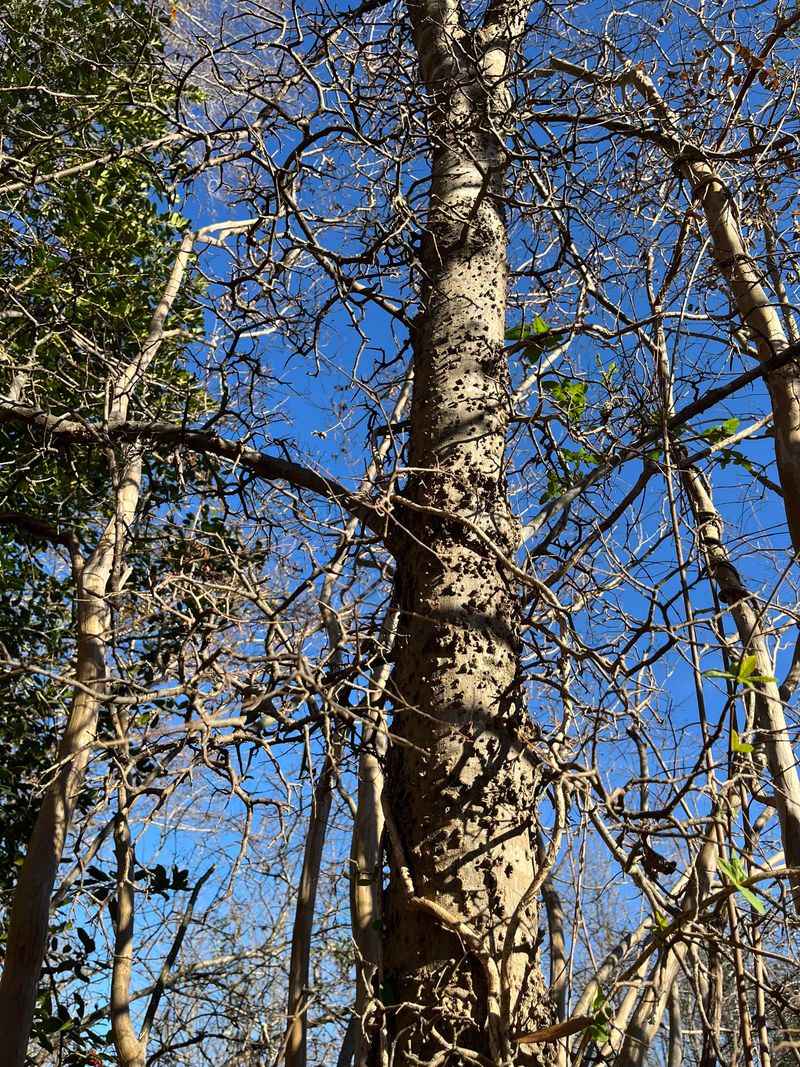
A branch normally grows with a few shoots spaced neatly along its length like steps on a ladder. A broom breaks that pattern with dozens of tiny shoots packed close together on one spot.
Researchers think the mite and fungus disturb the normal growth signals that guide how buds open each year. The exact chemistry is still being researched, so experts cannot explain every step with full confidence yet.
Buds that would usually stay single instead sprout many short stems, so the twigs end up crowded. Each stem is stubby, with leaf scars packed so tightly that the twig looks like a bottle brush.
The tree responds with extra growth in the same place year after year, so the bundle slowly grows larger. Many brooms stay fairly small, while older ones can slowly grow larger over the years.
The tree keeps the twigs even after leaf drop, so the bundle stays on show through winter. Frost, snow, and low winter light make the knotted outline look even sharper than it does in October.
Witches’ broom is a general name for tangled growth, and different trees get it from different causes. Some come from fungi, others from viruses and mites, and a few from other plant stresses.
On hackberry, the pairing of mildew and mite is the cause most often named by extension experts. Knowing that detail helps you describe what you see when you talk with a local forester or extension agent.
Most Trees Carry Them Without Serious Harm
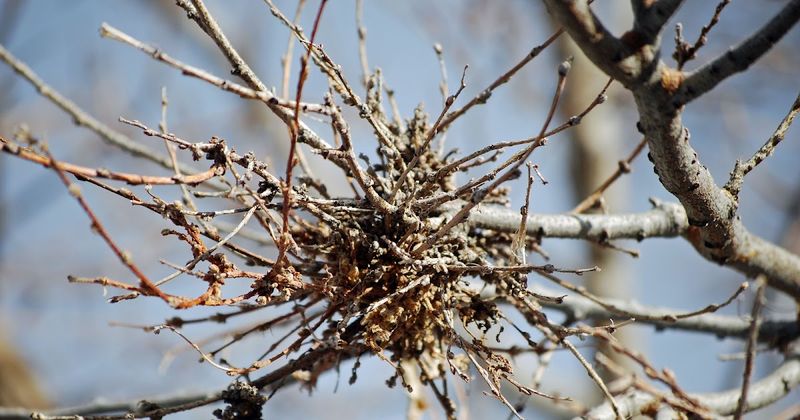
Relax, because a healthy hackberry usually carries a broom for many years with very little trouble overall. University extension services describe the growth as mainly cosmetic, so it rarely threatens the whole tree.
Hackberry is a tough native tree that handles wind, drought, and poor soil better than many neighbors. That strength is one reason it can shrug off a few tangled clumps in its crown.
Broom growth takes some energy from the branch, yet the tree keeps making food in its other leaves. A tree with only one or two brooms still grows, leafs out, and makes berries for birds as usual.
Trouble is more likely when a tree is already stressed by drought, root damage, or old age. In those cases, the broom is usually a side detail, not the main reason for decline.
Heavy brooms on thin branches can add weight, so a very large one deserves a second look. Wind and ice can strain a limb, especially one that is already narrow, cracked, or hanging over a driveway.
Brooms hanging near homes, cars, or play areas are worth a quick look from the ground this fall. If a limb looks cracked or sagging, call a certified arborist for honest advice before the winter storms arrive.
For most backyard hackberries, the broom is simply a curious feature rather than a warning sign. Enjoy the sculpture, keep an eye on the tree’s overall health, and let nature carry on.
Cutting Them Out Is Optional On A Healthy Tree
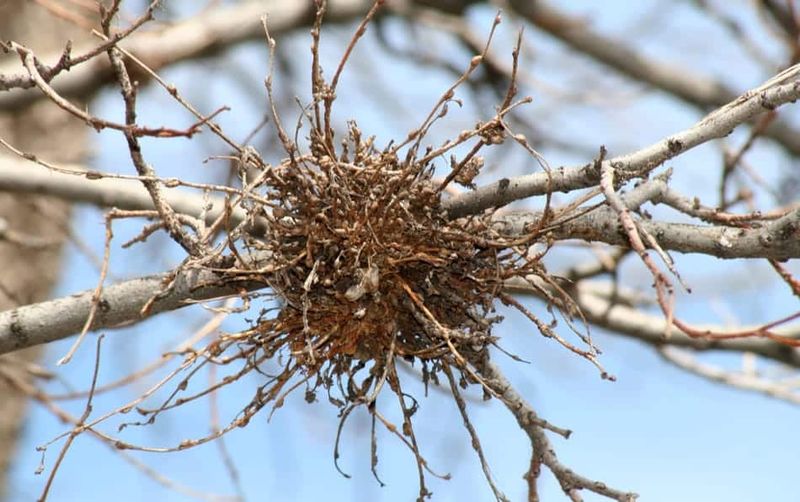
Pruning a broom is a personal choice, since a healthy tree does not need the cut itself. Extension guides generally treat these clumps as a cosmetic issue, so leaving them in place is fine.
Some people simply dislike the look of a big tangle hanging in a prized backyard shade tree. Others enjoy the odd shapes, and birds may use the dense twigs for cover on windy days.
If you decide to cut, wait until the leaves drop and the tree settles into its winter rest. Late fall through winter is a common pruning window for hardwoods, and the bare limbs are easier to see.
Make the cut just outside the branch collar, the slightly swollen ring where the limb meets its parent. Clean, sharp tools leave smoother wounds, and smooth wounds close over more easily than ragged ones do.
Skip wound paint and sealants, since research from university extension services shows they offer little benefit. A clean cut on a vigorous tree usually begins forming new woundwood around its edges the next growing season.
Keep your expectations realistic, because removing one broom does not cure the tree or stop new ones. The mite and fungus can still live in other buds, so fresh clumps may appear later.
Big limbs or high branches call for a certified arborist, since falls and dropped saws cause injuries. Ask for proof of insurance, and keep your own feet safely on the ground this season.
A Few Look-Alikes Can Fool Someone Standing Below
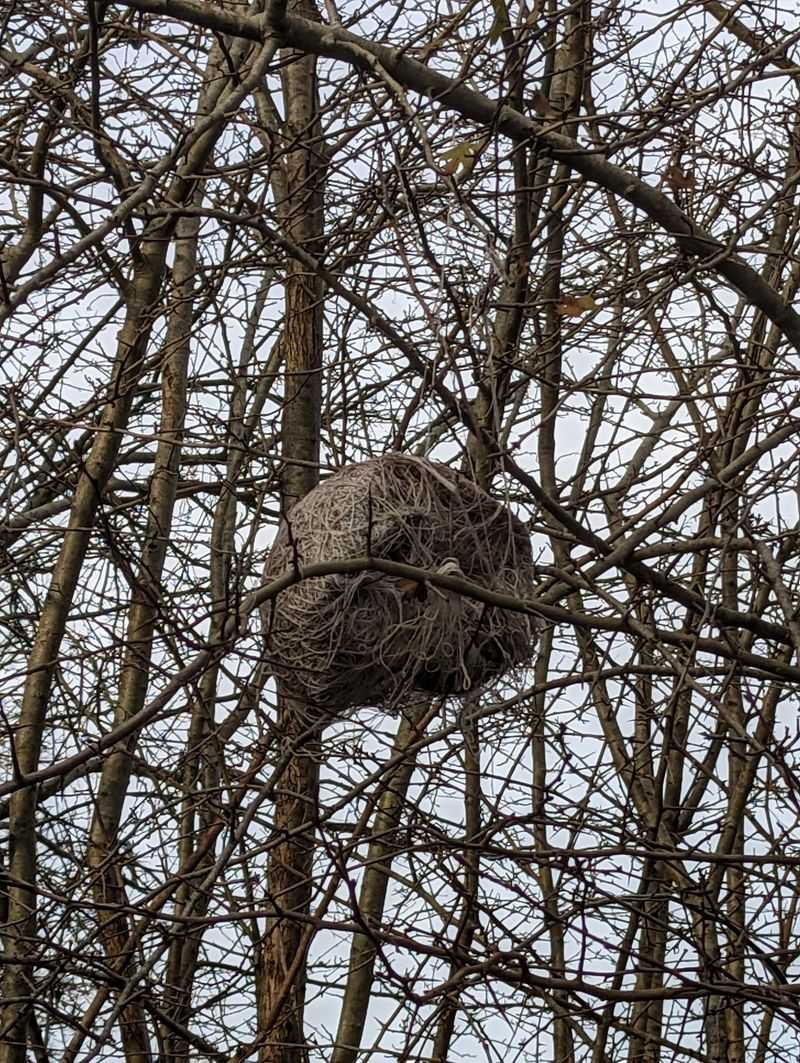
Standing far below, even sharp eyes can easily mix up a broom with several other treetop shapes. A few simple clues help you sort them out before you point and say the wrong name.
Squirrel nests, called dreys, are a common fooler, and they pop into view as leaves thin out. A drey is a round ball of leaves and twigs, usually tucked into a fork of branches.
Mistletoe is another doppelganger, forming round evergreen clumps on the branches of many Missouri hardwood trees. Its thick green leaves stay put after the host tree turns bare, which makes it easy to recognize.
Fall webworm nests can fool you too, appearing as silky tents wrapped around the tips of branches. Webs hold leaves and look soft and gauzy, while a broom is stiff, woody, and bristly overall.
Clusters of leaves that cling to a branch can also fool someone for a moment in autumn light. Those leaves eventually fall away, while a true broom stays woody and attached year-round.
Water sprouts, the straight shoots that rise from pruning cuts or stressed limbs, may also look bushy. They grow in a loose spray along one limb rather than in a single tight round ball.
When unsure, use binoculars or a phone camera zoom, then compare what you see with photos from extension websites. Your county extension office can also help, and many will gladly identify a photo you send.