New York Gardeners Swear By This Secret Trick For Christmas Cactus Blooms Every Year
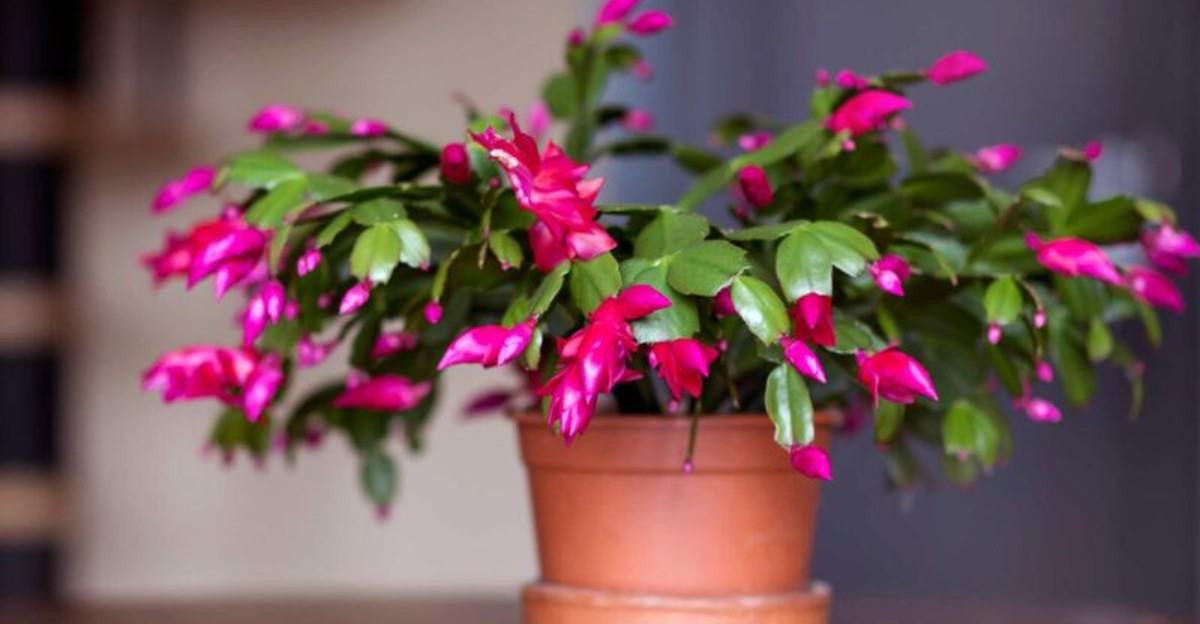
Long, dark nights are the real reason one famous holiday houseplant explodes with pink and red flowers. Plant scientists at several universities say twelve or more hours of darkness each night can trigger new buds.
Cool air helps too, and temperatures near fifty to fifty-five degrees can do the same job. Many New York gardeners lean on this simple pairing every October with surprisingly colorful results by December.
Personally, I love this trick for its price tag of zero dollars and a little patience. You need only a quiet closet, a cool spare room, or a dim porch in New York.
Your plant may reward you with dozens of hanging blooms right in time for the holidays. So are you ready to learn the timing, the mistakes, and the easy fix for next season?
Your Cactus Craves Long Dark Nights This Fall
Extension experts note that long nights and cool temperatures are the two main bloom signals for Christmas cactus plants. These plants are short-day bloomers, which means they set buds once nights stretch long enough each fall.
Most guides suggest about twelve to fourteen hours of steady darkness every night for roughly six weeks. Even a lamp switched on for a few minutes in the evening can confuse the plant’s inner clock.
New York gardeners have a natural advantage in October, since days shrink quickly after the autumn equinox. By early November, sunset arrives before five o’clock in much of the state, which helps a lot.
The catch is indoor lighting, because living rooms stay bright well into the night with TVs and lamps. Your plant cannot tell the difference between a sunset and a ceiling light, so it keeps waiting.
A simple fix is moving the pot to a guest room or closet each evening around six o’clock. Bring it back to a bright window each morning so the leaves still get their daily dose of light.
Some people slip a cardboard box or dark cloth over the plant instead of carrying it around. Just make sure air can move a little, because damp, trapped air may invite mold on the soil.
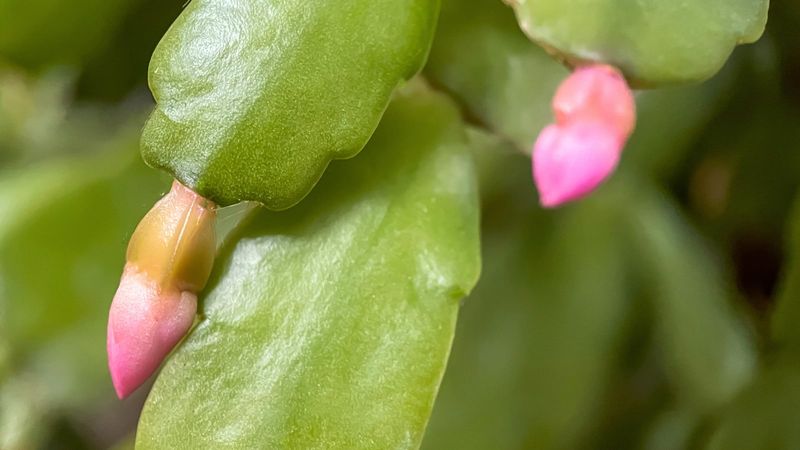
After a few weeks, tiny pink nubs should appear at the tips of the flat, segmented stems. That moment is a good sign the bud-setting conditions are working.
Cool Rooms Give You A Second Shortcut
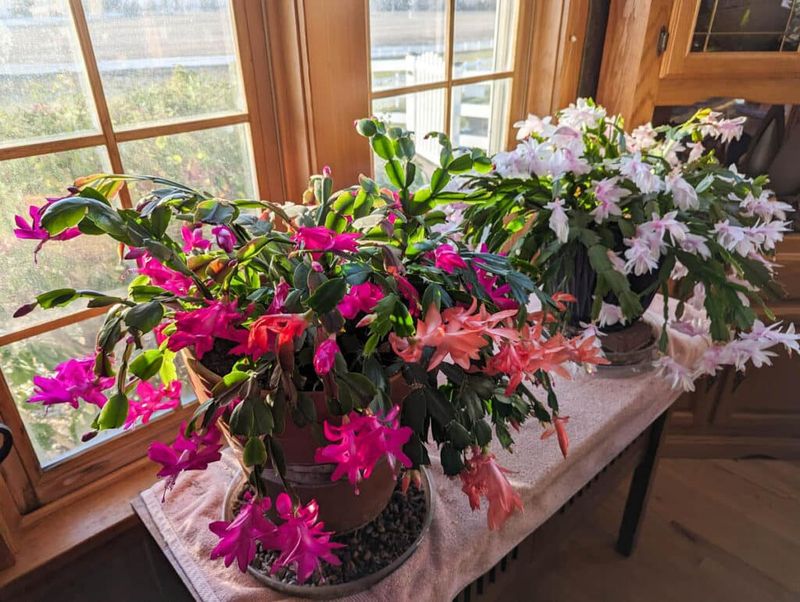
Chilly nights work like a backup key, and many growers use them when darkness is hard to manage. Extension specialists note that temperatures around fifty to fifty-five degrees can push buds even with some light.
Warmer rooms above seventy degrees tend to slow bud formation, even when the nights are properly long. Many New York homes run the heat high in fall, which can quietly work against your blooming plans.
An unheated sunroom, enclosed porch, or cool basement window often hits the right temperature range during a typical October. Keep a small thermometer nearby so you can check the real numbers instead of guessing each night.
Your New York Garden Changes Every Week. Your Plan Should Too.
Gardening in New York changes quickly throughout the season. Every Friday you’ll receive a simple weekly plan showing exactly what to plant, prune, fertilize, harvest, and protect so you never miss the right timing.
Be careful about frost or freezing air, because these tropical plants come from mountain forests in Brazil. Temperatures below about forty-five degrees can harm the stems, so bring pots inside before cold snaps arrive.
Wild relatives of your houseplant actually grow on tree branches as epiphytes, much like many orchids do. That mountain home explains the love for cool, misty nights and bright but filtered daytime light under a leafy canopy.
Combining cool air with long nights gives you the strongest chance of a full, showy display by mid-December. Personally, I think the cool room approach feels easier because the plant can stay in one spot.
Check on the pot every few days, and look for small buds forming near the stem tips. Once those buds show up, you can slowly move the plant somewhere a bit warmer for display.
October Is Your Perfect Starting Window
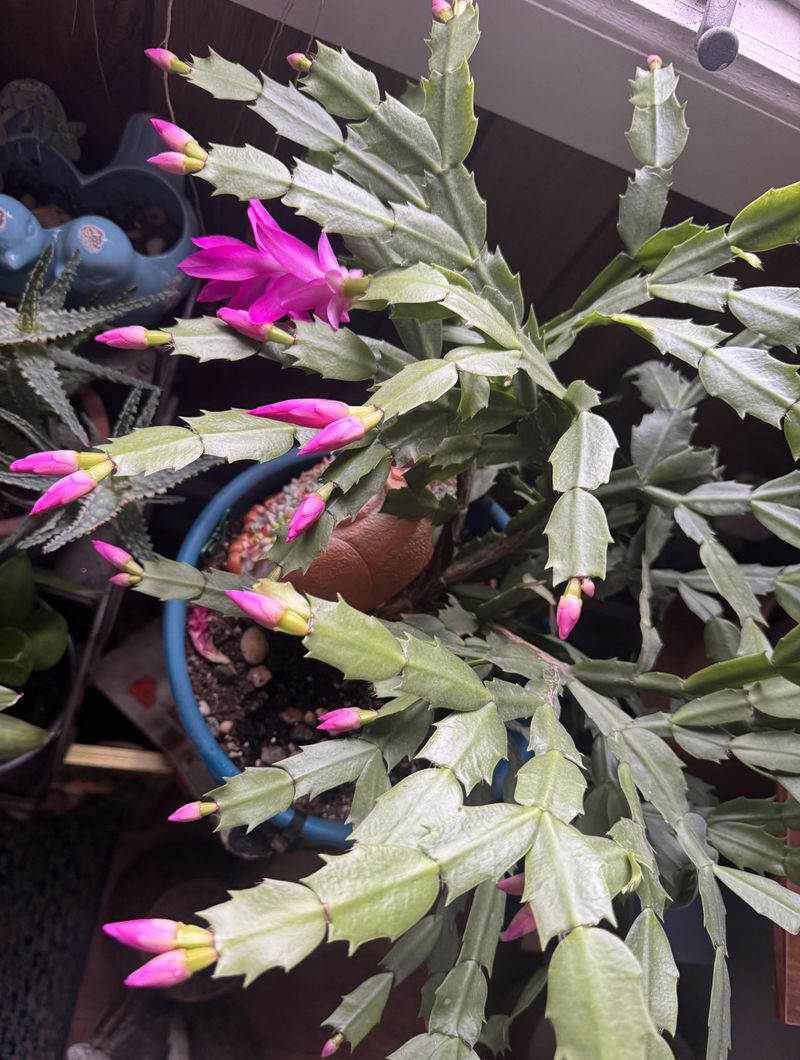
Calendar timing matters more than most people realize, and October sits right in the sweet spot for setting buds. Buds usually need about six to eight weeks to form and open after the dark treatment begins.
Starting in October lines up nicely with flowers opening around Thanksgiving or Christmas. Begin too late, and the plant may still bloom, though the show could slip into January instead.
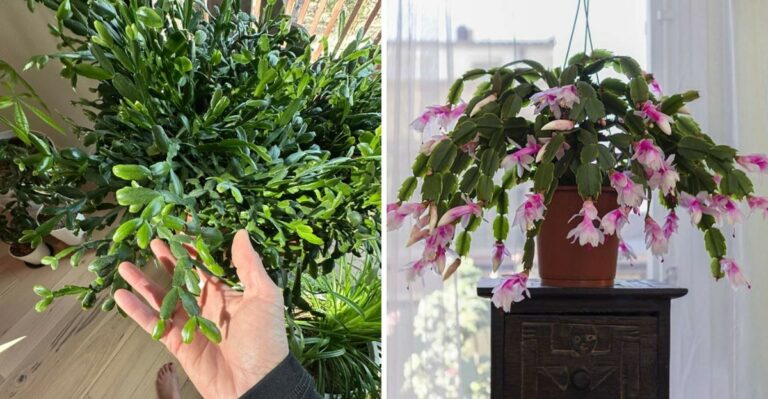
Name confusion plays a role too, because several holiday cactus plants look alike at the garden center. Thanksgiving cactus has pointed, claw-like stem edges, while true Christmas cactus has smoother, rounded scallops along each segment.
Many plants sold in stores each fall are actually Thanksgiving cactus, which usually blooms earlier. Knowing your plant helps you set realistic expectations, since flowers may open in late November instead of December.
Mark a start date on your calendar, then count forward six weeks to guess your first blooms. That small habit turns a hopeful guess into a plan, and it feels fun to watch unfold.
Hold off on fertilizer during this stretch, since many extension guides suggest stopping feeding in early fall. Water a bit less as well, letting the top inch of soil dry slightly between drinks.
These small shifts mimic the drier, cooler season the plant would feel in its native forest home. October gives you just enough time to set things up without any rush or stress before the holidays.
You Should Skip These Common Bud Mistakes
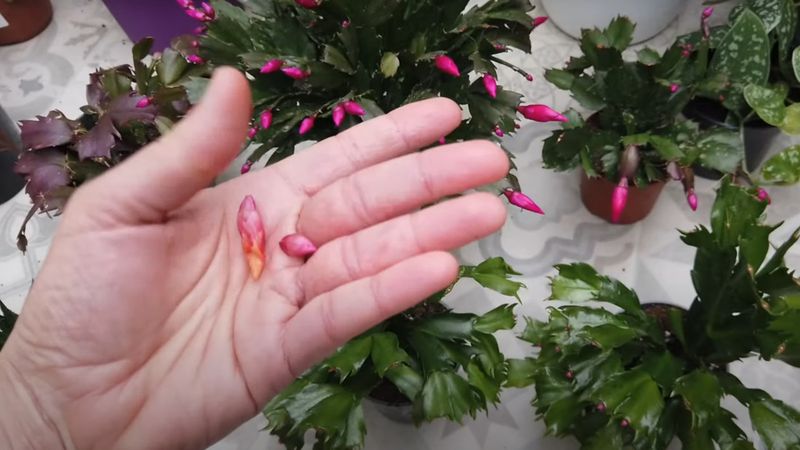
Few things sting like watching plump flower buds fall to the floor just days before they open. Bud drop is a common complaint, and extension services link it to sudden changes in the plant’s surroundings.
Moving a budded plant from a cool porch into a hot living room can shock it badly. Try shifting it gradually instead, giving it a few days in a medium spot before the final move.
Drafts are another sneaky problem, especially near front doors or heat vents that blast warm, dry air. New York apartments with radiators can be tricky, so keep pots a few feet away from the heat.
Overwatering causes trouble too, because soggy soil can lead to root rot in these forest plants fairly quickly. Check the soil with your finger first, and water only when the top layer feels dry to the touch.
Turning the pot often may also cause buds to drop, since they reorient toward the light each time. Pick a good spot, then leave the plant there and resist the urge to rotate it daily.
Low humidity during heating season may add stress, so a pebble tray with water underneath can help. Grouping houseplants together also raises moisture in the air, which these forest natives tend to appreciate in winter.
I believe most bud drop comes from good intentions, like extra water or a move to show off. A little restraint goes a long way, so let the plant settle and do its thing in peace.
Gentle Care Keeps Those Buds Hanging On
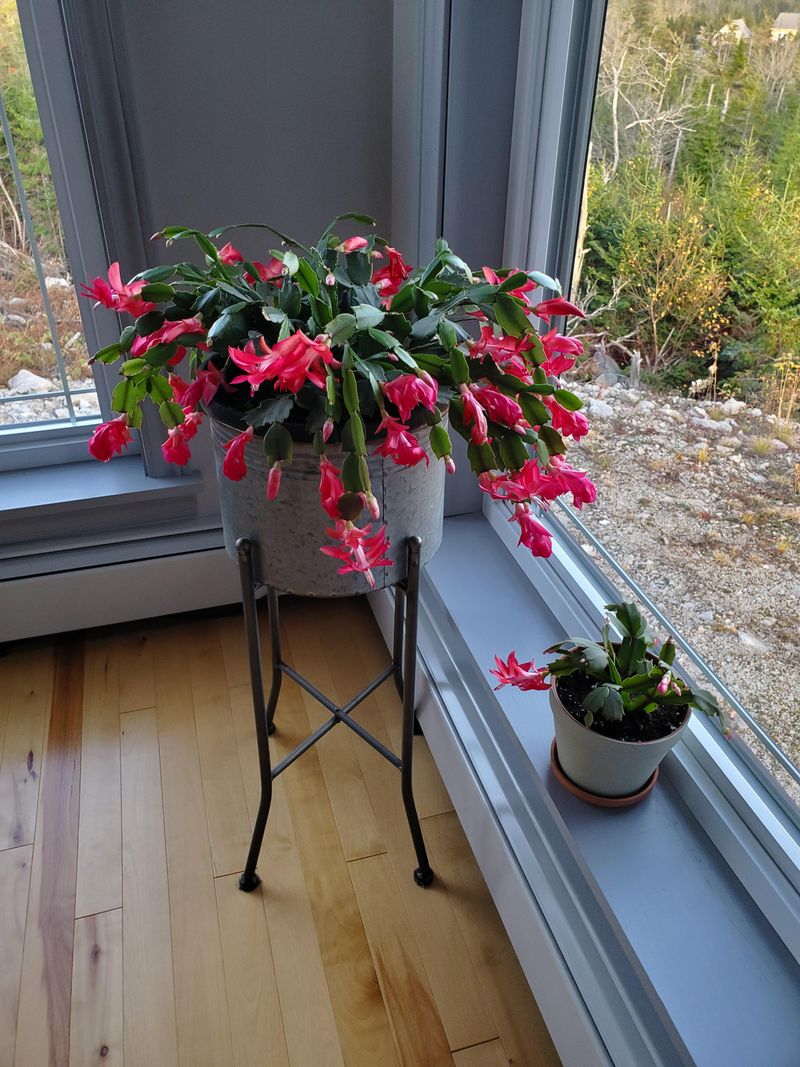
Once flowers open, your job shifts from coaxing to simply enjoying the colorful show for several weeks. Each bloom may last several days, and a healthy plant can keep opening new buds over many weeks.
Bright, indirect light works best now, such as an east window or a spot near a sheer curtain. Harsh afternoon sun through glass can fade flowers quickly, even during the cooler months in New York.
Room temperatures between sixty and seventy degrees help flowers last longer than hot, stuffy spaces do near the stove. Keep the plant away from the fireplace, the oven, and those cozy spots near heating vents this winter.
Water steadily during bloom, because flowering takes energy and the soil may dry faster than you expect. Still, avoid letting the pot sit in a saucer full of water for hours after each drink.
Pinch off faded flowers gently, which keeps the plant tidy and helps you spot fresh buds easily. Faded petals often slide off with a light tug, leaving the small green base behind on the stem.
Did you know some of these plants get passed down through families for decades with basic care? Many gardeners treasure cuttings from a grandparent’s plant, and those heirlooms often bloom again each winter with proper care.
Honestly, I can’t imagine a nicer holiday decoration than a living plant with family history behind it. Give it calm, steady care now, and it will likely repay you with color through the darkest weeks.
Your Plan For Blooms Year After Year
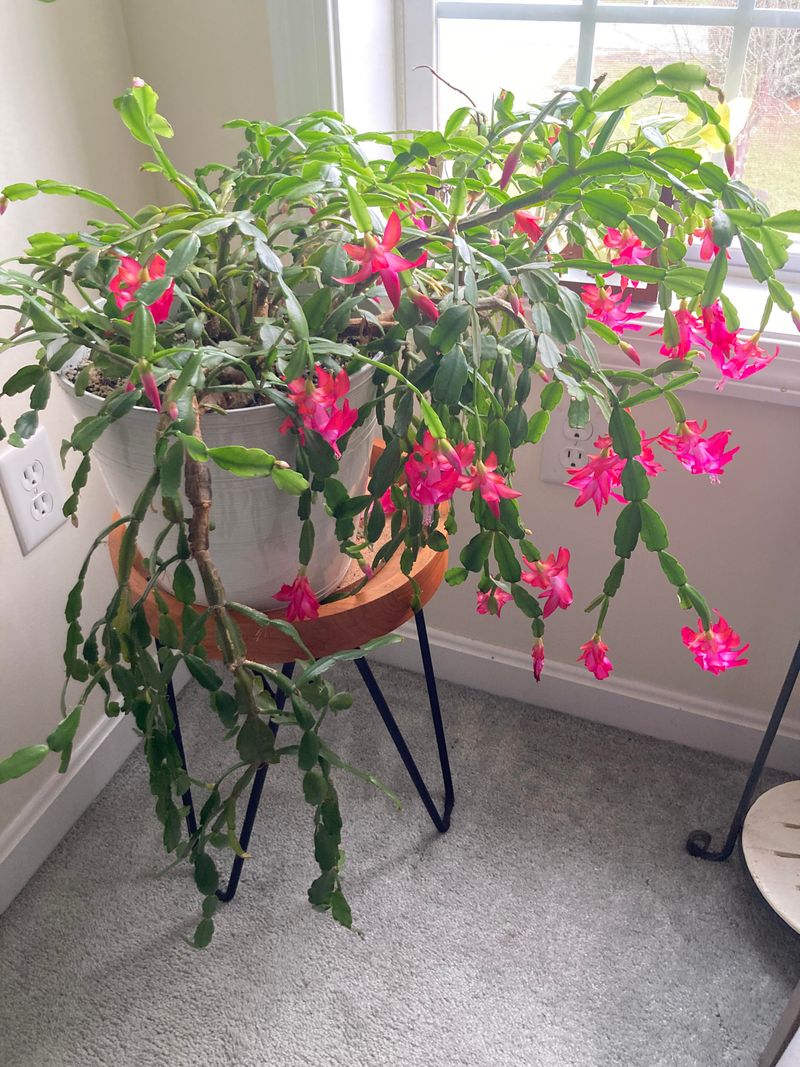
Blooms every year come from a simple rhythm that follows the seasons, not from one lucky October. After flowering ends in winter, give the plant a short rest with less water for about six weeks.
Late winter or early spring next year is a fine time for light pruning to encourage bushier growth. Twist off a few stem segments at the joints, and you can root them in moist potting mix.
During the warm months ahead, many New York growers move pots outside to a shady porch or patio. Feed lightly with a balanced houseplant fertilizer during active growth, then stop feeding again by early fall.
Repotting is rarely urgent, since these plants actually like being a little snug in their containers for years. When you do repot, choose a fast-draining mix, like potting soil blended with some perlite or bark.
Bring outdoor plants inside before nights dip below fifty degrees, which can happen by early fall in much of New York. Check leaves for pests like mealybugs before the move, and wipe off any fuzzy white spots you see.
Then restart the darkness routine and cool room trick, just like you did this season with great results. Each cycle teaches you a bit more about your plant’s quirks, favorite corners, and timing inside your home.
Once the habit sticks, the plant often grows larger over time. Bigger plants mean more stems, and more stems usually mean a fuller, brighter holiday display for you.