Gray Papery Balls Are Becoming Visible In Bare Indiana Treetops
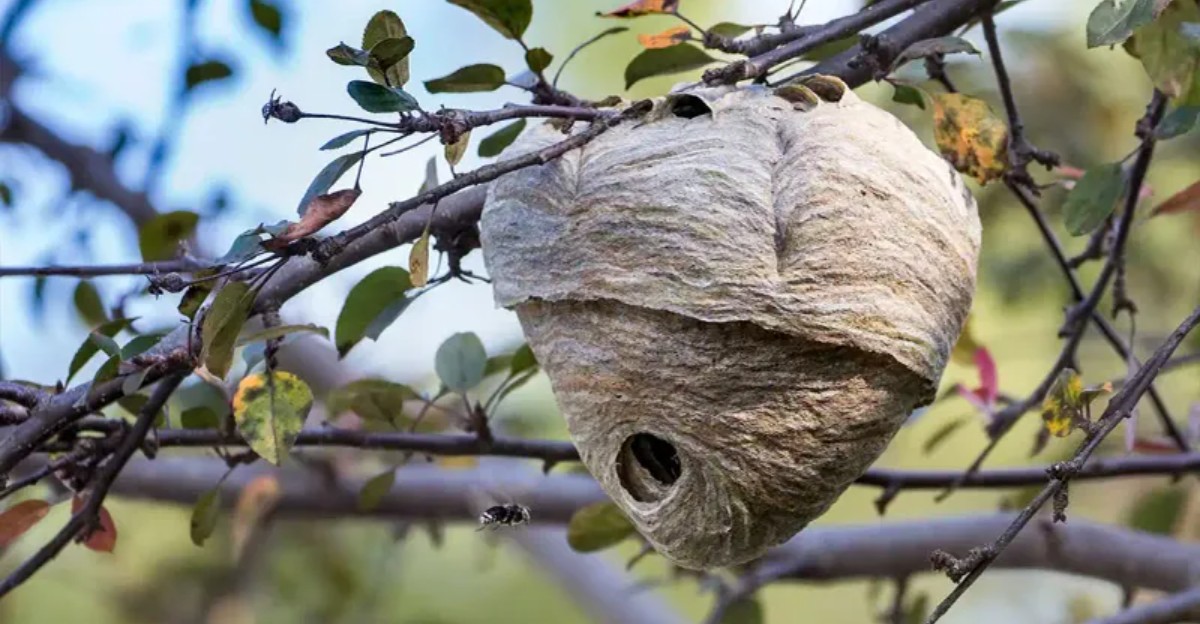
Those gray balls swinging in bare Indiana branches are made of paper, and wasps made every layer. A single nest can grow to the size of a basketball or larger and hold several layers of paper comb inside.
Thick summer leaves keep the nest hidden from nearly every passerby on the sidewalk or trail below. October wind strips the branches and suddenly the whole gray shape stands out against the sky.
Extension specialists describe a quiet nest in late fall, with the busy summer crowd long gone. Only the young queens slipped away to wait out the winter somewhere else nearby.
I find the whole life story of that paper house surprisingly fascinating to follow here in Indiana. Do you know which insect built it, and what becomes of that gray house this winter?
A Colony Of Insects Built It Over One Summer
A lone queen started the whole project last spring with a nest about the size of a walnut. She laid the first eggs and fed the hungry grubs by herself until the first helpers hatched.
Those first helpers were all females, and they soon took over the building, hunting, and nest guarding. The queen then stayed home to lay eggs while the workers expanded the paper house steadily.
By late summer, the nest had grown from walnut size to about the size of a basketball, and sometimes larger. A mature colony in Indiana may hold a few hundred workers moving busily in and out daily.
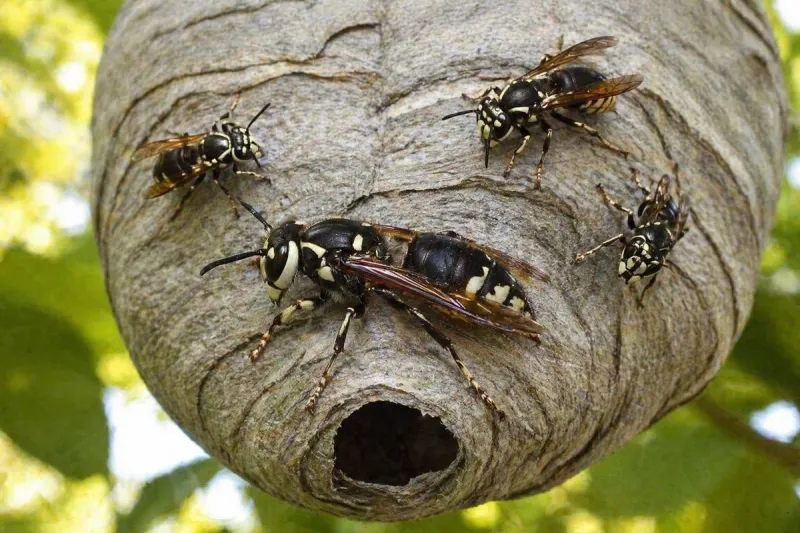
Baldfaced hornets, the usual builders of these gray globes, are actually one type of yellowjacket found across Indiana. Their black and white faces and bold markings make them easy to spot when one lands nearby.
If you spot a nest high in a bare maple, you are looking at a finished summer project. Most of the busy builders are gone by now, though the sturdy paper walls stay put on the branch.
Nests are often placed in trees, shrubs, and sometimes on the sides of buildings or garden sheds. Leaf drop in October simply makes the ones high in trees far easier for walkers to notice.
So the gray ball overhead is a record of one busy season, not a sign of trouble. Knowing its story can turn a worried glance into a friendly nod toward nature’s clever engineering work.
Layers Of Chewed Wood Fibers Form The Paper Walls
Paper making is an old human craft, yet hornets mastered the trick long before any of us. Workers scrape tiny bits of weathered wood from fence posts, old boards, and loose tree bark nearby.
Each hornet slowly chews the fibers with saliva until the wood turns into a soft, wet pulp. Back at the nest, she carefully presses that pulp into thin ribbons along the growing outer edge.
Once the ribbons dry in the sun, they harden into thin gray paper that sheds autumn rain surprisingly well. Dozens of overlapping sheets stack together to form a thick, rounded shell neatly around the whole colony.
Your Indiana Garden Changes Every Week. Your Plan Should Too.
Gardening in Indiana changes quickly throughout the season. Every Friday you’ll receive a simple weekly plan showing exactly what to plant, prune, fertilize, harvest, and protect so you never miss the right timing.
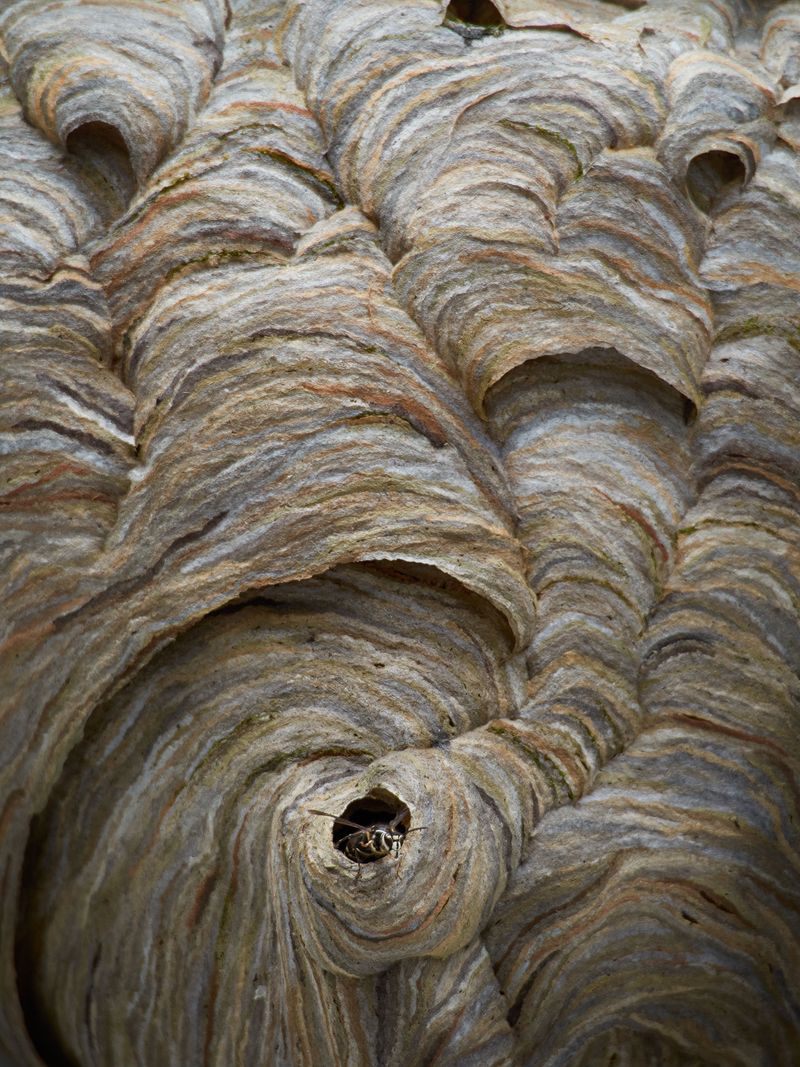
Look closely at a fallen nest and you may see wavy bands of tan, gray, and brown color. Each shade comes from a different wood source the workers happened to visit on that particular day.
Inside that shell sit several flat tiers of paper comb, hung from the top by sturdy paper stalks. Each tier holds six-sided cells where the queen’s tiny eggs grow into hungry larvae and then adults.
Air trapped between the paper layers works much like a cozy blanket on cool nights and hot afternoons. That insulation helps the brood stay at a steady temperature as weather swings through the day.
No tape and no tools beyond a strong pair of jaws went into the build, only chewed wood and saliva. Next time you pass a gray ball in the branches, give the tiny paper makers some well-earned credit.
Cold Weather Empties The Nest Of Workers
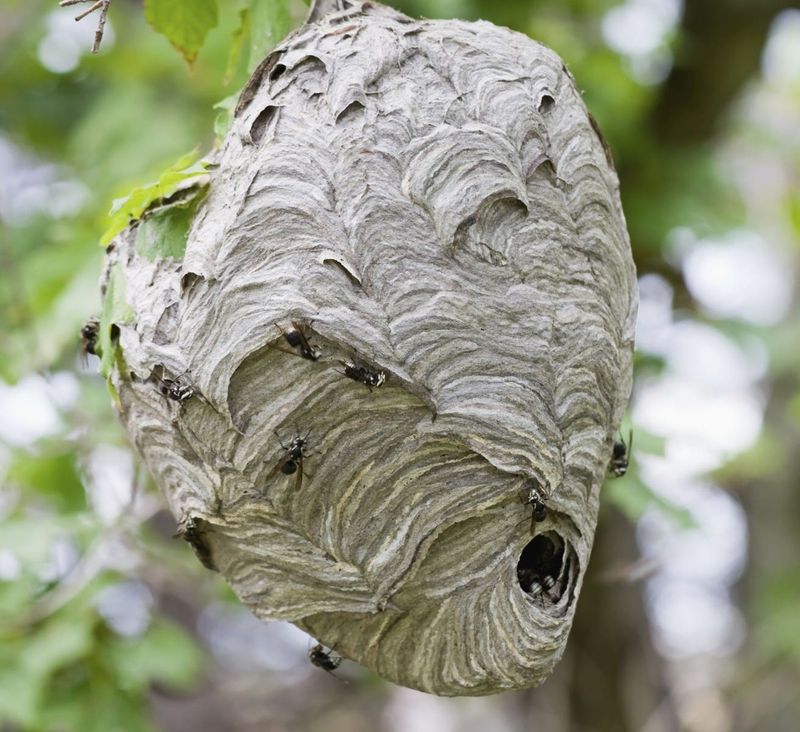
Sometime after the first hard frost, the constant buzzing around the gray nest slowly fades into a deep silence. Worker hornets cannot keep the colony going once nights turn cold and food sources fade away fast.
Unlike honey bees, baldfaced hornets do not huddle inside the nest to survive the long, cold winter. Workers, males, and the old queen all slowly decline as frosty nights pile up through late autumn.
Food is the other big piece, since hornets hunt flies and feed on sugary fruit and nectar. Frost removes both flying insects and soft ripe fruit, so the hunting grounds go quiet fast.
Back in late summer, the colony raised a special final group of future queens and many males. Those future queens mated and left, which means the nest was already thinning out slowly before the frost arrived.
By the time you notice the bare-branch nest, it is usually silent and almost empty of insects. A few stragglers may crawl around on a mild, sunny afternoon, but they are slow and weak.
Wind, rain, and snow will slowly batter the thin paper shell over the long coming winter months. Many old nests sag, tear open, or drop to the ground before the next growing season begins.
That quiet is natural and expected, not a sign that something went wrong in your own yard. Enjoy the silence of the empty paper globe and take a few photos from a safe distance.
Young Queens Leave To Overwinter Under Bark Or Logs
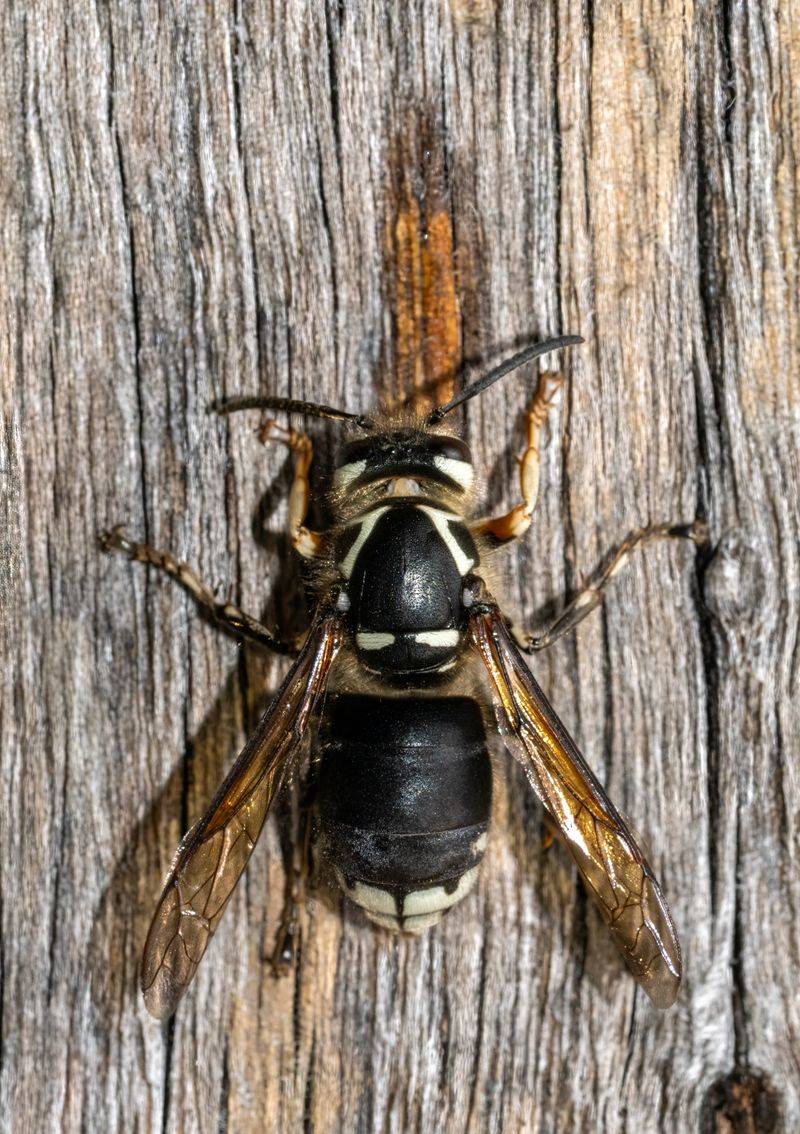
The true survivors of the colony are the young queens, and only a small number make it. Each one mated in late summer or early fall before looking for a quiet winter hideout nearby.
Loose bark on old trees makes a popular shelter, with a tight, dry space against the wood. Rotting logs, stumps, and woodpiles offer cracks where a queen can wedge herself in snugly for the winter.
Leaf litter, loose soil, and gaps in outer building walls can also work well as simple winter beds. Each queen picks a spot that stays dry and shielded from the harshest winter wind and rain.
Once tucked away, she slips into a very sleepy state called diapause, which slows her body down. Her body holds stored fat, and her needs shrink to almost nothing until warm weather slowly returns.
A sheltered queen can handle cold winter nights better than the open air around her would suggest. Even so, many queens struggle, and only a small fraction wake up to start a new colony.
Next year, a lucky survivor will choose a fresh new location and begin another walnut-sized paper nest alone. The cycle then repeats itself, with just one queen starting a whole summer crowd from scratch.
That explains why a log pile or loose bark in your yard may hold a sleeping young queen. Leaving such spots alone through winter gives her a fair chance and costs you very little.
Old Nests Are Not Reused By The Next Colony
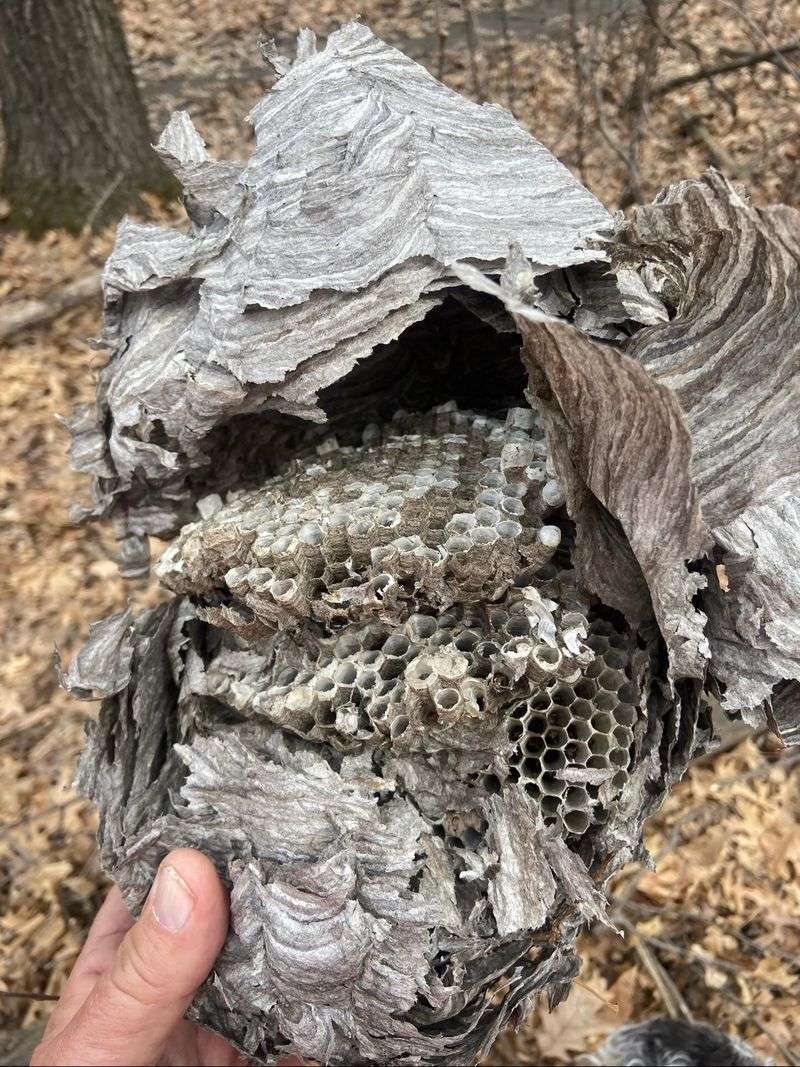
A gray nest hanging in a bare tree does not become next year’s cozy home for hornets. University extension guides explain that colonies start fresh, with each new queen building her own small nest.
Experts note that old comb is used up, torn, and weathered by the time winter finally arrives. A queen searching for a place to start would face a lot of heavy repair work anyway.
Queens tend to choose a new site each season, often a different tree, shrub, or building edge. Sometimes a new nest appears near the old one, which can look like a reuse to curious neighbors.
Weather and wildlife do much of the basic cleanup work on abandoned nests during the cold months. Hungry birds sometimes peck holes in the paper to look for leftover grubs and other insect remains.
Rain softens the outer sheets, and gusty winter wind pulls them away in long curling strips. By midwinter, many exposed nests look ragged, with open holes and thin layers hanging loose in the breeze.
Some people keep an empty nest as a fall decoration or a classroom display piece after a hard freeze. Check that it is truly empty and dry inside first, and wear gloves when you handle it.
Leaving an old nest in place after the freeze poses very little concern for next year’s colony. Just keep an eye on the same spot next summer in case a fresh queen starts something new.
Removal Is Safer After Several Hard Freezes
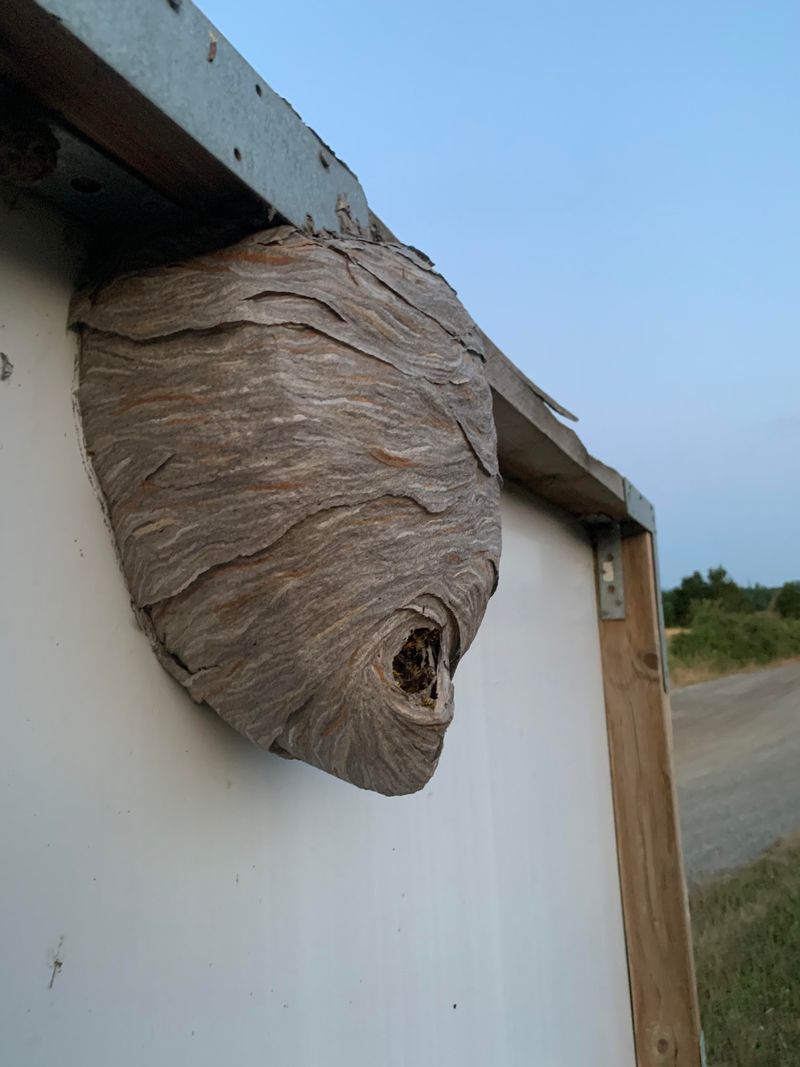
Timing matters more than any fancy gear when it comes to taking down an old hornet nest. A live colony defends its home fiercely, and one hornet can sting several times in a row.
Several hard freezes in a row usually bring the colony’s summer activity to a full stop across Indiana. One frosty night is not enough, because a few workers may linger in the warm core.
Early morning on a cold day gives you the safest window, since any insects left are slow. Wear thick work gloves, long sleeves, pants, and eye protection before you even touch the ladder or pole.
Bag the nest slowly, seal it tightly, and set it in the trash so animals leave it alone. Leaving it on the ground would only invite curious pets and children to poke around inside.
Skip the sprays, smoke, and fire that people sometimes try at home, since they add risk without much benefit. A frozen, quiet nest needs only careful hands and a calm plan to come down safely.
Nests that sit very high up or wrap around a roofline call for a licensed professional instead. No paper ball is worth a fall from a ladder, so ask for help when in doubt.
Honestly, a nest in a faraway treetop can simply stay put until it breaks apart on its own. Removal only matters when the nest sits near doors, walkways, or play areas that people use.