Why You May Hear Gambel’s Quail Calling at Dawn in Arizona’s Low Desert
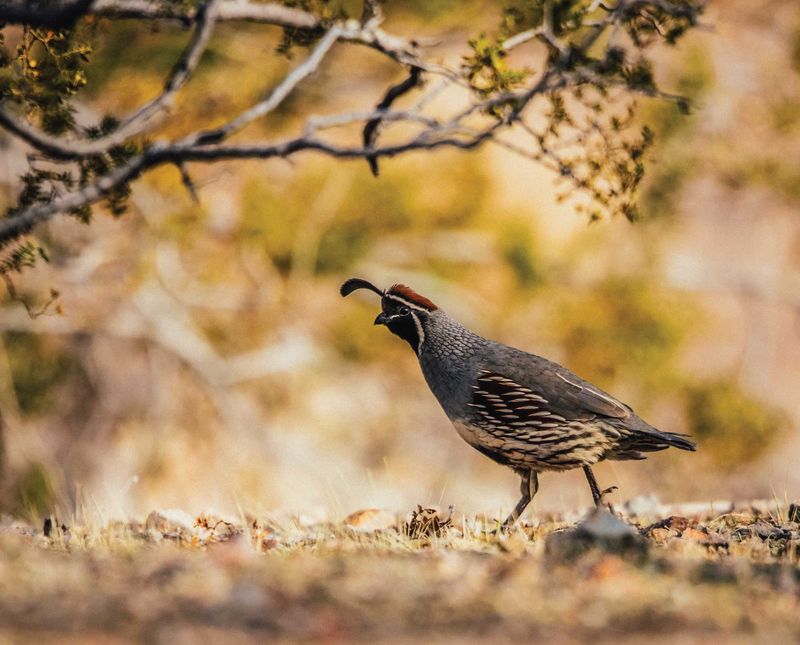
Step outside early in a low-desert Arizona neighborhood, and you may hear sharp, chattering calls coming from the brush. Many of those sounds come from Gambel’s quail, a bird well suited to desert life.
Knowing what the calls can and cannot tell you helps you enjoy them without worry. Here is a calm, practical look at what is probably going on.
Gambel’s quail are a likely low-desert visitor
If you live in the Sonoran low desert around Phoenix or Tucson, Gambel’s quail are the most likely birds behind those morning sounds. They are common across much of the state’s desert country, and Arizona Game and Fish notes that Arizona is home to several quail species, each with its own habitat preferences.
That means a quail sound in your neighborhood is a good clue, but it is not proof of which species you have. Location matters, since a yard in a desert valley is a different setting than a grassy foothill or a higher-elevation oak woodland.
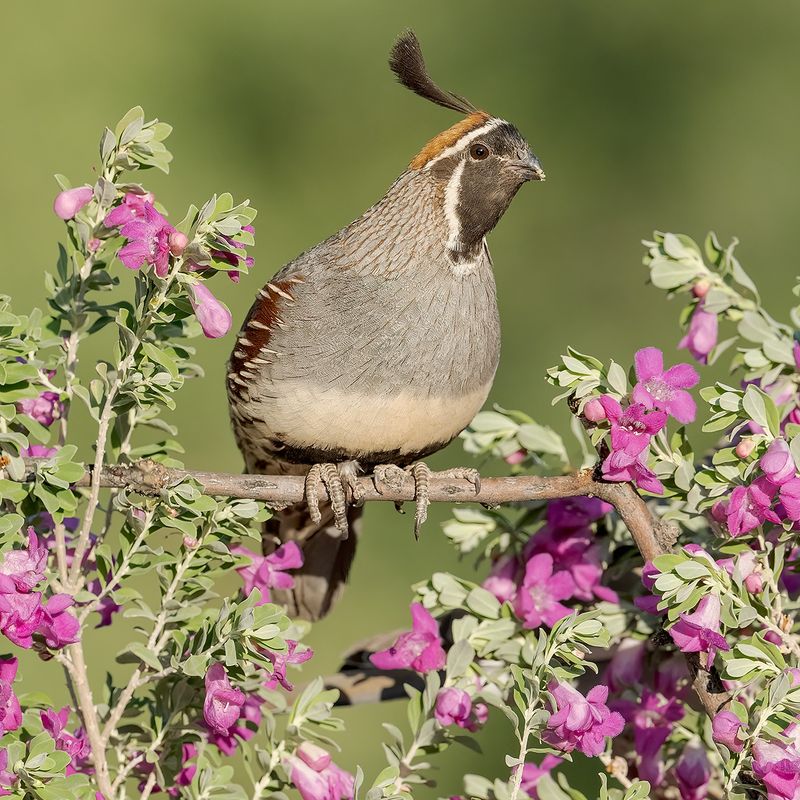
Appearance helps too. Gambel’s males show a black face patch, a rusty cap, and a dark, curved plume on the forehead.
If you can safely see the bird from a distance, those marks are a better guide than sound alone. This article stays focused on low-desert settings, so the same explanation may not fit everywhere in Arizona.
First light is a normal time for quail activity
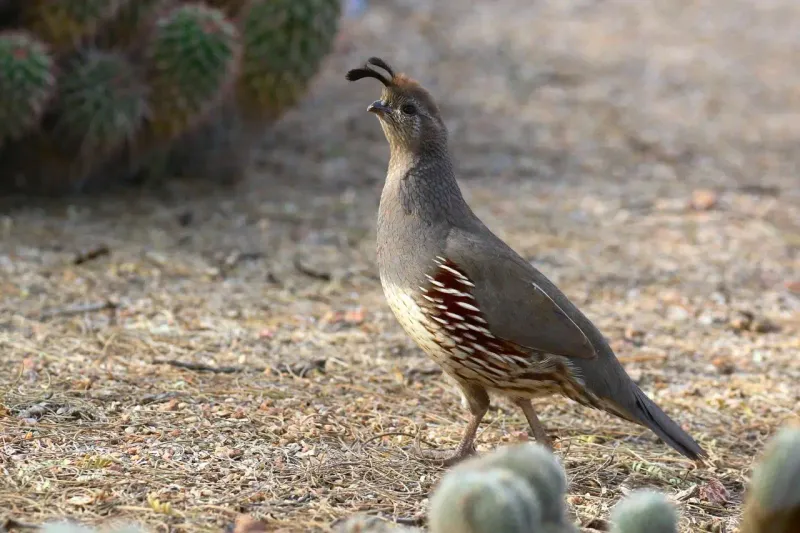
Quail tend to get moving early. According to an Arizona Game and Fish field guide excerpt, Gambel’s quail typically feed soon after first light and again later in the day.
While they forage, the birds trade soft chips, clucks, squeals, and purrs. Those small sounds help covey mates stay in touch as they scratch around for seeds and greens, so a quiet yard at sunrise can suddenly feel busy.
Put those habits together, and hearing quail in the morning is not surprising. Still, a normal dawn routine is not a clock.
Weather, season, food, and local conditions all shape what the birds do, so some mornings may be noisy and others nearly silent. Arizona Game and Fish also says quail numbers swing with seasonal rainfall, which is another reason the yard may sound different from one year to the next.
Different calls serve different purposes
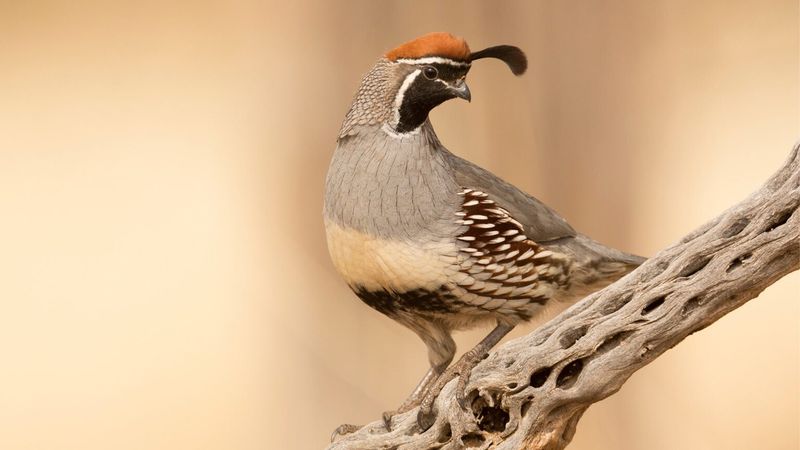
Gambel’s quail have more than one kind of call. The Cornell Lab of Ornithology explains that both sexes give a three- or four-note assembly call when separated from covey mates, which helps them find one another.
Males give a different call during breeding season, often from an elevated perch. Alarm calls are another distinct type, sharper and more urgent than the contact sounds heard while feeding.
Here is the catch for a listener. From a backyard, you may not know which call you are hearing or what set it off.
A call is not automatically a warning, a courting song, or a plea for help.
It is also not a message aimed at you. The field guide excerpt from Arizona Game and Fish describes calling as part of how quail keep in contact, so most of the noise is simply birds talking to birds.
Your Arizona Garden Changes Every Week. Your Plan Should Too.
Gardening in Arizona changes quickly throughout the season. Every Friday you’ll receive a simple weekly plan showing exactly what to plant, prune, fertilize, harvest, and protect so you never miss the right timing.
A morning call does not confirm a nest or forecast weather
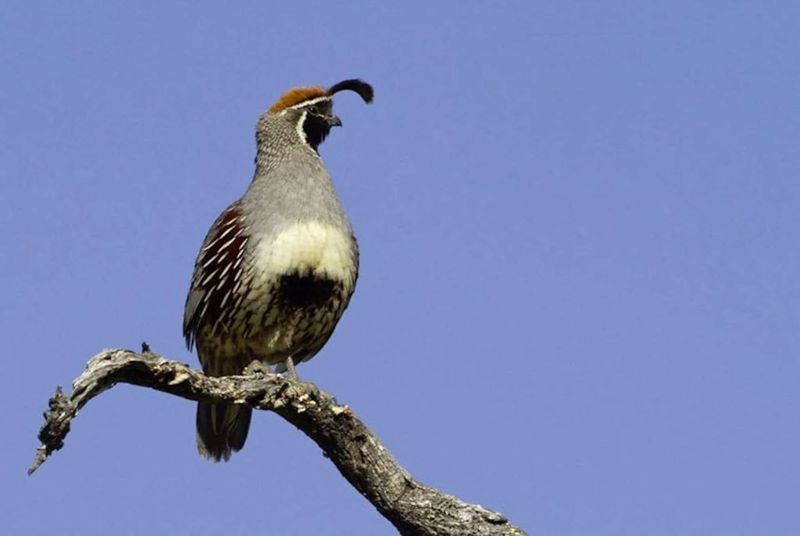
Spring is the main nesting season in Arizona, and Arizona Game and Fish describes breeding that can stretch into summer when conditions are poor. So the calendar matters when you think about nesting.
A male’s breeding call does fit that season. Even so, one morning call cannot show that a nest is nearby, since quail nests are well hidden on the ground and the male may be calling from some distance away.
Weather is a separate story. Quail numbers do shift with seasonal rainfall, and wetter stretches can help produce more chicks.
That is a population pattern over a season, not something a single bird announces at sunrise.
A dawn call does not reliably predict rain, drought, or a change in the forecast. For that, a weather report will serve you much better than the covey outside your window.
Give nearby quail space and avoid trying to lure them
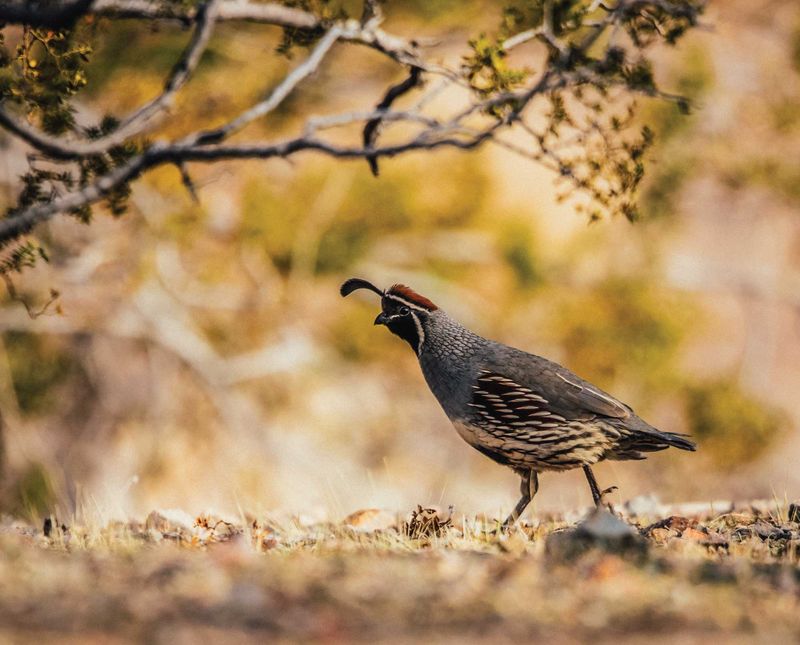
Gambel’s quail use desert scrub, thorny cover, mesquite stands, and other brushy areas, and they roost in bushes and low trees. The Arizona-Sonora Desert Museum describes similar habitat.
Leaving native cover in place gives birds somewhere to move, but no single plant or yard feature is a guarantee that a covey will show up.
If quail wander through, watch from a distance and let them go about their business. Keep pets supervised outdoors, because free-roaming cats and dogs can stress or harm wildlife.
You do not need to scatter seed to explain the calling, and you do not have to supply water for it either. Quail get much of their moisture from food.
Arizona Game and Fish advises keeping spilled seed out of reach of other wildlife and notes that local feeding rules can differ, so check what applies in your town or county.
Treat the calls as a clue, not a warning
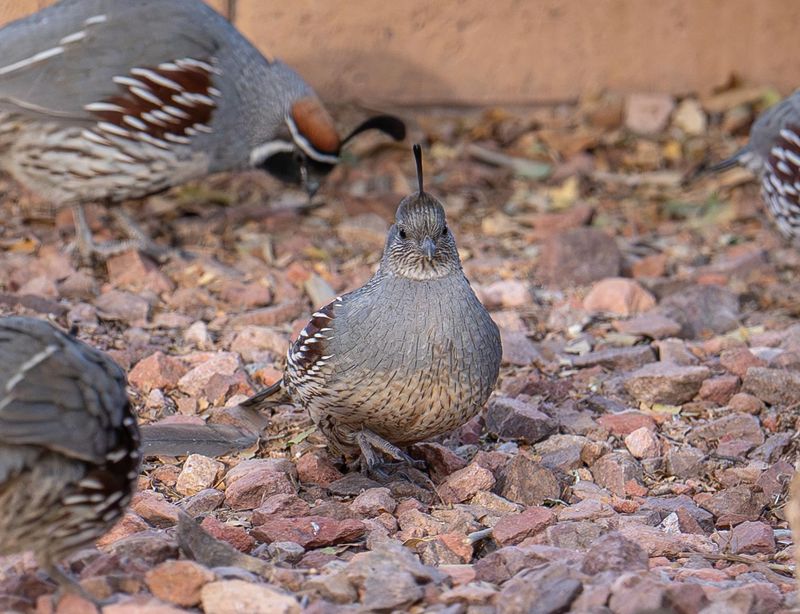
A call at dawn may be nothing more than quail doing what quail do, keeping track of each other as the day begins. Sound alone cannot settle the species, the type of call, or what caused it, and the pattern will not repeat on every morning.
So listen with curiosity instead of worry. If you want to learn more, try pairing what you hear with what you can see from a window, and notice the season and the habitat around you.
Some mornings the desert will be loud, and some it will hold its breath. Either way, the covey is not sending you a message.