This Fast-Growing Tree Is Replacing Traditional Arizona Privacy Hedges
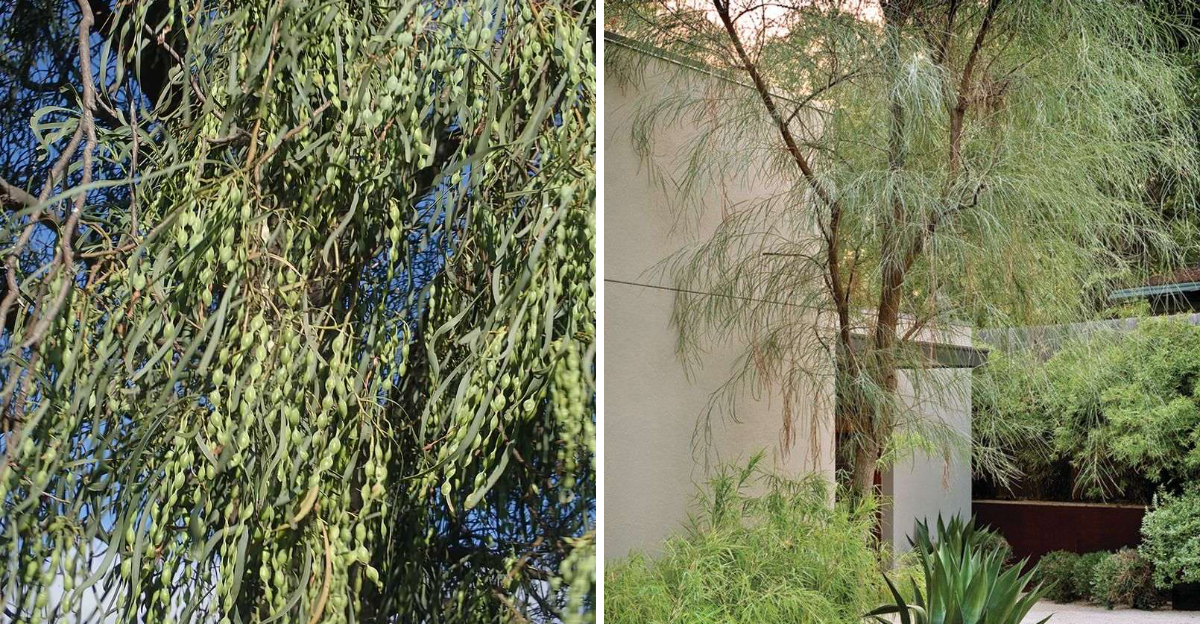
Stop waiting on privacy hedges that promise quick results but leave you staring through gaps year after year. You deserve something better than endless trimming and slow growth.
If you are planning more privacy, pause before buying another traditional hedge.
Arizona landscapes are proving that one fast-growing tree can create a fuller natural screen much sooner while handling desert conditions with less fuss. Give yourself permission to think beyond the usual choice.
You could save time, reduce maintenance, and enjoy more shade sooner than you expected.
Smart landscaping starts with better decisions, not bigger budgets. This tree is changing how many yards gain privacy, and it deserves your attention before you plant anything else.
Take a closer look first, then decide whether traditional hedges still make sense for your yard.
1. Shoestring Acacia Is A Fast-Growing Privacy Tree
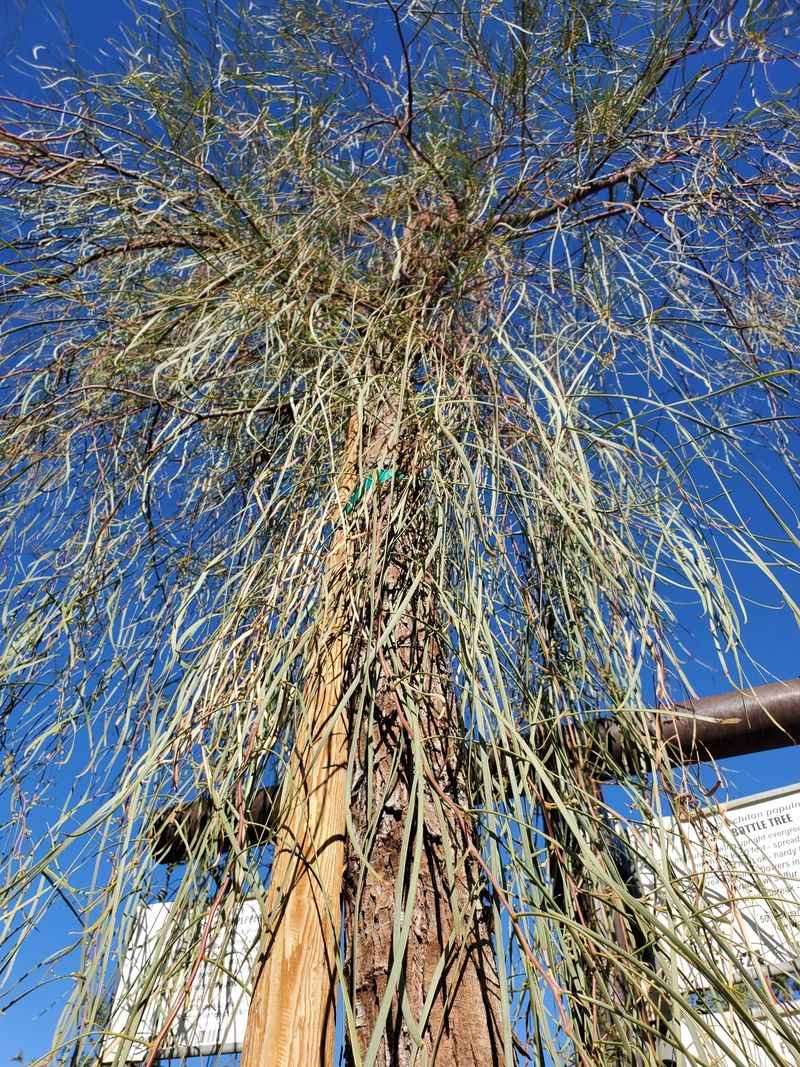
Shoestring Acacia moves fast. Under good conditions, it can put on several feet of growth each year, making it one of the quicker-growing privacy options available in desert regions.
Unlike slower hedges that take years to fill in, this tree starts providing real coverage within a couple of growing seasons.
Homeowners who have tried it often say they were surprised by how quickly it changed the feel of their yard.
The long, slender, drooping leaves give it a soft, almost weeping appearance. That look sets it apart from the stiff, boxy hedges most people are used to seeing in suburban neighborhoods.
Its canopy fills in densely enough to block views from neighboring yards or passing traffic. It works well as a living fence along property lines or behind patios where privacy matters most.
Shoestring Acacia also handles Arizona summers better than many traditional hedge plants. It does not struggle with intense afternoon heat the way some broadleaf shrubs do.
One thing worth knowing: growth speed can vary depending on soil quality, watering habits, and the specific spot in your yard.
Not every tree performs exactly the same way, so results can differ from one property to the next.
2. Its Slim Shape Fits Smaller Yards Well
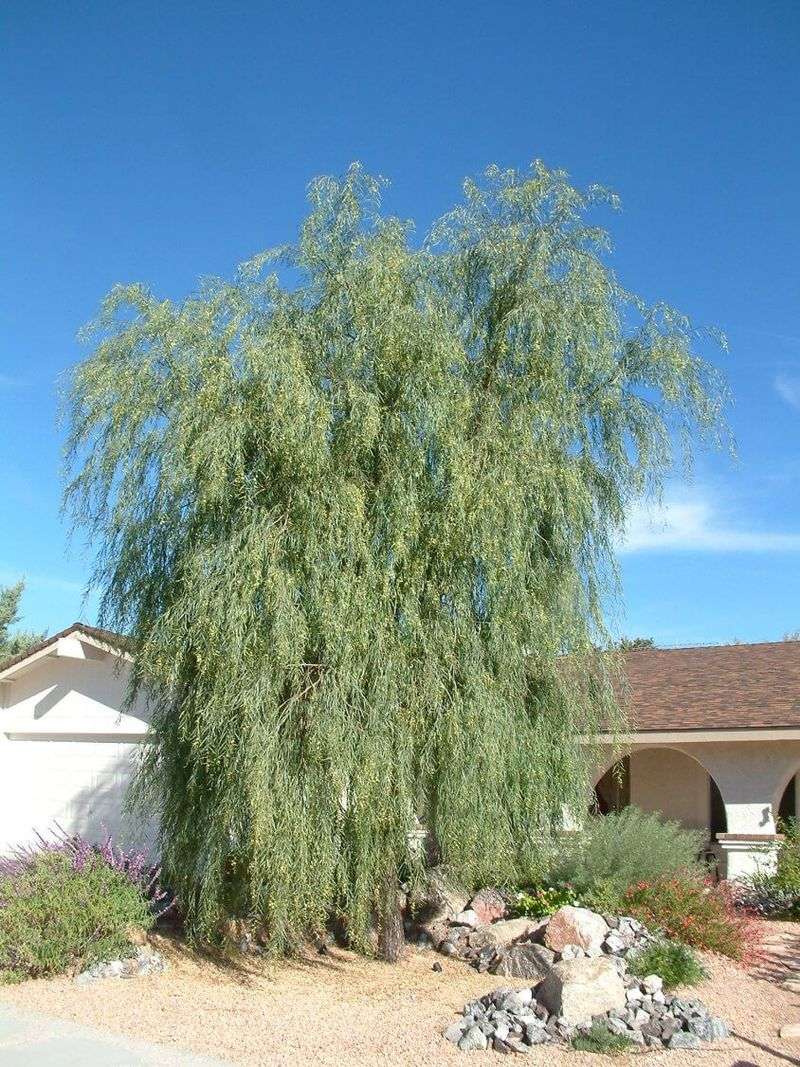
Space is tight in a lot of newer neighborhoods, and bulky shrubs just eat up too much of it. Shoestring Acacia solves that problem with a naturally narrow, upright form that fits where most other trees simply cannot.
Its trunk grows straight, and the canopy stays relatively contained compared to wide-spreading shade trees.
You can plant it closer to walls, fences, or property lines without worrying about branches pushing into neighboring spaces over time.
Smaller yards in Arizona often have to work harder to feel private and comfortable. A slim tree that provides solid screening without dominating the whole space is genuinely useful in those situations.
Patios, side yards, and narrow strips along driveways are all spots where this tree tends to perform well. It fills vertical space efficiently without spreading outward aggressively.
Keep in mind that root spread and canopy width still need to be considered before planting.
Even a narrower tree should be given reasonable clearance from structures, irrigation lines, and hardscape.
Your Arizona Garden Changes Every Week. Your Plan Should Too.
Gardening in Arizona changes quickly throughout the season. Every Friday you’ll receive a simple weekly plan showing exactly what to plant, prune, fertilize, harvest, and protect so you never miss the right timing.
Checking with a local nursery professional about specific spacing recommendations for your yard size and soil type is always a smart move. Every yard has its own quirks, and a little planning upfront saves a lot of reworking later.
3. Full Sun Helps It Grow Thick And Healthy
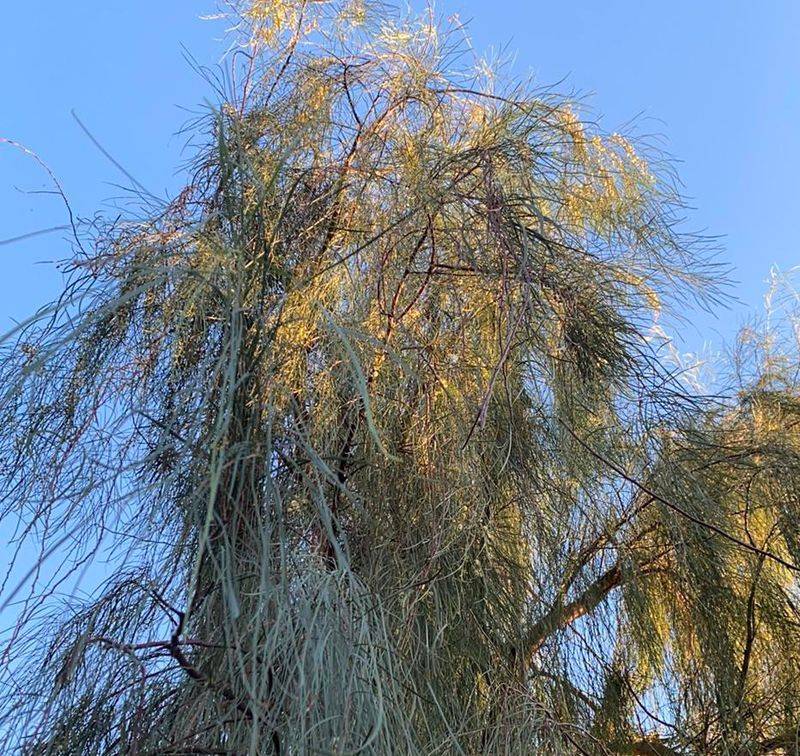
Put this tree in full sun and it thrives. Shoestring Acacia is a true desert plant, and it responds to long hours of direct sunlight by growing dense, healthy, and strong.
Shaded spots tend to slow it down and can lead to thinner, less effective screening.
If you want a solid privacy barrier, placing it where it gets at least six to eight hours of direct sun each day gives it the best shot.
Hot, exposed locations that would stress out many other plants are actually where this tree feels most at home. South-facing and west-facing yard exposures work particularly well for it.
A thicker canopy means better privacy coverage. When the tree gets the sun it wants, the leaves fill in more fully and the overall screen becomes more reliable.
Weak, leggy growth is often a sign that a tree is not getting enough light.
If your Shoestring Acacia looks sparse or stretched, consider whether shade from a nearby structure or larger tree might be limiting its sun exposure.
Sun availability is one of the easier factors to assess before planting. Spending a day watching how sunlight moves across your yard can help you pick the strongest spot for long-term growth and coverage.
4. Water New Trees Regularly While They Get Established
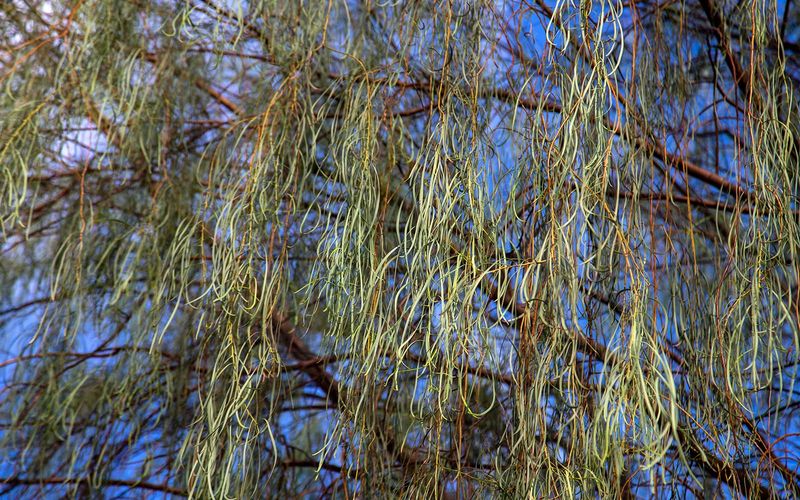
Young trees need extra attention before their roots dig deep enough to fend for themselves. Shoestring Acacia is drought-tolerant once established, but that reputation does not apply during the first year or two after planting.
Watering consistently during establishment is one of the most important things you can do for a new tree. Skipping waterings too early can stress the roots before they have spread far enough to pull moisture from a wider area of soil.
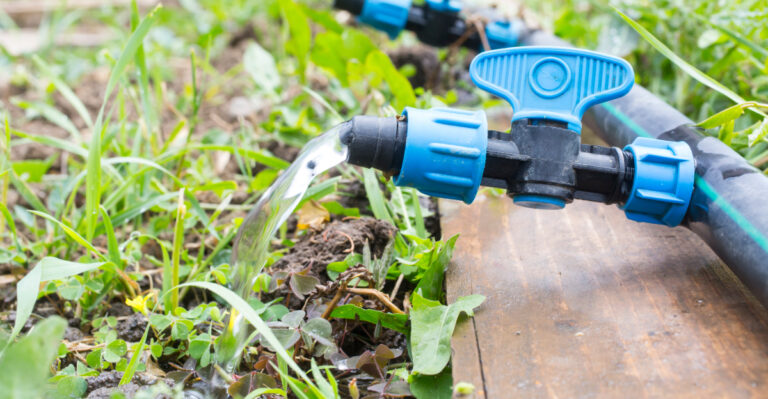
A slow, deep watering a couple of times per week during the hot months is a reasonable starting point for most newly planted trees.
Letting the water soak in deeply encourages roots to grow downward rather than staying shallow near the surface.
Once the tree has been in the ground for a full growing season and shows strong new growth, you can gradually reduce watering frequency.
Mature trees in desert landscapes often do fine with supplemental water just a few times per month, depending on rainfall and soil conditions.
Watching the tree itself is one of the better ways to gauge whether it is getting enough water.
Wilting leaves or a dull grayish-green color can be early signs that a tree needs more moisture.
Soil type matters too. Sandy soils drain faster and may require more frequent watering than heavier clay-based soils during the establishment phase.
5. Light Trimming Helps Keep The Screen Full
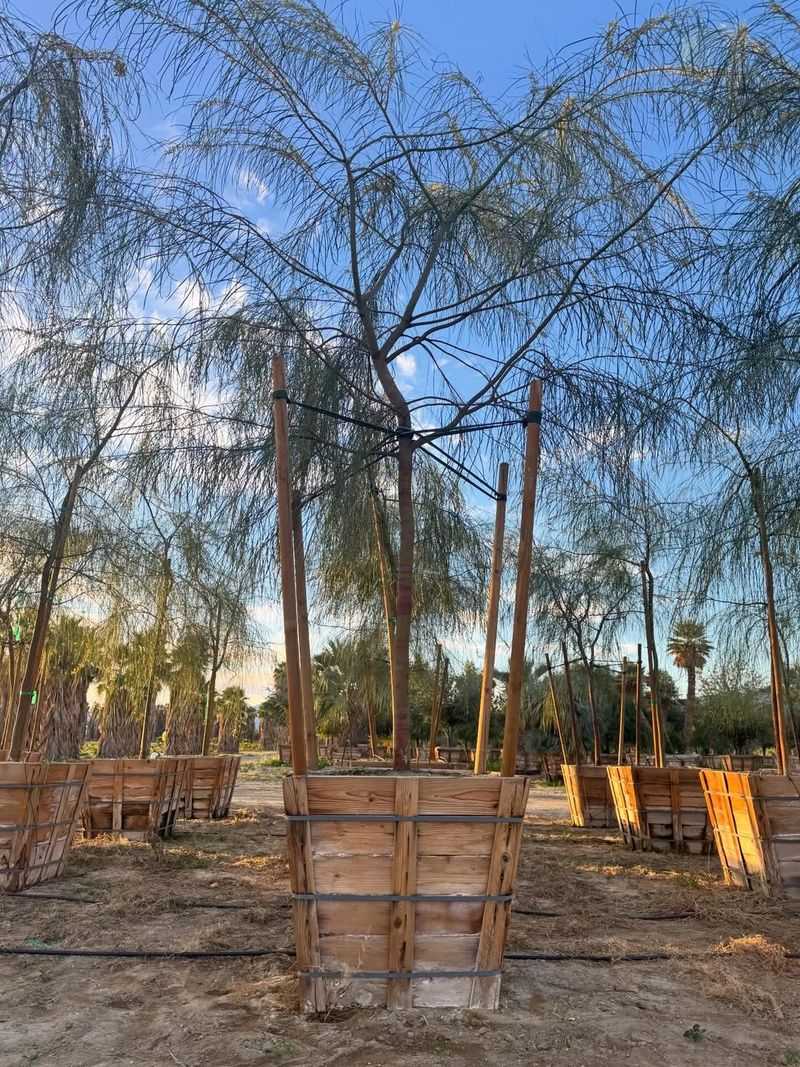
Left completely alone, Shoestring Acacia can get a little wild in spots. Light, occasional trimming helps direct its energy into the areas where you actually want coverage.
Heavy pruning is not what this tree needs. Cutting it back too hard can reduce the density of the screen and stress the tree unnecessarily.
A lighter touch done more regularly tends to work better than infrequent aggressive cuts.
Removing crossing branches, trimming back any growth that pushes toward structures, and tidying up the lower canopy are all reasonable tasks for routine maintenance. None of those jobs require professional equipment or a lot of time.
Timing matters a bit when it comes to trimming. Late winter or early spring, before the main growing season kicks in, is generally a good window for shaping.
Avoid heavy cutting during the hottest weeks of summer when the tree is already working hard to manage heat stress.
Some homeowners trim their Shoestring Acacia just once a year and get good results. Others prefer two lighter sessions annually to keep things looking tidy.
Both approaches can work depending on how fast your tree grows and how formal you want the screen to look.
Sharp, clean pruning tools reduce the chance of tearing bark or introducing problems at the cut site. Keeping blades clean between uses is a small habit that pays off over time.
6. Leave Enough Space For Healthy Growth
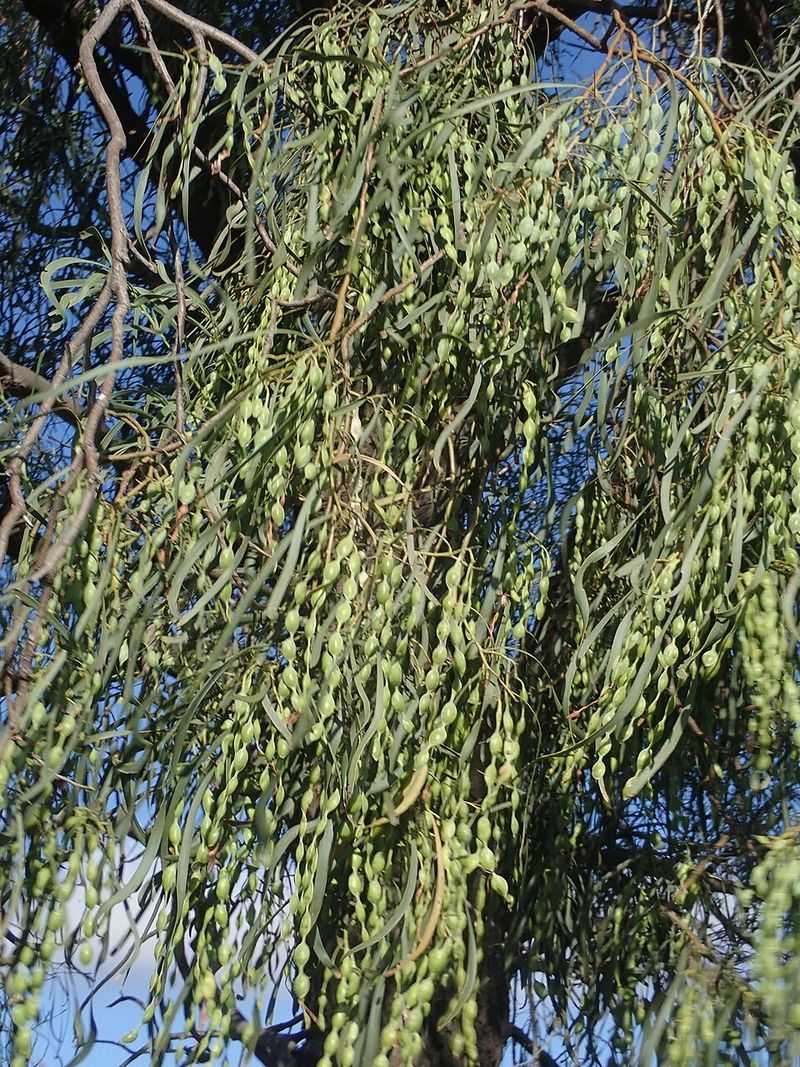
Crowding trees together might seem like a shortcut to faster privacy, but it usually creates more problems than it solves.
Shoestring Acacia needs reasonable space between each tree to develop a strong root system and a full, healthy canopy.
When trees are planted too close together, they compete for water, nutrients, and light.
Over time, that competition can weaken individual trees and create gaps in the screen rather than filling it in.
A good general guideline is to leave eight to ten feet between privacy trees, though the ideal spacing depends on the mature size of the trees and your growing conditions.
Checking with a local nursery for site-specific advice is worth the effort.
Distance from walls and structures matters just as much as spacing between trees. Roots need room to spread, and planting too close to a block wall or foundation can cause issues down the road as the tree matures.
Patience is part of the process. A row of properly spaced trees will eventually grow together into a continuous screen.
Rushing that process by planting too densely tends to backfire.
Marking out your spacing with stakes before you plant can save a lot of second-guessing. Seeing the layout on the ground before digging makes it easier to adjust positions and get the spacing right from the start.
7. Mulch Helps Keep The Soil Cooler In Summer
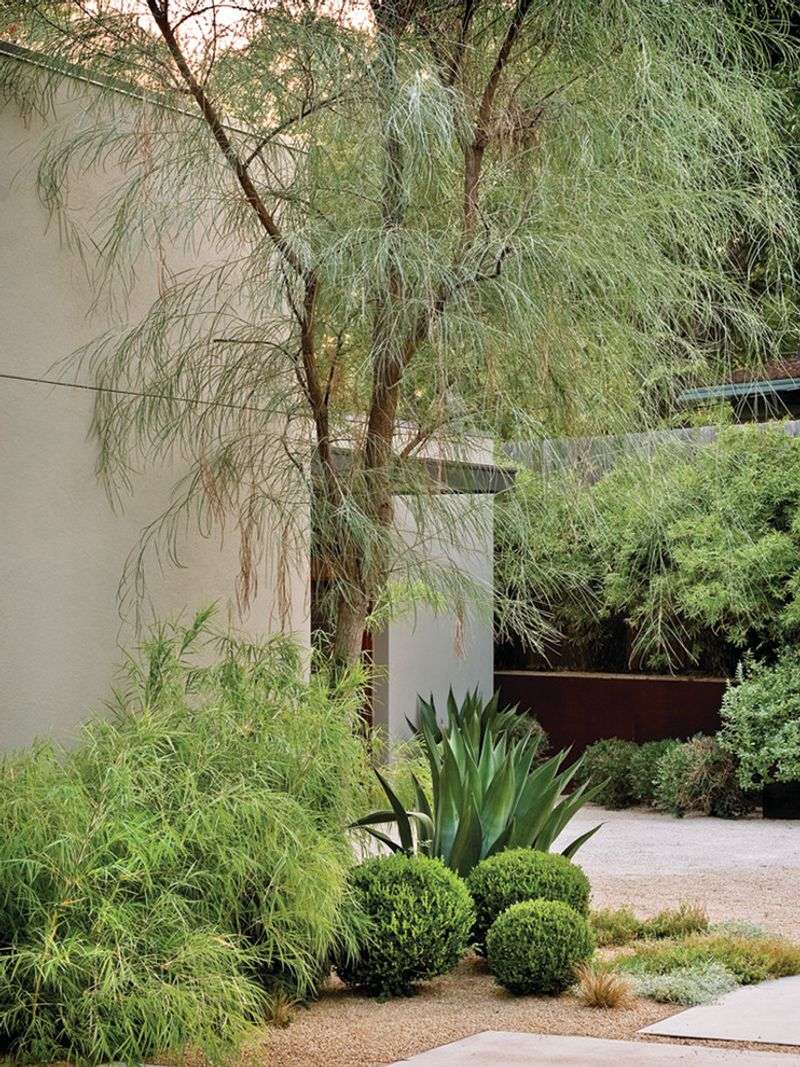
Desert soil bakes hard in summer, and that heat stress at the root zone can slow a tree down significantly.
A layer of organic mulch spread around the base of a Shoestring Acacia acts as insulation, keeping soil temperatures more moderate during the hottest months.
Wood chips, shredded bark, or similar organic materials work well for this purpose.
Spreading a two to three inch layer around the base of the tree, while keeping the mulch pulled back a few inches from the trunk itself, is a practical approach most homeowners can handle easily.
Mulch also helps the soil hold moisture longer after watering. In a dry climate, that means less frequent watering may be needed to keep the root zone adequately moist during establishment and beyond.
Organic mulch breaks down gradually and adds small amounts of organic matter back into the soil over time. That slow decomposition can modestly improve soil structure in areas where native soil tends to be sandy or compacted.
Refreshing the mulch layer once or twice a year keeps it effective.
As it breaks down, the layer thins out and loses some of its insulating ability, so topping it off periodically maintains the benefit.
Gravel mulch is common in desert landscaping, but organic mulch tends to do a better job of moderating soil temperature and retaining moisture around young trees specifically.