Reasons Your California Lawn Stays Thin No Matter How Much You Fertilize
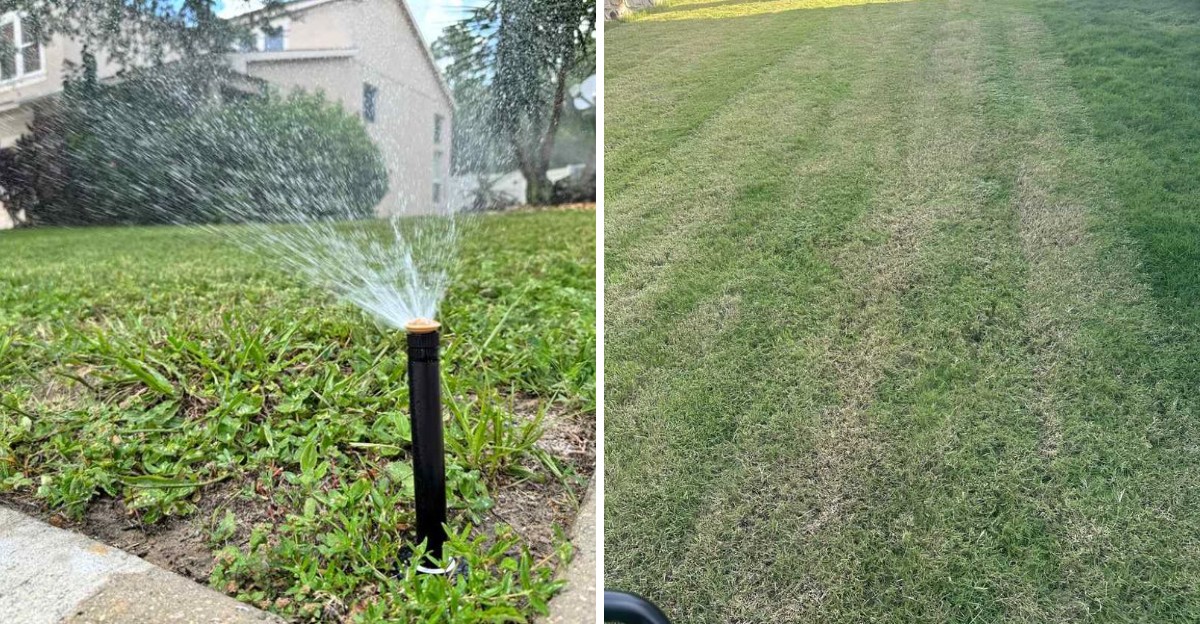
Fertilizer goes down on schedule, spring and fall, yet bare soil still peeks between the blades. A half-used bag slumps in the garage, and the lawn looks no fuller than before.
Situations like this frustrate many California households.
More food often isn’t the missing ingredient.
Grass depends on a handful of basics, and when one of them falls short, extra nutrients simply wash away or feed weeds instead.
Heavy feeding can even backfire, pushing soft growth that invites trouble.
The real answer usually hides in plain sight, waiting for a closer look at soil, water, light, and routine. A little detective work, a few simple tools, and some patience can turn a thin lawn into a thicker one.
1. Compacted Soil Blocks Roots
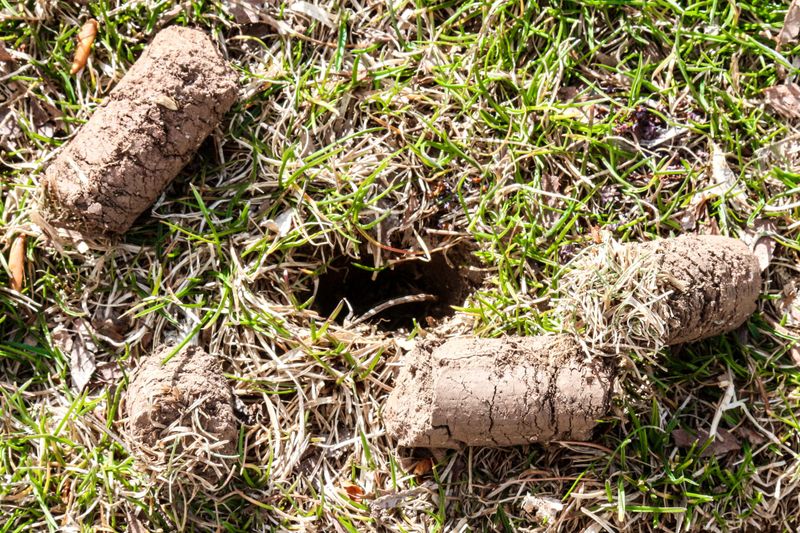
A long screwdriver pushed into the lawn after watering offers a quick test. Stopping cold after an inch or two means the soil is packed tight.
Children playing, dogs running, and mowers rolling over the same paths all squeeze soil particles together.
Roots need tiny air pockets to breathe and grow. Packed soil has very few, so roots stay short and stubby near the surface.
Water also runs off hard ground rather than soaking in, a common issue with California clay, and fertilizer can’t help roots that can’t spread to reach it.
UC guidance recommends core aeration as the fix. A machine pulls small plugs of soil, usually 2 to 3 inches deep, and leaves them on the surface.
Those holes let air, water, and nutrients slip down to the roots again. Spike aerators are best skipped, since poking can press soil tighter around each hole.
Timing matters. Cool-season grasses such as tall fescue respond best to fall or early spring aeration, making October an ideal window.
Warm-season grasses such as Bermuda or St. Augustine do best with late spring or summer aeration, when they grow fastest.
Watering a day or two beforehand helps tines sink in easily. Cores left on the surface crumble within a week or two and feed the soil.
Rotating play areas, adding stepping stones on busy paths, and avoiding work on wet soil all help prevent a repeat.
2. Thick Thatch Traps Nutrients Near The Surface
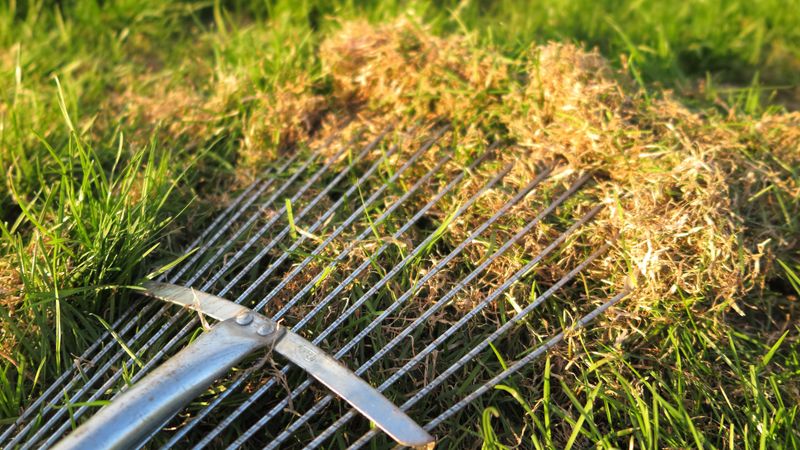
A lawn that feels springy, almost like a mattress, may hide a thick layer of thatch beneath the green blades.
Thatch is a tangle of stems, runners, and roots that builds up faster than it breaks down.
A thin layer, under half an inch, actually helps by cushioning feet and holding a bit of moisture.
Thicker thatch acts like a sponge, absorbing water and fertilizer before they reach the soil. Roots then grow up into the thatch rather than down, leaving grass weak and drought-prone.
A small knife or trowel makes checking easy. A wedge of turf, cut and lifted, reveals the brown spongy layer between blades and soil.
Anything over half an inch needs attention.
Dethatching offers the cure. A vertical mower or power rake slices through the layer and lifts debris, which then gets raked up for the green waste bin.
Your California Garden Changes Every Week. Your Plan Should Too.
Gardening in California changes quickly throughout the season. Every Friday you’ll receive a simple weekly plan showing exactly what to plant, prune, fertilize, harvest, and protect so you never miss the right timing.
The work goes best while grass actively grows, meaning fall for cool-season types and late spring for warm-season types.
Bermudagrass and other spreading grasses build thatch quickly, and heavy nitrogen feeding makes it worse, since fast growth piles up stems.
Ironically, extra fertilizer added to thicken a lawn may be the very thing crowding it from below.
Core aeration also helps thatch break down over time by mixing in soil and the microbes that digest it.
Grasscycling clippings doesn’t cause thatch, since short clippings break down quickly.
3. Shade Starves Sun-Loving Grass
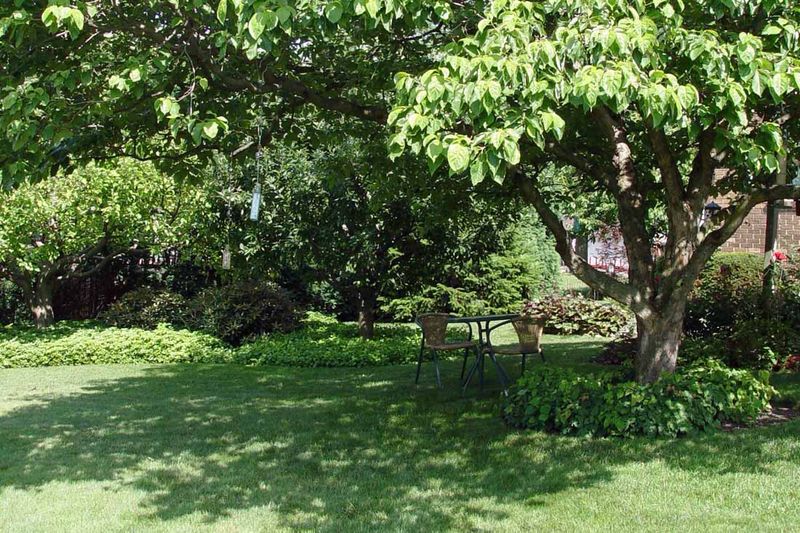
Thin spots often gather under the big tree, along the north side of the house, or behind a tall fence. Those patches signal a hunger for light rather than fertilizer.
Grass makes its food from sunlight. Most lawn grasses need at least four to six hours of direct sun daily, and many warm-season types want even more.
In heavy shade, blades turn thin and stretched, roots weaken, and plants slowly fade. Trees also compete for water and nutrients, adding a double challenge.
Fertilizing a shady lawn can backfire, since extra nitrogen pushes leaf growth the plant can’t support without light.
Letting the sun in comes first. Pruning lower tree limbs and thinning the canopy allows more light to filter through.
Large trees call for a certified arborist, whose license can be verified through the Contractors State License Board when tree work requires one.
Shade-tolerant grass helps next. Tall fescue and fine fescues handle partial shade well in many California yards, and St. Augustine stands as the toughest warm-season shade option.
Care adjustments matter too. Shaded grass benefits from slightly higher mowing so blades catch more light, and less frequent watering, since shady areas dry slowly.
In deep shade where nothing thrives, mulch, groundcovers, or shade-loving plants make better choices beyond five feet of the house, with gravel or pavers closer in.
Sometimes the smartest lawn move is simply less lawn.
4. Shallow Watering Grows Shallow Roots
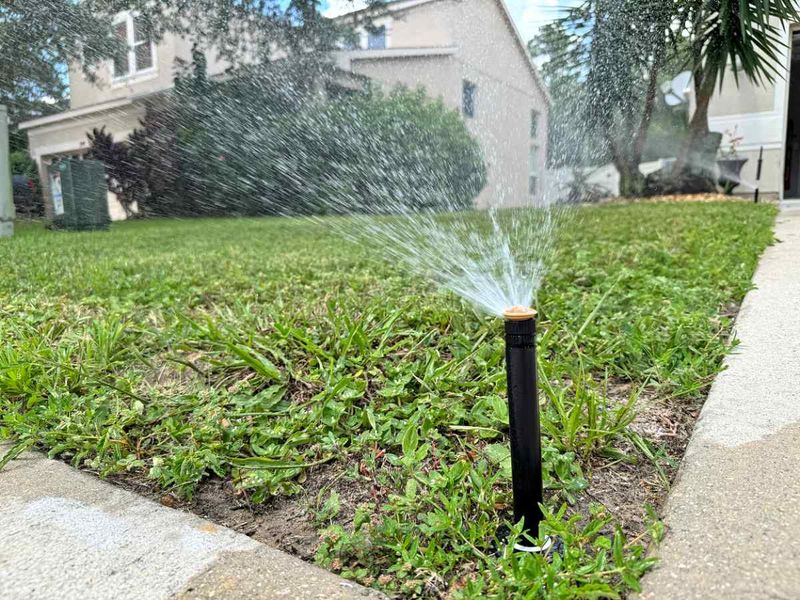
Daily five-minute sprinkler runs feel generous, yet grass treats them as a snack rather than a meal. Light, frequent watering wets only the top inch or two of soil.
Roots stay right there as a result.
Shallow roots spell trouble during California heat waves. The surface dries fast, and stubby roots have no deeper water to tap.
Blades wilt, turn gray-green, and thin out regardless of fertilizer, and constant surface moisture invites weeds and fungal disease.
UC guidance recommends watering deeply and less often, moistening soil down to the root zone, about 6 inches for most lawns, then letting the surface dry slightly.
Roots chase that moisture downward and grow longer and tougher.
The tuna can test helps measure output. A few empty cans set around the lawn, with sprinklers run for 15 minutes, show how much water collects.
A trowel a day later reveals how deep the water traveled, ideally reaching six inches.
Clay soil soaks slowly, so cycle and soak works best. Short sprinkler bursts with an hour’s pause between them let water sink in rather than run down the gutter.
Early morning watering cuts evaporation and disease. Many California cities also set watering days, and deep, infrequent soaking fits those limits nicely.
Fall brings cooler weather, so run times usually drop by October and drop again after the first soaking rain.
5. Scalping Weakens The Turf
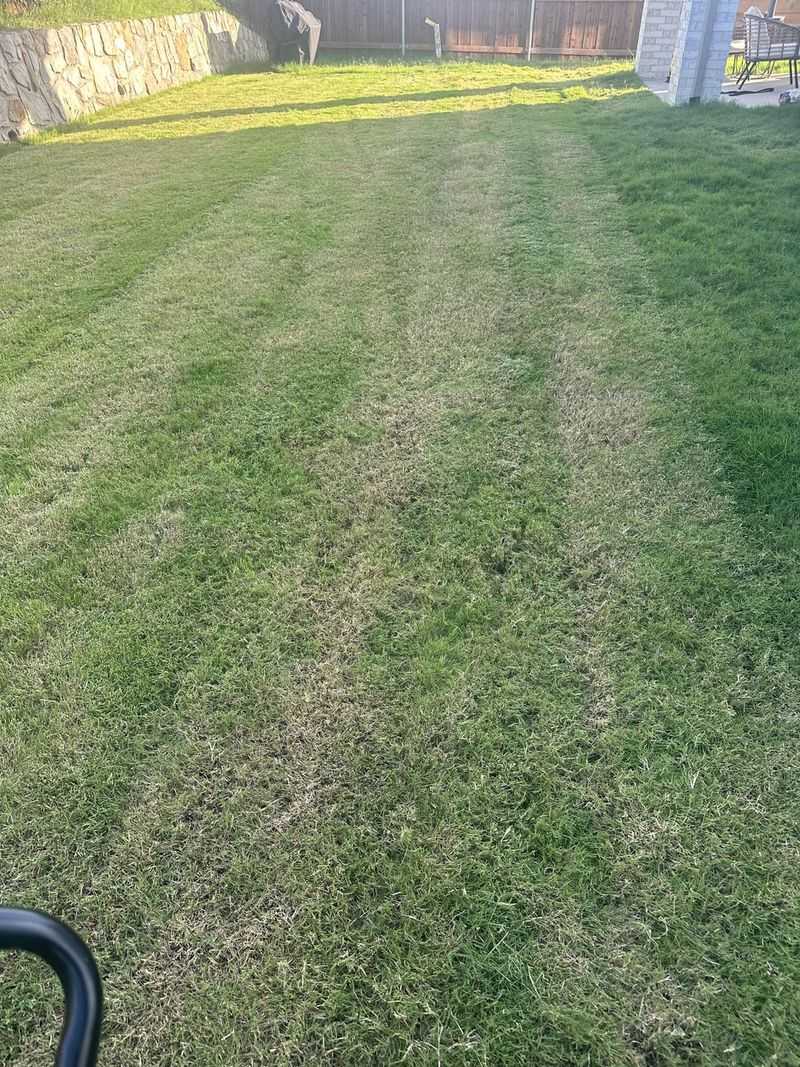
Cutting grass very short to mow less often sounds clever, yet the lawn rarely agrees. Scalping, or removing too much blade at once, leaves brown stubble and stressed plants.
Grass blades work like tiny solar panels. Remove most of them, and the plant loses its ability to make food, drawing on roots to regrow.
Roots shrink as a result, and the lawn thins over the following weeks.
Short grass also lets sunlight reach bare soil, helping weed seeds sprout and drying the ground faster.
The one-third rule offers a reliable guide, removing no more than a third of blade height in a single mowing.
Grass grown too tall during a busy week comes down best gradually over a few mowings.
Mower height depends on grass type. Tall fescue does best around 2 to 3 inches, even higher in summer heat.
Bermuda handles shorter cuts, often 1 to 1.5 inches with a standard rotary mower, while St. Augustine likes 1 to 3 inches depending on variety.
Sharp blades matter too. Dull blades tear grass, leaving ragged, frayed tips that brown and invite disease, so sharpening a couple of times each season helps.
Clippings left on the lawn return nutrients for free through grasscycling.
Blade sharpening goes safest with the spark plug disconnected and gloves on. Electric mowers also fit California rules, since new small gas engines face sales restrictions.
6. The Wrong Grass Fights The Site
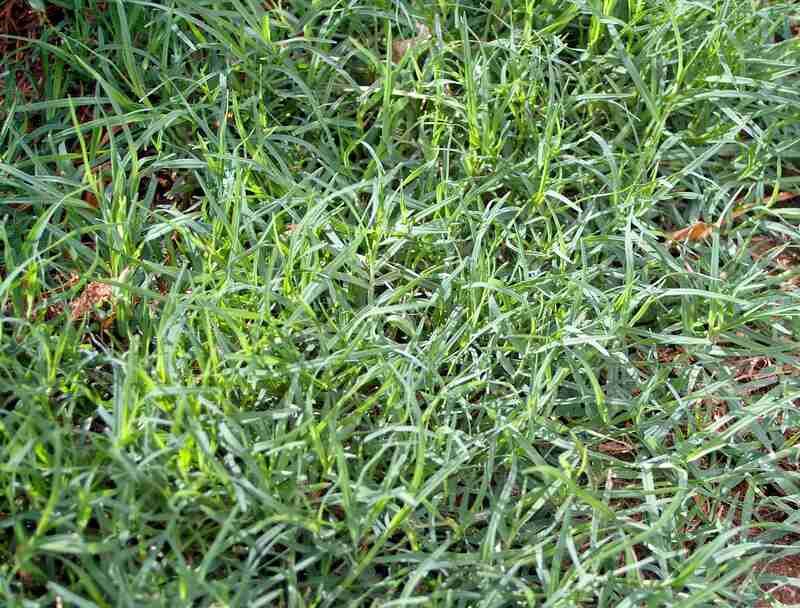
Kentucky bluegrass baking in a Fresno summer, or Bermuda sulking under foggy San Francisco skies, faces a battle fertilizer can’t win.
California holds many climates, from cool, damp coast to blazing inland valleys and chilly mountains, and lawn grasses fall into two main groups.
Cool-season grasses, such as tall fescue and perennial ryegrass, grow best in spring and fall and prefer mild temperatures.
Warm-season grasses, such as Bermuda, zoysia, and St. Augustine, love heat, use less water in summer, and often turn brown and dormant in winter.
The wrong type spends its energy simply coping, thinning in the season it dislikes and rarely recovering fully.
Matching grass to conditions makes the difference. Hot inland areas often suit warm-season grasses that handle heat and save water.
Coastal and shadier yards usually do better with tall fescue, and Bermuda in shade struggles badly.
The UC Guide to Healthy Lawns includes a helpful tool for choosing a species based on region and site.
Kikuyu grass is best avoided, since it’s a federally listed noxious weed that spreads aggressively into beds and neighboring yards.
Overseeding with a better-suited grass helps some lawns, while others need a fresh start with new sod or seed. Fall suits cool-season seeding well.
Not every spot needs grass. Low-traffic areas may look better as native plants or drought-tolerant beds, saving considerable water in dry years.
Turf replacement rebates from local water agencies can help offset the cost.
7. Pests Or Disease Thin The Stand
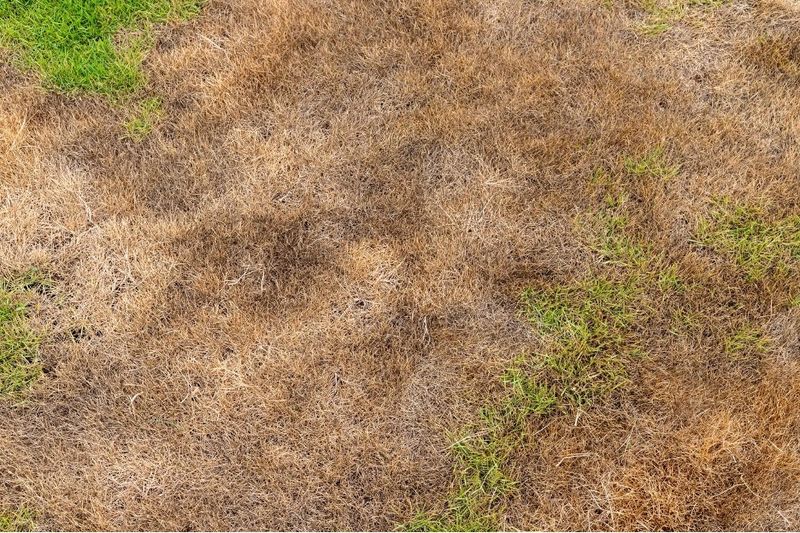
Brown patches that peel up like loose carpet raise a red flag, as do birds, skunks, or raccoons digging holes overnight. Hidden insects may be feeding below the surface.
White grubs, the C-shaped larvae of beetles such as masked chafers, chew grass roots until turf lifts right off the soil.
Caterpillars such as armyworms, cutworms, and sod webworms chew blades near the ground, leaving ragged, thin spots.
Diseases such as brown patch, rust, and dollar spot thin lawns too, often appearing as rings, spots, or orange dust on shoes.
Diagnosis comes before treatment. For grubs, a square foot of turf cut and lifted in a few spots reveals numbers.
UC IPM notes that tolerance levels vary by species and grass type, and many lawns handle a few grubs without visible harm.
For caterpillars, a soap flush works well. A couple of tablespoons of liquid dish soap in a gallon of water, poured over a small area, brings larvae wriggling up.
Healthy turf resists most of these problems. Many lawn diseases stem from overwatering, poor drainage, thick thatch, or too much nitrogen.
Fixing those conditions often solves trouble without any spray, and early morning watering lets blades dry quickly.
When treatment becomes necessary, the least toxic option comes first. Beneficial nematodes can target grubs, and Bt products manage young caterpillars.
UC IPM’s website helps identify the exact pest first, since treating the wrong one wastes money and harms helpful insects.
8. Soil pH Locks Up Nutrients
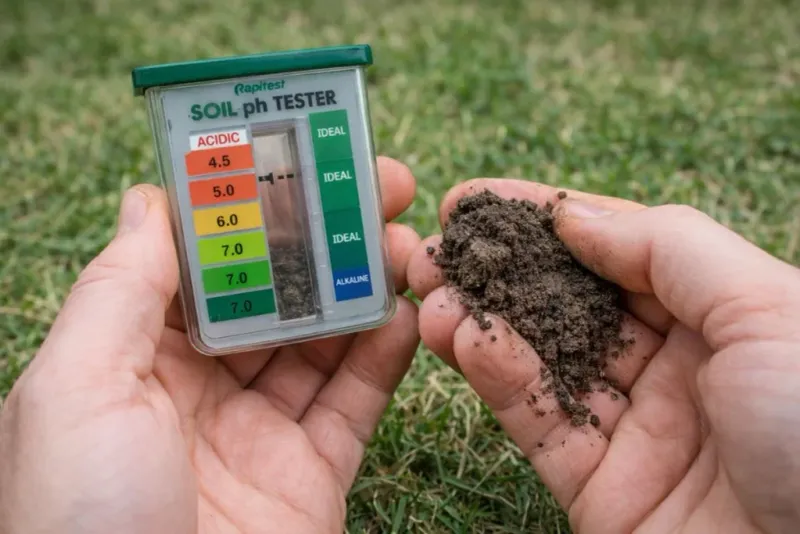
A feast set before grass can still leave it hungry when soil pH locks the pantry door. The pH scale measures acidity or alkalinity, controlling how easily roots absorb nutrients.
Most lawn grasses grow best in soil with a pH between about 6 and 7.5.
Many California soils, especially in drier inland areas, run alkaline, sometimes well above 7.5. At high pH, iron and manganese become hard for roots to absorb.
Grass then yellows between the veins and looks thin, even with plenty of fertilizer. Salty soils, common in some regions, add another layer of stress.
Guessing rarely works here. A soil test offers the only reliable way to know pH and nutrient levels.
Home kits give a rough idea, while a lab test provides more detail, including salts and organic matter. UC ANR resources and local nurseries can point toward labs.
Results guide the fix. Lime suits only genuinely acidic soil, which is uncommon in much of California, while alkaline soil can be nudged gradually with sulfur.
Iron products often green up yellowing grass in high-pH yards.
Salty soil benefits from occasional deep watering that flushes salts below the roots, and winter rains help with that job.
Retesting every few years tracks changes. Once soil numbers are known, every bag of fertilizer finally has a fair chance to work.
Fall offers a convenient testing window, giving time to adjust before spring growth begins.