These Are The California Native Salvias Every Dry Garden Should Have This Summer
Salvia might be the hardest working plant in a dry garden. It handles heat, survives on minimal water, and blooms in ways that stop you in your tracks during some of the hottest months of the year.
California native salvias take everything that makes summer difficult for most plants and use it as fuel. They do not just survive drought conditions.
They look better because of them. The problem is that most gardeners either overlook native salvias completely or grab whatever is closest at the nursery without knowing which varieties actually perform in a dry garden setting.
California has an impressive range of native salvias, and they are not all the same. Some are compact and perfect for borders.
Others grow large and dramatic and anchor an entire planting. Getting familiar with the best ones before summer peaks means your garden has color, structure, and life exactly when everything else is struggling to hold on.
1. White Sage
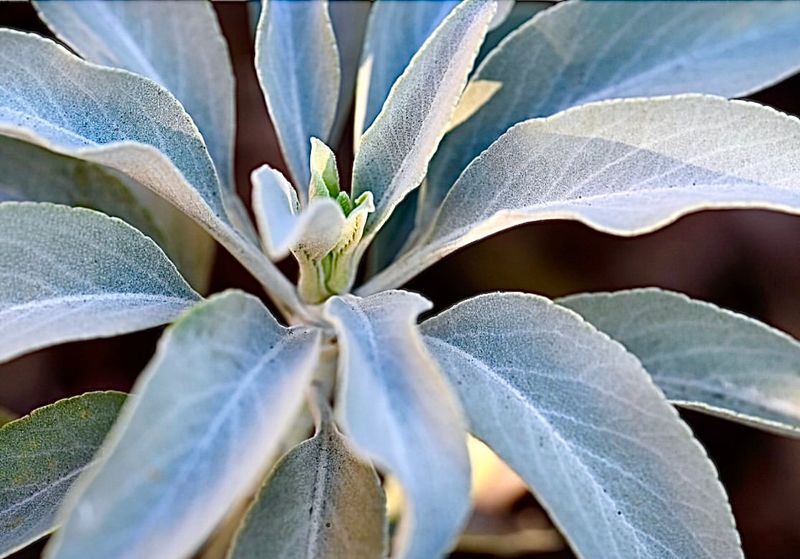
Few plants carry as much cultural and ecological weight as white sage. Known scientifically as Salvia apiana, this iconic native has been used by Indigenous peoples for centuries in ceremonies, medicine, and cooking.
Its thick, silver-white leaves release a bold, clean fragrance when touched, making it one of the most recognizable plants in the chaparral landscape.
White sage loves full sun and fast-draining soil. Once established, it rarely needs watering, which makes it a dream plant for dry summer gardens.
It grows into a rounded shrub about 3 to 5 feet tall and wide, with tall flower spikes that shoot up in late spring and attract bees like nothing else.
Because of its popularity, wild white sage has been over-harvested in some areas. Growing it in your garden helps support local populations and gives pollinators a reliable food source.
Avoid clay soils and overwatering, as both can cause root problems. Plant it in a spot with great drainage and plenty of airflow, and it will reward you with years of beauty and fragrance with almost no maintenance required.
2. Black Sage
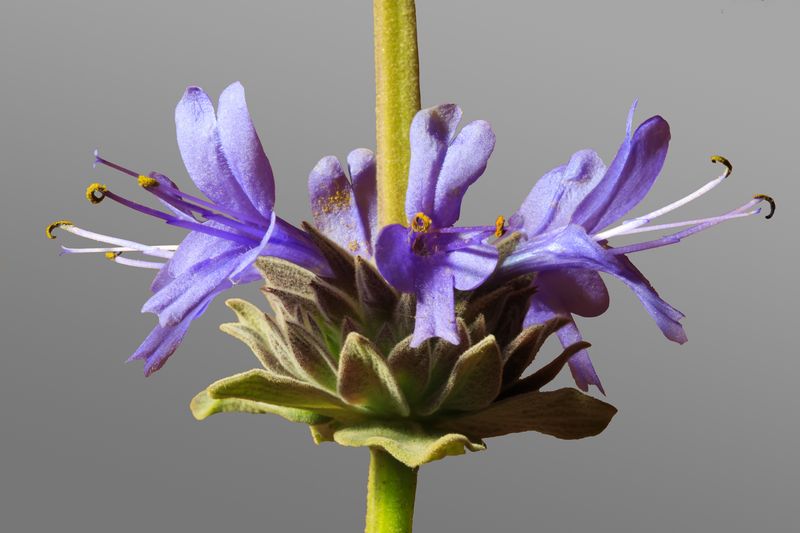
The name might sound mysterious, but black sage is actually one of the most cheerful and wildlife-friendly plants you can grow in a dry garden. Salvia mellifera gets its name from the dark color of its stems and seed heads in winter, not from gloomy foliage.
In spring and early summer, it bursts into bloom with small pale blue or white flowers that absolutely swarm with native bees.
Black sage is a powerhouse for pollinators. Studies have shown it to be one of the most important honey plants in Southern California, producing nectar that local bees rely on heavily.
If you want to support your local bee population, this is one of the best plants you can add to your garden this season.
It grows quickly, reaching 3 to 6 feet tall, and handles drought like a champion once its roots are settled in. Give it full sun, skip the summer water after the first year, and watch it thrive.
The aromatic leaves also deter deer, which is a bonus for gardens near wild areas. Black sage is tough, generous, and genuinely easy to love.
Your California Garden Changes Every Week. Your Plan Should Too.
Gardening in California changes quickly throughout the season. Every Friday you’ll receive a simple weekly plan showing exactly what to plant, prune, fertilize, harvest, and protect so you never miss the right timing.
3. Cleveland Sage
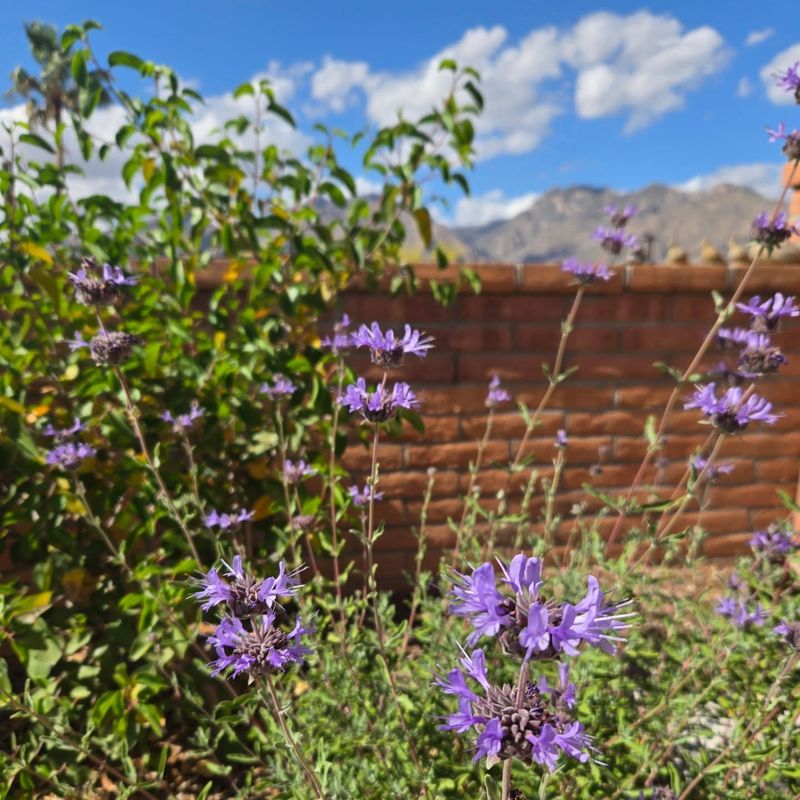
Walk past a Cleveland sage on a warm afternoon and the scent alone will stop you in your tracks. Salvia clevelandii is widely considered one of the most fragrant plants native to California, and garden designers have been using it as a centerpiece in water-wise landscapes for decades.
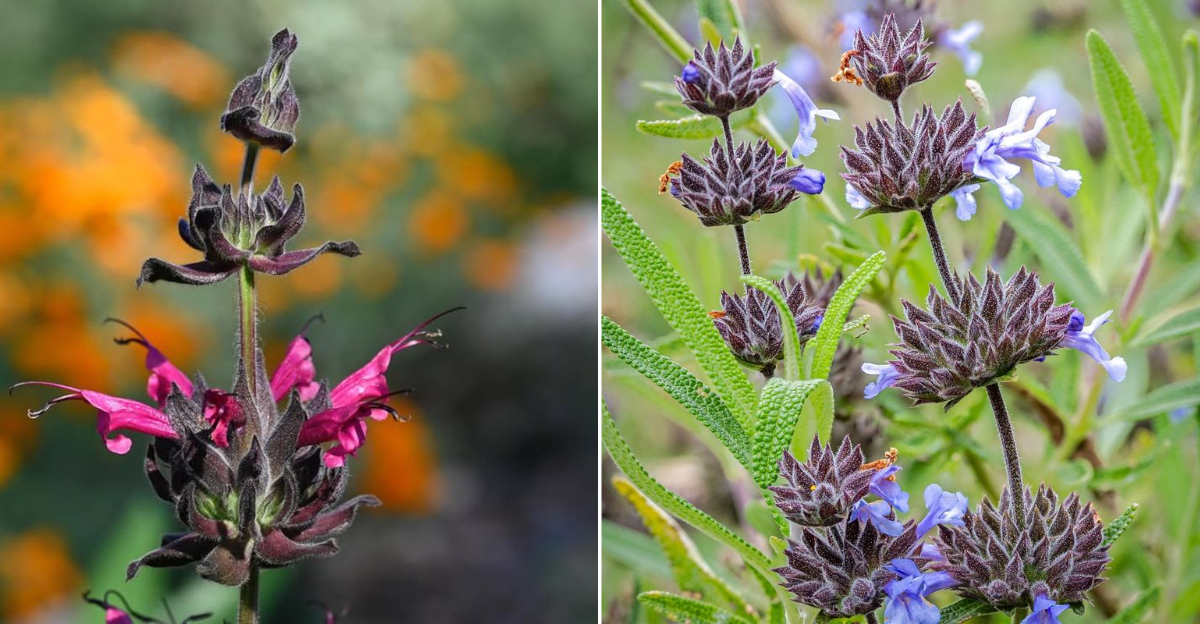
The deep blue-purple flowers are arranged in stacked rings along upright stems, creating a look that is both wild and architectural.
Cleveland sage blooms in late spring through early summer and can reach 3 to 5 feet in height. It thrives in full sun and well-drained soil, and once established, it handles Southern California summers with ease.
Hummingbirds are especially fond of the tubular flowers, and you will likely see them visiting regularly once the plant matures.
Pruning after bloom helps keep the plant tidy and encourages fresh growth. Many gardeners cut it back by about a third after the flowers fade, which also reduces the chance of it becoming woody and open in the center.
There are several named cultivars available, including the popular ‘Allen Chickering,’ which offers extra-large flower clusters. For fragrance, color, and wildlife value, Cleveland sage is genuinely hard to beat in any dry garden setting.
4. Purple Sage
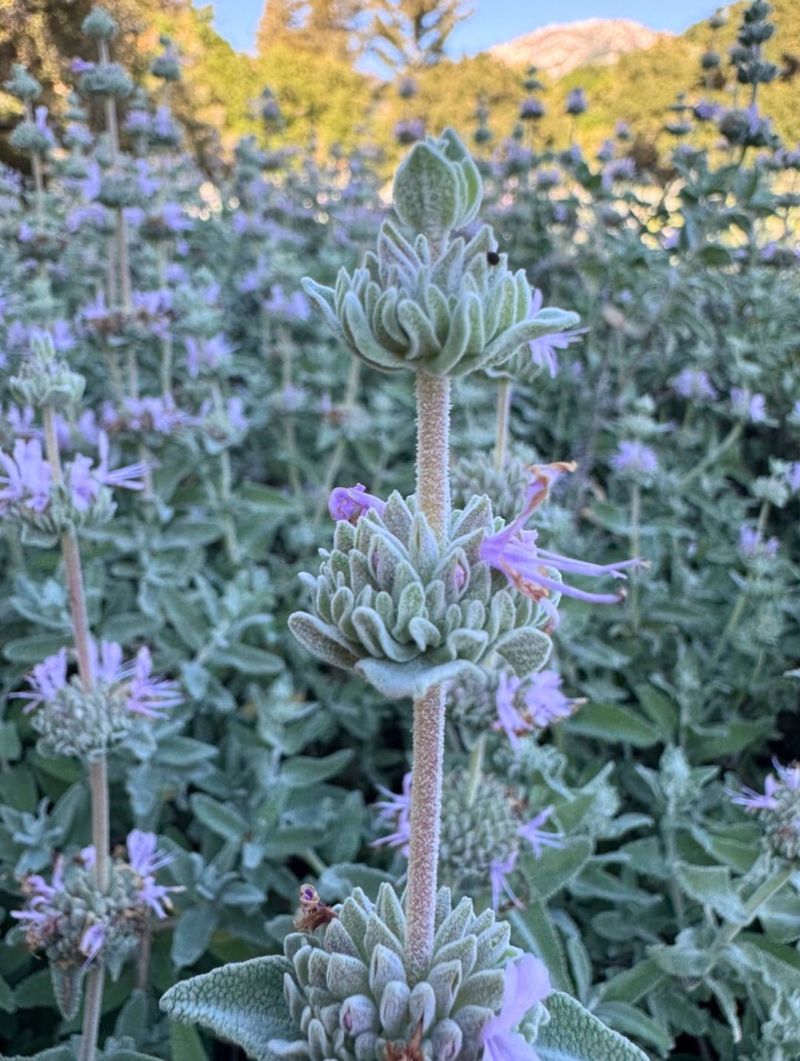
There is something almost painterly about purple sage growing on a dry hillside. Salvia leucophylla produces soft gray-green leaves that shimmer in the summer heat and tall spikes of lavender-pink flowers that bloom in late spring.
The combination of silvery foliage and rosy blooms makes it one of the most visually striking native salvias available to home gardeners.
Beyond its good looks, purple sage plays an interesting ecological role. Research has shown that chemicals released from its leaves can actually inhibit the growth of nearby plants, a natural process called allelopathy.
This means it tends to create a clear zone around itself in the wild, which can be useful in garden settings where you want to limit competition around the plant.
Purple sage grows 3 to 6 feet tall and wide, making it a solid choice for slopes, erosion control, or as a background shrub in a mixed native planting. It needs full sun and excellent drainage, and like most salvias, it prefers to stay dry in summer.
The fragrant foliage also repels deer. If you want a plant that looks effortlessly beautiful while doing serious ecological work, purple sage belongs in your garden.
5. Sonoma Sage / Creeping Sage
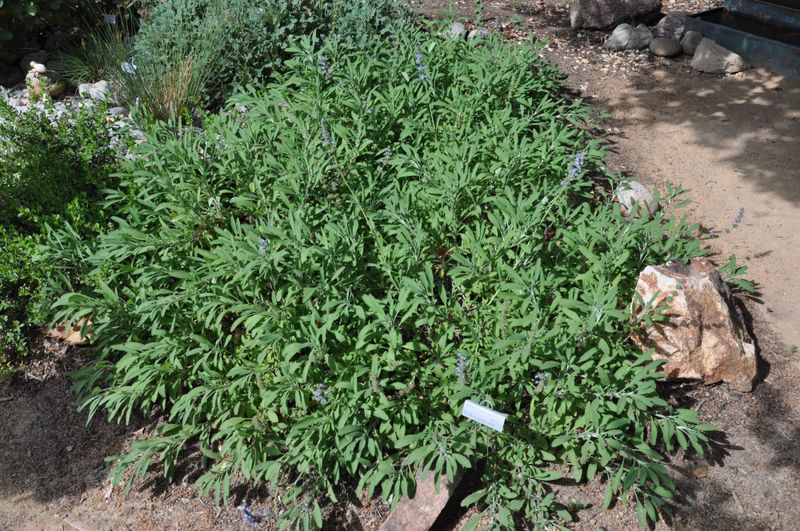
Not every garden needs tall shrubs. Sometimes the best plant is one that quietly spreads across the ground, fills in bare patches, and blooms with cheerful violet-blue flowers without asking for much attention.
Sonoma sage, also called creeping sage or Salvia sonomensis, is exactly that kind of plant. It grows low to the ground, usually under 18 inches tall, and spreads several feet wide over time.
This salvia is a fantastic choice for slopes, rock gardens, and areas where erosion can be a problem. Its spreading habit helps hold soil in place while creating a dense, attractive mat of aromatic foliage.
In spring, small but plentiful blue-violet flowers appear, drawing in bees and other small pollinators that are easy to overlook but incredibly important.
Sonoma sage prefers full sun to light shade and well-drained soil. It is more tolerant of some summer water than other native salvias, which makes it slightly more flexible for mixed plantings.
Cutting it back lightly after bloom helps keep it looking full and fresh. For gardeners who want a low-maintenance groundcover that doubles as a pollinator magnet, creeping sage is one of the most underrated options in the entire native plant palette.
6. Hummingbird Sage
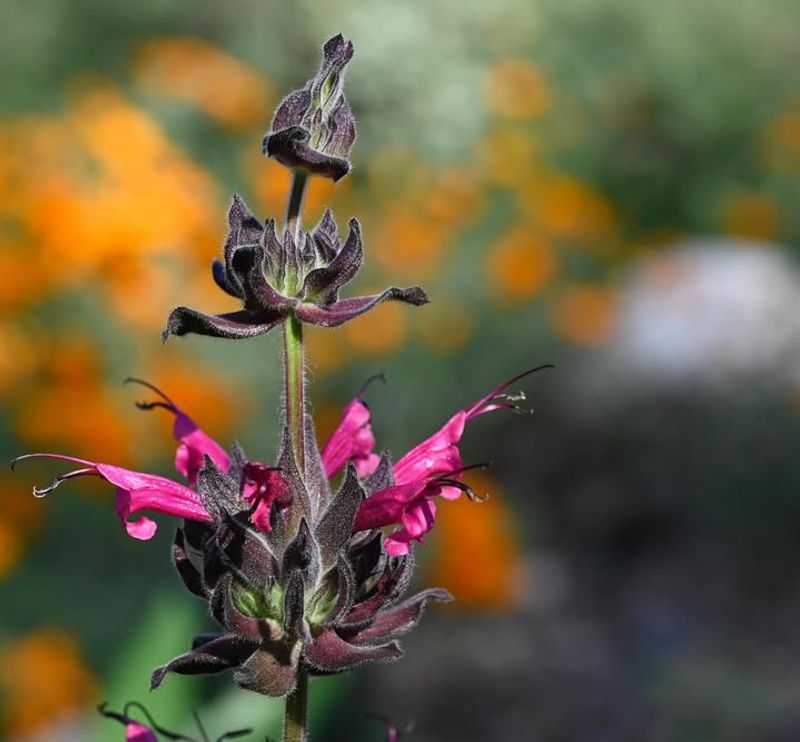
As the name makes very clear, hummingbirds absolutely adore this plant. Salvia spathacea, commonly called hummingbird sage, produces bold magenta-red flower spikes that are practically irresistible to Anna’s hummingbirds, which are year-round residents in much of California.
The blooms appear in spring and can last well into summer, giving hummingbirds a long and reliable food source.
What makes hummingbird sage especially useful is its tolerance for shade. Most salvias demand full sun, but this one actually prefers part shade to full shade, making it one of the few native salvias that works well under trees or along shaded fence lines.
It also spreads by underground runners, forming large colonies over time that can serve as a low-water groundcover in difficult spots.
The large, textured leaves have a strong fruity fragrance, almost like fresh pineapple or fruit punch, which surprises many gardeners when they first brush against it. Plants grow 1 to 3 feet tall and can spread several feet wide in ideal conditions.
Hummingbird sage is one of those rare plants that solves multiple garden problems at once. It handles shade, drought, deer pressure, and slope coverage while delivering gorgeous blooms and wildlife value all in one package.
7. San Diego Sage
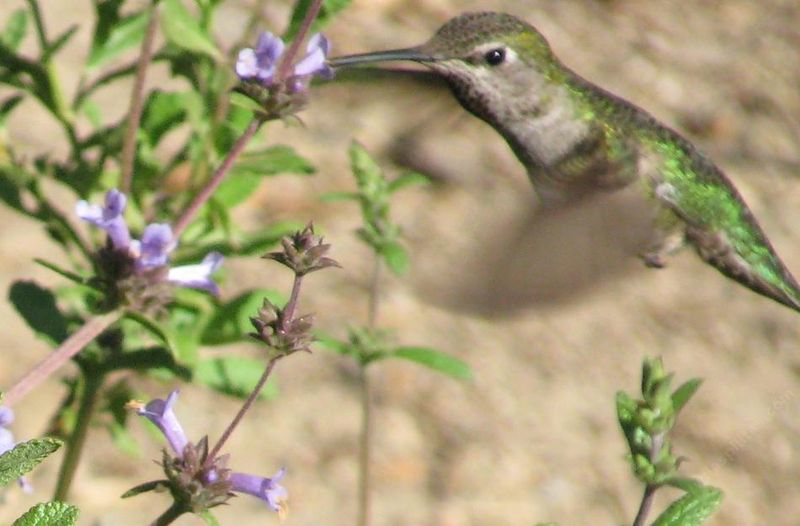
Named after the botanist Philip Munz, who dedicated his career to cataloging California’s remarkable plant diversity, Munz’s sage is a true regional treasure. Salvia munzii is native to San Diego County and Baja California, where it grows on rocky slopes and chaparral edges.
It closely resembles Cleveland sage but tends to be a bit more compact and slightly more tolerant of coastal conditions.
The flowers are a vivid blue-purple and appear in whorled clusters along upright stems in late spring. They are deeply attractive to hummingbirds and native bees, and the plant blooms reliably year after year with minimal care.
Its dark green, slightly sticky leaves release a pleasant herbal fragrance that fills the air on warm summer evenings.
San Diego sage grows 3 to 5 feet tall and wide and prefers full sun with sharp drainage. It is an excellent choice for Southern California gardens that want a native sage with strong regional identity.
Because it is not as widely sold as Cleveland sage or white sage, finding it at a native plant nursery can feel like a small victory. Once you have it growing in your garden, you will quickly understand why plant enthusiasts get so excited about this underappreciated species.
8. Mojave Sage
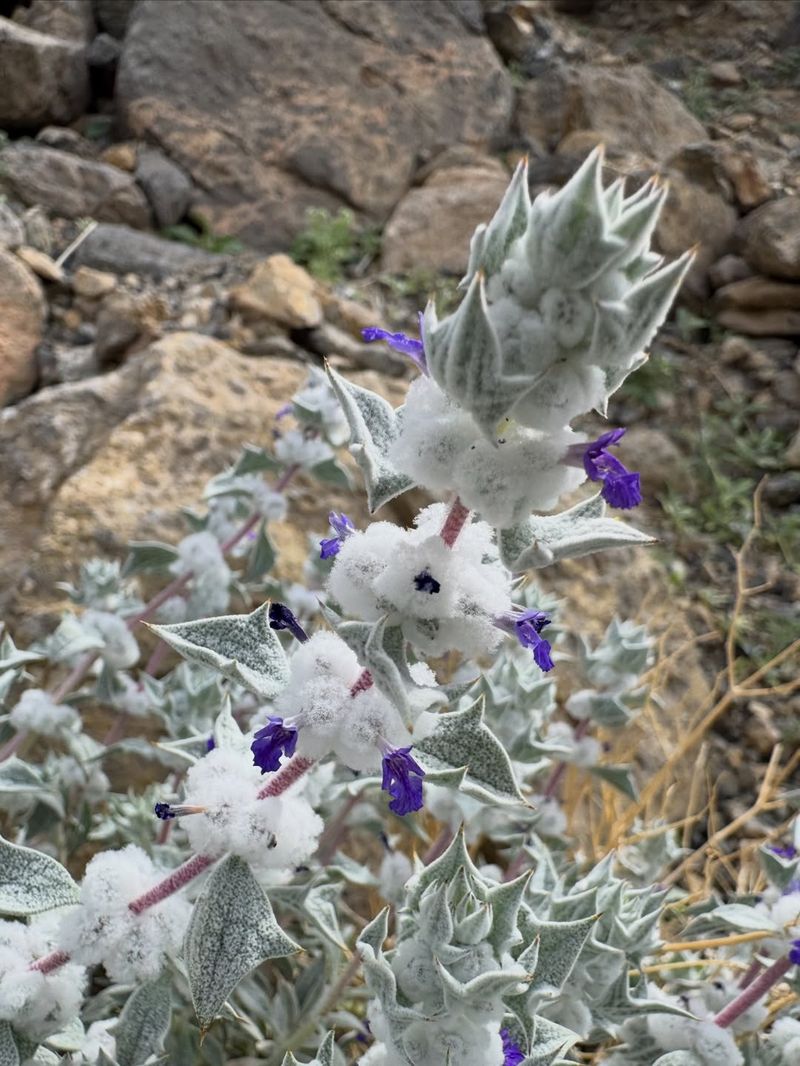
Surviving in the Mojave Desert takes serious toughness, and Salvia mohavensis has earned every bit of its reputation as one of the most drought-hardy salvias. This compact shrub grows naturally in rocky desert canyons and washes, where rainfall is rare and summer temperatures are brutal.
Bringing it into a home garden means you are getting a plant that was essentially built to handle the worst conditions your yard can throw at it.
Mojave sage grows 2 to 4 feet tall with small, gray-green aromatic leaves and pale blue flowers that bloom in spring. The flowers are subtle compared to some of its showier relatives, but up close they are genuinely lovely, with delicate details that reward a closer look.
Pollinators, especially native bees, visit the flowers regularly during bloom season.
Because it is adapted to desert soils, Mojave sage does best in very fast-draining, sandy or rocky soil. Heavy clay or regular irrigation will cause problems quickly.
Plant it in full sun in the hottest part of your garden and essentially forget about it after the first year. For gardeners in inland valleys or desert-adjacent areas who want a native plant that asks for almost nothing, Mojave sage is a quiet but reliable choice worth seeking out.
9. Rose Sage
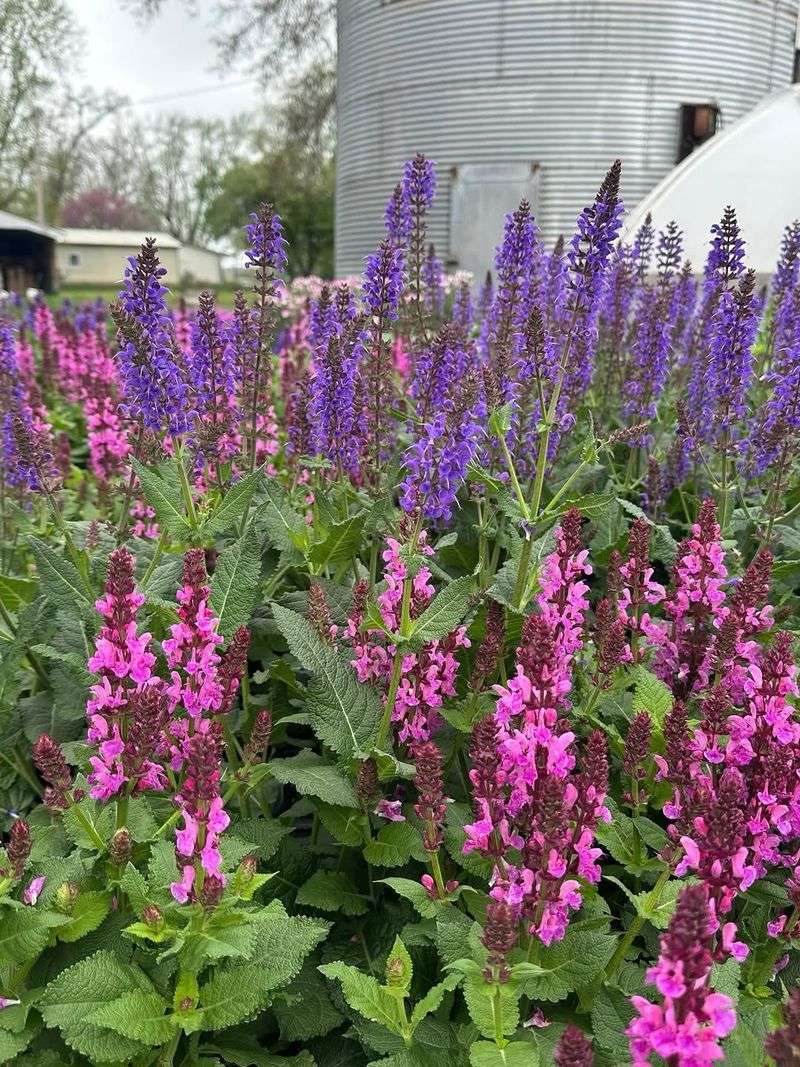
Few native salvias stop people in their tracks quite like rose sage. Salvia pachyphylla, sometimes called mountain desert sage, produces some of the most dramatic flower heads in the entire genus.
The blooms feature showy rose-pink to deep purple bracts that surround smaller flowers, creating clusters that look almost like something out of a tropical garden while being completely adapted to dry, rocky mountain conditions.
Rose sage is native to the higher elevations of Southern California and the Great Basin, where it grows in open, rocky terrain. It handles cold winters better than many other salvias, making it a great option for mountain gardens or areas with significant temperature swings.
The thick, blue-gray leaves are both beautiful and functional, reflecting heat and reducing water loss during hot summers.
In the garden, rose sage grows 2 to 4 feet tall and wide and blooms from midsummer into fall, which gives it a longer season of interest than many spring-blooming salvias. Plant it in full sun with excellent drainage and very little supplemental water.
The striking flower bracts hold their color even after the true flowers fade, extending the visual display considerably. For anyone who wants a native sage with genuine wow factor, this one delivers in a big way.
10. Brandegee’s Sage
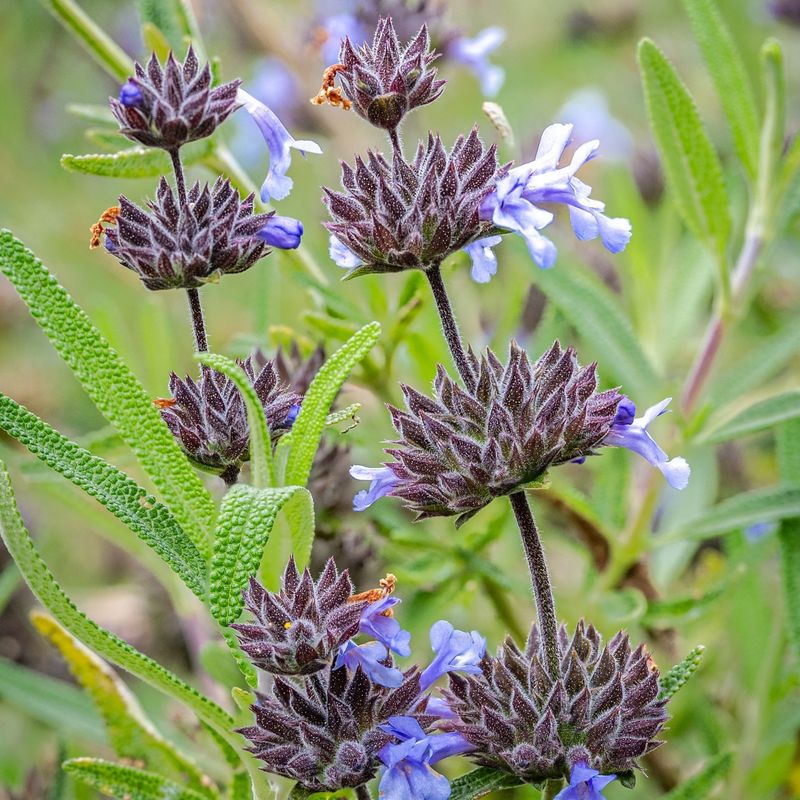
Growing naturally only on Santa Rosa Island off the coast of Santa Barbara, Brandegee’s sage carries the rare appeal of an island endemic. Salvia brandegei is closely related to black sage but has developed its own distinct character after thousands of years of island isolation.
The leaves are slightly larger and more aromatic, and the plant tends to be a bit more open and airy in its growth habit than its mainland cousin.
In cultivation, island black sage has proven surprisingly adaptable to mainland garden conditions. It grows 3 to 5 feet tall with gray-green foliage and pale lavender to white flowers that bloom in spring.
Like other black sages, it is a magnet for native bees and other pollinators, and it handles full sun and dry summer conditions with ease once established.
Because it comes from an island environment, it also shows good tolerance for coastal conditions, including salt spray and wind. This makes it especially valuable for gardens near the coast where many inland plants struggle.
Brandegee’s sage is not always easy to find at general nurseries, but specialty native plant sales and botanical garden plant sales sometimes carry it. Tracking it down is absolutely worth the effort for anyone who appreciates plants with a story as interesting as their foliage.