Why Your Virginia Boxwoods Turn Bronze Every Fall
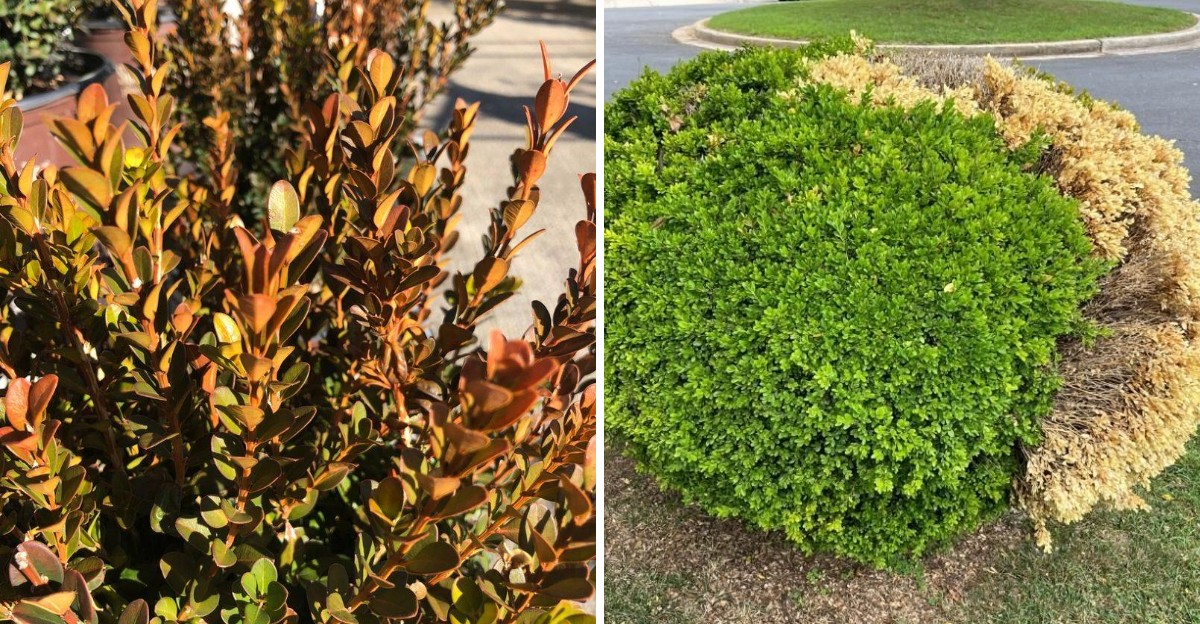
Your favorite green hedge can blush orange as the nights turn cold. I noticed it on mine last November. The leaves looked sunburned in the middle of autumn.
The color shows up first on the sunniest side. Shaded leaves often stay green right next to the bronze ones. I find that split look oddly beautiful.
You’re in for a surprise here in Virginia. The shrub is protecting itself. A hidden pigment works like a winter coat for each leaf.
Personally, I panicked the first time I saw it. I grabbed my pruners and nearly cut half the hedge. So what is your shrub trying to tell you?
That Orange Glow Is More Clever Than It Looks
My first bronze hedge gave me a real scare. I ran inside and searched for answers before dinner even finished cooking.
Turns out, the shrub was doing something smart.
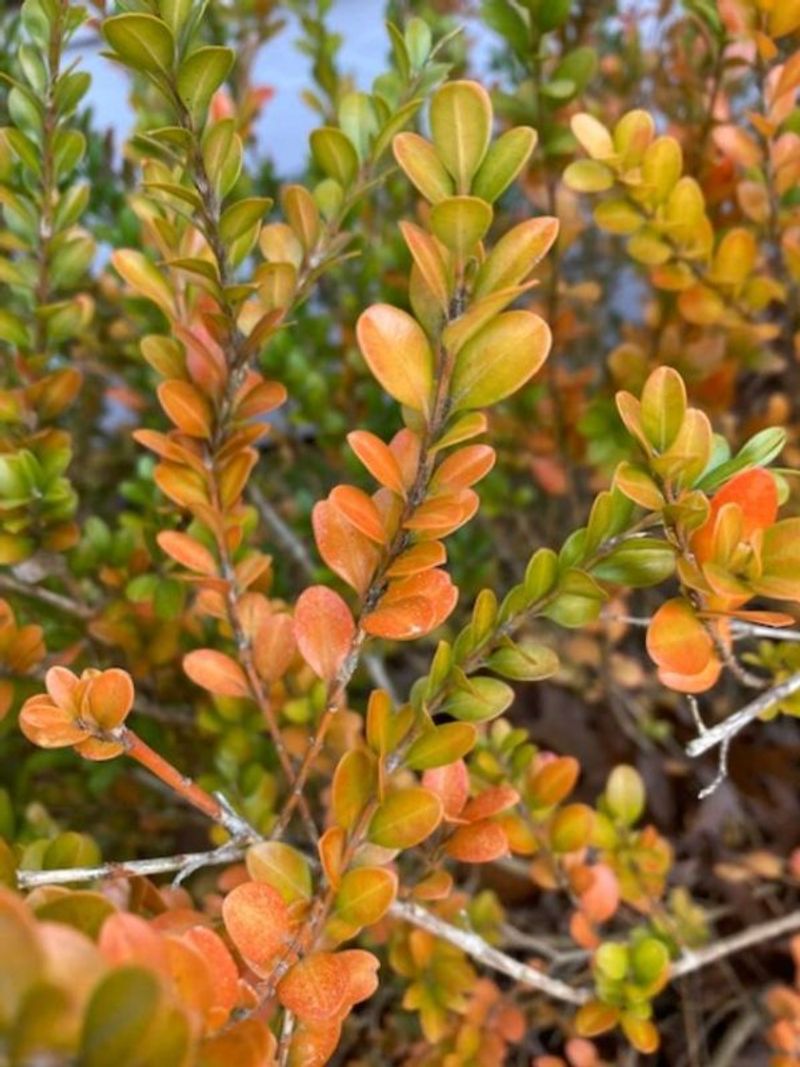
Boxwood leaves hold green chlorophyll most of the year. When cold weather arrives, many plants make extra pigments called carotenoids and anthocyanins.
These orange and reddish colors act a bit like sunscreen for the leaf.
Cold slows down how a leaf uses sunlight. Bright light still pours in, though.
That extra energy can harm the leaf cells, so the plant builds a protective tint to soak it up safely.
Plant scientists call the overall process winter bronzing. It mostly shows up on the outer leaves that face the open sky.
Leaves tucked deeper inside the shrub usually keep their regular color.
So the bronze shade is not a sign that your plant is giving up. In most yards, it is a seasonal shift, much like maple trees turning red.
Your boxwood simply keeps its leaves while changing outfits.
Knowing this can save you from cutting, spraying, or replacing a shrub that is healthy underneath. A little patience goes a long way here.
Your Shrubs Are Fighting Dry Winter Air
Winter wind is sneakier than most of us realize. Boxwoods keep their leaves all year.
Those leaves keep losing water, even on freezing days.
The roots have a hard job in cold months. When soil is dry or frozen, they struggle to pull up enough moisture.
Meanwhile, wind and low humidity keep drying the leaves out.
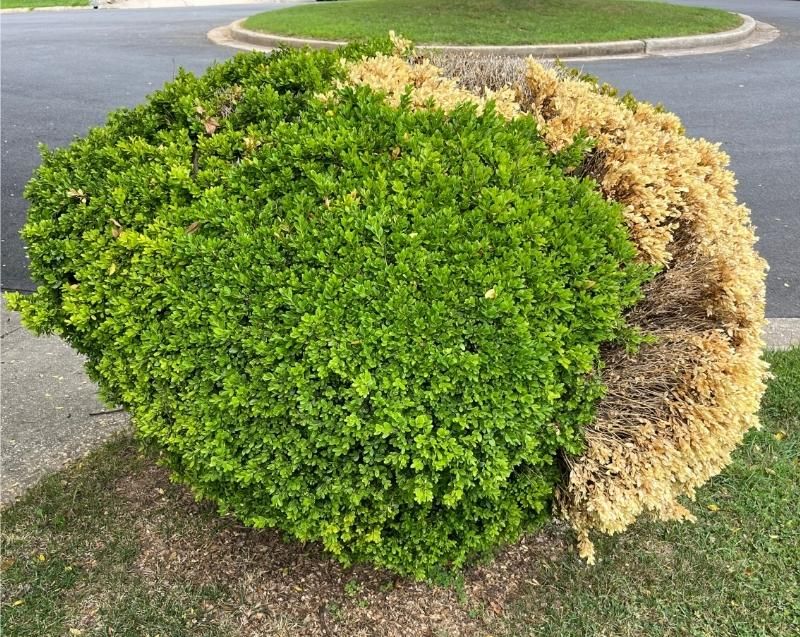
Experts call this winter desiccation. It adds stress and often deepens the bronze color.
In bad cases, leaf edges can turn tan or straw colored and stay that way.
Virginia winters bounce around a lot. A mild week can be followed by a sharp freeze.
Those swings make it harder for shrubs to settle into a steady rest.
Shrubs planted near driveways, corners of houses, or open lawns get hit hardest. Wind tunnels between buildings can be rough on them too.
If one hedge looks worse than another, check where the breeze blows.
A few simple steps help a lot, and we will cover those soon. For now, remember that dry air plus cold soil is a big part of the story.
Your Virginia Garden Changes Every Week. Your Plan Should Too.
Gardening in Virginia changes quickly throughout the season. Every Friday you’ll receive a simple weekly plan showing exactly what to plant, prune, fertilize, harvest, and protect so you never miss the right timing.
Water matters even in winter.
Sunny Spots Make the Bronze Even Brighter
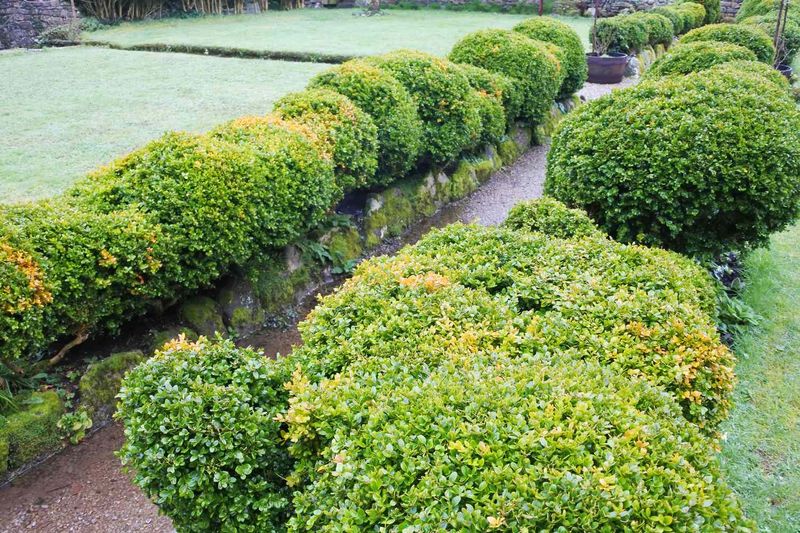
Walk around your hedge on a bright winter afternoon. You will likely spot a pattern.
The south and west sides often wear the deepest bronze.
Winter sun sits low in the sky. It shines straight onto those exposed faces for hours.
Snow on the ground can bounce even more light back onto the leaves.
Leaves in strong sun need more protection, so they build more colored pigment. They also warm up during the day and lose more water.
Then the temperature drops fast at night.
That daily warm and cold cycle adds stress. Boxwoods next to light colored walls or pavement can heat up even more.
I have seen one plant look half copper and half green.
Light shade from a nearby tree or building often keeps boxwoods greener. If you are planting new ones, an east facing spot with morning sun can be a kind choice.
Afternoon shade helps a lot in many parts of Virginia.
For shrubs already in full sun, do not worry too much. The bronze is mostly cosmetic.
You just know which side to watch and water.
Some Varieties Love to Show Off Their Copper Side
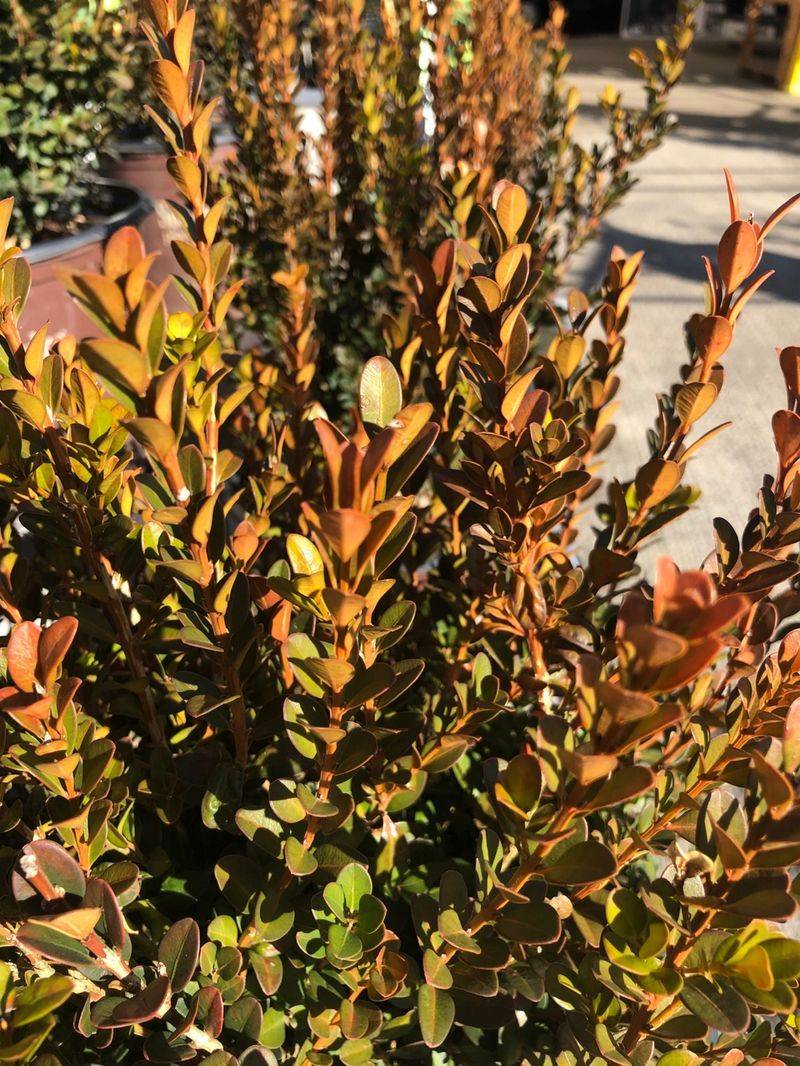
Fun fact: two boxwoods planted side by side can look nothing alike in January. The secret is often in their family tree.
Littleleaf boxwood, Buxus microphylla, and its Japanese types are well known for bronzing. Some varieties turn a strong yellow orange shade.
American and English boxwoods, forms of Buxus sempervirens, can bronze too, though often less dramatically.
Breeders have worked on this. Korean boxwood and hybrids like Green Velvet, Green Mountain, and Winter Gem were selected partly for cold hardiness.
Many of them hold their green better, though Winter Gem can still take on a bronze cast.
Results vary by yard, sun, and soil. A tough variety in a windy spot may still change color.
A touchier one in shade may stay fairly green.
If you love that deep green look all year, check the tag before you buy. Ask your local nursery which types hold color well in your area.
Virginia Cooperative Extension also shares helpful guides on boxwood choices.
And if your shrub is a bronzer by nature? Enjoy the warm color.
It is part of its personality.
You Can Help Them Hold On to More Green
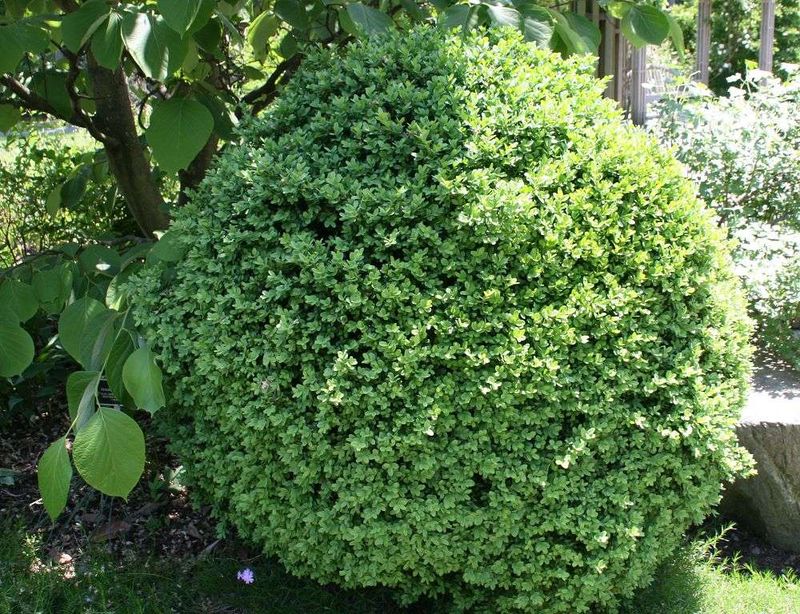
Here is my favorite fall habit. Before the ground freezes, I give every boxwood a deep, slow drink.
It takes a few minutes and pays off all winter.
Water deeply in autumn if rain has been light. Soak the root zone so moisture reaches several inches down.
During dry winter spells, water again on a mild day when the soil is not frozen.
Mulch helps hold that moisture in place. Spread about one to two inches of shredded bark around the shrub.
Keep it a few inches away from the stem, since boxwoods have shallow roots and dislike thick piles.
Skip heavy fertilizer in late summer and fall. It pushes tender new growth that cold weather can damage.
Late pruning can do the same thing.
For shrubs in harsh, windy spots, a simple burlap screen can block drying winds. Set it a few inches away from the leaves.
Avoid wrapping plastic around the plant.
Some gardeners use anti-transpirant sprays, but research results are mixed. Good watering and smart placement usually do more good.
Bronze Is Fine but Watch for These Warning Signs
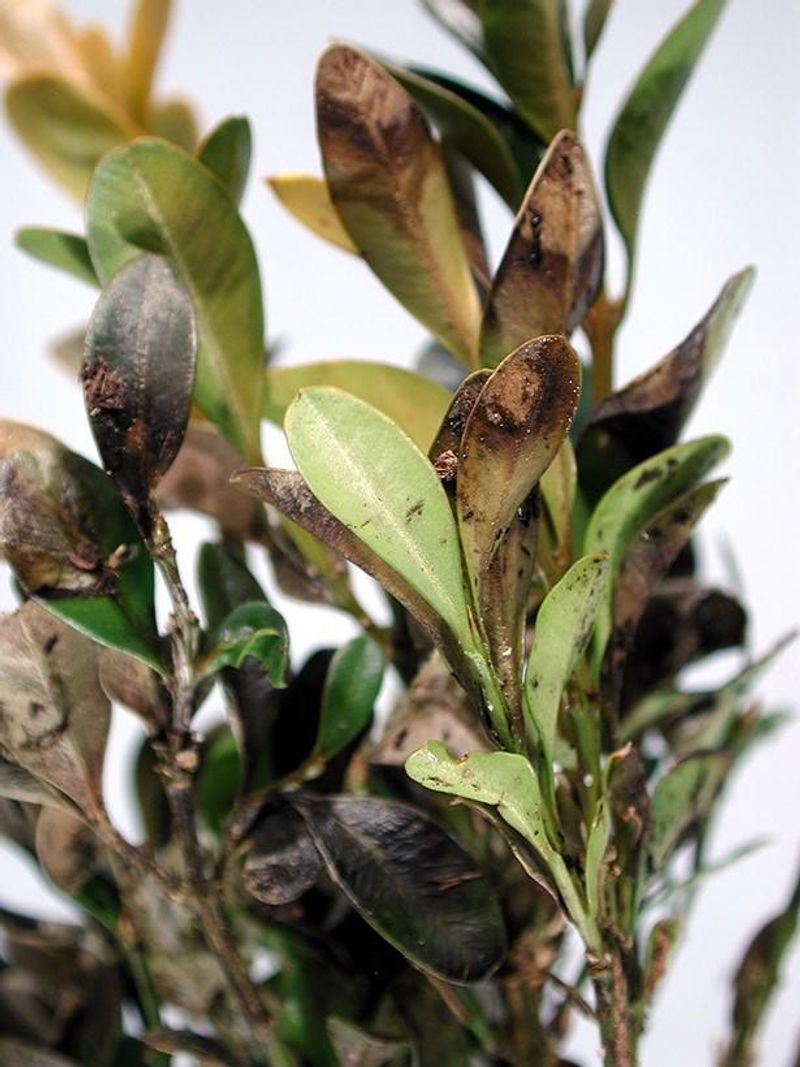
Not every color change is harmless. I learned to look closer after a friend’s hedge had more than a winter tan.
A quick check can save your shrubs.
Normal bronzing is even and shows up on sunny outer leaves. The leaves stay firm and attached.
Stems underneath remain green and bendy when you scratch them.
Boxwood blight is different. It causes dark brown leaf spots, black streaks on stems, and fast leaf drop.
It has been found in Virginia, so report suspicious plants to your local Extension office.
Volutella blight turns whole branches straw colored, often with pink spores in damp weather. Root rot can make a shrub look dull, then yellow, then bare.
Wet, poorly drained soil often plays a role.
Pests can also mess with color. Boxwood leafminers cause blister-like bumps on leaves.
Boxwood mites leave tiny pale speckles.
When in doubt, take a sample to your county Extension agent. Many offer plant clinics at low cost.
Bag the sample so you do not spread any problem.
Spring Usually Brings That Rich Green Back
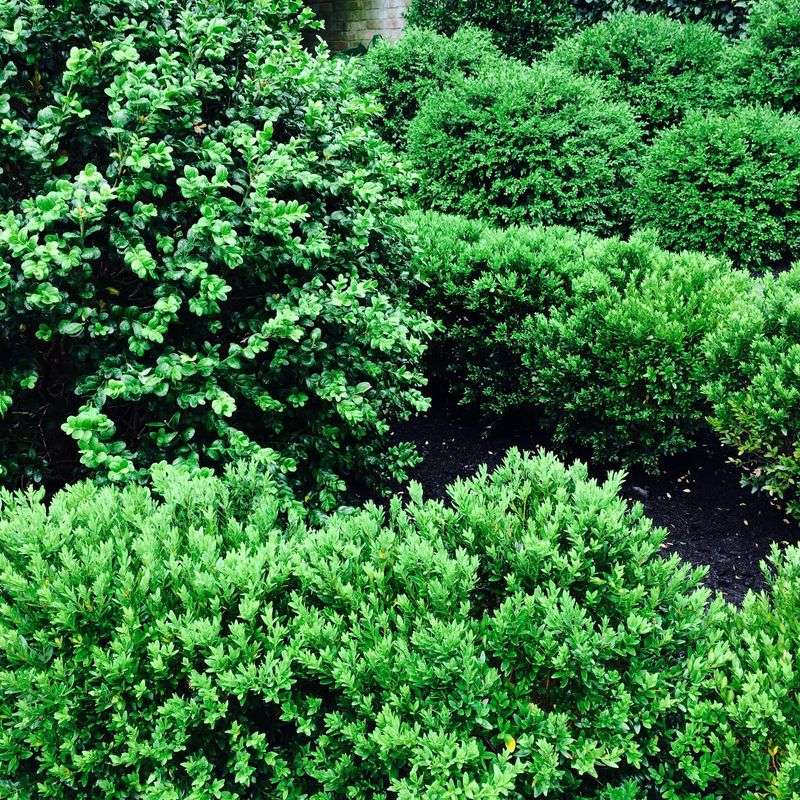
Hang in there through the gray months. Most bronzed boxwoods quietly recover once warm weather returns.
It feels like a small spring reward.
As days lengthen and soil warms, the leaves rebuild their chlorophyll. The orange tint fades back toward green.
Fresh, bright new shoots also appear in mid to late spring.
Some leaves with serious winter burn may stay brown. They often drop off as new growth fills in.
That is normal and usually not a big concern.
Wait until new growth starts before you prune. Then you can clearly see which twigs are healthy.
Trim out only the brown tips that did not green up.
A light spring feeding can help if your soil test shows a need. Boxwoods prefer slightly acidic to neutral soil.
Your local Extension office can test soil for a small fee.
Next fall, you will know what to expect. The bronze will likely return, and that is fine.
Your shrub just takes a winter rest in a warmer shade of color.