Two Owls Hooting Outside Indiana Homes After Dark Are Starting Nesting Season Early
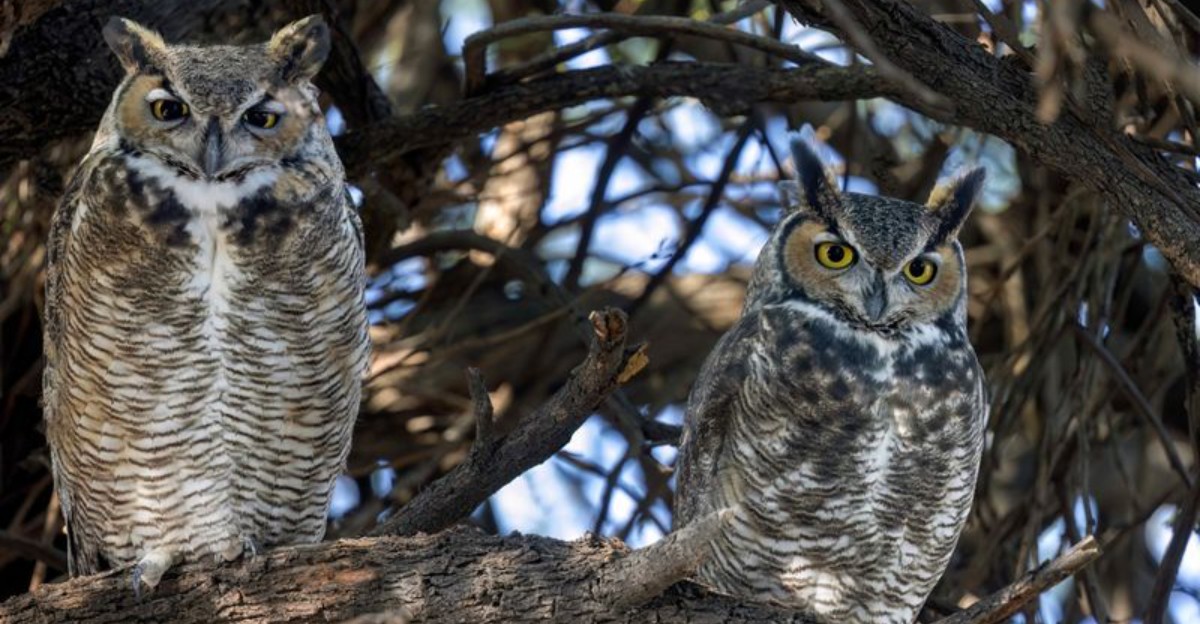
The smaller bird in a hooting owl pair actually has the deeper voice, and it is usually the male. I love that the larger female answers him with a higher call, so you can tell them apart by ear.
In Indiana, these birds often lay eggs in late January or February, while snow can still sit on the branches. The mother keeps those eggs warm for about a month, sitting through freezing nights with very few breaks.
They rarely build their own homes and usually move into an old nest left behind by hawks or crows. Some pairs also choose tree hollows, broken snags, or even quiet ledges on barns and other farm buildings.
You can hear the early part of this story right now, on calm October evenings across Indiana. So the next time two voices trade hoots past your porch light, who do you think is talking first?
A Courtship Duet That Begins In Late Fall
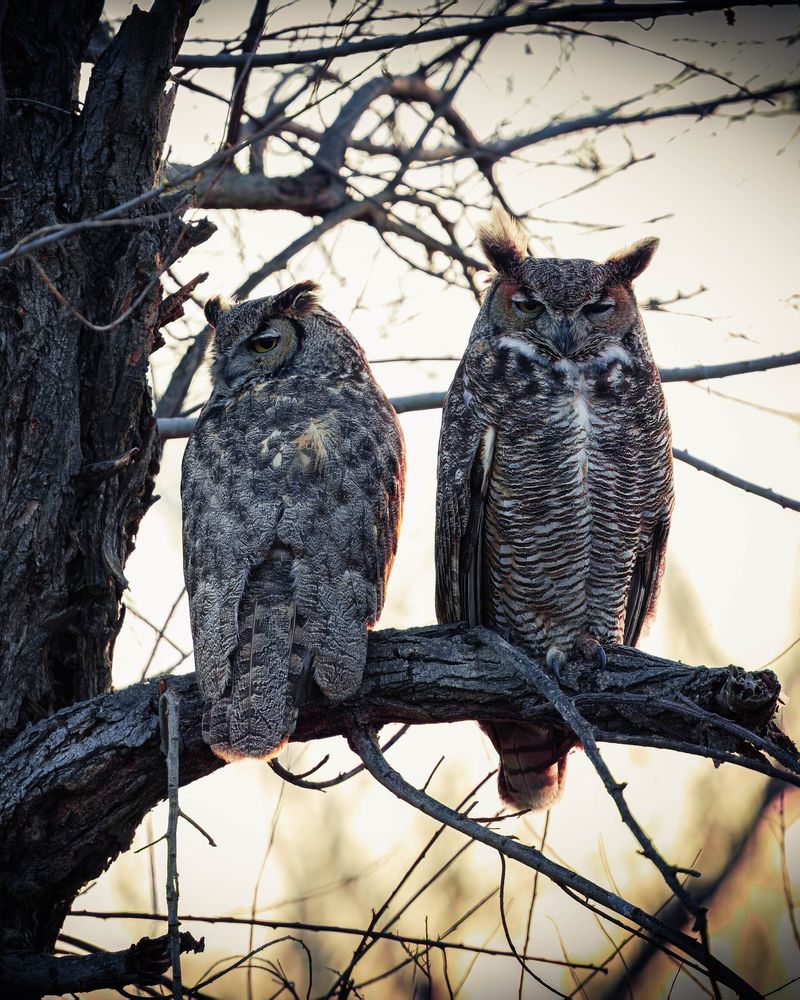
Those back-and-forth hoots outside your window most likely come from a pair of great horned owls claiming their territory. These big owls live in Indiana all year, and their duets often grow louder from October through winter.
That hooting marks the start of nesting season, since pairs begin bonding long before eggs appear. Great horned owls nest in winter, well ahead of spring, so fall calling is their first step toward raising chicks.
Many pairs stay together for several years and defend the same patch of woods, parks, or neighborhoods. The duet works like a fence line made of sound, telling other owls that this space is already taken.
Cornell Lab of Ornithology notes that great horned owls begin courtship calling in late fall and early winter, before eggs appear. You will often hear the most activity just after sunset and again in the quiet hours before dawn.
A typical call sounds like a deep rhythm of five hoots, often written as who’s awake, me too. Listening for that pattern helps you tell these owls apart from barred owls, which ask who cooks for you.
Barred owls also live in Indiana, especially near wet woods, and they start courting a bit later in winter. So if your nighttime pair sounds deep and steady, great horned owls are the most likely answer for October.
Try stepping outside on a still evening with the porch light off and simply listening for a few minutes. Keeping a small notebook of dates and times can show you how the duet changes as winter gets closer.
Deeper Hoots From The Smaller Male
Size usually predicts voice in animals, yet great horned owl pairs flip that rule in a memorable way. The male is smaller than the female, but his hoots are noticeably lower and sound richer on calm nights.
Researchers report his voice box, called a syrinx, is larger than hers, which helps explain the deeper sound. Females can weigh up to about five pounds, while males are often closer to three pounds or a bit less.
Your Indiana Garden Changes Every Week. Your Plan Should Too.
Gardening in Indiana changes quickly throughout the season. Every Friday you’ll receive a simple weekly plan showing exactly what to plant, prune, fertilize, harvest, and protect so you never miss the right timing.
During a duet, the two voices take turns, and the higher female call often overlaps the end of his. Once you notice that pitch gap, you can often tell which bird is calling from which tree in your yard.
Males often start the conversation, and their steady hooting helps announce the territory to any wandering young owls nearby. Young owls hatched last spring leave their parents in fall and search for their own open territory.
That is one reason October nights can get noisy, since established pairs need to remind newcomers of the borders. You might even hear three or more owls calling at once when a young bird tests a pair’s patience.
A free phone app like Merlin from Cornell can record the calls and help confirm which species you heard. Kids especially enjoy matching the deep and high voices, and it turns a regular evening into a nature lesson.
Try not to play recorded calls back at the owls, since that can stress them during an important season. Simply listening from a porch or open window gives you the best show without disturbing the pair at all.
Feather Tufts That Look Like Ears
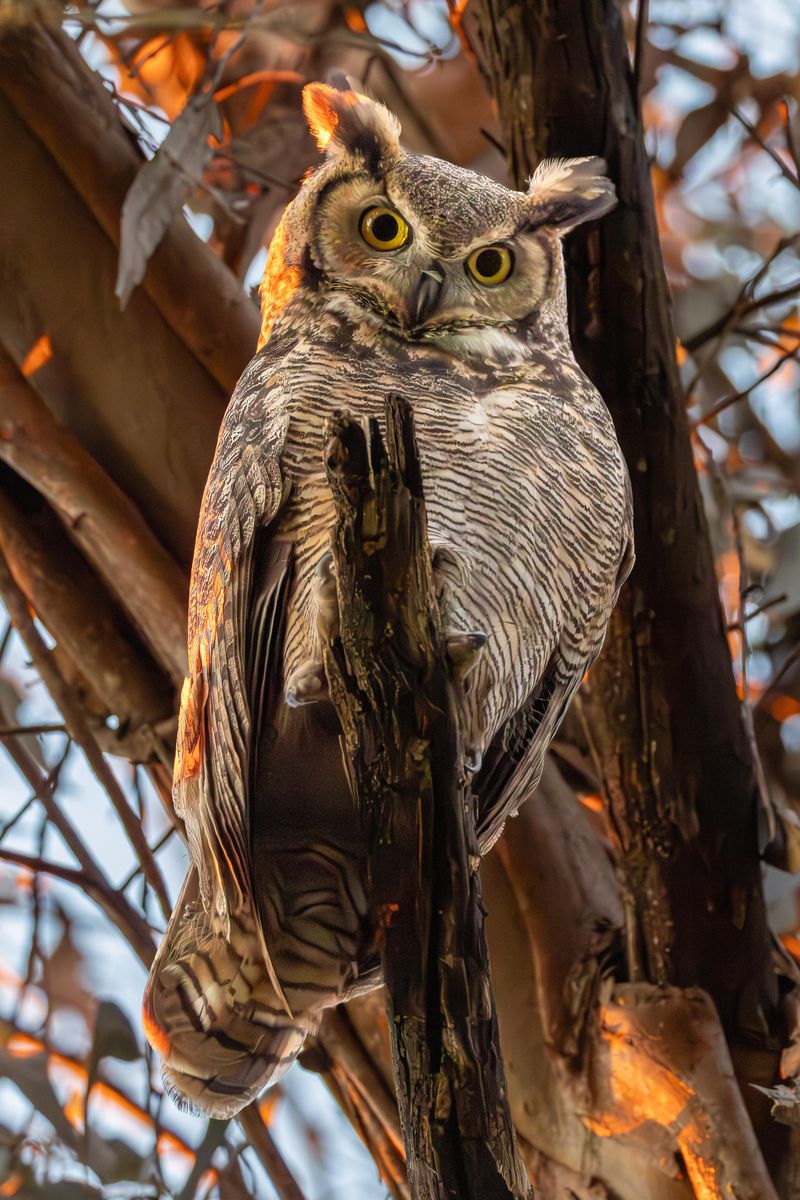
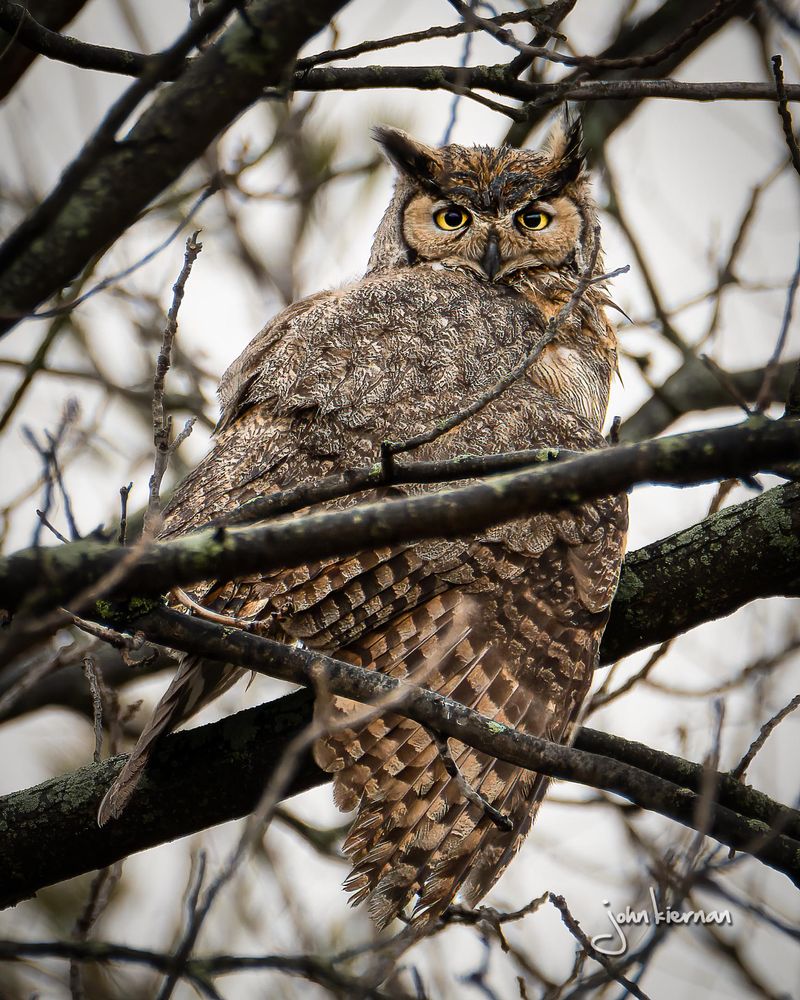
Plenty of people call them cat owls, and one look at those pointed tufts explains the nickname right away. Those tufts are just feathers, though, and they have nothing to do with how great horned owls hear.
Scientists call them plumicorns, and the owl can raise or flatten them depending on its mood or situation. Some researchers think the tufts help with camouflage by breaking up the round shape of the head.
Others suggest they help owls signal to each other, though nobody knows the exact purpose for sure yet. The real ear openings sit on the sides of the head, hidden under feathers, in a spot you rarely see.
A round facial disk of feathers works like a satellite dish, guiding sound toward those hidden openings. That sharp hearing lets the owl find mice moving under leaves, even on dark fall nights with little moonlight.
The big yellow eyes also help, since they gather light well and face forward for strong depth perception. Owl eyes cannot roll around like ours, so the bird turns its whole head up to about 270 degrees.
Spotting one in daylight takes patience, because the mottled brown feathers blend well against tree bark. Fall leaf drop makes the search easier, since bare branches leave fewer places for a roosting owl to hide.
Look for a stocky shape near the trunk of a pine or tall hardwood, roughly two feet tall. Crows mobbing and cawing loudly around one tree is often a clue that an owl is resting there.
Old Nests Borrowed From Hawks Or Crows
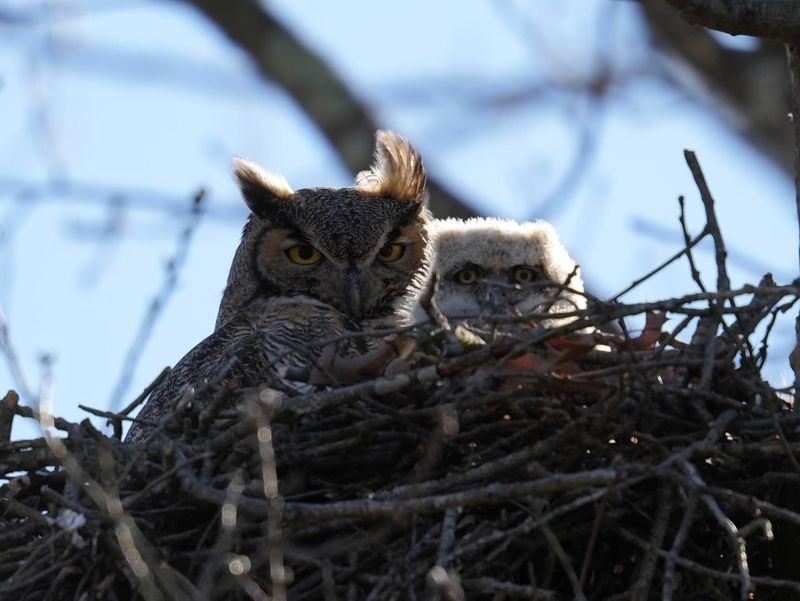
Great horned owls are skilled hunters but surprisingly lazy builders, and they rarely make a nest of their own. Instead, they usually take over stick nests built in earlier years by red-tailed hawks, crows, or herons.
Because the owls start nesting so early, the original builders often have not returned to claim their nests yet. Fall is when pairs scout possible sites, so you may notice owls perching near large stick nests now.
Thinning October foliage makes those old nests easier to see, often high in an oak, cottonwood, or pine. Owls also use tree cavities, broken treetops, cliff ledges, and sometimes even platforms on buildings or towers.
Because they borrow instead of build, the nest may look messy, with few repairs beyond some added feathers. The female usually lines the bowl with soft feathers from her own chest, which helps hold in warmth.
If you have big trees on your property, consider leaving any old stick nests in place through winter. Fall pruning is common, but checking for nests first helps protect a site that owls may soon need.
All native owls and hawks are protected under the federal Migratory Bird Treaty Act, along with active nests. Indiana DNR can answer questions if a nest sits near a home and causes worry for your family.
Some people even build large open nest platforms, and owls occasionally accept them in quiet wooded yards. Mount any platform high in a sturdy tree before December, giving the pair time to notice it.
Eggs Laid While Snow Can Still Cover The Ground
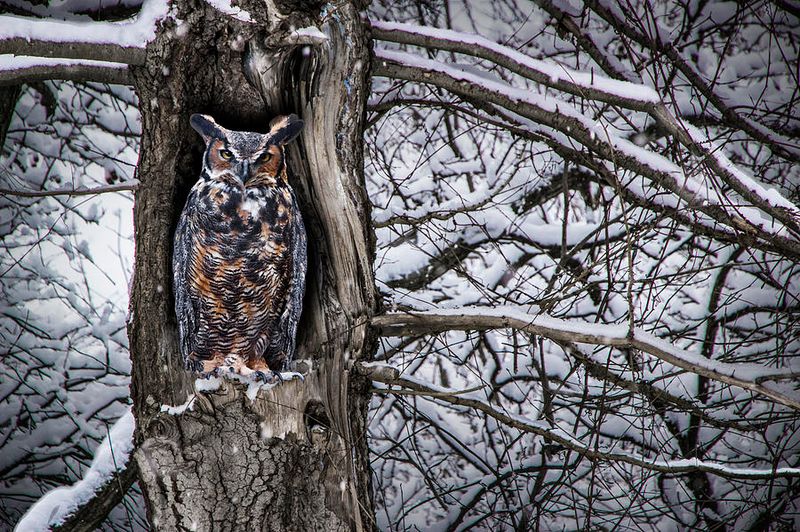
Winter babies sound odd for birds, yet great horned owls are among the earliest nesting birds in Indiana. Females often lay eggs from late January through February, while snow and ice can still blanket parts of the state.
A typical clutch holds two eggs, though some nests contain one, three, or occasionally four round white eggs. The female sits on them for about 30 to 37 days, while the male hunts and brings her food.
Thick feathers and steady body heat keep the eggs safe, even when nighttime temperatures drop well below freezing. Some observers have photographed nesting females covered in snow, sitting calmly while the storm passes overhead.
Starting so early gives the young owls extra time to learn hunting skills before the next winter. Chicks often leave the nest at about six weeks, then climb around nearby branches before they can fly well.
Spring arrives just as these youngsters need the most food, when rabbits, mice, and other prey become plentiful again. So the duets you hear this October are really planning for a family that will grow up next spring.
If you find a fluffy owlet on the ground later in spring, it is usually fine and still being fed. Contact a licensed wildlife rehabilitator through Indiana DNR before moving it, since parents often stay close by.
Marking a calendar now for late winter helps you remember to watch nearby nests from a respectful distance. Binoculars work far better than walking close, and they keep the nesting pair calm during their busiest season.
Small Pets Safer Indoors After Dark
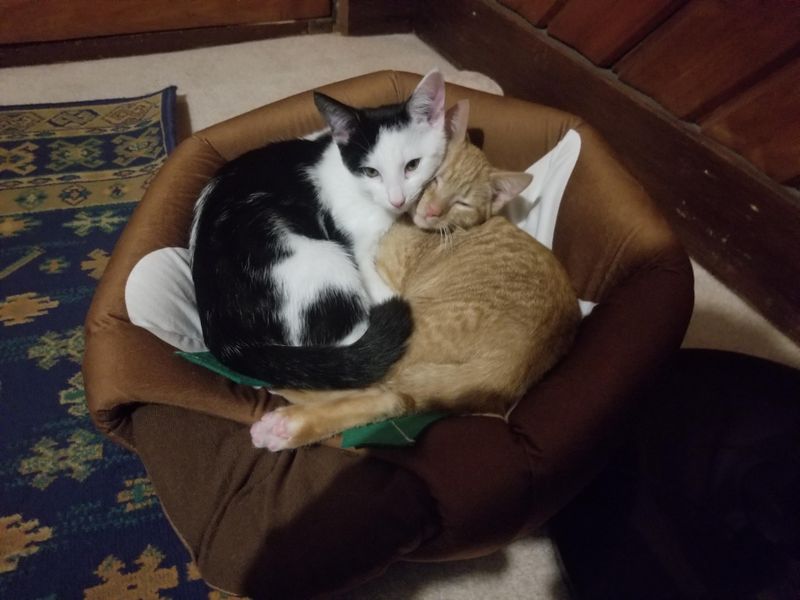
Owls rarely bother people, but a hungry great horned owl may see a small cat or tiny dog as prey. Owl encounters with pets are uncommon, yet extension services still suggest simple steps to lower the risk.
These powerful birds regularly catch rabbits, skunks, and other animals that weigh as much as some house pets. Their grip is strong, so owners of pets under about ten pounds should take extra care at night.
Bringing cats and small dogs inside before sunset is the easiest fix, especially as October evenings get darker sooner. Keeping cats indoors also protects songbirds, which many wildlife agencies and bird groups strongly recommend for that reason.
For late bathroom trips, walk small dogs on a leash and stay close instead of letting them roam alone. A bright yard light and a covered pen offer extra protection for backyard chickens, rabbits, and ducks.
Poultry owners should close coop doors every evening, since owls can slip through open tops on outdoor runs. Sturdy wire or netting over the run keeps flying hunters out while letting your birds enjoy fresh air.
Remember that owls also help homeowners by eating mice, voles, and rats that chew on gardens and stored items. Avoiding rodent poisons protects these owls too, because the poison can build up in the rodents they eat.
With a few easy habits, your pets are much safer and the hooting pair can keep courting outside all season. Enjoy those deep and high voices from your porch, knowing the neighborhood benefits from their rodent control.