Fall Porch Decor From Your Own Garden In New Jersey
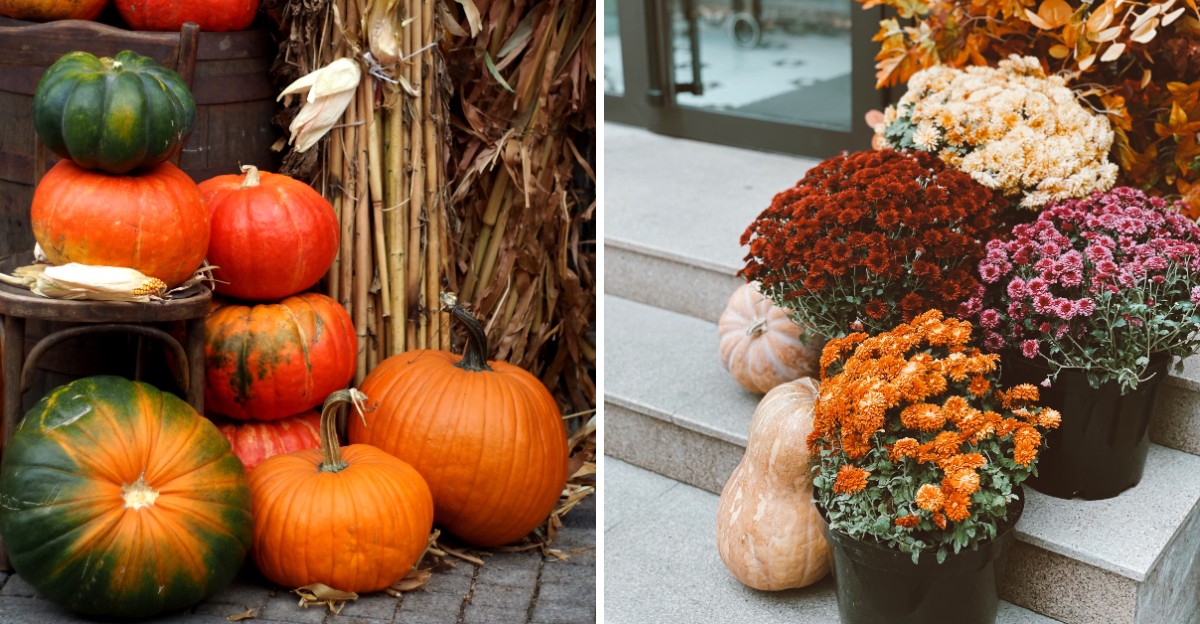
Why does a florist charge premium prices for what waits behind your shed? You can gather a porch display from the fence line in an afternoon.
Plastic orange decor costs more and looks similar from porch to porch. Foraged finds from New Jersey soil carry a story no store can stock.
Texture does the work, so you skip the glitter and the price tags. Grab pruners, a sturdy bucket, and gloves before sunset.
Wander the shed’s shadow side, where overlooked treasures cluster. Bold rust, silver, and mauve tones layer into a display that looks professionally styled.
Pair them with a lantern and your steps gain polish. Neighbors will ask where you shop, and you smile mysteriously.
Timing matters, since New Jersey frost can spoil soft stems overnight, so gather today. Ahead waits the lineup that makes your stoop the showpiece.
1. Homegrown Pumpkins And Gourds
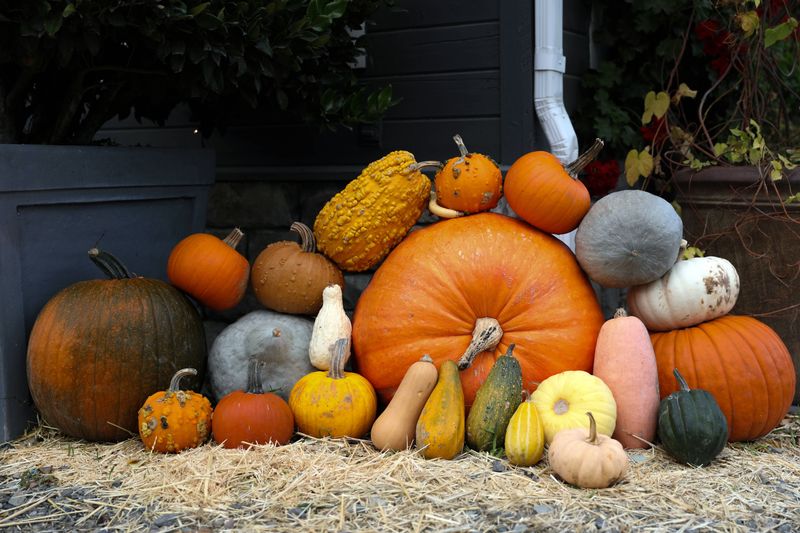
Picture a lumpy pumpkin you grew yourself sitting proudly by the door. Store pumpkins look perfect, but homegrown ones have real character.
New Jersey summers give squash plenty of heat to ripen by early fall. Many varieties are ready when the rind feels hard and the stem turns woody.
Cut each pumpkin with three or four inches of stem attached. Avoid carrying it by the stem, since it can snap off and invite rot.
Wipe the skin with a cloth dipped in bleach water, one tablespoon per gallon. That rinse helps fight mold and keeps displays fresh longer.
Group pumpkins in odd numbers for a natural, relaxed look. Stack a big one at the bottom and smaller ones on top.
Gourds add fun shapes and wild colors to the mix. Warty, striped, and goose-necked kinds pair nicely with smooth orange pumpkins.
Place your display in a shady corner if possible. Strong afternoon sun can soften the skins faster than expected.
Keep pumpkins off bare concrete by setting them on straw or wood. Trapped moisture underneath is one common reason they turn mushy.
Uncarved pumpkins can last until Thanksgiving with good care. Once the season ends, toss them in the compost pile for next year.
Save a few seeds, too. Dry them on a paper towel and plant them next spring, though cross-pollinated pumpkins may produce different fruit.
Squirrels may nibble a bit, so check your display often. A light dusting of cayenne pepper may help, though rain washes it off.
2. Dried Hydrangea Blooms With Vintage Charm
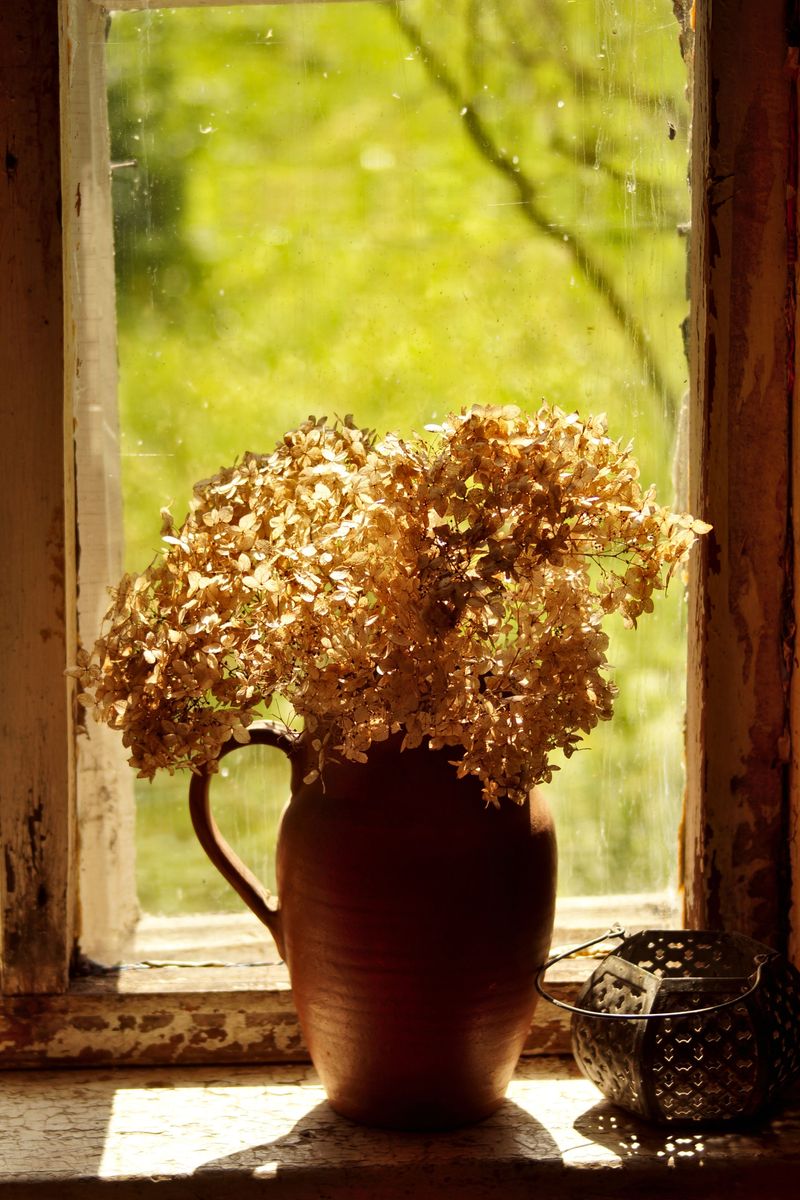
Grandma’s porch had a bucket of faded hydrangeas each October. Those dusty pink and green blooms still feel like a warm hug.
Hydrangeas grow widely in New Jersey, from shore towns to northern suburbs. By fall, their flowers shift into soft antique tones that dry beautifully.
Timing matters when cutting them. Wait until the petals feel papery and slightly stiff on the shrub.
Snip stems about twelve to eighteen inches long. Strip away the leaves so the blooms dry evenly without wilting.
Place the stems in a vase with an inch of water. Let the water evaporate slowly over a week or two.
Your New Jersey Garden Changes Every Week. Your Plan Should Too.
Gardening in New Jersey changes quickly throughout the season. Every Friday you’ll receive a simple weekly plan showing exactly what to plant, prune, fertilize, harvest, and protect so you never miss the right timing.
Another method is hanging bundles upside down in a dark closet. Tie them with twine and leave them for about two weeks.
Bigleaf types turn rosy, purple, or blue-green as they age. Panicle varieties like Limelight fade to creamy blush and burgundy shades.
Display dried blooms in a crock, basket, or old watering can. They also tuck nicely into wreaths and window boxes.
Keep them out of heavy rain, though. A covered porch spot protects their delicate petals from soaking through.
A dried bunch can last for months indoors after the season. Many folks bring them inside for holiday tables.
Leave some blooms on the shrub through winter. They catch snow prettily and, on bigleaf types, protect next year’s buds.
Cut a few extra stems for gifts this season. A small bundle tied with ribbon makes a thoughtful present for a neighbor who admires your lovely porch.
3. Ornamental Grasses Adding Swaying Texture
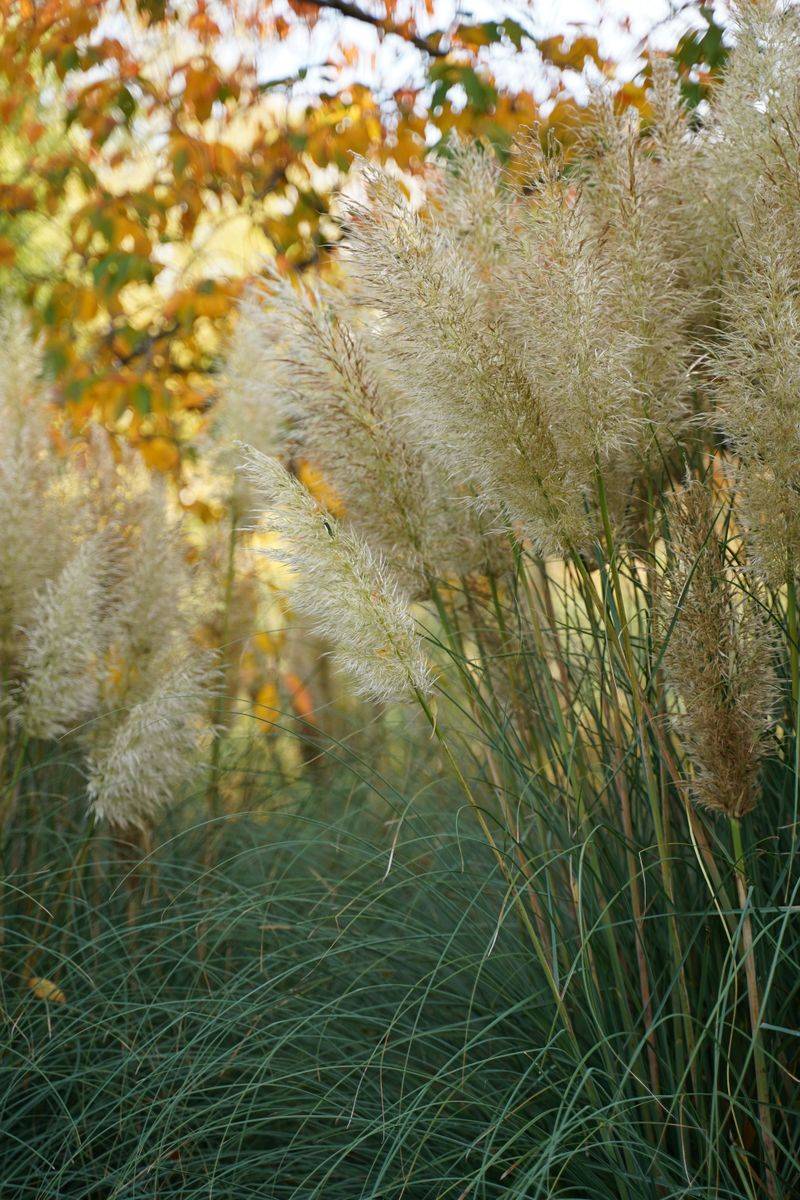
Ever notice how grass plumes glow at sunset? That golden shimmer is a warm October glow on a porch.
Ornamental grasses hit their peak right now in Garden State yards. Miscanthus, switchgrass, and little bluestem all show off feathery tops this month.
Little bluestem and switchgrass are native to New Jersey. Switchgrass handles our clay soil and humid summers well, while bluestem wants drainage.
Cut a handful of stems with sharp pruners. Choose plumes that are fully open but not shedding fluff yet.
Cut miscanthus plumes before the seeds mature, since it can self-seed and spread into wild areas.
A quick spritz of unscented hairspray can help hold the seeds in place. It keeps your porch from turning into a fuzzy mess.
Bundle the stems with jute twine for tall, rustic sheaves. Stand them in empty planters or lean them beside the door.
Pair a tall clump with pumpkins. The height contrast draws the eye straight to your front door.
Mix grass with cornstalks for a classic farm-stand look. The contrast between thin plumes and wide leaves is lovely.
Grasses move with each breeze, adding gentle life to your entry. Even a still porch feels a bit more lively.
Leave most of the plant standing in the garden. Birds love the seeds, and hollow stems shelter helpful insects all winter.
Trim the clumps back in late winter. New green shoots will push up soon after. Short on space? A single potted grass by the steps still delivers big seasonal texture.
4. Hardy Mums In Rusty Autumn Colors
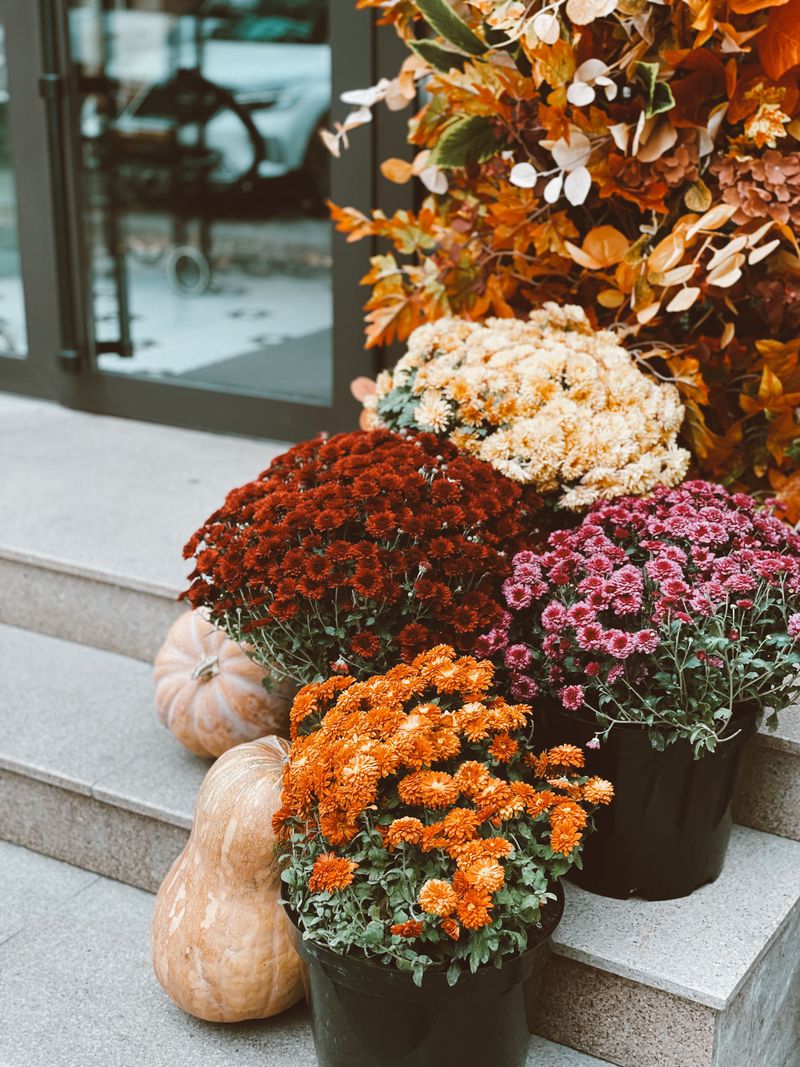
Few plants signal autumn like a mum covered in rusty orange flowers. Grow your own, and you skip the crowded garden center lines.
Hardy garden mums are perennials in New Jersey, unlike many florist types. Planted in spring, they return year after year with bigger mounds.
The secret is pinching them back during early summer. Snip the tips every few weeks until mid-July for bushy plants.
By October, those pinched plants fill with blooms. Colors range from buttery yellow to deep wine red.
Dig a clump carefully and pot it up for the porch. Water it well right after moving to reduce stress.
Mums drink a lot, especially in sunny spots. Check the soil daily and water when the top inch feels dry.
Pick plants with lots of tight buds instead of full blooms. They will keep flowering for several more weeks.
Pair mums with pumpkins and gourds for a cheerful scene. Clay pots or wooden crates suit the cozy farmhouse feel.
Plant mums in the garden now. Mulch them thickly so roots can settle in before the ground freezes.
Leave the old stems standing through winter. They help protect the crown from freezing temperatures. Divide large clumps every few springs. You will end up with plenty to share with neighbors.
Choose a spot with at least six hours of sun. Shade leads to leggy stems and fewer flowers by October.
Remove spent blooms through the season. Fresh buds then open steadily to replace the faded ones on each plant.
5. Bittersweet Alternatives And Berry Branches
A quick note before we talk berries. Oriental bittersweet looks pretty but spreads readily through New Jersey woods.
Hanging it on your door can scatter seeds across the neighborhood. Birds carry them far, and the vine overwhelms native trees.
Thankfully, native shrubs offer gorgeous berry branches instead. Winterberry holly is a standout with bright red fruit clusters.
Winterberry drops its leaves in fall, leaving bare stems loaded with color. Cut branches look striking in tall urns or crocks.
Remember that winterberry needs a male plant nearby to make berries. One male can serve several female shrubs.
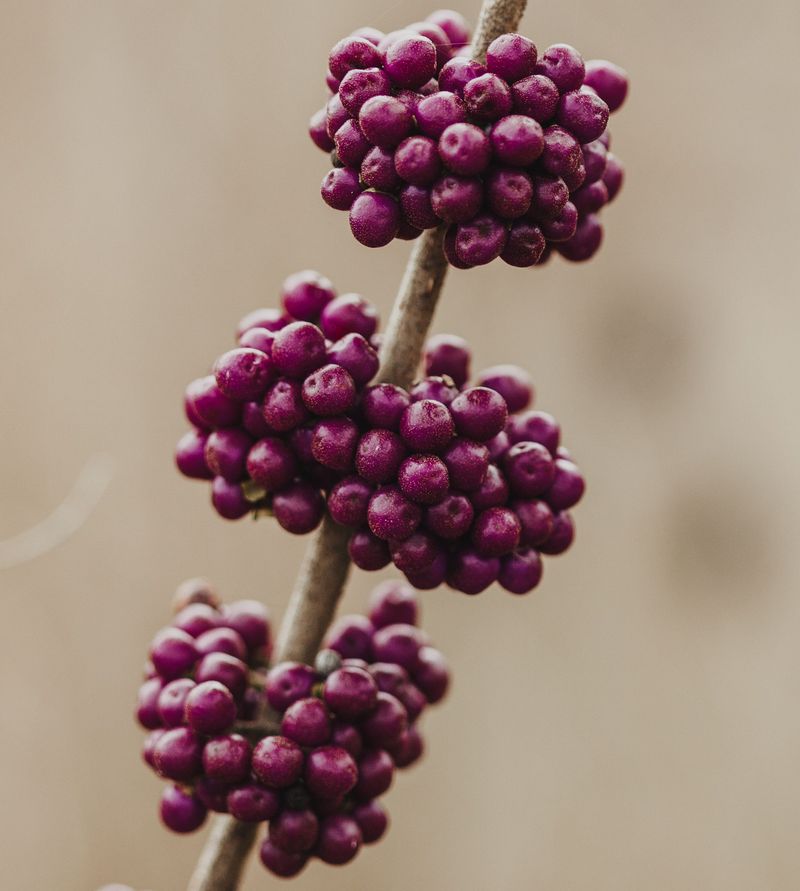
Beautyberry is another eye-catching choice, though non-native. Its clusters of purple berries look striking in the garden.
Black chokeberry and arrowwood viburnum also produce dark fruit this time of year. Their leaves turn fiery red and add even more drama.
Cut branches on a cool morning. Place them in water right away to keep berries plump. Arrange stems in groups of three or five for balance. Mix them with dried grasses for a layered look.
Try to leave plenty of fruit on the shrubs. Robins and cedar waxwings count on those berries through winter.
Choosing mostly native plants feels good for your porch and local wildlife. Your display becomes a small gift to the ecosystem.
Place cut branches in a heavy container so tall stems stay upright in wind. Pebbles or sand at the bottom add weight. Check the berries weekly, since hungry birds may strip a branch bare within just a few days.
6. Harvest Cornstalks And Sunflower Heads
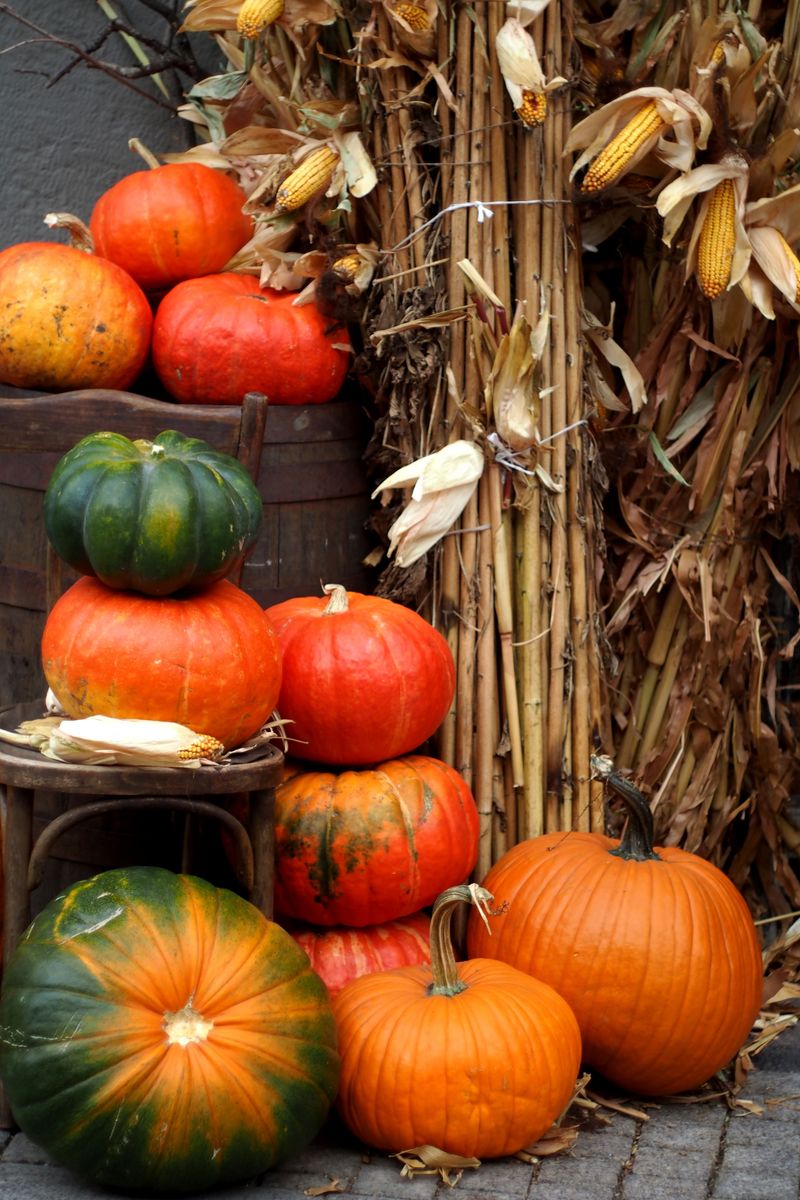
Remember those summer sunflowers that towered over the fence? Their dried heads now make fantastic porch decorations.
Sweet corn and sunflowers both grow well in New Jersey gardens. After harvest, their stalks turn a soft tan perfect for fall.
Cut cornstalks near the base once they dry out. Bundle five or six together with sturdy twine.
Tie the bundles to porch posts or railings. They instantly give your entry that classic farm-stand feel.
Secure tall bundles with a hidden zip tie or wire at the base. Wind can topple loose stalks and scatter husks across the steps.
Sunflower heads need a little extra attention. Cut them once the backs turn yellow-brown and petals droop.
Hang the heads upside down in a dry garage for a couple of weeks. Good airflow helps prevent mold.
Display them in baskets, on wreaths, or wired to stalk bundles. Their spiral seed patterns look like natural artwork.
Birds will likely find your sunflower heads eventually. Goldfinches and chickadees love pecking out the seeds.
Consider that a bonus feature rather than a problem. Watching birds visit your porch adds cheerful movement and sound.
Add a few ornamental corn ears with colorful kernels. Peel the husks back and tie them with raffia for a rich, multicolored accent by the door.
Straw bales from local farms round out the scene nicely. Set pumpkins and mums on top for height.
Once November ends, compost the stalks or chop them for mulch. Little goes to waste in this cozy display.
7. Colorful Leaves And Seed Pods Turned Into Natural Wreaths

Crunch, crunch, crunch. A walk across the lawn this month can hand you free wreath supplies.
New Jersey maples, oaks, and sweetgums turn brilliant shades in October. Red, gold, and burgundy leaves make striking door decorations.
Pick leaves soon after they fall, while still flexible. Dry, crumbly leaves will break apart on your wreath.
Press them between heavy books for a few days first. You can also brush them with a thin coat of glue-and-water mix.
Start with a grapevine wreath base, homemade or store-bought. Wild grapevine works nicely, but identify it first, since poison ivy and bittersweet look similar.
Tuck stems into the vine or attach them with hot glue. Work in small clusters for a full, natural look.
Seed pods add wonderful shape and texture. Try milkweed pods, sweetgum balls, coneflower heads, and acorns.
Pinecones from backyard evergreens bring a woodsy touch. Bake them at 200°F for 30 to 45 minutes to remove hidden bugs.
Hang your wreath on a covered door if possible. Rain and strong wind can wear it down quickly.
Finish with a loop of ribbon or twine at the top. A sturdy hanger keeps the weight balanced on the door.
Spritz the finished wreath with clear sealer. That coat slows fading and helps leaves hold their color through November.
Kids love helping with this project. Send them on a leaf hunt and let them pick favorite colors. Each wreath ends up one of a kind. No two backyards give exactly the same treasures.
8. Herb And Kale Living Planters
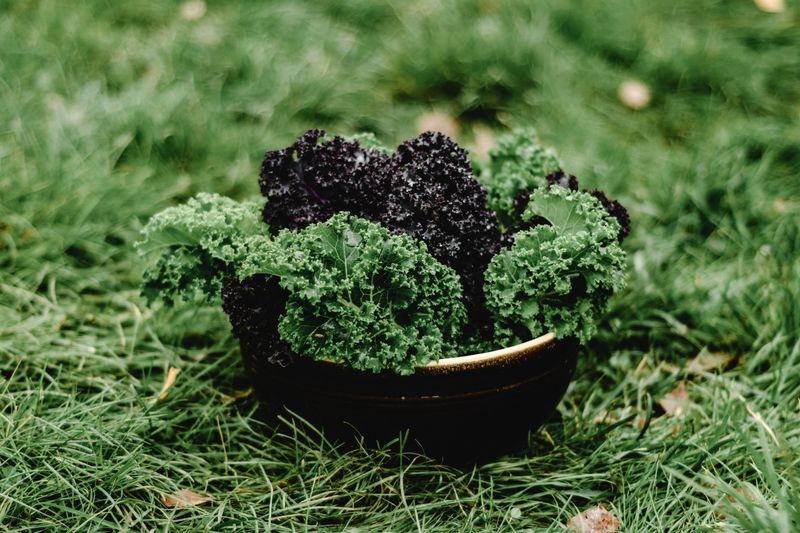
Who says porch planters must only hold flowers? Your herb garden and veggie beds can bring cool-season beauty right to the door.
Ornamental and edible kale love New Jersey’s chilly October nights. Their colors actually deepen as temperatures drop.
Dig up a few kale plants from the garden with plenty of soil. Pot them into containers and water deeply.
Purple and frilly varieties look especially dramatic. Lacinato kale adds a dark, bumpy texture that catches the eye.
Herbs like sage, thyme, and rosemary also fit in nicely. Purple sage and golden oregano offer soft, earthy tones.
Mix these plants in large containers for a lush arrangement. Put the tallest plant in the center and trailing herbs at the edges.
Choose containers with drainage holes. Soggy roots rot quickly in cold autumn rain, so raise pots on small feet.
Water in the morning so leaves dry before evening. Use a light potting mix, and feed lightly, because cool weather slows plant growth.
The scent is a wonderful surprise for guests. Brushing past rosemary releases a fresh, piney smell.
Snip herbs for cooking while they decorate your porch. Sage pairs perfectly with roasted squash on chilly evenings.
Kale and hardy herbs often survive light frosts. Many will look good well into December here.
Bring rosemary indoors once nights dip below the mid-twenties. It struggles with cold New Jersey winters outside.
Add small pumpkins or pinecones around the soil for finishing touches. Your planter becomes both pretty and practical.