What’s Behind New Jersey’s Loudest Katydid Chorus Of The Year
Dusk drops, and a wave of sound rolls over your porch. Your neighbors credit the humidity or a soggy summer stretch. Insects hidden in your oaks are actually running the show.
Tiny bodies vibrate together somewhere above your driveway right now. New Jersey turns into your loudest stage each September night. Heat alone cannot explain a chorus this loud around you.
Biology, not weather, drives this buildup toward its yearly peak. You feel it in your chest before your ears register it. Katydids across New Jersey hit their sharpest, loudest window right now.
This racket might convince you that something unusual is unfolding outside. Reality flips that assumption on its head instantly. Males sing loudest, while females quietly judge each note.
Louder males often win, so competition drives the volume higher nightly. Temperature, timing, and population size push the noise upward together. A single truth ahead makes stopping now impossible.
Peak Season Timing Hits Its Stride
Timing explains a lot. The insects making all that noise hatched back in late spring as tiny nymphs, and they spent June and July eating leaves and growing through several molts.
By late August and early September, that whole generation has finally reached adulthood at roughly the same time. Adults are the only ones with working sound-producing wings, so the volume jumps once the population crosses that finish line together.
Think of it like a school choir where the singers arrive one by one over three months. For a while you hear scattered voices, then one week the whole group is standing on the risers at once.
New Jersey sits in a sweet spot for this. Warm, humid Augusts followed by mild early-September nights give the insects a long runway to mature without cold snaps cutting things short.
Homeowners often notice the shift almost overnight. One evening the yard is quiet enough for crickets, and by the weekend the oaks carry a steady, buzzing chorus.
The window does not last forever. Once nights slide into the forties, the chorus thins out and slows down, which is why early September tends to be the loudest stretch on the calendar.
If you want to enjoy it, plan an evening on the patio during the second or third week of the month. Bring a flashlight, look up into the higher branches, and you may spot a leaf-shaped singer clinging to a twig.
Warm Nights Turn Up The Tempo

Temperature acts like a volume knob and a speed dial at the same time. These insects are cold-blooded, so their muscles fire faster when the air is warm.
On a sticky 80-degree evening, the wing-rubbing rhythm speeds up and the calls stack closer together. Drop that to 60 degrees and the same insect sounds sluggish, like a record played at the wrong speed.
Scientists have used crickets for this trick for over a century, counting chirps to estimate air temperature. Katydids follow similar rules, which is why a humid New Jersey night sounds so much busier than a cool one.
Your New Jersey Garden Changes Every Week. Your Plan Should Too.
Gardening in New Jersey changes quickly throughout the season. Every Friday you’ll receive a simple weekly plan showing exactly what to plant, prune, fertilize, harvest, and protect so you never miss the right timing.
Humidity plays a supporting role too. Moist air carries sound a bit differently, and damp conditions keep the insects active longer instead of sending them into hiding.
Early September in the Garden State often delivers exactly that combination. Days still run hot, the ocean keeps moisture in the air, and nights stay mild well past midnight.
You can test the effect yourself without any equipment. Listen from your porch on a muggy evening, then listen again after a cold front sweeps through, and the difference in tempo is easy to hear.
Gardeners sometimes worry the noise signals trouble. In reality, a fast chorus mostly tells you the weather has been generous, and the insects are simply making the best of the season while conditions hold.
Wings, Not Mouths, Make The Music
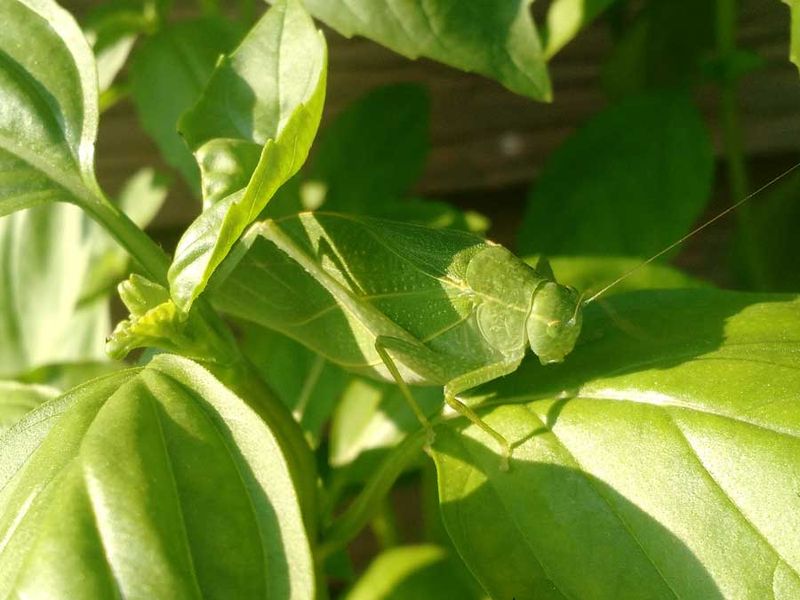
Here is the part that surprises people at backyard barbecues. The sound has nothing to do with mouths, throats, or vocal cords.
Katydids rub their forewings together in a process called stridulation. One wing carries a ridged file, a bit like the teeth on a comb, and the other carries a hardened scraper edge.
Dragging the scraper across the file creates vibration, and a thin patch of wing called the mirror amplifies it into that raspy broadcast. The whole setup works like a tiny violin with a built-in speaker.
The classic northeastern species produces a three-part call that early naturalists heard as the words katy-did. Others deliver a steady buzz, a series of ticks, or a lisping rattle depending on their wing shape.
Females usually stay silent in the true katydid group, though some species answer with a quick click. That back-and-forth helps males locate a mate in a dark canopy full of leaves.
Ears sit in an odd place as well. Katydids hear through slits on their front legs, just below the knee joint, which lets them pinpoint sound direction with surprising accuracy.
Next time you hear the rattle overhead, picture a wing sawing back and forth dozens of times per second. It makes the racket feel less like noise and more like a precise sound-making mechanism.
Mating Season Runs Short
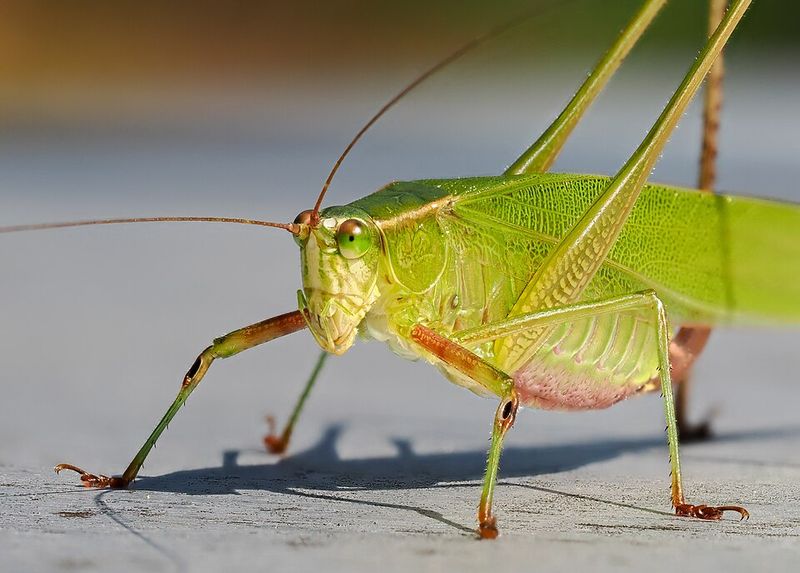
Urgency drives the whole performance. Adult katydids have a short window to find mates, and that window closes as autumn settles in.
Males call to advertise their location and their fitness. A louder, steadier, more persistent singer stands a better chance of attracting a female moving through the branches.
Competition ramps up the volume even further. When one male hears a rival nearby, he adjusts his timing to avoid being drowned out, and the result is a rolling wall of sound rather than random noise.
Researchers have recorded groups falling into loose synchrony, with calls rippling across a stand of trees like a stadium wave. That coordination makes the chorus carry much farther than any single insect could manage alone.
Females lay flat, seed-shaped eggs along twigs, bark crevices, or leaf edges before the season turns. Those eggs sit tight through winter and hatch the following spring, restarting the cycle.
So the September racket is really the final phase of the yearly cycle. The insects are wrapping up their business before cold weather changes the rules.
Knowing that tends to shift how the sound lands. Instead of hearing an annoyance outside the bedroom window, you are listening to a seasonal cycle wrapping up, one wing stroke at a time.
Tree Canopies Act Like Concert Halls

Location matters as much as the performers. Katydids favor the upper canopy of hardwood trees, especially oaks, maples, and other broadleaf species common across New Jersey.
Leaves reflect and scatter sound, so a dense canopy bounces those calls around instead of letting them escape straight up. The effect turns a mature street tree into something like an outdoor amphitheater.
Suburban neighborhoods often amplify things further. Houses, fences, garages, and paved driveways all reflect sound back toward ground level, which is why the chorus can feel louder on a residential block than in open farmland.
Towns with old shade trees along the sidewalks, especially in older suburban neighborhoods, tend to get the strongest effect.
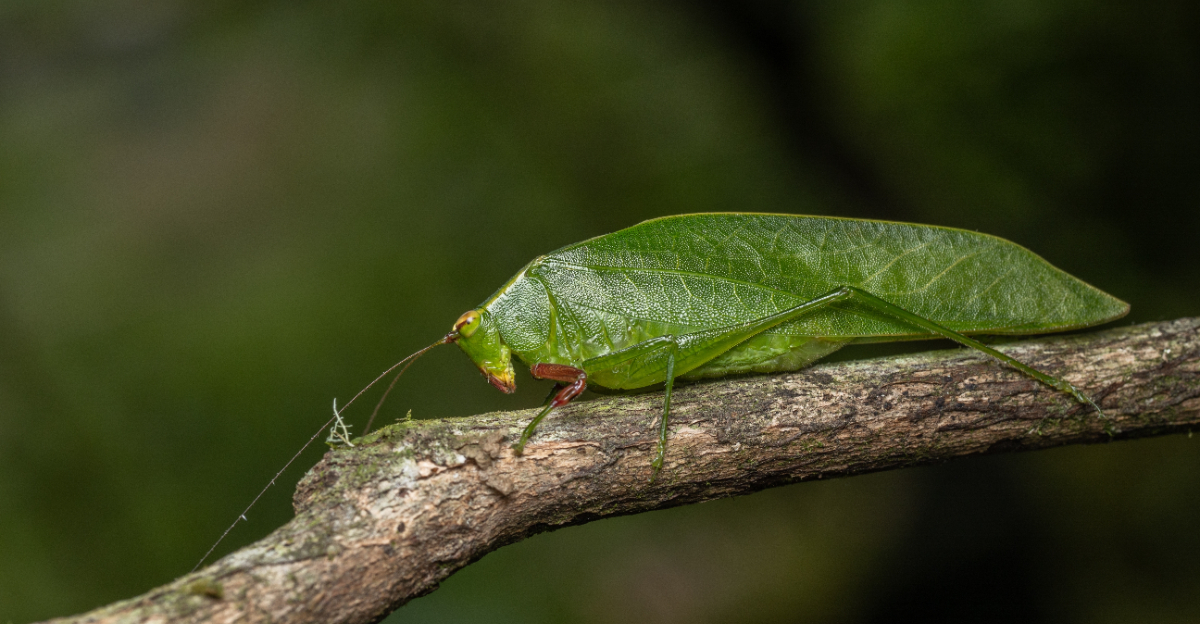
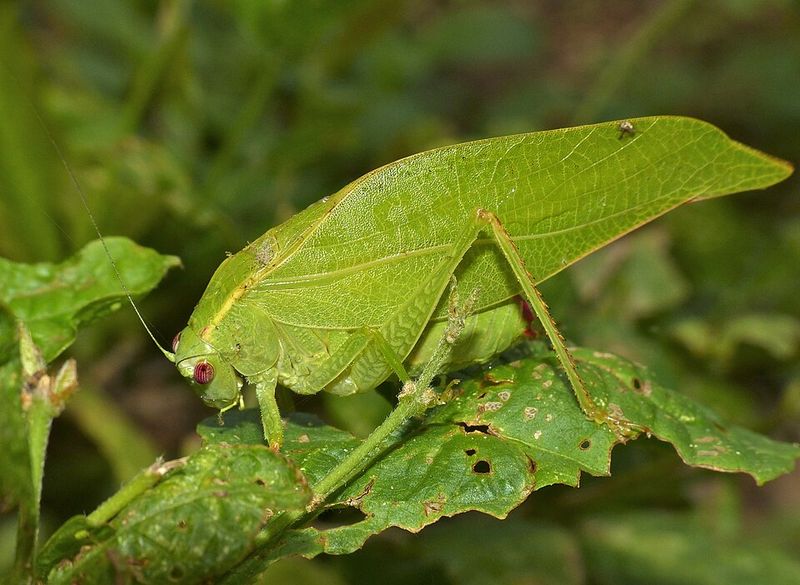
Green camouflage keeps the singers hidden the entire time. Their bodies mimic leaves right down to the vein patterns, so you can stare at a branch for a full minute and still miss one sitting there.
Spotting them takes patience and a decent flashlight. Scan slowly along the undersides of leaves, and watch for the long antennae, which stretch out well past the body and give the insect away.
If your yard has mature trees, consider the noise a small compliment. Layered, leafy habitat supports plenty of wildlife, and a busy September soundtrack suggests the canopy overhead is doing its job.
A Wet Summer Set The Stage
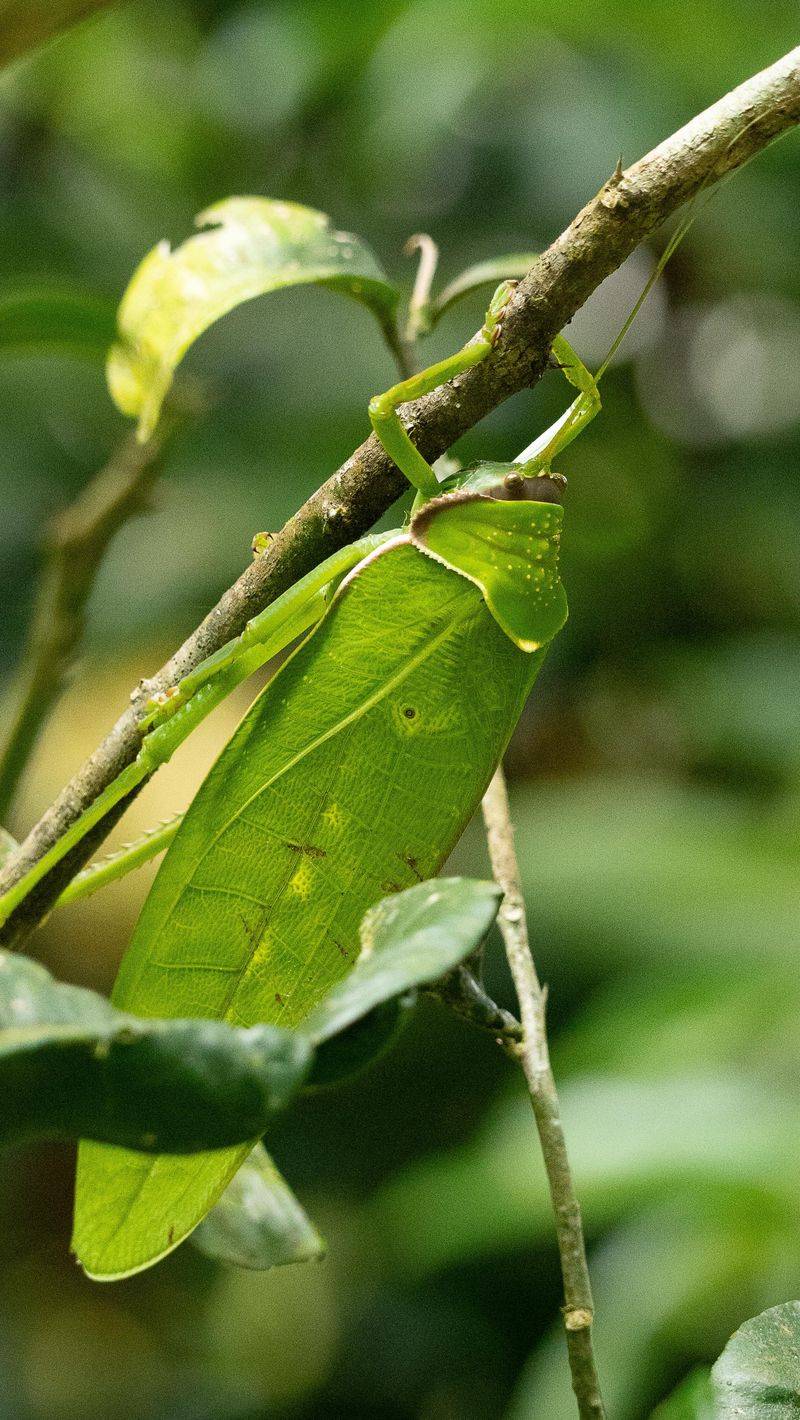
Rainfall from months earlier shows up in the September soundtrack. Katydids feed on leaves, flowers, and tender plant growth, so a well-watered summer means better meals during the nymph stage.
Well-fed nymphs survive at higher rates and reach adulthood in stronger condition. More surviving adults simply means more singers in the trees when peak season arrives.
Lush growth also provides cover from birds, spiders, and paper wasps. Thick foliage gives a slow-moving green insect plenty of places to hide during daylight hours.
New Jersey summers with steady thunderstorms tend to produce noticeably busier autumn choruses. Dry, baked seasons usually deliver a thinner sound because fewer nymphs made it through.
Gardeners occasionally spot chewed leaf edges and wonder what happened. In most home landscapes, katydid feeding is light and scattered, leaving ragged notches rather than stripping a plant bare.
Ornamental shrubs, roses, and fruit trees can take a bit of cosmetic nibbling without lasting harm. Healthy plants push out new growth and move on without much fuss.
If damage bothers you, hand-picking at night with a flashlight works well and skips any spraying. Row covers over young vegetable beds also help during the peak feeding weeks.
Mostly, though, the chewing goes unnoticed until the singing starts. The chorus is the loud reminder that a whole population has been quietly growing up in your landscape all summer.
What The Racket Says About Your Yard
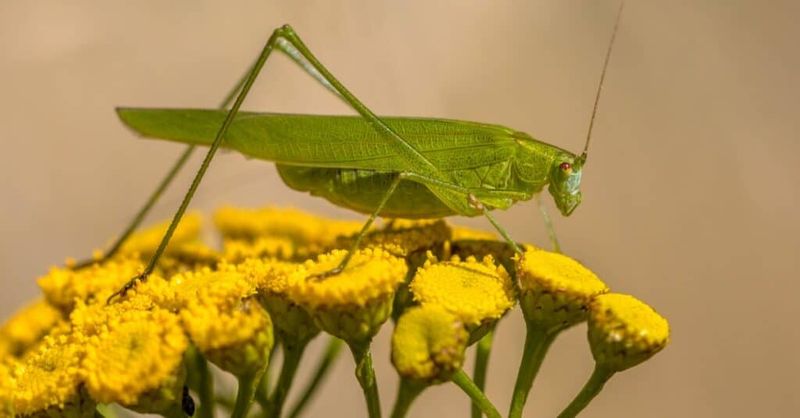
Consider the chorus a simple indicator of habitat health on your property. Insects that need leafy trees, layered shrubs, and pesticide-light conditions do not show up in large numbers where habitat is poor.
Katydids also sit in the middle of the food web. Bats, screech owls, tree frogs, and songbirds all rely on large night-flying insects, so a strong chorus supports the animals you actually enjoy seeing.
Reducing bright outdoor lighting helps more than people expect. Harsh floodlights disrupt night insects and the predators that hunt them, while warm, shielded fixtures cause far less disturbance.
Leaving a few native shrubs and letting a back corner grow a little wild pays off quickly. Even a small unmanicured patch gives insects room to feed and lay eggs.
For light sleepers, simple fixes work fine. A window fan, a white noise machine, or closed windows on the tree-facing side of the house usually smooth out the sound.
Kids tend to love the whole thing once they understand it. Try counting call rhythms together or recording the sound on a phone and comparing it week to week as temperatures drop.
Once nights consistently dip into the forties, usually by mid-October, the volume fades and the yard goes quiet again. Enjoy the concert while it lasts, because those eggs tucked into your twigs are already waiting on next spring.