These 7 Pruning Mistakes Are Why Your Arizona Bougainvillea Stopped Blooming
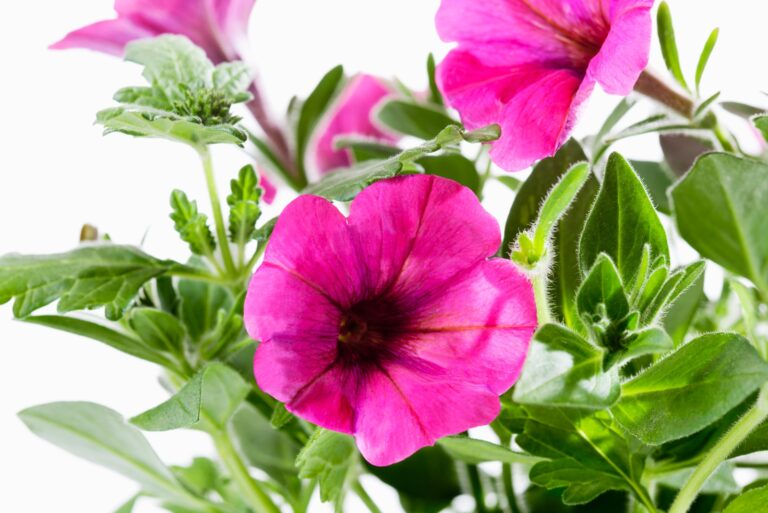
Your bougainvillea was a wall of hot pink last spring, and now it is mostly green leaves. In the low desert, that sudden color drop usually comes down to how and when the plant was cut.
Bougainvillea is tough enough to shrug off 110 degree days, but the wrong snip at the wrong moment can wipe out months of flowers. Here are the seven most common pruning slip-ups in Phoenix and Tucson yards, plus simple fixes to bring the blooms back.
1. Pruning at the Wrong Time of Year
Picture a sunny January afternoon in Mesa. The weather feels perfect, the shears are sharp, and that leggy bougainvillea is begging for a haircut.
So out come the clippers, and two weeks later a cold snap browns every tender new shoot.
Bougainvillea flowers on fresh growth, so timing your big cut matters more than almost anything else. A hard prune in early winter pushes out soft stems right when the low desert can still dip near freezing.
Those shoots get nipped, the plant spends energy repairing itself, and your spring color shows up late or barely at all.
In Phoenix and Tucson, the sweet spot for major pruning usually falls between mid-March and early April. By then frost risk has passed, the soil is warming, and the plant is ready to grow fast.
Cuts made in this window can lead to a strong flush of bracts by late spring.
A simple rule helps here. Wait until nighttime temperatures stay comfortably above 40 degrees for a couple of weeks before doing anything dramatic.
Patience in February can pay off with a much brighter April, and your vine will be better prepared to handle the summer heat that follows soon after.
2. Cutting Back Too Late in the Growing Season
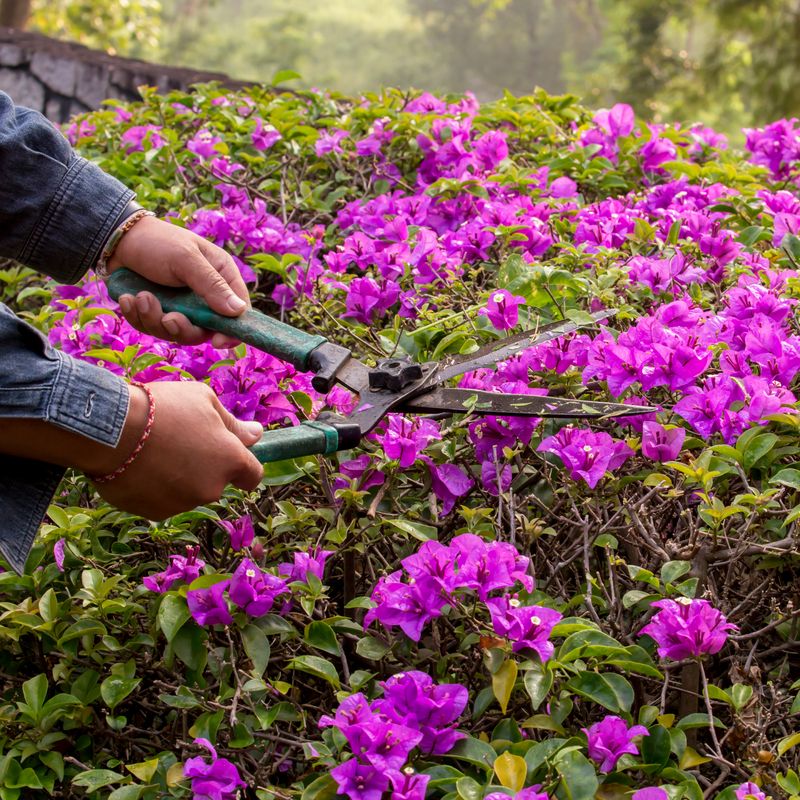
Ever trimmed a bougainvillea in June and wondered why the next round of color never came? You may have snipped off the show before it started.
Those tiny pointed clusters at the stem tips are future bracts, and they form surprisingly fast.
Once the plant is actively growing in late spring and summer, it is busy setting buds on new wood. A heavy cut during that stretch removes the very growth that was about to flower.
Instead of color, you get weeks of leafy regrowth while the plant tries to start over.
Summer pruning in the low desert has another downside. Freshly exposed stems and inner leaves can sunburn when temperatures climb past 105, which adds stress to a plant already working hard to stay hydrated.
Stressed vines tend to hold back on blooms.
If something truly needs attention mid-season, keep it small. Trim only branches blocking a walkway or scraping the house, and leave the rest alone.
Save shaping for the next spring window or a light touch-up after a bloom cycle fades. Your bougainvillea will reward that restraint with steadier waves of color through the warm months, and it can keep providing shade and shelter for lizards and small birds.
3. Going Too Hard With the Shears
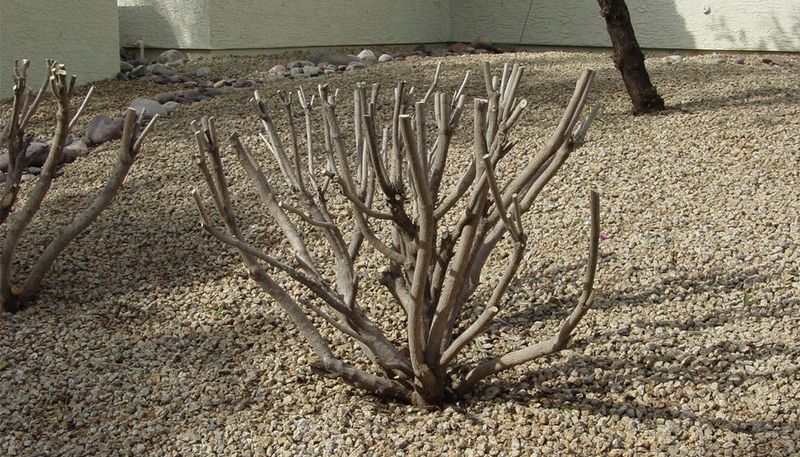
Some neighbors treat bougainvillea like a hedge that needs a buzz cut. A few hours of enthusiastic chopping later, the once-lush vine is a bundle of bare sticks.
Your Arizona Garden Changes Every Week. Your Plan Should Too.
Gardening in Arizona changes quickly throughout the season. Every Friday you’ll receive a simple weekly plan showing exactly what to plant, prune, fertilize, harvest, and protect so you never miss the right timing.
It feels satisfying in the moment, but the plant pays a steep price.
Removing more than about half of the total growth at once shocks the plant. It has to rebuild roots and foliage balance before it thinks about flowering again.
That recovery can eat up an entire season, especially in alkaline, caliche-heavy soil where nutrients are already hard to reach.
Heavy cuts also strip away the leafy canopy that shades the trunk and soil. In Arizona sun, that exposure can scorch bark and dry out the root zone faster, which means more watering and more stress.
The smarter approach is moderate and steady. Take off roughly a third of the growth during the spring window, focusing on crossing, crowded, or wayward stems.
Then follow up with smaller trims as the season moves along. Think of it like a series of light edits rather than one dramatic rewrite.
The plant stays vigorous, water use stays reasonable, and those papery bracts keep coming in bold magenta, orange, and red.
4. Skipping Regular Pruning Altogether
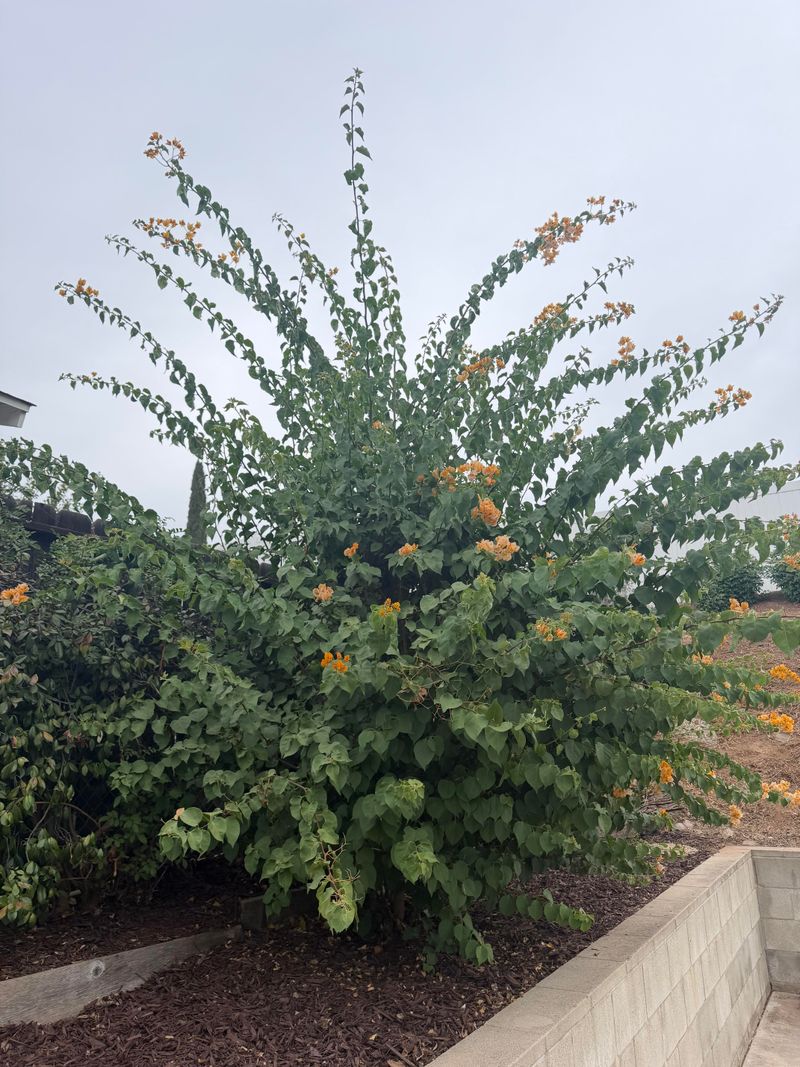
On the flip side sits the hands-off gardener. Maybe the thorns are intimidating, or life simply got busy.
Either way, the vine has swallowed half the block wall and turned into a dense green tangle with color only at the very edges.
Left alone, bougainvillea tends to pour energy into long, leafy runners. Old interior wood gets shaded out and stops producing much of anything.
Without fresh stems, there are fewer places for bracts to form, so the flower display shrinks year after year.
Thick, untouched growth can also become a cozy hideout. Packed branches near the ground and against walls may give scorpions and pack rats shelter close to your home.
Opening up the base and keeping stems off the house can make that area less inviting to unwanted guests.
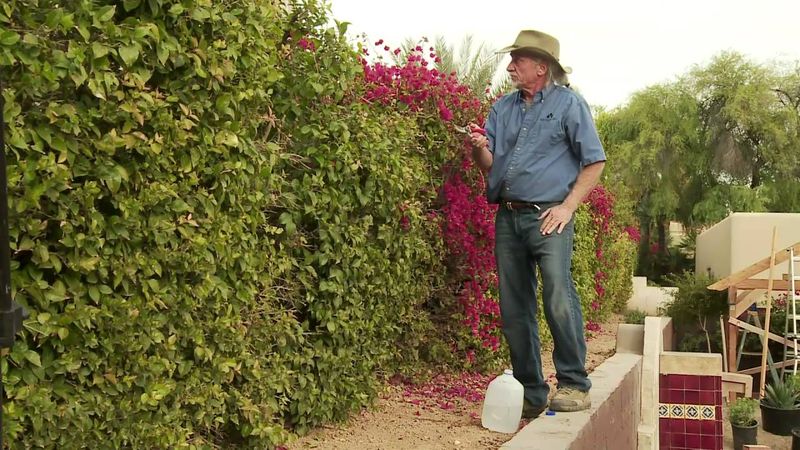
A once-a-year shaping session, plus occasional thinning, keeps things in balance. Remove some of the oldest, woodiest canes at the base and clear out anything growing inward.
Light reaches the center again, new shoots appear, and blooms spread across the whole plant instead of clinging to the tips. Wear thick gloves and long sleeves, since those thorns are no joke.
5. Ignoring Light Tip Trims After Each Bloom Cycle
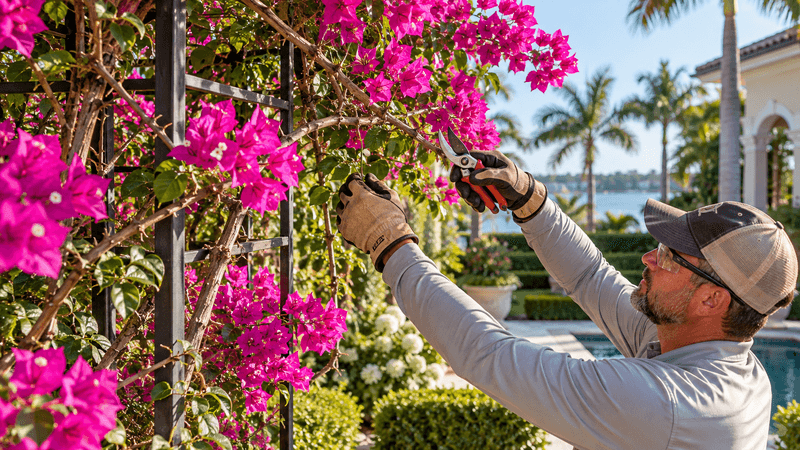
Here is a little secret desert gardeners love sharing: bougainvillea does not bloom just once. It flowers in waves through the warm season, resting between flushes.
A quick trim at the right moment can nudge it into the next performance.
After a round of color fades, snip or pinch the soft tips of new growth back a few inches. That small cut encourages side branching, and more branches mean more spots for bracts.
It takes minutes, not hours, and the plant barely notices the effort.
Skipping this step lets stems keep stretching in long, leafy whips. You end up with a lanky vine and longer gaps between flushes.
Tip pruning keeps the shape compact and the color coming.
Fun fact: the bright parts most people call flowers are actually bracts, modified leaves. The true flowers are the tiny cream-colored trumpets tucked in the middle.
Those small blossoms may draw in hummingbirds and other pollinators, giving your yard a lively, wildlife-friendly buzz.
Try to do these touch-ups in the cooler morning hours during spring and early fall. In the peak heat of July, keep trims especially light so freshly exposed stems do not sunburn.
6. Removing Frost-Damaged Branches Too Soon
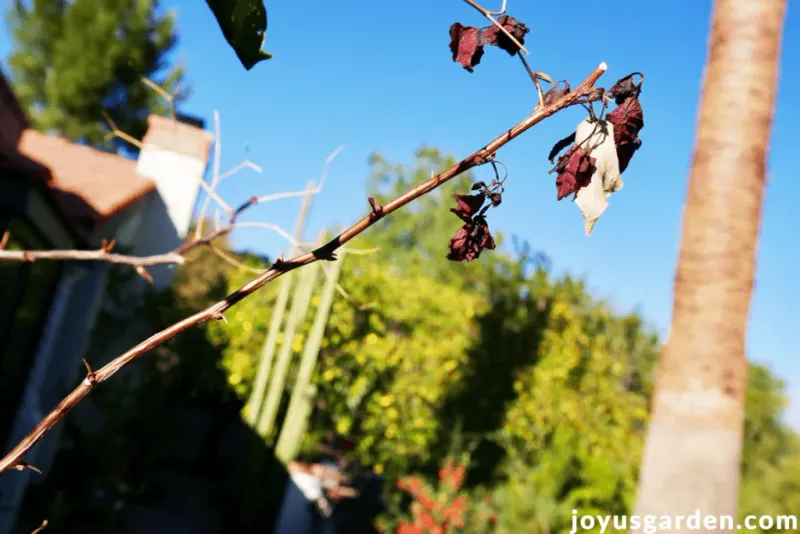
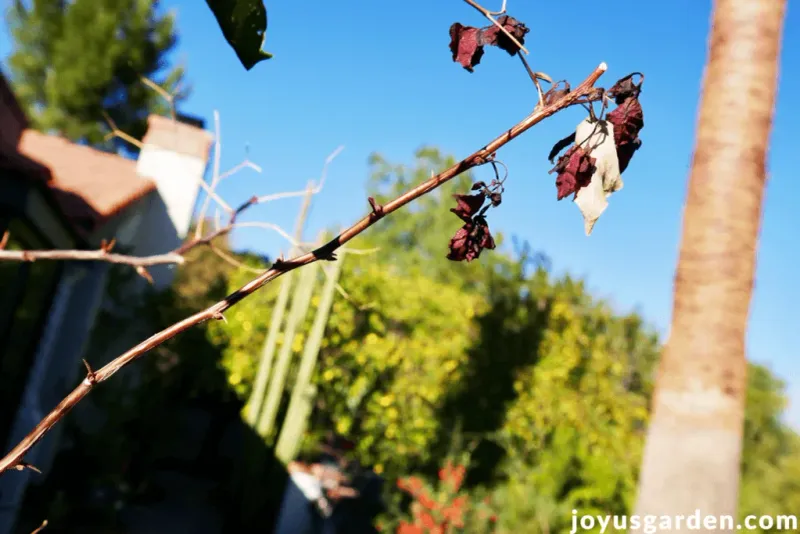
A rare hard freeze rolls through the Valley, and by morning the bougainvillea looks crispy and brown. The urge to grab the loppers and clean it all up is strong.
Hold that thought, because acting fast here often backfires.
Many branches that look lifeless after frost are still very much alive under the bark. Give them time and they often push out fresh leaves once the weather warms.
Cutting them early removes healthy wood you would have kept, and that wood is where future blooms come from.
Those ugly brown leaves also serve a purpose. They act like a blanket, shielding inner stems from the next cold night.
Strip them away in January, and a second freeze can hit exposed growth even harder.
The better plan is to wait until frost danger has fully passed, usually around early to mid-March in the low desert. Watch for new buds, then trim back to just above where green growth appears.
Scratch a stem lightly with a fingernail if you are unsure. Green underneath means it is fine, while brown and brittle means it can go.
Covering the plant with frost cloth on cold nights helps avoid the problem entirely.
7. Using Dull or Dirty Pruning Tools
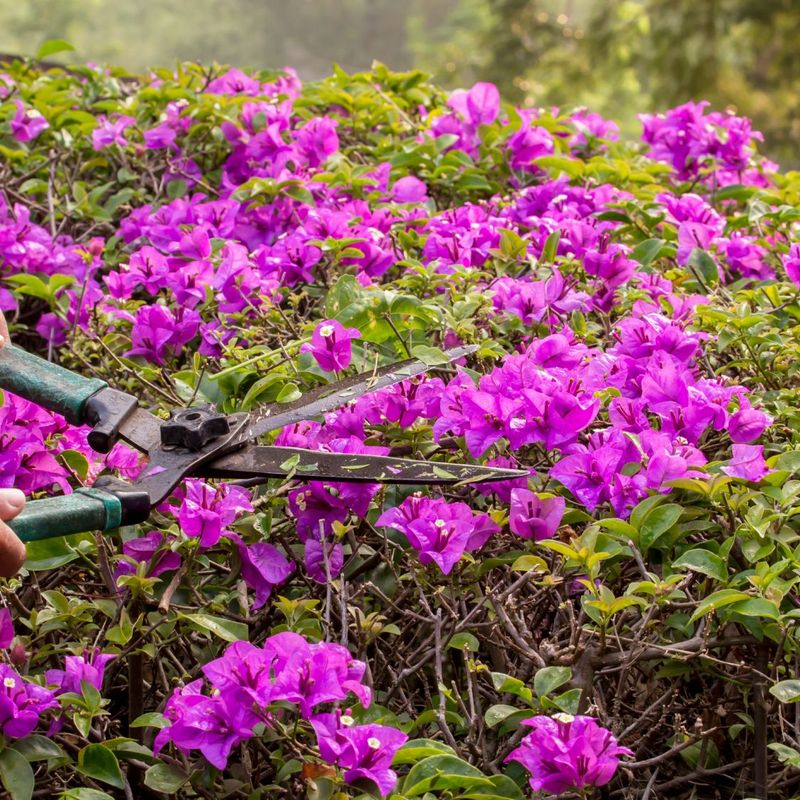
Honestly, the tool in your hand matters just as much as the timing. A rusty pair of shears from the back of the garage might seem good enough, but it can quietly sabotage your blooms.
Dull blades crush and tear stems instead of slicing them cleanly. Ragged wounds heal slowly, leave openings for disease and pests, and force the plant to spend energy on repair.
Over time, that steady drain can mean fewer, smaller flushes of color.
Dirty blades bring their own trouble. Sap, soil, and residue from other plants can carry pathogens from one shrub to the next.
A quick wipe with a household disinfectant between plants helps keep problems from spreading across your yard.
Sharpen your bypass pruners at the start of each season, and keep a sharpening stone handy for touch-ups. Bypass styles cut like scissors and make cleaner cuts on green stems than anvil types.
For thicker, woody canes, use loppers or a small pruning saw instead of forcing hand shears. Angle each cut just above a leaf node so new growth points outward.
Clean, sharp cuts help your bougainvillea bounce back quickly and keep painting your desert yard with color all summer long.