7 Winter Habits That Quietly Invite Roof Rats Into Arizona Attics
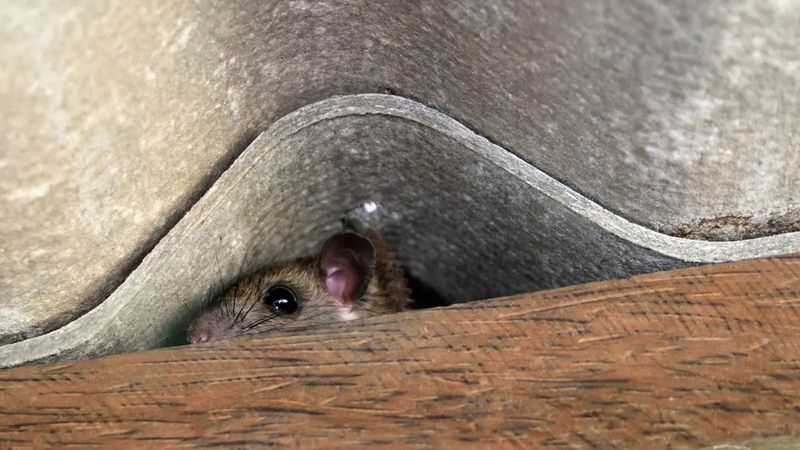
When the desert finally cools off, Arizona homeowners relax, and so do roof rats looking for a cozy place to spend the season. These agile climbers love citrus, warm attics, and the small gaps most of us never notice.
A few everyday winter routines can quietly roll out the welcome mat for them. Here are seven habits worth changing before you hear scratching above the ceiling.
1. Leaving Fallen Citrus on the Ground

Picture a grapefruit tree in a Mesa backyard, branches heavy and a dozen soft fruits rolling across the gravel below. To you, that is a chore for Saturday.
To a roof rat, it is an all-night buffet with no closing time.
Citrus season in the low desert runs right through the cooler months, and roof rats tend to feed on fruit from roughly November through May. They often hollow out oranges while the fruit still hangs on the tree, leaving an empty peel behind like a little calling card.
Fallen fruit is even easier, since rats can eat on the ground and scurry back to cover in seconds.
A steady food supply near your house can encourage rats to settle in close, and the attic is often the nearest warm shelter. Try picking ripe fruit promptly instead of letting it linger for weeks.
Rake up drops every day or two, and bag them rather than tossing them into an open compost pile.
Did you know? A hollowed-out orange still hanging on the branch is one of the most common early clues of roof rat activity in Phoenix and Tucson neighborhoods.
Checking your trees during a morning walk only takes a minute.
2. Letting Branches and Palm Fronds Touch the Roof
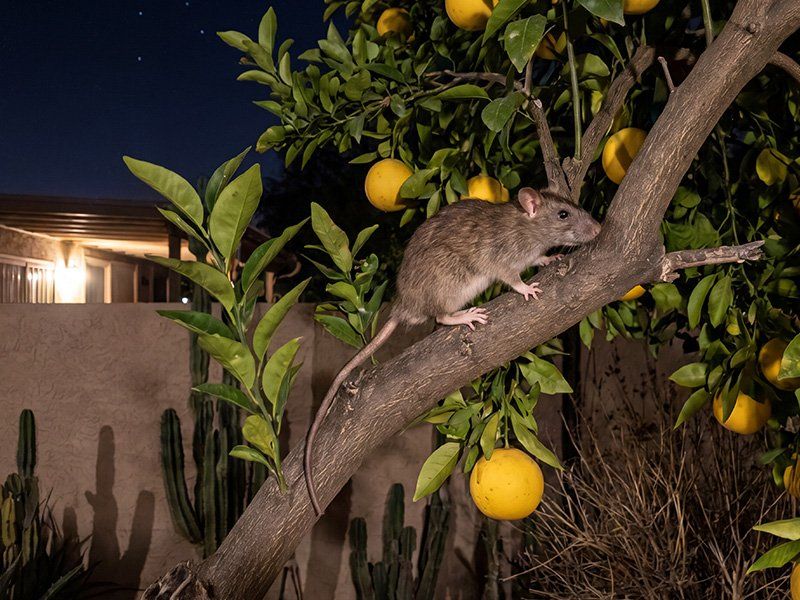
Roof rats are basically tiny tightrope walkers. They can scamper along a thin branch or power line with surprising balance, and they would much rather travel high than cross open ground where hawks and owls hunt.
That is why a mesquite limb resting on your eaves or a shaggy palm skirt brushing the tiles works like a private freeway. Once a rat reaches the roof, it can explore every edge, vent, and lifted tile at its leisure.
Untrimmed palm skirts are a double problem, since the thick layer of dead fronds can also serve as a hidden nest.
Winter is a smart time to tackle this job. Many desert trees, including mesquite and palo verde, handle light pruning well during the mild season before spring growth kicks in.
Aim to keep branches trimmed back several feet from the roofline so rats cannot simply hop across.
For tall palms, it often makes sense to hire a licensed tree crew to remove old fronds safely. The payoff goes beyond pest control, because a cleaner canopy also lowers fire risk and looks tidier from the street.
Fewer bridges to the roof can make your home far less inviting to these climbers.
3. Ignoring Small Gaps Around Eaves and Vents
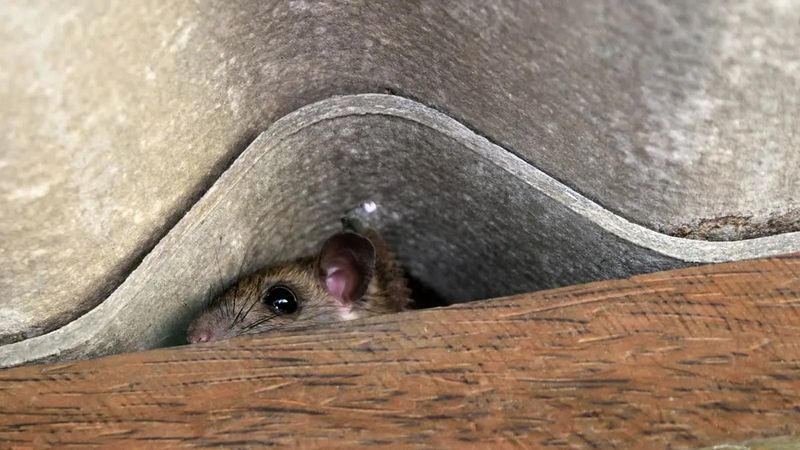
Here is a fact that surprises plenty of homeowners: a roof rat can squeeze through an opening about half an inch wide. That is roughly the size of a quarter.
Your Arizona Garden Changes Every Week. Your Plan Should Too.
Gardening in Arizona changes quickly throughout the season. Every Friday you’ll receive a simple weekly plan showing exactly what to plant, prune, fertilize, harvest, and protect so you never miss the right timing.
If its head fits, the rest of its body usually follows.
Arizona roofs have plenty of spots where gaps quietly form. Clay and concrete tiles can shift over time, especially after monsoon winds.
Soffit returns, roof transitions, and gable vents with torn or rusted screens are favorite entry points, and most of them sit high enough that no one notices.
Grab binoculars or carefully use a sturdy ladder and walk the perimeter on a cool winter afternoon. Look for lifted tiles, gnawed edges, greasy rub marks, and small droppings near the eaves.
Those dark smudges come from oily fur brushing the same path again and again.
Sealing gaps with hardware cloth, metal flashing, or sturdy vent screens tends to hold up better than foam alone, since rats can chew through soft materials. If you already suspect activity inside, a pest professional can make sure no rats get sealed in by accident.
Closing these doors now may save you a noisy spring.
4. Leaving Pet Food and Birdseed Out Overnight
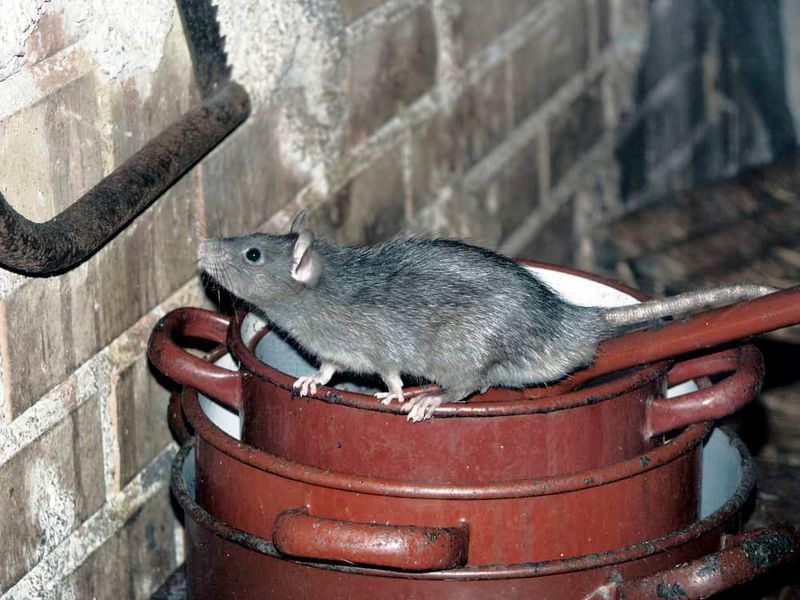
You fill the dog bowl, top off the bird feeder, and head inside to enjoy a mild desert evening. Meanwhile, the night shift arrives.
Roof rats are mostly nocturnal, and an untouched bowl of kibble on the patio is exactly what they hope to find.
Birdseed is just as tempting. Seed that spills under feeders piles up fast, and rats happily pick through it after the finches and doves go to roost.
Bags of seed or pet food stored in a garage or shed can also draw them in, since paper and plastic are easy to chew.
Feeding birds and wildlife is a wonderful part of a habitat-friendly Arizona yard, so you do not have to give it up. A few tweaks can help.
Bring pet bowls indoors at night, and only offer what your animals finish during the day.
For feeders, choose models with seed trays that catch spills, and sweep underneath regularly. Store all feed in metal cans with tight lids.
You might also lean on native plants like penstemon and desert marigold, which feed pollinators and birds naturally without leaving a nightly snack bar on the ground.
5. Overlooking Drips and Standing Water

Water is gold in the desert, and every creature knows it. After monsoon season fades, natural sources dry up quickly, and roof rats start searching for any reliable sip they can find.
Sadly for homeowners, our yards are full of them. A slow drip from a hose bib, a leaky irrigation emitter, a condensate line from the AC, a pet dish left outside, or a bird bath can all keep a rat family hydrated for months.
Even soggy soil in overwatered potted plants can provide moisture.
Think of it this way: if a rat finds food in your citrus tree and water by your back door, your attic starts looking like a fully stocked vacation rental. Cutting off water may help make the whole property less appealing.
Winter is a great time for a quick leak walk. Check faucets, tighten fittings, and repair broken drip lines.
Point AC condensate away from the house foundation, and empty pet dishes at night.
Cooler weather also means most desert plants need far less water, so trimming your irrigation schedule saves money too. Natives like agave and desert willow are happy with little winter watering.
Less puddling means fewer reasons for rats to linger.
6. Keeping Dense Shrubs and Debris Piles Near the House

Ever notice how that stack of firewood by the side gate never seems to shrink? Roof rats notice too, and they consider it prime real estate.
Woodpiles, old lumber, stored pots, and leaf debris offer dark, quiet spaces where rats can rest during the day.
Thick shrubs pressed against your walls create the same effect. Overgrown oleander hedges, tangled bougainvillea, and untrimmed palms give rats safe tunnels to travel from the yard to the house without being spotted.
From there, it is a short climb to the roof.
Winter firewood stacks are especially sneaky, since many Arizona families only use fireplaces or fire pits for a few chilly weeks. Store wood on a raised rack at least a foot off the ground and well away from exterior walls.
Thin dense plantings so you can see the soil beneath, and leave a clear gap between shrubs and the house. Clutter in side yards should be hauled off or neatly organized on shelves.
An open, airy landscape also helps natural predators do their thing. Owls and roadrunners can spot movement more easily when rats have fewer hiding places, which may help keep numbers in check.
7. Forgetting to Seal Utility Line Openings
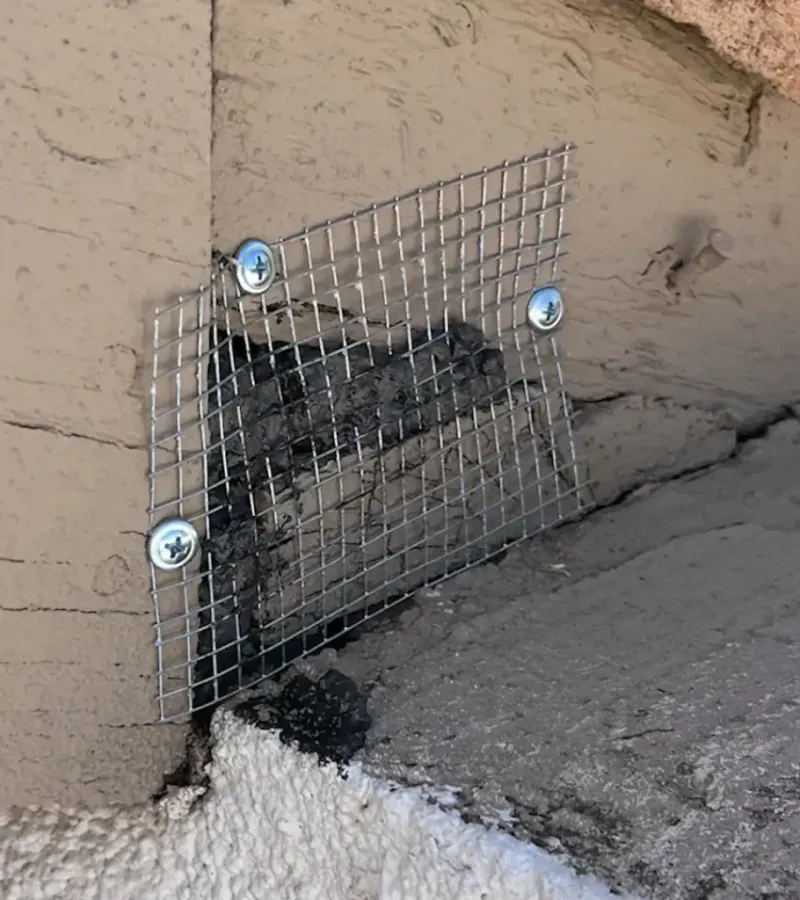
Plumbers, electricians, and AC techs do great work, but the holes they leave behind are not always sealed tight. Years later, those little openings can become a hidden doorway straight into your walls and attic.
Common trouble spots include gaps around AC line sets where refrigerant tubes enter the house, electrical conduits, cable and internet lines, gas pipes, and plumbing vent stacks poking through the roof. Rooftop AC units, common on many Phoenix homes, may have flashing that loosens over time.
Once a rat slips inside one of these gaps, it can travel through wall voids up to the attic without ever touching the roof edge. Many homeowners seal their vents and eaves carefully, then never look at the side of the house where the AC enters.
Take a slow lap around your home and look closely wherever a pipe or wire meets stucco. Fill gaps with copper mesh or steel wool, then cover with exterior sealant or a metal escutcheon plate.
On the roof, check that flashing around vent stacks lies flat.
A quiet winter afternoon is the perfect time for this simple project. Tiny fixes like these often add up to a much more rat-resistant home.