What To Do With Arizona Raised Beds Between Spring And Monsoon Growing Seasons
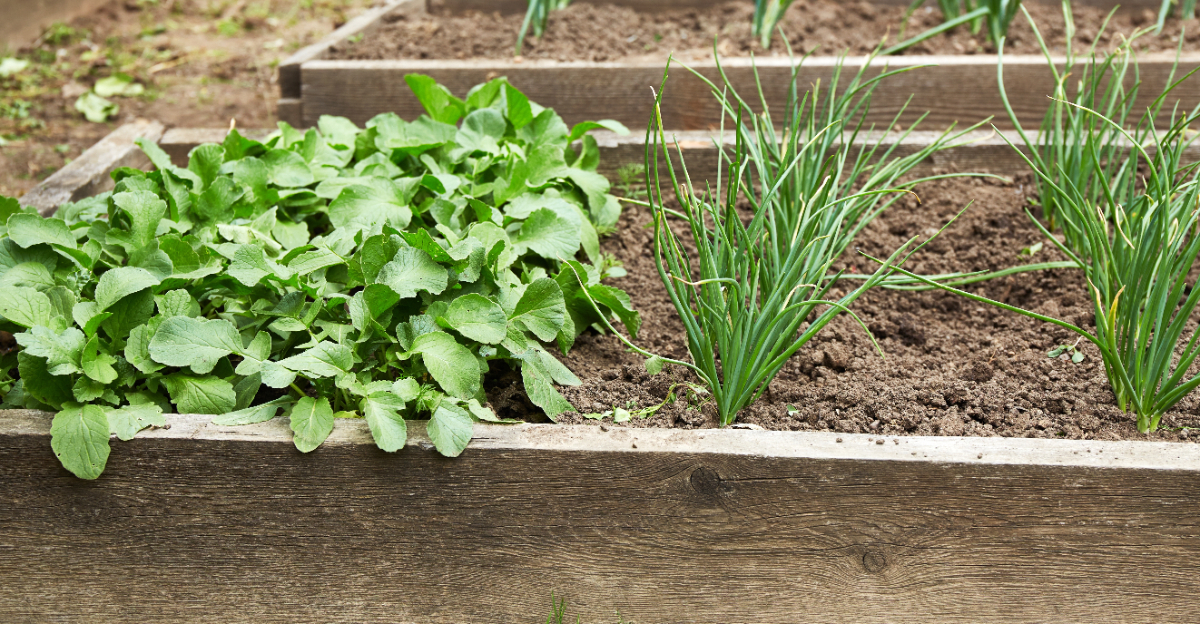
One of the hardest parts of gardening is knowing when not to plant something.
After a productive spring, it is tempting to fill every empty space as soon as crops come out. A bare raised bed can feel unfinished, and seeing open soil often creates the urge to start planting again right away.
Sometimes that works. Other times it leads to frustration when new plants struggle through the hottest part of the year.
That is why this stretch of the gardening calendar feels a little unusual. Spring is winding down, but monsoon season has not fully arrived yet.
The garden is in a transition period, and what you do during that gap can influence how successful the next growing season becomes.
Arizona gardeners often focus on spring planting and monsoon planting, but the time between them deserves attention too. A few smart choices now can help raised beds stay healthier, more productive, and better prepared for what comes next.
1. Remove Spent Crops Before They Become A Problem
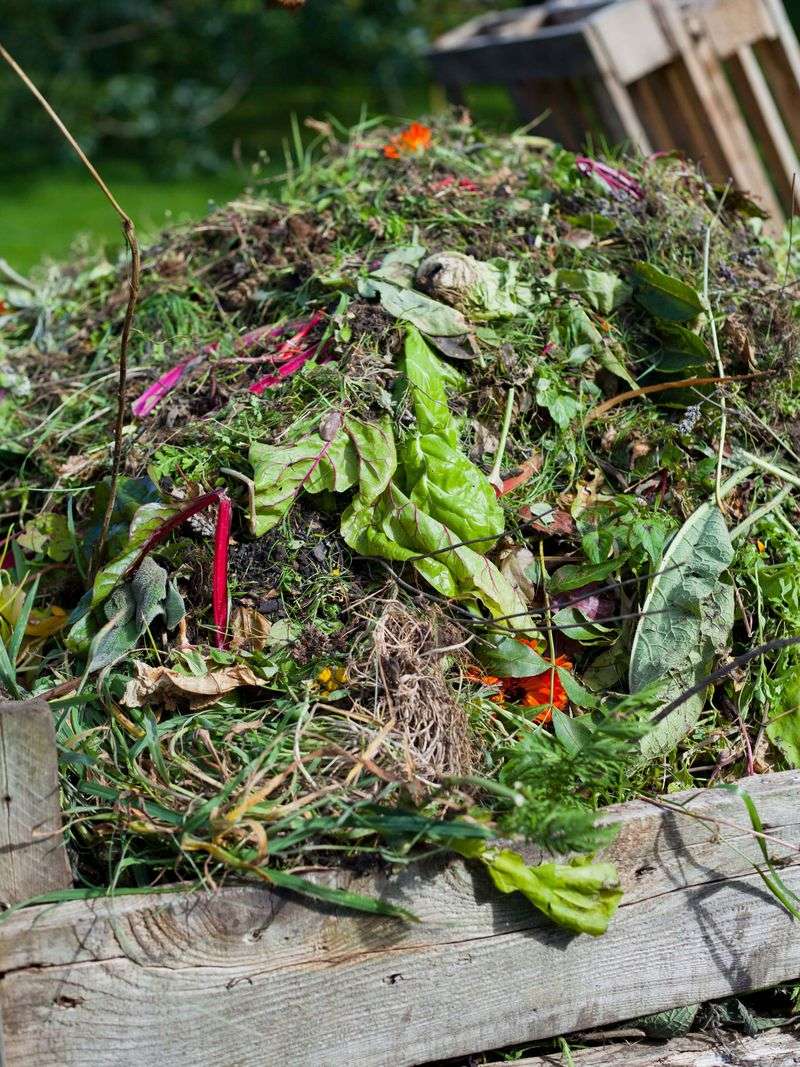
Old plants left sitting in a raised bed are not just an eyesore. Spent crops that stay in the soil attract pests and can harbor fungal issues that spread fast in warm conditions.
Pull everything out by the roots. Leaving root systems behind can slow down your soil prep and sometimes introduce rot or disease into the bed before your next planting cycle even starts.
Work quickly during cooler morning hours. Desert heat climbs fast, and spending too much time in the midday sun makes a simple cleanup job exhausting and uncomfortable.
Bag up anything that looks diseased or pest-ridden. Don’t toss those materials into a compost pile unless you’re confident your pile reaches high enough temperatures to break down potential pathogens safely.
Healthy plant material can go straight into compost. Stems, leaves, and roots from clean, disease-free plants break down well and eventually return useful organic matter back to your beds.
Check the soil surface as you clear each bed.
Sometimes you’ll spot signs of grubs, fungus gnats, or other insects hiding just below the top layer once the plant cover is removed.
2. Pull Remaining Weeds Before Seeds Spread
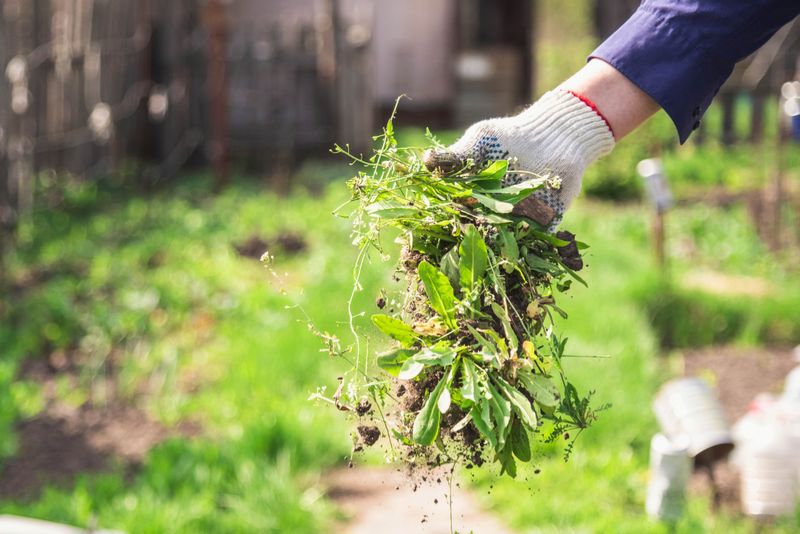
Weeds don’t take a break just because your vegetables are done for the season.
Some of the most aggressive desert weeds actually thrive in the warm, slightly disturbed soil of a recently cleared raised bed.
Get them out before they go to seed. One plant left too long can drop dozens of seeds into your bed, creating a much bigger problem when monsoon moisture arrives and triggers a mass germination event.
Focus on the roots. Many desert weeds have deep taproots or spreading rhizomes that snap off easily if you just pull the top growth without loosening the soil first.
A hand cultivator or a narrow hoe works well in raised beds without disturbing too much of the surrounding soil structure. Work the tool a few inches down to get the full root system out cleanly.
Your Arizona Garden Changes Every Week. Your Plan Should Too.
Gardening in Arizona changes quickly throughout the season. Every Friday you’ll receive a simple weekly plan showing exactly what to plant, prune, fertilize, harvest, and protect so you never miss the right timing.
Don’t skip the edges and corners. Weeds love to establish along the walls of raised beds where soil tends to be slightly cooler and more sheltered from direct sun.
Toss pulled weeds into a bag right away rather than leaving them on the soil surface. Some weeds can re-root quickly if they stay in contact with moist soil, especially after an unexpected sprinkle.
3. Add Compost To Rebuild Soil Quality
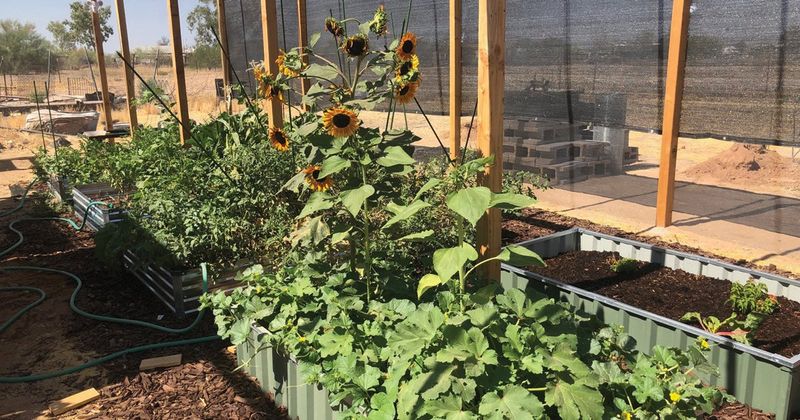
Raised bed soil gets depleted fast. Every crop cycle pulls nutrients out, and the intense desert sun speeds up organic matter breakdown much faster than it would in cooler climates.
Adding compost between seasons is one of the most practical things you can do. It replenishes nutrients, improves soil texture, and helps the bed retain moisture better during those brutal pre-monsoon weeks.
Spread a two to three inch layer across the entire bed surface. Work it into the top few inches of existing soil with a fork or hand cultivator rather than just leaving it on top to bake in the heat.
Worm castings are a solid addition if you can find them locally. They add a concentrated dose of nutrients and beneficial microbes without risking any burn to plant roots the way some stronger fertilizers can.
Avoid adding compost that isn’t fully broken down.
Partially composted material can tie up nitrogen in the soil temporarily, which actually makes nutrients less available to your plants during the early monsoon growing period.
Good compost also feeds the beneficial soil organisms that keep your beds biologically active.
Healthy microbial activity in raised beds leads to better nutrient cycling and stronger plant root development throughout the growing season.
4. Check Irrigation Lines For Leaks And Clogs
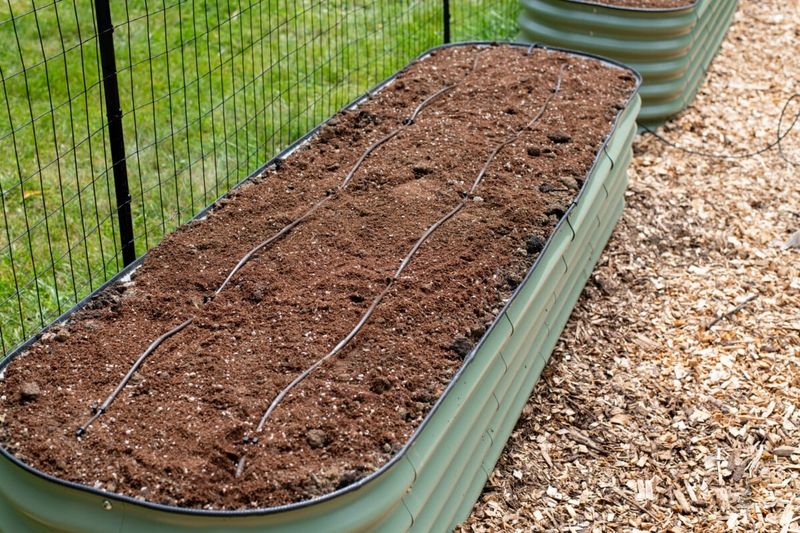
Irrigation problems have a way of hiding until the worst possible moment. A slow leak or a clogged emitter might go unnoticed while beds are empty, but the damage shows up fast once you’ve got young seedlings depending on consistent water delivery.
Walk each line carefully. Look for wet spots in the soil that don’t match where your emitters are placed, since those usually point to a crack or a loose connection somewhere along the tubing.
Flush the lines before inspecting individual emitters.
Turn the system on and let it run briefly to clear any debris that may have built up inside the tubing during the weeks since your last active growing cycle.
Emitters clog regularly in areas with hard water. Mineral deposits build up inside the small openings and restrict flow, which means some plants end up underwater while others get too much.
Carry a few spare emitters and end caps when you do your inspection. Swapping out a faulty emitter takes less than a minute, and having parts on hand means you don’t have to stop and make a hardware store run mid-task.
Check the pressure at the source too. Low pressure can cause uneven distribution across the whole system, leaving the beds at the far end of the line consistently drier than those closer to the water supply.
5. Refresh Mulch To Reduce Moisture Loss
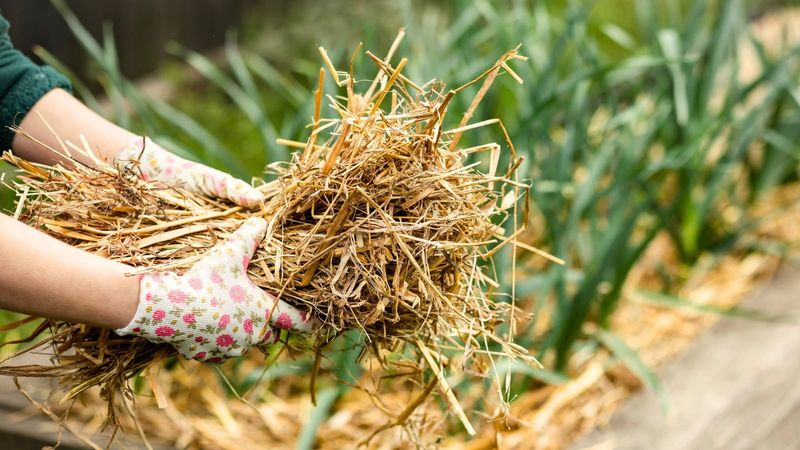
Bare soil in a raised bed loses moisture at a shocking rate when temperatures climb past 100 degrees. Mulch acts as a buffer between the sun and the soil, slowing evaporation and keeping the root zone cooler during the hottest part of the day.
Pull out old mulch that has broken down or become matted. Compacted mulch can actually repel water rather than letting it pass through, which defeats the whole purpose of having it there in the first place.
Straw works well in desert raised beds. It’s lightweight, easy to spread, and breaks down gradually to add a bit of organic matter to the soil without creating a dense mat that blocks airflow.
Wood chip mulch is another solid option. It lasts longer than straw and does an excellent job of insulating the soil surface, though it takes more time to break down into the soil over multiple seasons.
Apply a layer about two to three inches thick across the entire bed. Too thin and it won’t hold much moisture.
Too thick and it can create conditions that encourage fungal growth in the soil below.
Keep mulch pulled back slightly from the base of any plants you leave in the bed.
6. Cover Bare Soil During The Hottest Weeks
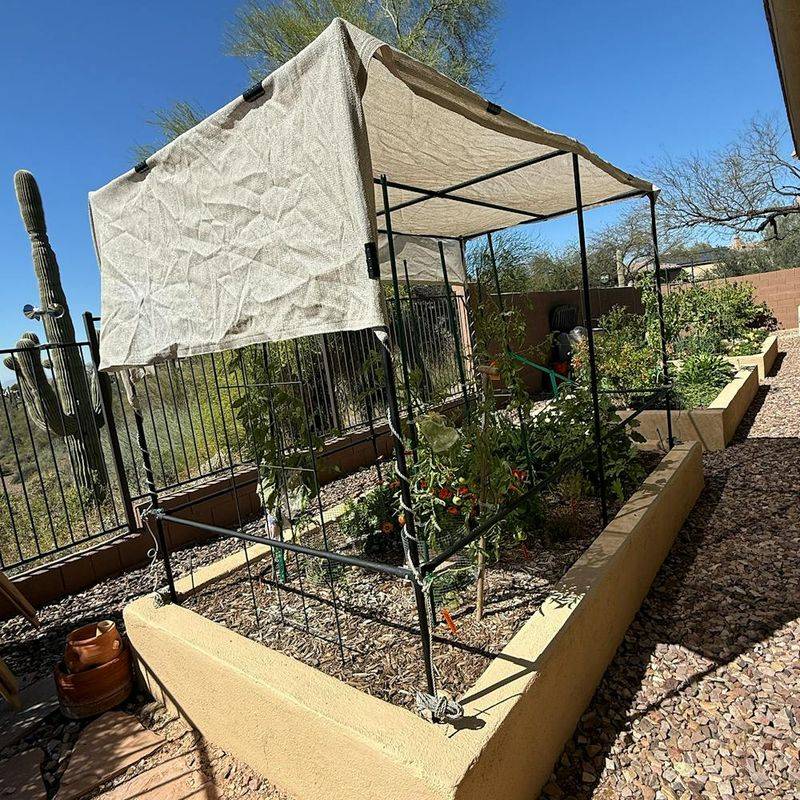
Exposed soil in a raised bed bakes hard under triple-digit heat. When the surface crusts over, water has a harder time penetrating evenly, and the soil structure you worked to build starts to break down from the top down.
Shade cloth is one practical solution. Draping a 30 to 50 percent shade cloth over empty beds keeps the soil temperature from spiking too high and protects any beneficial organisms living just below the surface.
Old bed sheets or burlap fabric work in a pinch. They aren’t as durable as purpose-made shade cloth, but for a few weeks of protection they can make a real difference in how the soil holds up under intense sun exposure.
Consider planting a cover crop instead of leaving beds completely bare. Heat-tolerant options like cowpeas grow fast, shade the soil naturally, and fix nitrogen back into the bed at the same time.
Cover crops also suppress weed growth without any additional effort on your part. Once the monsoon season approaches, you can turn the cover crop into the soil directly as a green manure to boost organic matter content.
Lightweight row cover fabric is another option that allows some airflow while still cutting down on direct sun intensity.
7. Prepare Planting Spaces For Monsoon Crops
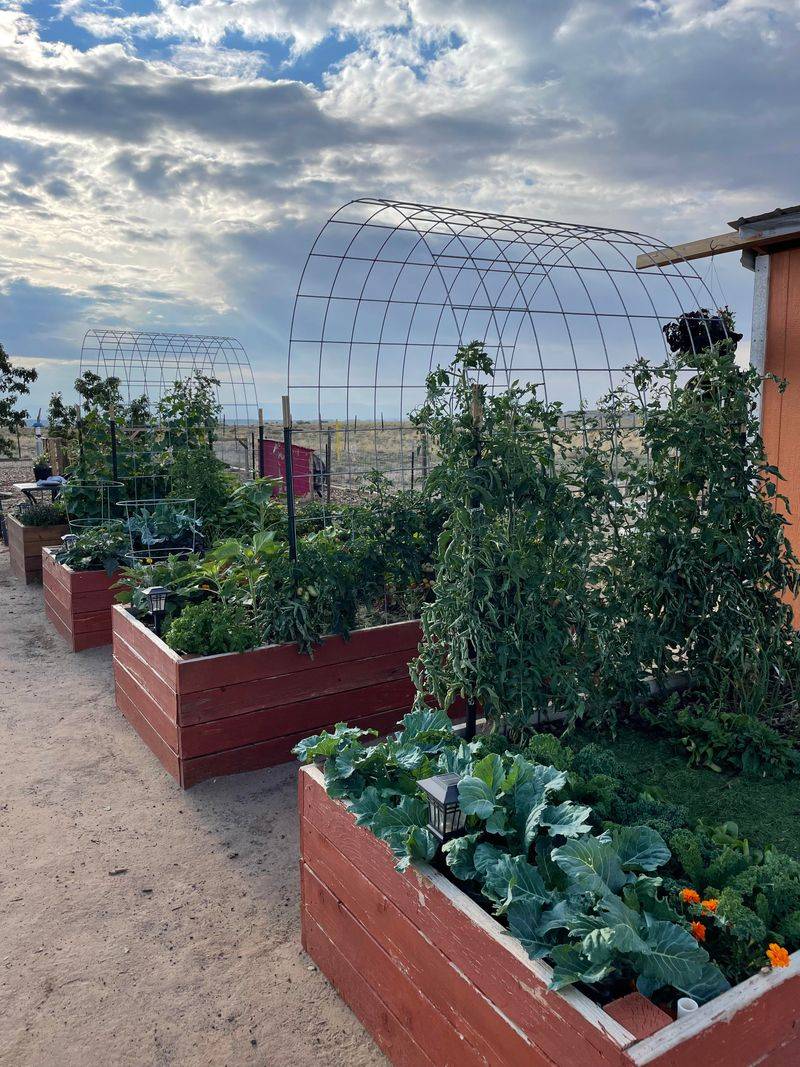
Monsoon season brings a reliable window of warmth and moisture that many desert gardeners underuse. Getting your beds ready before the rains arrive means you can plant the moment conditions line up instead of scrambling to prep at the last minute.
Loosen the soil across the entire bed surface. Even with compost added earlier, the soil can settle and compact over the hot dry weeks, so a light pass with a fork opens things up before planting.
Mark out your planting zones. Knowing where each crop will go before you start saves time and helps you space things correctly rather than guessing and ending up with overcrowded beds once everything germinates.
Monsoon-friendly crops include beans, squash, corn, and heat-tolerant greens like Malabar spinach. These plants thrive in warm, humid conditions and can handle the irregular but intense rainfall patterns that come with summer storm systems.
Check your soil moisture level before planting. Even if rain is in the forecast, starting seeds in bone-dry soil can cause uneven germination since the top layer may wet quickly while deeper soil stays dry.
Pre-moistening the bed a day or two before planting gives seeds a more consistent environment to sprout in.