Why Georgia Gardeners Should Leave Crape Myrtle Seed Pods Alone In November
Brown seed pods clinging to bare crape myrtle branches can make a once-colorful tree look a bit untidy by November. Many homeowners grab the pruners hoping to clean things up before the holidays.
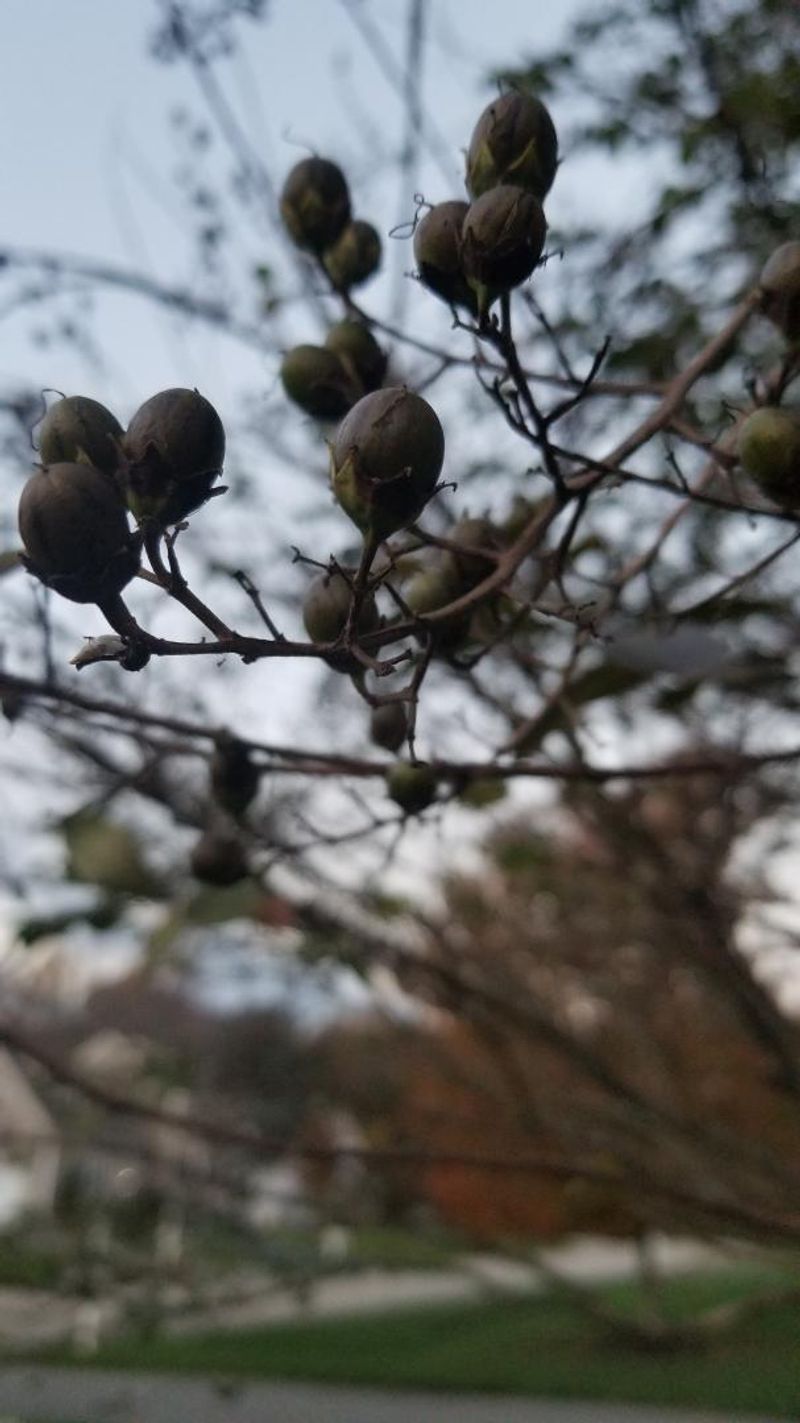
Each of those small, round capsules holds seeds that serve a purpose through the colder months.
Several kinds of songbirds pick through the pods for food once summer insects and berries start running low. Goldfinches and other small seed eaters often work the branches on mild winter mornings.
Heavy fall pruning can also invite problems that show up long after the cuts are made.
Most horticulture experts in Georgia recommend waiting until late winter for any structural pruning on these trees.
Leave the pods in place for now, and the branches may turn into one of the busier spots in your winter yard.
1. Those Dry Brown Capsules Still Have A Job To Do
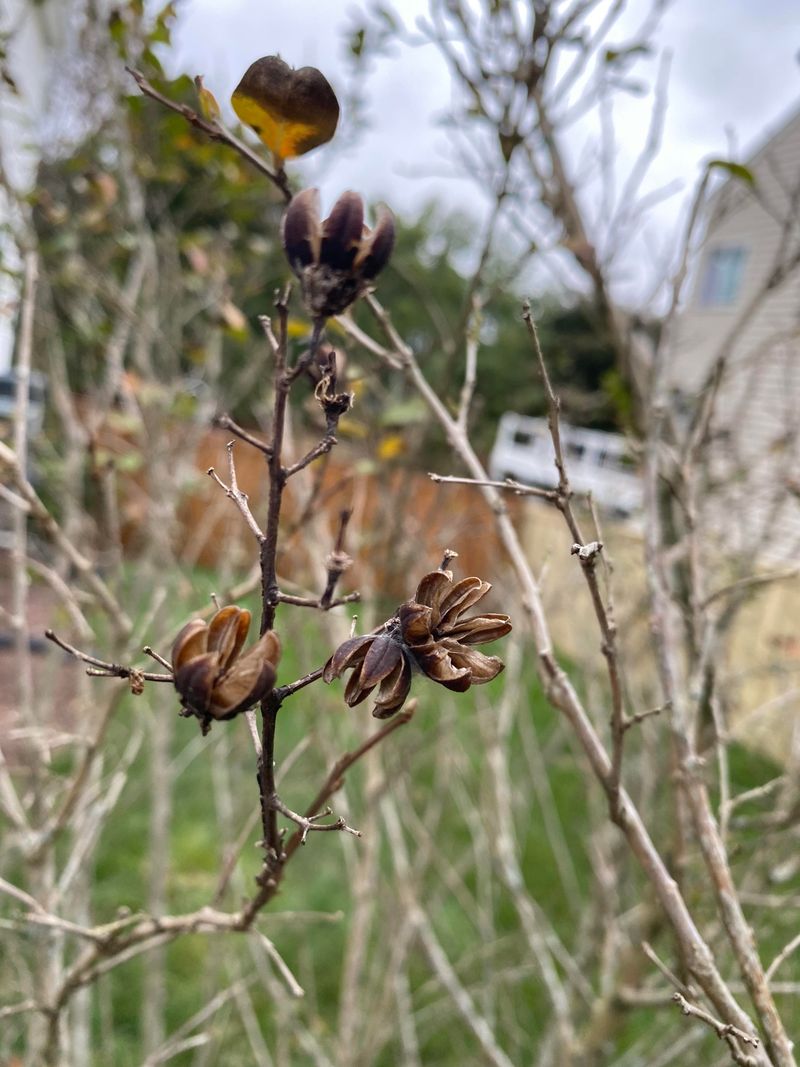
Brown and brittle does not mean useless. Those round capsules on your crape myrtle are the fruit of the plant, and they formed right where the summer flowers once opened.
Each capsule holds tiny winged seeds that ripen as the weather cools.
Once the pods dry out in fall, they slowly split along their seams. Wind can then carry some of those small, papery seeds a short distance from the tree.
Across Georgia, that splitting usually happens gradually over late fall and winter rather than all at once.
So what does that mean for your yard? Mostly, it means the pods are finishing a natural cycle that does not require any help from you.
A few seedlings might pop up near the tree in spring, though plenty of seeds never sprout.
If you spot volunteer seedlings in beds or lawn edges, pulling them while they are small is easy. Seedlings from named hybrids may not look like the parent tree, so most people simply remove them.
Leaving the pods also saves you a chore during a busy season of raking and bed cleanup.
Watch the clusters over a few weeks and you will see them open, release seeds, and weather to a lighter tan. That slow change is part of how the tree winds down for the year.
2. Goldfinches And Other Small Birds Pick At The Seeds In Winter
Look closely on a chilly morning and you might catch a goldfinch hanging upside down on a pod cluster. Those little birds have sharp, pointed bills that work well for picking out small seeds.
American goldfinches spend the winter in Georgia, and their numbers often grow as northern birds move south.
In the cold months, males lose their bright yellow color and look olive-brown. That duller coat makes them easy to overlook, so watch for quick movement among the branches.
Other small seed-eating birds, such as house finches and some sparrows, may stop by too.
Keep your expectations realistic, though. Crape myrtle seeds are a minor food source compared to native plants like coneflowers, sunflowers, or sweetgum.
Birds tend to visit when it suits them, and some yards see more traffic than others.
Your Georgia Garden Changes Every Week. Your Plan Should Too.
Gardening in Georgia changes quickly throughout the season. Every Friday you’ll receive a simple weekly plan showing exactly what to plant, prune, fertilize, harvest, and protect so you never miss the right timing.
Even so, a pod-covered tree adds one more option during months when natural food gets thinner. Clipping every cluster in November takes that option away before winter even starts.
Want to see more activity? Pair your crape myrtle with seed-bearing native perennials and a clean water source nearby.
A window view of the tree makes watching easy on gray days. Keep binoculars handy, and you may be surprised by who drops in for a snack.
3. Pods Do No Harm To The Tree If Left In Place
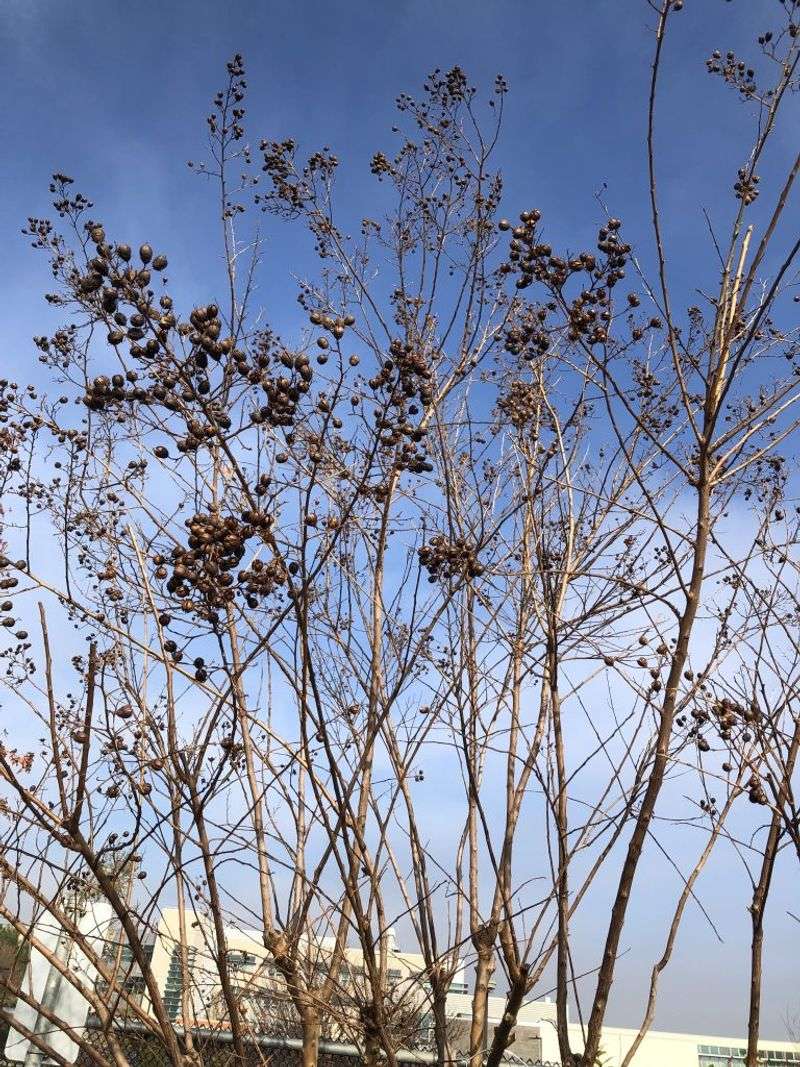
Relax, your crape myrtle is fine. Seed pods hanging on through winter do not drain the tree or weaken it in any meaningful way.
By November, the energy that went into making those seeds has already been spent during summer and early fall.
Removing the dry pods now will not send that energy back into the roots. In other words, cutting them off does not give the plant a boost for next year.
Some folks worry that the extra weight can bend branches. Heavy clusters can droop a bit after rain, especially on young or thin stems, but they rarely cause real damage.
In Georgia, the bigger threat to crape myrtle branches usually comes from ice storms rather than seed pods.
If a limb does snap during a winter storm, trim it cleanly back to a healthy branch or trunk. A clean cut heals better than a ragged break left hanging.
Pods also do not invite disease on their own. Problems like powdery mildew or crape myrtle bark scale depend on other factors, including variety, sun, airflow, and pests.
Simply put, those brown clusters are more of a look than a health concern.
Whether you enjoy them or not is a matter of taste. Either way, your tree will keep growing normally come spring.
4. Clusters Add Texture To Bare Branches Through The Cold Months
Winter gardens can feel flat. Crape myrtles help fix that, and the pods are part of the reason.
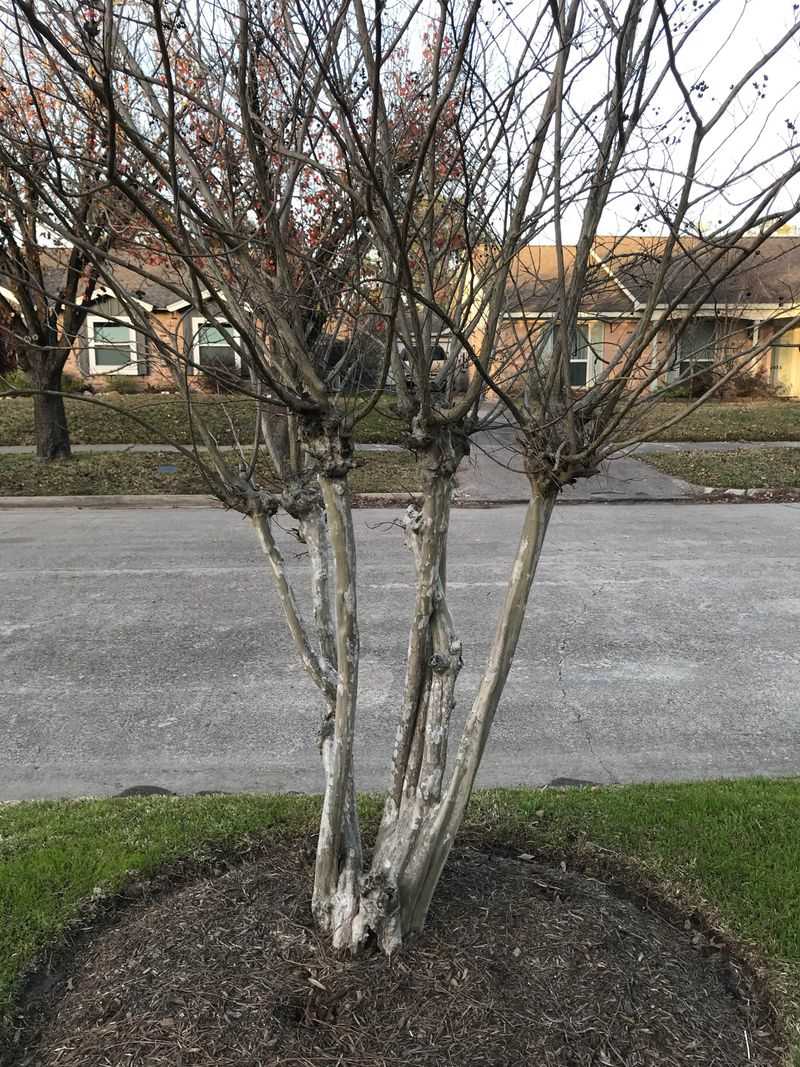
Once the leaves drop, those clusters sit at branch tips like little brown ornaments against the sky.
Picture a frosty morning in north Georgia with sunlight hitting each round capsule. The effect is subtle, but it gives the tree a fuller, finished look instead of a bare outline.
Crape myrtle bark adds even more interest during these months.
Many varieties have smooth, peeling bark in shades of tan, gray, or cinnamon. Paired with the seed heads, the tree offers color and texture at a time when most shrubs look plain.
Landscape designers often talk about winter interest, and this tree provides plenty of it with zero extra effort.
Want to make the most of it? Plant evergreens like hollies or boxwoods nearby to create a darker backdrop that helps the pods and bark stand out.
Not everyone loves the look, and that is perfectly okay.
Some people prefer a cleaner silhouette, especially on trees near a front walk. If that sounds like you, wait until late winter to snip off the old clusters along with any light pruning, so you still get a few months of texture first.
5. Trimming Spent Blooms Helps In Summer But Does Little By Late Fall
Timing changes everything with deadheading. Snipping faded flower clusters in early to mid summer can encourage some crape myrtles to produce a second, smaller round of blooms.
That trick works because the plant is still actively growing and has a long warm season ahead.
Results vary by variety, tree size, and weather. Smaller shrub types are easier to deadhead, while tall trees can be tough to reach safely.
Fast forward to November, and the picture looks very different.
Growth has slowed, leaves are falling, and the tree is heading toward dormancy. Cutting off seed pods now will not trigger new flowers, because the blooming season is already over.
Across most of Georgia, crape myrtles finish flowering by late summer or early fall.
So if you skipped deadheading this year, there is no need to make up for it now. Your tree will bloom next summer on fresh new growth regardless of what happens to the old pods.
Planning ahead for next season is a better use of your energy.
Mark your calendar for early summer and check the first flush of flowers as they fade. A quick trim right after that first wave gives you the best chance of extra color, especially on compact varieties you can reach from the ground.
6. Late Winter Is The Better Time For Any Needed Pruning
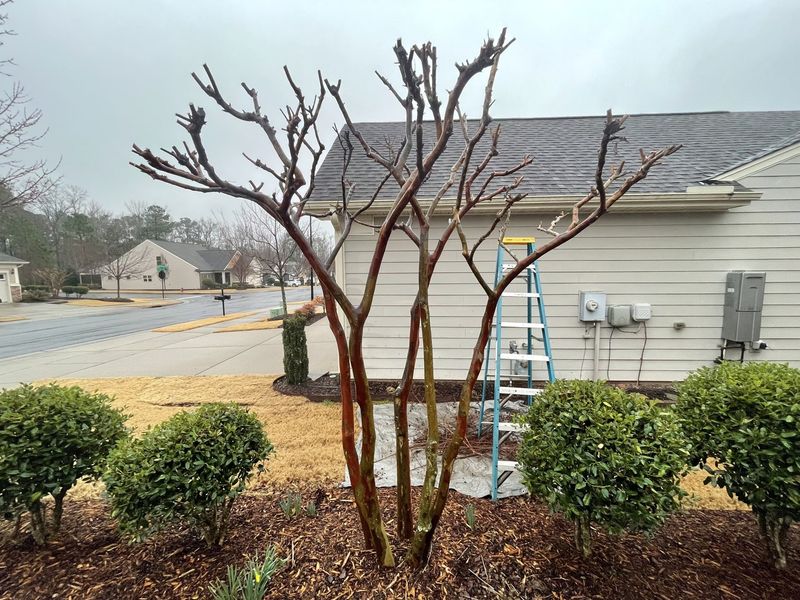
Patience pays off with crape myrtles. Extension experts in the Southeast generally suggest pruning these trees in late winter, before new spring growth begins.
Across Georgia, that usually means roughly late January through February, though timing shifts a bit with your region and the weather.
Why wait? Without leaves, you can clearly see the branch structure and spot problems.
Pruning in late fall can sometimes encourage tender growth if warm spells follow, and that soft growth may be hurt by a hard freeze later.
By late winter, the coldest stretch is often behind you, especially in the southern half of the state. Folks in the mountains may want to wait a little longer than gardeners near the coast.
Focus on simple goals. Remove broken branches, crossing limbs that rub, and suckers sprouting from the base.
Thin crowded interior shoots to improve airflow, which may help reduce mildew on susceptible varieties.
Use clean, sharp tools and cut just outside the branch collar, the slightly swollen area where a limb meets a larger one. Avoid leaving stubs, since they heal poorly.
Old seed pods can come off at the same time if you like a tidier look.
One visit with clean pruners in late winter can handle everything at once. That beats making several trips out with the loppers during the fall.
7. Topping The Trunks Weakens Branches And Spoils Their Natural Shape
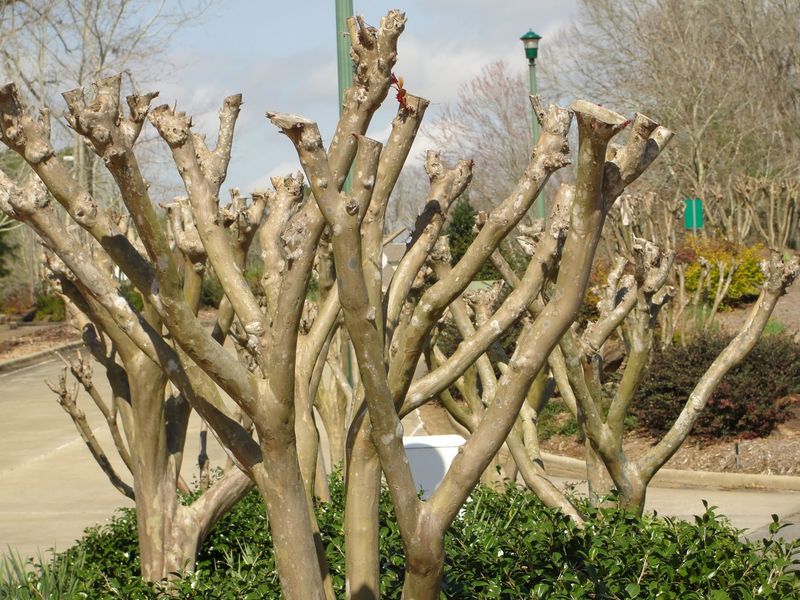
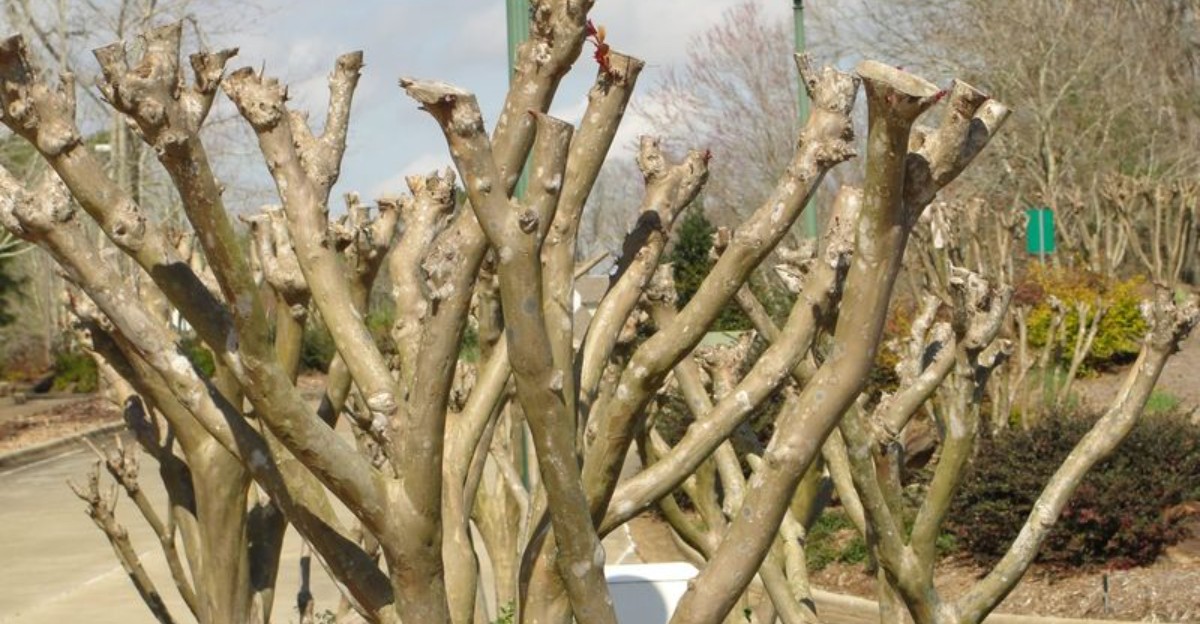
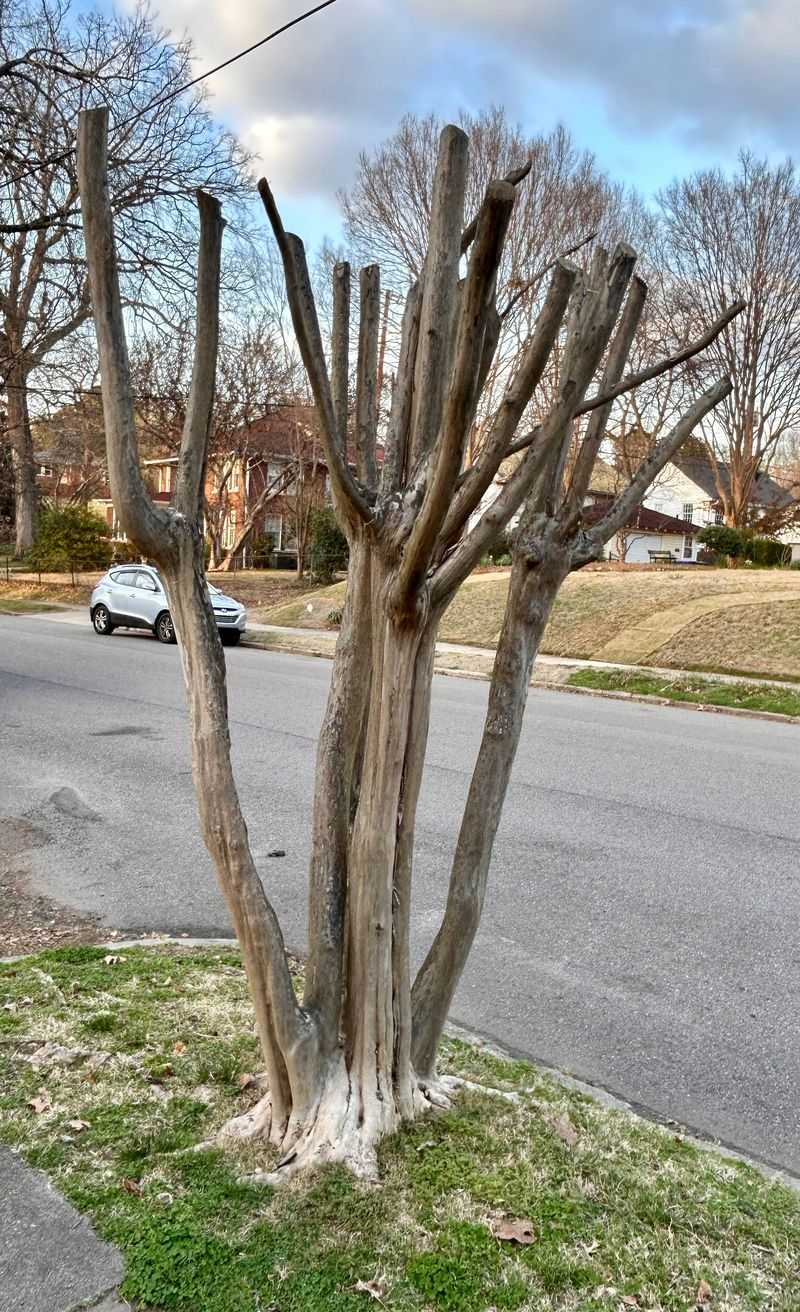
Drive through almost any Georgia neighborhood in winter and you will see them. Crape myrtles chopped back to thick stubs, often called crape murder, are a common sight.
That heavy topping is one of the most widely criticized practices in Southern landscaping.
Cutting large trunks back to the same height causes the tree to push out a cluster of thin, fast shoots near each cut. Those whippy stems can be weakly attached and may bend or break under heavy blooms.
Repeated topping over the years can also create swollen knobs at the cut points.
Beyond looks, those knobs mark spots where the tree keeps sprouting crowded growth. Some trees may also become more prone to problems from large wounds that do not close well.
Topping is often done to control size. A better fix is choosing a variety that matches your space, since crape myrtles range from small shrubs to tall trees.
If your tree has already been topped, all is not lost.
Over a few seasons, you can select a few strong shoots at each knob and remove the rest. With patience, the tree may slowly regain a more natural, vase-like form, though results depend on its age and condition.
Let the graceful, multi-trunk shape shine. Light thinning keeps the tree healthy and lets its smooth bark stay on full display.