How To Spot An Osage Orange Tree And Where To Find Hedge Apples in Ohio
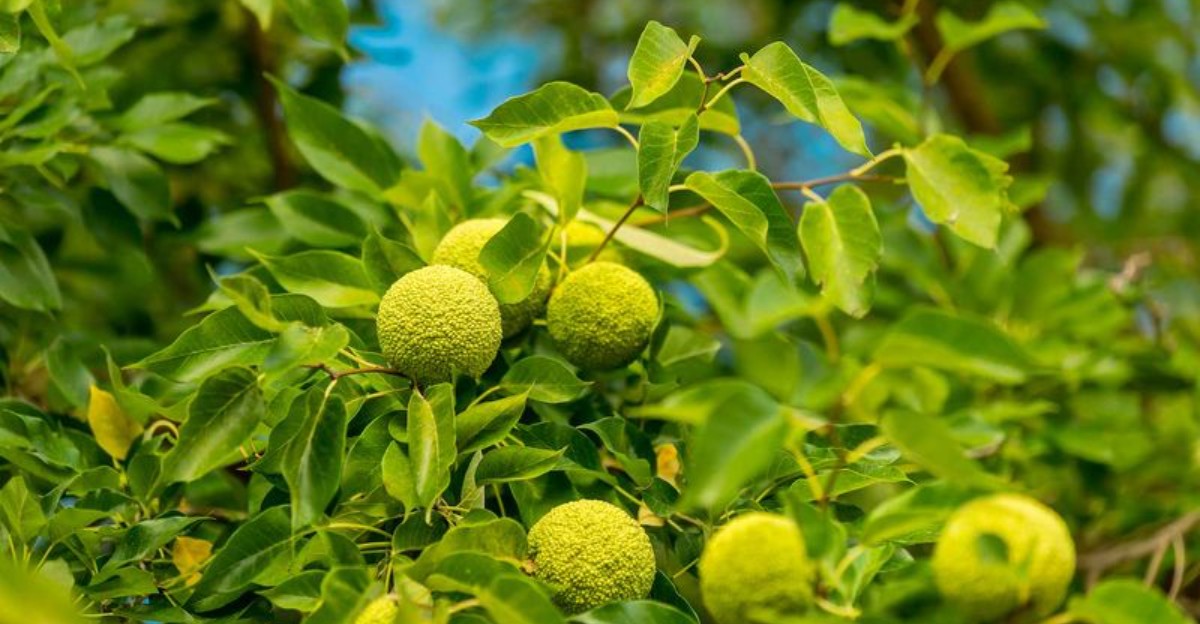
You’ve probably driven past one a hundred times, a gnarly tree with lime-green balls the size of softballs scattered underneath.
Ohio has plenty of them, tucked along old fence lines, field edges, and country roads. Most people never look twice.
Those who do usually stop, stare, and wonder what on earth they’re looking at. The fruit looks like a brain left out in the yard, and the tree has a few more oddities beyond that.
Spotting one takes a trained eye and a few quick clues. Bark, thorns, leaves, and the fruit itself all give it away once you know where to look.
Some of the best hunting grounds sit closer to home than you’d guess.
Pay attention on your next drive through farm country. Slow down near the old fence rows.
1. Look For Glossy, Dark Green Leaves With Pointed Tips
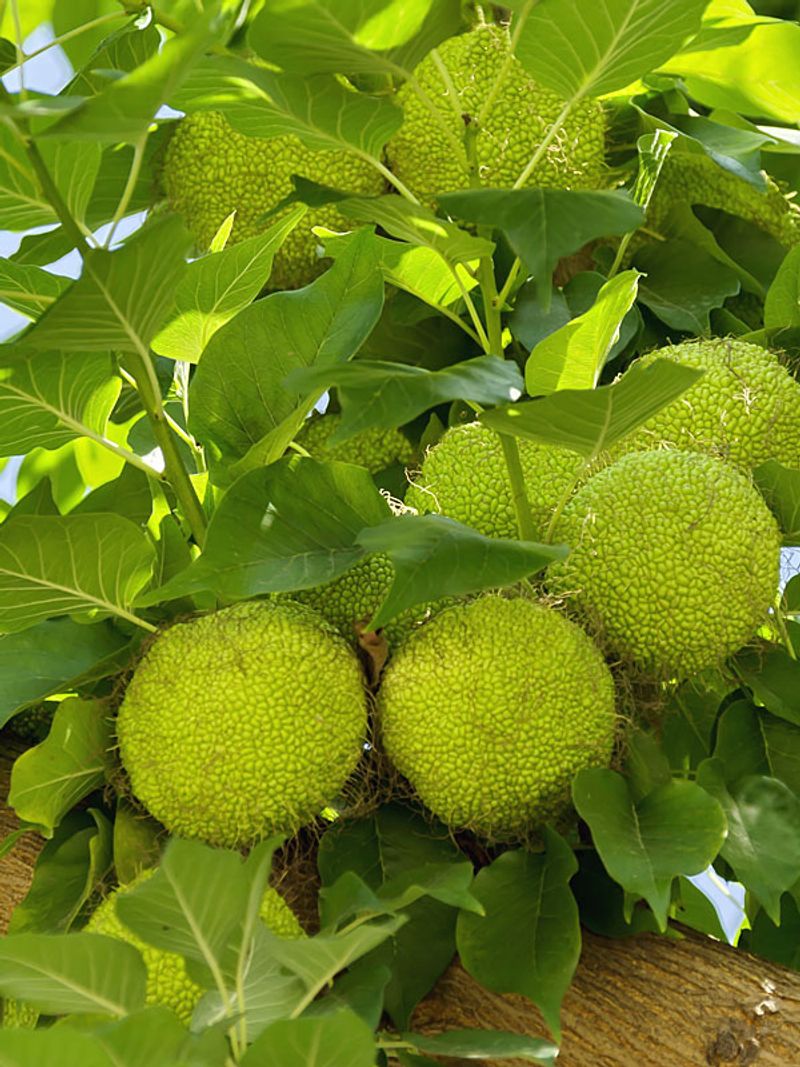
Sunlight bounces off these leaves like someone polished them with wax. That shine is your first friendly hint that you are near an Osage orange.
Each leaf grows by itself along the twig, taking turns on opposite sides. Botanists call that pattern alternate, and it helps you rule out lookalikes with paired leaves.
The shape is mostly oval or egg-like, ending in a long, drawn-out point.
Run a finger along the edge and you will feel smooth sides with no teeth. Many common Ohio trees, like elms and cherries, have saw-toothed edges.
Smooth margins help this tree stand out from the crowd.
Size matters too, so bring a ruler or use your hand. Most leaves stretch 3 to 6 inches long and about 2 to 3 inches wide.
That is roughly the length of a dollar bill on the bigger ones.
Flip a leaf over for another clue. The underside looks paler and duller than the top.
Sometimes you can spot tiny hairs along the veins if you look closely.
Color ranges from bright green on fresh growth to deep, rich green by midsummer. Snap a quick photo of the top and bottom of a leaf.
Comparing your pictures with a field guide later makes learning these trees much easier and a lot more fun.
2. Check For Sharp Thorns Where The Leaves Meet The Twigs
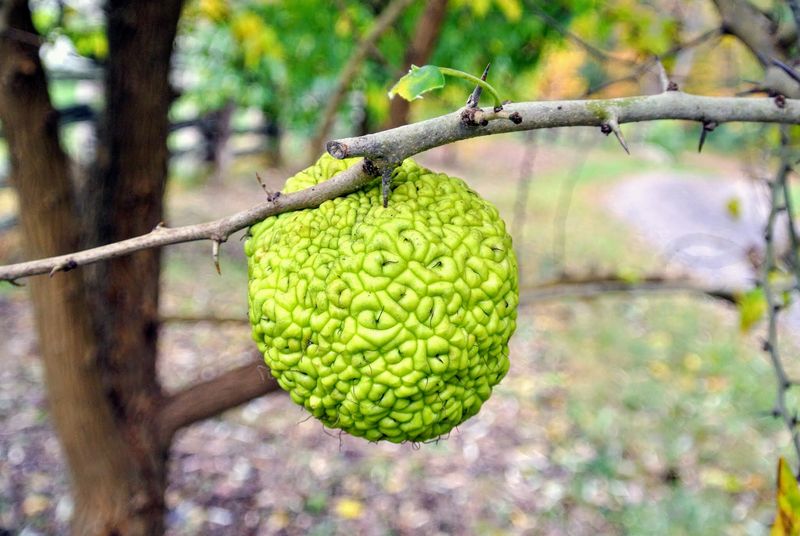
Ouch! Plenty of Ohio farm kids learned about this tree the hard way.
One careless grab at a branch, and a thorn reminded them who was boss.
Most Osage orange trees carry stout, straight thorns about half an inch to one inch long. They are woody and stiff, not soft or bendy.
You will usually find one sitting right where a leaf joins the twig, in a spot called the leaf axil.
Young branches show off the most thorns. Look at fresh shoots, low sprouts near the trunk, and fast-growing water sprouts.
Older, thicker limbs often lose their thorns as the tree gets bigger, so do not give up if the high branches look smooth.
Here is a wild fact for you. These thorns can poke right through leather work gloves.
Your Ohio Garden Changes Every Week. Your Plan Should Too.
Gardening in Ohio changes quickly throughout the season. Every Friday you’ll receive a simple weekly plan showing exactly what to plant, prune, fertilize, harvest, and protect so you never miss the right timing.
That toughness is one reason farmers loved the tree as a natural fence for cattle long ago.
Safety comes first when you inspect a branch. Look with your eyes before you touch with your hands.
Gently pull a twig toward you by the leaves instead of wrapping your fingers around it.
Thorns plus glossy leaves make a strong combo. When both show up on the same twig, your detective work is really paying off.
3. Snap A Twig And Look For Milky Sap
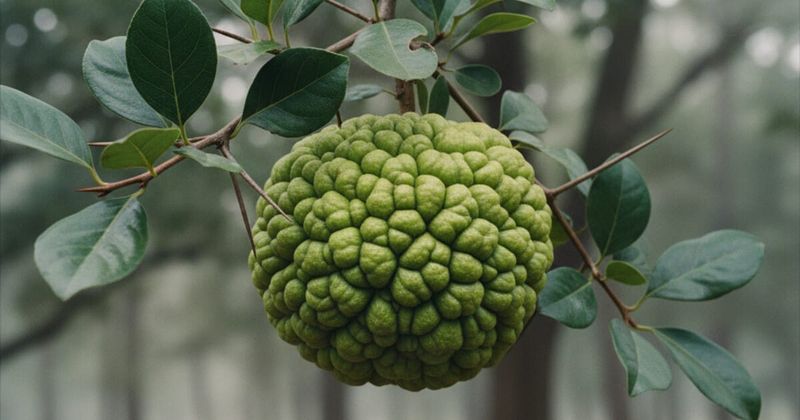
Think of this as the tree version of a secret handshake. Break a small twig, and a sticky white liquid beads up like a drop of glue.
That milky sap contains latex, the same kind of stuff found in rubber plants. Almost every part of the Osage orange makes it, including twigs, leaves, bark, and fruit.
Most Ohio trees ooze clear sap or none at all, so white drips are a big clue.
To try this test, pick a thin, green twig about the width of a pencil. Bend it slowly until it cracks, keeping your face back from any thorns.
Within a few seconds, you should see white beads forming at the break.
A leaf works too if you would rather not snap wood. Tear one near its stem and watch the torn edge.
Tiny white droplets will usually appear quickly.
Be careful with your skin, though. The sap is gummy and can cause itching or a rash with longer contact.
Wipe your hands on a rag and wash with soap and water when you get home.
Pack a small cloth and some hand wipes in your bag before heading out. Your fingers will thank you after a busy afternoon of tree testing.
4. Orange Peeks Through Its Deeply Furrowed Bark
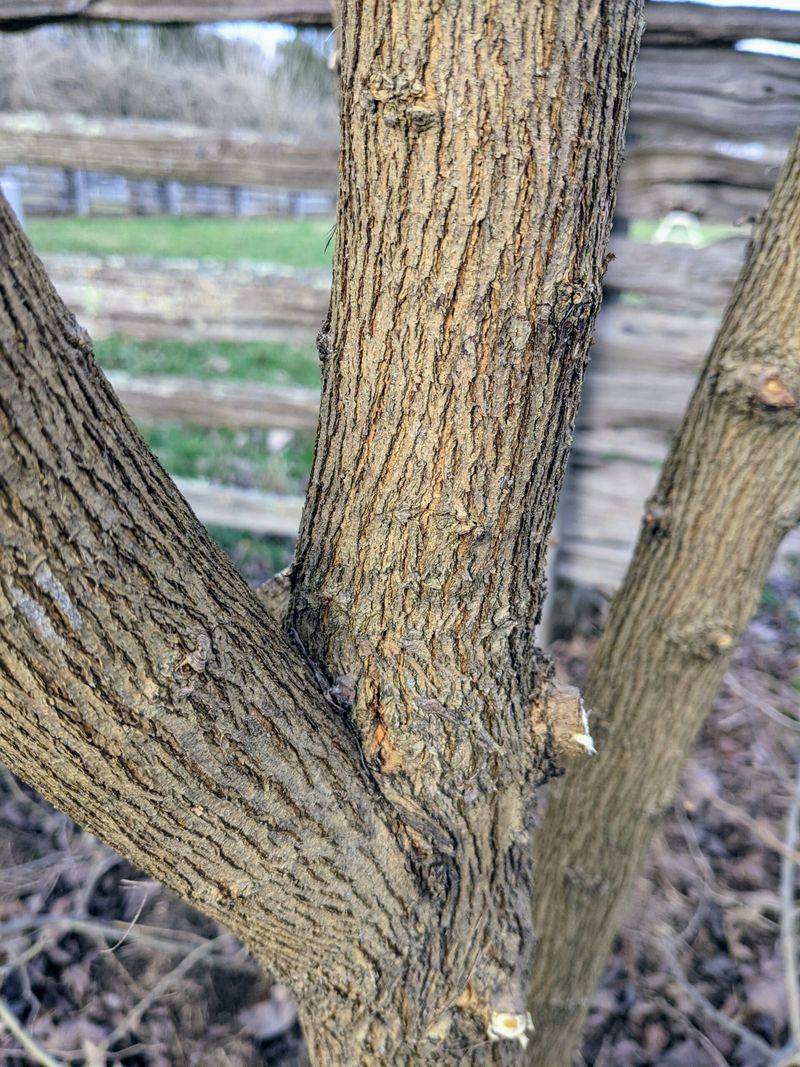
Some trees wear plain gray coats. This one hides a bright orange lining underneath, like a jacket with a surprise inside.
On the outside, the bark looks brown, grayish-brown, or orange-brown. As the tree ages, it forms deep grooves with rounded ridges that weave together up the trunk.
Sometimes the ridges peel into long, skinny strips you can see from several feet away.
The real magic shows up in the cracks. Peer closely into the furrows and you may notice a warm orange glow.
Younger trees often show this color more easily than old giants.
If you have permission on private land, gently scratch a tiny spot with your fingernail. A flash of bright orange tells you that you found the right tree.
Keep it small, since bark protects the tree like skin protects you.
Roots can join the party too. Where soil has washed away near a creek or ditch, exposed Osage orange roots often look shockingly orange.
Few other trees in Ohio show that color underground.
Pioneers and Native peoples once used the wood and roots to make yellow and orange dyes. Next time you spot glowing grooves on a twisted trunk, you are seeing a little piece of that colorful history.
5. The Leaves Turn Bright Yellow In Fall
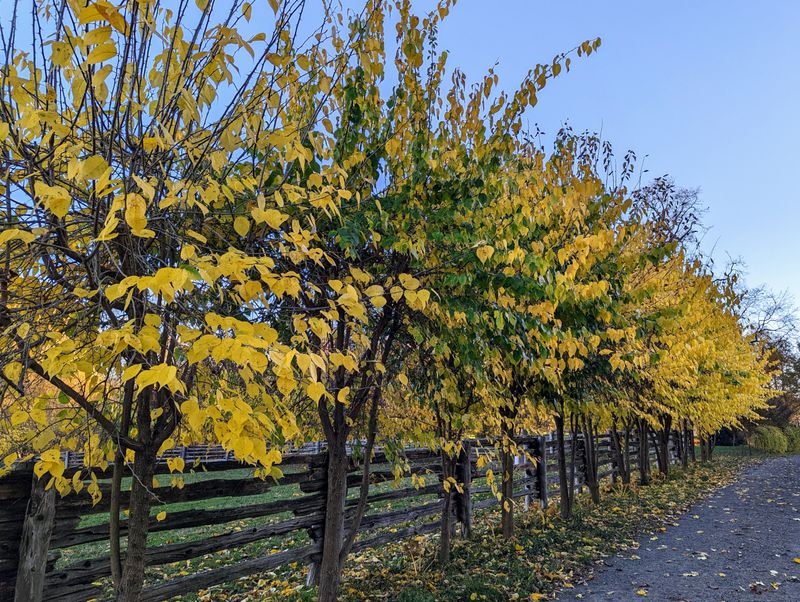
November in Ohio can look pretty gray. Then you round a bend on a country road and spot a tree still glowing like a golden lamp.
Chances are good it is an Osage orange. Its leaves turn a clear, bright yellow in autumn, sometimes with a hint of green.
In some years, the color gets so bold it almost seems to light up the fence line.
Timing makes this clue extra handy. Osage orange often changes color later than most of its neighbors.
While maples and oaks drop their leaves in October, this tree may hold yellow foliage into November or even early December.
So plan a late-fall drive with your family. Look for spots of yellow along field edges after most woods have gone bare.
Those glowing shapes are easy to see from far away.
Write down the locations you notice, or drop a pin on a phone map. In spring and summer, you can return and check the leaves, thorns, and bark up close.
Next autumn, those same spots might reward you with hedge apples too.
Yellow color alone will not prove you found the tree. Combine it with the other clues in this list, and you will feel like a true leaf detective.
6. Only Female Trees Grow Hedge Apples
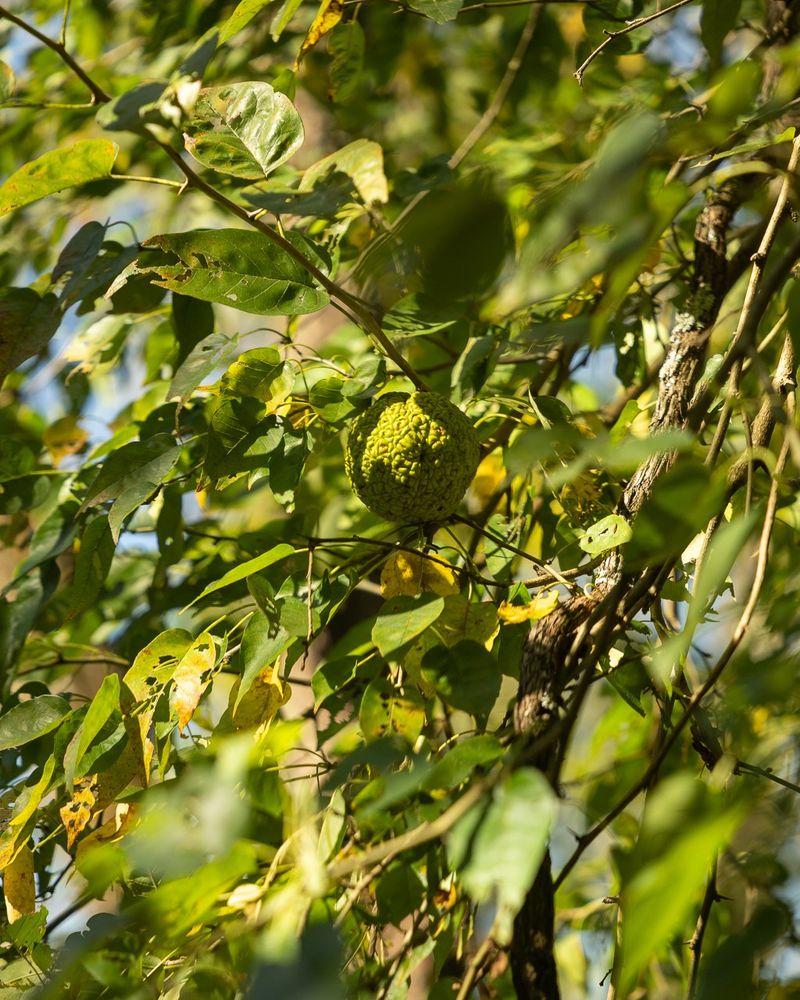
Here is a twist that surprises many people. Two Osage orange trees can stand side by side, yet only one drops those famous green balls.
Scientists call this tree dioecious, which is a fancy way of saying it comes in boys and girls. Male trees make pollen, while female trees make flowers that grow into fruit.
Only the females produce hedge apples, also known as horse apples.
So what if a female grows alone with no male nearby? She can still make fruit, believe it or not.
Those hedge apples just will not have seeds inside.
Patience is part of the deal too. Female trees usually start bearing fruit around 10 years old.
A young tree in your yard might keep its secret for quite a while.
This explains why some fence rows are full of fruit and others have none. If you find a healthy Osage orange with zero hedge apples underneath in October, it is probably a male.
Do not cross it off your map, because it still counts as a great find.
Some homeowners actually prefer male trees for this reason. They get the tough wood and shade without heavy fruit thumping onto cars and sidewalks every fall.
7. The Bumpy Green Fruit Drops From September Into Early November
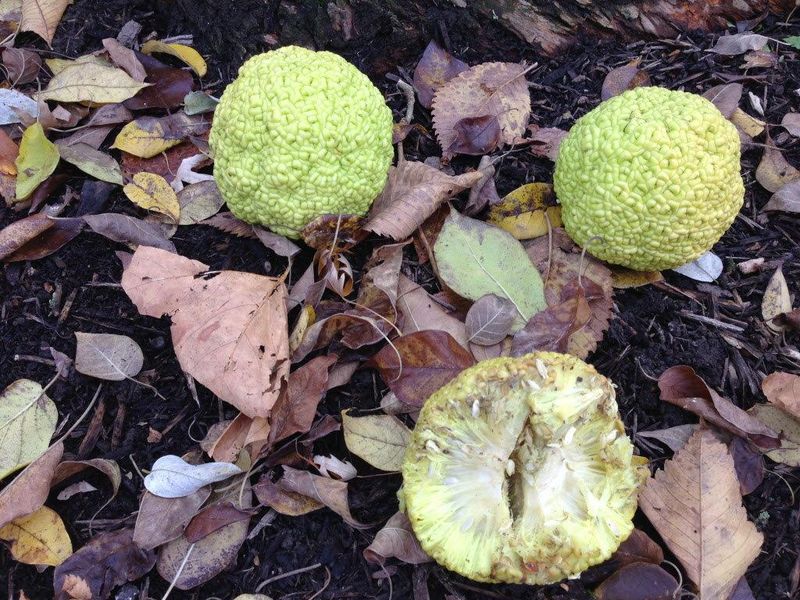
Thud. That heavy sound in a quiet September field might be a hedge apple hitting the ground.
These fruits look like a lime crossed with a brain. They are round, wrinkly, and bumpy, with a bright green to yellow-green skin.
Most measure 3 to 6 inches across and can weigh up to a pound.
Ripening usually happens in September or October. From then until early November, the fruit tumbles down, piling up under the branches.
Mark your calendar, because that window is prime hunting season in Ohio.
Cut one open, if you dare, and you will find stringy pulp packed with small seeds. It oozes the same sticky, bitter, milky sap found elsewhere on the tree.
Wear gloves, and please do not take a bite.
Most birds and animals skip the fruit entirely. Squirrels are the exception, chewing the fruit apart to snack on the seeds.
Look for shredded bits under the tree as proof of their work.
Over time, fallen hedge apples fade from chartreuse to a dull brown. Freshly dropped green ones look best for crafts or fall displays.
Many Ohio folks place them in basements, hoping to scare off spiders, though science has not backed that idea.
8. Look Along Old Fence Rows And Farm Field Edges
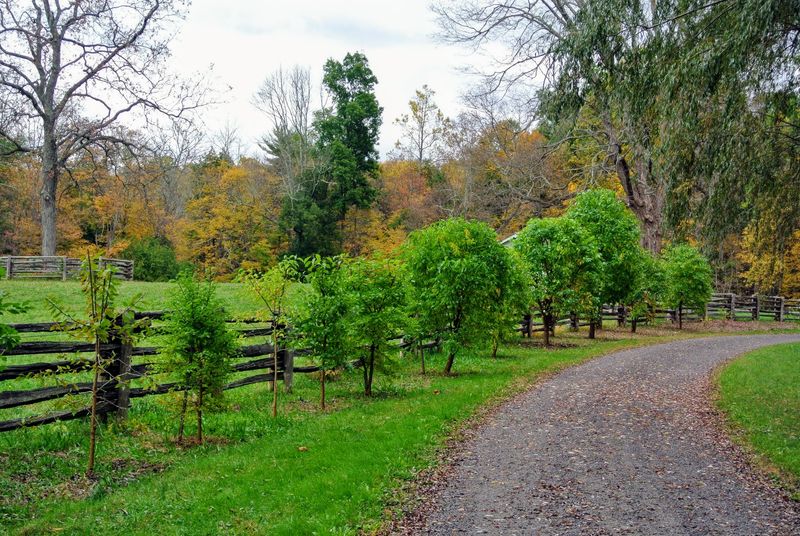
Long before barbed wire, Ohio farmers had a clever problem to solve. How do you keep cattle in without miles of costly wooden fence?
Their answer was a living fence. Starting in the 1800s, settlers planted Osage oranges in tight rows along field borders.
With sharp thorns and dense branches, these hedges were said to be horse high, bull strong, and pig tight.
Many of those rows still stand today. Drive through rural counties and look for lines of twisted, scruffy trees marking old property edges.
Some stretch for a long way between crop fields.
The tree is not picky about where it grows. Poor soil, scorching heat, and strong winds barely bother it.
That toughness helped it spread far beyond its home range in Arkansas, Texas, and Oklahoma.
You can also spot Osage orange along stream banks, in windbreaks, and in scrubby, disturbed woods. Parks are a great choice too.
Slate Run Metro Park in Pickaway County, just south of Columbus, is home to one of the largest Osage oranges in Ohio, measuring about 54 inches across, right beside the wetland observation deck on the Bobolink Trail.
Remember to stay on public land or ask permission before exploring private farms.
9. Fallen Fruit Is The Easiest Giveaway
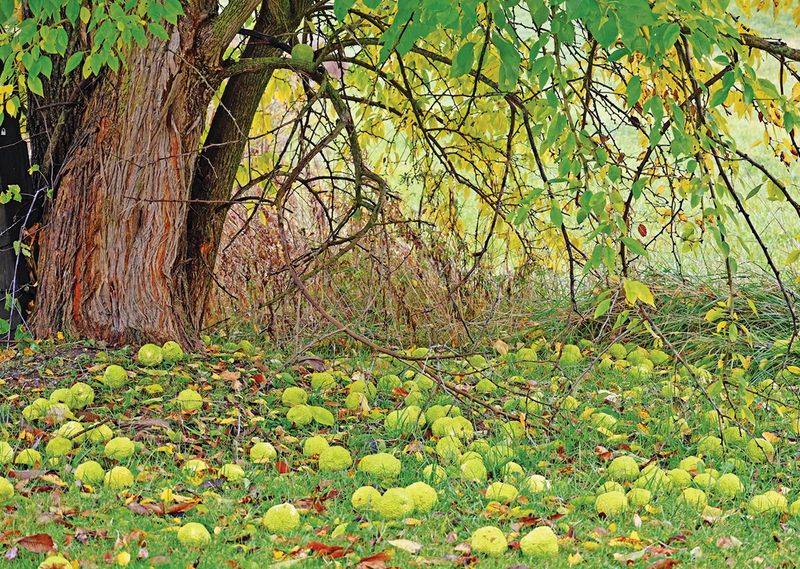
Leaves can fool you and bark can hide its color. A softball-sized green lump in the grass, though, is about as subtle as a marching band.
When you see one, you can bet an Osage orange is close by. Nothing else in Ohio drops heavy, round, bumpy, lime-colored fruit like this.
Even beginners can make this call with confidence.
In autumn, hedge apples often cover the ground beneath female trees in big clusters. They tumble down once ripe, from late summer into fall.
One tree can leave dozens scattered around like forgotten playground balls.
Use them as a starting point for your detective work. Stand by the fruit and look up.
Check the leaves for glossy shine, the twigs for thorns, and the trunk for orange in the grooves.
Bring a sturdy bag if you plan to collect a few. They are heavier than they look, and the sap can get messy.
Gloves make the job much cleaner.
Watch your head when standing under a loaded tree on a windy day. A falling hedge apple packs a surprising punch.
Pick a calm afternoon, grab a friend, and enjoy one of the easiest and silliest nature hunts Ohio has to offer.