10 Pumpkin And Gourd Varieties That Actually Grow Well In Florida’s Climate
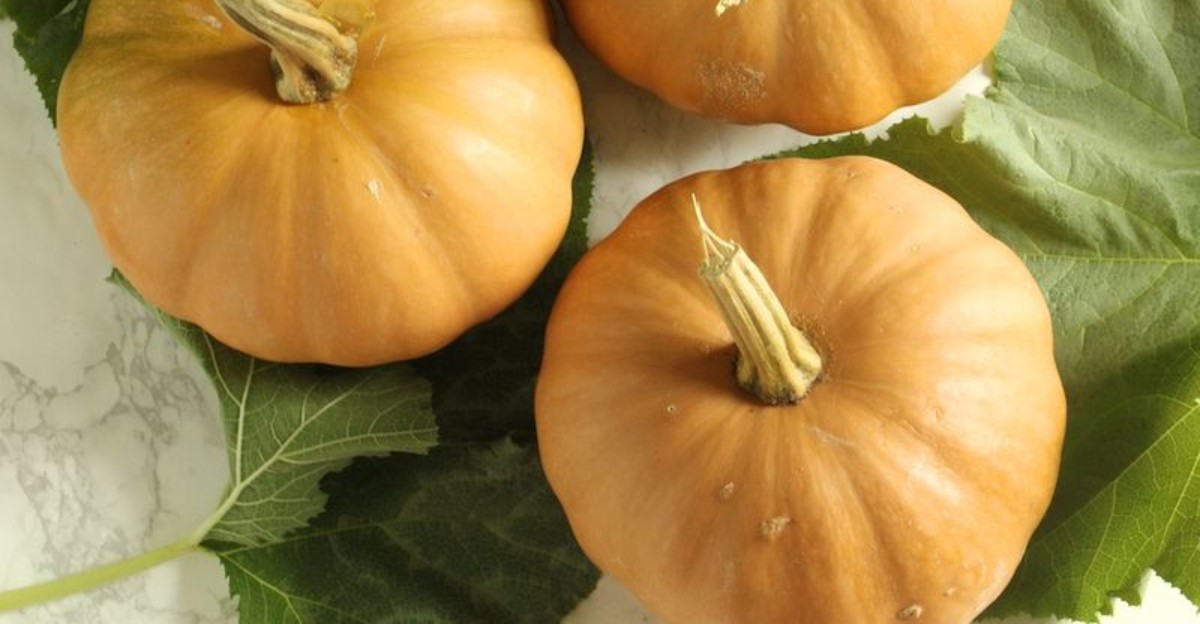
Florida pumpkin patches look great in photos. Ask the farmers where those pumpkins grew, and you’ll often hear “somewhere up north.”
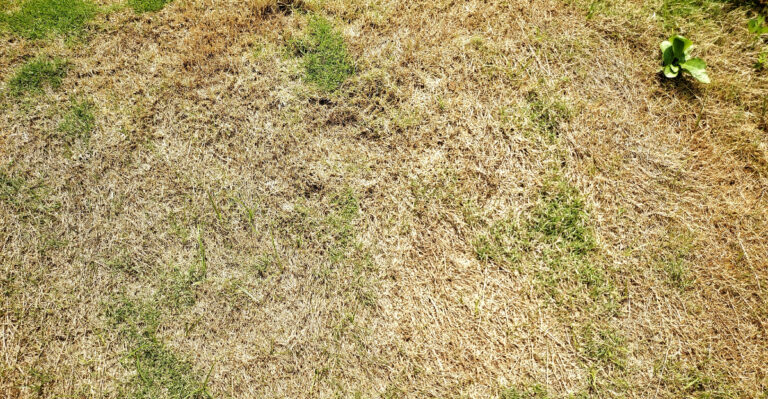
The state’s heat, humidity, and bugs chew through most of the varieties that sit proudly on grocery store displays. Gardeners plant the classic carving type at the wrong time with no plan, and the vines collapse before the first fruit turns orange.
Mildew, borers, and soggy soil take care of the rest.
A better plan starts with picking the right kind. Ten varieties handle this climate far better than the usual suspects, and they come in more shapes and colors than you might expect.
Some are perfect for pies, some for porch decor, and a few for both.
Timing and spacing matter almost as much as the variety itself.
Browse the list before ordering seeds. Next fall’s porch could be homegrown.
1. Seminole Pumpkin, Florida’s Own Native Pumpkin
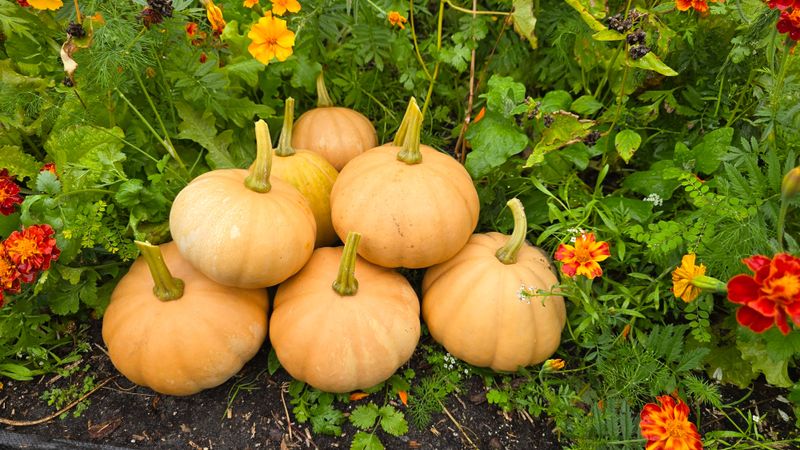
Long before grocery stores, the Calusa, Creek, and Miccosukee people grew this vine across the state. Some say they planted seeds at the base of trees and let the vines climb right up into the branches.
That history matters, because the plant has had centuries to get used to our heat. It handles humidity well and shows good resistance to powdery mildew and squash vine borers.
The fruits are small and tan to orange, usually weighing 6 to 12 pounds. Cut one open and you will find bright, firm flesh that tastes like a sweeter butternut.
Give the vines room, since they can stretch 10 to 25 feet. Let them sprawl on the ground, or train them up a sturdy fence or trellis for a tidy look.
In North and Central Florida, plant from February to April for the best start. Frost-free areas farther south can plant anytime between August and March.
Choose a sunny spot with well-drained sandy or loamy soil mixed with compost. Water steadily, but skip soggy soil, since too much moisture invites fungus.
Expect a harvest roughly 95 to 150 days after planting. Stored in a cool, dry place, these little gems can sit on your kitchen counter for many months, sometimes close to a full year.
2. Calabaza, The Tough Tropical Pumpkin
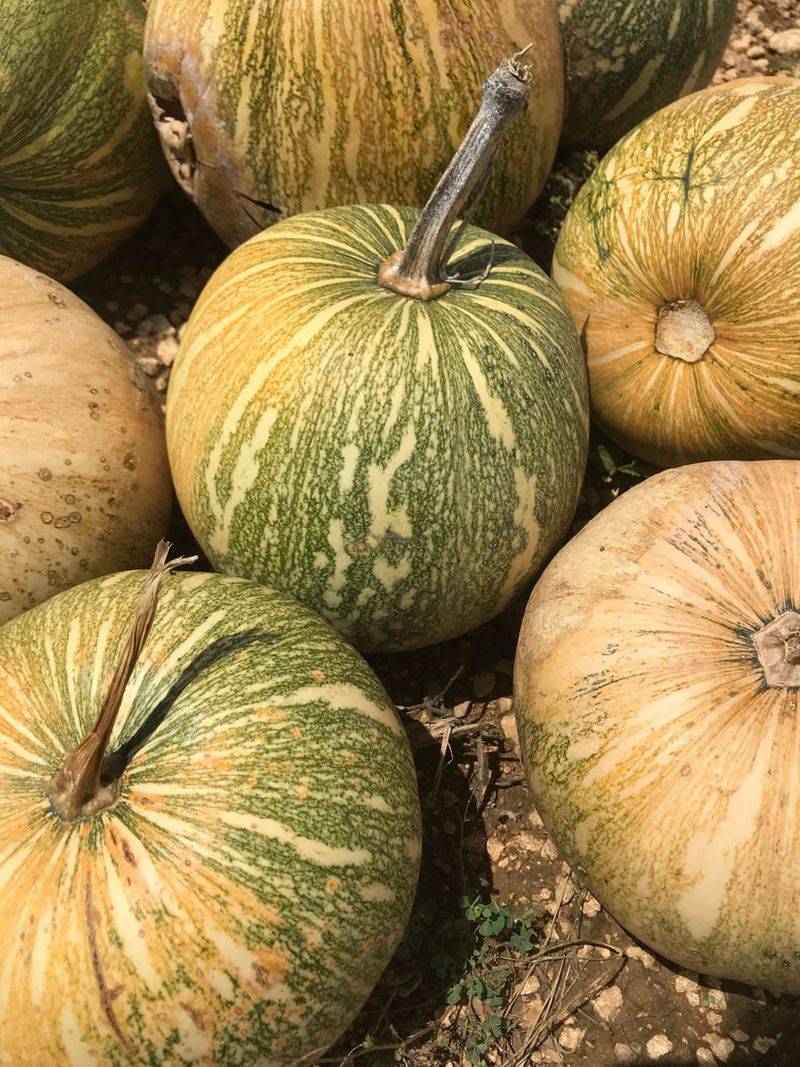
Ask a Cuban grandmother about calabaza and you might get a recipe, a story, and a plate of food before you leave. Known as Cuban squash or tropical pumpkin, it is a kitchen star across Latin America.
The plant is built for warm, sunny places like our steamy Florida backyards. It needs little extra water and stays mostly free of pests, which makes it a dream for busy weekend gardeners.
Fair warning, though, the vines are really wild. They can reach up to 50 feet, so give them a back corner of the yard where they can roam.
Each fruit weighs about 5 to 12 pounds and can be green, orange, or striped with ridges. Inside, the thick yellow to deep orange flesh tastes mild, sweet, and a little nutty.
Most gardeners plant from January through April or in August and September. If you want fruit for Halloween, get seeds into the soil in July.
Bees are your helpers here, since the flowers need pollinators to set fruit. Planting a few colorful blooms nearby can bring more buzzing visitors to the party.
Researchers at UF/IFAS are breeding new calabaza types for South region. Their goal is bigger harvests and tastier fruit for home growers and farmers alike.
3. ‘La Estrella,’ A Short-Vine Calabaza For Smaller Gardens
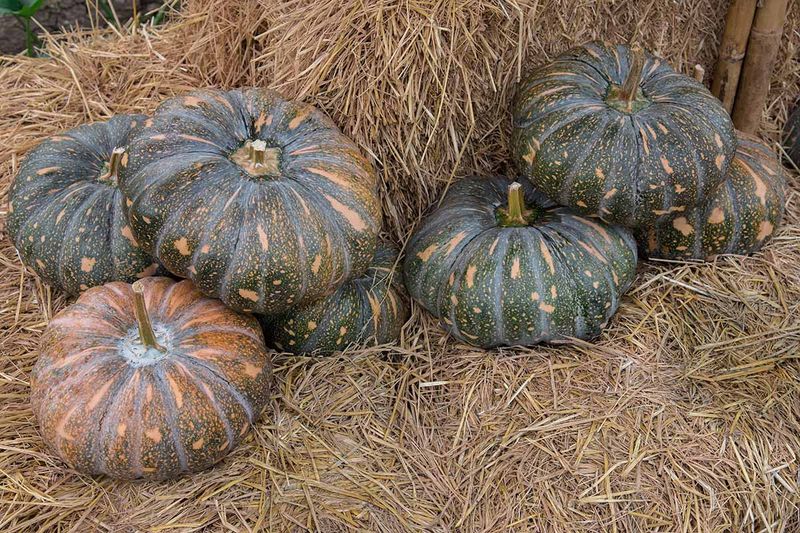
Not everyone has an acre to spare, and the University of Florida knew it. Their answer is ‘La Estrella,’ a hybrid whose name means The Star in Spanish.
Its semi-compact vines take up far less room than traditional calabaza. That makes it a smart pick for townhouse yards, raised beds, or a narrow strip along the fence.
Each plant usually gives you 4 to 6 round, slightly flat fruits. They weigh 6 to 10 pounds and wear thick, mottled green and orange skins with little tan flecks.
Slice one open and the flesh is sweet and nutty, with a hint of melon. Cooks love it in Cuban, Caribbean, and South American dishes like soups and stews.
Disease protection is a big bonus. The variety resists powdery mildew and several common viruses that can ruin a squash patch fast.
Since it was bred for winter growing, it fits nicely into the cooler months. That gives you a fresh crop when many summer plants have already called it quits.
Timing depends on where you live. Along the warm tropical coast, fruit can mature in about 70 days, while cooler northern areas may need 125 to 130 days.
You can start seeds indoors to get a jump on the season. Move seedlings outside once the soil warms to at least 60 degrees Fahrenheit, and water them in well.
4. Butternut Squash, A Disease-Resistant Cousin
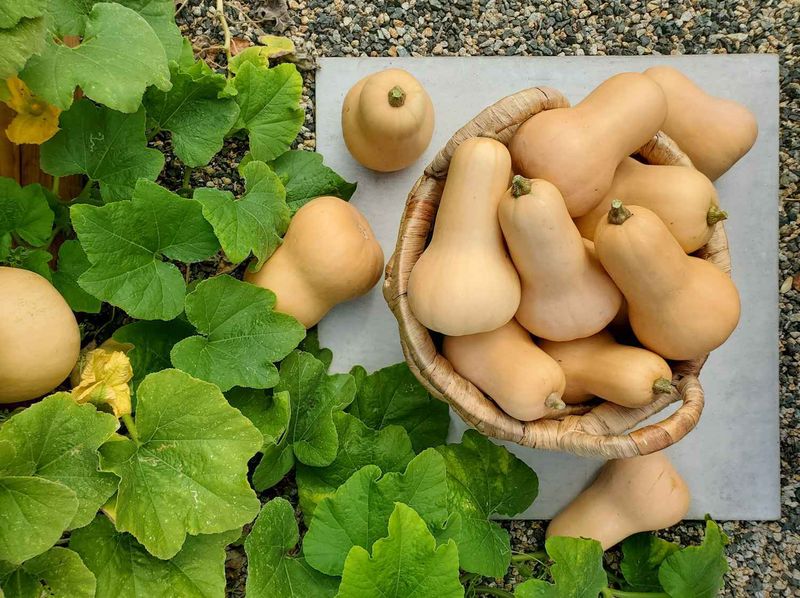
Here is a fun fact that makes Florida gardeners smile: squash vine borers tend to leave butternut alone. Its solid stems make it hard for those pesky larvae to tunnel inside.
On top of that, butternut handles powdery mildew pretty well. Some newer types, like ‘South Anna Butternut,’ were even bred to fight downy mildew.
Two trusted picks are ‘Waltham’ and ‘Early Butternut.’ Both give you that familiar bell shape filled with sweet, nutty, deep orange flesh.
North growers can plant from February to April or in August and September. Central Florida has a slightly longer spring window, and South region can plant from August through March.
Find a spot with at least six hours of sun each day. Mix compost into the soil so roots can find plenty of food and drain well after storms.
Vines need space to wander, or you can guide them up a trellis. Going vertical saves room and keeps fruit off damp ground.
Aim for about one inch of water each week, poured right at the roots. Wet leaves invite fungus, so try to keep the foliage as dry as you can.
A layer of mulch finishes the job nicely. It blocks weeds, holds in moisture, and saves you from extra chores on hot afternoons.
5. Buttercup Squash For A Sturdy Winter Squash
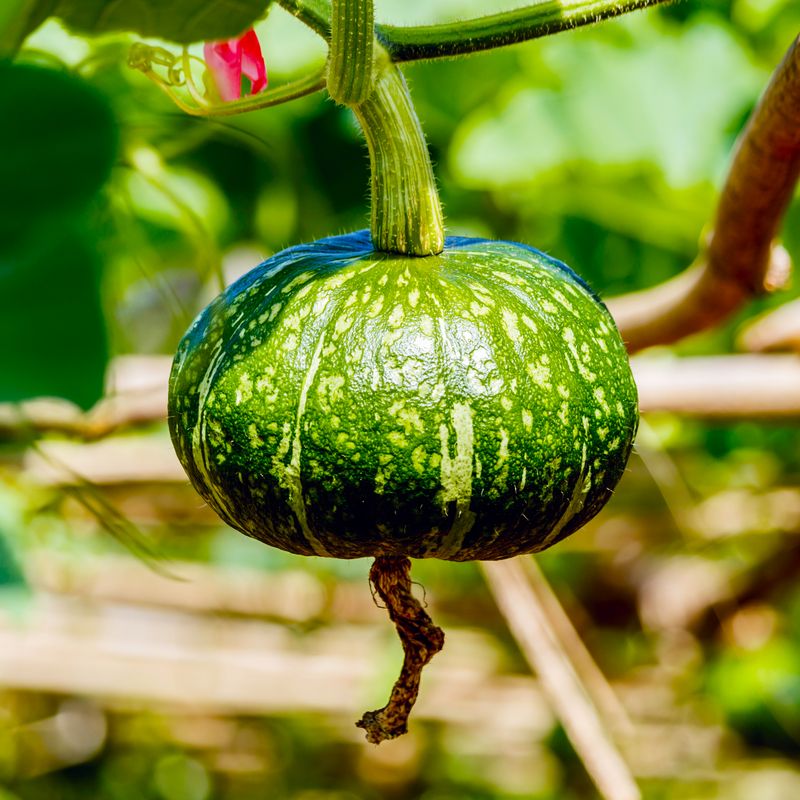
Think of buttercup as the cozy sweater of the squash world. Its dark green skin, sometimes striped with lighter green, hides dry, sweet, yellow-orange flesh that roasts beautifully on a chilly evening.
This heirloom is a manageable size, usually just 2 to 3 pounds. One fruit makes a perfect side dish for a small family dinner.
The Sunshine State gives you two chances to grow it, in spring or fall and winter. North Florida gardeners can plant after the last frost or from August to December.
In Central Florida, spring planting after the last frost works best. South Florida growers have a long window from August through March.
Full sun keeps the plants happy most of the year. During steamy August and September, though, a bit of afternoon shade can help them cope.
The plants grow as vining bushes and like some elbow room. A trellis or fence lets them climb, which saves space and keeps fruit cleaner.
Steady moisture is key, especially if you grow them in containers that dry out quickly. Check pots with your finger, and water when the top inch feels dry.
Plan on 90 to 95 warm days before harvest. Frost can harm the vines, so keep an old sheet handy if a cold snap rolls in unexpectedly.
6. ‘Howden’ For Classic Jack-O’-Lanterns
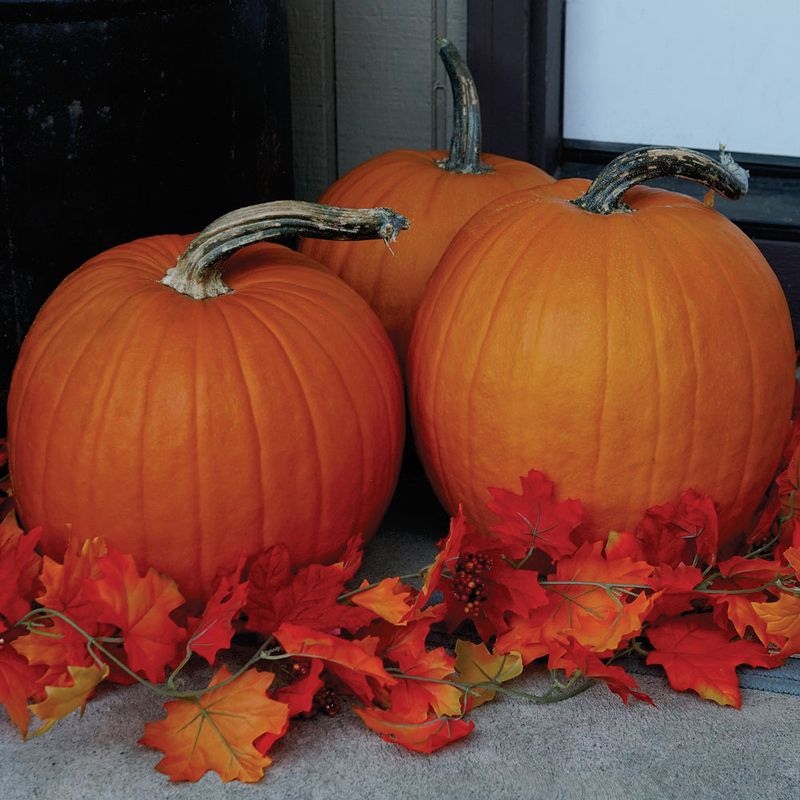
Remember scooping slimy seeds from a big orange globe at the kitchen table? There is a good chance that pumpkin was a ‘Howden,’ the classic jack-o’-lantern choice for decades.
Just know that classic carving pumpkins are the fussiest picks on this list in the state. Plant on time, watch closely for mildew and vine borers, and they can still reward you.
Its fruits are round and even, with smooth deep orange skin and neat ribs. A sturdy handle on top makes it easy to carry home and show off.
Most weigh 8 to 25 pounds and mature in 75 to 120 days. Plant by early July if you want them ready for Halloween.
Just know that the flesh is pretty watery, so it is better for carving than for pies. The seeds, though, roast up into a salty, crunchy snack.
Give the vines full sun, ideally 6 to 8 hours or more each day. Fertile, well-drained soil with a pH between 6.0 and 7.0 suits them best.
Deep, regular watering matters most during flowering and fruit growth. Aim the hose at the soil, not the leaves, to help keep powdery mildew away.
Want bigger pumpkins for your porch? Thin each vine down to just 1 to 3 fruits so the plant can focus its energy.
Carving night becomes extra special when the pumpkin came from your own yard. Kids get a kick out of choosing one they watched grow all summer.
7. ‘Jackpot’ For Carving
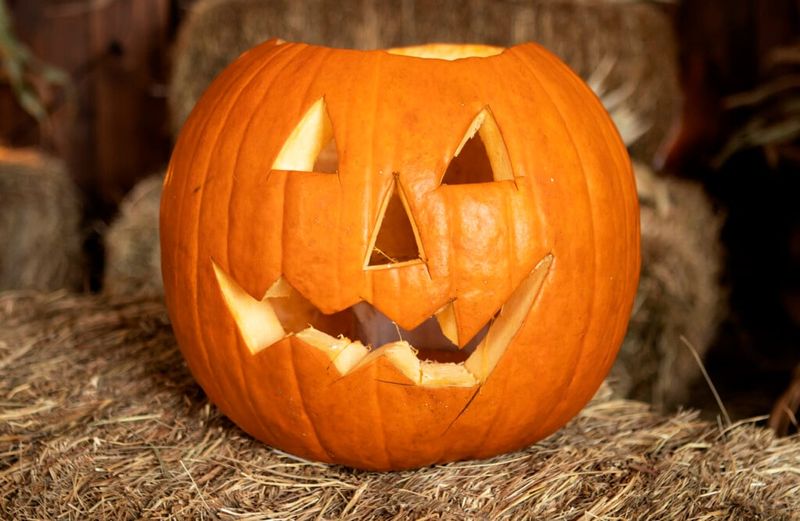
Some names just fit, and ‘Jackpot’ feels like winning a prize when those big orange fruits show up. Gardeners in hotter parts of Florida have good luck with it too.
The pumpkins are round and bright deep orange, usually 10 to 30 pounds. They measure about 12 to 14 inches across, which leaves plenty of room for a carved face.
Expect them to mature in about 100 days. Like ‘Howden,’ it should go in the ground by early July for a Halloween harvest.
Pick your sunniest patch of yard for these vines. They grow best in soil with a pH between 6.0 and 7.0, so a simple soil test can save guesswork.
Water is the other big piece of the puzzle. Give them about 1 to 2 inches each week, more during long dry spells.
Mulch around the base helps sandy soil hold that moisture. It also keeps the fruit from sitting directly on wet ground.
Here is a handy trick for neat pumpkins. Gently turn each fruit now and then so it colors evenly and does not develop a flat, pale side.
When the rind feels hard and the stem starts to dry, it is harvest time. Cut the stem with a few inches attached so your pumpkin lasts longer on the porch.
8. ‘Big Max’ For Giant Pumpkins With Extra Care
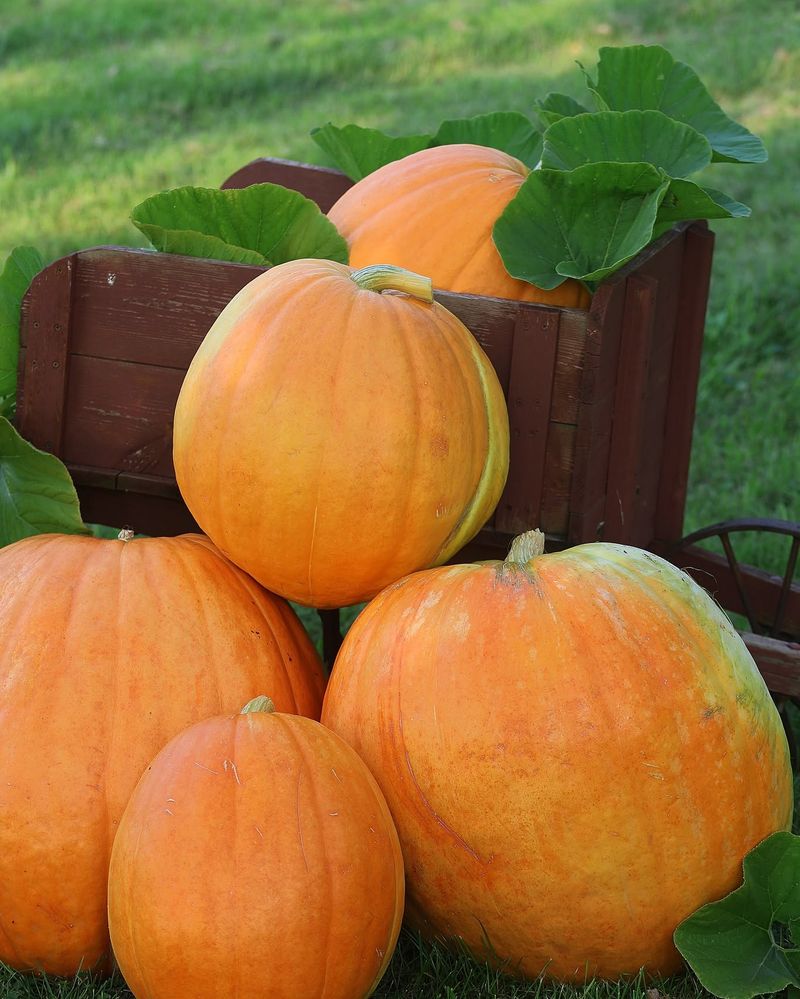
Dreaming of a pumpkin so big it needs a wagon? ‘Big Max’ is the heirloom that giant pumpkin fans reach for, and it can top 100 pounds.
With ideal care, some growers have pushed it close to 200 pounds. That is heavier than most grown adults, so bring a friend at harvest time.
The fruits are nearly round with smooth, light to reddish orange skin. Beyond carving, the thick flesh works for pies, baking, canning, and freezing.
Space is a must, because the trailing vines run 10 to 15 feet. Expect about 110 days from seed to harvest.
Plant seeds directly in the garden about 1 inch deep. Wait until the soil reaches at least 65 degrees Fahrenheit so they sprout quickly.
Here is the secret to size: limit each vine to just one or two fruits. The plant then pours all its energy into those few lucky pumpkins.
Feed regularly and water deeply but not too often. That routine pushes roots to grow down, building a stronger, healthier plant.
Drip irrigation is a smart upgrade for the project. It keeps leaves drier, which helps prevent downy and powdery mildew in our muggy air.
Yes, it takes extra effort. The look on a neighbor’s face when they see your monster pumpkin makes it worth every drop of sweat.
9. Luffa Gourd, The Sponge You Can Grow
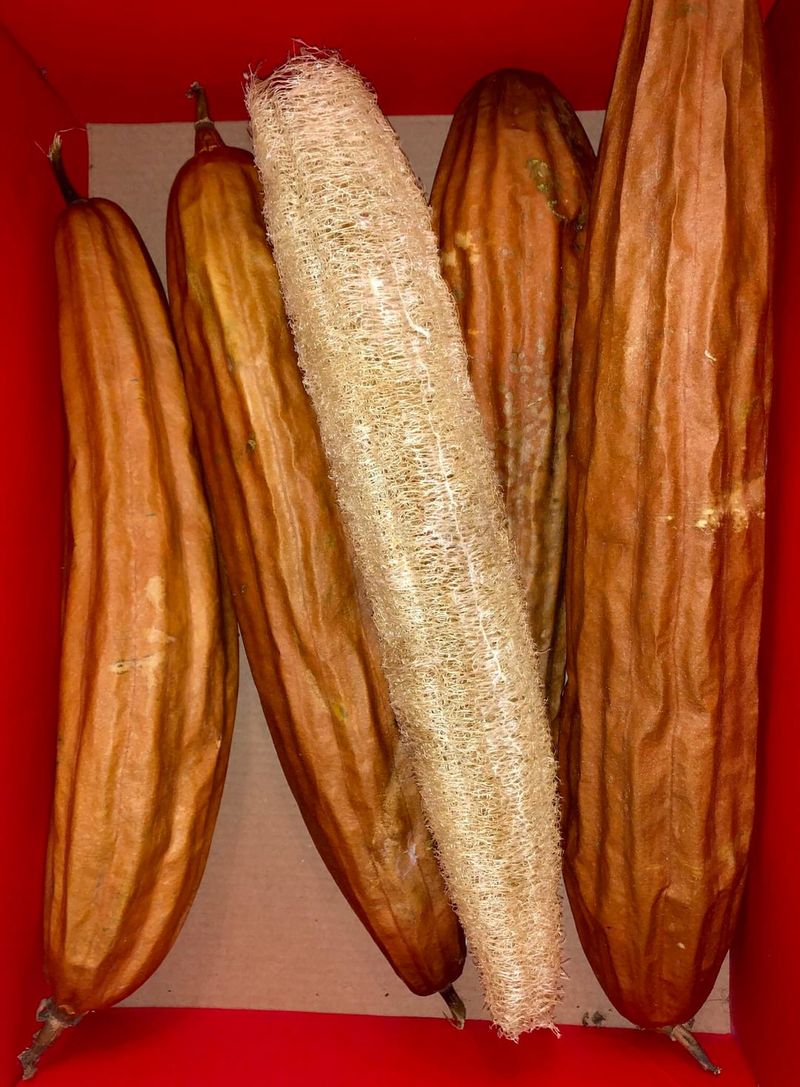
Surprise your friends by telling them their bath sponge grew on a vine. Luffa gourds are the real deal, and our steamy summers suit them nicely.
Two main types grow here, angled luffa and smooth luffa. Both form fibrous insides that turn into natural scrubbers once dried.
Patience helps, since they need at least 200 warm days to fully mature. Luckily, our long, sticky summers give them plenty of time to finish.
Bonus: young fruits under six inches long are tasty, along with the leaves, shoots, and flowers. Many cooks toss them into stir-fries like zucchini.
Plant in full sun with well-drained soil rich in organic matter. A pH between 6.0 and 6.8 and steady moisture keep the vines growing strong.
Those vines can climb up to 30 feet, so build a tough trellis or use a fence. Hanging fruit grows straighter and stays safe from rot.
Sow seeds outdoors from March through July. You can also start them inside and move them out once they show two or three true leaves.
For sponges, wait until the gourds turn brown and the skin pulls away from the fibers. Peel off the skin, shake out the seeds, and admire your very own homemade scrubber.
10. Small Ornamental Gourds That Handle The Heat Better
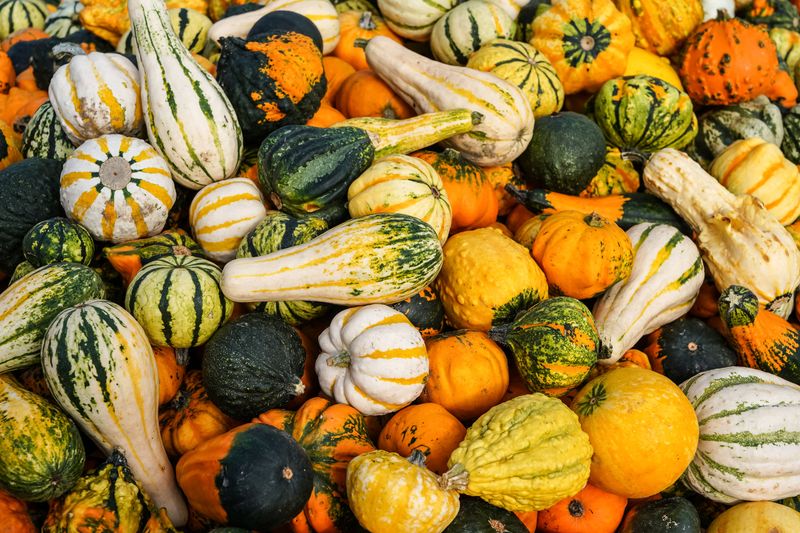
Warty, striped, pear-shaped, or flat like tiny pumpkins, ornamental gourds are nature’s craft supplies. They belong to the same family as squash but are grown mainly for decoration.
Heat-tolerant types do well in state’s bright sunshine. Try pear gourds, flat fancy gourds, or warty fancy gourds for a fun mix of shapes and colors.
Bottle gourds and calabash gourds also thrive here. Crafters turn them into birdhouses, bowls, and even musical instruments.
Give the plants 6 to 8 hours of sun and well-drained soil with plenty of compost. A slightly acidic to neutral pH, around 6.0 to 6.8, suits them well.
South Florida gardeners can plant seeds from September through March. Elsewhere, start seeds indoors 4 to 6 weeks before the last frost or plant once spring soil warms.
These climbers love a sturdy trellis or fence. Growing up saves space, improves airflow, and keeps fruit from rotting on the ground.
Keep the soil moist but not soggy, and add mulch to hold in water. Unlike edible squash, leave the gourds on the vine until they mature and dry.
Snip them off with sharp shears, leaving part of the stem. Then cure them for a month or two in a warm, dry, airy room before painting or displaying.