What It Means When You See a Sandhill Crane in Your Michigan Yard
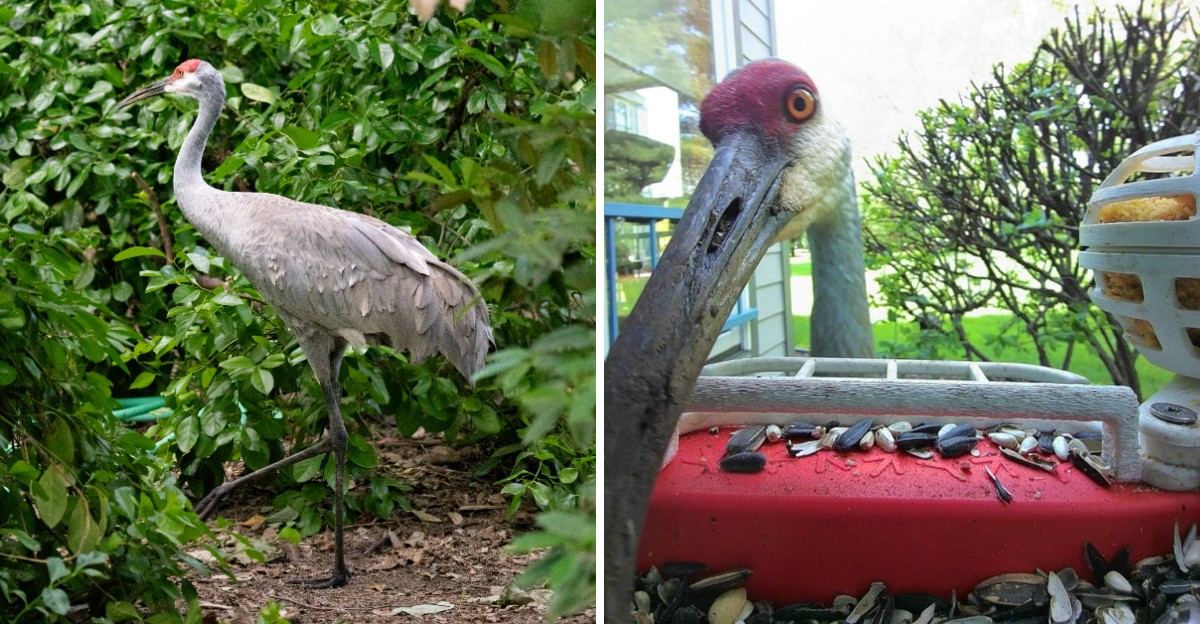
A bird taller than your kitchen counter just strolled past your mailbox. It has a bright red patch on its head and a call you can hear from over a mile away. I still grin every time that rattling trumpet floats over the trees.
These birds belong to one of the oldest bird families on Earth. Fossils of close relatives date back millions of years. Michigan nearly lost them a century ago, and now they wander through suburbs, farm fields, and backyards.
You need to see one up close at least once. They pace slowly, poke at the grass, and sometimes leap into wild, flapping dances. Personally, I find their calm confidence a little funny.
So what brought this prehistoric-looking guest to your lawn? The answer says more about your yard than you might expect.
1. That Tall Gray Crane on Your Lawn Is Sending You a Message
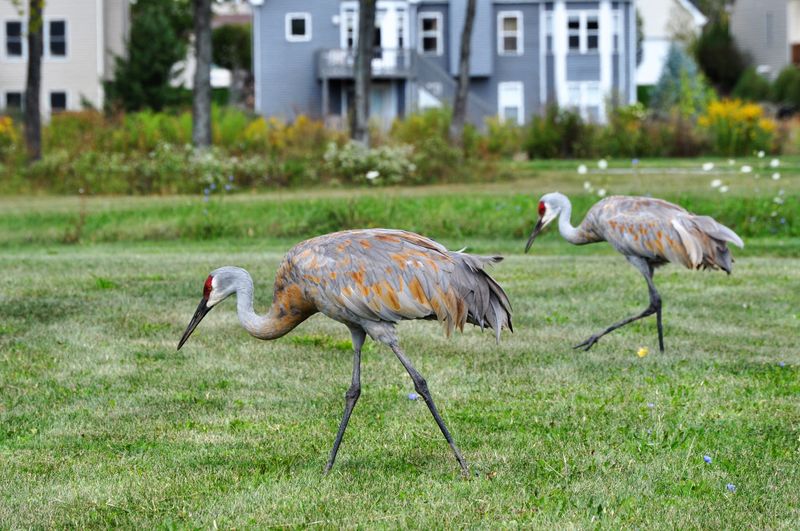
Honestly, a crane in your grass is a compliment to your neighborhood. These birds look for open ground, nearby water, and easy food. When one shows up, your area likely offers all three.
Sandhill cranes favor wet meadows, marshes, and bogs for nesting. Many Michigan homes sit near ponds, retention basins, ditches, or farm fields. That mix gives cranes a safe place to rest and a short walk to snacks.
Your lawn also works like a lookout tower. Short grass lets cranes spot coyotes, foxes, and dogs from far away. That clear view helps them feel relaxed enough to stay for a while.
So the visit usually means your yard sits inside a healthy patch of crane habitat. It does not mean anything is wrong. Most of the time, the bird is simply doing normal crane things in a spot that suits it.
Watch for clues about why it came. Is it probing the soil, sticking close to a partner, or standing with a group? Each behavior tells a slightly different story.
Grab binoculars and enjoy the show from a comfortable distance, ideally through a window or from your porch.
2. Those Long Crane Bills Are Hunting for Grubs and Seeds
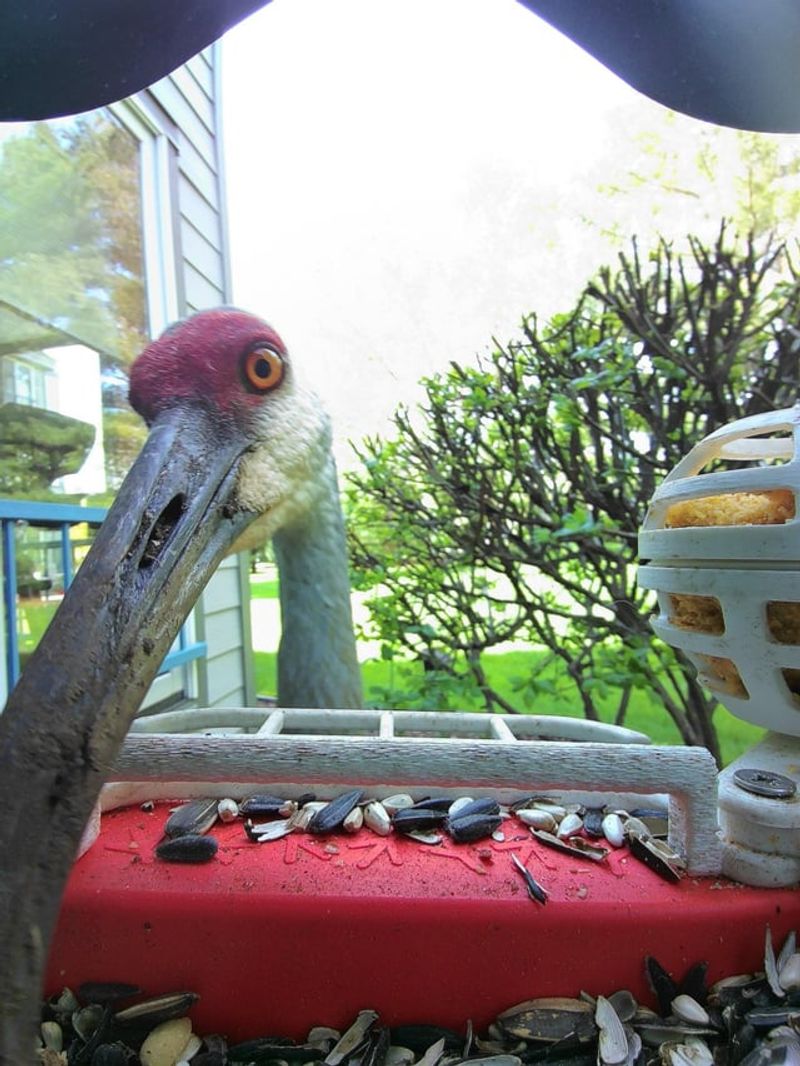
Grubs are basically crane candy. Sandhill cranes eat a wide menu of seeds, grains, roots, insects, worms, snails, and even small frogs or mice. Your lawn may hide a buffet you never noticed.
Watch closely and you will see the bird jab its bill into the turf again and again. It is often hunting beetle larvae living under the grass roots. Those same grubs can harm your lawn, so the crane is doing you a small favor.
Spilled birdseed is another big draw. Cranes happily clean up sunflower seeds and cracked corn beneath feeders. In nearby farm fields, they also pick up leftover corn after harvest.
Here in Michigan, cranes sometimes pull up newly planted corn sprouts in spring. Farmers notice that problem more than homeowners do. In gardens, they may sample tender seedlings or bulbs now and then.
If you want fewer visits, rake up spilled seed and bring feeders in for a few weeks. Trays with catch pans help too. Handling grubs with milky spore or beneficial nematodes can also reduce the food supply over time.
The crane will likely move on to richer ground once the easy snacks disappear.
3. Is This a Quick Migration Stop or a Crane Couple Moving In?
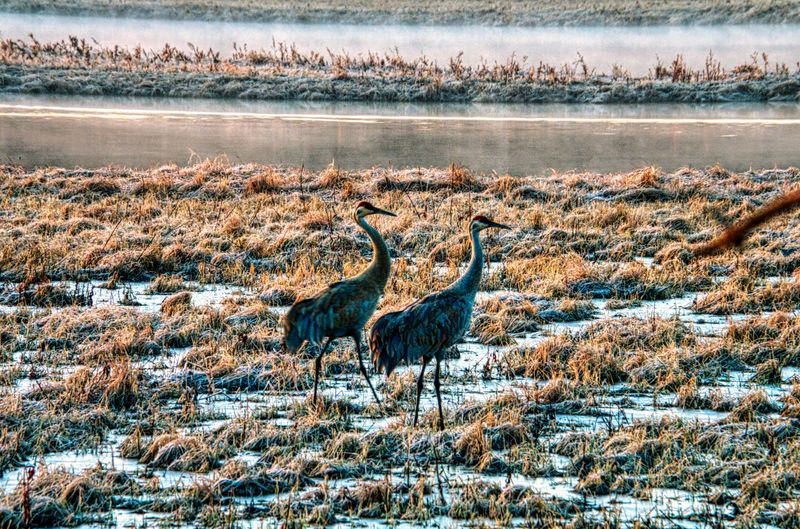
Season matters a lot with these birds. A crane in April is telling a very different story than one in late October. Checking the calendar helps you figure out what is going on.
In spring, pairs return to Michigan from the southeastern states as early as late February or March. They mate for life and often reuse the same territory each year. If you see two cranes together near a marsh, they may be nesting close by.
Nesting usually happens from April into May. The pair builds a mound of plants in shallow water and lays one to three eggs. Fuzzy, cinnamon-colored chicks called colts can walk within hours of hatching.
Fall is another matter. From September through November, cranes gather in big groups called staging flocks before heading south. Famous spots like Baker Sanctuary in Calhoun County can host thousands of birds at once.
So a big noisy group in autumn likely means travelers fueling up. A steady pair from spring to summer probably means neighbors. Either way, you get a front-row seat to one of the oldest travel routines in the bird world.
4. Give Those Crane Parents and Colts Plenty of Room
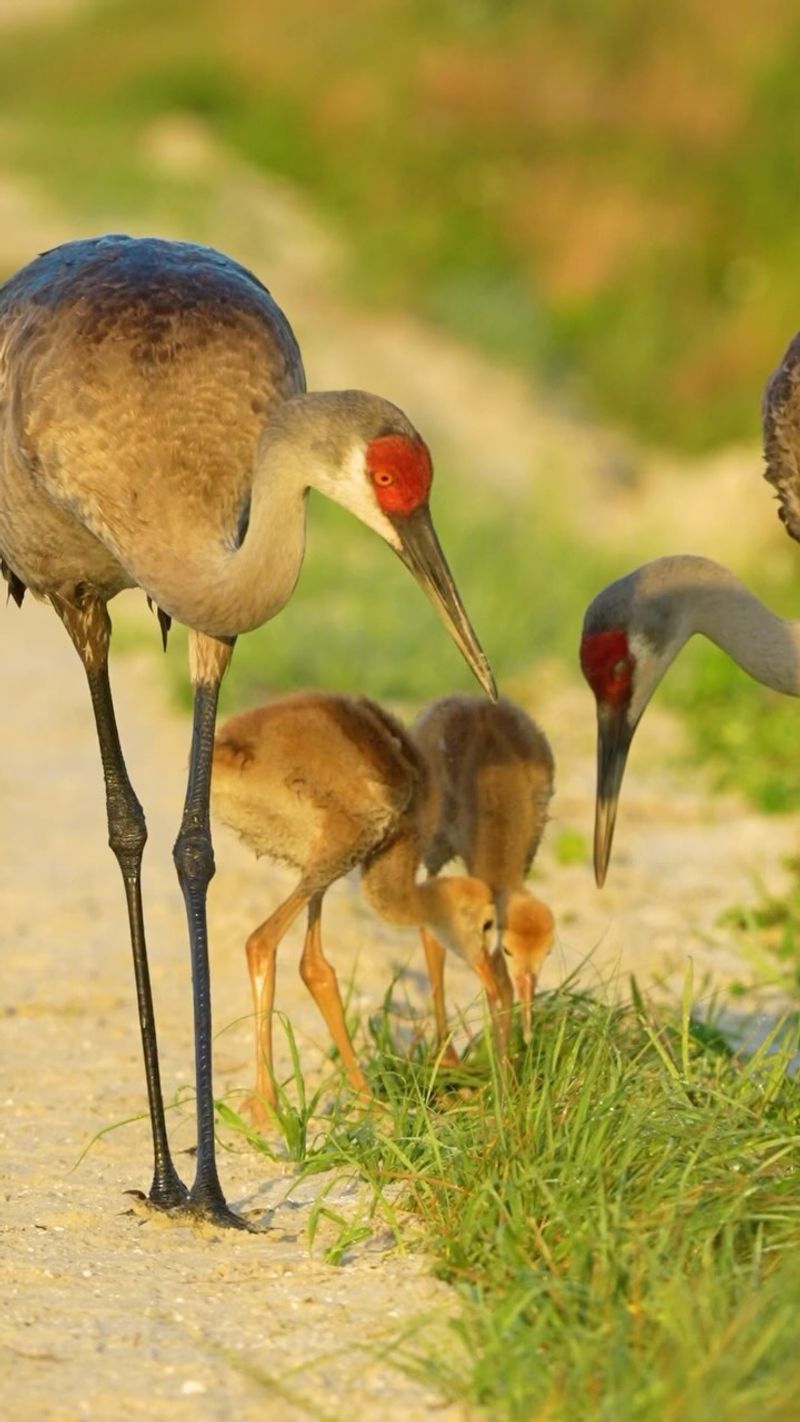
My first close encounter with a crane family taught me one lesson fast. Those parents do not mess around. A crane standing four feet tall can lunge with a sharp bill and strong feet.
Keep at least 50 feet between you and any crane, more if chicks are present. Watch for warning signs like spread wings, a lowered head, or loud calls. Those signals mean you are too close.
Pets need extra care. Keep dogs leashed and cats indoors during nesting season. A curious pet can stress the family or get hurt itself.
Please skip the handouts. Wildlife experts warn that fed cranes lose their fear of people. They may start pecking at windows, cars, or even people asking for food.
That window pecking happens anyway sometimes. Cranes may attack their own reflection, thinking it is a rival. Covering the glass with screens, tape, or a temporary sheet usually solves the problem.
Drive slowly in neighborhoods with crane families, too. Colts follow their parents across roads at a very relaxed pace. A little patience keeps everyone safe and gives you a charming moment to watch.
5. You Can Tell a Sandhill Crane From a Heron in Seconds
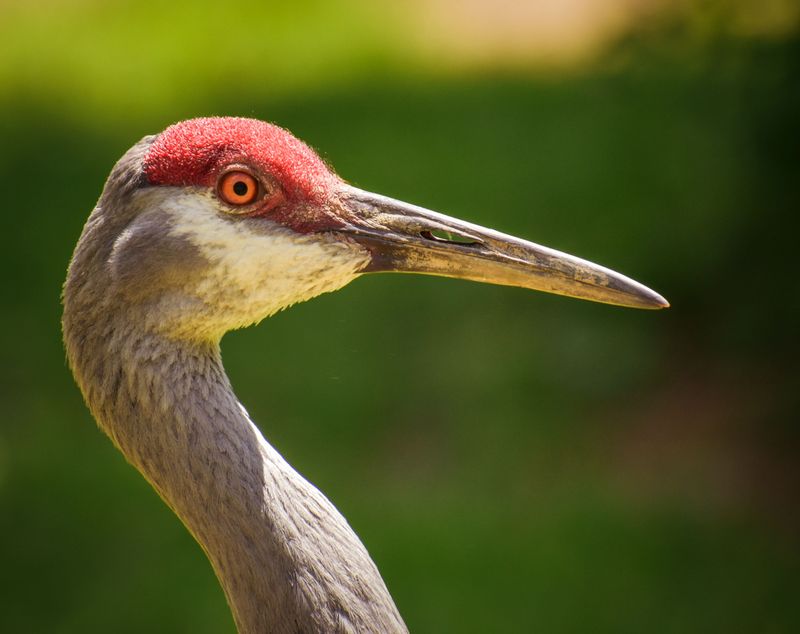
Plenty of folks mix up cranes and great blue herons. Both are tall, gray, and long-legged. A few quick clues make the difference easy to spot.
Start with the head. Adult sandhill cranes wear a bright red patch of bare skin on the forehead. Herons have no red cap and instead show a black stripe over the eye.
Next, check the back end. Cranes have a fluffy bunch of feathers over the tail, often called a bustle. It looks a bit like a feather skirt.
Flight gives another strong clue. Cranes fly with their necks stretched straight out. Herons tuck their necks into an S-shape while flying.
Behavior helps, too. Herons usually hunt alone, standing still in water. Cranes often walk in pairs or groups across dry fields and lawns.
Then there is the sound. A crane gives a rolling, trumpeting rattle you can hear from far away. Herons offer only a harsh croak.
Fun fact: some cranes look rusty brown in summer. They paint their gray feathers with iron-rich mud while preening. It works like natural camouflage during nesting season.
6. Sandhill Cranes Pulled Off an Amazing Michigan Comeback
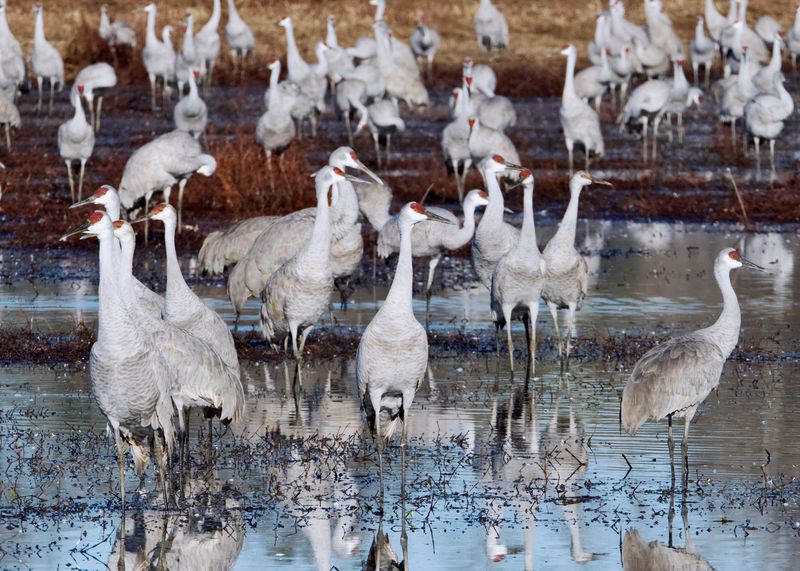
Back in the early 1900s, spotting one of these birds in Michigan was a rare event. Hunting and draining of wetlands pushed the population to just a few dozen pairs. Some experts worried they might vanish from the state.
Things slowly turned around. The Migratory Bird Treaty Act of 1918 gave cranes legal protection. Groups like the Michigan Audubon Society also protected key wetlands, including Baker Sanctuary, set aside in 1941 as a crane refuge.
Wetland restoration helped even more. Farmland nearby gave cranes extra food, especially waste corn. Over the decades, numbers climbed steadily.
Today, the eastern population numbers in the tens of thousands. Cranes now nest in most Michigan counties, from the southern Lower Peninsula to the Upper Peninsula. That growth explains why more people see them near homes.
I love that a backyard sighting now feels normal. My grandparents rarely saw one. Your kids may grow up thinking cranes are just part of the neighborhood.
Still, success needs care. Each healthy wetland, protected marsh, and respectful neighbor helps keep the story going strong for the next generation.
7. Your Yard Can Help Keep These Protected Cranes Thriving
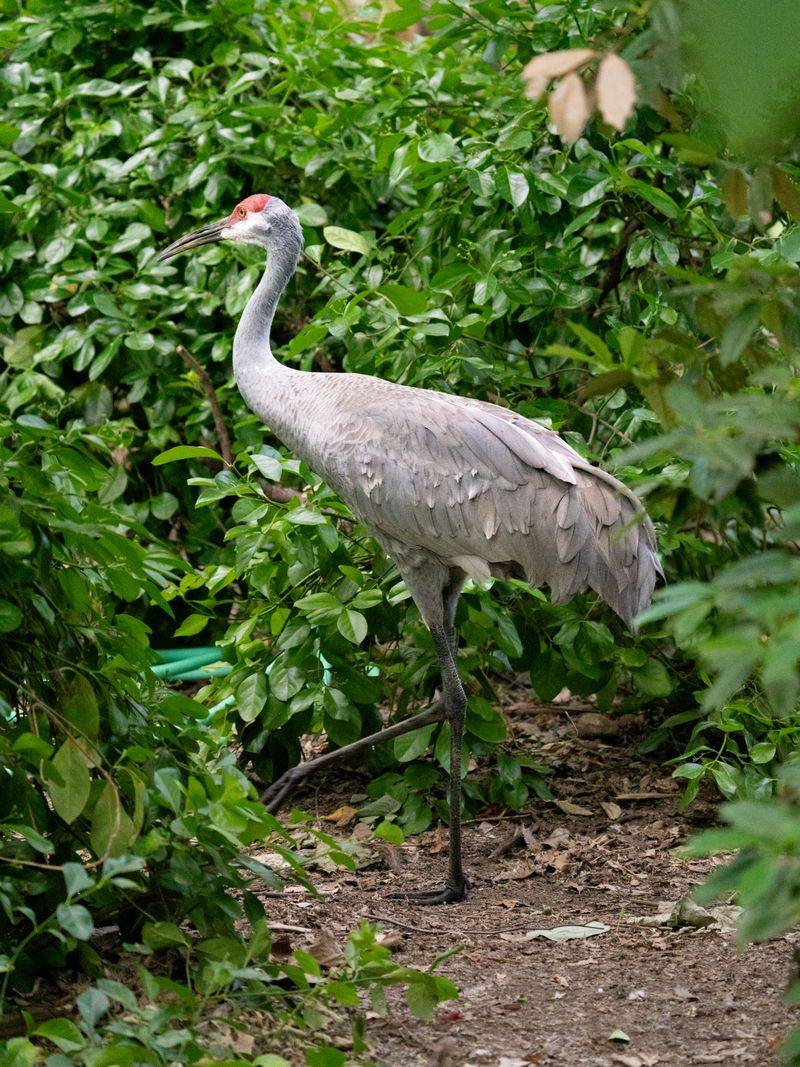
Law comes first with these birds. Sandhill cranes are protected under the federal Migratory Bird Treaty Act. Harming, capturing, or disturbing nests, eggs, or birds is illegal without a permit.
Michigan does not allow crane hunting, though the idea has been debated. If a crane causes real trouble, contact the Michigan DNR or USDA Wildlife Services for advice. Farmers dealing with crop damage can get help through proper channels.
You can do plenty to support them at home. Leave wet, low spots natural instead of filling them in. Plant native sedges, rushes, and wildflowers near ponds or ditches.
Go easy on lawn chemicals. Pesticides can affect the insects and frogs cranes rely on. Fewer chemicals also help pollinators and songbirds.
Pick up fishing line, string, and plastic litter near water. Cranes sometimes get tangled in these items. A quick cleanup can prevent a painful injury.
Finally, share your sightings. Reporting cranes on eBird helps scientists track populations across Michigan. Your simple photo or note adds to a bigger picture. Enjoy each visit as a sign your corner of the world still has room for wild things.