8 Native Texas Trees To Plant Instead Of Italian Cypress
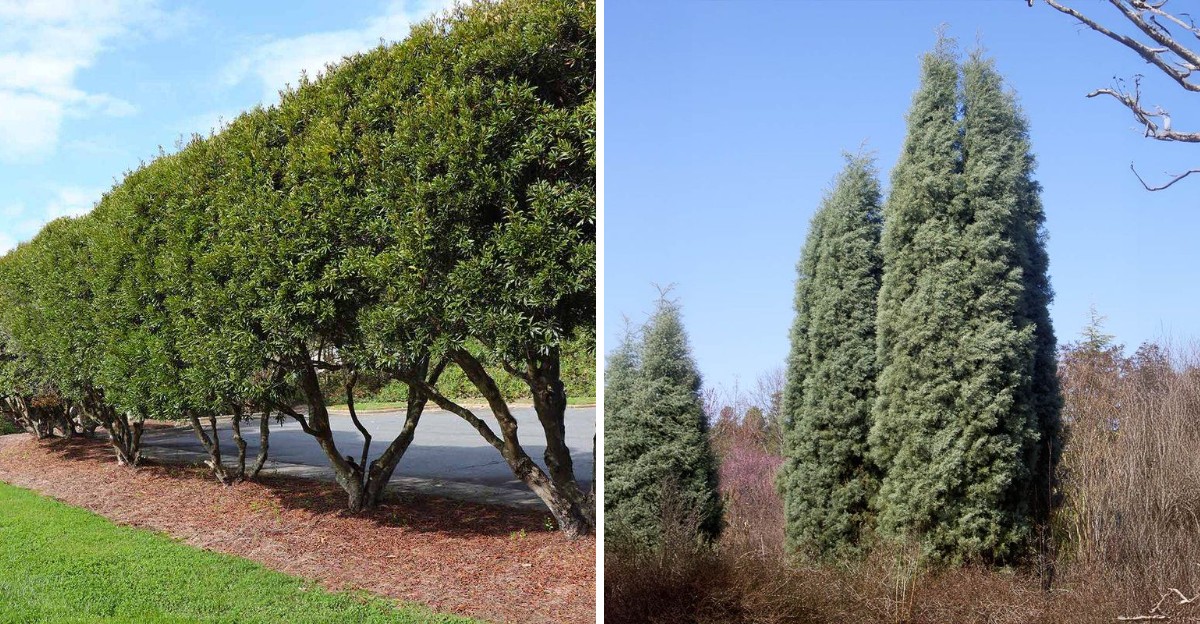
Tall, skinny Italian cypress trees can make a Texas yard look like it belongs in the Tuscan countryside.
Lined up along a driveway or flanking a front door, they add instant height, drama, and a touch of old-world elegance. That Mediterranean charm, however, doesn’t always hold up in Texas.
Italian cypress often struggles with spider mites, bagworms, and fungal diseases that turn sections of the tree a rusty brown.
Hard freezes can damage them, heavy rains can rot their roots, and strong winds may leave them leaning or toppling. They also offer very little food or shelter for local wildlife.
Thankfully, Texas has native trees that can deliver a similar tall, narrow look with far fewer headaches.
Many handle heat and drought with ease, stay evergreen, and attract birds and pollinators, too. Swapping in a native can give your yard the same striking style without the constant worry.
1. Eastern Red Cedar
Ranchers across Texas have watched eastern red cedar shrug off droughts that left other trees gasping. It grows in rocky soil, clay, and sand. Strong winds barely slow it down.
Most wild cedars grow wide and bushy, so they are not the best fit for a narrow spot. The good news is that growers have found slim selections.
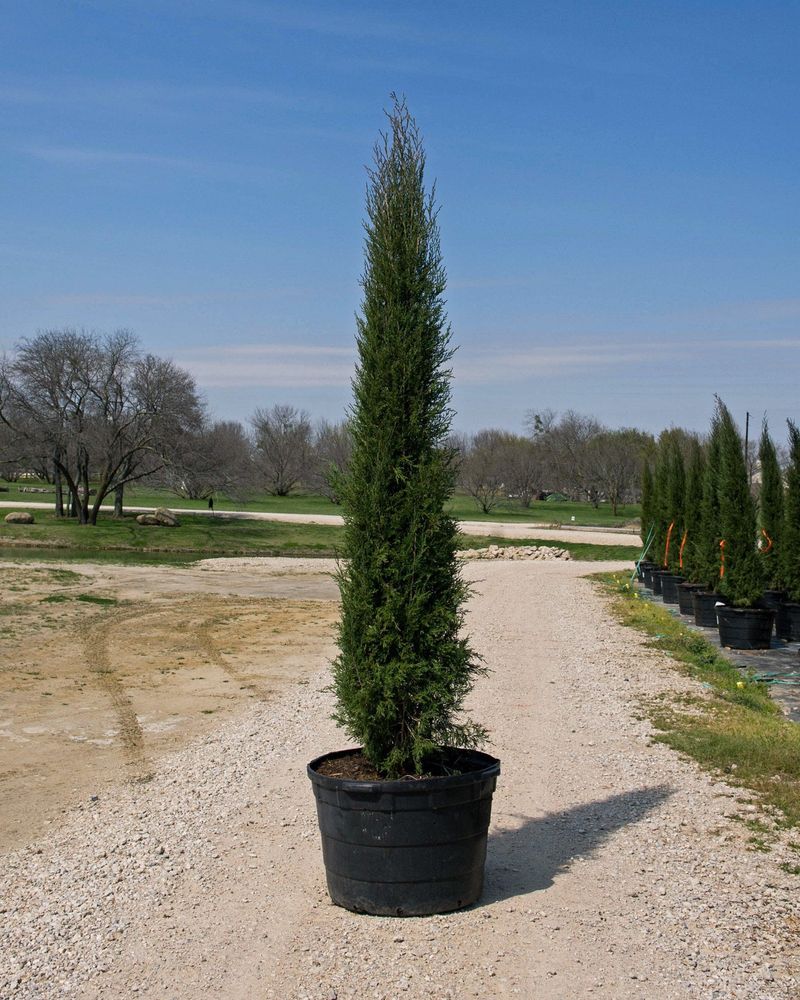
The variety called ‘Taylor’ is the star here. It grows about 20 to 30 feet tall but stays only 3 to 5 feet wide. That slender, column shape looks a lot like Italian cypress.
Plant it in full sun for the best growth. Shade makes it thin and patchy. Water it often during the first summer while the roots settle in. After that, it can usually live on rainfall alone, except in very long dry spells.
Birds love this tree. Female cedars make small, blue, berry-like cones that cedar waxwings and robins gobble up in winter. The thick branches also give songbirds a safe place to nest and hide from hawks.
A few things are helpful to know before you plant. Cedar pollen in winter can bother people with allergies, so think about where windows and patios sit. Also, keep it away from apple trees if you can, since a rust disease can pass between them.
Here is a fun fact. Eastern red cedar wood smells sweet and resists bugs, which is why people use it to line closets and chests. Your grandparents may have stored blankets in a cedar chest.
For a tough, low-water screen or a tall accent by the front door, ‘Taylor’ is hard to beat. It gives you the classic upright look with true Texas grit.
2. Arizona Cypress
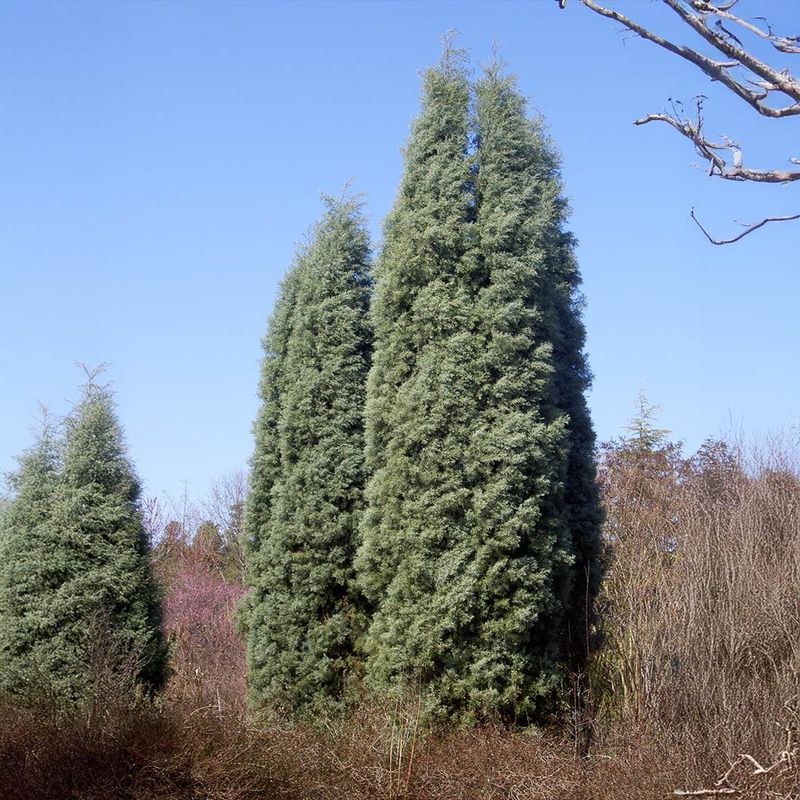
High in the Chisos Mountains of Big Bend, a blue-gray evergreen clings to rocky slopes. That tree is Arizona cypress, and it feels right at home in Texas. It is a true cousin of the Italian cypress, just better suited to our climate.
The color is what grabs people first. Its soft foliage has a silvery blue tint that glows in the sun. Next to green shrubs, it really stands out. Some varieties, like ‘Blue Ice’ and ‘Carolina Sapphire’, have even brighter color.
Your Texas Garden Changes Every Week. Your Plan Should Too.
Gardening in Texas changes quickly throughout the season. Every Friday you’ll receive a simple weekly plan showing exactly what to plant, prune, fertilize, harvest, and protect so you never miss the right timing.
The shape is naturally pyramid-like. It grows wider at the bottom and narrows to a point. Expect it to reach 30 to 40 feet tall and about 15 to 20 feet wide, so give it a bit more room than a skinny cypress.
Good drainage is the secret to success. Arizona cypress hates soggy roots. Heavy clay that holds water can cause problems, so plant it on a slope or in a raised bed if your yard stays wet. Full sun keeps it dense and healthy.
Once settled in, it is very drought tolerant. Deep watering once every few weeks in summer is usually plenty after the first year.
Too much water does more harm than too little. Gardeners use it in a few clever ways:
Plant a row for a fast privacy screen. Use one as a bold focal point in a rock garden. Pair it with agave and yucca for a desert look.
Crush a few needles between your fingers and take a sniff. They give off a fresh, lemony scent. It is a small bonus that makes walking past this tree a treat.
3. Upright Yaupon Holly
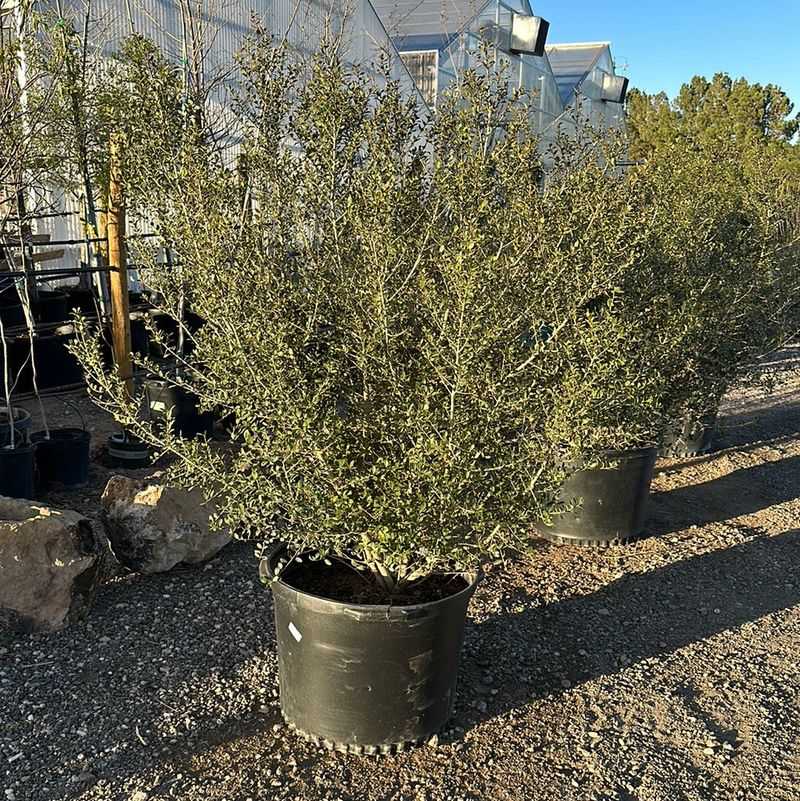
Want a tall, skinny evergreen that practically takes care of itself? Meet the upright yaupon holly. It might be the easiest plant on this whole list.
Yaupon is a native that grows wild across much of East and Central Texas. Most yaupons are bushy, but some varieties grow straight up like a pencil.
‘Will Fleming’ is the best known. It reaches about 10 to 15 feet tall and stays only 1 to 2 feet wide.
That narrow shape makes it perfect for tight spots. Try it beside a garage door, between windows, or along a skinny side yard. It also looks sharp in large pots on a patio.
The leaves are small, smooth, and glossy green. They stay on all year, so your yard never looks bare in winter.
Unlike some hollies, yaupon leaves are not prickly, which makes it friendly near walkways. Here is what makes it so easy to grow:
It handles heat and drought once established. It grows in clay, sand, or rocky soil. It does fine in full sun or partial shade. It rarely has bug or disease troubles.
Pruning is almost never needed. The plant holds its slim form naturally. If a branch starts leaning out, just snip it off in late winter.
One small tip helps with a heavy snow or ice storm. Loosely wrap the plant with soft twine so the stems do not split apart from the weight.
Fun fact time. Yaupon is the only plant native to North America that contains caffeine. Native peoples brewed its leaves into tea, and some Texas companies still sell yaupon tea today.
4. American Holly
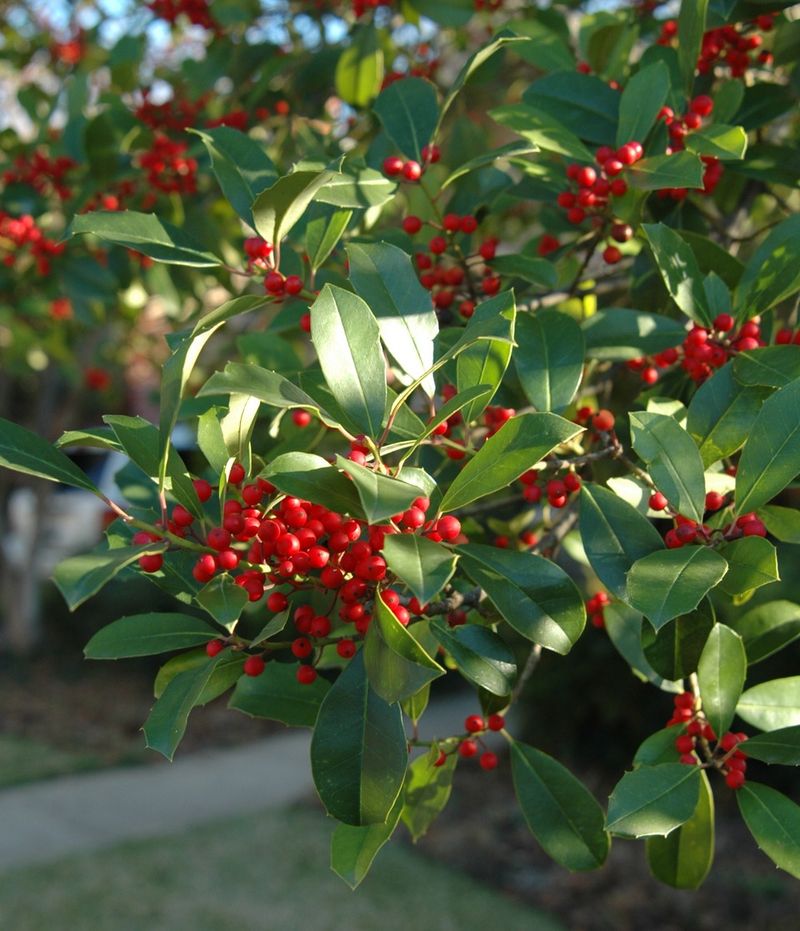
Holiday cards love to show it. Glossy green leaves, bright red berries, and a cardinal perched on a branch. That classic scene comes straight from the American holly, and it grows wild in the forests of East Texas.
The shape is dense and pyramid-like, wide at the bottom and pointed on top. It grows slowly, often reaching 15 to 30 feet in a home yard.
Its thick branches make a solid wall of green, so it works well as a privacy screen or a single showpiece.
Now, about those berries. Only female trees produce them. They also need a male holly growing nearby to make fruit. If you want red berries, plant at least one male for every few females, or check if a neighbor already has one.
When you shop, look at the tag. Many nurseries sell named female types like ‘Savannah’, which grows a bit narrower and loads up on berries.
American holly likes slightly acidic soil that drains well. It is happiest in East Texas, where the soil is sandy and rain is more common. In alkaline soils farther west, its leaves may turn yellow, so it is not the best pick there.
Give it full sun to part shade. Water it regularly the first two years. A layer of mulch helps keep roots cool and moist.
Keep in mind that the leaves have sharp, spiny edges. Plant it a few feet back from sidewalks and play areas.
Birds will thank you, though. Robins, bluebirds, and mockingbirds feast on the berries in late winter when other food is scarce. Your yard turns into a busy bird cafe.
5. Carolina Cherry Laurel
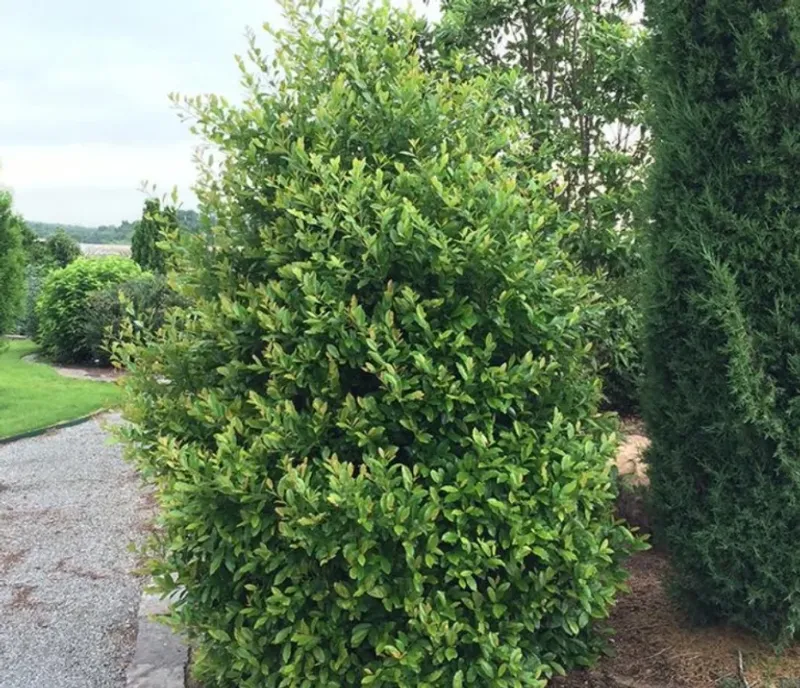
Nosy neighbors, meet your match. Carolina cherry laurel grows into a thick, leafy wall that blocks views quickly. For many Texas homeowners, it is the go-to privacy plant.
Native to East Texas, it has glossy, dark green leaves that shine in the sunlight. The foliage stays full all year. In early spring, it puts out small clusters of creamy white flowers that bees enjoy.
Left alone, it can grow 20 to 30 feet tall and fairly wide. That is too big for some yards. Light pruning a couple of times a year keeps it narrow and neat.
If you want something smaller from the start, try a compact type like ‘Bright ‘N Tight’, which stays tighter and more upright.
Growing it is pretty simple. It handles sun or partial shade. It grows fast, often a couple of feet per year. It tolerates most soils that drain well.
After the flowers fade, small black fruits appear. Birds love them and will spread seeds around, so pull up any seedlings that pop up in flower beds.
Now for an important safety point. The leaves, stems, and seeds contain a substance that is toxic to people, pets, and livestock.
Wilted leaves after a storm or pruning can be especially harmful. Rake up clippings right away and do not plant it near horse pastures or goat pens.
A simple test can help you identify it. Crush a leaf and you will notice a smell like almonds or maraschino cherries.
Used wisely, cherry laurel is a fast, fuss-free way to get a green screen. Just keep curious kids and animals from snacking on it.
6. Wax Myrtle
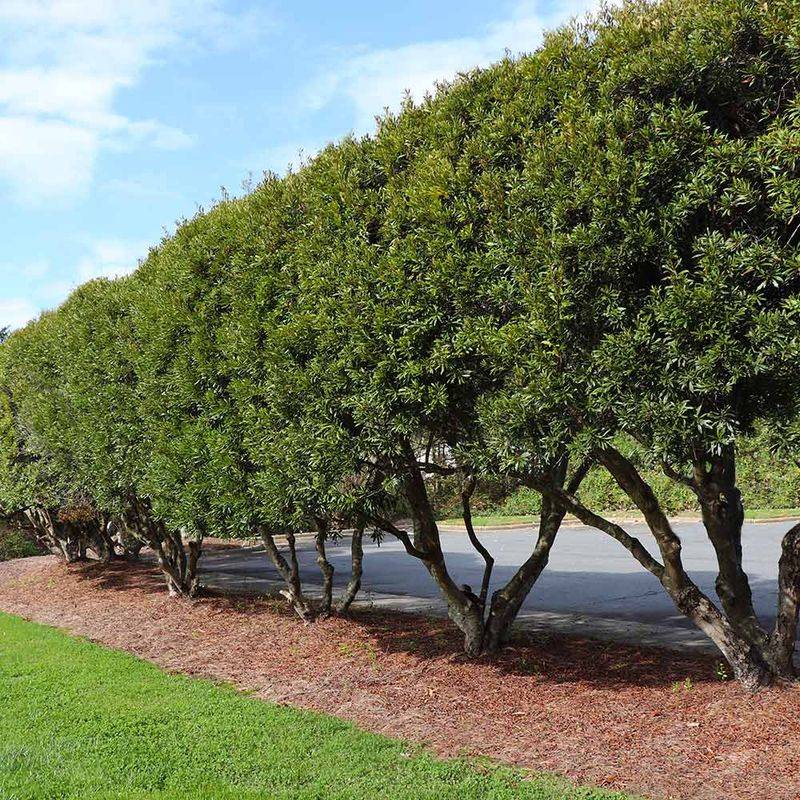
Colonial families once boiled the berries of this shrub to make candles. The waxy coating floated to the top and was skimmed off. That clever trick is how wax myrtle got its name.
Today, it is loved for different reasons. It is one of the fastest growing native evergreens in Texas. A young plant can shoot up 3 to 5 feet in a single year. If you need a screen in a hurry, this is your friend.
The olive-green leaves have a spicy, fresh scent when you brush against them. Many people say it keeps fleas and mosquitoes away, though that is more folk wisdom than proven science.
Wax myrtle naturally grows as a big, bushy shrub. With a little training, you can turn it into a small, upright tree.
Pick three to five strong trunks and remove the rest. Then trim off the lower side branches as it grows. The result is a graceful multi-trunk tree around 15 to 20 feet tall.
Soil is no problem. It grows in wet, swampy spots and dry, sandy ones. That makes it handy for low areas in your yard where water collects after rain.
Female plants grow clusters of small, pale blue berries. They last through winter and feed yellow-rumped warblers, bluebirds, and other hungry birds.
A couple of tips will keep it looking good. Suckers sprout from the base often, so snip them off a few times a year.
Very hard freezes in North Texas can damage it, so it does best in the southern half of the state. Fast, fragrant, and friendly to wildlife, it earns its spot.
7. Bald Cypress
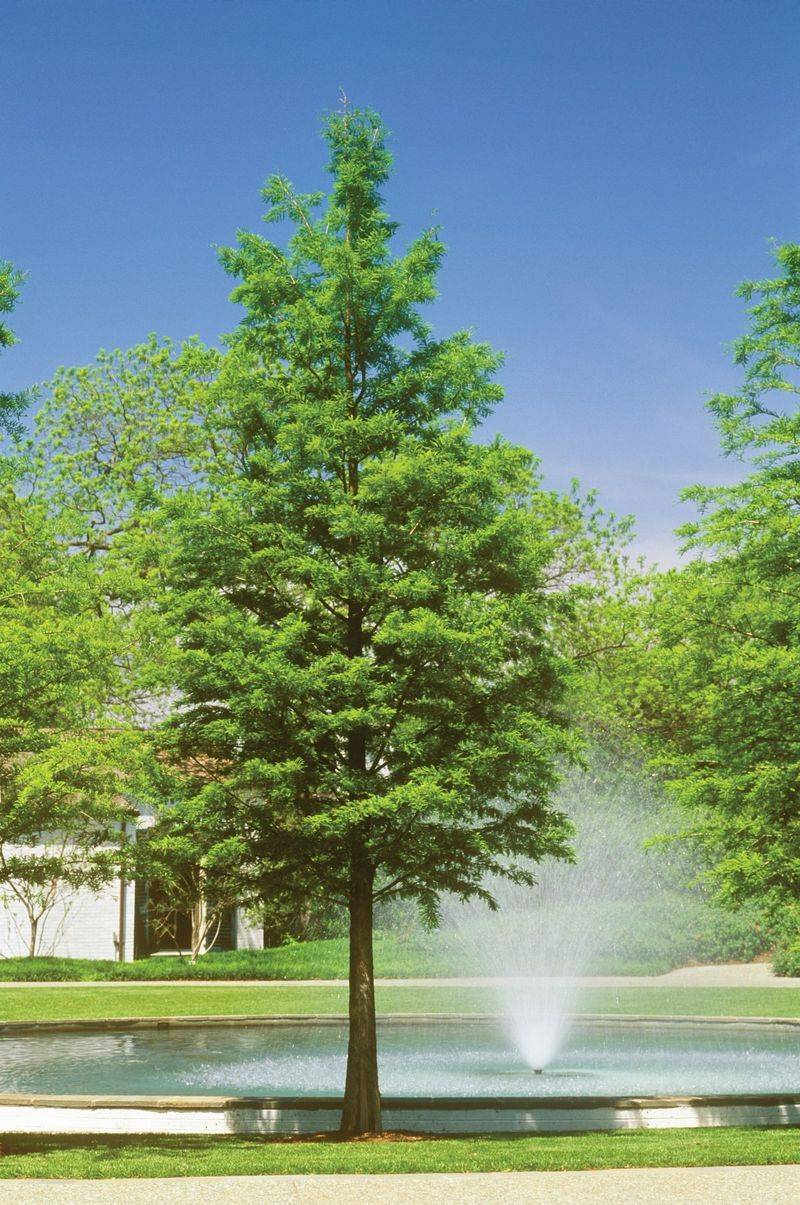
Some bald cypress trees along Texas rivers are over 1,000 years old. They have watched centuries pass by on the banks of the Guadalupe and Frio. Planting one is like starting your own living legacy.
Unlike the other trees here, bald cypress is not evergreen. Its soft, feathery needles turn a warm rusty orange in fall, then drop. That is how it earned the name bald. In spring, fresh bright green needles return.
The shape is naturally upright and pyramid-like, especially when young. Standard trees get big, up to 50 to 70 feet tall and 20 to 30 feet wide. That is too much for many yards.
Luckily, there is a slimmer option. ‘Shawnee Brave’ grows tall but stays about 15 to 20 feet wide. It gives a strong vertical look without taking over the whole lawn.
You might think this tree only grows in swamps. Not true. It does great in regular yards too. It handles clay soil, wet spots, and even dry spells once its roots are deep.
A few growing tips help. Plant it in full sun. Water deeply during its first couple of summers. In very alkaline soil, its needles may yellow, so adding compost can help.
Near water, bald cypress grows knobby bumps called knees that poke up from the ground. Scientists still debate why. In dry yards, knees rarely show up, so mowing is not a worry.
Want seasonal change instead of the same look all year? Bald cypress delivers green in summer, copper in fall, and a tidy, open shape in winter.
8. Texas Sabal Palm
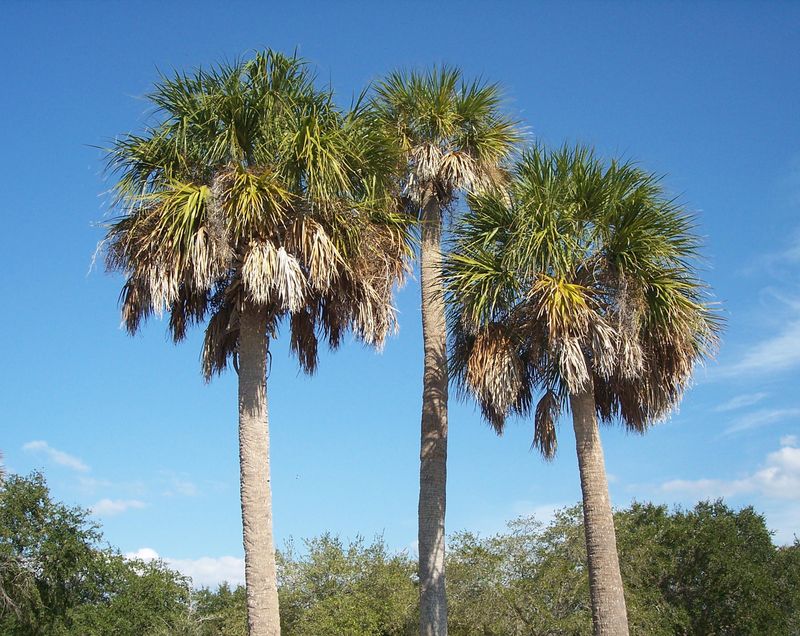
Down near Brownsville, a small grove of native palms has survived for thousands of years. The Sabal Palm Sanctuary protects some of the last wild stands of Texas sabal palm. It is the only palm tree native to the state.
If you want a bold, tall accent with a tropical feel, this is your tree. It grows a thick, sturdy trunk topped with huge, fan-shaped leaves. Each leaf can stretch several feet across. Over time, it reaches 30 to 50 feet tall, though it grows slowly.
Many palms sold in Texas are not tough enough for a cold snap. The Texas sabal is different. It handles winter chills better than most tall palms, often surviving temperatures in the teens.
That makes it a solid choice for South and Central Texas, including San Antonio and Austin.
Heat and drought do not bother it either. Once settled, it needs little extra water. It grows well in full sun and most soil types, as long as water does not sit around the roots for days. Some planting advice will help it thrive:
Buy a larger tree if you want height sooner, since young ones grow slowly. Water often for the first year. Trim only brown, fully dried leaves, and leave the green ones alone.
Wildlife enjoys it too. Small black fruits feed birds and other animals, and the big leaves give shelter from storms.
Line a driveway with a few of them and you get a striking, resort-style entrance. It is a proud native that brings a little Rio Grande Valley charm to your own front yard.