Texas Native Plants That Actually Prefer Heavy Clay Soil
Most gardening advice about clay soil sounds the same. Dig it up. Add compost. Mix in sand. Repeat every year. But what if your soil isn’t the problem? What if you just haven’t found the right plants yet?
Heavy clay covers huge stretches of Texas, especially across the Blackland Prairie. It’s dense, slow to drain, and tough to work with a shovel.
Many popular nursery plants struggle in it because they’re better suited to loose, sandy ground.
Native plants are a different story. They grew up in this soil long before anyone tried to change it.
Their roots know how to push through tight earth, and many of them love the extra moisture and nutrients clay holds on to. Instead of fighting your yard, you can plant the natives that feel right at home in it.
1. Maximilian Sunflower Brings A Fall Blaze
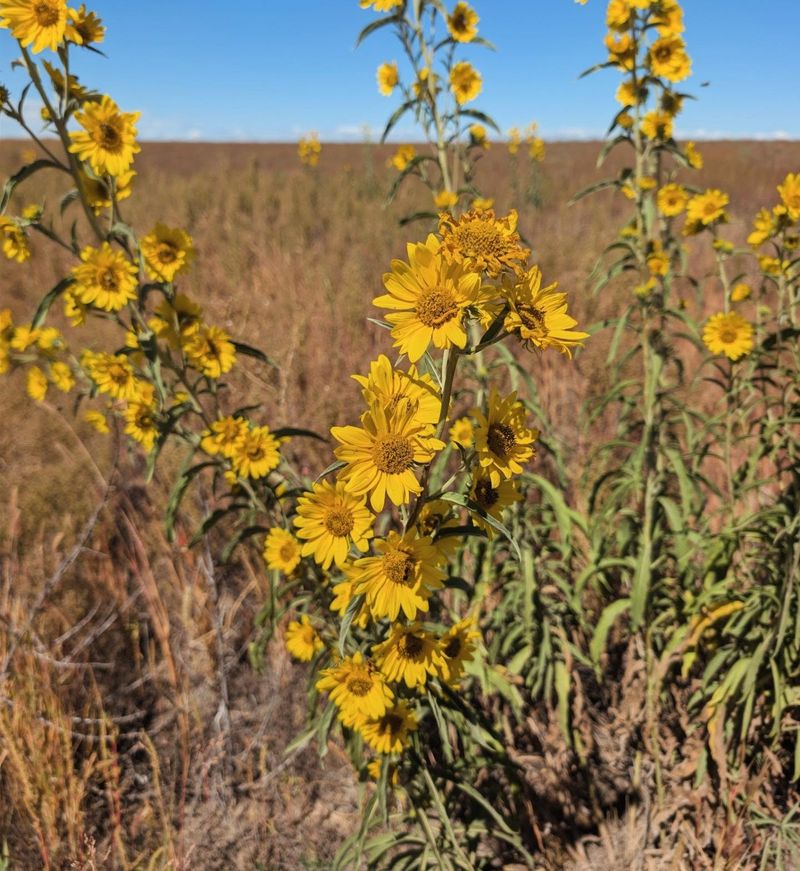
Walk past a Texas prairie in October and you might see a wall of gold taller than your dad. That bright show comes from Maximilian sunflower, a native perennial that loves the sticky Blackland Prairie clay. It can reach six to ten feet tall by fall.
Unlike the big single-headed sunflowers at the grocery store, Maximilian grows many small blooms up and down each stem.
The flowers open in September and October, right when most gardens look tired. Bees and butterflies flock to them for one last feast before winter.
After the petals fade, the seed heads become a buffet for birds. Goldfinches, sparrows, and cardinals pick at them well into the cold months. Leave the stems standing over winter, and you will have free bird watching from your kitchen window.
Planting is simple. Give it full sun and plenty of room, since it spreads by underground roots to form big clumps. Clay soil actually helps here, because it holds moisture that keeps the plant steady during dry spells.
Here is a helpful trick for small yards. Cut the stems back by about half in early June. Plants will grow bushier and shorter, so they are less likely to flop over in fall storms.
Water young plants weekly during their first summer. After that, they mostly take care of themselves. You rarely need fertilizer, and too much can make the stems weak and floppy.
Fun fact: the plant is named after Prince Maximilian of Germany, who explored the American West in the 1830s. He probably never guessed his name would someday brighten Texas backyards every autumn.
2. Eastern Gamagrass Loves The Soggy Spots
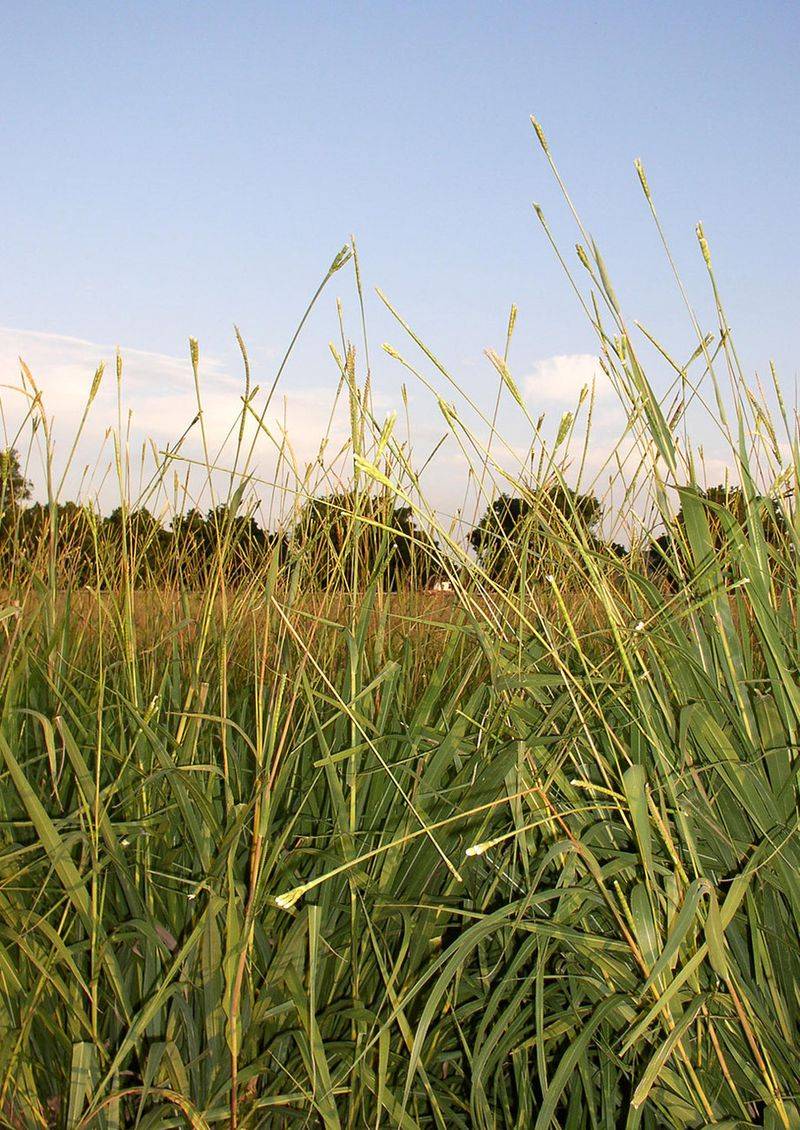
Got a corner of the yard that stays mushy for days after rain? Most plants sulk there, but eastern gamagrass feels right at home. It is a big native bunchgrass that actually likes wet, heavy clay.
Here is a surprise for many people. Gamagrass is a cousin of corn. Look closely at its seed stalks and you will notice small segmented seeds that look a bit like tiny corn pieces lined up in a row.
Long ago, eastern gamagrass covered huge parts of the Blackland Prairie. Bison and other grazing animals loved it because the leaves are soft and full of nutrients.
Your Texas Garden Changes Every Week. Your Plan Should Too.
Gardening in Texas changes quickly throughout the season. Every Friday you’ll receive a simple weekly plan showing exactly what to plant, prune, fertilize, harvest, and protect so you never miss the right timing.
Farmers later called it ice cream grass for that reason. Heavy grazing and plowing made it rare, so planting it today helps bring back a piece of Texas history.
The clumps grow about three to four feet wide with leaves that arch like a fountain. Seed stalks can rise even taller in late spring and summer. Use it as a lush backdrop behind smaller flowers or along a drainage ditch.
Sun is best, though it handles a little afternoon shade. It thrives in poorly drained clay where water sits after storms. Once settled, it also handles summer heat better than you might expect.
For care, cut the clump down to about a foot tall in late winter. Fresh green growth will push up in spring. Divide big clumps every few years with a sharp shovel and share them with neighbors.
Birds use the dense clumps for shelter, and caterpillars of some skipper butterflies feed on the leaves. Your soggy problem spot can become a wildlife hotel.
3. Switchgrass Shines From Spring To Frost
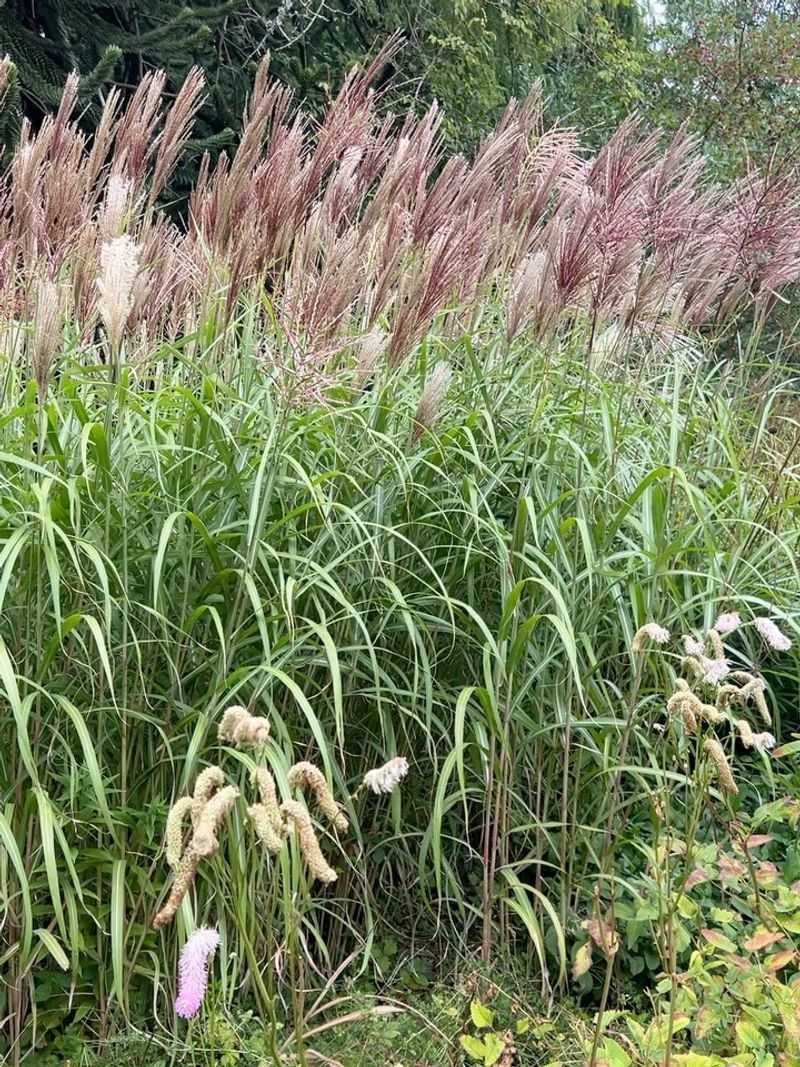
Some plants are fair-weather friends. Switchgrass is the buddy who shows up whether it rains for a week or stays bone dry for a month. Once its roots settle into clay, very little bothers it.
The roots are the secret. They can grow eight feet or more into the ground, breaking up tight soil and pulling water from deep below. Over time, those roots even help improve your clay by adding tiny channels for air and water.
In summer, the clumps stand three to six feet tall with blue-green or green leaves. Then come the seed heads, which look like soft, pinkish clouds floating above the plant. When the breeze moves through, the whole clump seems to shimmer.
Fall brings another treat. The leaves turn gold, tan, or even reddish depending on the variety. Many gardeners leave them standing all winter because they catch frost and sunlight so nicely.
Wildlife loves switchgrass too. Quail, sparrows, and rabbits hide in the dense clumps, and birds eat the seeds in cold months. It is like planting a small prairie shelter right in your yard.
Want a quick tip? Plant it in full sun for the strongest stems. In too much shade, it may lean or flop.
Varieties such as Heavy Metal and Shenandoah stay a bit smaller and work well in home beds. Space plants about three feet apart.
Cut them back to six inches in late February before new shoots appear. Water during the first summer, then mostly let nature handle it. Few grasses offer this much beauty for so little effort.
4. Turk’s Cap Thrives In Sun Or Shade
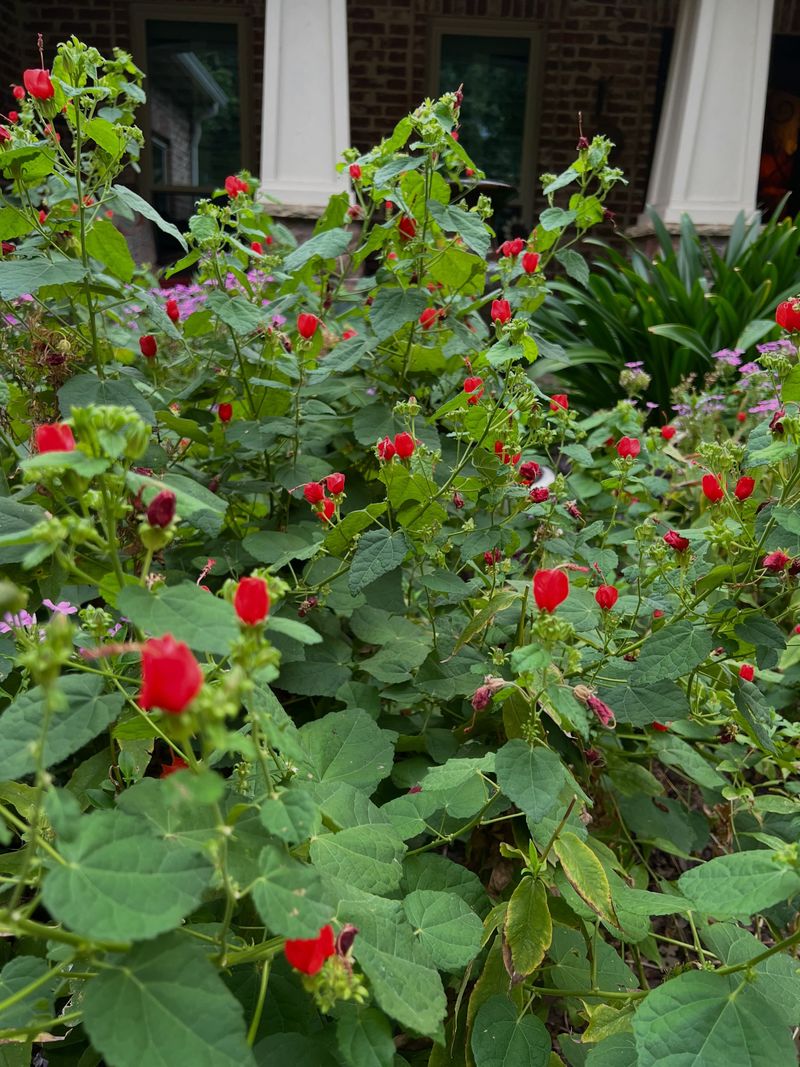
Ask any Texas native plant lover for a can’t-miss shrub, and Turk’s cap will probably come up first. It grows in heavy clay, sandy soil, full sun, or deep shade. Honestly, it is hard to find a spot it dislikes.
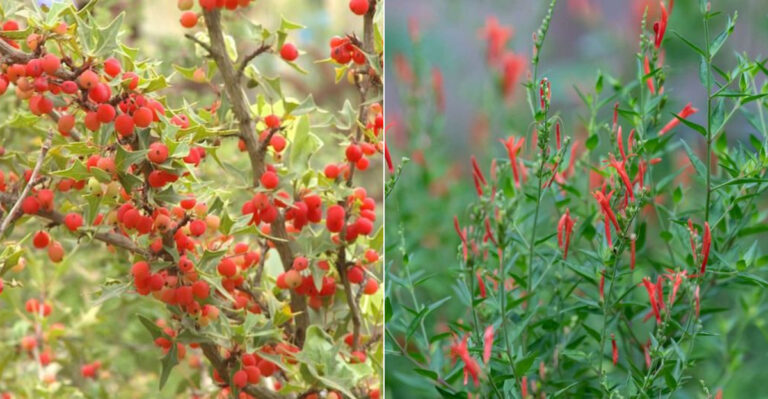
The flowers are what make people stop and stare. They are bright red and twisted, like a tiny turban or a swirl of ribbon that never fully opens. Hummingbirds can hardly resist them.
Blooms start in early summer and keep going until frost. That long season makes Turk’s cap a fueling station for hummingbirds as they migrate through Texas in fall. Butterflies and bees stop by too.
Later, small red fruits appear that look a bit like mini apples. Birds eat them, and people can too. Some folks say they taste a little like a mild apple or watermelon.
Plants usually grow three to five feet tall and wide. In shady spots under big trees, they stay looser and greener. In full sun, they bloom more but may need a drink during long summer droughts.
Care is easy. Cut the stems close to the ground in late winter after frost browns them. Fresh shoots will return in spring, often even fuller than before.
Turk’s cap spreads slowly by roots and seeds. Pull extra seedlings to share with friends or keep the clump tidy.
For a cheerful look, plant it with white or pink varieties for a mix of colors. Pair it with inland sea oats for a shady corner that feels lush and wild. Shade gardeners in Texas rarely get a plant this rewarding.
5. Possumhaw Holly Glows All Winter Long
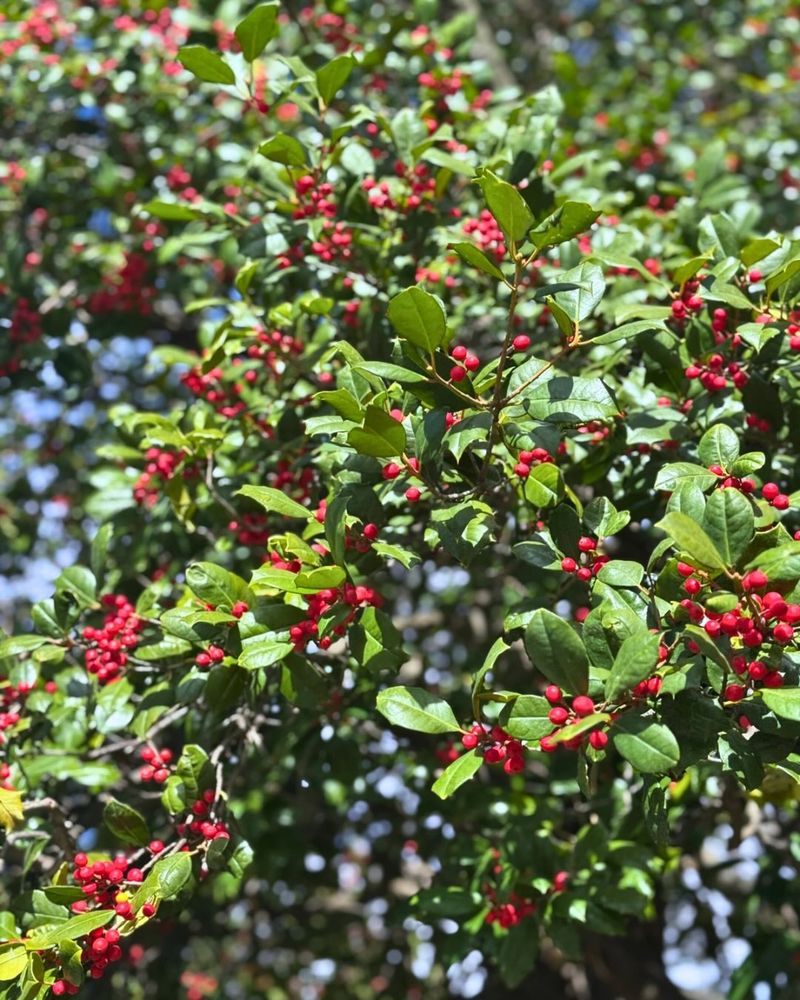
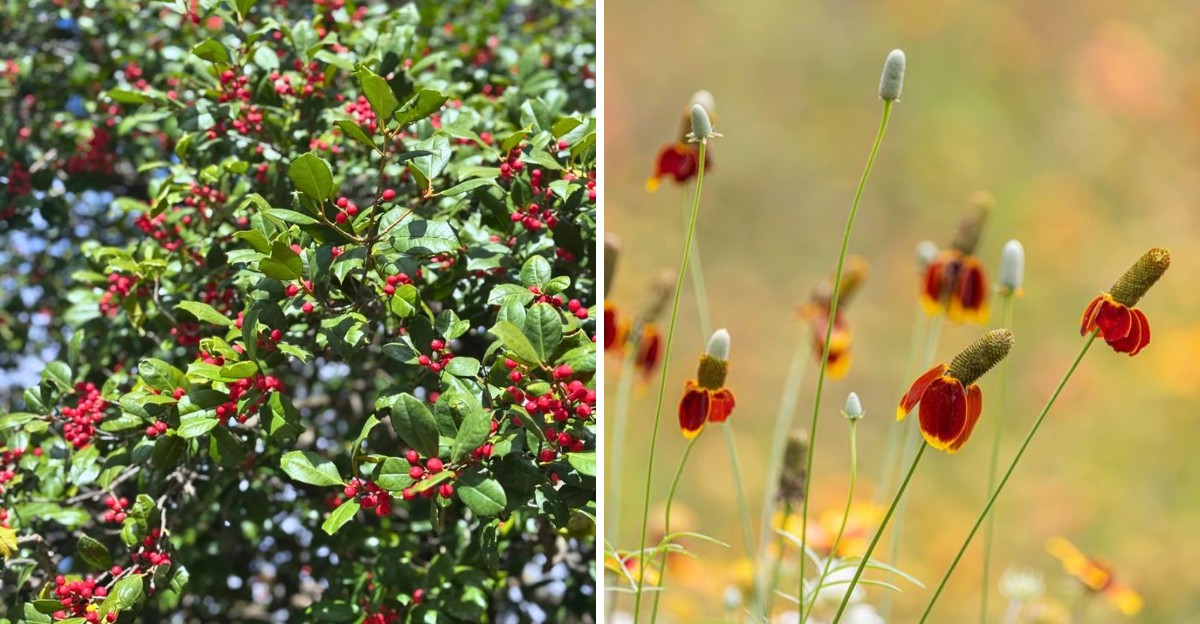
January in Texas can look a little gray and dull. Then you spot a possumhaw holly, its bare branches covered in bright red berries, and suddenly winter feels festive. Few plants put on a better cold-weather show.
Possumhaw is a deciduous holly, which means it drops its leaves in fall. Losing the leaves is actually a good thing, because it leaves the berries on full display. They often stay on the branches until late winter.
In the wild, you will find it growing along creeks and in bottomlands. Those places often have heavy, poorly drained clay. So if your yard holds water after storms, possumhaw is a natural match.
There is one important detail to remember. Only female plants make berries, and they need a male plant nearby for pollination.
Buy from a nursery that labels plants, or ask for a known female like Warren’s Red. One male within a few hundred feet can serve several females.
Birds treat the berries like a winter snack bar. Cedar waxwings, robins, and mockingbirds often strip a tree in a day or two late in the season. Opossums, deer, and other animals enjoy them too, which explains the funny name.
Possumhaw usually grows as a small tree or large shrub, around fifteen to twenty feet tall. It handles full sun or partial shade. More sun means more berries.
Plant it where you can see it from a window during winter. Water it well the first year. After that, it handles both wet spells and dry summers with little help from you.
6. Bur Oak Builds Shade For Generations
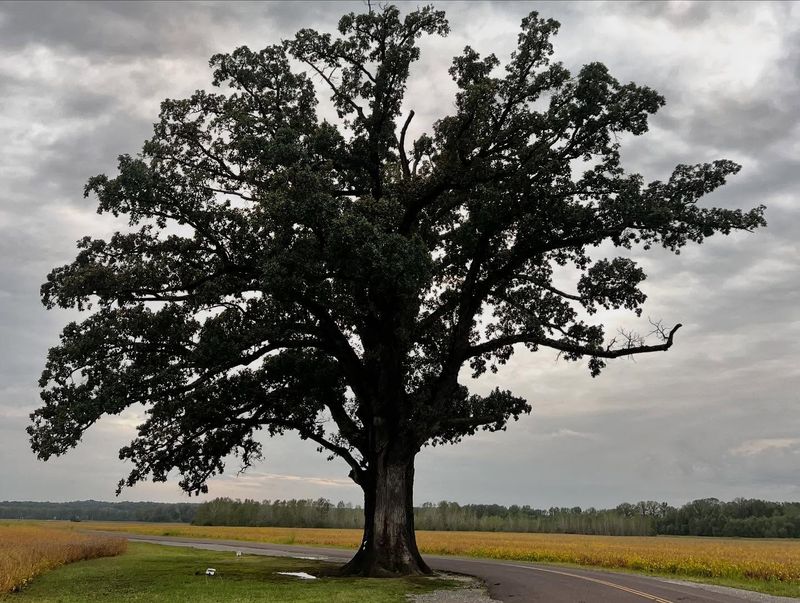
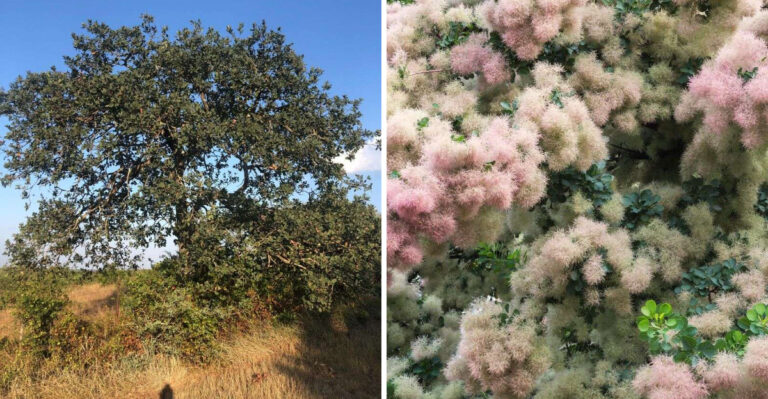
Planting a bur oak is a gift to people you may never meet. These trees can live for hundreds of years and grow sixty to eighty feet tall. Some old ones in Texas were already growing when settlers first arrived.
Heavy clay does not scare this tree. Neither does alkaline soil, which is common across much of Texas. Its deep taproot reaches far below the surface, helping it ride out long droughts once it is established.
The acorns are the real stars. They are the largest of any North American oak, sometimes as big as a golf ball.
Each one wears a fuzzy, fringed cap that looks like a tiny knitted hat. Kids love collecting them in fall.
Wildlife loves them even more. Deer, squirrels, wild turkeys, and blue jays all feast on the acorns. Over the years, the tree also hosts hundreds of kinds of caterpillars, which in turn feed baby birds.
The leaves are big and deeply lobed, with a narrow waist in the middle. The bark grows thick and corky, which helped bur oaks survive prairie fires long ago.
A few planting tips will help. Choose a spot with full sun and lots of space, far from your house and power lines. Start with a smaller tree, since young oaks settle in faster than large ones.
Water deeply once a week for the first two summers. Spread mulch in a wide circle, but keep it away from the trunk. Be patient. Bur oaks grow slowly at first, then pick up speed once their roots are happy in that thick clay.
7. Mexican Hat Tips Its Sombrero All Summer
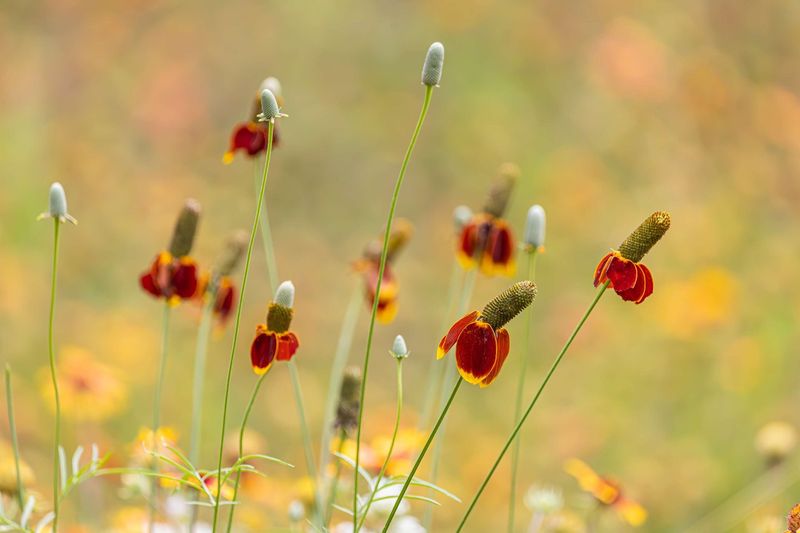
Ever seen a flower wearing a hat? Mexican hat looks exactly like a tiny sombrero, with a tall brown cone in the center and red-and-yellow petals drooping down like a brim. Once you notice it along Texas roadsides, you will see it everywhere.
Those roadsides give a big clue about how tough it is. Mexican hat grows in hard, packed clay that gets very little care. It handles heat, wind, and weeks without rain like a champ.
Plants reach about one to three feet tall with lacy, finely cut leaves. Blooms start in late spring and keep coming all summer long. Some years, they even push out flowers into early fall.
Pollinators adore it. Bees, butterflies, and small native wasps visit the flowers all day. Later, birds such as goldfinches pick at the seed cones.
Growing it is about as easy as gardening gets. Scatter seeds in fall on bare soil and press them in with your feet. Winter rain and cold help them sprout in spring.
Full sun is a must. In shade, the plants get leggy and bloom less. Skip the fertilizer, because rich soil can make them floppy.
Here is a fun bonus. Mexican hat reseeds itself, so a small patch can turn into a bigger one in just a couple of years. Pull extras if they wander too far.
Try mixing it with bluebonnets, Indian blanket, and black-eyed Susans for a mini meadow. Your clay yard will look like a cheerful slice of the Texas countryside.