Hartweg’s Twinevine: One Native Food Source for Queen Caterpillars in Arizona
Queen butterflies are a familiar sight in Arizona, with their rich brown wings and white spots. Their caterpillars need leafy food, and a native desert vine can help provide it.
Hartweg’s twinevine is one plant that Queen caterpillars can eat. Here is what it offers, what it can’t do on its own, and how to grow it in a low-desert yard.
Meet Hartweg’s twinevine
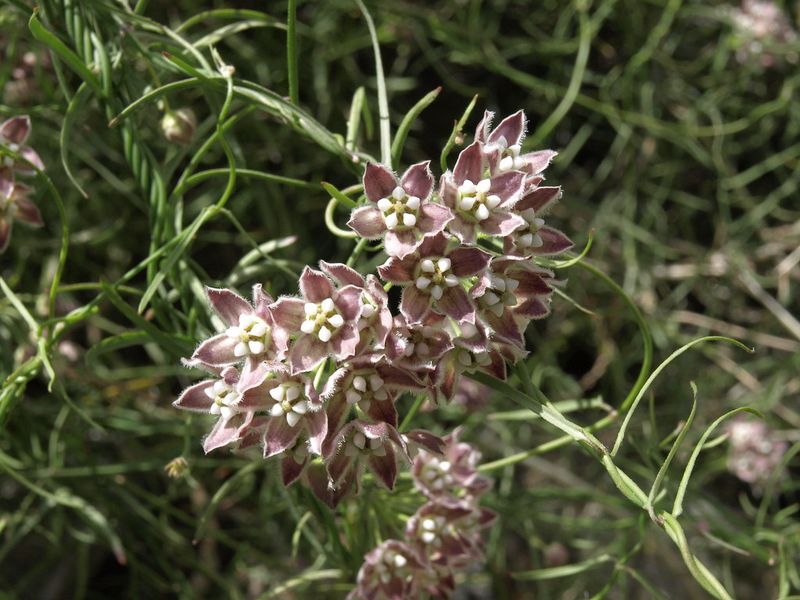
Hartweg’s twinevine goes by several names. Local guides list it as Funastrum cynanchoides subsp. heterophyllum, and you will also see climbing milkweed, vine milkweed, or Sarcostemma cynanchoides.
References do not always agree, so the scientific name helps when you shop at a nursery.
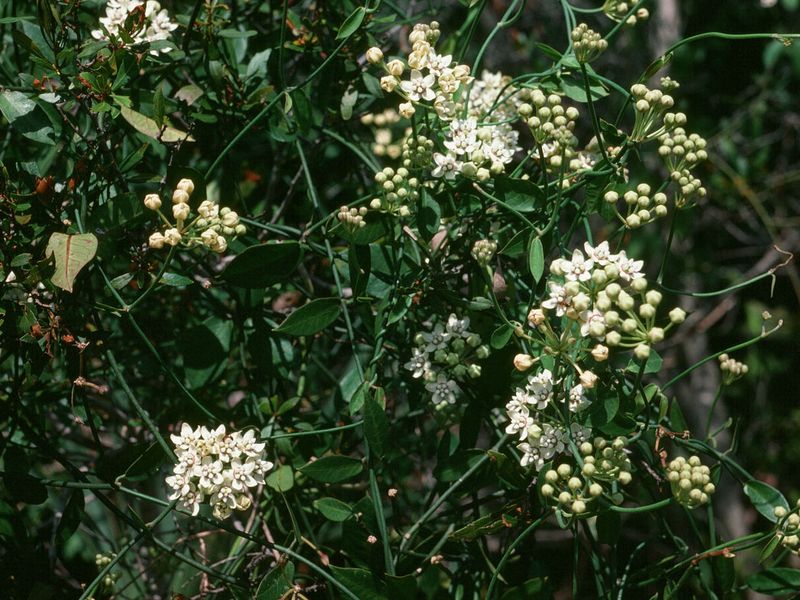
It is a native Arizona perennial vine. According to a University of Arizona plant database entry, it trails or twines over trees and shrubs, can reach about 10 feet, and has milky sap when damaged.
It turns up in desert washes, slopes, canyons, and floodplains, and flowers from about May to September.
Picture a slender, scrambling vine that threads itself through whatever shrub stands nearby. That climbing habit is the easiest way to recognize it, and it is a good clue for deciding where it might fit in your yard.
How the vine helps Queen caterpillars
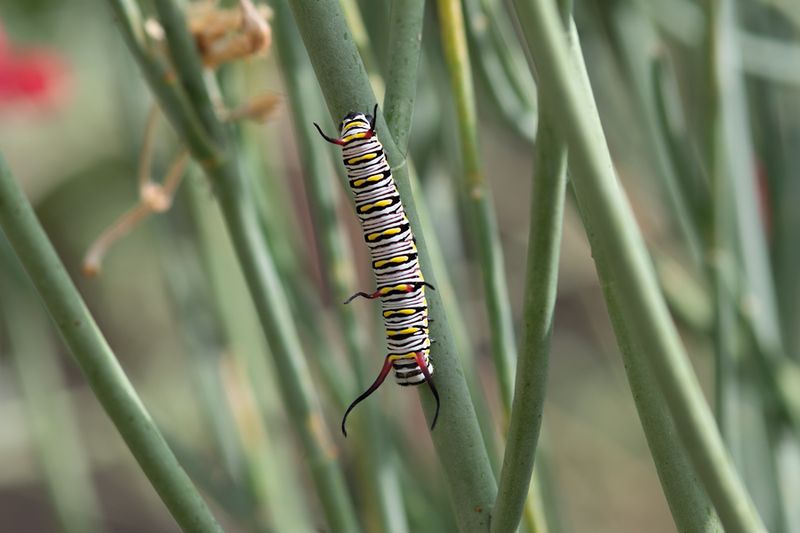
Queen caterpillars can eat Hartweg’s twinevine. A Maricopa Community Colleges host plant guide lists it as food for Queen caterpillars, which makes it a larval host plant.
Female butterflies lay eggs on host plants, and the hatched caterpillars then chew the leaves.
A study of western Queens in the Mojave and Sonoran Deserts also names Funastrum among the host plant genera these butterflies use. That fits what local gardeners see.
Here is the honest limit. The vine is a food source for one life stage, the caterpillar.
It is not a plant Queens need in order to complete their life cycle, and planting it does not guarantee that a Queen will visit, lay eggs, or that caterpillars will survive. Think of it as one useful piece of the puzzle.
Queens can use other host plants
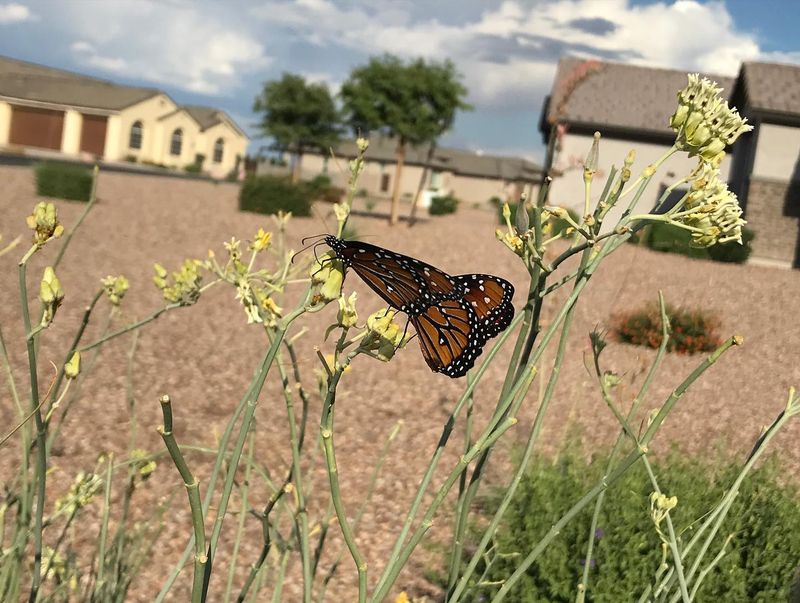
Hartweg’s twinevine is not the only option. The same Maricopa guide also lists rush milkweed (Asclepias subulata) as a host for Queens, so a yard with a different native milkweed can serve caterpillars too.
The western Queen study treats host plants as a broader group rather than a single required species. If a vine does not suit your space, a different host may be the better choice.
A small caution about monarchs: some of these plants are listed for both Queens and monarchs locally. Still, advice written for monarchs should not be treated as Queen-specific.
When you read a plant list, check which butterfly it is actually describing before you buy.
Give the vine room to climb
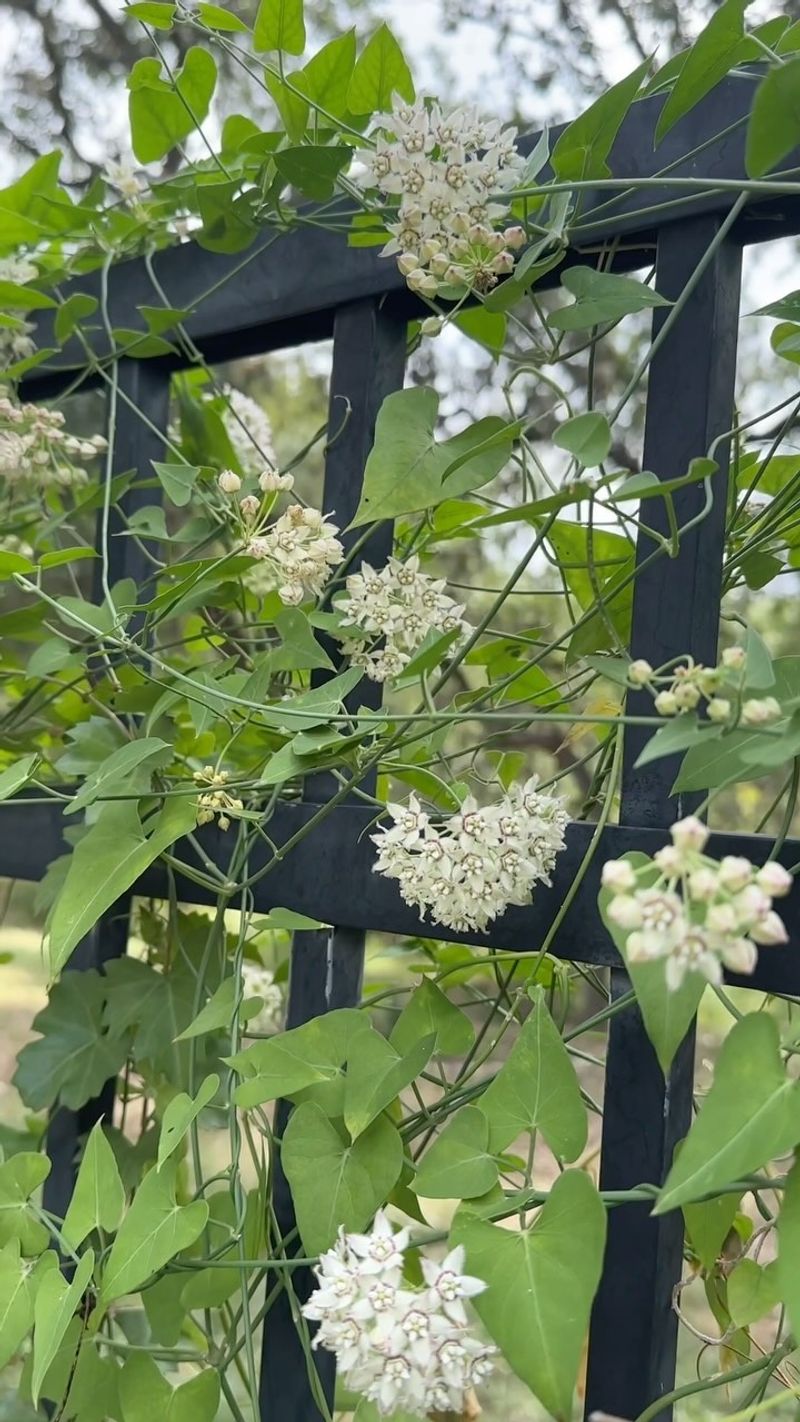
Because this vine twines, placement matters more than it does for a tidy clumping plant. Give it a trellis, a fence, or a sturdy shrub it can scramble through, and leave space around it.
Your Arizona Garden Changes Every Week. Your Plan Should Too.
Gardening in Arizona changes quickly throughout the season. Every Friday you’ll receive a simple weekly plan showing exactly what to plant, prune, fertilize, harvest, and protect so you never miss the right timing.
Plant guidance from the Arizona Native Plant Society lists it as a low-water native for full sun or partial shade. It also warns that wind-carried seeds can spread, and that seedlings can twine into nearby shrubs.
That makes it a poor fit for tightly managed beds, and it should not be called easy to contain. Check around the base each season and pull seedlings that pop up where you do not want them.
A looser corner of the yard, away from prized ornamentals, is usually the better home.
Plant with the desert calendar in mind

Timing helps. University of Arizona xeriscape guidance favors late fall for planting many desert-adapted plants.
That is general Arizona advice, not a rule written just for this vine, and early spring can also work for many natives.
The same guidance says native plants generally do not need amended planting soil. Dig a hole, set the plant at the right depth, and backfill with the soil you removed.
Watering needs a plan too. Newly planted natives need more frequent irrigation than established ones, as Extension guidance on irrigating natives explains.
Water more often at first, then ease off as roots settle in.
There is no twinevine-specific schedule here, and it should not be treated as a plant that never needs water.
Adult Queens need nectar, too
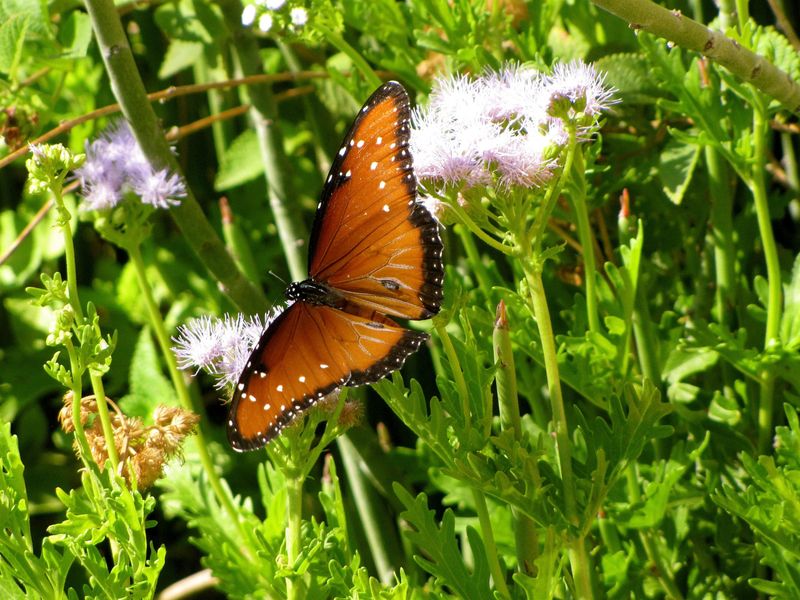
Caterpillars eat leaves, but adult butterflies sip nectar. Those are two separate needs, and a host vine only covers the first one.
A University of Arizona Extension lesson plan recommends blue mistflower as an attractive nectar source for adult Queens and monarchs in central and southern Arizona. Adding a few nectar plants like it gives adults something to feed on.
Research on western Queens sorts the plants they use into groups: larval hosts, adult nectar plants, and other plants tied to reproductive behavior. A yard with only one vine covers just one category.
Even a well-rounded planting cannot promise butterfly activity, since weather and surrounding habitat play a role. It simply gives Queens more reasons to stay.
Make the vine one part of a butterfly-friendly yard
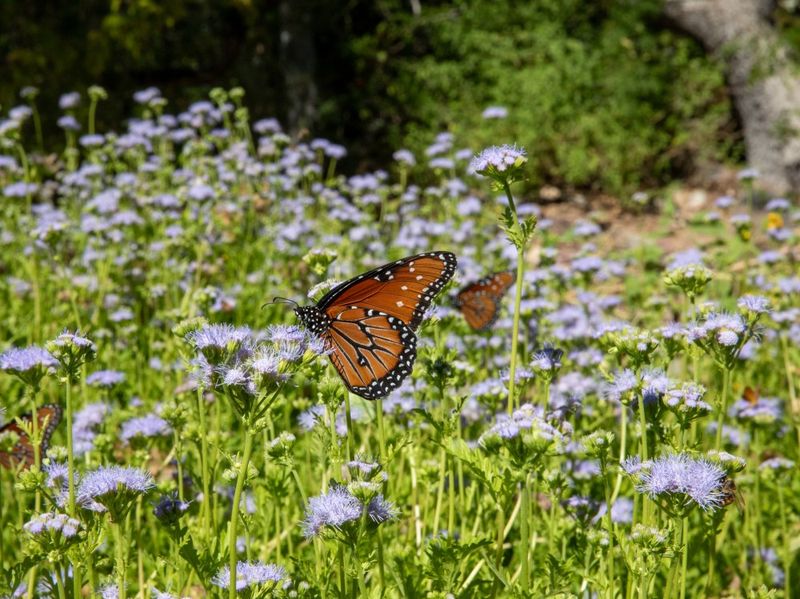
Hartweg’s twinevine can add food for Queen caterpillars, while nectar plants and other habitat resources round out what a study of western Queens describes. Pick a spot with room to climb, and plan for seeds that may wander, as the native plant society listing notes.
You are offering a meal, not making a promise. Sometimes that is all a good desert yard needs to do.