What Arizona Plumbago Needs In Late August Before Fall Growth Picks Up
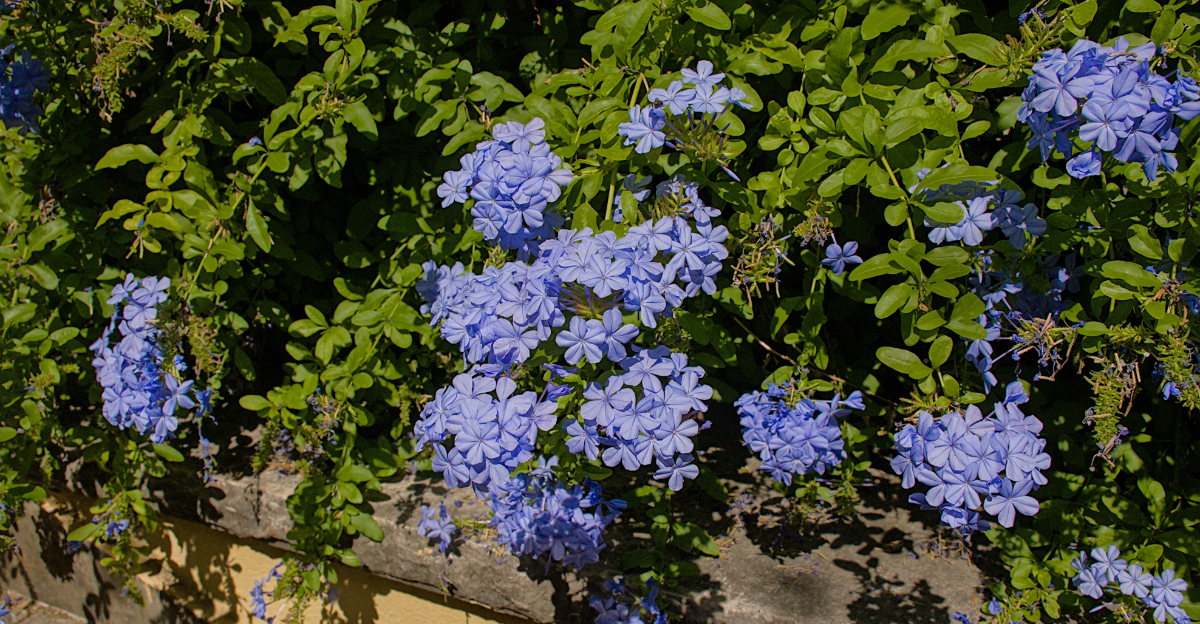
Plumbago can look worn down by late August, especially after weeks of punishing summer heat. That tired appearance does not mean the season is finished or that your plant needs drastic attention.
This part of summer is better for checking its condition than forcing lots of fresh growth. Give the plant what it needs now, and it can be better prepared as temperatures become less intense.
In Arizona, late summer conditions can still be harsh enough to make aggressive care a poor choice. Your plumbago benefits more from steady support while the hottest weather remains.
Pay attention to how the soil feels and how the foliage responds each day.
Fall can bring another active stretch once conditions become more comfortable.
The goal now is to help your plumbago reach that seasonal change without adding unnecessary stress.
1. Late August Heat Still Shapes What Plumbago Needs
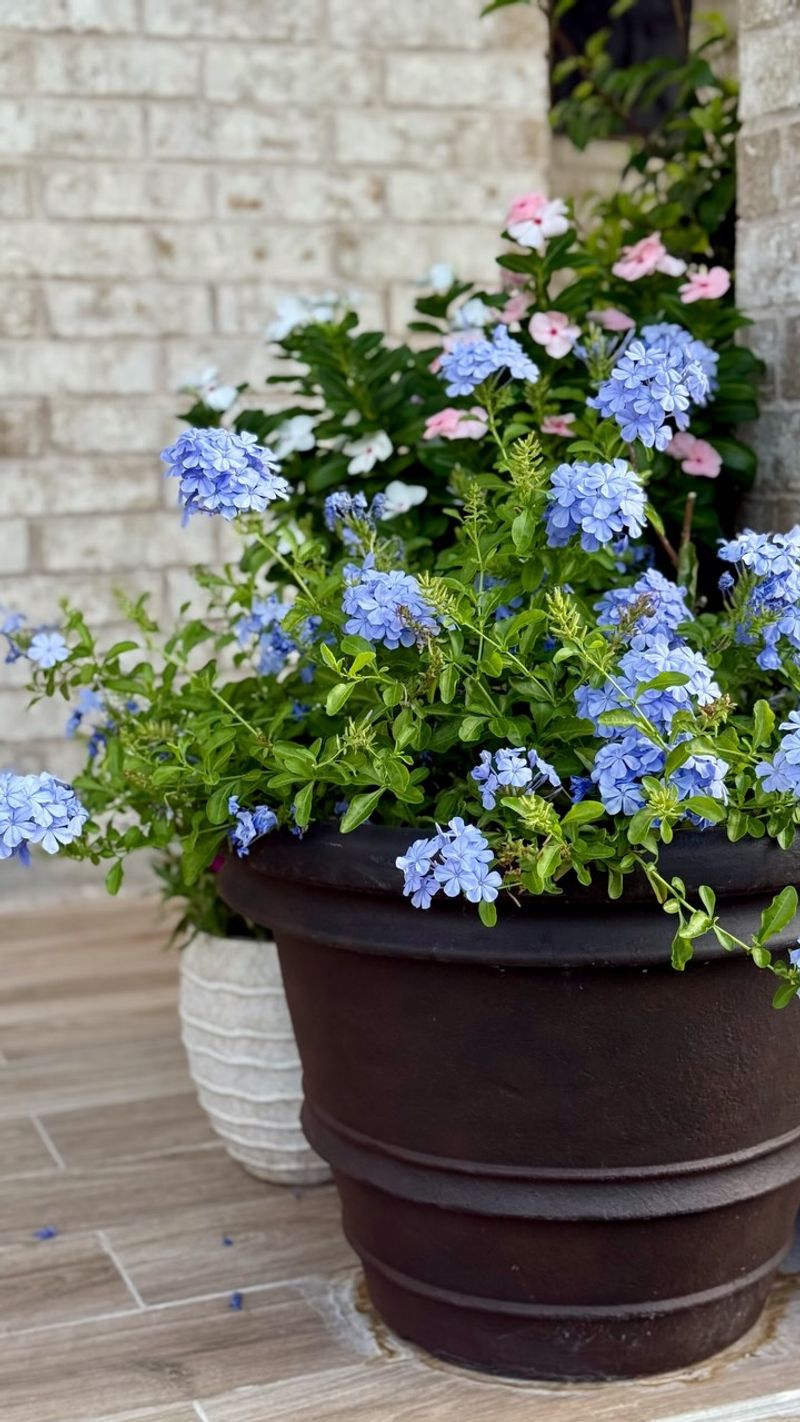
August in the desert does not let up easily. Temperatures can stay well above 100 degrees for weeks, and plumbago feels every bit of it.
Understanding what the plant is going through right now helps you make smarter care decisions.
Plumbago handles heat better than most ornamental shrubs. Its roots are adapted to warm, dry soil, and it can hold its own through tough stretches.
But late August is not the time to push it with extra fertilizer or major changes to its routine.
Root activity slows when soil temperatures stay high for extended periods. Pushing new growth with fertilizer during this window can stress the plant more than help it.
Patience pays off more than intervention right now.
Watch the leaves for clues. If they look a little tired or slightly curled at the edges, that is normal for this time of year.
Plumbago usually bounces back quickly once temperatures drop even a few degrees.
Cooler nights in late August and early September signal the plant to shift gears. Growth that stalled in the hottest weeks often resumes steadily as the season turns.
Knowing this helps you time your care steps without rushing them.
2. Filtered Shade Gives It Relief From Strong Afternoon Sun
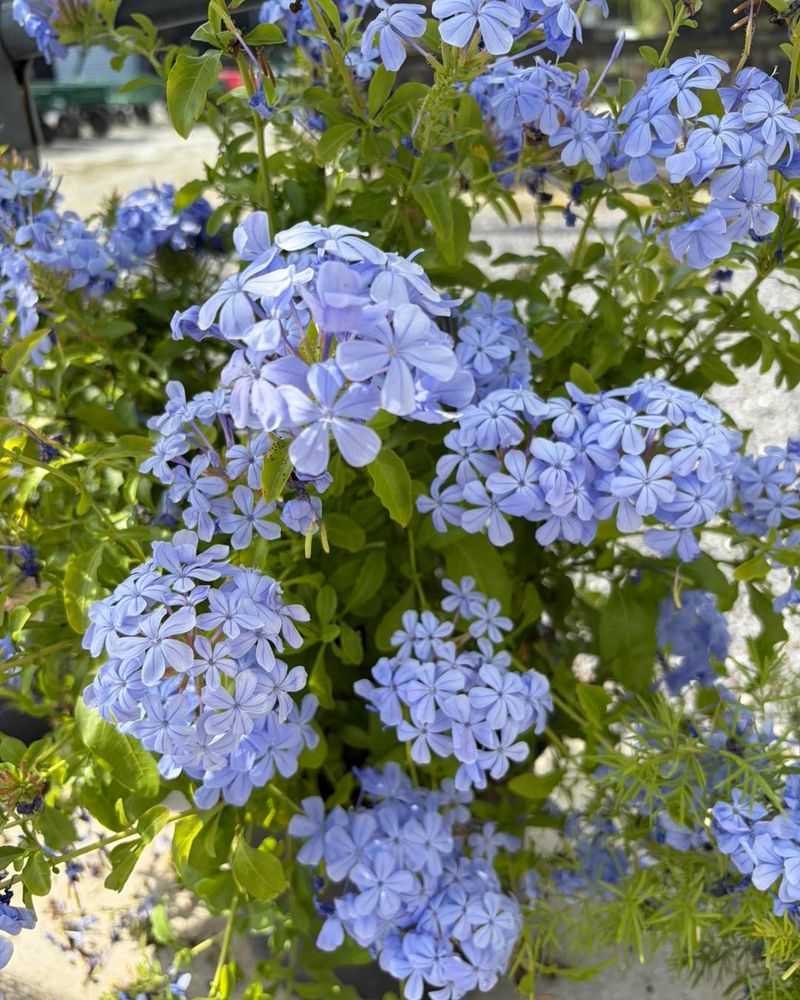
Afternoon sun in late August is brutal, even for plants that love heat. Plumbago does well in full sun during spring and fall, but a little afternoon shade can reduce stress during the hottest weeks of summer.
Filtered shade from a nearby tree or a shade structure can lower leaf temperature noticeably. Plumbago positioned on the east or northeast side of a building often handles August heat better than plants in full western exposure.
Placement matters more than people realize.
Shade cloth rated around 30 to 40 percent can help in open areas with no natural cover. It softens the intensity of direct sun without blocking the light the plant needs to bloom.
Temporary shade setups are worth considering for established plants showing stress.
Reflected heat from walls, patios, or gravel can add extra stress beyond what the sun alone causes. Plumbago planted near light-colored masonry or concrete may need more attention during late August than those in open garden beds.
Your Arizona Garden Changes Every Week. Your Plan Should Too.
Gardening in Arizona changes quickly throughout the season. Every Friday you’ll receive a simple weekly plan showing exactly what to plant, prune, fertilize, harvest, and protect so you never miss the right timing.
Moving a container-grown plumbago to a more sheltered spot for a few weeks is a practical option.
In-ground plants cannot be relocated, but adjusting nearby mulch or adding a shade barrier can still help reduce soil and root temperatures during the worst afternoon hours.
3. Weekly Summer Watering Helps It Through The Heat
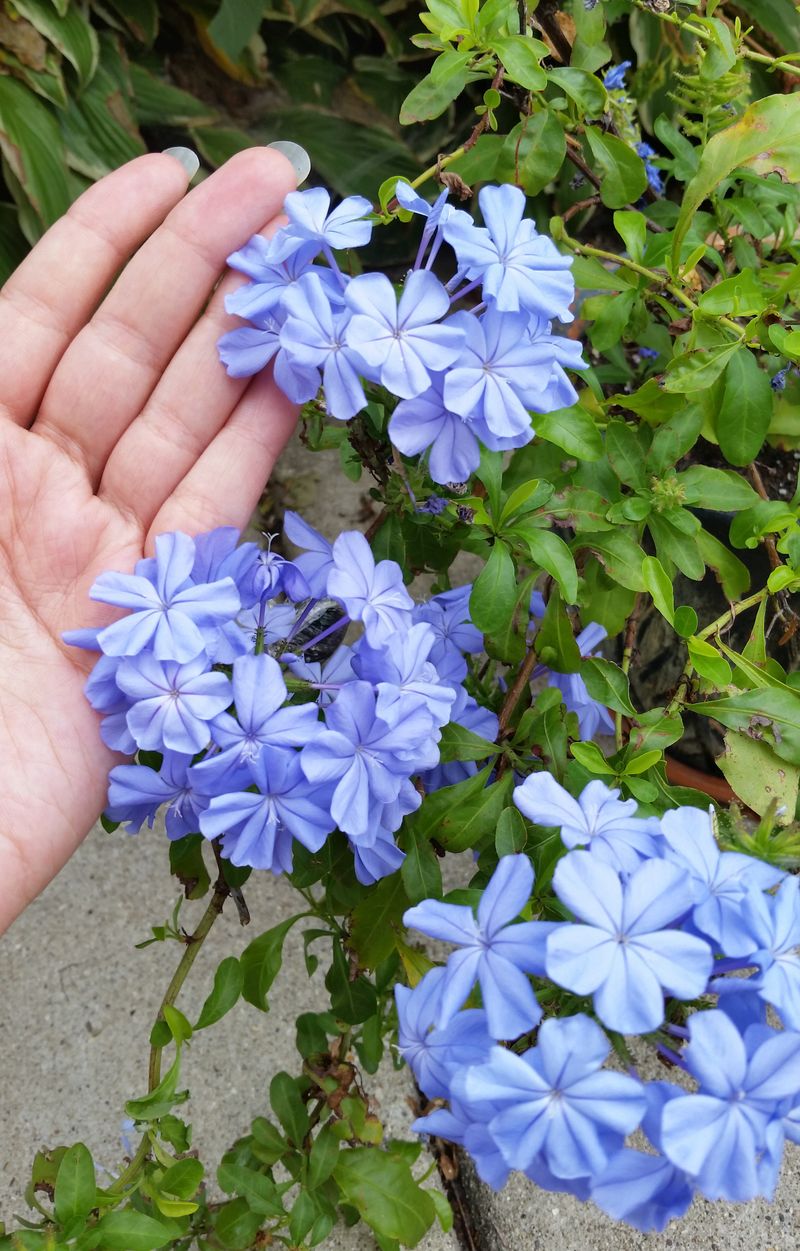
Watering plumbago in late August requires balance. Too little and the plant struggles through heat stress.
Too much and the roots sit in warm, wet soil that invites rot. Weekly deep watering tends to work well for most established plants during this period.
Deep watering means letting moisture soak down to the root zone rather than just wetting the surface. A slow, steady soak for 20 to 30 minutes at the base of the plant is more useful than a quick spray.
Surface watering in dry desert heat evaporates fast and barely reaches the roots.
Early morning is the best time to water. Soil absorbs moisture more efficiently when temperatures are cooler, and foliage dries before the heat of the day sets in.
Wet leaves sitting in hot afternoon sun can develop scorch spots over time.
Newly planted plumbago needs more frequent watering than established shrubs. Plants in their first summer may need water two or three times a week, depending on soil type and heat intensity.
Established plants that have been in the ground for a year or more are considerably more drought-tolerant.
Check soil moisture before watering rather than watering on a fixed schedule.
4. Well Drained Soil Keeps Extra Water Away From The Roots
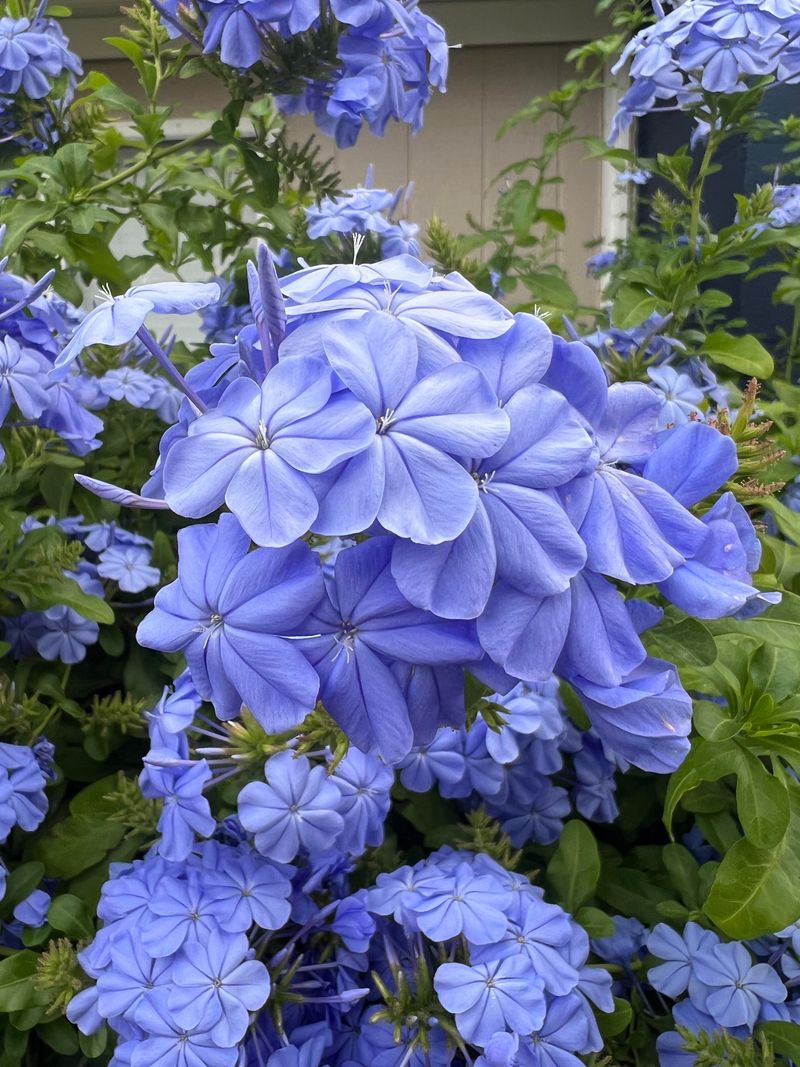
Plumbago is not picky about soil fertility, but it is particular about drainage. Roots sitting in waterlogged soil during warm weather can deteriorate quickly.
Well-draining soil is one of the most important factors for keeping this plant healthy through late summer.
Native desert soils are often sandy or gravelly, which drains fast. Garden beds amended with heavy clay or compost can hold moisture longer than plumbago prefers.
If your soil stays wet for more than a day after watering, drainage may be a problem worth addressing.
Raised beds and berms improve drainage naturally. Planting plumbago slightly above grade, even just a few inches, helps water move away from the crown of the plant.
Crowns that stay wet are more vulnerable to fungal issues during warm, humid monsoon weather.
Mixing coarse sand or decomposed granite into dense soil before planting improves drainage over time.
Amending soil after a plant is established is harder, but top-dressing with gravel mulch can help reduce surface moisture retention around the root zone.
Avoid planting plumbago in low spots or areas where water pools after rain. Monsoon storms in the region can drop a lot of rain in a short time.
Spots that collect runoff may look fine most of the year but become problematic during heavy rain events in late summer.
5. Too Much Water Creates Problems For Plumbago
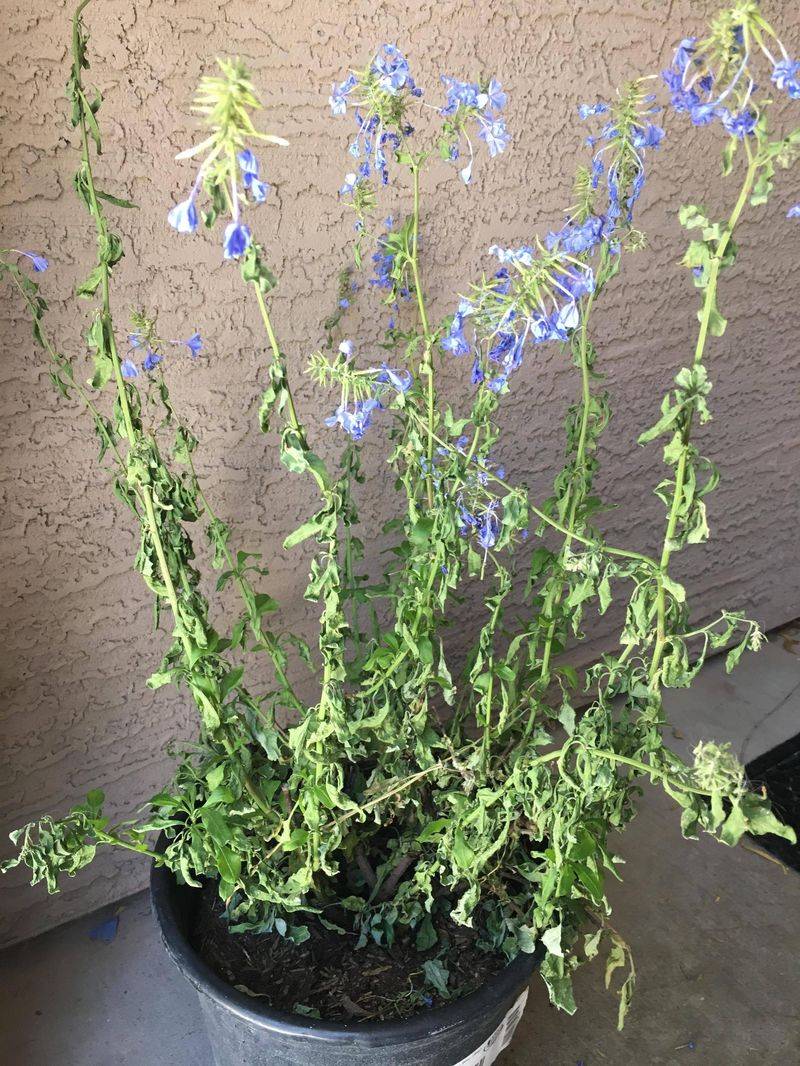
Overwatering is one of the most common mistakes made with plumbago in late summer. It seems logical to water more when temperatures spike, but this plant does not respond well to soggy conditions.
Roots need oxygen as much as they need moisture.
Yellow leaves are often the first visible sign of too much water. Gardeners sometimes assume yellowing means the plant needs more water, and they add even more.
That cycle makes things worse fast. Check soil moisture before assuming the plant is thirsty.
Monsoon season brings extra moisture that many gardeners do not account for. If your area is getting regular afternoon storms, your plumbago may not need supplemental watering at all during those weeks.
Adjust your watering schedule based on actual rainfall, not just the calendar.
Fungal issues can develop in warm, wet soil around the root zone. Symptoms include wilting that does not improve after watering, soft stems near the base, or a musty smell near the soil surface.
Improving drainage and reducing water frequency are the most practical responses.
Container-grown plants face overwatering risk more often than in-ground plants because pots limit drainage. Make sure containers have adequate drainage holes and that saucers are not collecting standing water beneath the pot.
Letting the top inch of soil dry out between waterings is a reasonable guide for potted plumbago in summer.
6. Heavy Pruning Is Better Saved For Spring
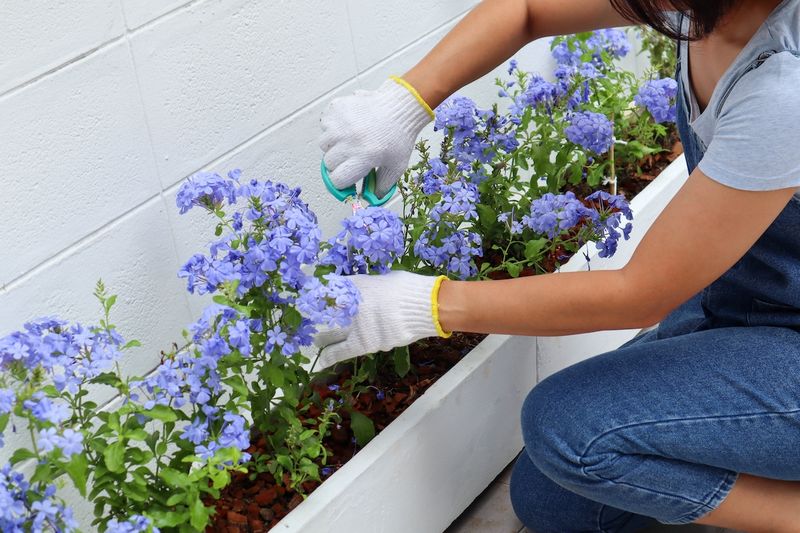
Reaching for the pruning shears in late August feels tempting, especially when plumbago looks a little ragged after months of summer heat. Light cleanup is fine, but heavy pruning right now can set the plant back rather than help it forward.
Cutting back hard in late summer removes the growth that the plant will use to push new stems and flowers in fall. Plumbago naturally begins rebounding as temperatures ease in September and October.
Pruning aggressively just before that window shortens the fall blooming period.
Removing spent flower clusters and damaged tips is a reasonable task for late August. Snipping back just a few inches on long, leggy stems helps tidy the plant without removing the base growth it needs for fall recovery.
Keep cuts minimal and clean.
Spring is the right season for significant shaping. Once the chance of frost has passed and new growth is actively emerging, plumbago handles heavier pruning much better.
Cutting back by one-third to one-half in early spring encourages a fuller, more compact shape going into the warm season.
Sharp, clean pruning tools reduce the risk of stem damage and disease entry. Wipe blades before use and make cuts just above a leaf node or branching point.
Jagged or crushed cuts heal more slowly, which matters more during warm, humid monsoon conditions than at other times of year.
7. White Flowers Continue From Summer Into Fall
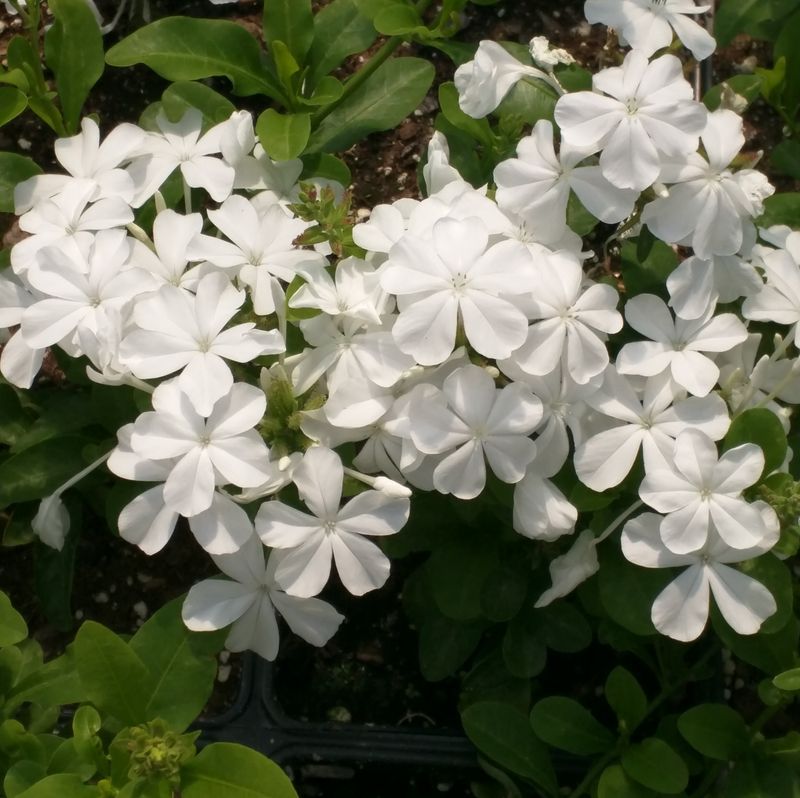
White-flowering plumbago varieties are a reliable presence in desert gardens from late spring through fall. Late August is not a peak bloom period, but flowers continue appearing on healthy plants even through the hottest stretch of the season.
Spent flower clusters can be removed to encourage fresh buds. Deadheading is not strictly necessary for plumbago, but it can slightly improve the appearance of the plant and may prompt new flower production.
Use small snips or pinch off spent clusters by hand.
Flower production often slows during the hottest weeks of summer. Gardeners sometimes worry the plant has stopped blooming for good, but that is rarely the case.
A slight temperature drop in late August or early September is usually enough to trigger a new flush of flowers.
White plumbago pairs well with other fall-blooming desert plants. As summer gives way to fall, the pale blooms stand out against the warm tones of dried grasses and late-season perennials.
Placement in a visible garden spot lets you appreciate the flowers as the season shifts.
Healthy soil, appropriate watering, and minimal stress during late summer all contribute to stronger fall bloom. Plants that struggled through August with poor drainage or inconsistent watering tend to produce fewer flowers in fall.
Giving plumbago what it needs now pays off with better blooms in the weeks ahead.