Before Adding Fall Mulch Around An Ohio Tree, Check How Much Is Already There
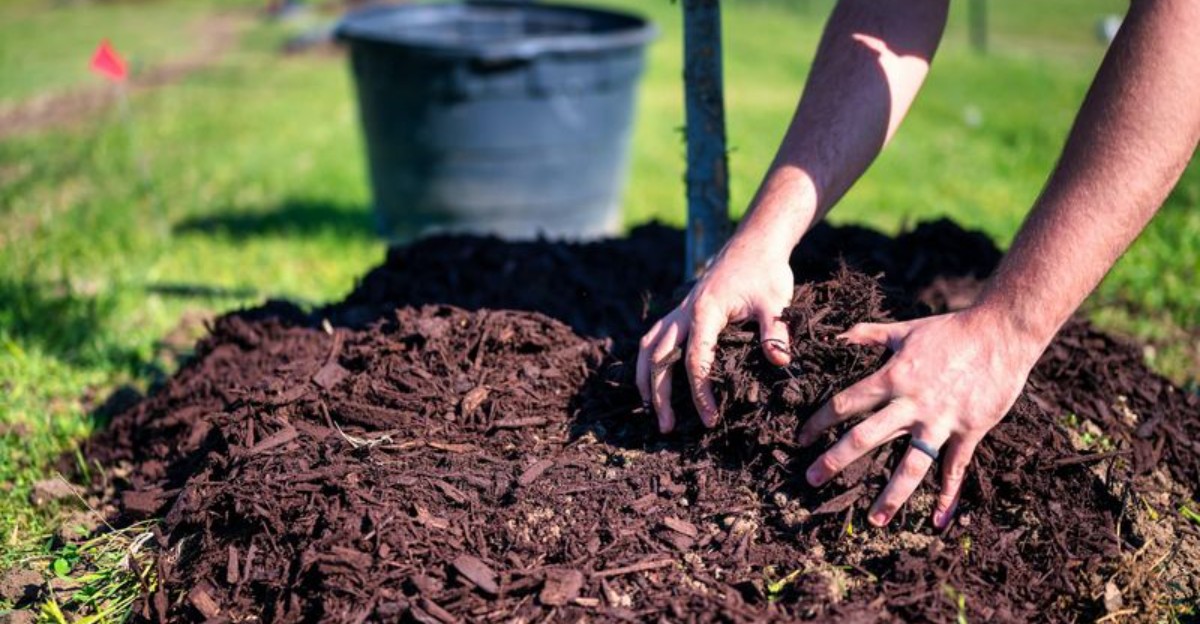
Adding fresh mulch around your trees every fall might seem like good maintenance, especially when you’re preparing the yard for colder weather. But if last year’s mulch is still sitting there, another layer could do more harm than good.
The trouble starts when mulch gradually builds up around the base of a tree.
Too much material can trap moisture against the bark, create unfavorable conditions around the trunk, and hide problems you might otherwise notice.
For Ohio homeowners, fall is a convenient time to inspect existing mulch before winter arrives. You may find that your tree already has enough protection and doesn’t need another application.
The depth of the mulch and its distance from the trunk are more important than how freshly covered the planting area looks.
Checking those details now can help you avoid common mulching mistakes while keeping your trees in better condition through the colder months.
1. Last Year’s Mulch May Already Be Thick Enough
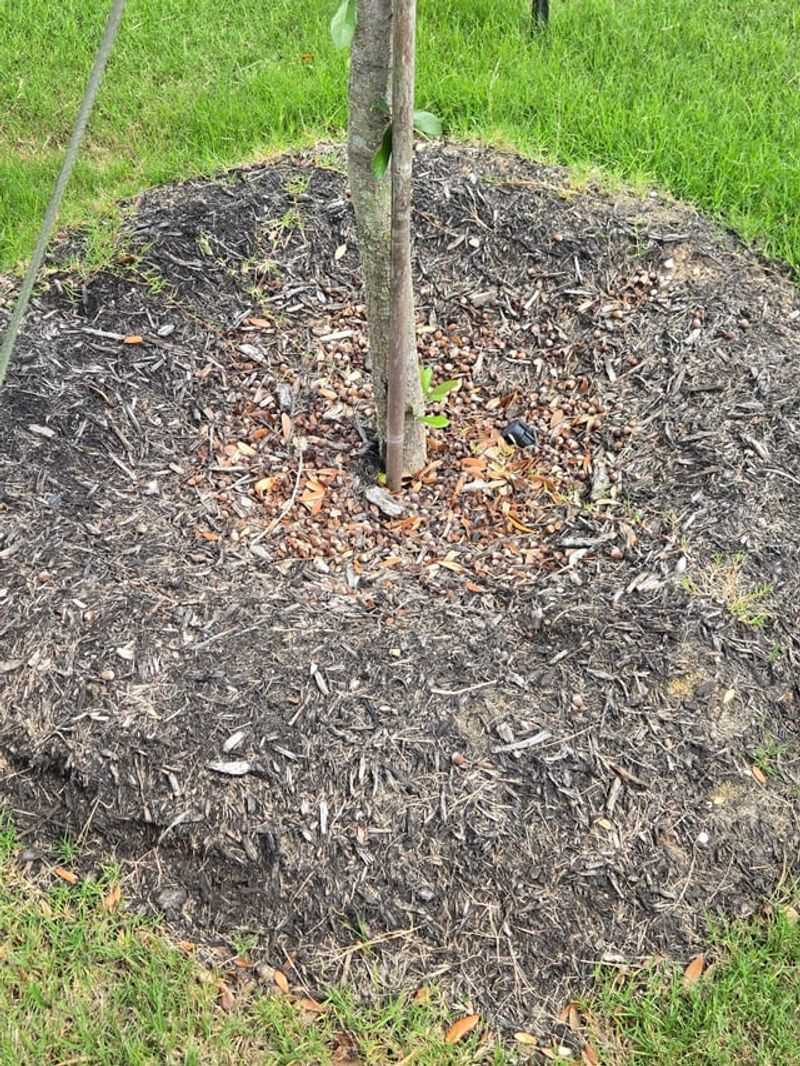
Old mulch fades long before it disappears. Shredded bark that looked rich and dark in May can turn gray by October, which makes it easy to assume it has broken down.
Color alone tells you very little about depth, though.
Wood mulch usually breaks down slowly, often over a year or more, depending on the material, moisture, and soil life. Coarse bark tends to last longer than finely shredded mulch, so a spring layer may still be sitting fairly deep by fall.
Ohio yards also collect extra material on their own as autumn rolls in. Leaves drift into mulch rings, and some homeowners add grass clippings or compost without thinking of it as part of the layer.
All of that counts toward the total depth around the tree.
Try pushing a finger or a garden trowel down through the mulch until you hit soil. If you dig through several inches of loose material before reaching dirt, your tree likely does not need more right now.
A faded top layer can be refreshed with a quick rake that flips the darker mulch underneath to the surface.
Skipping a fresh round of mulch for a season is fine in many cases. Your tree gains nothing from extra depth, and your wallet gets a break too.
2. Measure The Existing Layer Before Adding More
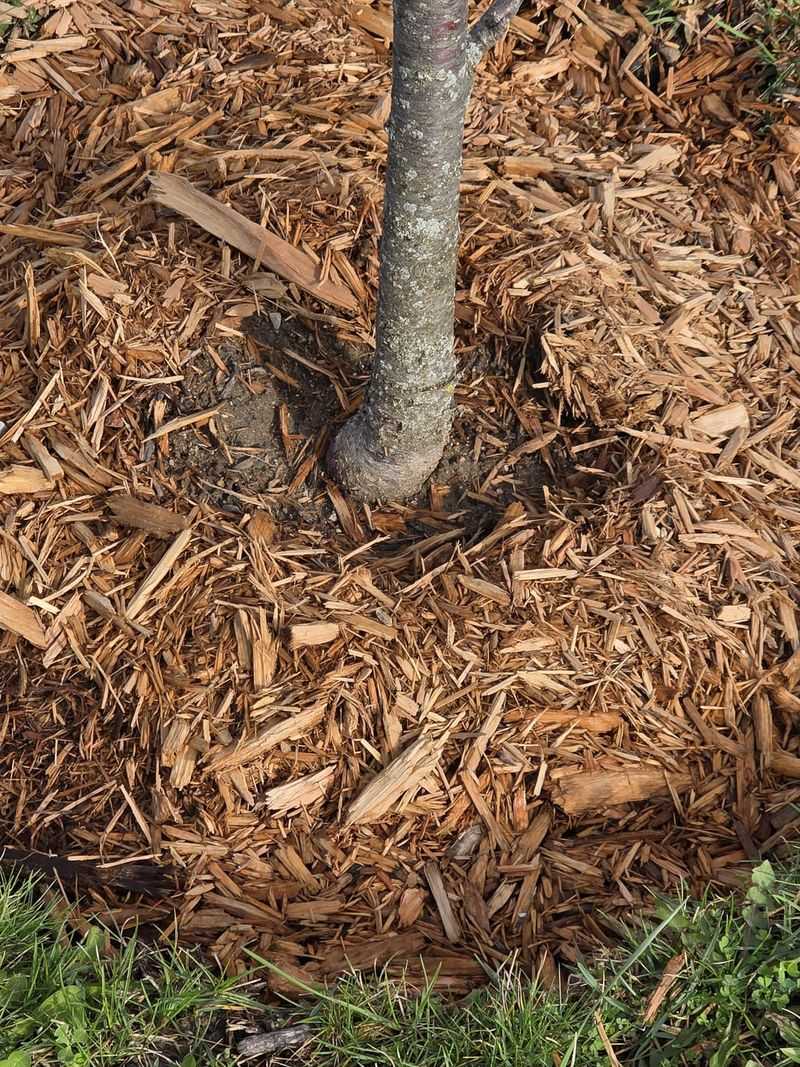
Guessing is how mulch volcanoes get built. A quick measurement takes away the guesswork and gives you a real number to work with.
Grab a ruler, a yardstick, or even a pencil you can mark later.
Pull back the mulch with a trowel in one spot until you see bare soil. Then stand the ruler straight up in that small hole and read where the top of the mulch sits.
Checking just one spot can fool you, so test a few places around the ring.
Mulch often piles deeper near the trunk and thins out toward the edge, especially if it was dumped from a wheelbarrow in one spot. Checking near the trunk, halfway out, and close to the edge gives you a fair picture.
Pay attention to what you find at the bottom as well. Matted, packed mulch or a fine layer that looks like soil may be older mulch that has partly broken down.
That partly broken-down layer still holds moisture and adds depth, so include it in your number.
Many Ohio homes sit on heavy clay soil, which already holds water well. Knowing your real mulch depth helps you avoid adding a wet blanket on top of soil that stays damp on its own.
Once you have your measurements, you can decide whether to add, spread, or simply leave things alone.
3. Two To Three Inches Is Usually Enough Around Trees
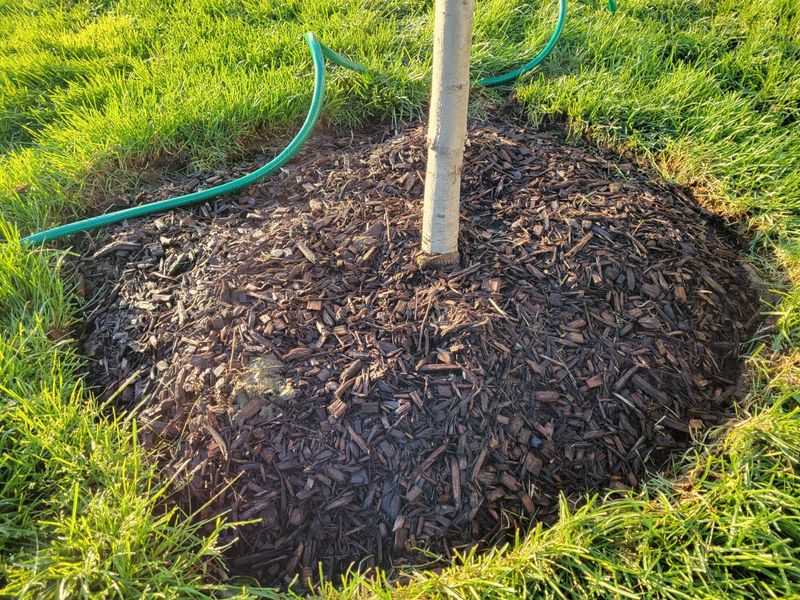
More mulch is not more protection. Extension services, including Ohio State University Extension, commonly suggest a layer of about two to three inches around trees.
That depth tends to strike a sensible balance for most yards.
A layer in that range helps hold soil moisture, softens temperature swings, and slows down many weeds. It also stays loose enough for rain and air to move through to the soil below.
Finer materials can pack down more, so a layer closer to two inches may be plenty for them. Coarse wood chips allow more airflow, which is why some people go toward the three-inch end with chunkier mulch.
Your soil plays a part too.
Poorly drained clay may do better with a lighter layer, while sandier ground that dries quickly might handle the fuller depth. Your own site conditions matter more than any single rule.
Width is often more helpful than depth. Spreading mulch wider, even out toward the edge of the branches when space allows, covers more of the root zone than piling it tall.
Leave a small gap of a few inches between the mulch and the trunk itself.
If your measurement already lands in the two-to-three-inch range, you are in good shape. Adding another bag mostly adds cost, not benefit.
4. Thick Mulch Can Keep Water And Air From Reaching Roots
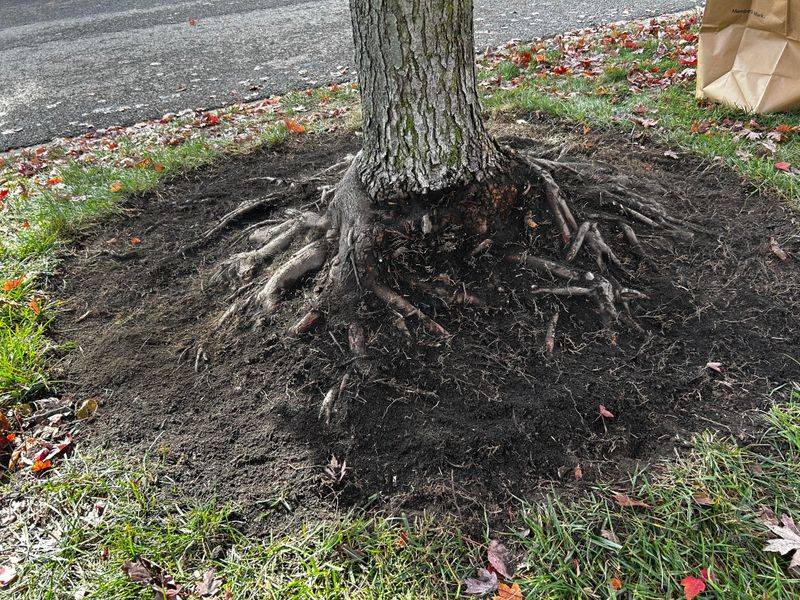
Roots breathe, even underground. Most of a tree’s fine feeder roots live in the top several inches of soil, where they take in water and oxygen.
Bury that zone under a deep pile, and things can get stuffy.
A very thick mulch layer can soak up light rain before much of it reaches the soil. In a dry spell, that means the roots below may get less water than you would expect.
Heavy layers can also cause the opposite problem in wet weather. On slow-draining ground, deep mulch may hold soil soggy for long stretches, which can stress roots and favor some root problems.
Neither outcome is certain, since weather and soil type change the picture quite a bit.
Ohio falls are often a mix of dry weeks and soaking rains, and spring can bring plenty of moisture across much of the state. A moderate layer handles those swings better than a deep one.
Some trees under heavy mulch also grow roots up into the mulch itself, where they can dry out or get stressed by cold.
Signs of trouble can be vague, such as thin leaves, smaller growth, or early fall color. Plenty of other issues cause those symptoms too, so a deep mulch pile is just one thing worth ruling out.
5. Buried Root Flares Can Lead To Long-Term Tree Problems
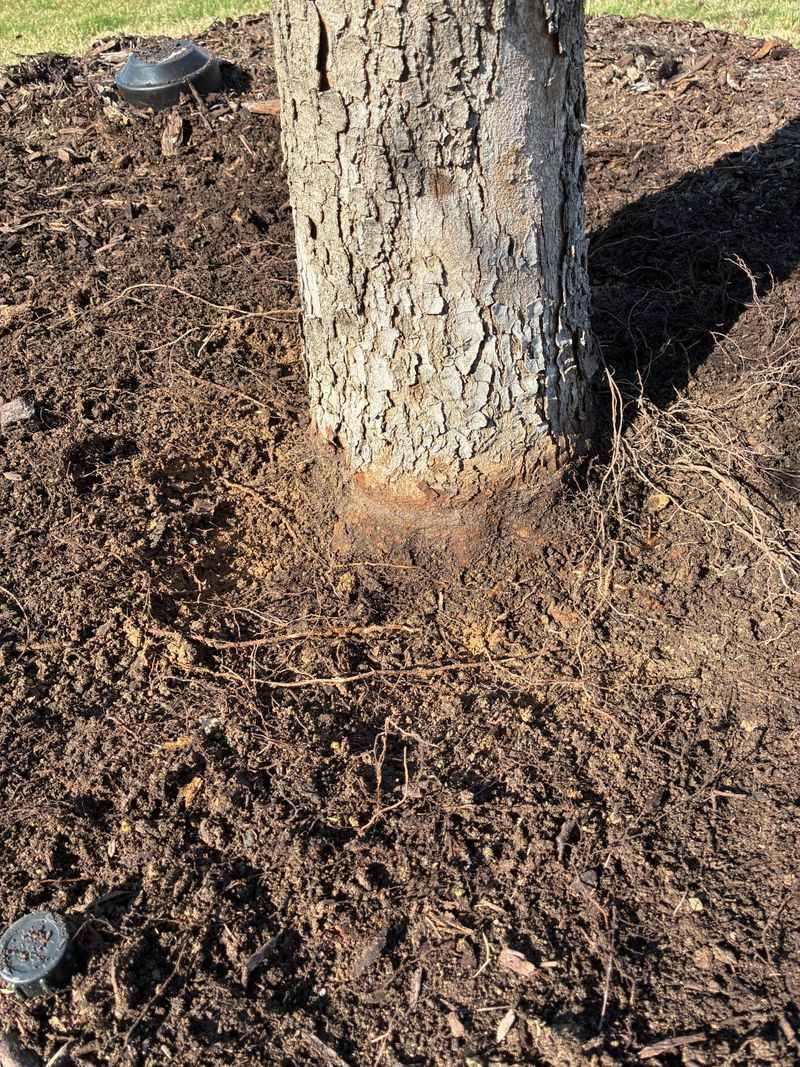
Look at the bottom of a healthy tree trunk. It should widen out where it meets the ground, almost like the base of a wine glass.
That widening is called the root flare, and it is meant to stay visible.
Bark on the trunk and flare is built for open air, not constant dampness. When mulch stays packed against it year after year, the bark can stay moist, which may make it easier for decay or disease to get started.
Buried flares can also hide girdling roots. These roots wrap around the base of the trunk and can slowly squeeze it as both grow larger over many years.
Not every buried flare leads to trouble, and how fast problems show up varies by tree.
Still, arborists commonly point to deep mulch and deep planting as frequent issues seen in landscape trees. The damage tends to build quietly, so it is easy to miss until the tree shows stress.
Checking your own tree is simple.
Gently pull the mulch away from the trunk with your hands or a small rake until you can see the flare. If you cannot find it even after clearing mulch, the tree may have been planted too deep, and a certified arborist in Ohio can take a closer look.
6. Mulch Piled Against Trunks Can Shelter Winter Rodents
Voles love a cozy hideout. A thick mound of mulch pressed against a trunk gives these small rodents cover from hawks, cats, and cold wind.
Once they settle in, the bark nearby can become a snack.
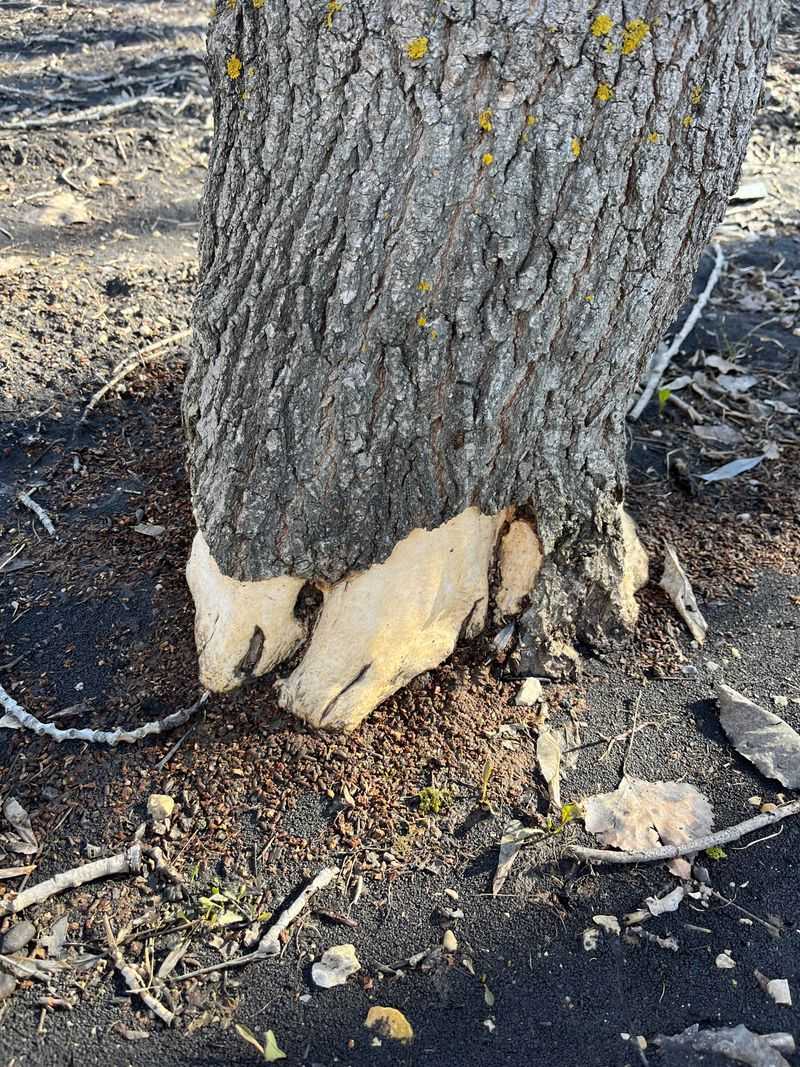
Meadow voles are common in Ohio lawns and gardens. During winter, when food is harder to find, they may chew bark near the base of young trees and shrubs, especially under snow or mulch where they feel hidden.
Fruit trees and young, thin-barked trees often take the most damage. If the chewing wraps all the way around the trunk, it can seriously harm the tree.
Damage levels swing a lot from year to year, often following vole numbers and snow cover.
Pulling mulch back a few inches from the trunk removes some of that shelter. A bare ring of soil right at the base makes the area less inviting, though it will not stop every vole.
Some gardeners also add a cylinder of hardware cloth around young trunks for extra protection.
Bury the bottom edge slightly and leave space between the wire and the bark so it does not rub. Take a peek at the trunk base during winter thaws, since early chewing is easier to manage when you catch it soon.
7. Rake And Redistribute Old Mulch Before Buying More
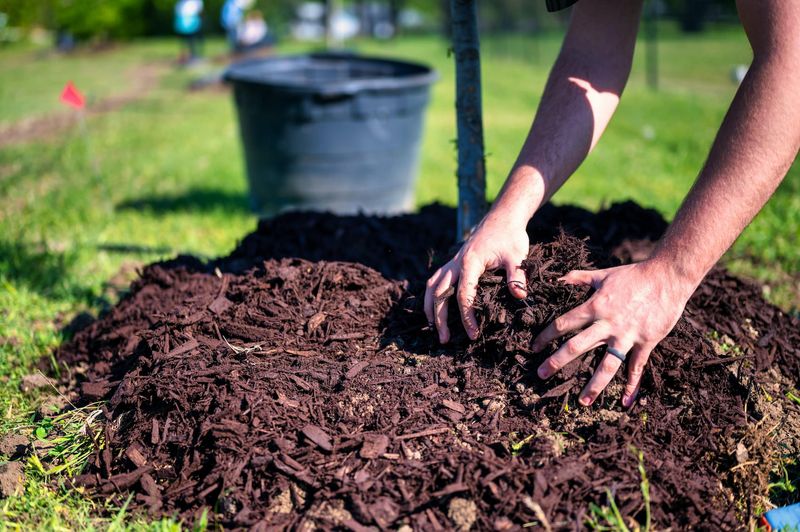
Your best mulch might already be on the ground. Before heading to the store, spend ten minutes with a rake and see what you can do with what you have.
Start by pulling any mulch away from the trunk and flare.
Next, spread the extra outward toward the edge of the ring. Piles near the center can often cover a wider area once they are evened out, which helps more roots without adding depth.
Break up any crusted or matted spots as you go. Packed mulch can shed water, so loosening it with a rake or hand fork lets rain soak in more easily.
A quick turn also brings darker mulch to the top and gives the ring a fresher look.
If you still come up short after spreading, add only enough to reach about two to three inches. Many Ohio gardeners find that a few bags go much further this way than expected.
Shredded fall leaves can work as a free top-up in some spots, too.
Run them over with a mower first so they do not mat down into a soggy sheet. Then check the depth again with your ruler, and you will know your tree is set for the colder months ahead.