How to Keep a Poinsettia in Michigan Alive Until Spring
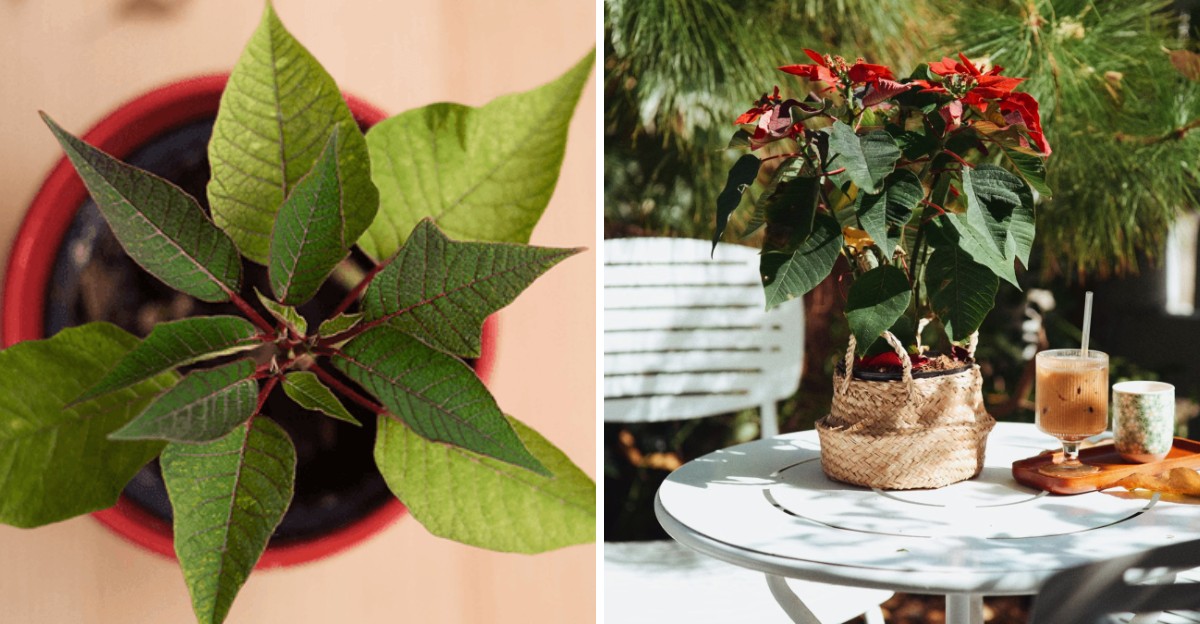
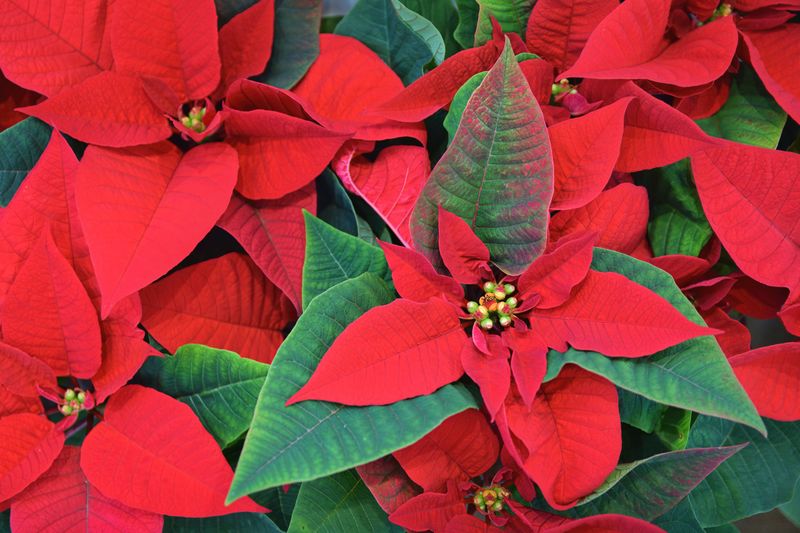
Those bright red petals on your holiday plant are not petals at all. They are leaves that changed color, and the real flowers are the tiny yellow beads hiding in the center.
I love that little secret. It makes me look at every grocery store display a bit differently, and I bet you will too.
This plant comes from the warm hillsides of Mexico, where it can grow into a shrub taller than a basketball hoop. Now it sits on a Michigan windowsill while snow piles up outside.
That is quite a commute for a plant that sulks when the air drops below 50 degrees.
Most people toss theirs by New Year’s Day.
Personally, I think that is a missed chance, because a few easy habits can carry those colorful leaves well into March. So what does a tropical guest really need to make it through a long northern winter?
1. That Chilly Windowsill Could Be Your Poinsettia’s Biggest Problem
Cold is the number one reason holiday poinsettias give up early. Michigan State University Extension notes that these plants can be hurt by temperatures below 50 degrees, and even a short blast of icy air can do harm.
That damage often starts before you even get the plant home. A quick walk across a snowy parking lot can cause leaves to wilt or drop a few days later. Always ask the store to wrap or bag your plant, and head straight to a warm car.
Once it is inside, look around for sneaky cold spots. Front doors, drafty windows, and patio sliders let in chilly air every time someone opens them. Leaves that press against frosty glass can also get chilling injury, which shows up as dark, limp patches.
Heat can be a problem too. Keep the pot away from heat vents, fireplaces, and space heaters, since hot, dry air causes leaves to curl and fall.
I like to do a simple hand test. If the spot feels uncomfortable to you in a T-shirt, your plant probably feels the same way. Moving it just a few feet can make a big difference.
2. Steady Room Temperatures Keep Those Red Bracts Hanging On
Poinsettias are a lot like Goldilocks. They want temperatures that are not too hot and not too cold, and they want them to stay that way.
Aim for daytime temperatures between 60 and 70 degrees. At night, a little cooler is fine, but try to keep it above 55 degrees. Slightly cooler nights can actually help the colorful bracts last longer.
Big swings are what cause trouble. A room that is 72 degrees during the day and drops to 52 at night can stress the plant and lead to sudden leaf drop. That is why rooms over unheated garages or near old windows can be tricky in a Michigan winter.
Many families turn the thermostat down at night to save on heating bills. That is smart, but keep an eye on where your plant sits. An inside wall away from exterior doors usually stays more even.
Your Michigan Garden Changes Every Week. Your Plan Should Too.
Gardening in Michigan changes quickly throughout the season. Every Friday you’ll receive a simple weekly plan showing exactly what to plant, prune, fertilize, harvest, and protect so you never miss the right timing.
A cheap indoor thermometer can help you learn your home’s warm and cool zones. I was surprised to find my dining room ran almost eight degrees cooler than my kitchen.
Once you know those numbers, picking the right spot becomes easy and your plant will thank you with longer-lasting color.
3. Soggy Foil Wraps Can Drown Poinsettia Roots
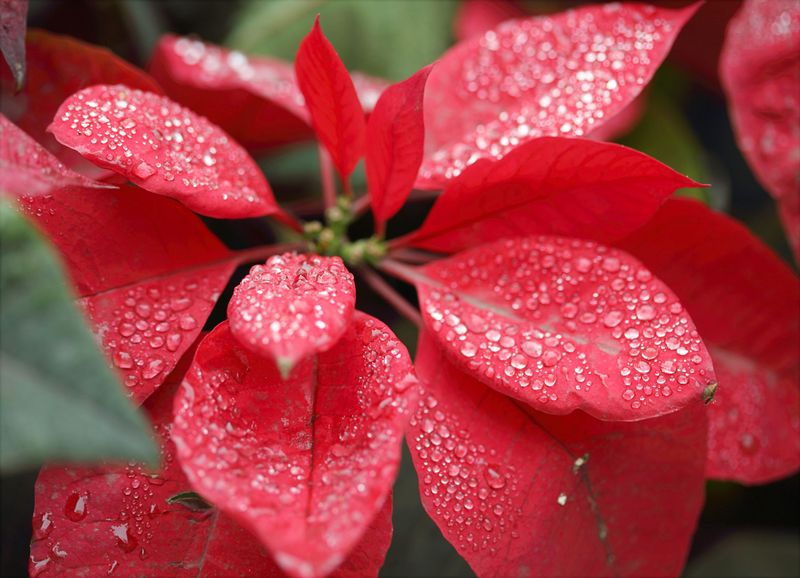
Those shiny foil wraps look festive, but they hide a common trap. Water pools at the bottom, and the roots end up sitting in a puddle for days.
Overwatering is one of the top ways people lose poinsettias. Roots need air as much as water, and soggy soil leads to root rot, yellow leaves, and droopy stems. The fix is simple once you build the habit.
Check the soil every day or two by pressing a finger into it. If the top inch feels dry, it is time to water. If it still feels damp, wait.
When you do water, take the plant to the sink. Remove the foil or poke holes in the bottom, then water slowly until it drains out the bottom. Let it drip for a few minutes before putting it back.
Do not let it get bone dry either. A poinsettia that wilts badly from thirst may drop leaves even after you water it. Lifting the pot is a handy trick, since a light pot usually means dry soil. After a week or two, you will be able to tell just by picking it up.
4. A Bright Window Gives Your Poinsettia the Light It Craves
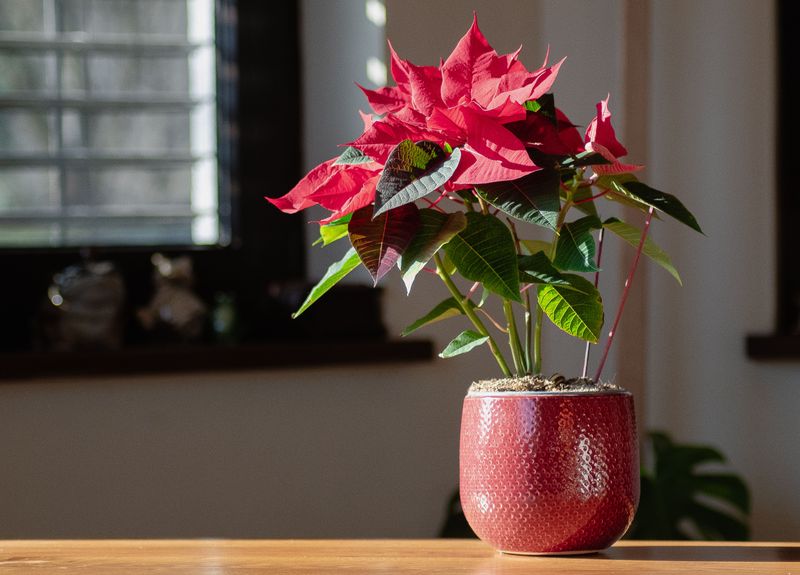
Short winter days are rough on everyone, and plants feel it too. In much of Michigan, December brings only about nine hours of daylight, often behind gray clouds.
Poinsettias do best with at least six hours of bright, indirect light each day. A south, east, or west window usually works well. A sheer curtain can soften strong afternoon sun if needed.
Dark corners are where many holiday plants start to fade. Without enough light, the green leaves turn yellow and drop, and the plant gets thin and leggy. It might look fine on a coffee table for a week, but it will struggle after that.
Here is a fun trick that worked for me. I display my poinsettia on the dining table for parties, then move it back to the window afterward. It gets to show off when guests arrive and still soaks up light the rest of the time.
Remember the cold glass warning, though. Keep the leaves from touching the window pane. If your brightest window is also your draftiest, a small LED grow light in a warmer room is a good backup plan for those cloudy weeks.
5. Pebble Trays Help Poinsettias Handle Dry Furnace Air
Ever notice your lips crack and your hair gets staticky in January? Running the furnace all winter pulls moisture out of the air, and your poinsettia notices too.
In the wild, these plants grow in warm areas with more humid air. Indoor humidity in a heated Michigan home can drop very low in midwinter. That dryness can lead to crispy leaf edges and early leaf drop.
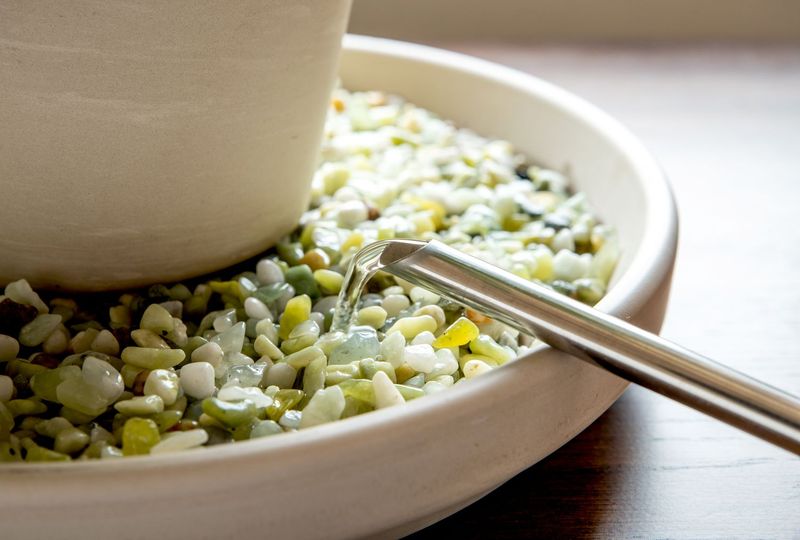
A pebble tray is an easy, low-cost fix. Fill a shallow tray with small stones, add water until it sits just below the tops of the pebbles, and set the pot on top. As the water evaporates, it adds a bit of moisture right around the plant.
Make sure the bottom of the pot sits on the stones and not in the water. Otherwise you are back to soggy roots.
Grouping plants together also helps, since they release moisture through their leaves. A small cluster of houseplants can create a slightly more humid pocket. A room humidifier works well too and makes the air nicer for people.
I skip misting the leaves, since it adds little humidity and can leave water spots on the bracts.
6. Fading Poinsettia Bracts Are Your Cue to Grab the Pruners
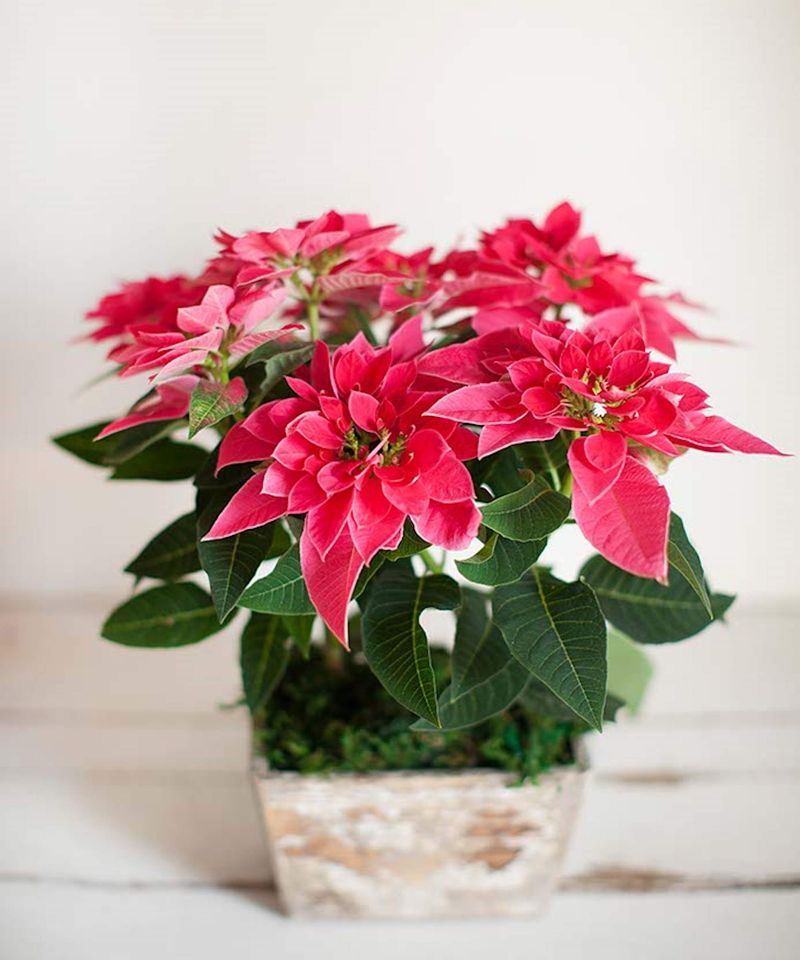
Around March, the red bracts usually start to look tired. They may turn greenish or drop off, and that is perfectly normal.
It does not mean you failed. It just means the plant is ready for its next stage. If your goal is to keep it going into spring and beyond, a good haircut helps.
Many extension experts suggest cutting the stems back to about 4 to 6 inches tall in late winter or early spring. Leave a few leaves or leaf buds on each stem so it can push out new growth. It feels bold, but the plant often comes back fuller and bushier.
Wear gloves while you work. Poinsettias have a milky white sap that can bother sensitive skin, especially for people with latex allergies.
Despite the old rumors, poinsettias are not highly poisonous, but the sap can cause mild irritation and the leaves can upset a pet’s stomach.
Use clean, sharp pruners for neat cuts. After pruning, keep the plant in its bright spot and water a little less until new shoots appear. Watching those fresh green leaves pop out is one of my favorite parts of spring.
7. New Green Shoots Mean Your Poinsettia Is Hungry Again
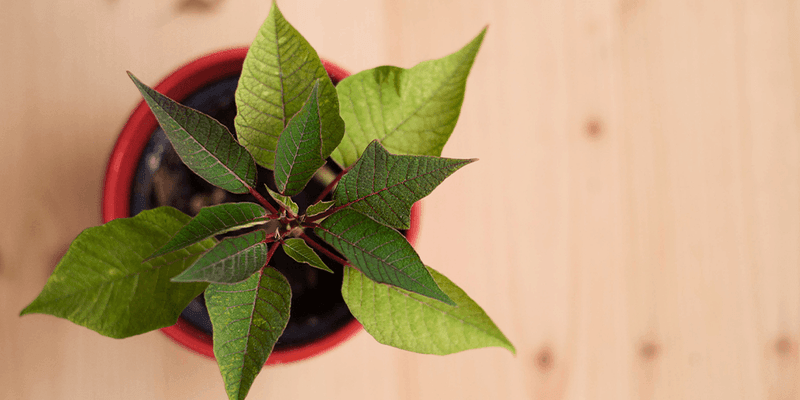
Feeding a poinsettia while it is in full color is mostly a waste. The plant is not growing much during the holidays, so extra fertilizer just sits in the soil.
Things change once you see new growth after pruning. Those fresh shoots need fuel to build strong stems and healthy leaves. That is when a balanced, all-purpose houseplant fertilizer becomes useful.
Follow the label and feed every two to four weeks through spring and summer. Many gardeners use a water-soluble mix at half strength to stay on the safe side. Too much fertilizer can burn roots and cause brown leaf tips.
Spring is also a good time to check the roots. If they are circling the pot or poking out the bottom, move the plant up to a container one or two inches wider. Use fresh potting mix that drains well, and make sure the new pot has drainage holes.
I think of this stage as a fresh start. The holiday show is over, but the plant is building the strength it needs for months ahead.
With steady care, it can become a handsome green houseplant, and some gardeners even coax it to color up again next December.
8. Wait for Warm Nights Before Your Poinsettia Heads to the Patio
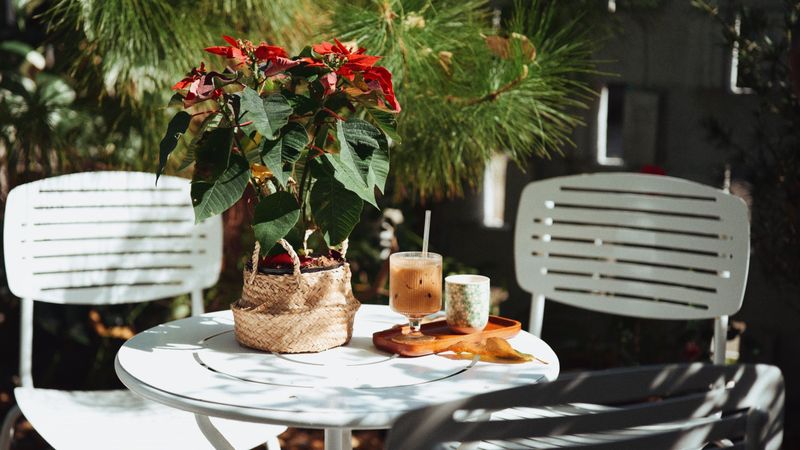
Spring fever hits hard in Michigan, and I get the urge to haul every plant outside on the first sunny day. Your poinsettia needs you to be patient.
Wait until nighttime temperatures stay above about 50 to 55 degrees. In southern Lower Michigan, that is often late May, while the Upper Peninsula and northern areas may not be ready until early June.
Check your local forecast and last frost date before making the move. Do not just plop it in full sun. After months indoors, the leaves can scorch easily. Start in a shaded spot for several days, then slowly give it a few more hours of morning sun each week.
Bring it back inside on any surprise cold night. Michigan springs love to throw a chilly curveball, and one frosty evening can undo months of careful work.
Outdoors, the plant may need water more often, especially on windy or hot days. Keep it in its pot rather than planting it in the ground, since it cannot survive our winters outside.
By early fall, plan to bring it back in before nights cool off. You will have kept your holiday plant thriving all the way through spring and beyond.