Why Geraniums Stretch Out Indoors During Dark Michigan Winters and How to Fix It
A plant can grow taller in the dark than in bright sun, yet end up weaker for it. Botanists call that sneaky habit etiolation, and it shows up on windowsills every winter.
In Michigan, December days shrink to about nine hours of daylight. The sun also hangs low and weak, and cloudy skies around the Great Lakes steal even more of its glow. I believe most of us underestimate how dim our homes really get.
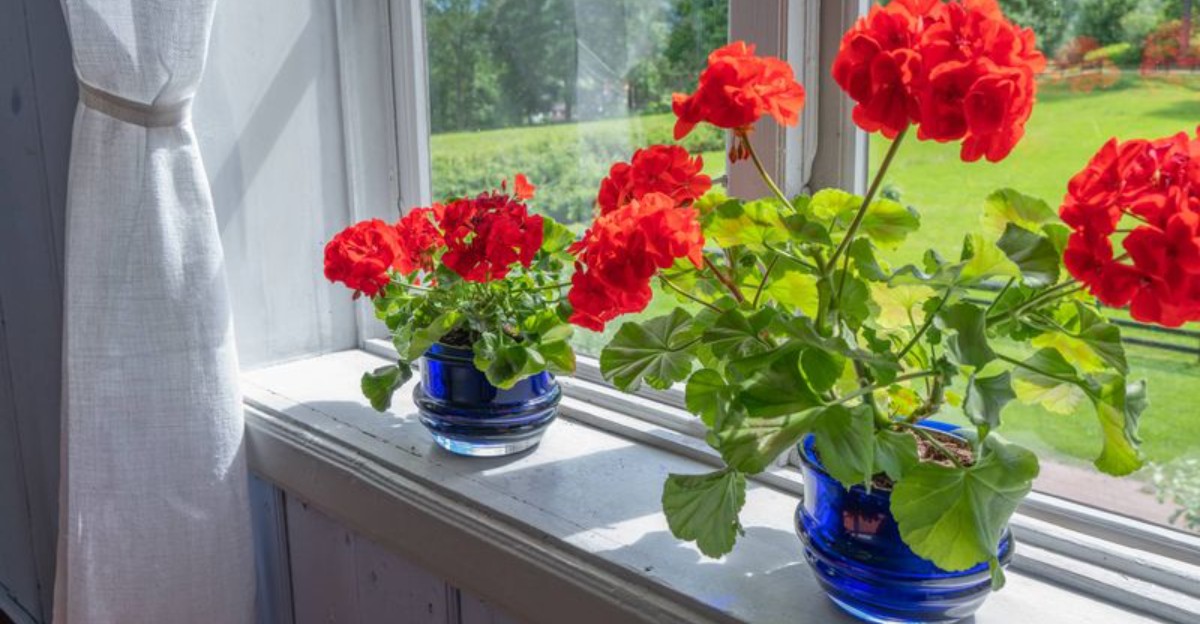
You probably remember that cheerful red pot from the summer porch. Now it might look like it is reaching for the glass with long, skinny arms and only a few pale leaves up top.
To be honest, I find that gangly look a little sad and a little funny at the same time. The stretching is a clue, not a failure.
1. Those Long, Skinny Geranium Stems Are Sending You a Message
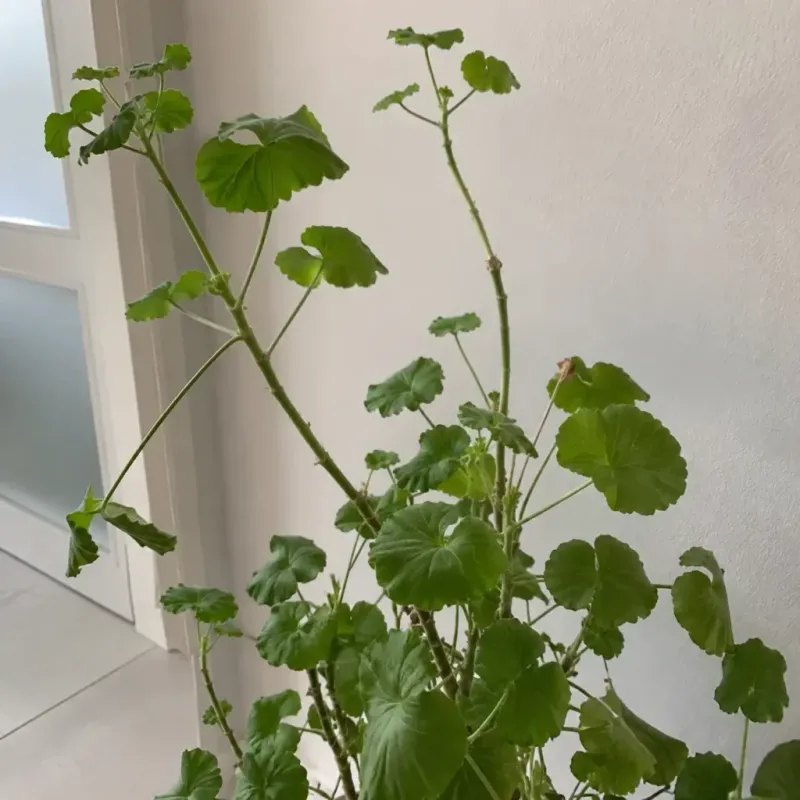
Plants cannot walk to a brighter room, so they do the next best thing. They grow toward light as fast as they can. That race is called etiolation, and your geranium is running it right now.
Look closely at the stems. You will likely see big gaps between each leaf, called long internodes. The new leaves may be smaller and lighter green than the summer ones, and the whole plant often leans hard toward the window.
Inside the stem, a growth hormone called auxin is busy. In low light, cells on the shaded side stretch more, which bends the plant toward the brightest spot. The plant also puts its energy into length instead of thick stems and full leaves.
I like to think of it as a plant standing on its tiptoes. It is a smart survival trick in the wild, where a seedling must climb past its neighbors to find sun. On your windowsill, it just looks awkward.
Here is the part that should calm you down. Stretching does not mean you have been careless. It means the plant needs more light than your home gives in winter, and that is fixable.
2. Short Michigan Days Leave Geraniums Starving for Sunlight
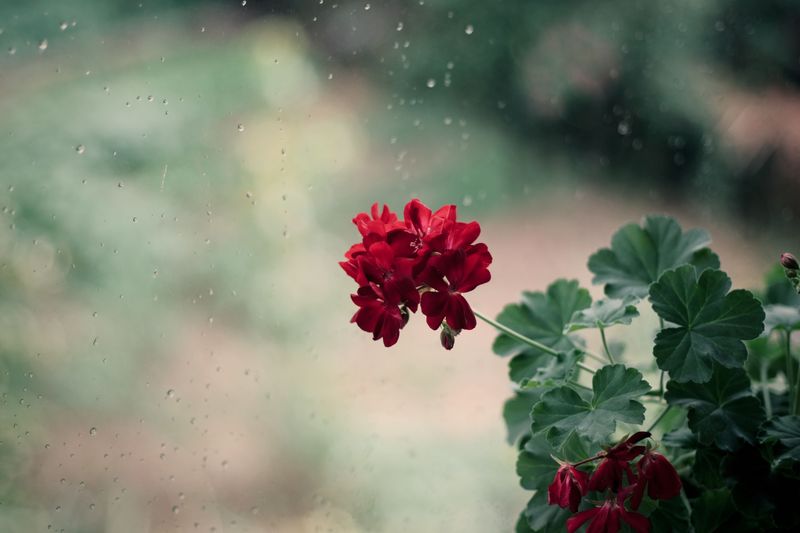
Winter light in the Great Lakes region is a lot weaker than most people realize. Around the solstice, Michigan gets roughly nine hours of daylight, and the Upper Peninsula gets even less. Compare that to about fifteen hours in late June.
The angle matters too. A low winter sun sends light through more atmosphere, so less energy reaches your window. Add the lake-effect clouds that blanket western and northern Michigan for days, and your plant gets a thin trickle of light.
Garden geraniums are really Pelargonium plants from sunny southern Africa. They evolved under bright skies, and they want at least six hours of strong light to stay compact. Our December windows rarely deliver that.
Glass also filters out some light, and screens, curtains, and dirty panes cut it further. A spot that feels bright to your eyes can be surprisingly dim to a plant. Human eyes adjust so well that we hardly notice the drop.
So the main cause is simple. Your geranium is not sick. It is hungry for light, and the dark stretch from November through February is when the stretching shows up most.
3. A South-Facing Window or Grow Light Can Rescue Your Geraniums
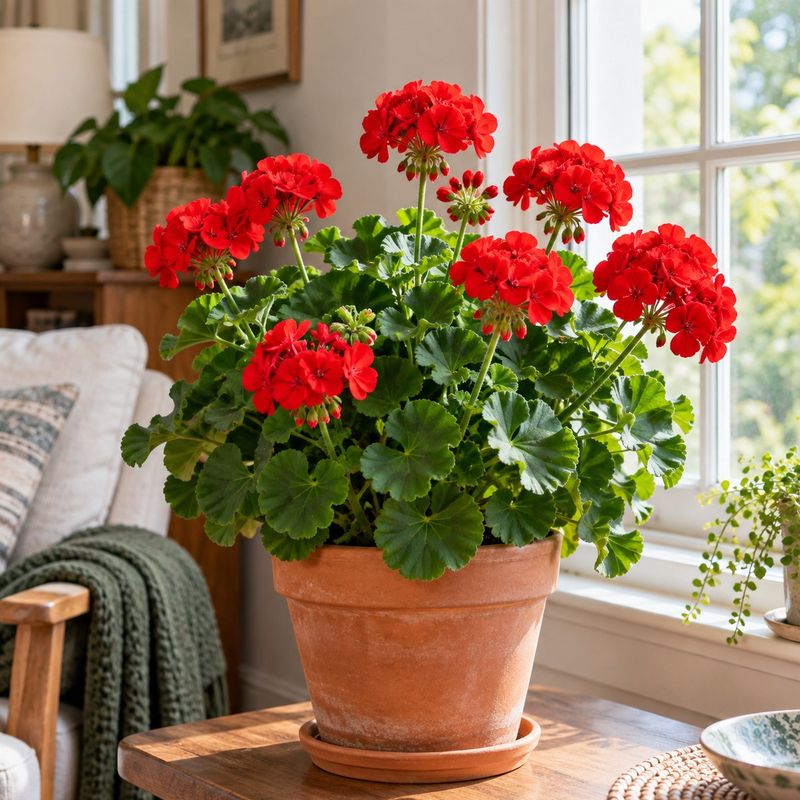
Light is the real cure, so start there before anything else. Move your pots to the brightest window you have. South-facing glass gives the strongest winter light, with west a close second.
Keep the pots close to the pane, within a foot or so, but not touching cold glass. Turn each pot a quarter turn every few days. That small habit keeps stems from leaning in one direction.
If your windows face north or sit under deep eaves, a grow light is worth it. Simple LED shop lights or full-spectrum strip lights work well and use little power. Hang them about six to twelve inches above the leaves.
Run the lights for about 14 to 16 hours a day. A cheap outlet timer makes this easy, so you never have to remember. Plants also need a dark rest, so do not leave the lights on all night.
Personally, I was shocked at how fast new growth tightened up under lights. The stretched stems will not shrink back, but fresh shoots come in shorter, greener, and sturdier. Within a few weeks, the difference is easy to see.
4. Snip Back Those Leggy Geranium Stems for a Fuller Plant
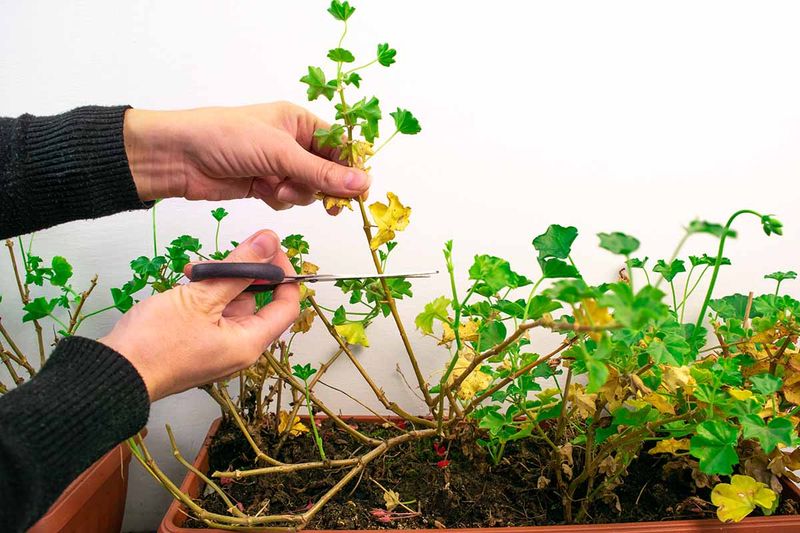
Grab your clean scissors, because pruning is the second half of the fix. Cutting back stretched stems feels scary, but geraniums bounce back quickly. Each cut tells the plant to sprout new side shoots.
Find a leaf node, the small bump where a leaf joins the stem. Cut about a quarter inch above it. New growth will push out from buds right at that spot.
For a mildly leggy plant, trim the longest stems back by about one third. If the plant looks like a tangle of bare sticks, many extension guides suggest cutting back by half or more. Try to leave a few leaves on each stem so the plant can keep making food.
Late winter, around February or March, is a great time for harder pruning. Days are getting longer, so new shoots get the light they need. Pruning in deep December can just lead to more stretching if light stays poor.
Pinching works for smaller tweaks. Use your fingertips to nip off the soft tip of any growing shoot. That simple trick makes the plant branch out and fill in, giving you more stems and more spots for flowers later.
5. Warm Rooms Push Geraniums to Grow Too Fast in Weak Light
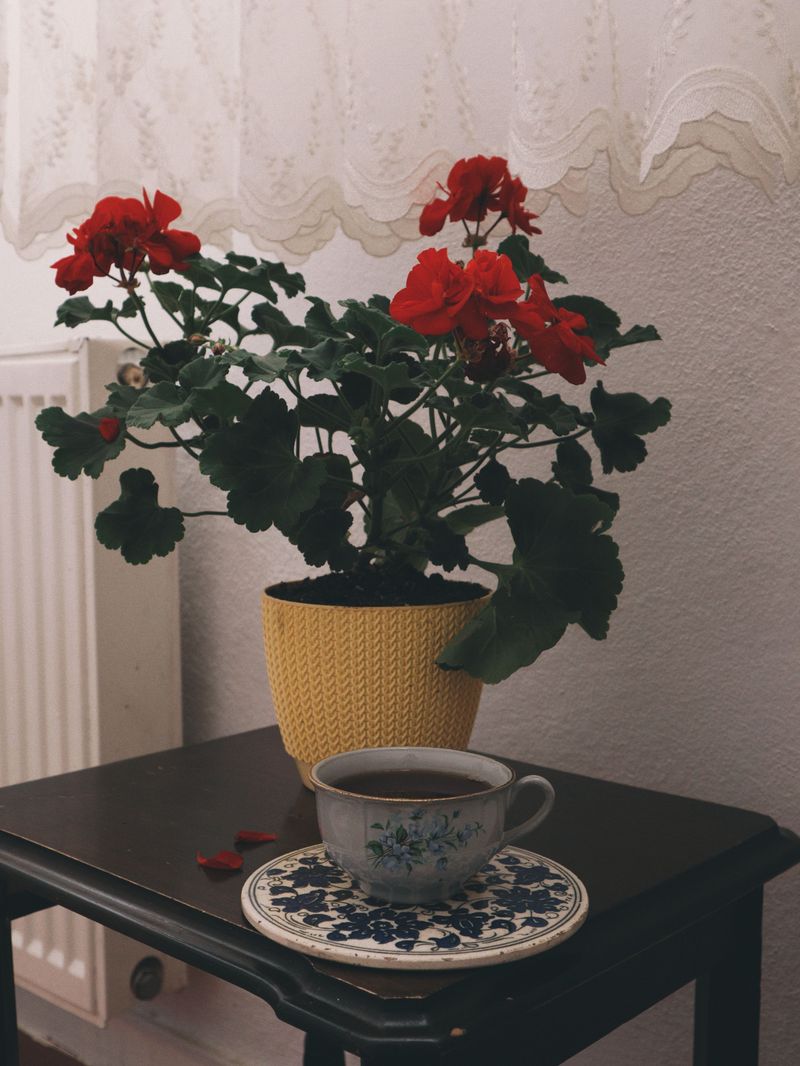
Cozy living rooms are great for people and tricky for geraniums. Heat speeds up growth, but weak light cannot support it. The result is fast, floppy stems with little substance.
Geraniums overwintering indoors are happiest on the cool side. Aim for about 60 to 65 degrees during the day and the mid to upper 50s at night. A bright enclosed porch, a cool spare bedroom, or a sunny basement window can work well.
Watch out for heat sources. Forced-air vents, radiators, and wood stoves blow hot, dry air that stresses leaves and speeds up that spindly growth. Even a few feet of distance helps.
Cold drafts are a problem too. Keep leaves from pressing against icy glass on frigid nights, when temperatures near the pane can drop sharply. A bit of space or a curtain pulled behind the plant at night solves that.
I like thinking of winter as nap time for these plants. Cooler air slows them down to match the light they get. Slow, steady growth stays compact, and you will see far less of that stretched, reaching shape before spring arrives.
6. Easy on the Watering Can and Fertilizer This Winter
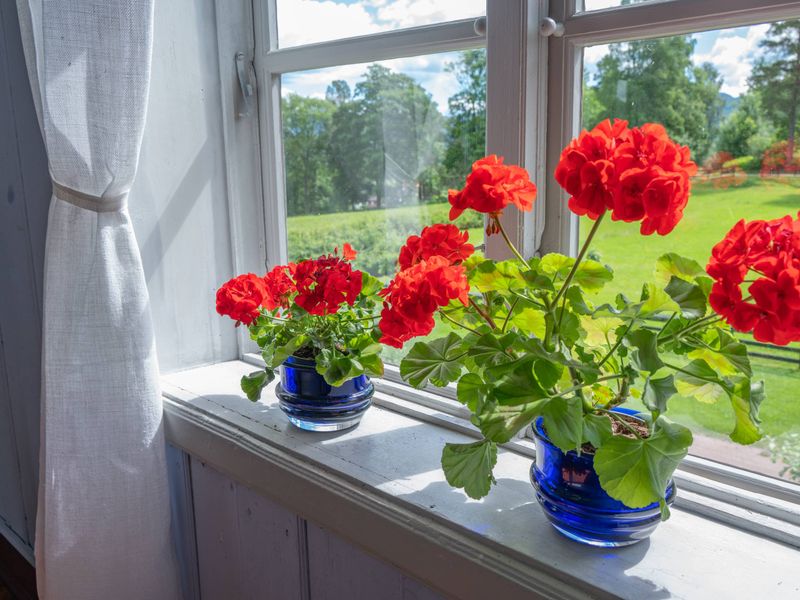
Overloving a geranium in winter is one of the easiest mistakes to make. Low light means slow growth, and slow growth means the plant drinks much less. Soggy soil is far more trouble than dry soil.
Stick your finger about an inch into the potting mix. Water only when it feels dry at that depth. Depending on your home, that might be every couple of weeks or even less often.
When you do water, soak the pot until water runs out the bottom. Then empty the saucer so roots do not sit in a puddle. Wet roots in cool rooms can rot, and yellow, mushy stems are a common warning sign.
Fertilizer can wait. Feeding during dim months pushes soft new growth the plant cannot support, which adds to the stretching problem. Most guides suggest holding off until you see active growth in late winter or early spring.
Clay pots help too, since they breathe and dry out faster than plastic. A light, well-draining mix keeps air around the roots. Keep things lean and simple until the days lengthen, and your geranium will thank you with tidier stems.
7. Turn Leftover Geranium Cuttings Into Fresh Plants for Spring
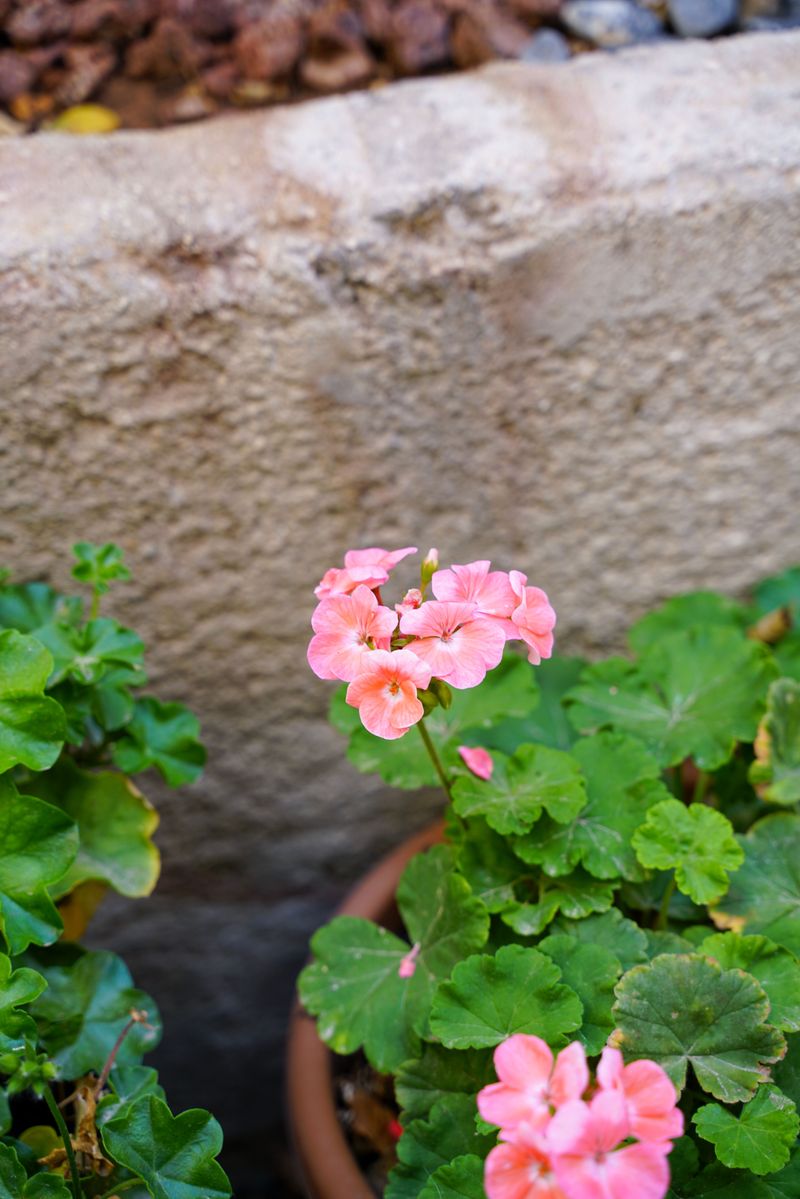
Those stems you just trimmed do not have to go in the compost. Geraniums root easily, so your pruning pile can turn into a crop of new plants. It is one of the most satisfying winter projects I know.
Choose healthy, non-flowering tips about three to four inches long. Cut just below a leaf node and strip off the lower leaves. Let the cut ends dry for a few hours to help prevent rot.
Push each cutting into moist, well-draining mix, like a seed-starting blend with some perlite. Rooting hormone is optional but can speed things up. Skip the plastic bag, since geraniums dislike humid, stuffy conditions.
Give the pots bright light and keep the mix lightly moist, not wet. Roots usually form in about three to four weeks. A gentle tug that meets resistance tells you they have taken hold.
Plan ahead for spring. In most of Michigan, it is safest to move geraniums outside after frost danger passes, often mid to late May, with the Upper Peninsula later.
Harden them off over a week, and your compact new plants will be ready to shine on the porch again.