Why Fire Ants Suddenly Raft Across Florida Yards After Heavy Rain
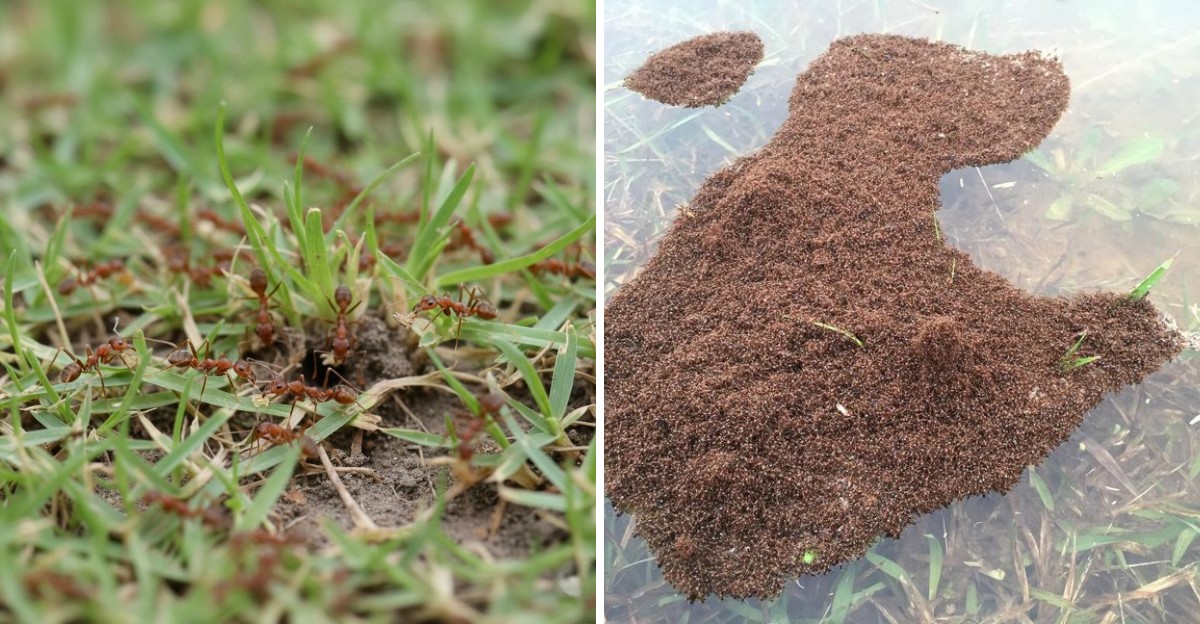
A living raft made of thousands of insects can float for days and still keep its queen dry. Scientists have watched these rafts hold together for close to two weeks on water.
After a big Florida storm, that reddish clump drifting past your fence might not be mulch at all. I still remember poking at one with a rake and watching it ripple like a blanket. It was alive, and it was not happy with me.
You need to know what you are looking at before you wade out to rescue a soggy flower bed.
Those floating patches can sting, cling, and hitch a ride on almost anything they touch.
I find the whole thing equal parts creepy and brilliant.
How do creatures smaller than a grain of rice build a boat with no plan, no leader, and no wood?
That Reddish Clump Floating Past Your Fence Is Very Much Alive
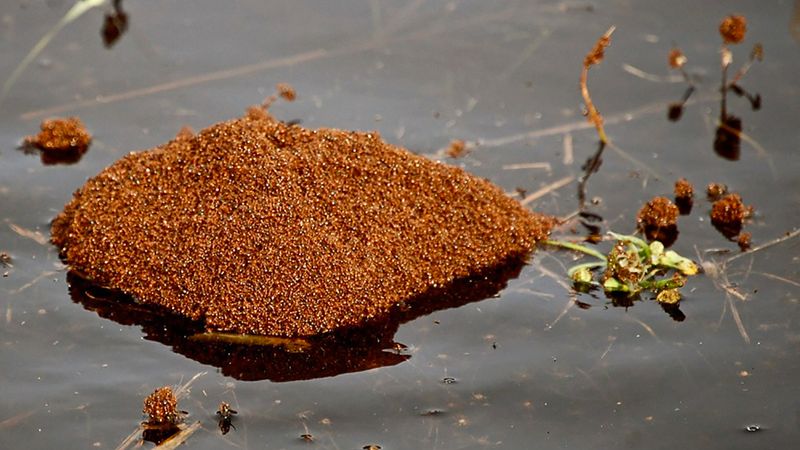
One stormy afternoon, a neighbor down the street called it a pile of floating coffee grounds. A closer look told a different story, because the pile was crawling.
What you are seeing is a colony of red imported fire ants that left its flooded home underground.
Fire ant mounds sit in the top layer of soil, with tunnels that can run several feet down. When heavy rain fills those tunnels, the workers do not wait around.
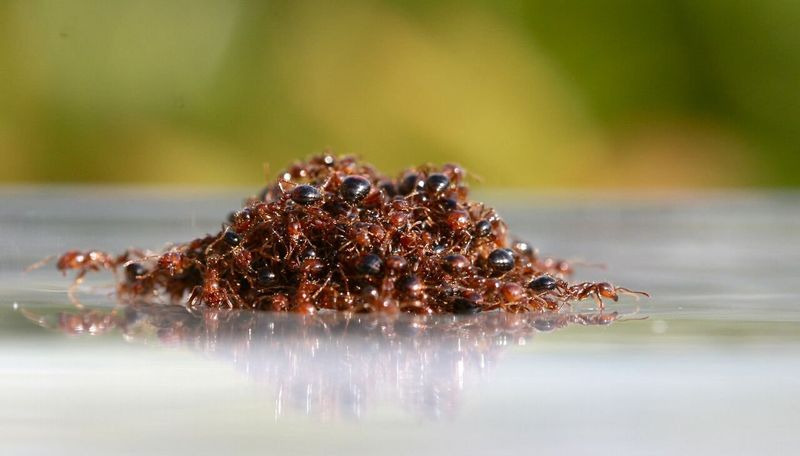
They haul the queen and the young upward and link their bodies together on the surface of the water.
The result looks like a flat, rust-colored pancake. Some rafts are the size of a dinner plate, while others stretch wider than a doormat.
They often bump along ditches, flooded lawns, and low spots in garden beds.
Florida gets plenty of these sightings during the rainy season, which mostly runs from late May through October. Tropical storms and hurricanes can push the problem into overdrive.
So if a patch of debris seems to move against the breeze or slowly change shape, give it space. That clump is a whole family on the move, and it is looking for dry ground.
Fire Ants Grab Each Other With Legs and Jaws to Build a Living Boat
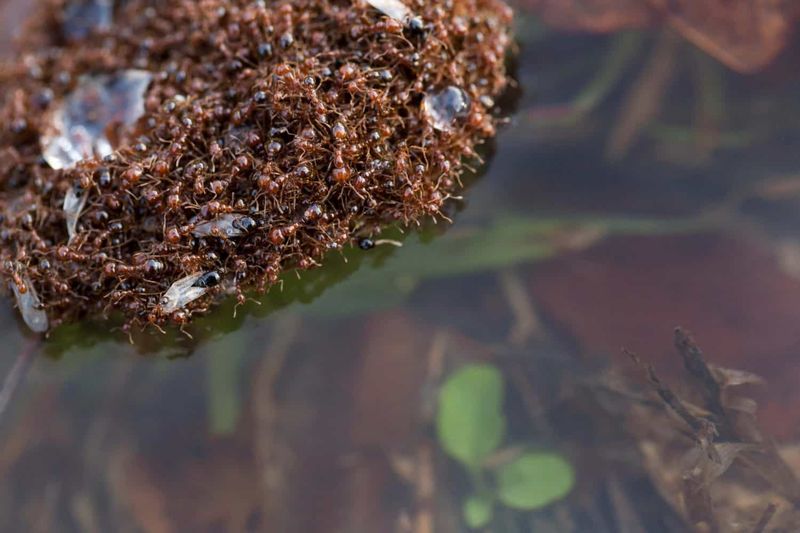
Here comes the cool part, and researchers at Georgia Tech have studied it closely. Each ant grips its neighbors using its jaws and the tiny claws on its legs.
Together they form a mesh that works a lot like a woven mat.
Fire ant bodies have a waxy, water-repelling surface. When thousands of ants pack together, tiny pockets of air get trapped between them.
That trapped air acts like a life jacket, so the raft floats instead of sinking.
Scientists found that a group of ants can form a raft in under two minutes. The ants on the bottom layer stay partly underwater, yet they still breathe thanks to that thin coat of air.
Members trade places, so no single worker stays stuck below.
The queen and the brood ride near the middle, safe and mostly dry. Eggs and larvae can even help the raft float.
I love that no single ant is in charge. Each one follows simple rules, like grab a neighbor and hold on, and a sturdy boat appears.
It is teamwork on a scale that makes most group projects look messy, and it helps explain why these pests are so hard to beat.
South American Floodplains Taught These Ants to Float
Long before they reached Florida, red imported fire ants lived along rivers in central South America. Their home region in parts of Brazil and Argentina floods often.
Colonies that could float survived, and colonies that could not did not pass on their genes.
Over thousands of years, rafting became a built-in skill. The ants did not learn it from each other.
They are born ready to link up the moment water rises around them.
Fire ants arrived in the United States through the port of Mobile, Alabama, sometime in the 1930s. Experts believe they hitched a ride in soil used on cargo ships.
From there they spread across the Southeast, and Florida’s warm, wet climate suited them just fine.
Think of how much the Sunshine State resembles their old home. Flat land, sandy soil, summer downpours, and lots of standing water give these ants the same challenges they evolved to handle.
Fun fact for your next backyard chat: the scientific name is Solenopsis invicta. The word invicta means unconquered in Latin.
Given how well they cope with floods, that name feels a little too accurate for any gardener trying to keep them out of the vegetable patch.
New Ant Mounds Popping Up After a Storm Usually Mean a Colony Moved In
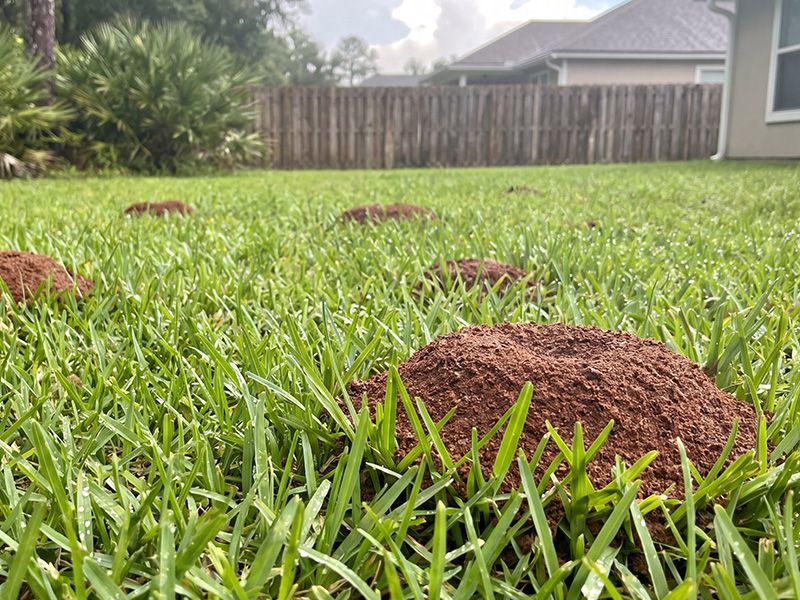
Ever walked outside after a soaking rain and found three fresh mounds that were not there yesterday? You are not imagining things.
Rain softens the soil, and fire ants take advantage.
Some of those mounds belong to colonies that floated over from a flooded area nearby. When a raft bumps into dry ground, a tree trunk, or a fence post, the ants climb off and start digging.
Within a day or two, a fluffy dome of soil can appear.
Other mounds come from colonies that never left. Wet soil is easy to move, so the workers rebuild higher to keep the queen above soggy layers.
That is why mounds often look taller and puffier after storms.
Fire ant mounds lack a single opening on top. Instead, the ants enter through tunnels underground, so you usually will not see a hole.
If you poke one, workers will pour out fast.
A sudden crop of mounds rarely means a population boom. More often it is the same ants shifting to better spots.
Knowing that can save you from panic-buying every product on the store shelf the morning after a storm.
Touching a Floating Ant Raft Can Turn Into Dozens of Painful Stings
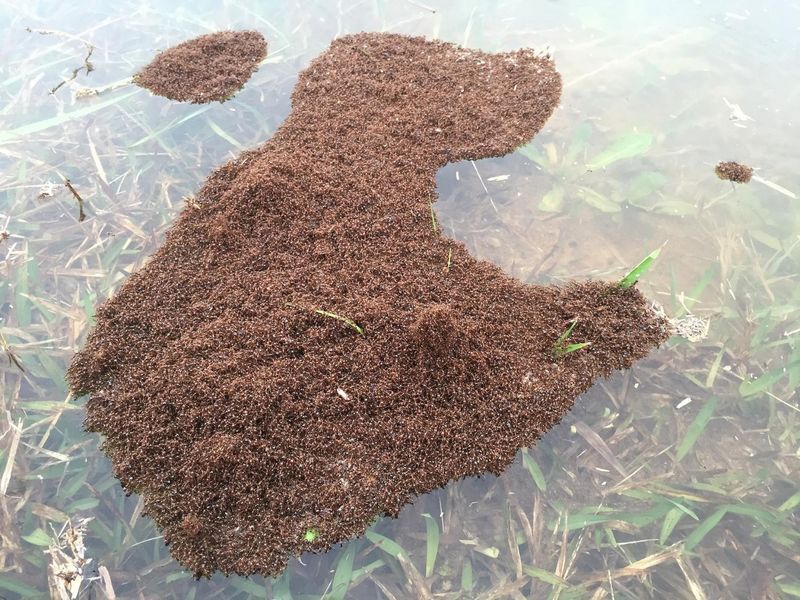
A friend once tried to push a raft away from her porch steps with a broom. The ants swarmed up the handle in seconds.
She learned the hard way that a floating colony is still a fully armed colony.
Fire ants grab skin with their jaws and then sting, often several times each. Rafts are packed with workers, so one touch can lead to many stings at once.
The burning feeling explains the name.
Most people get red bumps that turn into small white pustules within a day. According to University of Florida experts, you should leave those pustules alone, since scratching them open can lead to infection.
A cool compress and an over-the-counter anti-itch cream often help.
Some people are allergic, and that is serious. Watch for swelling of the face or throat, trouble breathing, dizziness, or hives spreading across the body.
Call 911 right away if any of those happen.
Pets face risks too, since curious dogs love sniffing odd floating stuff. Keep them on a leash near flooded areas.
If your dog gets stung many times or seems weak, a quick trip to the vet is the safest move.
Fence Posts, Debris Piles, and Even Your Boots Become Ant Landing Pads
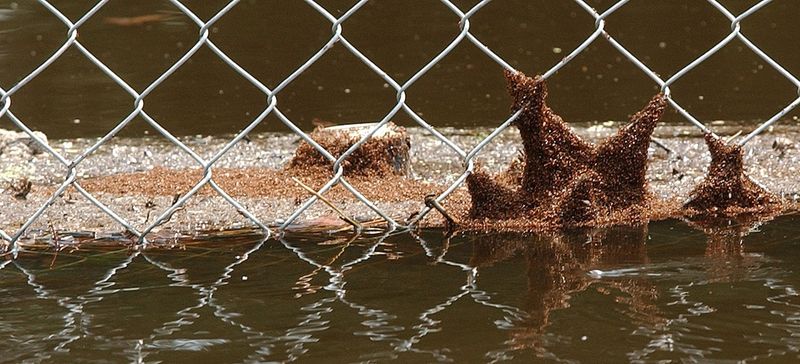
Rafting ants grab onto anything that sticks out of the water. Tree trunks, mailbox posts, storm debris, garden tools, and stranded toys all work as rescue spots.
So do your legs if you happen to be wading.
After a flood, you might spot a dark band of ants clustered on a fence or shrub just above the waterline. They wait there until the ground dries.
Lift a tarp, a board, or a pile of soggy leaves, and you may find a crowd hiding underneath.
Fire ants also love electrical gear. They are drawn to the warmth and buzz of equipment, so they often move into air conditioner units, pool pumps, and outdoor outlet boxes.
That can cause shorts and pricey repairs.
Here is my rule during cleanup: move things slowly and look before you grab. Use a shovel or rake to shift debris instead of bare hands.
Shake out boots and gloves before putting them on.
Spraying a cluster with a hose usually just scatters ants, which can make matters messier. Patience works better, because once the water drops, most colonies head back into the soil on their own.
Rubber Boots and Long Sleeves Are Your Best Friends in a Flooded Garden
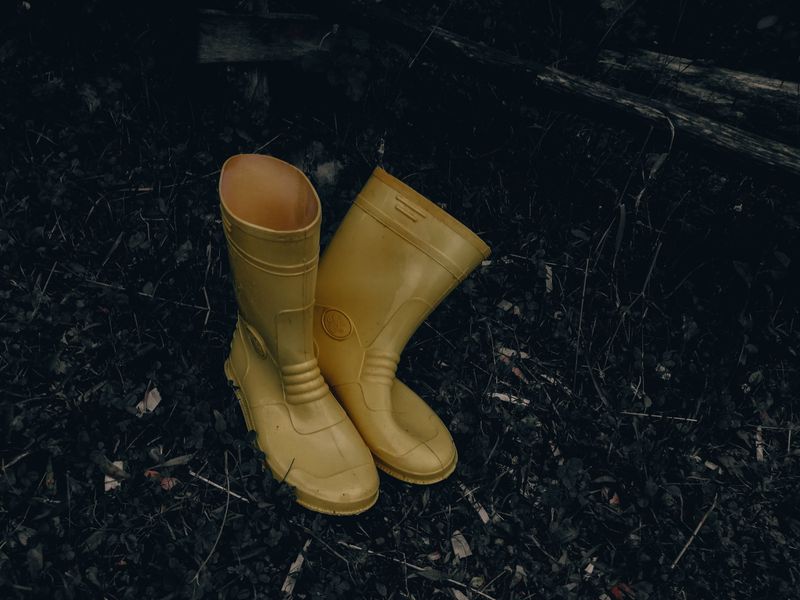
Gear up before heading into soggy beds, and you will thank yourself later. Tall rubber boots, long pants tucked in, long sleeves, and snug gloves create a barrier ants struggle to cross.
Smooth rubber is hard for them to climb compared with fabric.
Some extension experts suggest dusting boots with baby powder, since ants have trouble gripping slippery surfaces. It is a handy trick, though it is not a guarantee.
Checking yourself often still matters more.
If ants do get on you, brush them off quickly with a gloved hand or cloth. Water alone often will not wash them off, because they cling tightly.
Step out of the water right away and rub firmly.
Kids should stay out of floodwater completely. Apart from ants, it can hide sharp objects, snakes, and germs from sewage.
Make it a firm house rule after big storms.
Be patient with the garden itself. Most landscape plants can handle a short soaking better than you might expect.
Wait until the soil drains before pulling weeds or replanting, so you avoid squishing roots and stirring up any hidden ants waiting nearby.
Fire Ant Bait Works Best Once Your Lawn Dries Out
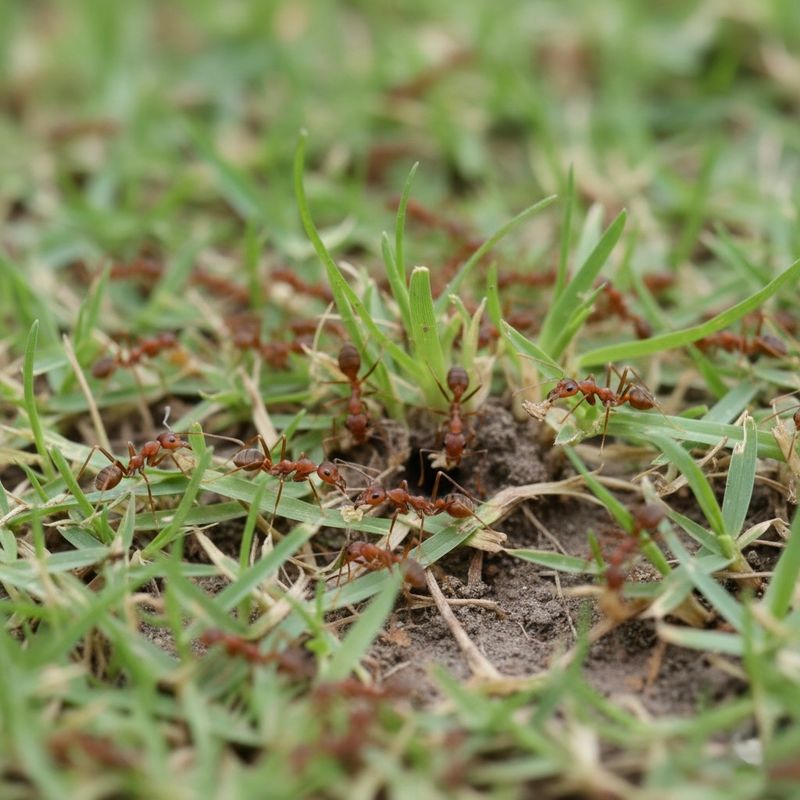
Once the sun returns and the grass dries, it is time to take back the yard. University of Florida IFAS recommends a two-step method that many homeowners find effective.
First, broadcast a fire ant bait across the lawn, then treat any stubborn mounds directly.
Baits work because worker ants carry the granules back home and share them, eventually reaching the queen. Timing matters a lot here.
Spread bait when the ground is dry and no rain is expected for at least a day, since wet bait loses its appeal fast.
Pick a warm day when ants are actively foraging, usually when soil temps are between about 70 and 90 degrees. A simple test is to drop a potato chip near a mound and see if ants show up within half an hour.
Use fresh bait and follow label directions closely. Old, stale bait often gets ignored.
Fall and spring treatments tend to give the best long-term control in Florida.
For electrical boxes, heavy infestations, or pets with allergies, a licensed pest pro can help. The big takeaway is simple: floods move fire ants around, but smart timing keeps them from taking over.