These Arizona Fall Leaves Are Easy to Tell Apart Once You Stop Looking at Color
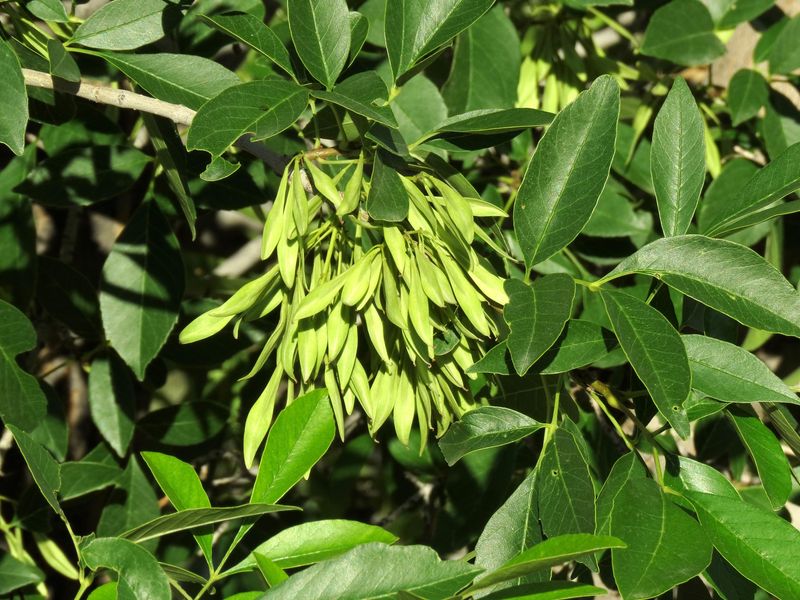
One mountain grove can be a single living organism, with every white trunk sprouting from the same shared roots. That odd fact changed how I study autumn trees in Arizona, especially the ones lining shady canyon creeks.
Color turns out to be a poor clue, because several species fade to the same buttery yellow each October. Bark, leaf shape, seed pods, and even the way a leaf moves tell the real story.
I have to admit I mixed up two creekside giants for years before learning to check the trunk first. You might notice the same trick works on your own backyard trees once the heat finally breaks.
Better yet, many of these natives feed the birds, bats, and lizards that quietly snack on pests around your home. So which golden tree has been hiding in plain sight on your street or favorite hiking trail?
1. Arizona Sycamore
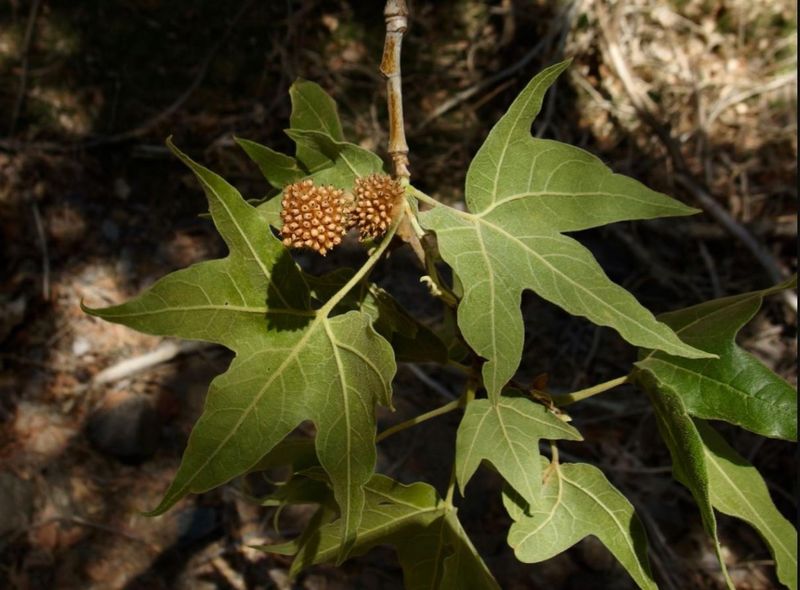
Ghostly white trunks splotched with tan and olive patches make this streamside giant easy to spot from across a canyon. I love how the bark peels away like old paint, revealing smooth pale wood underneath.
Leaves are huge, often wider than your hand, with three to seven deep, pointed lobes shaped like a star. Flip one over and you will feel a soft fuzz along the underside, especially on younger leaves.
Look for round, bristly seed balls dangling in strings of two to four, a trait that separates it from cottonwoods. Those little spiky clusters hang on through winter and make a fun treasure hunt for curious kids.
Platanus wrightii wants regular water and deep soil, so it belongs near washes, drainage areas, or generously irrigated yards. Planted in a dry, rocky spot, it tends to struggle with leaf scorch during long summer heat.
Personally, I think its wide canopy is worth the space, since shade lowers soil temperature and invites insect-eating birds. October is a fine time to plant one, giving roots months of mild weather before next summer arrives.
2. Quaking Aspen
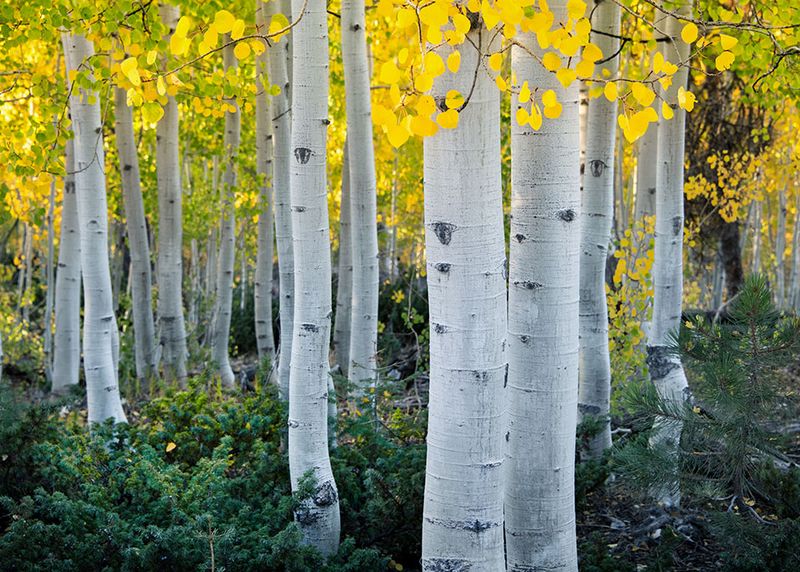
Stand under a grove on a breezy day and the leaves clatter like soft applause even when the air feels still. Flattened leaf stems let each round blade spin and flutter, which is the easiest identification trick I know.
Leaves are nearly circular with a short pointed tip and fine, rounded teeth around the edge, roughly two inches across. Compare that with cottonwood leaves, which run larger and more triangular despite similar flattened stems.
Bark is smooth and chalky white to pale green, often marked with black knots and scars where branches once grew. Elk sometimes chew the bark in winter, leaving dark scraped patches you can spot at eye level.
Populus tremuloides grows naturally at high elevations, including the San Francisco Peaks and the White Mountains, where nights stay cool. Lowland gardeners usually find it sulks in desert heat, so I recommend admiring it on a mountain road trip.
Many groves spread through shared root systems, so one stand can be a single genetic individual sending up new trunks. Those dense stands shelter birds and deer, and fallen leaves feed a busy community of soil insects below.
3. Velvet Mesquite
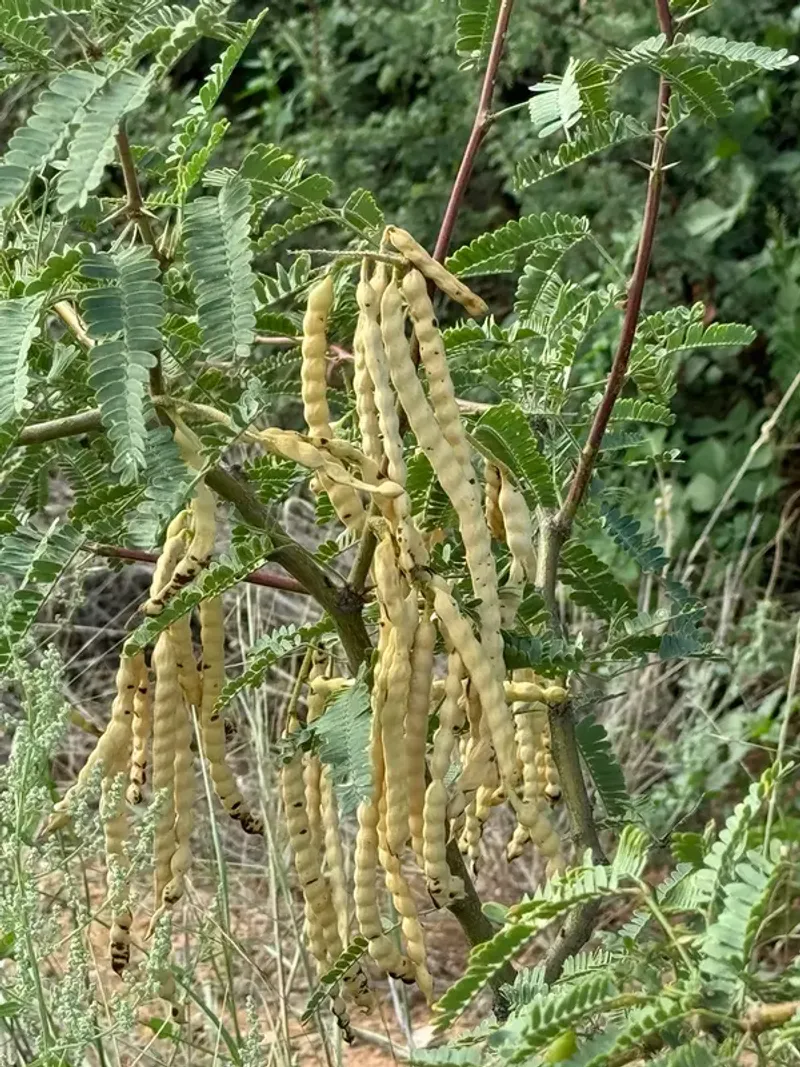
Run your fingers along a leaflet and you will feel the soft, fuzzy coating that gives this desert workhorse its name. I like how that velvety texture works as a quick test when several mesquite types grow side by side.
Leaves are twice compound, splitting into feathery pairs of tiny oblong leaflets that look delicate against dark, rough bark. Paired spines often sit where leaves join the branch, so wear gloves when you prune in cooler months.
Pods give the biggest clue in fall, hanging in straw-colored bunches roughly four to eight inches long with bumpy edges. Many ripened during summer, yet plenty linger on branches into October for quail and hungry rabbits to enjoy.
Prosopis velutina shrugs off brutal heat once established, thanks to roots that reach remarkably deep underground for moisture. Deep, infrequent watering during the first few years encourages those roots to travel down rather than spread near the surface.
Spring flowers draw native bees, and the insect buffet that follows attracts lizards and roadrunners hunting through your yard. Roadrunners are known to eat scorpions, so a mesquite can be part of a quietly helpful backyard food web.
4. Blue Palo Verde
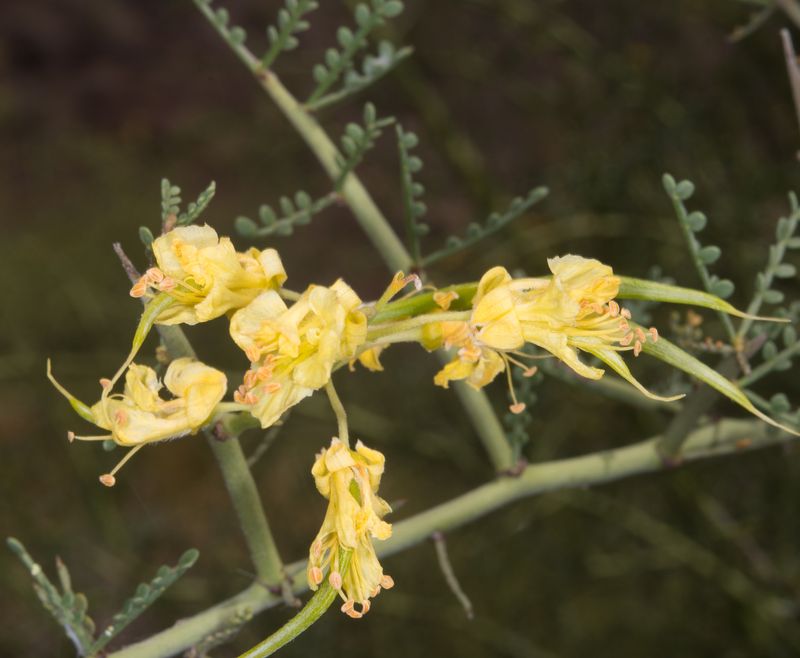
Green bark is the giveaway here, glowing blue-green even after the tiny leaves have dropped away for the season. That bark actually photosynthesizes, letting the tree keep making food when it sheds leaves during drought or cool weather.
Leaves are small and compound, with only a few pairs of tiny leaflets, so the canopy looks airy and almost lacy. Short thorns sit along the twigs, and the trunk stays smooth and blue-tinged well into old age.
Look closely at the branches for flat, papery pods hanging from earlier in the year, often still holding their seeds. Foothill palo verde looks similar, but its bark leans yellow-green and its twigs end in sharp, stiff points.
Parkinsonia florida shares state tree honors with its foothill cousin, and it thrives in low desert washes and sunny flats. Full sun and fast-draining soil keep it happy, while too much water can lead to weak, floppy growth.
I appreciate how its open canopy leaves fewer dense hiding spots near walls than thick shrubs packed against a house. Spring blooms buzz with native bees, and those visitors bring in insect-eating birds that keep patrolling the yard.
5. Desert Willow
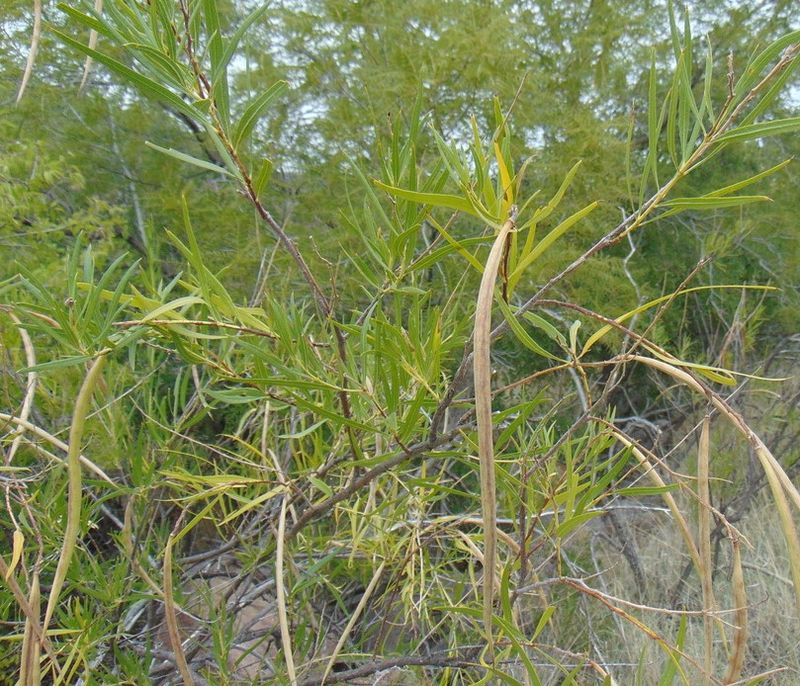
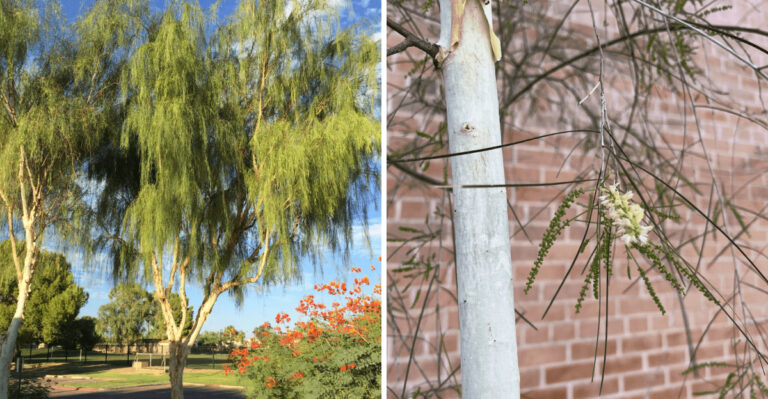
Despite the name, this graceful wash dweller belongs to the catalpa family and has no close ties to true willows. The long, narrow leaves just happen to mimic willow foliage, which fools plenty of hikers every autumn.
Each leaf is thin and pointed, often four to twelve inches long, and slightly curved like a slender green ribbon. Branches droop gently, giving the whole tree a relaxed, sweeping look even after its flower show has ended.
Fall brings skinny seed pods up to a foot long that dangle like green beans and slowly turn brown. Split one open and you will find flat, papery seeds fringed with fine hairs that help them drift on wind.
Chilopsis linearis is drought tolerant once established and grows roughly fifteen to twenty-five feet tall in full sun. Fast-draining soil suits it best, and October planting gives roots time to settle before the next hot season.
Hummingbirds adore the trumpet flowers in warm months, and the moths drawn to them help feed insect-eating bats after dark. Bats eat many night-flying insects, so I count this tree as a friendly helper for evening patio time.
6. Gambel Oak
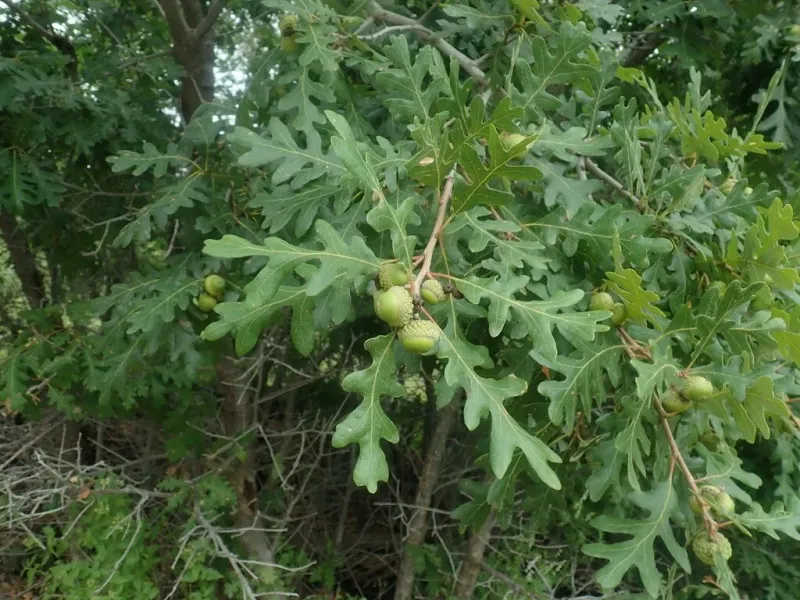
Acorns scattered across the trail are your first hint that you have wandered into a patch of this mountain oak. Wild turkeys and Steller’s jays feast on them, so October groves can feel surprisingly busy with wildlife.
Leaves have deep, rounded lobes, usually five to nine, with a glossy top and a softer, paler underside. Rounded lobes without bristle tips mark it as a white oak, unlike the pointy-lobed red oaks found elsewhere.
Bark turns gray and rough with age, while younger stems stay smoother and often sprout in tight, shrubby thickets. Those thickets spread from underground roots, which explains why one hillside can look like a solid wall of oaks.
Quercus gambelii grows naturally in mountain woodlands, often alongside ponderosa pines, and handles cold winters with ease. Gardeners in higher towns can plant it now in well-drained soil, then water deeply until roots get established.
Oaks host an enormous variety of caterpillars, which makes them a powerhouse for feeding nesting songbirds every spring. I find it comforting that one scrubby oak can support so much life without asking for fussy care.
7. Fremont Cottonwood
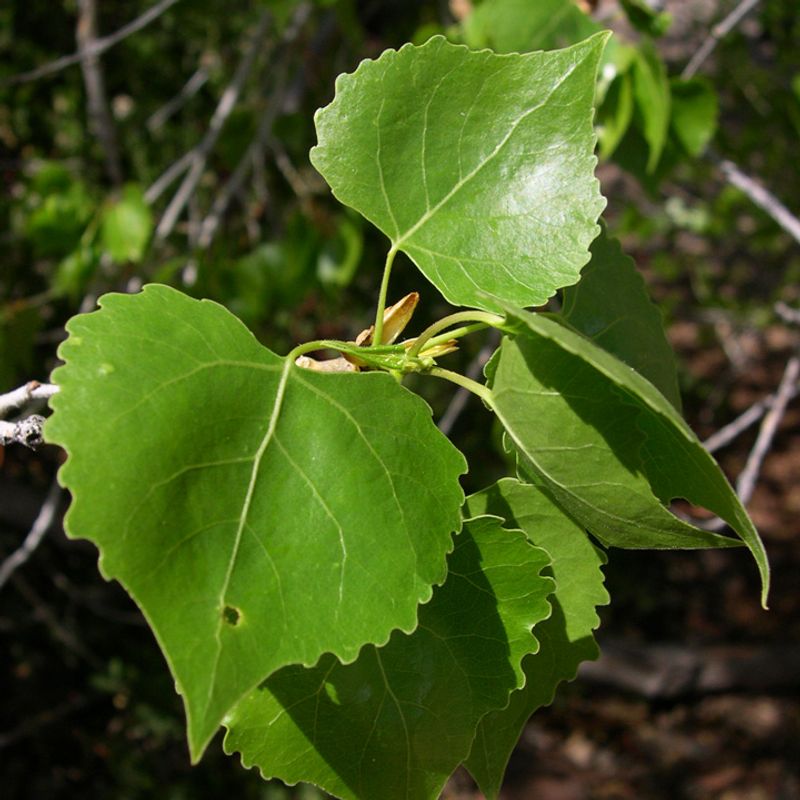
Leaves on this riverside giant flutter and rustle almost like aspen, which explains why so many people confuse the two. Turn one over and you will notice a broad triangular shape with coarse teeth, far larger than aspen foliage.
Long, flattened leaf stems create that shimmer, while the leaf itself often stretches two to three inches across or wider. Fallen leaves pile up quickly under mature trees, creating a crunchy carpet along creeks and lakeshores in fall.
Bark gives another strong clue, turning thick and deeply furrowed on older trunks rather than staying smooth like aspen. Young branches remain pale and smooth, so compare the base of the tree with the upper limbs for confirmation.
Populus fremontii needs reliable water and grows fast, sometimes reaching heights near eighty feet along rivers and washes. Roots can travel far toward moisture, so keep this thirsty tree well away from pipes and pools in small yards.
Personally, I treasure the cottonwood galleries along the Verde River, where orioles and woodpeckers nest high overhead. Female trees release cottony seeds in spring, so many homeowners choose male trees for tidier, easier landscaping.
8. Arizona Walnut
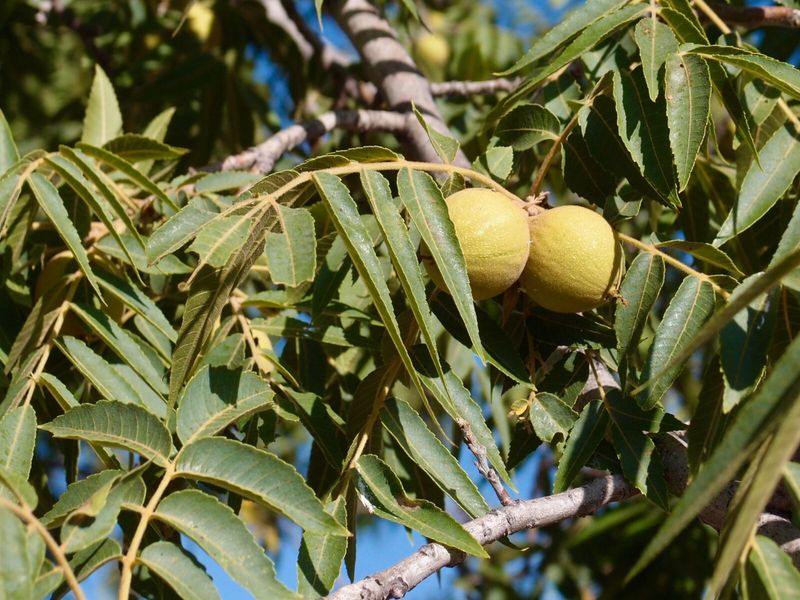
Crush a leaf between your fingers and a sharp, spicy scent rises, a clue that works long after the color fades. I love how this canyon tree announces itself through your nose before you even notice its nuts.
Leaves are pinnately compound with nine to thirteen narrow, toothed leaflets lined up along a central stem. Many of them drop early in fall, leaving bare branches dotted with round nuts wrapped in green husks.
Each nut is small, roughly one to one and a half inches, with a thick shell that challenges even determined squirrels. Husks blacken as they ripen, so wear gloves because the juice stains skin and patio stones for weeks.
Juglans major grows along canyon streams in central and southern Arizona, often sharing the shade with sycamores. Walnuts release a compound called juglone that can hinder some nearby plants, so choose tough neighbors when planting one.
Wildlife clearly appreciates the effort, as squirrels and woodpeckers chip away at the hard shells through late autumn. Planting a native walnut in a roomy, well-watered corner adds shade and a dependable natural snack bar for critters.
9. Bigtooth Maple
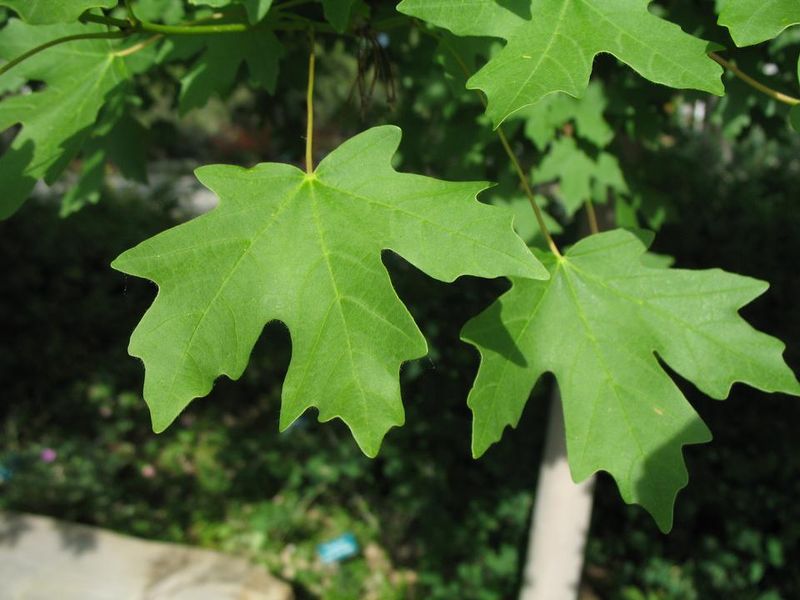
Big, blunt teeth along each leaf lobe give this canyon maple its name and its most reliable identification clue. Hikers often mistake it for an oak or sycamore until they notice the leaves grow in opposite pairs.
Leaves have three main lobes with a few large, rounded teeth, usually two to five inches across. Opposite branching sets maples apart from oaks and sycamores, which carry alternating leaves along their stems.
Paired winged seeds, called samaras, hang in V-shaped clusters and spin like tiny helicopters when they finally fall. Spotting those seeds on the ground under a tree is a fast way to confirm you found a maple.
Acer grandidentatum grows in moist canyons and mountain slopes, with popular viewing spots in places like Oak Creek Canyon. In a garden, it handles cold winters well and prefers some afternoon shade at lower, hotter elevations.
Personally, I think it makes a smart choice for higher-elevation yards that want a native shade tree of modest size. Birds and squirrels eat the seeds, and small mammals shelter in the dense, low branches during cold weather.
10. Arizona Ash
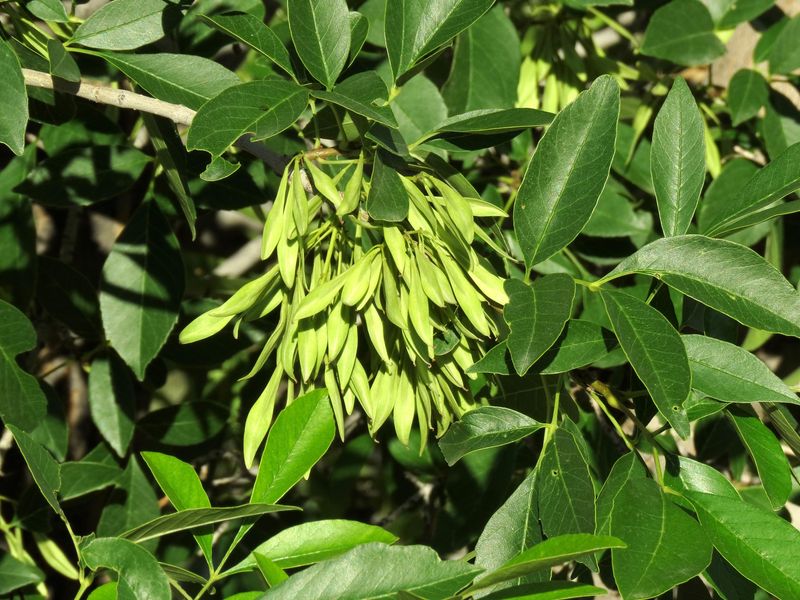
Velvet ash hides in plain sight along city streets and desert creeks, often mistaken for walnut at a glance. Leaves offer the quickest clue, since each one splits into three to nine leaflets with smoother edges than walnut.
Branches grow in opposite pairs, much like maples, while walnuts carry their leaves alternately along each twig. Many leaflets carry a soft fuzz underneath, which explains the velvet nickname and makes a handy fingertip test.
Female trees produce clusters of narrow, single-winged seeds that hang through fall like bundles of tiny paddles. Bark on mature trunks turns gray with crisscrossing ridges that form a diamond pattern you can trace by hand.
Fraxinus velutina grows naturally along streams across much of Arizona and adapts well to irrigated yards in lower deserts. Deep, occasional watering suits it better than frequent shallow sprinkles, which encourage weak surface roots and leaf scorch.
I like that its quick-growing canopy shades west walls, cooling the house and giving birds a safe place to perch. Seed-eating finches visit in fall, and insect-hunting warblers comb the leaves during spring and autumn migrations.