New Jersey Feeders Are Welcoming Long-Distance Travelers
A bird weighing less than an ounce can fly from northern Canada to my backyard feeder every single autumn. Some of the travelers landing near my seed trays this week started their trip in spruce forests near the Arctic.
Many of them fly at night, using the stars and Earth’s magnetic field to find their way south. Others drift south only when cone crops fail up north, so their visits change from year to year.
I get a happy jolt every time a new face appears beneath my feeders after the first New Jersey frost. You might notice them too, especially if you scatter a little seed on the ground near some shrubs.
Each of these birds carries a story about northern forests and a long hunt for a reliable winter meal. So which of these hardy travelers is already hiding in your New Jersey yard right now?
1. Slate Gray Dark-Eyed Juncos Return From Canada
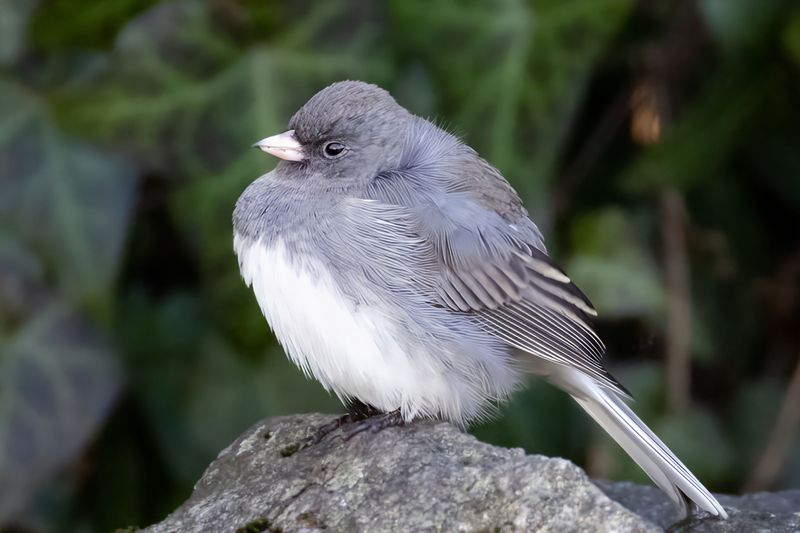
Folks in many northern towns call these little gray birds snowbirds because they show up right before the snow. I spotted my first one this week, flashing those crisp white tail feathers as it bolted for the hedge.
Dark-eyed Juncos breed across Canada and in high mountain forests, then spread south over much of the country for winter. Some of the birds under your feeder may have traveled well over a thousand miles to get here.
Juncos are ground feeders at heart, so they seldom perch on tube feeders like chickadees and finches do. Instead, they shuffle and scratch through leaf litter, picking up seeds that messier birds have dropped from above.
White proso millet scattered on a low platform is their favorite, though cracked corn and sunflower chips work nicely too. I sprinkle a small handful each morning, which keeps the food fresh and avoids attracting unwanted nighttime visitors.
Shelter matters as much as seed for these birds, since hawks often patrol backyard feeding areas in winter. Keep a dense shrub or brush pile within a short hop, and you will see them linger much longer.
Native evergreens like eastern red cedar give juncos a cozy roost on frosty nights and handy cover during storms. Leaving some fall leaves and seed heads in your garden beds also gives them extra places to forage.
Expect them to stick around until early spring, when they head north again to raise their families. Until then, their soft twittering and tidy gray outfits make chilly mornings at the window feel a lot friendlier.
2. White-Throated Sparrows Whistle Beneath The Shrubs
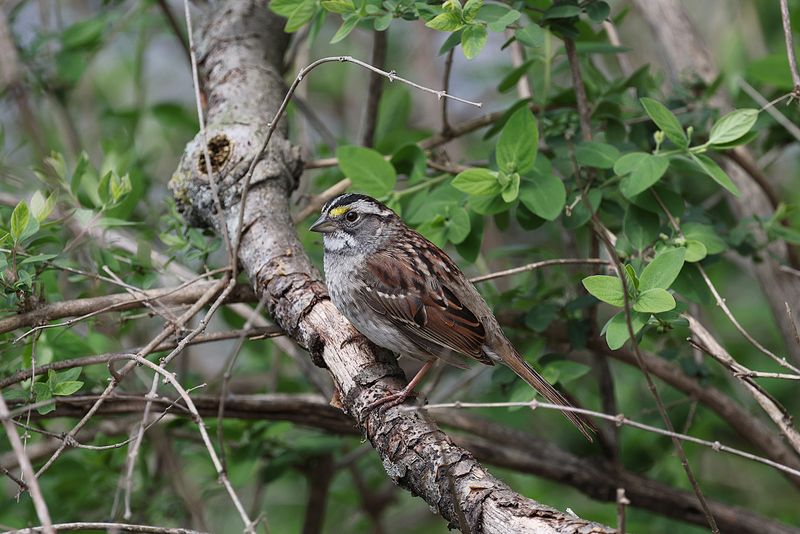
A clear, wavering whistle drifting from the hedge told me the white-throated sparrows were finally back this week. Many people hear the song as Oh sweet Canada, which fits nicely since many of them breed there.
White-throats nest in northern forests across Canada and parts of New England, then winter throughout the eastern states. They usually arrive around early October and often stay into May, so you get months of company.
Look for a bright white throat patch and a small splash of yellow between the eye and bill. Some birds wear crisp white head stripes while others show tan stripes, and both forms are perfectly normal.
Fun fact, the two color forms usually pair with the opposite type when they choose a mate each spring. Scientists find this so unusual that the species has become a famous subject in bird behavior research.
Like juncos, these sparrows prefer eating on the ground, kicking backward with both feet to uncover hidden seeds. Millet and sunflower chips on a ground tray or low platform will bring them out of the bushes.
I keep a loose brush pile in one corner of my yard, and it has become their favorite hangout. Fallen branches from autumn cleanup work perfectly, and the pile gives them quick shelter whenever a hawk swoops by.
Native shrubs with berries, like winterberry and arrowwood viburnum, give them a bonus snack later in the season. Plant a few in spring, and your sparrow guests will thank you with songs on mild winter mornings.
3. Rusty-Capped American Tree Sparrows Travel From The Tundra
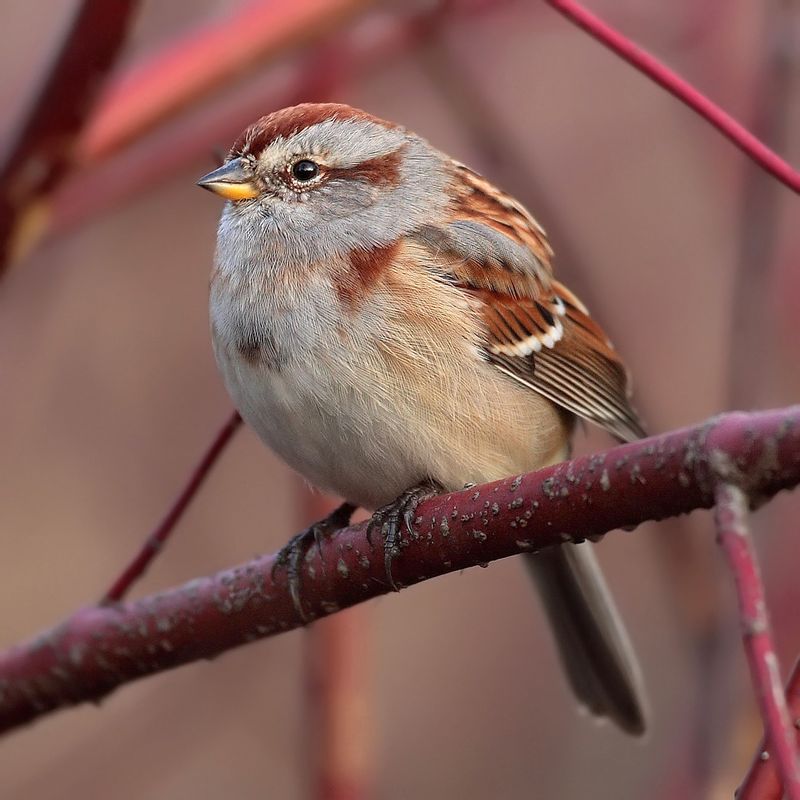
Despite the name, American tree sparrows spend most of their time on the ground, and they nest near treeless tundra. Early European settlers likely named them after Eurasian tree sparrows, which they resembled from back home.
Their summer homes stretch across Alaska and far northern Canada, near the edge where scrubby forest meets open tundra. That means the bird hopping beneath your feeder may have flown a couple thousand miles to reach you.
Spotting one feels like winning a small prize, since they tend to arrive later than most winter sparrows. In my yard they usually show up once real cold settles in, often sticking around until early spring.
Look for a rusty cap and a single dark smudge right in the middle of a plain gray chest. Their two-toned bill, dark on top and yellow below, is a handy clue when chipping sparrows confuse you.
These tough little birds need lots of fuel, eating seeds nearly nonstop during short winter days to stay warm. Sunflower chips and millet scattered on the ground or a low platform will keep them well supplied.
In the wild, they feast on seeds from grasses and weeds, so a messy garden is their best friend. I leave native grasses like little bluestem standing all winter, and the sparrows pick through the seed heads happily.
Goldenrod and asters left uncut provide even more seeds, plus cover from the wind on bitter afternoons. Skip the fall tidying in at least one bed, and you may earn a visit from this tundra traveler.
4. Tiny Red-Breasted Nuthatches Creep Headfirst Down Tree Trunks
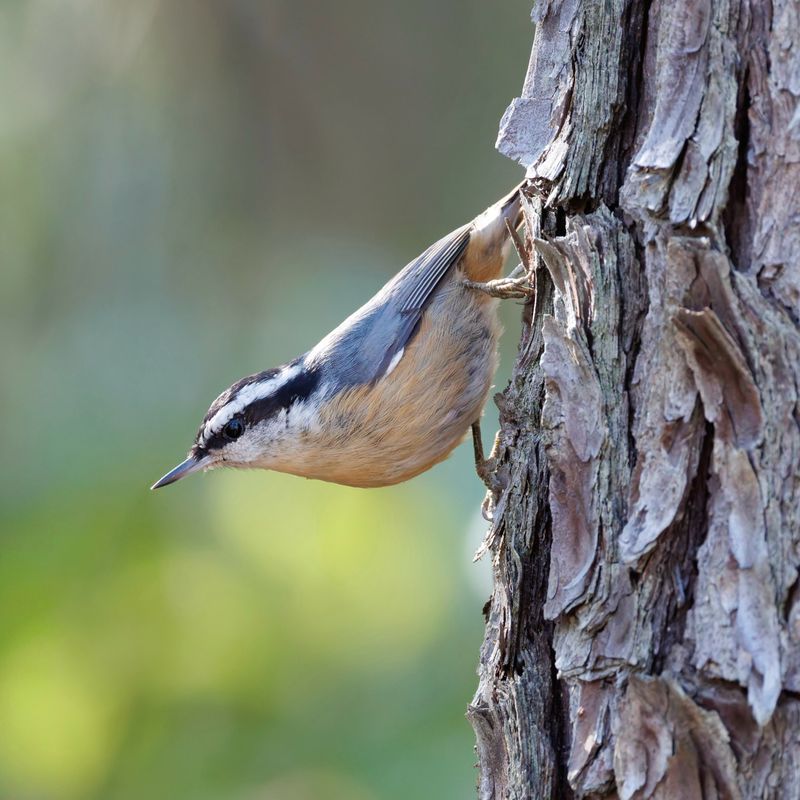
A tinny little honk, like a toy horn, is usually my first clue that a red-breasted nuthatch has arrived. Then I spot it creeping headfirst down the oak trunk, as if gravity were just a casual suggestion.
Red-breasted nuthatches live mostly in northern and mountain conifer forests, feeding heavily on spruce and fir seeds. When those cone crops come up short, many of them move south in big waves called irruptions.
Some years you will barely see one, while other years they seem to pop up at every feeder. Checking regional bird reports or eBird sightings is a smart way to learn whether this is a big year.
Look for a bold black eye stripe framed in white above a warm, rusty orange belly. Their larger cousin, the white-breasted nuthatch, lives here year-round and has a plain white face instead.
Black oil sunflower seeds and suet are their top picks, and they visit hanging feeders with real confidence. Watch closely and you may see one carry a seed away to tuck into a crack in the bark.
That hiding habit is called caching, and it helps them survive cold snaps when food gets hard to find. I keep my feeders full during these irruption years, since the tiny birds return many times each day.
Planting native conifers, like eastern white pine, gives them natural food and shelter for years to come. A single pine near the feeders makes these little northern guests feel right at home in your yard.
5. Streaky Pine Siskins Swarm Nyjer Feeders
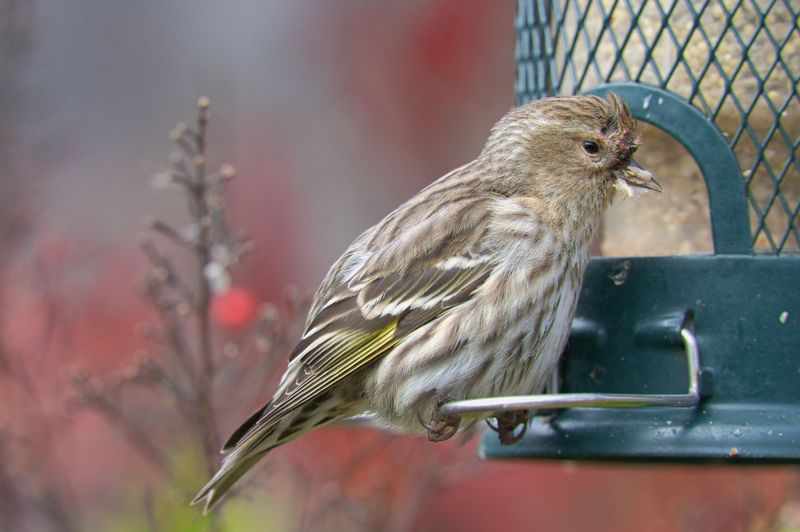
My finch feeder looked like a crowded subway car this week, packed with streaky brown birds flashing yellow. Pine siskins had found me, and they brought their wheezy, rising zreeee call along for the ride.
Siskins breed in conifer forests across Canada and the western mountains, wandering wherever tree seeds are plentiful. In years when northern cone crops fail, huge flocks pour south and sometimes reach the Gulf Coast.
Up close, they look a bit like a sparrow, but their thin pointed bill gives away their finch family. Watch for yellow streaks along the wings and tail, which flash brightly when a bird takes flight.
Nyjer seed in a tube or mesh feeder is their favorite, and sunflower chips disappear just as fast. They often hang upside down while eating, which makes for some wonderfully silly entertainment at the kitchen window.
Despite their small size, siskins can be surprisingly bossy, chasing goldfinches away from the best feeding ports. Adding a second finch feeder helps keep the peace when a big flock settles into your yard.
Crowded feeders can spread salmonella among siskins, so wildlife experts recommend cleaning feeders often during big flight years. I scrub mine every week or two with a diluted bleach solution, then rinse and dry them well.
Raking up spilled seed and hulls under the feeders also keeps the feeding area healthier for every visitor. If you notice a fluffed-up, sluggish siskin, take feeders down for a week or two to let the flock disperse.
6. Raspberry-Colored Purple Finches Visit From The North Woods
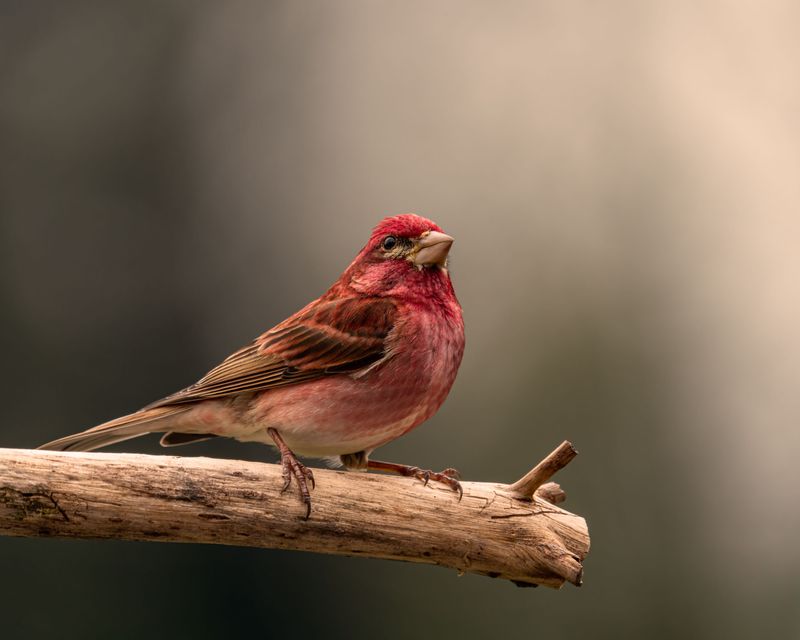
Roger Tory Peterson once described the male purple finch as a sparrow dipped in raspberry juice, and he nailed it. That rosy wash covers the head and chest, fading softly into the back like watercolor on paper.
Most purple finches visiting eastern feeders in winter come from forests in Canada and the northernmost parts of New England. Their numbers swing from year to year, rising when northern seed crops run low and falling when food is plentiful.
Telling them apart from house finches takes a little practice, and I still double-check with binoculars some mornings. Male purple finches lack the brown streaks on the belly sides that most male house finches show clearly.
Females look like bold brown sparrows, with a strong white stripe above the eye and heavy streaking below. That eyebrow stripe is a great clue, since female house finches have plain, blurry faces by comparison.
Black oil sunflower seed is the surest way to win them over, served in a hopper or tube feeder. They also nibble buds and tree seeds, so native trees like sweetgum and tulip poplar add natural snacks.
Purple finches have declined in parts of the Northeast, partly because of competition with the introduced house finch. Scientists are still studying the full story, but every rosy visitor at my feeder feels like a gift.
Listen for a sharp, metallic tick call as they fly overhead, a sound house finches do not make. Once you learn it, you will start noticing these northern visitors far more often than you expected.
7. Yellow-Bellied Sapsuckers Drill Neat Rows Of Sap Wells
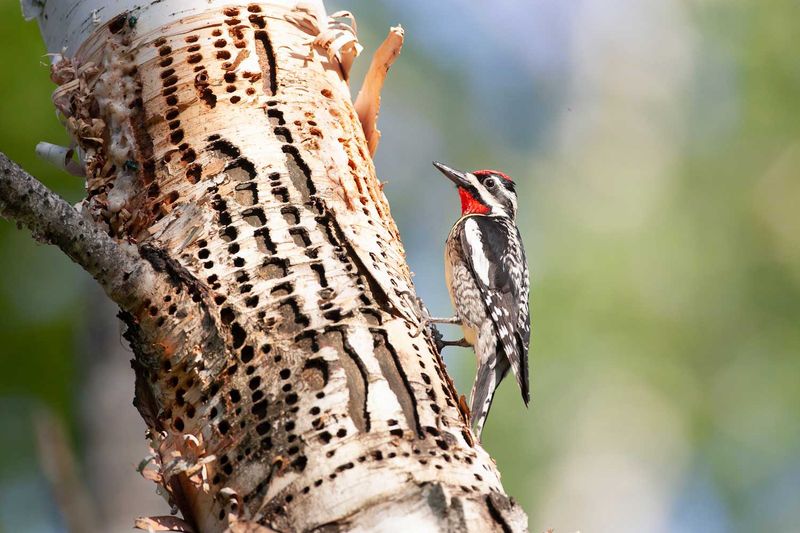
Tidy rows of tiny holes circling a birch trunk are the calling card of the yellow-bellied sapsucker. Yes, that silly name belongs to a real bird, and it happens to be one of my favorites.
According to Cornell Lab, it is the only woodpecker in eastern North America that is fully migratory. Sapsuckers breed in northern forests and winter from the southern part of our region down into Central America.
Many pass through in fall, while some settle in for the winter, especially in milder southern counties. A few may travel more than two thousand miles between their summer forests and winter hangouts.
Those sap wells are not random, since the birds return again and again to lap up the sugary flow. Insects caught in the sap become bonus protein, and hummingbirds sometimes sip from the wells in spring.
Sapsuckers are not regular feeder birds, but they occasionally visit suet feeders, especially near wooded edges. Hanging a suet cake on a sturdy tree trunk gives you a decent chance of a close look.
Look for a bold white stripe along the folded wing and a bright red forehead on both sexes. Males also wear a red throat, while females have a white one, which makes pairs easy to sort.
Most healthy trees handle sapsucker visits just fine, although heavy drilling can occasionally stress a single favorite tree. Wrapping that trunk loosely with burlap for a season usually encourages the bird to drill somewhere else.
8. Migrating Blue Jays Fly South In Noisy Flocks
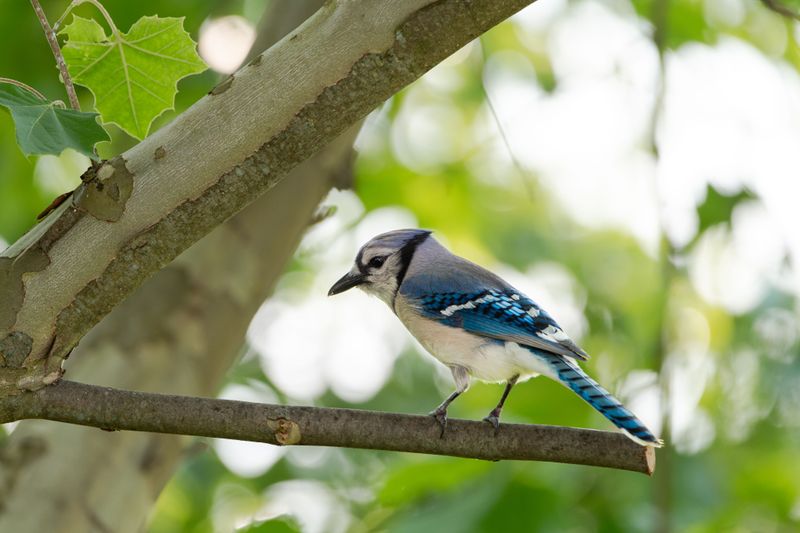
Thousands of blue jays stream along the Atlantic Coast and Great Lakes shorelines each fall, often in loose, chattering flocks. That loudmouth raiding your peanut tray could easily be a traveler from Canada just passing through town.
Scientists still puzzle over blue jay migration, because some birds head south while their neighbors stay put all winter. Banding studies show that a single jay might migrate one year, then skip the trip the next year.
Most migration happens from mid-September through October, though a few stragglers continue moving south into early winter. So the jays at your feeder this week could be year-round locals or newcomers from farther north.
Peanuts in the shell are pure jay magic, and I love watching them stuff several into their throats at once. They carry the extras away and bury them, building winter pantries all over the quiet neighborhood.
That burying habit has a lovely bonus, since forgotten acorns sometimes sprout into brand-new oak trees. Researchers credit blue jays with helping oaks spread northward after the last ice age thousands of years ago.
A sturdy platform or hopper feeder suits these big birds better than a narrow tube with tiny perches. Planting a native oak, such as white oak or pin oak, feeds jays and countless other creatures for decades.
Keep an ear out for their spot-on red-shouldered hawk impression, which can send every songbird scrambling for cover. I fall for that prank more often than I would like to admit, and the jays seem to enjoy it.