What To Do With Acorns Covering Your Pennsylvania Lawn
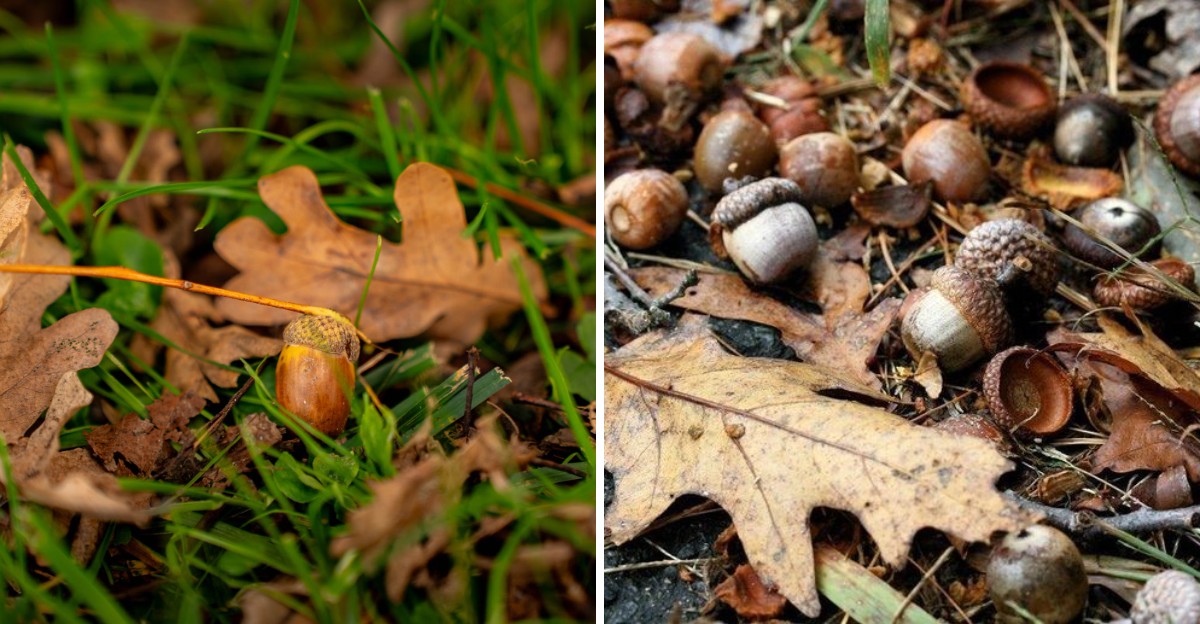
A single mature oak can drop thousands of acorns in one good autumn. Some years, the ground beneath it sounds like popcorn every time the wind blows. I swear one tree in my yard tried to bury the patio.
Oaks don’t produce the same crop every fall. They seem to coordinate across whole regions, flooding the woods one year and holding back the next. Scientists still debate exactly how the trees sync up, which I find wonderfully mysterious.
Here in Pennsylvania, that bumper crop matters to deer, turkeys, black bears, and blue jays. It also matters to your ankles, your mower blades, and your patience. You need a plan that works for your yard and the critters counting on it.
So what should you actually do with that crunchy brown carpet? A few answers might surprise you, and one could save your grass next spring.
That Crunchy Oak Acorn Carpet Has A Natural Rhythm
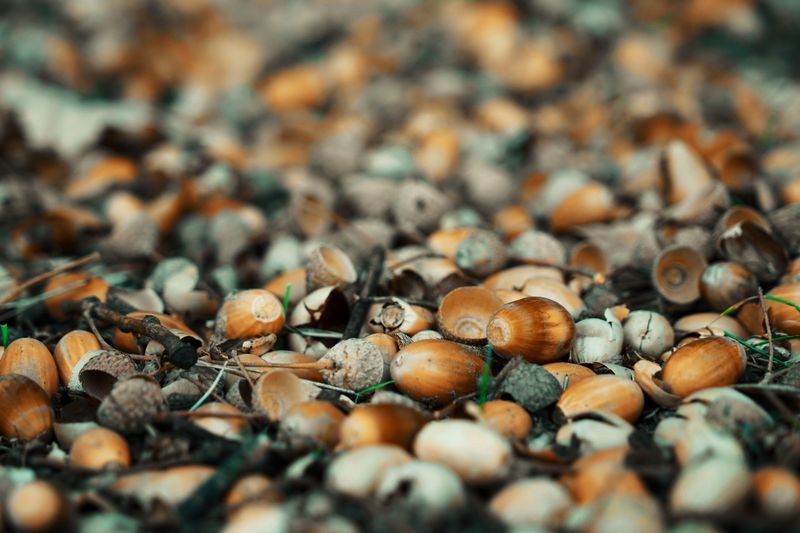
Some falls feel ordinary, and then one year your oak decides to unload everything at once. Foresters call this a mast year, and it explains most of those acorn avalanches.
Oaks tend to swing between heavy and light crops, with big years often showing up every two to five years.
Weather during flowering and the tree’s stored energy both play a role. Researchers believe the pattern helps oaks outsmart seed eaters, since squirrels and deer can’t eat every nut in a bumper year.
In Pennsylvania, acorns usually start dropping in late August and keep falling through October and into November. White oaks often release earlier, while red oaks can linger on the branch longer.
I find this oddly comforting. Your tree isn’t sick, and it isn’t trying to punish you. A heavy drop mostly means the oak had a strong season and is doing exactly what nature designed it to do.
Knowing this helps you plan. A huge crop this year may mean a much lighter one next fall. That makes it easier to choose a cleanup method that fits the moment, rather than buying tools you’ll only need once in a while.
Rake Up The Acorns Before Your Grass Starts To Struggle
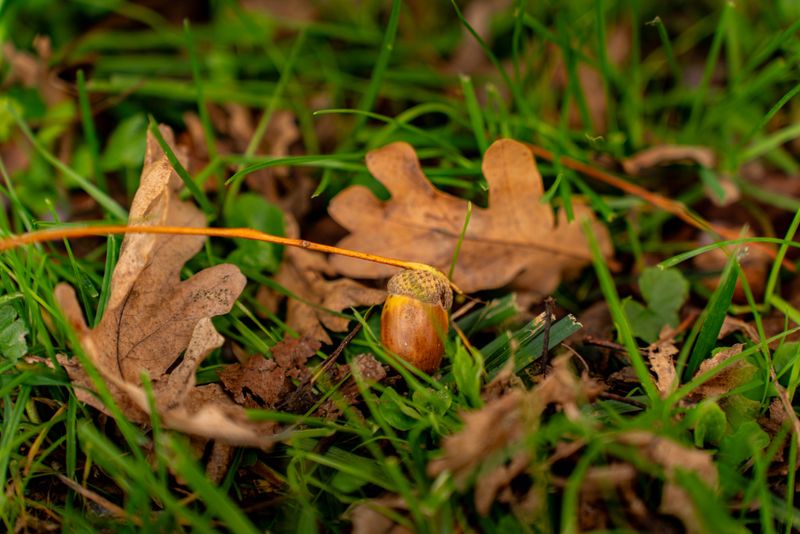
Grass under a thick blanket of acorns can’t soak up much sunlight. Left in place for weeks, that layer can thin your turf and leave bare patches by spring.
Removing most of the acorns is the main answer for a healthy lawn. You don’t need every single one gone, but you want the grass blades visible and breathing. Aim to clear the heaviest spots every week or two during peak drop.
Timing matters too. Fall is the best season for cool-season grasses like tall fescue, Kentucky bluegrass, and perennial ryegrass, which most Pennsylvania lawns rely on. Those grasses are storing energy for winter right now, so give them room to work.
Acorns also sprout readily in moist soil. A few seedlings popping up next spring are easy to pull, but hundreds can turn mowing into a chore. Quick cleanup cuts that problem down early.
Personally, I pair acorn removal with leaf cleanup so I’m not out there twice. A short session on a dry afternoon goes faster than you’d expect.
Dry acorns roll easily, while wet ones cling to soggy leaves and grass, so pick your weather wisely.
A Rolling Nut Gatherer Saves Your Back
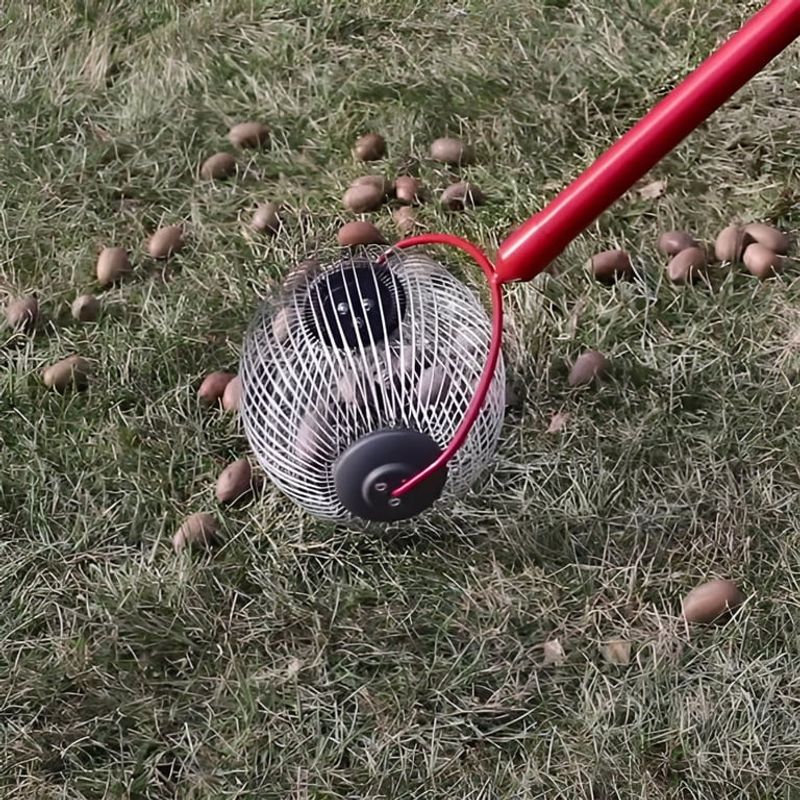
My lower back once filed a formal complaint after an afternoon of hand-picking acorns. That’s when I discovered rolling nut gatherers, and I haven’t looked back.
These handy tools have a wire basket on a long handle. You roll it across the lawn, and the flexible wires spread open to trap acorns inside.
Most models empty with a quick squeeze or a twist into a bucket. Other options fit different yards:
A sturdy leaf rake works fine for small lawns or light drops. A push lawn sweeper with spinning brushes grabs acorns, leaves, and twigs together on flat ground.
A mower with a bagging attachment can collect acorns too, though check your manual since hard nuts can wear blades.
For big oaks, try laying tarps under the canopy before the heaviest drop. Gather the corners, and you’ve collected hundreds of acorns in seconds.
One safety tip matters a lot. Mowing over a thick acorn layer can fling nuts hard enough to injure someone or crack a window.
Clear the worst areas first, wear eye protection, and keep kids and pets away from the mower.
Deer, Turkeys, And Blue Jays Are Counting On Those Acorns
Few foods in the Pennsylvania woods carry as much weight as the humble acorn. The Pennsylvania Game Commission considers acorns one of the most important fall foods for wildlife.
White-tailed deer bulk up on them before winter. Wild turkeys, black bears, gray squirrels, chipmunks, wood ducks, and blue jays all join the feast.
Acorns pack plenty of fat and carbohydrates, which helps animals build reserves for colder months.
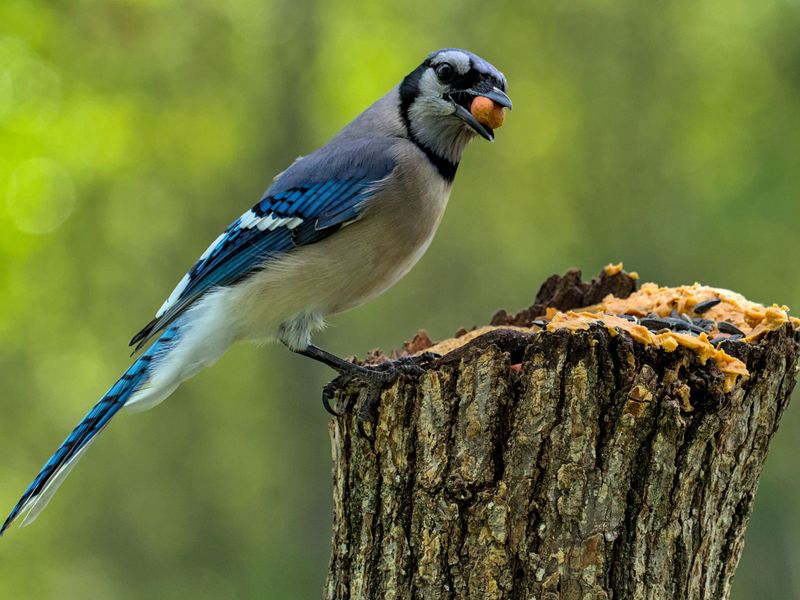
Blue jays deserve a special shout-out. They carry acorns away and bury them, then forget a good share. Many oak forests owe part of their spread to these noisy planters.
So you don’t need to bag every nut for the trash. Leaving a strip of acorns along a wooded edge or brush pile gives backyard wildlife a boost.
Be thoughtful, though. Pennsylvania has rules on feeding certain wildlife, and the Game Commission prohibits feeding elk and black bears.
Deer feeding is also restricted in Chronic Wasting Disease management areas. Scattering acorns where they fall naturally is very different from building a feeding pile near your house. Keep things natural and away from your doorstep.
Crushed Acorns Can Feed Your Compost Pile
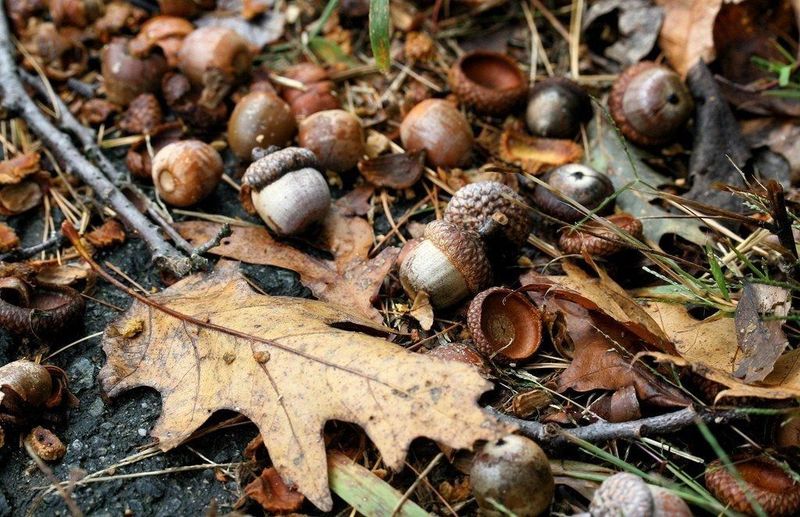
Composting acorns feels like a small victory every time. Instead of hauling bags to the curb, you’re turning a nuisance into future garden soil.
Whole acorns break down slowly thanks to their tough shells. Cracking them first speeds things up a lot.
Some gardeners spread them on a driveway and roll over them with a car, while others smash them inside a burlap sack with a mallet.
Mix crushed acorns with shredded leaves and green material like vegetable scraps or grass clippings.
Keep the pile damp, not soggy, and turn it now and then. A hot, active pile handles nuts much better than a cold one.
Some folks worry about tannins, the bitter compounds in acorns. In a balanced compost pile, those tannins break down over time and aren’t a real concern for most garden plants.
A few acorns may sprout in your finished compost if they weren’t crushed. That’s easy to fix by pulling the seedlings.
Honestly, I enjoy the reminder of where that rich, dark material came from. A dusting of oak memories in my vegetable bed makes the whole effort feel worthwhile.
Red Oak Or White Oak Changes Your Acorn Timeline
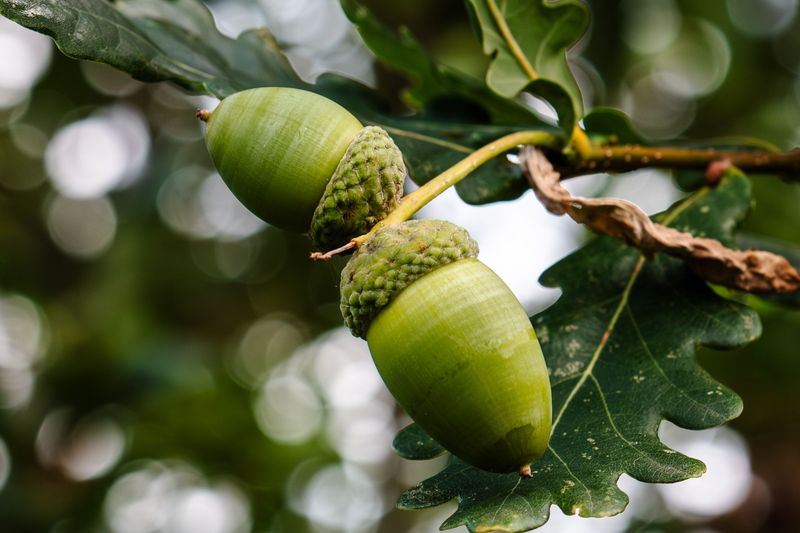
Grab a leaf from your tree and look at the tips. That simple check tells you a lot about your acorn season.
White oaks have rounded leaf lobes. Their acorns mature in a single growing season and often fall early, sometimes sprouting soon after landing. Wildlife tends to gobble them first because they’re lower in bitter tannins.
Red oaks, including northern red oak, black oak, and pin oak, have pointed, bristle-tipped lobes. Their acorns take about two seasons to mature, so this year’s crop started forming last year.
They carry more tannins and often keep longer, which makes them a late-winter backup food for animals.
Pennsylvania hosts a long list of native oaks. Northern red oak, white oak, chestnut oak, and black oak show up across much of the state, while pin oak is common in yards and wetter spots.
Why should you care? A white oak may drop fast and early, while a red oak can keep releasing acorns into November.
Knowing your tree helps you schedule cleanup sessions and decide which acorns to leave for wildlife and which to gather.
Watch Your Dog Around Fallen Oak Acorns
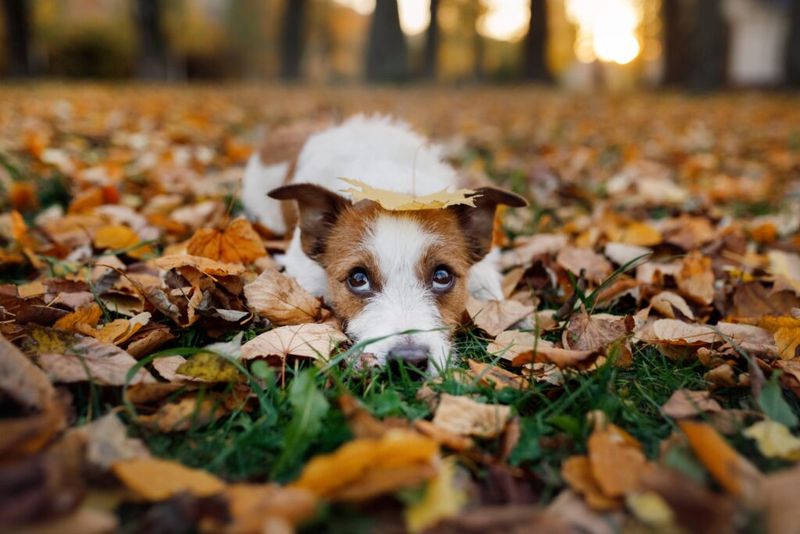
My dog treats every fallen acorn like a fascinating snack, and that habit deserves attention. Acorns contain tannins and other compounds that can upset a dog’s stomach.
Veterinary sources note that eating acorns may cause vomiting, diarrhea, or belly pain in dogs. Larger amounts can lead to more serious problems, including kidney trouble.
The hard shells also pose a choking or intestinal blockage risk, especially for small breeds.
Horses, cattle, and sheep can also face problems from eating large amounts of oak leaves or green acorns.
If you keep livestock near oaks, talk with your veterinarian or Penn State Extension about managing access.
Simple habits help a lot. Clear acorns from the areas where your pets spend the most time. Supervise curious puppies during peak drop and teach a firm leave-it command.
If you notice your pet eating acorns and acting off, call your vet promptly. Quick action usually makes treatment easier.
Kids are another reason to tidy up. Acorns roll underfoot like marbles on patios and steps. A fast sweep of walkways keeps everyone steady during the busiest weeks.
Turn Next Spring’s Oak Seedlings Into A Plan
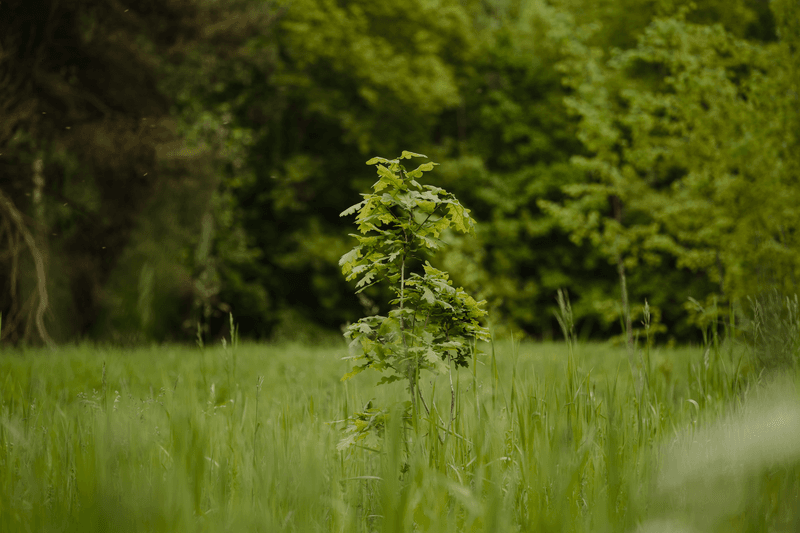
Spring has a funny way of revealing which acorns you missed. Little oak seedlings poke through the grass with tiny lobed leaves, often by the dozen.
Pull them early while the roots are short. Oak seedlings grow a deep taproot fast, so waiting a season makes removal much tougher. Regular mowing also keeps most of them in check.
Of course, a few seedlings might deserve a better fate. Oaks are keystone trees, and entomologist Doug Tallamy’s research shows native oaks support hundreds of caterpillar species. Those caterpillars feed countless songbirds.
If you have open space away from your house, power lines, and septic system, consider letting one grow.
You could also pot up a seedling for a friend or a local native plant swap. Just give a full-size oak plenty of room, since many species grow very wide.
The bigger takeaway feels simple to me. Clear what hurts your lawn, share what helps wildlife, and compost the rest.
An acorn-heavy fall in Pennsylvania means your oak is thriving, and that tree gives back far more than a few weekends of raking could ever cost you.