10 Fast-Spreading Perennials Ohio Gardeners Should Order Now for Spring
A few humble perennials can stretch from one small pot into a two-foot carpet within a single season. They travel by creeping stems and hidden rhizomes, quietly claiming bare garden dirt before weeds even notice.
Several of the best spreaders are actually Ohio natives that bees and butterflies have relied on for many generations. One even feeds the caterpillars of a striking orange and black checkerspot butterfly found in wet meadows.
I have to admit that I love plants doing the hard work while I sip coffee on the porch. You need to order early, though, because the most popular varieties sell out at nurseries every spring.
Bare-root plants and plugs shipped across Ohio arrive around planting time, ready to root into cool soil. Several eager spreaders are worth snapping up now, before the best picks vanish from nursery shelves.
1. Creeping Phlox
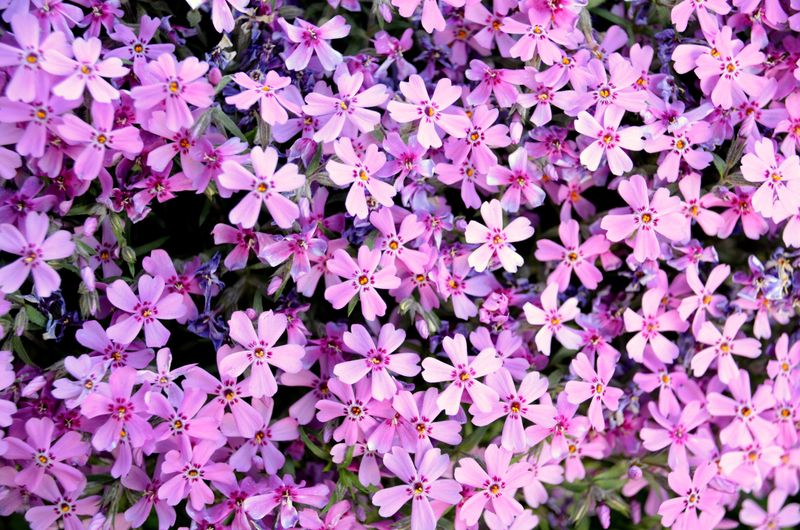
Every April, sunny slopes across the state turn into bright pink blankets, and creeping phlox deserves the credit. I love how the tiny needle leaves vanish beneath so many flowers that you barely see green.
Phlox subulata is native to parts of Ohio, so it handles our winters in Zones 5 and 6 easily. Mature plants stay about four to six inches tall but can spread up to two feet wide.
Give it at least six hours of sun for the heaviest bloom and the thickest mats. Light afternoon shade works too, though flowering may thin out a bit in darker corners of the yard.
Drainage matters more than fertilizer here, since soggy roots lead to rot and patchy growth by midsummer. Sandy or gravelly ground suits it well, which makes rocky banks and wall tops perfect planting spots.
Early bloom time is a real gift for hungry pollinators waking up after a long, gray winter. Butterflies and early bees visit often, and deer usually leave the prickly foliage alone in most yards.
After flowers fade, shear the stems back by about half to keep the mat dense and tidy. That quick haircut encourages fresh growth and helps prevent the woody, open centers older plants sometimes develop.
Order plugs now and tuck them in once the soil is workable, roughly a foot apart. By next spring, those small plugs should knit together into one cheerful carpet across your slope.
2. Sedum
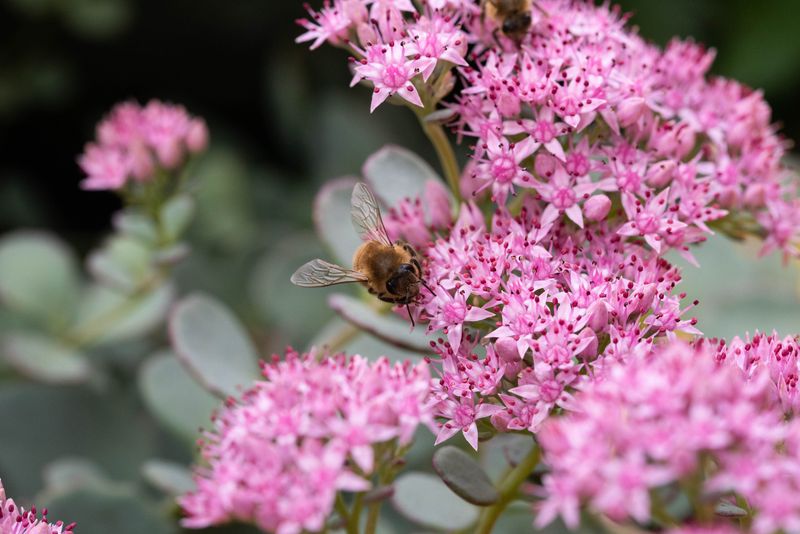
Bees practically line up on sedum flower heads in September, when most other nectar sources are fading fast. Personally, I think watching those rosy clusters hum with life is the best show of late summer.
Stonecrops belong to Sedum and Hylotelephium, and most are hardy from Zone 3 through Zone 9. Groundcover types can reach twelve to eighteen inches wide in their first season under the right conditions.
They creep by horizontal stems that root as they go, forming thick mats that crowd out weeds. Upright kinds like Autumn Joy stay in tidy clumps but still widen a little bit every year.
Full sun is the key, with six or more hours keeping stems sturdy and flowers plentiful. Too much shade makes them stretch and flop, which looks a little sad by the end of August.
Skip the rich compost and heavy watering, because sedums prefer lean, well-drained soil that dries out between drinks. Heavy clay can be improved with gravel or a raised bed so the fleshy roots stay healthy.
Pinch upright stems back in late spring to get shorter, bushier plants that hold their heads up. Groundcover sedums need little more than a quick trim if they wander onto your walkway or patio.
Leave the dried flower heads standing through winter for texture, and birds may pick at the seeds. Deer and rabbits tend to ignore sedum, which feels like a small victory for many suburban gardeners.
3. Creeping Thyme
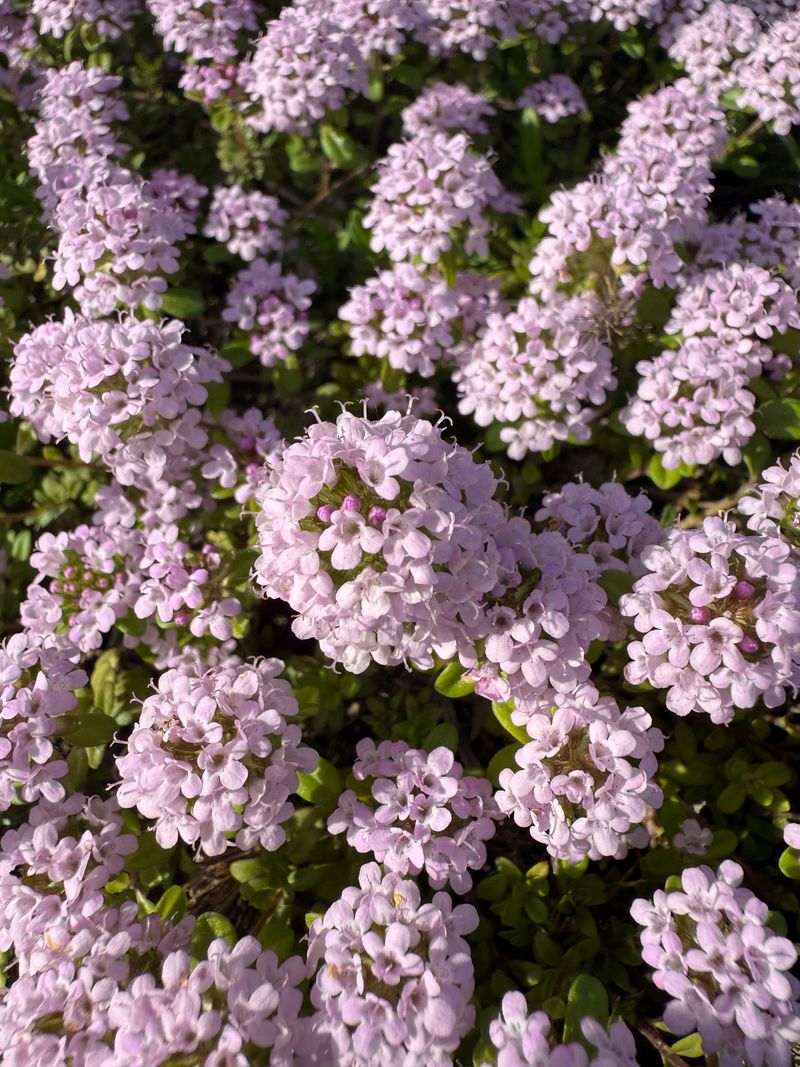
One careless footstep on creeping thyme releases a warm herbal scent that drifts up from the path. I can’t imagine a nicer way to greet guests walking toward your front door on a summer evening.
Thymus serpyllum and Thymus praecox both stay just two to four inches tall when covered in blooms. Plants grow quickly and knit into dense, fragrant carpets that handle light foot traffic quite well.
Hardy in Zones 4 through 9, creeping thyme shrugs off most winters in this part of the Midwest. Wet winter soil causes more trouble than cold, so drainage should be your very first concern.
Plant it in lean, sharply drained ground, like gravel paths or the gaps between flat stepping stones. Rich, heavy soil often leads to rot, so resist the urge to add extra compost or fertilizer.
Six hours of direct sun keeps the mat tight and flowering heavily from early to mid-summer. Shadier spots produce leggy stems with fewer blooms, so save those areas for other groundcovers on this list.
Small pink or purple flowers pull in honeybees and bumblebees, so watch your step during peak bloom. Deer generally avoid the strong scent, which helps when they browse through neighborhood yards at night.
Trim the edges after flowering if stems creep onto mulch beds or across your lawn line. Once established, it tolerates drought nicely, and you can snip leaves for cooking any time you like.
4. Hardy Geranium
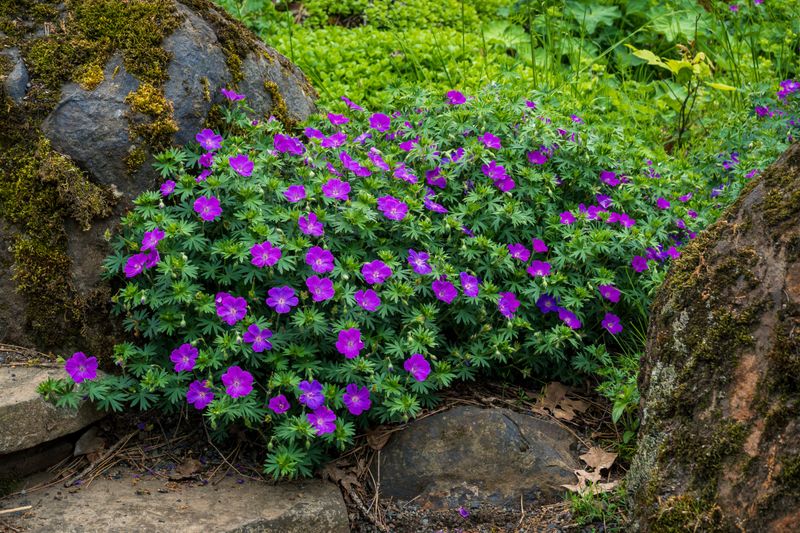
Cranesbill earned its quirky name from seed pods shaped like the long, pointed beak of a crane. You might notice those little beaks after the flowers fade, and they launch seeds when they dry.
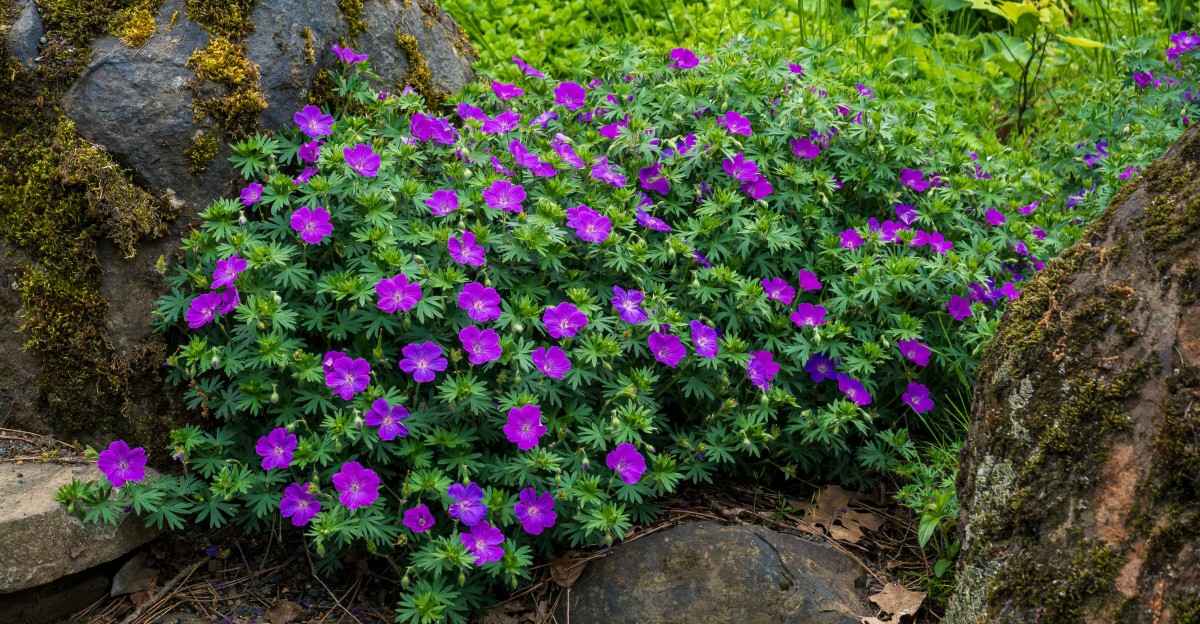
Hardy geraniums are not the potted geraniums on Grandma’s porch, which belong to a separate genus called Pelargonium. True Geranium species are tough, long-lived perennials, with most thriving comfortably across Zones 4 through 8.
Many varieties form wide mounds that spill outward, filling bare gaps at the front of a border. Their spreading habit is vigorous but well-behaved, so they rarely bully neighboring plants in mixed beds.
Full sun to partial shade works, though afternoon shade helps leaves stay fresh during hot, humid summers. Most types adapt to various well-drained soils and appreciate steady moisture while their roots get settled.
Blooms arrive from late spring into summer in shades of pink, blue, purple, or crisp white. Some popular hybrids like Rozanne flower for months, giving bees a dependable snack bar all season.
Shear tired, floppy foliage back after the first flush, and a fresh mound usually returns within weeks. That simple trim often encourages a second round of flowers when summer starts to feel a bit stale.
Divide crowded clumps every few years in spring to keep plants vigorous and share extras with friends. Deer generally pass them by, and that makes hardy geraniums a smart choice for open suburban yards.
5. Daylilies
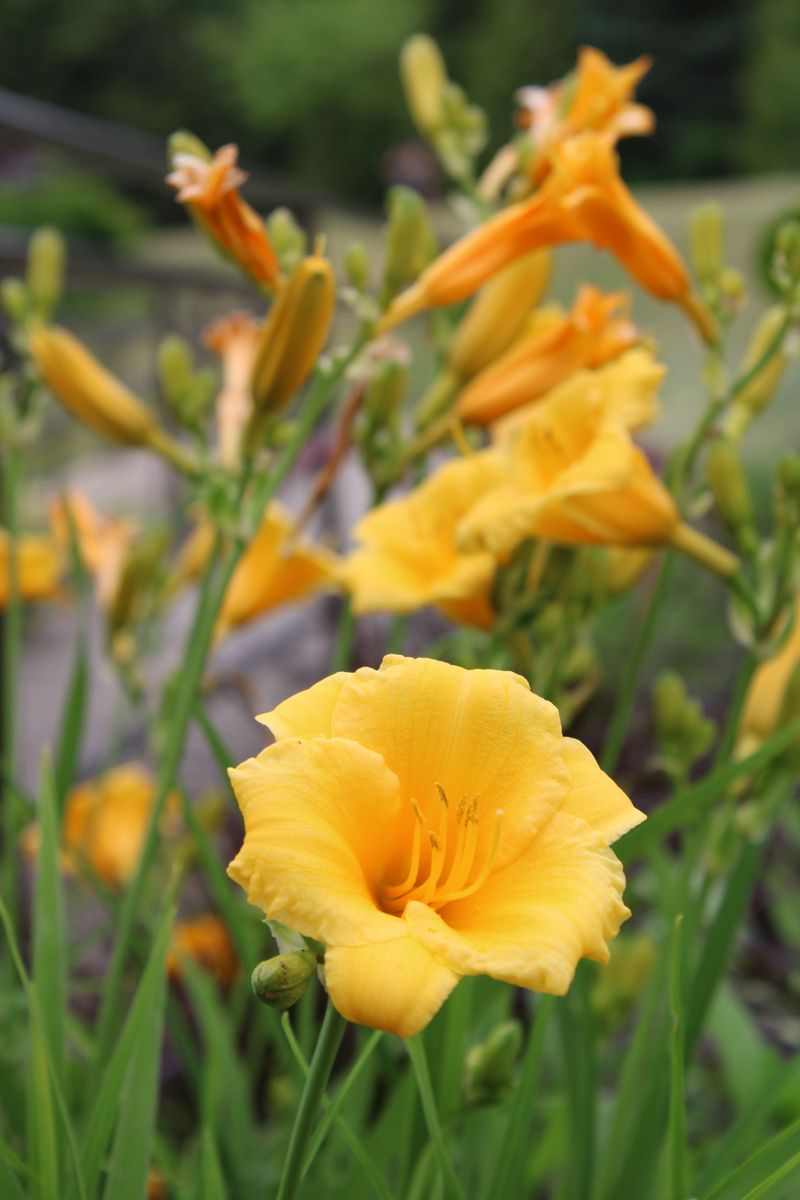
Each daylily flower lasts just one day, yet a healthy clump keeps opening new buds for weeks. I like how the garden looks a little different every morning when fresh trumpets unfold at sunrise.
Hemerocallis hybrids are hardy in Zones 3 through 9, so they thrive in every corner of Ohio. Clumps grow quickly and widen each year, shading out weeds with dense, arching foliage that covers the soil.
Choose named hybrids rather than the orange ditch lily, which spreads aggressively along roadsides in many states. Hemerocallis fulva can escape gardens, so stick with clump-forming cultivars like Stella de Oro or Happy Returns.
Six hours of sun gives the best flower show, though plants still grow fine in partial shade. Too much shade reduces blooms, so save the brightest bed for varieties you really want to admire.
Nearly any well-drained soil works, from clay to loam, as long as water does not pool for long. Water regularly the first season, and afterward most clumps handle dry spells with very little fuss.
Colors range across nearly every shade except true blue, from pale lemon to deep burgundy and peach. Hummingbirds and butterflies visit the open trumpets, while the long bloom season stretches from midsummer into early fall.
Divide crowded clumps every three to five years to refresh flowering and keep their spread under control. Deer may nibble buds when food is scarce, so a repellent spray in summer can help protect them.
6. Purple Coneflower
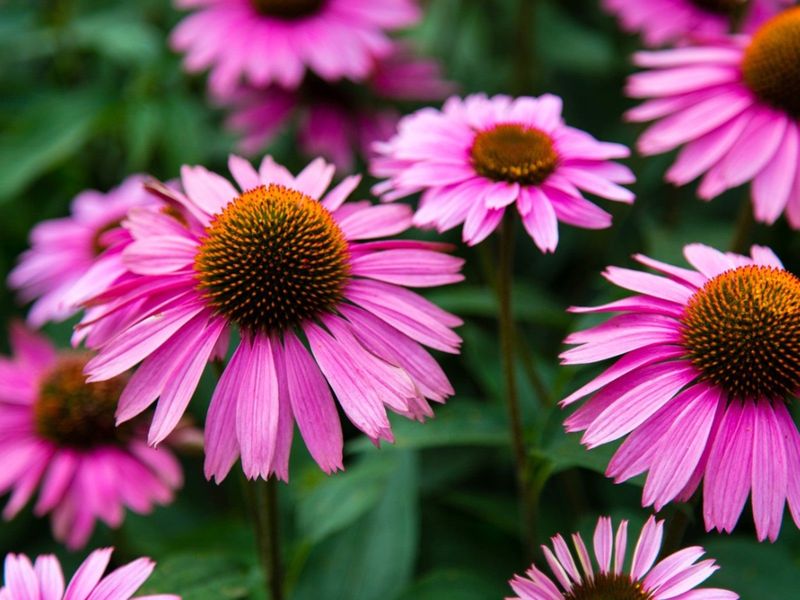
Goldfinches perch on coneflower seed heads in fall, plucking seeds out of the spiky centers like tiny acrobats. Personally, I leave every stem standing just to watch that bright yellow show from my kitchen window.
Echinacea purpurea is native to Ohio and grows two to five feet tall in sunny meadows. Clumps expand each year and self-sow gently, so new seedlings pop up nearby without taking over.
Speed here is more steady than explosive, but a few plants can fill a sunny bed over several seasons. Hardy in Zones 3 through 8, it handles cold winters and humid summers with remarkable grace.
Full sun gives sturdier stems and more flowers, though part shade is acceptable in a pinch. Average, well-drained soil suits it, and it even tolerates clay and dry spells nicely once established.
Monarchs and swallowtails crowd the pinkish-purple petals from June through August, often lingering for long visits. Silvery checkerspot caterpillars also feed on the foliage, which makes it a quiet nursery for butterflies.
Snip some faded blooms to coax a second flush, but leave plenty of heads for winter birds. Those seed heads also add structure to the garden when snow piles up around the brown stems.
Deer and rabbits usually leave coneflowers alone, thanks to the rough, hairy leaves and prickly cones. Plant bare-root divisions in spring after the ground thaws, spacing them about eighteen inches to two feet apart.
7. Bee Balm
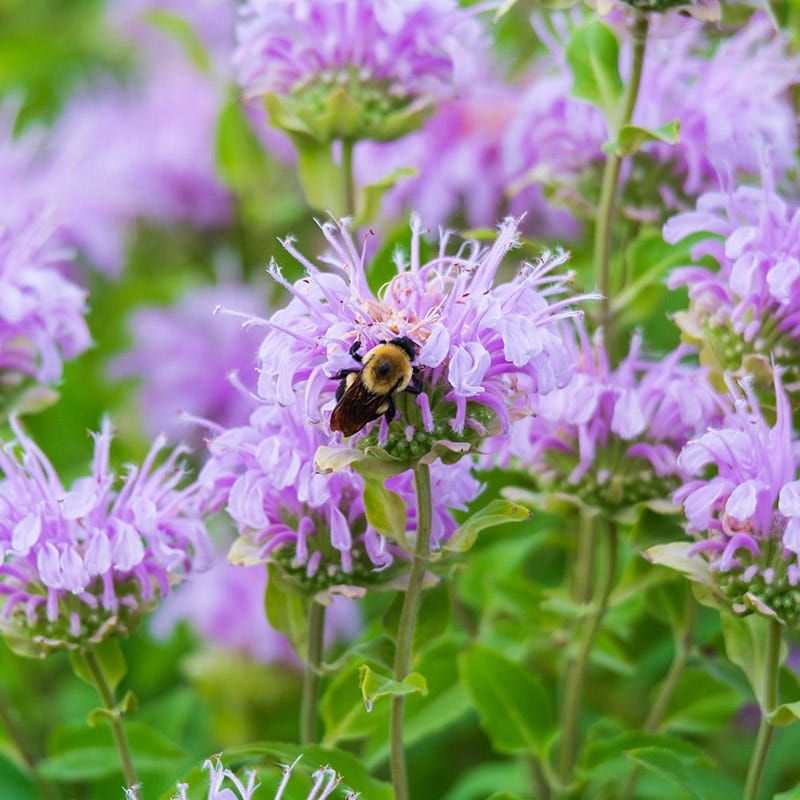
A crushed bee balm leaf smells spicy, somewhere between mint and oregano, and it lingers on your fingers. Hummingbirds seem to love the shaggy flower heads just as much as I love that scent.
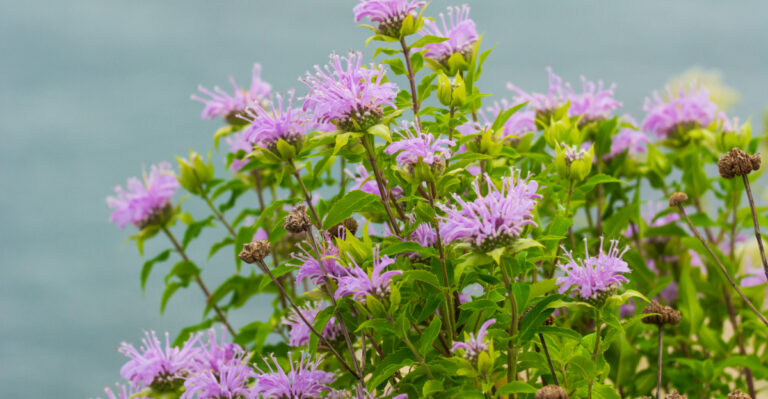
Wild bergamot, Monarda fistulosa, is the most widespread native species, while hybrids of Monarda didyma, another eastern native, offer brighter reds and pinks. Most types are hardy from Zone 4 through Zone 9 and grow two to four feet tall.
Underground rhizomes help it spread vigorously, so one plant can turn into a wide patch fairly quickly. That speed is great for filling gaps, but give it elbow room away from delicate neighbors.
Full sun encourages heavy flowering and reduces powdery mildew, the gray coating that often shows up in midsummer. Good air circulation helps too, so avoid cramming plants tightly against solid fences or garage walls.
Moist, well-drained soil rich in organic matter keeps bee balm happy and blooming through hot stretches. During dry periods, give a deep soak every seven to ten days rather than frequent light sprinkles.
Tubular flowers suit long-tongued visitors like hummingbird moths, and blooms can last for around eight weeks in summer. Snip faded heads to stretch the season, and look for mildew-resistant varieties like Jacob Cline when shopping online.
Divide clumps every three or four years, since the center can thin out while edges keep marching outward. Deer and rabbits typically avoid the aromatic leaves, which makes bee balm a dependable border choice.
8. White Turtlehead
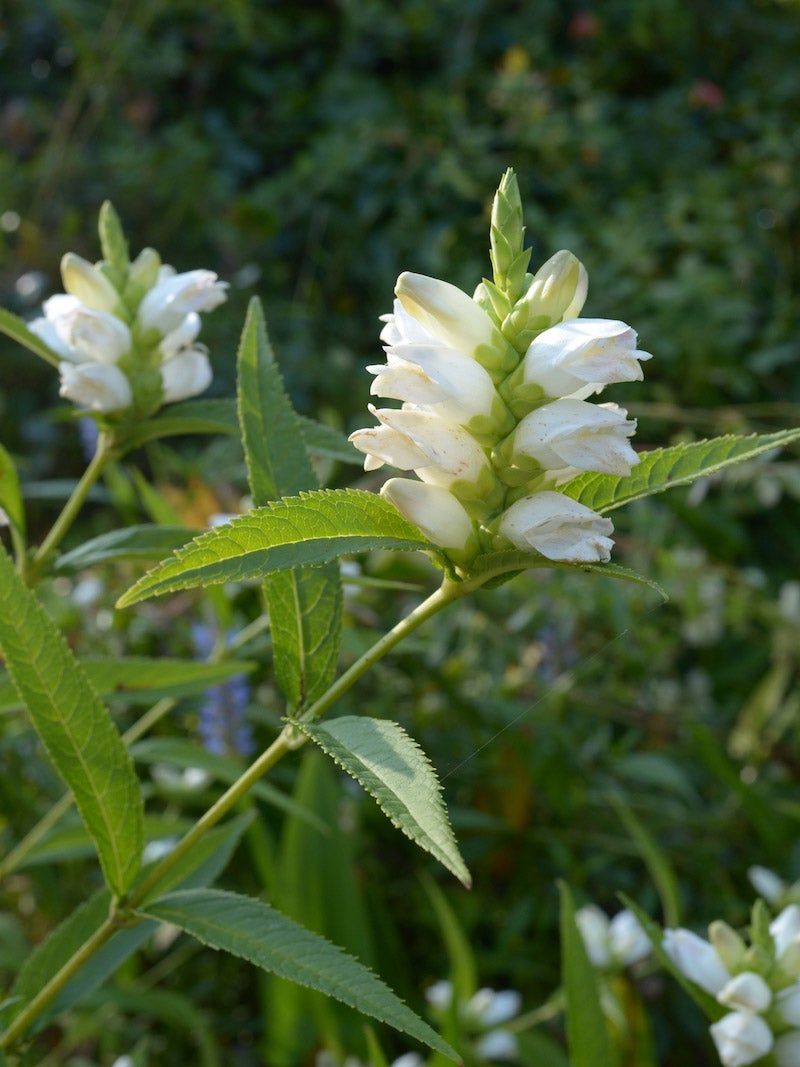
A gentle squeeze on a turtlehead flower makes its petals part like a small turtle opening its mouth. Bumblebees push right inside those hooded blooms, and watching them wiggle back out honestly makes me laugh.
Chelone glabra is native to Ohio wetlands and stream banks, thriving across Zones 3 through 9. Plants usually reach two to three feet tall and slowly widen through short, easily managed rhizomes.
Spread here is steady rather than wild, forming bushier clumps each year without bullying nearby perennials. Late summer blooms in August and September fill a gap when many garden flowers start to fade.
Moist to wet, rich soil suits it best, and it tolerates heavy clay that frustrates many other plants. Drought is its weakness, so plan on extra water during dry spells, especially in sunny spots.
Partial shade works well, while deeper shade leads to floppy stems that lean over by autumn. Pinch stems back in late spring to encourage sturdier, bushier growth and reduce the need for stakes.
Baltimore checkerspot caterpillars rely on turtlehead as a host plant, and common buckeyes use it too. Those bitter leaves also discourage deer and rabbits, which rarely bother more than a stray stem.
Rain gardens and low, soggy corners are perfect homes for this native beauty with white, pink-tinged flowers. Order it now, since native plant nurseries often sell out of turtlehead well before planting season.
9. Wild Ginger
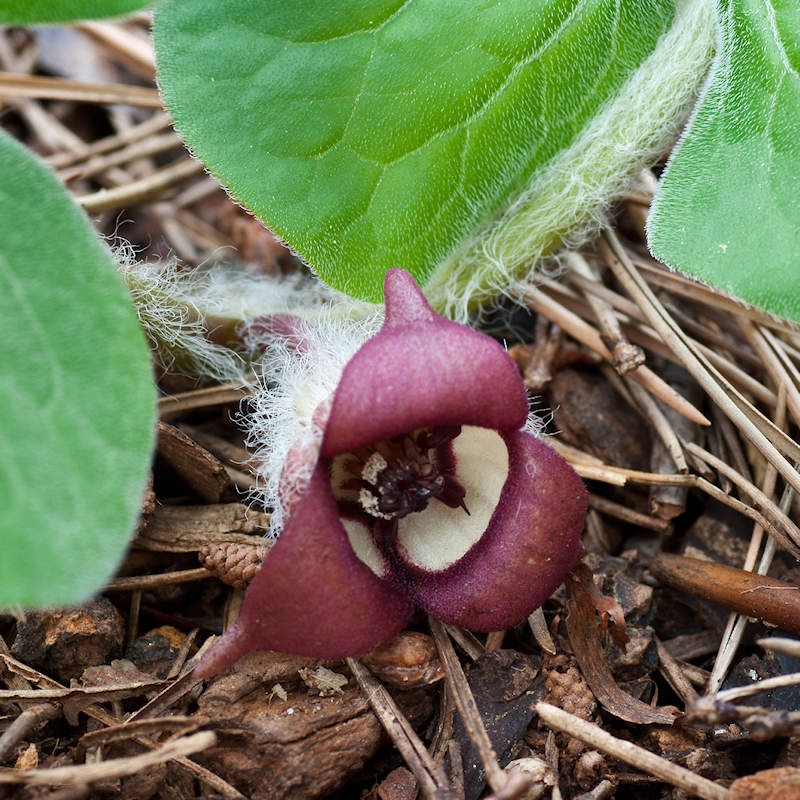
Hidden under heart-shaped leaves, wild ginger flowers sit right on the ground, shaped like tiny maroon jugs. Some botanists think early flies and gnats visit them, though pollination is still debated by researchers.
Asarum canadense is native to Ohio woodlands and thrives in shady spots across Zones 3 through 8. Plants stay about six inches tall and spread by creeping rhizomes into soft, velvety green mats.
Despite the name, it is not the ginger from grocery stores, though the roots do smell spicy. Eating it is not recommended, since the plant contains aristolochic acid, a compound linked to kidney harm.
Part to full shade suits it perfectly, making it a great fix for bare soil under trees. Rich, moist, well-drained soil with plenty of leaf litter mimics the forest floor it calls home.
Spacing plants about a foot apart helps them close the gaps within a few growing seasons. Keep the soil evenly moist the first summer, since young plants sulk during long dry spells.
Ants carry the seeds away to eat a fatty attachment, which helps spread new plants around. I love that a tiny insect partnership quietly plants my shade garden for free each year.
Pipevine swallowtail caterpillars are reported to occasionally feed on wild ginger leaves in some regions. Deer usually skip it, and the leaves stay attractive from spring until hard frost arrives.
10. Golden Ragwort
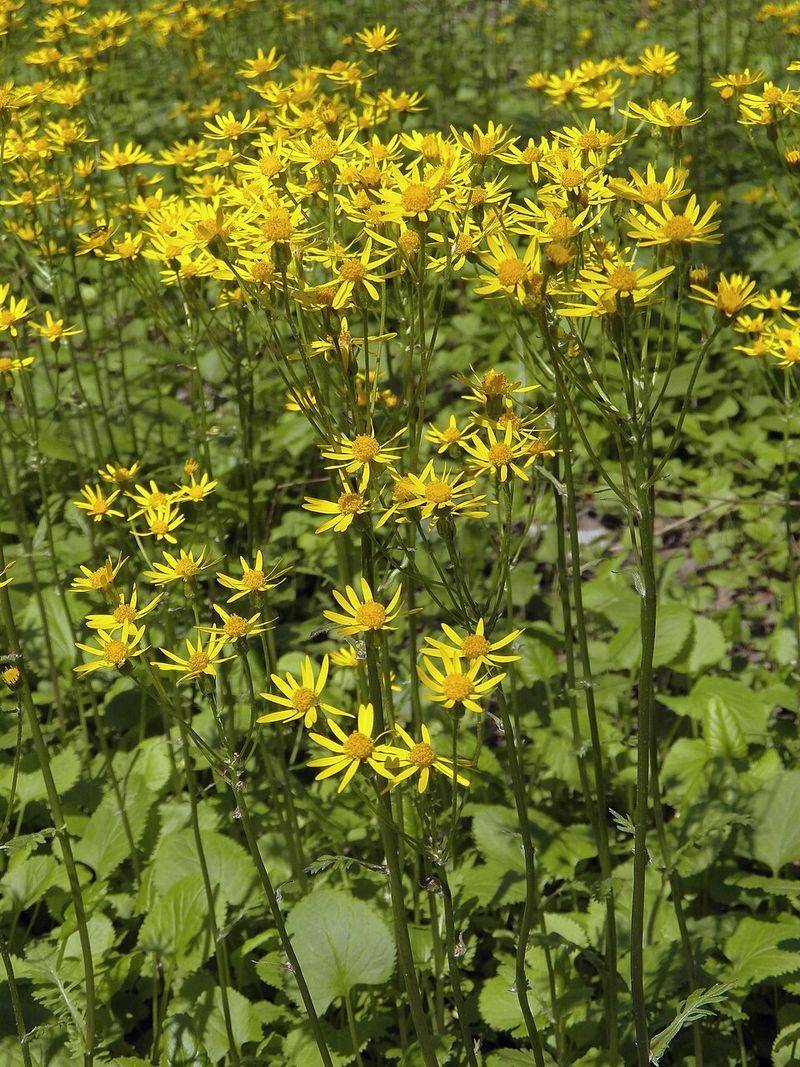
Bright yellow daisies blanket shady streambanks in May when golden ragwort hits its peak bloom. Few native groundcovers bloom this cheerfully in shade, and I grin every time a patch lights up.
Packera aurea is native across Ohio and hardy in Zones 3 through 8, handling tough winters easily. Low rosettes of rounded leaves stay green much of the year, while flower stems rise about two feet.
Stolons and self-sown seedlings help it spread quickly, often forming a dense carpet within a couple of years. That vigor makes it a superb weed blocker, but it can outpace shy woodland flowers in small beds.
Moist, rich soil suits it best, and it handles wet clay or rain garden conditions surprisingly well. Partial shade to full sun works, though hot afternoon sun can scorch leaves if soil dries out.
Early flowers feed small native bees and flies when few other plants offer pollen in spring. Snip the stems after blooming if you want to limit seedlings and keep the patch neat.
Deer and rabbits mostly avoid the foliage, which contains bitter compounds that discourage casual nibbling in gardens. Those same compounds make it toxic if eaten, so keep curious pets and livestock from munching on it.
Plugs set in spring settle in fast, filling gaps under shrubs or along shady downspouts and drainage ditches. Order early, because this native favorite is popular with rain garden fans and often sells out quickly.