The August Lawn Move Most Ohio Homeowners Completely Miss Every Year
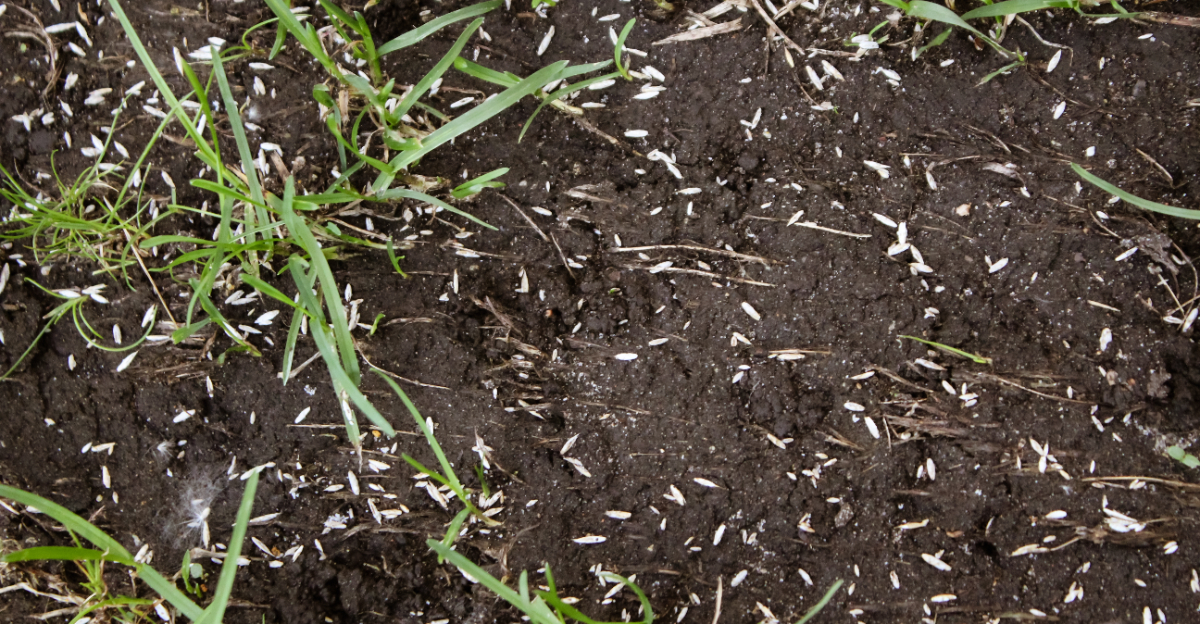
August arrives and Ohio lawn care goes on autopilot. Mow it, water it, hope it holds until fall.
The yards that show up to September looking genuinely good are doing something in August that autopilot never covers. August is not a waiting month for Ohio lawns.
It is a setup month. The decisions made right now determine what the lawn looks like heading into fall seeding season.
How well it recovers from summer stress. Whether it arrives at October ready to finish strong or still playing catch-up.
The moves that matter are not complicated. Several take under an hour.
A few cost nothing at all. They just never get made because August feels like the part of the lawn calendar where nothing important is happening.
That feeling is exactly what separates a lawn that peaks in fall from one that limps into it.
1. Start Overseeding Before The Fall Window Closes
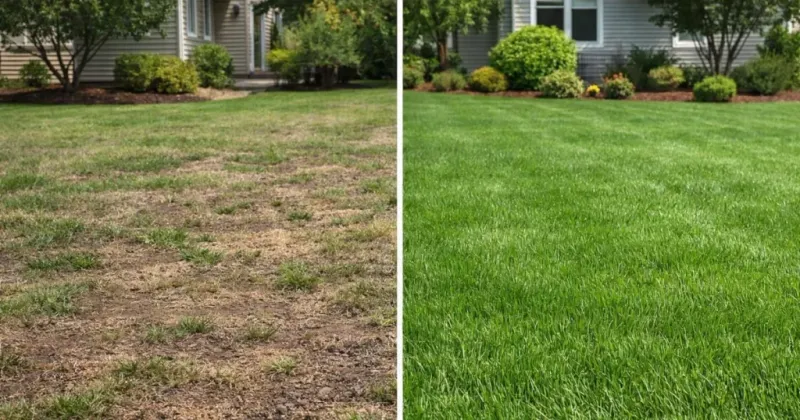
A thin lawn in late summer is not just an eyesore. It is an open invitation for weeds to move in before winter even arrives.
The missed move many Ohio homeowners skip is starting overseeding prep before the best fall establishment window closes.
OSU Extension turfgrass guidance notes that cool-season grasses establish best from late summer into early fall. These include tall fescue, Kentucky bluegrass, and perennial ryegrass.
Soil temperatures are still warm enough to support germination, and cooling air temperatures reduce the stress on young seedlings trying to take root.
Timing varies a bit by region. Northern regions of Ohio may want to start earlier in August, while central and southern areas can sometimes push into mid-September.
Waiting until the ground cools significantly can slow germination and reduce establishment success before winter arrives.
Starting earlier also gives seedlings more time to develop root systems before the first frost. A shallow root system heading into winter is fragile.
More time in the ground means a better chance of surviving cold and returning thicker in spring.
Keep in mind that timing alone does not fix every problem. Poor soil, deep shade, heavy compaction, or drainage issues need to be addressed separately.
Seed dropped into bad conditions, even at the perfect time of year, may still struggle to establish well.
2. Rake Bare Spots Before Seed Ever Touches Soil
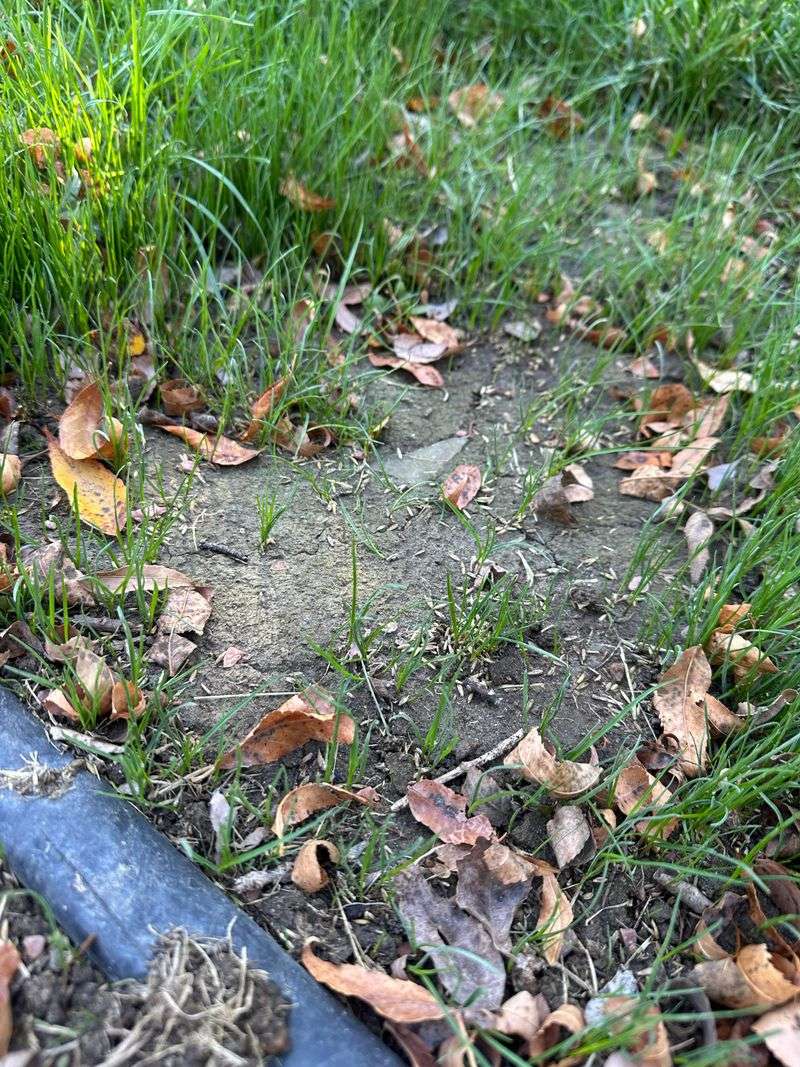
Seed sitting on top of deceased leaves, thick thatch, or crusted, unbroken ground has very little chance of becoming actual grass.
Good seed-to-soil contact is one of the most important factors in successful overseeding, and it starts before a single seed is spread.
Raking bare spots thoroughly removes loose debris, deceased grass clippings, and surface buildup that can block seed from reaching the soil. After clearing the surface, scratch the top layer of soil with a firm rake.
This creates small grooves where seeds can settle and contact the ground beneath them.
Turfgrass establishment guidance explains that seed needs moisture, warmth, and physical contact with soil to germinate reliably. Seed left sitting on hard, smooth, or debris-covered ground tends to dry out quickly, wash away in rain, or simply fail to sprout at all.
Your Ohio Garden Changes Every Week. Your Plan Should Too.
Gardening in Ohio changes quickly throughout the season. Every Friday you’ll receive a simple weekly plan showing exactly what to plant, prune, fertilize, harvest, and protect so you never miss the right timing.
For small low spots or uneven areas, a light topdressing of quality topsoil or compost can help level the surface and improve the seedbed. However, seed should not be buried deeply.
Most cool-season grass seeds germinate best when covered by only a thin layer of soil, roughly a quarter inch or less.
Do not dump thick layers of new soil over existing grass trying to fill in thin areas. That approach can smother what is already growing and create new problems rather than fixing old ones.
3. Loosen Compacted Soil Where Grass Keeps Failing
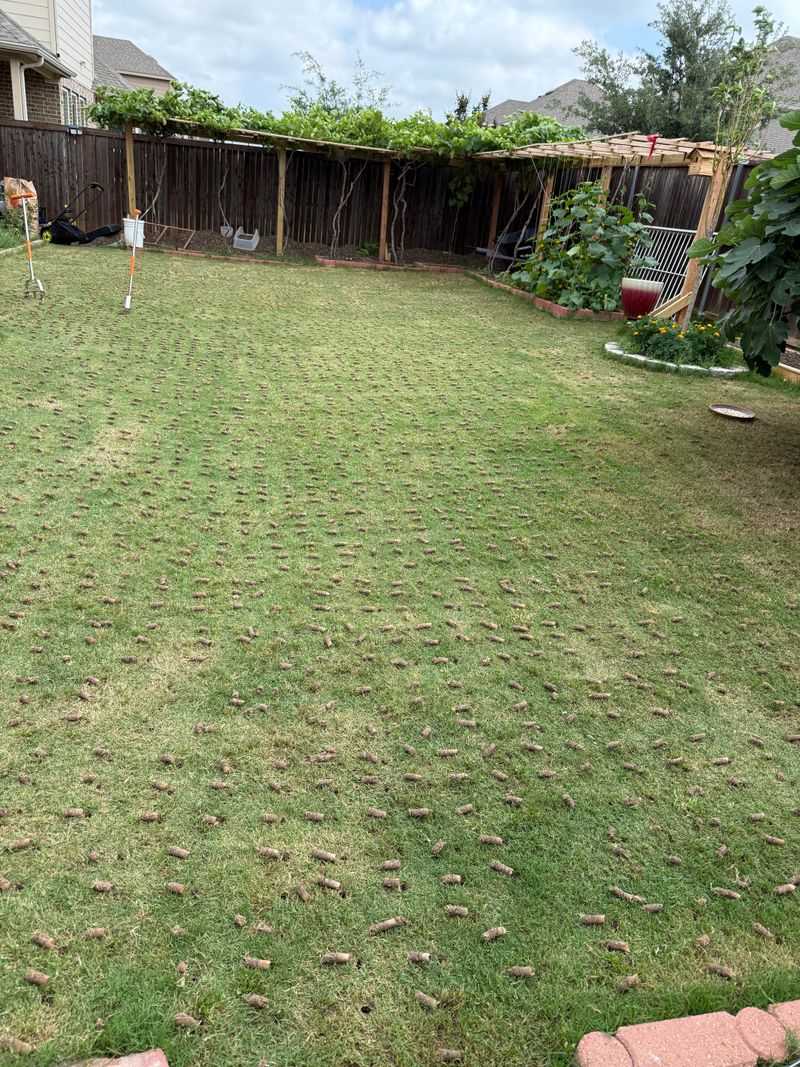
Hard, worn paths across the yard tell a story. When the same spots go bare year after year, despite reseeding and watering, the problem is often underneath the surface rather than on top of it.
Compacted soil limits the space roots need to grow, reduces water infiltration, and cuts off the air movement that healthy turf depends on.
Heavy foot traffic, repeated mowing on soft ground, and clay-heavy soils common in parts of Ohio can all contribute to compaction over time.
Water running off the surface instead of soaking in is one sign worth watching for.
Core aeration is a widely recommended practice for relieving compaction. It involves pulling small plugs of soil from the ground, which opens channels for water, air, and nutrients to reach the root zone.
University extension lawn guidance notes that aeration works best when soil is slightly moist. It should not be bone dry or waterlogged, and it is often timed with fall overseeding.
Overseeding alone does not fix compacted soil. Seed dropped onto hard ground without any preparation may sprout briefly but fail to establish a deep root system.
Addressing compaction first gives new seedlings a better environment to grow into.
If a spot stays bare due to heavy shade, root competition from nearby trees, or persistent drainage problems, aeration and seed may still struggle. Identifying the actual cause matters before putting effort into repair.
4. Choose Cool Season Seed For Local Lawns
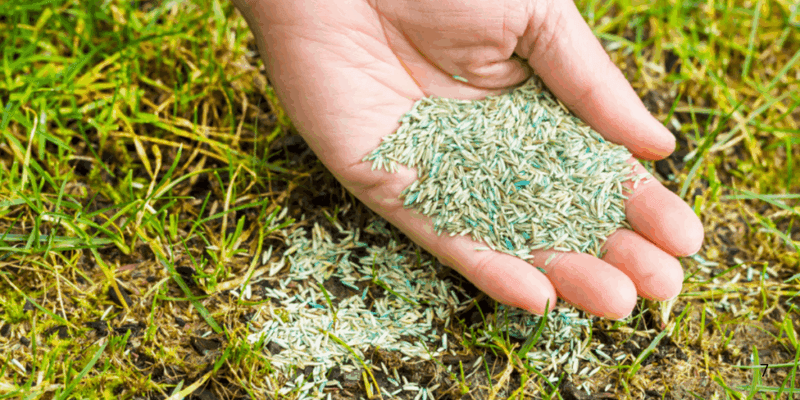
Not every bag of grass seed at the hardware store is the right fit for every yard. Picking up the cheapest or most familiar bag without reading the label is a common mistake.
It can lead to a patchy lawn that fades in summer or fails to match nearby turf.
Most lawns across Ohio are planted with cool-season grasses, which thrive in the moderate temperatures of spring and fall and can handle cold winters. Common cool-season options include tall fescue, Kentucky bluegrass, and perennial ryegrass.
Each has different strengths. Tall fescue handles drought and moderate shade better than Kentucky bluegrass.
Kentucky bluegrass prefers full sun and spreads through rhizomes to fill bare spots.
OSU Extension turfgrass guidance recommends matching seed to the specific conditions of the site. A shady backyard needs a shade-tolerant mix, not a full-sun blend.
A high-traffic play area needs a durable variety, not a fine ornamental grass.
Reading the seed label carefully matters. Look for the germination rate, the percentage of weed seed listed, and the variety names included.
A label with a high percentage of crop seed or inert matter is a signal to look for a better product.
Avoid mystery mixes with no clear variety names listed. Spending a little more on quality seed from a reputable source often produces better results than saving a few dollars on a bag that underperforms.
5. Water New Seed Lightly Until Roots Take Hold
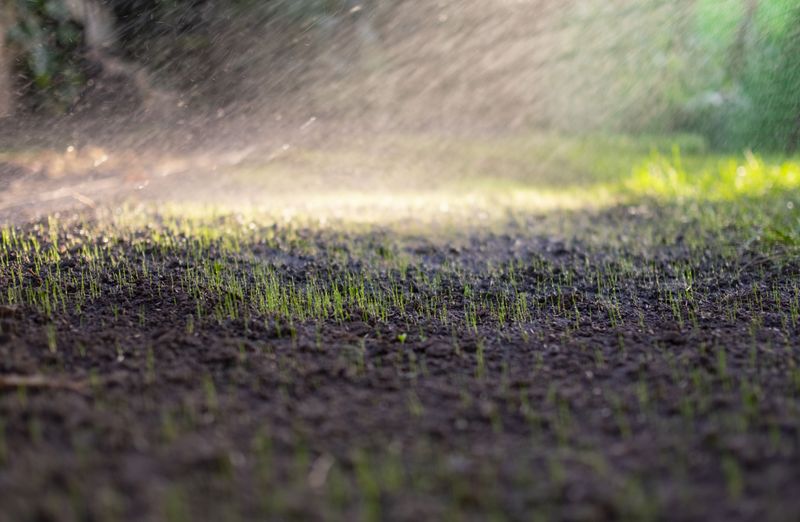
A sprinkler misting a freshly seeded patch looks simple enough, but watering new grass seed requires more attention than most people expect. Getting it wrong in either direction, too much or too little, can stop germination before it starts.
Newly seeded areas need consistent surface moisture during the germination period. The top layer of soil should stay damp, not soaking wet, until seeds sprout and tiny seedlings appear.
Letting the seedbed dry out completely, even for a day or two during hot late-summer weather, can interrupt germination or destroy seedlings that have just emerged.
Light, frequent watering works best during the first week or two. A gentle spray that wets the surface without puddling or washing seed around is the goal.
Turfgrass establishment guidance recommends checking soil moisture before watering rather than following a fixed daily schedule. If the surface still feels moist, hold off.
As seedlings develop and roots start pushing deeper into the soil, watering frequency can decrease while the depth of each watering session increases. This encourages roots to follow moisture downward rather than staying shallow near the surface.
Avoid watering in ways that flood or pool water over new seed. Standing water can move seed around, promote disease, or suffocate germinating seedlings.
Adjust irrigation output based on recent rainfall, temperature, and how quickly the seedbed seems to dry between sessions.
6. Skip Weed Destroyers That Block Fresh Seed
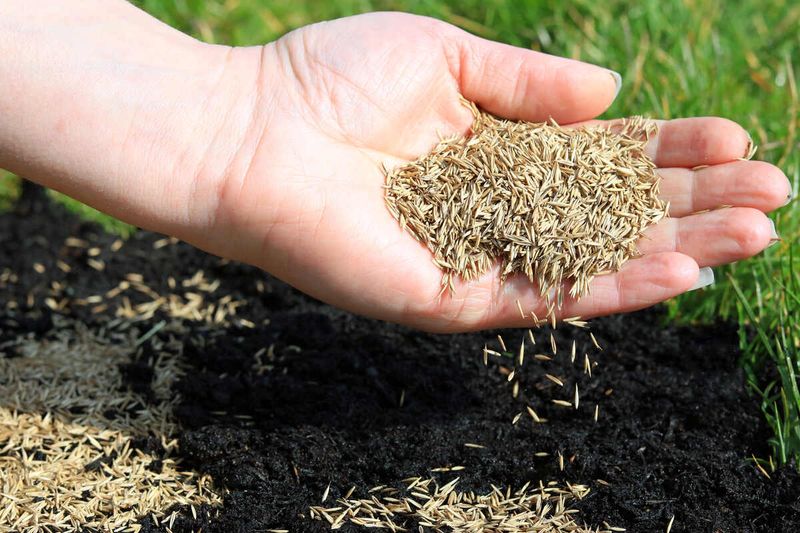
Crabgrass preventers work by creating a chemical barrier in the soil that stops seeds from germinating. That barrier does not know the difference between crabgrass seeds and the grass seed you just spread.
Using a pre-emergent herbicide at the wrong time can wipe out an entire overseeding effort before a single blade appears.
Pre-emergent products are typically applied in early spring to prevent summer annual weeds like crabgrass from sprouting. Applying them in late summer, when you are actively trying to establish new grass, directly conflicts with the overseeding goal.
Pesticide label guidance is clear: read the label before applying any product near a seeding area. Follow the listed waiting periods before and after seeding.
Broadleaf herbicides used to control dandelions, clover, and other weeds also carry timing restrictions around seeding. Some products require waiting several weeks after application before overseeding.
Others should not be applied to newly seeded areas until the grass has been mowed several times.
Planning weed control around your overseeding schedule is the safest approach. If crabgrass is a problem, address it in the correct season and plan overseeding separately.
OSU Extension guidance and product labels are the most reliable sources for timing rules in Ohio.
Never apply a weed-control product to a seeded area based on a general tip or online post. Labels are legal documents, and following them protects your lawn and your investment in new seed.
7. Mow High While New Grass Fills In
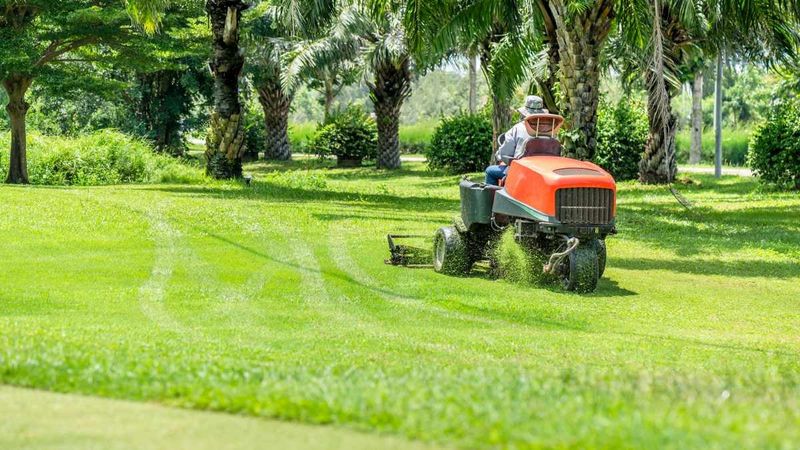
Mowing height might seem like a minor detail, but it has a real impact on how well cool-season turf survives heat, fills in bare spots, and competes against weeds.
Cutting grass too short during late summer stresses the plant and reduces the leaf area available for photosynthesis.
University extension lawn guidance recommends keeping cool-season grasses at the higher end of their recommended mowing range during late summer. Tall fescue, for example, is often maintained between three and four inches.
Taller grass shades the soil surface, which helps retain moisture and makes it harder for weed seeds to germinate in open areas.
When new seedlings are filling in a recently overseeded patch, mowing requires extra care. Wait until new grass reaches at least three to four inches before running a mower over it.
Mowing too early can uproot seedlings that have not yet developed strong root systems.
Sharp mower blades matter more than most people realize. A dull blade tears grass rather than cutting it cleanly, leaving ragged edges that stress the plant and invite disease.
Sharpening blades at least once per season is a simple step with a noticeable payoff.
Avoid mowing when the lawn is wet or when newly seeded areas are soft and easily disturbed. The weight of a mower on tender seedlings or saturated soil can compact the surface and damage the very grass you are trying to establish.
8. Fix Thin Turf Before Spring Weeds Return
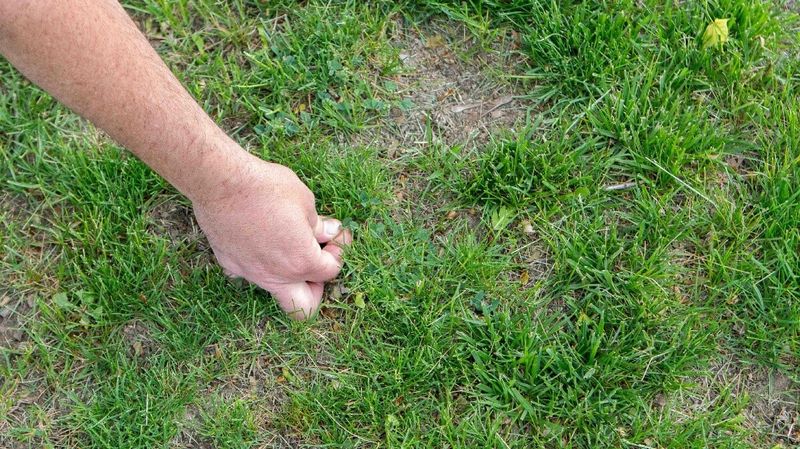
Every bare patch left unrepaired heading into fall is essentially a reserved spot for next spring’s weeds. Dandelions, chickweed, and annual bluegrass are quick to colonize open soil, and they get a head start the moment the ground warms up in March and April.
Thickening thin turf in late summer through overseeding is one of the most practical ways to reduce weed pressure the following spring. Dense, healthy grass crowds out weed seedlings by competing for light, moisture, and soil space.
A lawn with fewer open patches simply gives weeds fewer places to start.
Pulling together everything covered in this article matters here. Raking bare spots, loosening compacted areas, choosing the right seed, keeping the seedbed moist, timing herbicides carefully, and mowing high all work together.
Skipping one step does not always ruin the effort, but combining them improves the odds of real results.
Track which areas thin out or go bare each season. Repeated failure in the same spot usually points to an underlying issue, whether that is shade, drainage, compaction, tree roots, or heavy traffic.
Fixing the cause gives new grass a chance to actually stay.
The August move most people miss is not a secret or a lawn-care trick. It is simply giving cool-season grass a head start before the best seeding window closes and before weeds claim another season of open ground.