Should Virginians Fertilize Their Lawn in November? What Experts Recommend for Cool-Season Grass
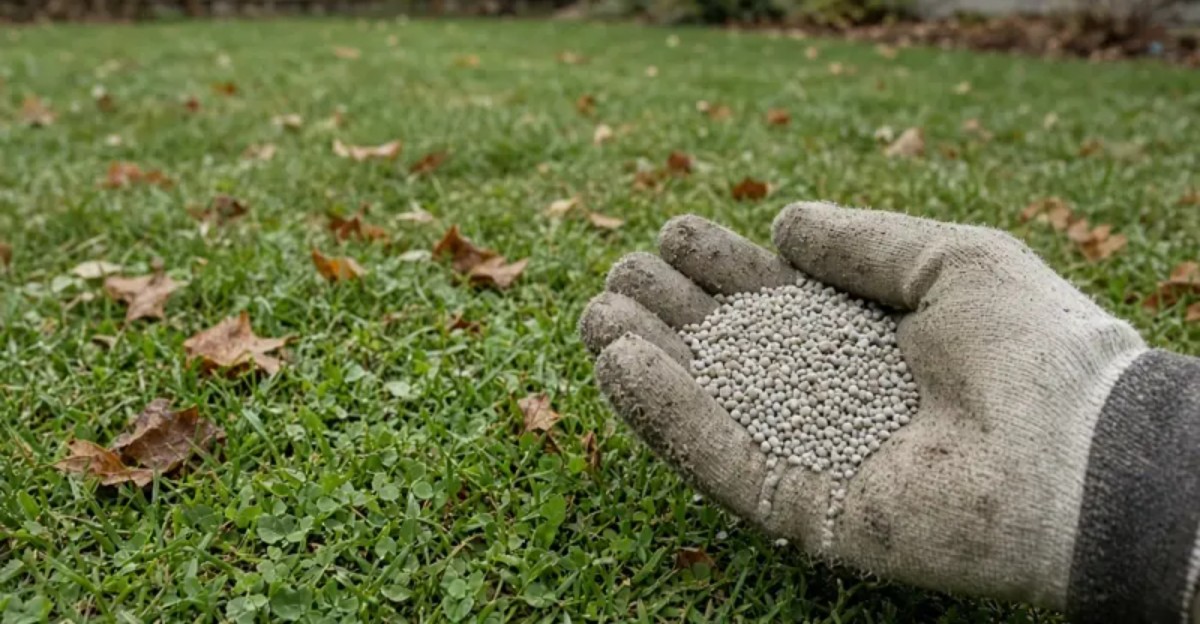
Grass blades can stop growing in late fall while the roots underneath keep working for weeks. Turf scientists have studied this quiet underground shift for decades, and it changed how many experts schedule lawn care.
The leaves on top slow down once the air turns cold. Meanwhile, the soil stays warm enough for roots to pull in food and store it like a pantry stocked for winter. I love that a lawn can look sleepy and still be so busy.
Here in Virginia, many of us put the spreader away right after the last mowing. Personally, I used to think fall feeding was a waste of money.
You’re in for a surprise, because some researchers see the late-season meal as one of the most useful of the whole year. So does November really deserve a spot on your lawn calendar?
Those Fescue Roots Stay Busy Long After The Mower Goes Quiet

Grab a shovel and lift a slice of your tall fescue lawn in mid-November. You’ll likely spot fresh white roots, even though the blades above barely budged all week.
That hidden activity explains why experts care so much about late fall.
Cool-season grasses like tall fescue, Kentucky bluegrass, and perennial ryegrass slow their leaf growth once air temperatures drop. Their roots, however, keep working as long as the soil stays above roughly 40 degrees.
In much of the state, soil holds that warmth well into November and sometimes December.
During this stretch, the grass makes food through photosynthesis on sunny days. Instead of spending that energy on new blades, it stores sugars and carbohydrates in its roots and crowns.
Think of it as packing a lunchbox for the long winter ahead.
A late-season feeding helps the plant keep its leaves green and productive a little longer. More green leaves mean more stored energy, and more stored energy means a stronger start in spring.
Turf researchers often call this a late-fall or winterizer application.
I find this part fascinating, honestly. The lawn looks like it is resting, yet it is quietly building the foundation for next year.
Once you understand that, November stops feeling like the end of the season and starts feeling like a smart investment.
Yes, A November Feeding Fits Most Cool-Season Lawns
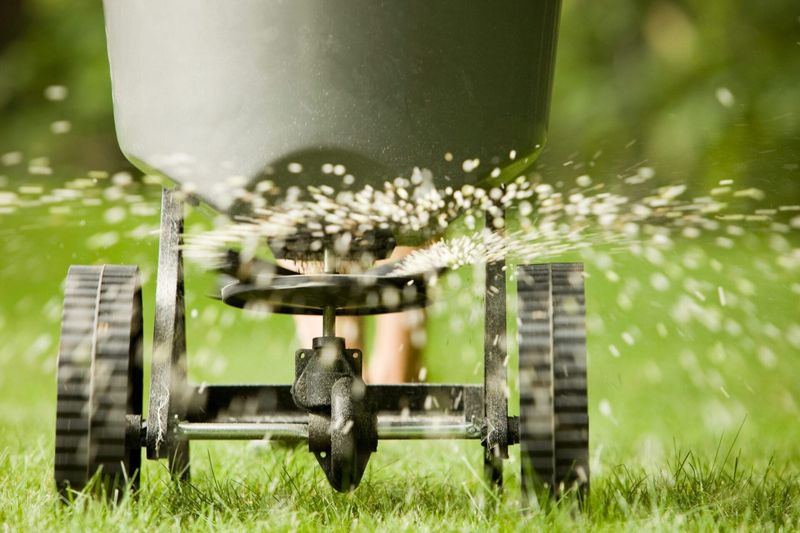
Short answer for most homeowners with fescue or bluegrass: yes. Virginia Cooperative Extension includes a late-fall nitrogen application in its maintenance calendar for cool-season lawns.
That November meal is usually the last stop in a schedule that leans heavily on fall.
Extension guidance puts most of the yearly nitrogen into September, October, and November. September and October feedings help grass recover from summer heat and thicken up.
The November dose then supports color and root energy storage before winter.
Timing matters, though. You want the grass still green and the ground not frozen when you apply.
For many parts of the state, that means early to mid-November, often wrapping up around Thanksgiving.
Regional differences play a role too. Lawns in the mountains and northern counties cool off sooner, so earlier November makes more sense there.
Yards near Hampton Roads and the Southside stay mild longer, which gives a little extra wiggle room.
Skip it if the lawn has already turned brown and gone dormant from a hard freeze. Fertilizer sitting on frozen soil cannot be taken up well and can wash away.
Watch the weather, pick a calm and dry day, and you’ll give your grass exactly what it can use.
Nitrogen Is The Star Of Your Late-Fall Fertilizer Bag
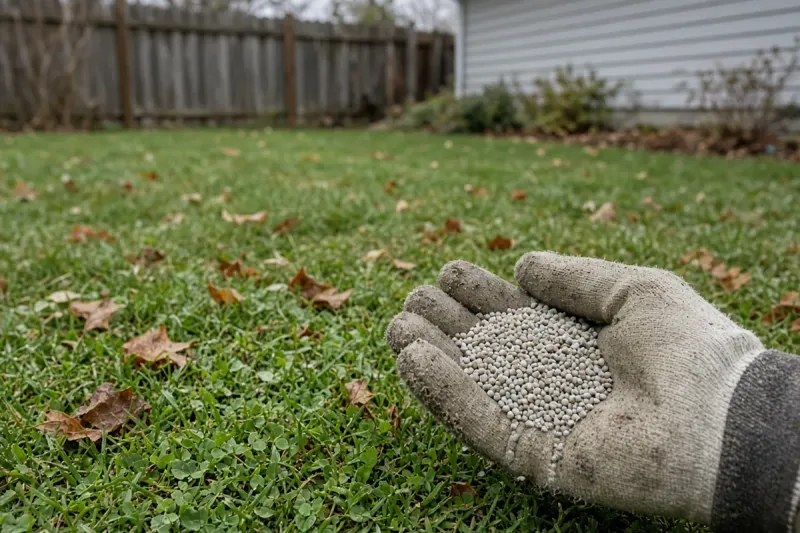
Flip over any fertilizer bag and three numbers stare back at you. They stand for nitrogen, phosphorus, and potassium, in that order.
For a November feeding, nitrogen does most of the heavy lifting.
Nitrogen keeps grass blades green and helps the plant make and store energy. Virginia Tech turf guidance generally suggests about 0.5 to 1 pound of actual nitrogen per 1,000 square feet per application.
Space feedings at least 30 days apart so the lawn can use each one.
Doing the math is easier than it looks. A bag labeled 20-0-5 is 20 percent nitrogen, so 5 pounds of product delivers 1 pound of nitrogen.
Most spreader charts on the bag will help you set the right rate.
Phosphorus deserves a quick note. Virginia law limits phosphorus in most lawn fertilizers for established turf unless a soil test shows a need.
That’s why many bags you’ll find show a zero in the middle.
Quick-release nitrogen often works well this late in the year, since cool soil slows slow-release types. Personally, I keep a small notebook of what I applied and when.
It saves guesswork next fall and keeps me from overdoing it.
A Simple Soil Test Can Save Your Lawn And Your Wallet
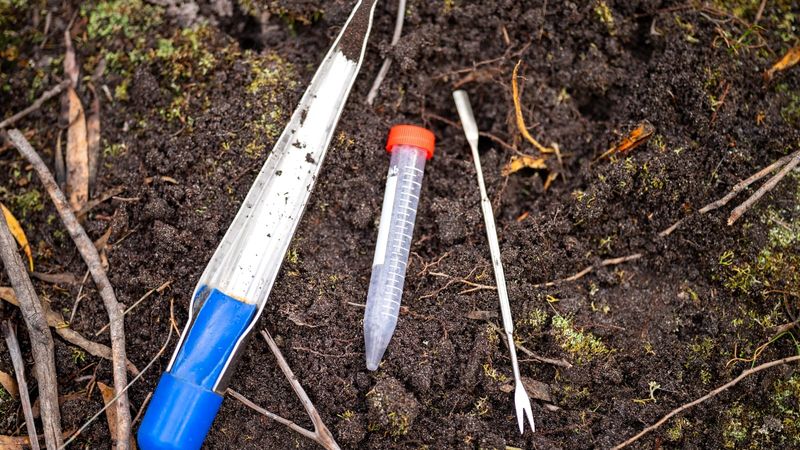
Ten dollars or so can tell you more about your yard than a whole shelf of lawn products. Virginia Tech’s Soil Testing Lab analyzes home samples, and local Extension offices often supply boxes and instructions.
Results show nutrient levels, pH, and lime needs.
Collecting a sample takes only a few minutes. Use a trowel or soil probe to gather small cores about 3 to 4 inches deep from 10 to 15 spots.
Mix them in a clean bucket, let the soil dry, and fill the sample box.
Many soils across the state lean acidic. Tall fescue grows best when pH sits around 6.0 to 6.5.
If your number is lower, grass can struggle to use the fertilizer you spread.
Lime fixes acidic soil, but it works slowly. Fall and winter are great times to apply it because freezing and thawing help it move into the soil over the following months.
You can spread lime in November alongside your fertilizer plan.
I used to just guess, and my lawn showed it. After my first test, I learned I had plenty of potassium and needed lime instead.
Your results may surprise you too, so test every two or three years.
Bermudagrass And Zoysia Lawns Need A Different Plan
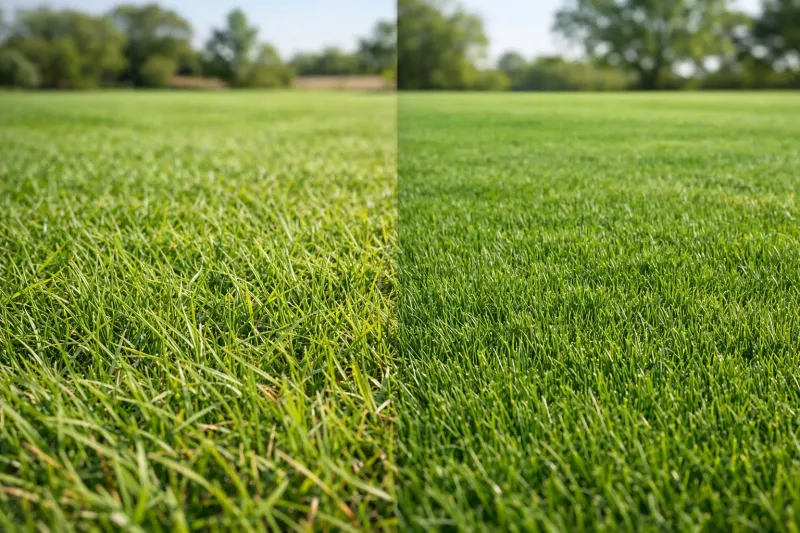
Walk through a Virginia Beach neighborhood in November and you’ll see a funny pattern. Some lawns glow green while their neighbors turn straw tan.
Those tan yards are usually warm-season grasses heading into dormancy.
Bermudagrass, zoysiagrass, centipede, and St. Augustine grow best in summer heat. They slow down and go brown when cool weather arrives.
Feeding them in late fall can push tender growth that cold weather may injure.
Extension experts advise wrapping up nitrogen on warm-season lawns by around mid-August to early September. Their main feeding season runs from late spring through summer instead.
So the November advice in this article does not apply to them.
Not sure which grass you have? Look at it right now.
Cool-season lawns stay mostly green through late fall, while warm-season types fade to tan after the first frosts.
Some yards have a mix, especially in the eastern part of the state. In that case, focus on the main grass type and keep fall feeding light.
A local Extension agent can identify a sample and help you decide.
Getting this right saves money and protects your lawn. One fertilizer plan does not fit every yard, and grass type is the first thing to check.
Stray Fertilizer Pellets On Driveways Can Reach The Chesapeake Bay
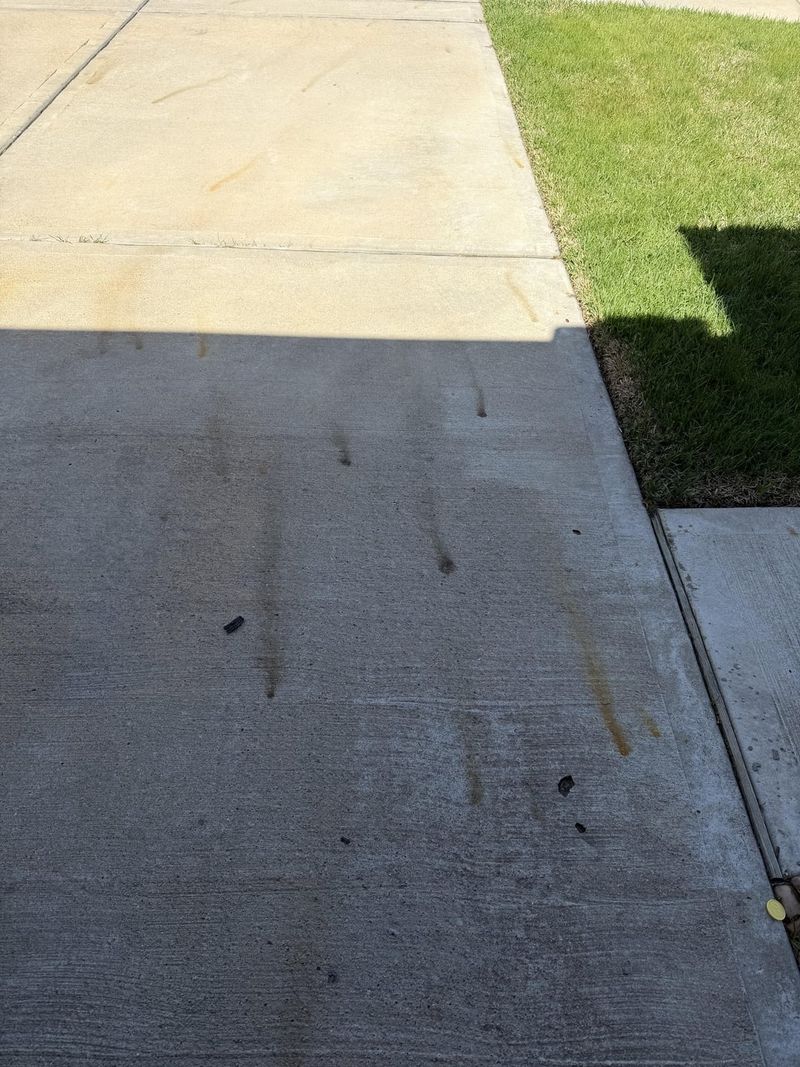
Every storm drain in much of Virginia eventually connects to streams that feed the Chesapeake Bay. That makes a little spilled fertilizer more important than it looks.
Extra nitrogen and phosphorus can fuel algae blooms that lower oxygen in the water.
Thankfully, a few easy habits make a big difference. Sweep or blow any pellets from sidewalks, driveways, and streets back onto the grass.
Close the spreader hopper when you turn or cross pavement.
Check the forecast before you head out. A light rain or a quick watering of about a quarter inch helps fertilizer settle into the soil.
A heavy downpour soon after spreading, on the other hand, can carry it away.
Leave a strip of unfertilized grass or plants near creeks, ponds, and ditches. Many experts suggest at least 10 to 15 feet.
That buffer catches nutrients before they reach the water.
Applying more than the label suggests rarely helps the lawn. Grass can only use so much at once, and the rest often washes off.
Lighter, well-timed feedings work better for both turf and water.
I like knowing my lawn routine helps protect crabs, oysters, and fish downstream. It’s a small effort with a surprisingly wide reach.
Your Spring Lawn Starts With These November Habits
Fast forward to April. A lawn that ate well in fall often greens up sooner and looks thicker without needing a heavy spring dose.
Extension experts actually recommend going light on spring nitrogen for cool-season grass.
Too much spring fertilizer pushes fast leaf growth at the cost of roots. That can leave fescue weaker heading into hot, dry summers, when brown patch disease likes to show up.
A strong fall program helps you avoid that trap.
A few more November habits round things out. Keep mowing at about 3 to 4 inches until growth stops.
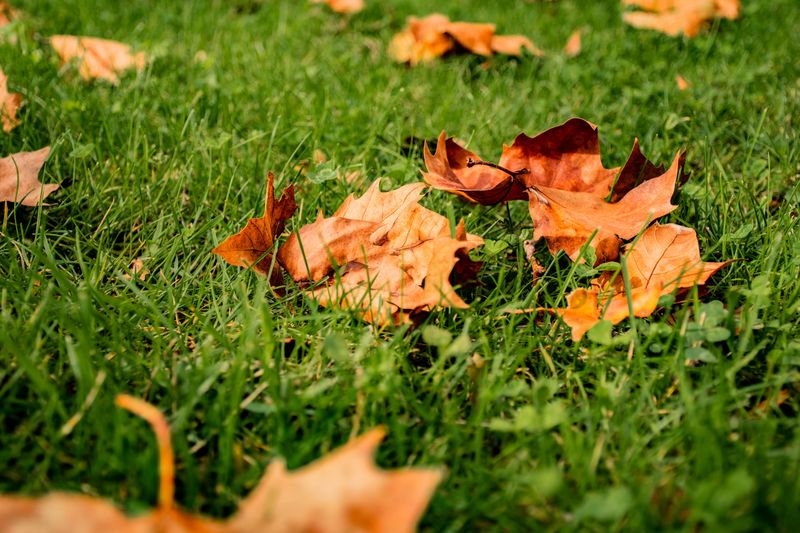
Mulch fallen leaves with your mower so they break down into the turf instead of smothering it.
Clean and store your spreader after the final feeding. Rinse it, let it dry, and jot down the setting you used.
Future you will appreciate that note next September.
Here’s my favorite takeaway. Fall is the main season for cool-season lawn care, not an afterthought.
Feed in September, October, and early November, test your soil, and keep the spreader on the grass.
Follow that rhythm, and your yard will reward you. A dense, green spring lawn is mostly built during the chilly days most people ignore.